

How to Document Region-Specific Subluxation and Functional Improvement for Clean Claims
Learn how region-specific subluxation documentation and functional improvement narratives prevent chiropractic claim denials under Medicare and payer standards.
Clean claims for region-specific subluxation and functional improvement come down to linking three things in every note: a documented chief complaint, physical examination findings specific to the affected spinal region, and objective evidence that function has changed because of treatment. Subluxation has to be demonstrated through documented physical examination criteria that identify asymmetry or misalignment, or an abnormality in range of motion, within the specific spinal region being treated. That regional finding must connect directly to the patient's stated functional complaint. It cannot stand alone as an isolated exam result. Functional improvement then has to be tracked with objective, measurable data rather than subjective pain reports alone, showing progress across visits toward a defined clinical goal. A treatment plan supporting these claims should state goals of care, treatment frequency, and duration, and an initial plan of care for a musculoskeletal condition should not extend past a defined short-term window before objective progress is reassessed. Once a patient's clinical status stabilizes and no further objective improvement is expected, continued manipulative treatment shifts from active corrective care into a maintenance category, which carries separate coding and coverage implications. Clean claims depend on documentation that shows a reviewer, step by step, how the region-specific finding, the functional deficit, and the measured change all connect to one clinical outcome. Records that list adjustments without tying each one to a functional result leave that connection for a payer to infer, and that is where documentation-based denials most often originate.
What Counts as Proof of Subluxation, and Why Most Notes Fall Short
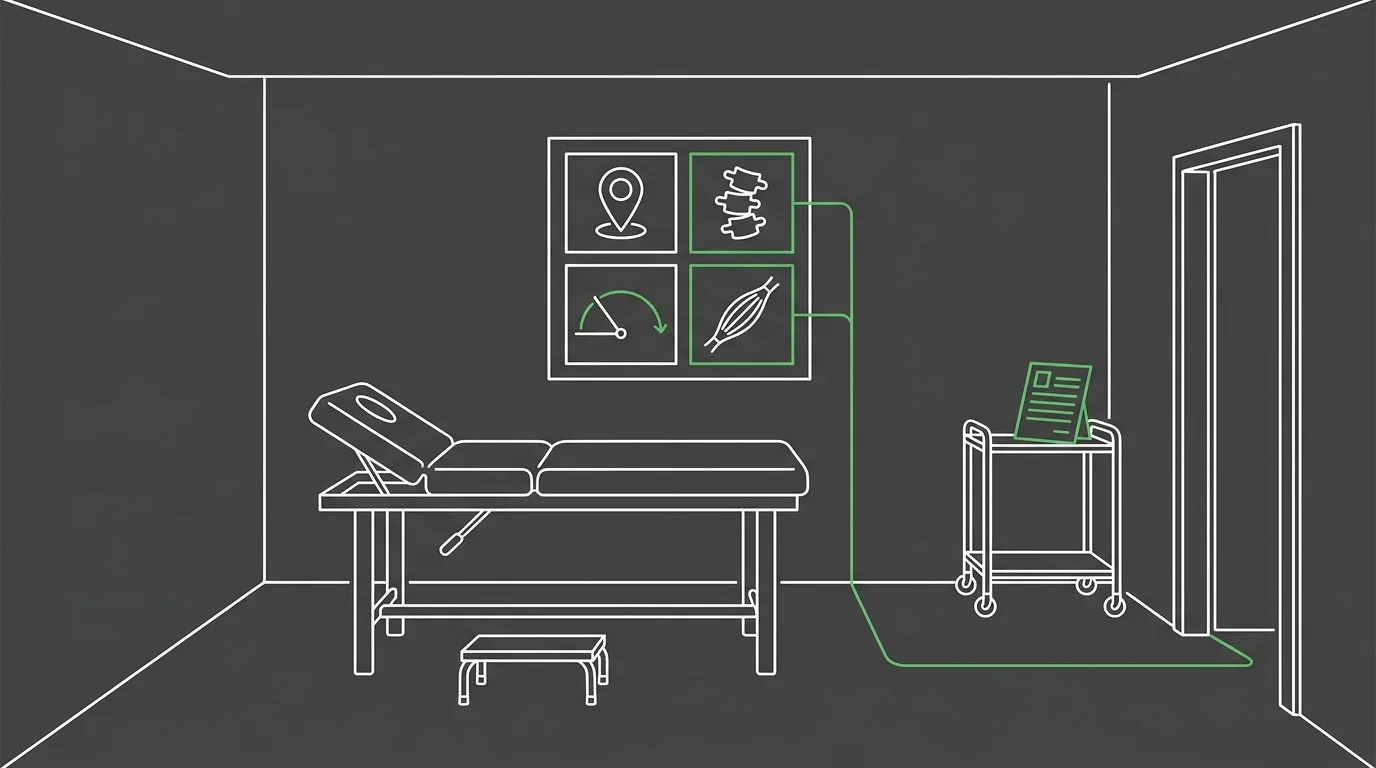
Payers check documentation against a standard clinicians call P.A.R.T.: pain, asymmetry, range of motion, and tissue tone. A note has to show findings across those categories tied to a specific spinal region, not just a diagnosis code.
Most charts fail at the exam step. According to CMS, two of four physical examination criteria must be documented to demonstrate subluxation, one of which must be asymmetry/misalignment or range of motion abnormality. A note missing that specific pairing has not met the standard, no matter how detailed the rest of the visit note reads.
Clean claims are not a software outcome. Mastering the clinical narrative matters more than mastering a billing platform, and the risks of generalist billing for chiropractic claims traces what happens when agencies skip that narrative entirely.
Why Adjustment-Counting Documentation Keeps Getting Denied
Adjustment counting is the habit that ignores that standard entirely. A note that lists cervical, thoracic, and lumbar adjustments still says nothing about why any of them were medically necessary.
Here's why that habit gets denied: payers don't reimburse the adjustment. They reimburse the documented, medically necessary correction of a functional deficit, and a code list proves neither the deficit nor the correction.
The biggest gap in most chiropractic documentation is exactly this disconnect. Findings from a specific spinal region never get tied to the patient's specific functional complaint, so the story a reviewer needs never gets told. How to Prove Medical Necessity for Chiropractic Care walks through what closing that gap looks like on the page.
How a Flawed Note Turns Into a Denied Claim
A payer's reviewer does not read a chart the way a clinician does. They scan for one thing: does this note prove the treatment was necessary.
Miss that proof and the claim doesn't get flagged for a closer look. It gets denied on the paper trail alone, before anyone weighs the care that was actually delivered.
Where the Region-to-Complaint Link Breaks Down
The break usually starts at the top of the note, not the middle. Every chart is supposed to open with the chief complaint stated first, and that placement is not cosmetic.
The chief complaint has to appear as the first notation in the record. That requirement holds across every level of history a provider documents.
Published academic reference documents that the chief complaint must be documented by the provider as the first notation in all medical records and is required for all levels of history. Once that opening notation is missing or vague, everything written after it loses its anchor. The regional exam finding has nothing to answer to, and the reviewer is left reconstructing a story the provider never told. Understanding Medicare Section 1862(a)(1)(A) sets out the legal standard this whole chain of proof is built to satisfy.
What the Numbers Say About Chiropractic Claim Risk

That gap between adjustment counting and functional proof is not a theory. It shows up in federal audit data as a measurable dollar figure, not a hypothetical.
CMS's chiropractic services guidance documents that the improper payment rate for chiropractic services is 33.6%, representing a projected improper payment amount of $178.3 million. That 33.6% figure describes chiropractic services broadly, not a narrow subset of poorly run practices. It reflects how often the documented paper trail fails to support the claim, independent of whether the care itself was appropriate.
A chiropractic billing and revenue recovery partner who understands region-specific documentation is built to close that exact gap, not just resubmit denied codes faster. The failure lives in the note, so the fix has to live there too.
| Metric | Figure | What It Measures |
|---|---|---|
| Improper Payment Rate | Documented in federal audit findings | How often a chiropractic claim's paper trail fails to support what was billed, independent of whether care was appropriate |
| Physical Exam Criteria Standard | A defined ratio of required findings | The minimum documented evidence needed to demonstrate subluxation within the treated spinal region |
| Initial Plan of Care Window | A short, defined treatment period | How long a plan of care runs before objective progress must be reassessed and documented |
| Chief Complaint Placement | First notation in the record | Where the clinical story must begin so every later finding has something to answer to |
Building the Proof: Region-Specific Findings and Functional Measurement
Build a note to survive review and it won't open with the treatment. It opens with the structure that carries proof from one section to the next.
That structure has three fixed points: a regional finding tied to the chief complaint, and a functional measure tied to that finding. Skip any one of them and the story breaks somewhere a reviewer will find it.
| Documentation Element | What It Must Show | Common Gap |
|---|---|---|
| Chief Complaint | Stated first, in the patient's own functional terms, before any exam findings appear. | Buried after exam findings or written as a diagnosis label instead of a functional complaint. |
| Region-Specific Exam Finding | Asymmetry, misalignment, or range of motion abnormality documented for the exact region treated. | A general subluxation note with no region-specific finding attached to it. |
| Functional Link | The regional finding tied directly to the complaint it explains, in the same note. | Exam finding and complaint recorded separately, leaving the connection unstated. |
| Objective Functional Measurement | Measurable data tracked across visits toward a stated clinical goal. | Pain scores alone, recorded without a comparison point from a prior visit. |
| Treatment Plan Structure | Stated goals of care, frequency, and duration, reassessed on a defined schedule. | A plan with no endpoint, no goal, and no reassessment trigger written in. |
Turning Progress Into Data a Payer Can Verify
Functional improvement is the piece most notes shortchange. It is the central pillar of a defensible claim, and it has to rest on objective, measurable data rather than a pain score alone.
That data has to move. A single measurement proves nothing on its own. Tracked across visits toward a stated goal, it becomes the evidence a reviewer can actually verify.
Sequencing the Treatment Plan So the Timeline Holds Up
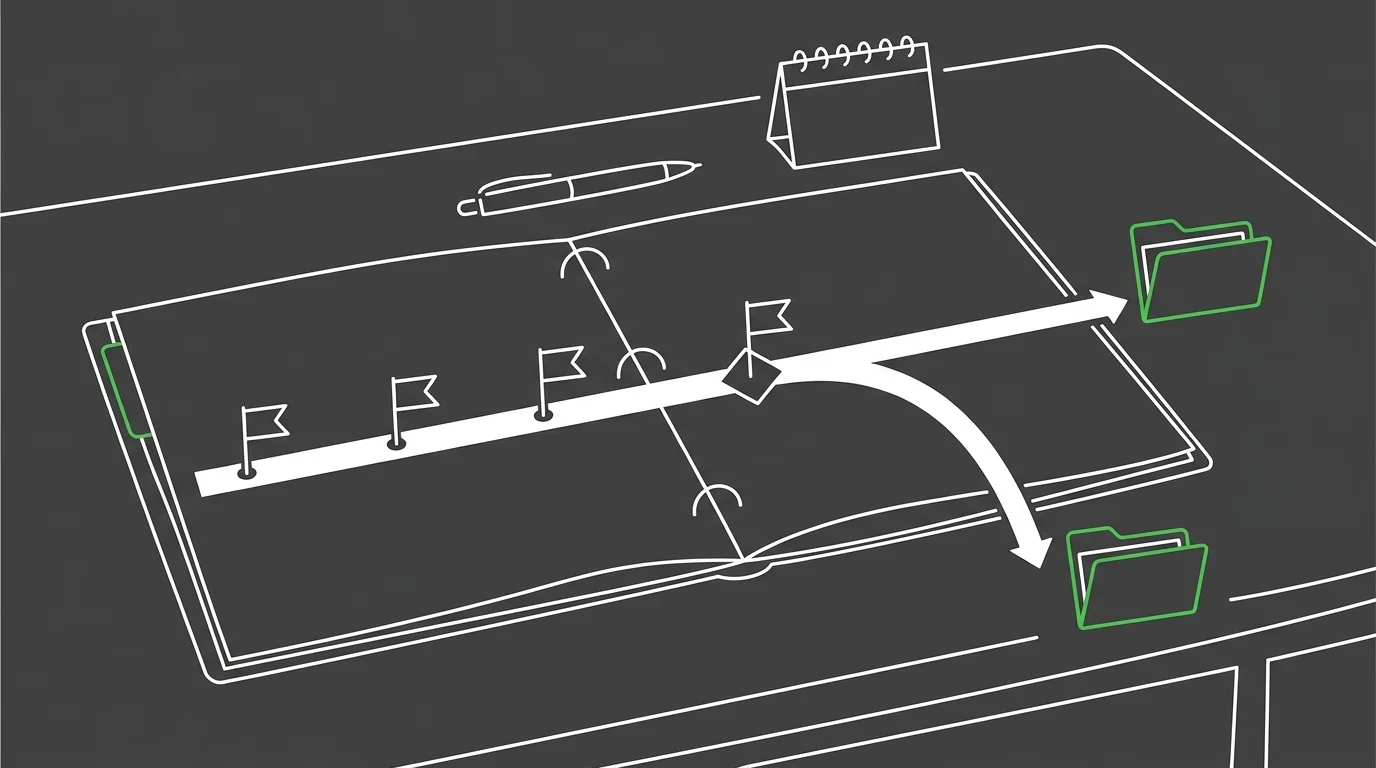
A treatment plan is not a formality attached to the note. It is the timeline a reviewer measures every visit against.
That short-term window is what forces a reassessment before the plan drifts. According to published government guidance, a compliant initial plan of care for a musculoskeletal condition should not exceed 4 weeks in duration. Run longer than that without re-justifying the care, and the plan reads as unmanaged instead of deliberate.
| Plan Stage | Maximum Duration | Required Documentation |
|---|---|---|
| Initial Plan of Care | Defined short-term window before reassessment | Stated goals of care, treatment frequency and duration, and regional exam findings tied to the chief complaint |
| Reassessment Point | Triggered when the initial window closes, not left open-ended | Updated functional measurement compared against the original goal, with a documented decision to continue, revise, or close active care |
| Continued Active Care | Justified only while objective improvement is still expected | A new or renewed functional deficit, fresh measurable data showing change, and an updated goal supporting further correction |
| Maintenance Category | Not bound to a corrective timeline because no further objective gain is expected | A documented shift in clinical status showing stability, separating the record from active-care coding going forward |
Documenting the Shift From Active Care to Maintenance
Care does not stay active forever, and documentation has to mark the moment it changes. Once a patient's clinical status stabilizes with no further objective improvement expected, continued manipulative treatment becomes maintenance therapy, not corrective care.
Medicare does not cover that maintenance category. According to a Medicare chiropractic fact sheet, once a patient's clinical status has remained stable for a given condition without expectation of additional objective clinical improvements, further manipulative treatment is considered maintenance therapy and is not covered. A note that keeps billing active-care codes past that point is not describing ongoing progress. It is describing a plan that never got re-justified against the timeline it was supposed to hold.
Frequently Asked Questions
The architecture holds up on paper. Applying it to a real chart raises mechanical questions fast, so here are the ones that come up most.
What is the difference between documenting for an acute subluxation versus a chronic condition?
Acute documentation ties fresh exam findings to a recent onset, showing why active correction is justified now. Chronic documentation still needs those same regional findings, but it has to show ongoing objective change, not just a standing diagnosis.
How do I correctly use the AT modifier to prevent an automatic denial from Medicare?
The AT modifier tells Medicare the visit was active corrective treatment, not maintenance. Attach it only when the note itself proves active treatment through a regional finding and a functional deficit still being corrected. A note without that proof gets flagged even with the modifier attached.
What are the most commonly accepted Outcome Assessment Tools to prove functional improvement?
Standardized tools like the Neck Disability Index and the Oswestry Disability Index turn a patient's functional complaint into a number that can move across visits. That number is what lets a reviewer verify progress instead of taking a pain description at face value.
Can the P.A.R.T. framework be used for claims with commercial payers, or is it strictly for Medicare?
The P.A.R.T. framework was built around Medicare's language, but its logic isn't Medicare-specific. Commercial payers want the same throughline: a regional finding connected to a functional deficit connected to measured change. Using it for commercial claims strengthens the note either way.
If a patient's functional improvement has plateaued, how should I document the transition to maintenance care?
Document the plateau directly. State that objective measures have stopped showing improvement, then shift the plan from active correction to maintenance care going forward. Continuing to bill active-care codes past that point is what turns a plateau into a denial.
How many of the four P.A.R.T. criteria does a note need to demonstrate subluxation?
Two of the four. One of those two has to be asymmetry or misalignment, or a range of motion abnormality. A note missing that specific pairing hasn't met the standard, no matter how many other findings it lists.
Where This Leaves Your Documentation
Clean claims were never a software problem. They were a storytelling problem, and the story either holds together or it doesn't.
A reviewer reading a chart is looking for one throughline: chief complaint, regional finding, functional change, resolved. Notes that skip that sequence leave the reviewer to guess, and a guess rarely lands in the provider's favor. Rebuilding documentation around that throughline is the only durable answer to the denial pattern this article has traced.
That standard is peer-to-peer, not a checklist a generalist service can bolt on after the fact. So if your notes need to read the way a reviewer actually reads them, book a call with Bushido Billing.