

How to Spot a Timely Filing Deadline Before It Expires
Learn where the Medicare filing clock starts, which exceptions extend it, and three steps that keep chiropractic claims ahead of timely filing deadlines.
To prevent timely filing denials, age each claims queue from the earliest filing deadline that applies, not from the day staff last touched it. Move claims up to a higher level of attention before they enter the final filing window, and keep acknowledgement files in an archive you can search. In general, the 12 month timely filing period for Medicare starts on the date of service or the “From” date on the claim. When a claim is denied for timely filing, do not use the date someone created the claim as proof you filed on time. A practice needs evidence that the payer, or the clearinghouse the payer named, accepted the submission.
Where the Medicare Filing Clock Starts
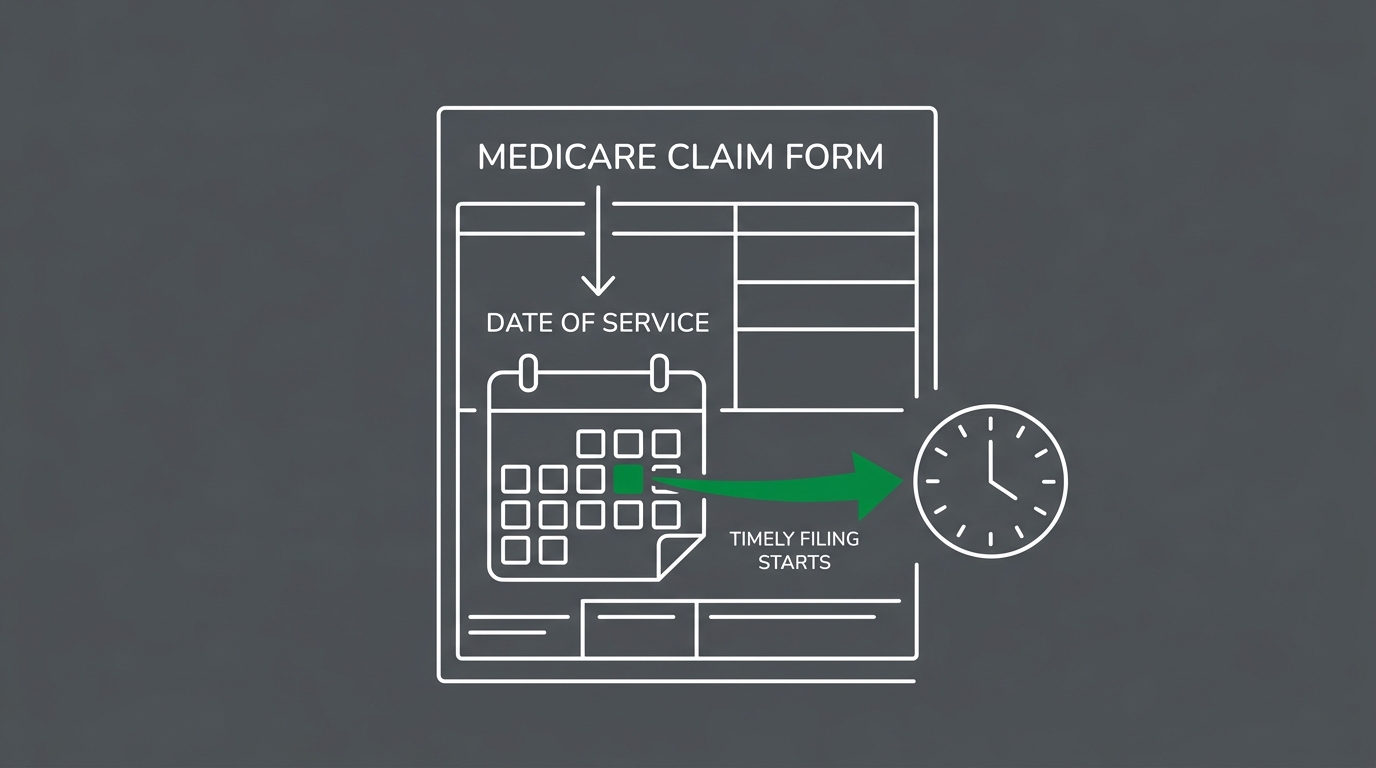
In general, the 12 month timely filing period for Medicare starts on the date of service, or the “From” date on your claim.
There’s one edge case to know. If your date of service is February 29, you need to file by February 28 of the next year for the claim to count as filed on time.
Both rules come from the Medicare Claims Processing Manual transmittal: timely filing (ACA 6404) from the Centers for Medicare & Medicaid Services (CMS). For the limits other payers set, read Timely Filing Limits by Payer: What Chiropractic Clinics Must Track.
What Counts as Filed for Medicare

Under Medicare, sending each claim to the right Medicare contractor is your job. Check the contractor before you send.
If a claim gets re-routed, Medicare regulations don’t treat what you submitted as a claim until the right Medicare contractor receives it. CMS sets this out in the Medicare Claims Processing Manual transmittal: timely filing (ACA 6404).
Medicare Exceptions That Extend the Deadline
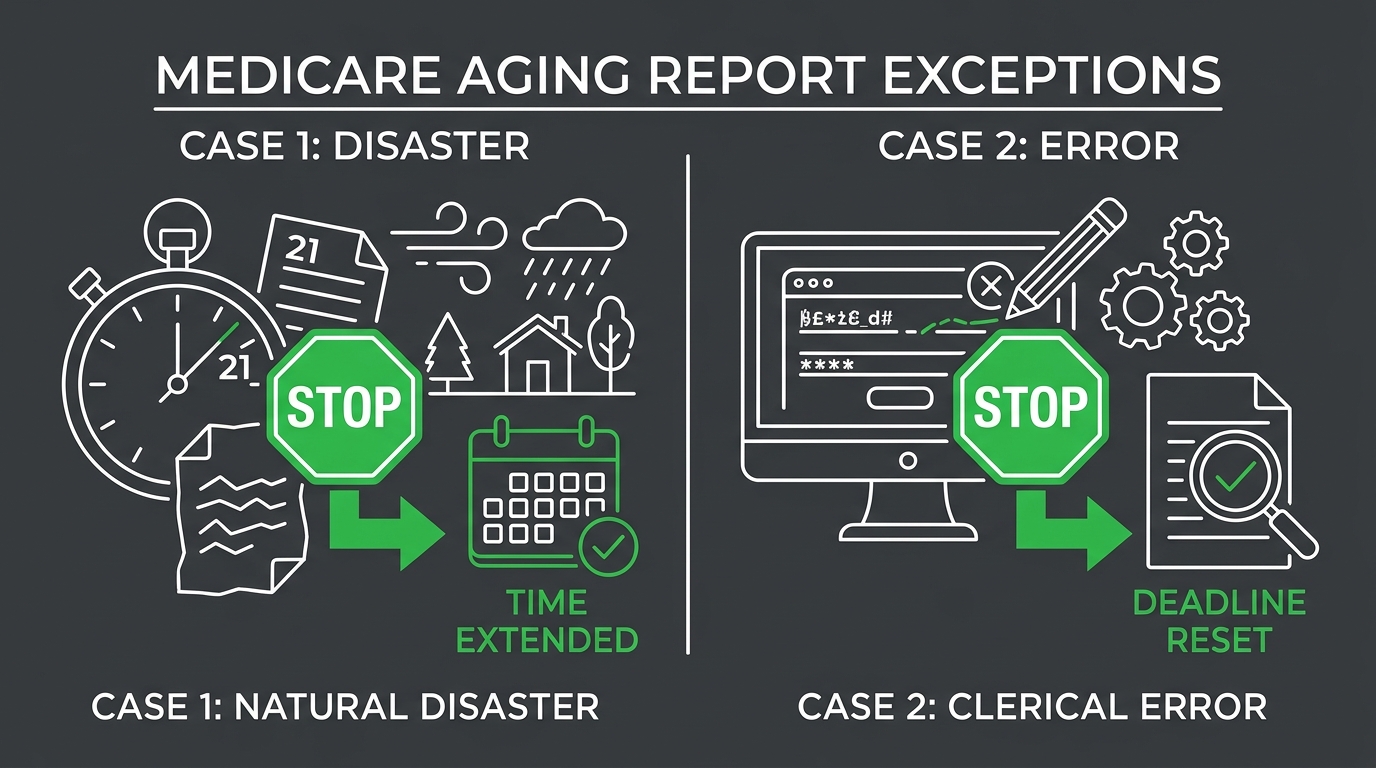
Two cases can give you more time. In both, Medicare contractors must extend the 1 calendar year timely filing limit through the last day of the sixth calendar month. You count that month from the month the notice arrived.
A Corrected Error or Misrepresentation
The first case is an error or misrepresentation that was corrected. Your extra time runs through the last day of the sixth month after the month in which the patient, or you as the provider or supplier, got notice of the correction.
Retroactive Entitlement
The second case is retroactive entitlement. Entitlement means the right to Medicare coverage. If the notice of entitlement reaches back to or before the date of the service, the same extension applies. It runs through the last day of the sixth month after the month in which the patient, or you as the provider or supplier, got that notice.
Both rules are in the Medicare Claims Processing Manual transmittal: timely filing (ACA 6404). Keep the notice with the claim, along with the month it arrived.
Medicaid Timing Traps: Receipt Dates, Medicare Crossovers and Retroactive Eligibility
How Medicaid Dates Receipt
Under the federal Medicaid rule, the date of receipt is the date the agency gets the claim, as shown by the agency’s date stamp on the claim. Daily eCFR publishes the rule as 42 CFR 447.45 Timely claims payment.
The Extra Window After a Medicare Decision
If your Medicare claim was filed on time, the Medicaid agency may pay a Medicaid claim for the same services within 6 months after the agency or you get notice of what happened with the Medicare claim. Keep that notice.
Retroactive Eligibility and the Paper Trail
A federal regulation, 42 CFR 435.915, requires the state agency to make Medicaid eligibility effective no later than the third month before the month of application. That holds only if the person got a covered service in that time and would have qualified had they applied then.
The Medicaid Timely Filing and Retroactive Eligibility Issues article from the Health Law Alliance adds that a provider often cannot bill until the state’s system shows active coverage for the retroactive period. That notice can come close to, or after, the 12-month filing deadline.
The Health Law Alliance also notes what happens without the underlying eligibility record explaining the timing. A pattern of claims filed near the deadline or after retroactive eligibility can then be wrongly described as an attempt to beat a closing window. It is really a structural consequence of the state’s own eligibility and filing deadlines.
Warning Signs a Claim Is Headed for a Timely Filing Denial
The first warning sign is a claim with no proof of acceptance. Don’t use the date someone created the claim as proof you filed on time. You need evidence that the payer, or the clearinghouse the payer named, accepted the submission.
The second sign is a rejected transaction. A rejected claim transaction may never get into the payer’s adjudication system, which is the system that decides how a claim is paid. So the payer may not treat it as received. Kepler Health covers both signs in CO-29 Timely Filing Denials: Build the Proof Before You Appeal.
A claim built in your electronic health record (EHR) isn’t a claim the payer received, and I don’t count it as one. I use EHR software to get claims out the door.
Denials, appeals and the chase for unpaid accounts stay with a person. I don’t trust any tool to make those calls well on its own.
Three Steps That Keep Claims Ahead of the Deadline
Kepler Health gives three steps to prevent timely filing denials.
- Age each claims queue from the earliest filing deadline that applies. That means counting how old its claims are from that date. Don’t count from the day staff last touched it.
- Escalate before the final window. Move claims up to a higher level of attention before they enter the final filing window.
- Keep acknowledgement files in a searchable archive.
Software tracks the dates for me, and a skilled person handles every escalation. I’ll automate routine, error-free work. But when an at-risk claim needs a call, like showing why care was medically necessary or writing an appeal that fits the denial, a person takes it. Tech gets a real role, just a limited one. For a way to sort your unpaid claims, see How to Triage a Chiropractic AR Aging Report.
Building the Appeal When the Deadline Was Met
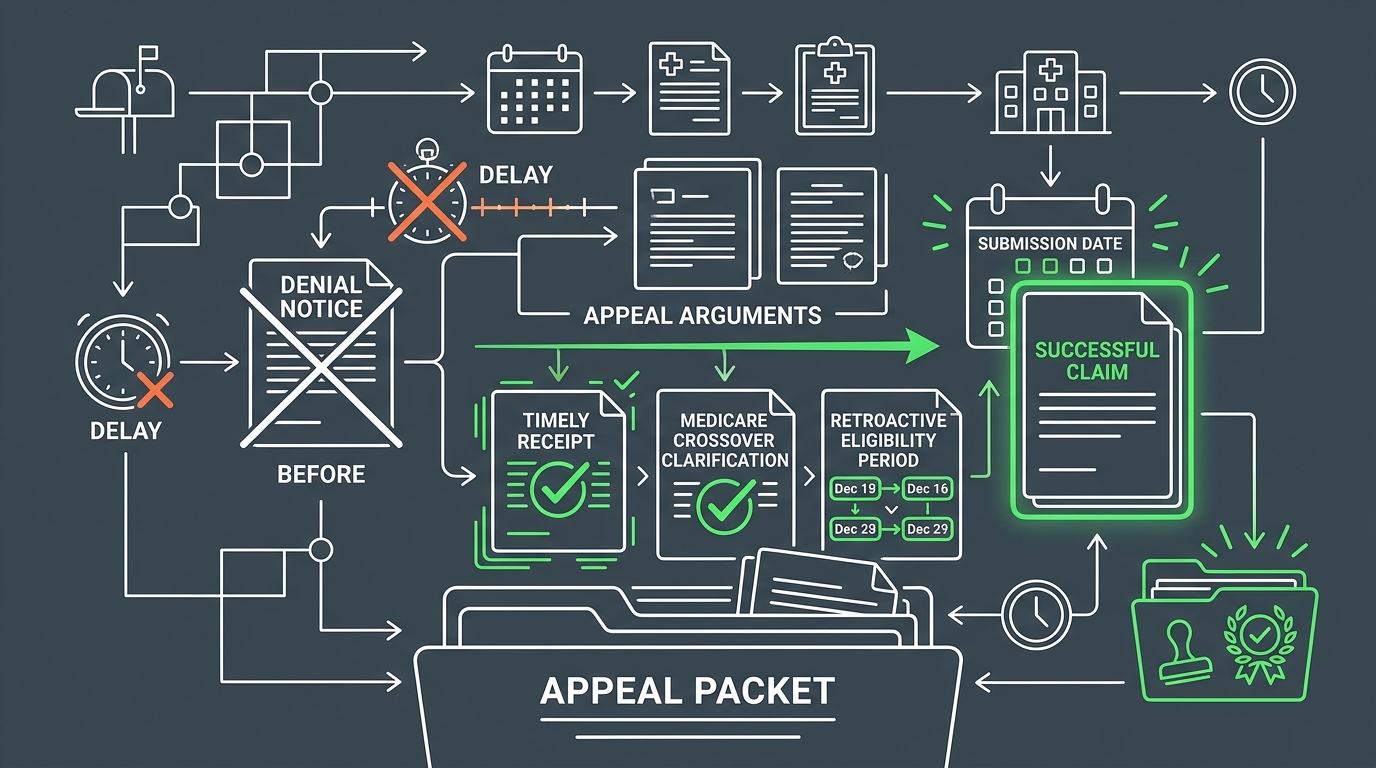
Not all proof is equal. A batch report kept in your own office can show you meant to send the claim. An acknowledgement, a payer acceptance report, a portal history, or a claim-control number is stronger evidence.
Next, build a timeline. Check whether retroactive eligibility, coordination of benefits, or payer error creates an exception. Coordination of benefits is how payers share the bill when a patient has more than one.
Then attach the acceptance report or acknowledgement, the payer claim-control number, the eligibility or coordination of benefits evidence that applies, and the history of corrected claims.
Some denials shouldn’t be appealed. If no timely submission exists and no exception applies, an appeal may not be justified.
The table lines up each appeal item with what it shows.
| Appeal item | What it shows |
|---|---|
| Acknowledgement or payer acceptance report | Stronger evidence than a local batch report, which can show intent |
| Payer claim-control number and corrected-claim history | Items to attach to the appeal |
| Retroactive eligibility, coordination of benefits or payer error | Check whether it creates an exception |
| No timely submission and no exception | An appeal may not be justified |
I count a deadline as met only when the claim pays. A sent claim isn’t the finish line. The job is done when money lands in your practice’s account, and I judge billing by collections, not by activity or claims sent.
Kepler Health’s CO-29 Timely Filing Denials: Build the Proof Before You Appeal covers the appeal proof in more detail. For older unpaid claims, read Resolving Aged Chiropractic Insurance Balances: A Complete Guide. You can also see how the work is done on our Medical Billing Services page.
Frequently Asked Questions
Has Medicare’s filing window always been this short?
No. Before the Affordable Care Act became law on March 23, 2010, a Medicare provider or supplier had from 15 to 27 months to file a timely claim, depending on the date of service.
Can a Medicaid claim be denied for late filing even with solid documentation?
Yes. A missed deadline is a basis for denial no matter whether the service was medically necessary or properly documented. Good notes don’t fix a late claim.
What is a clean claim under Medicaid, and how fast must it be paid?
Under federal Medicaid rules, a clean claim is one that can be processed without getting more information from the provider of the service or from a third party. The Medicaid agency must pay 90 percent of all clean claims from practitioners within 30 days of the date of receipt. That covers practitioners in individual or group practice and those who practice in shared health facilities.
Does an incomplete or wrong-format Medicare submission count as filed?
No. If a submission is not complete and does not follow the instructions, Medicare’s electronic claims system will not accept it. It does not count as filed when deciding if you filed on time. Check each claim for completeness before you send it, and confirm it was accepted.
Spot the Date, Then Act Early
You spot a deadline by aging each queue from the earliest filing deadline that applies. You act on it by escalating the claim before it enters the final filing window, with acknowledgement files kept where you can find them.
At Bushido Billing, a human-led team keeps that watch. We do full-service insurance billing for chiropractic and allied health practices, including cleaning up unpaid insurance claims and fixing and appealing denied claims.
When a claim is at risk, I tell you early. I’d rather raise a problem now than stay quiet and let it grow into a cash flow emergency, so those early notes go in your weekly update.
Want a team watching your filing dates every week? Book a Call and we’ll walk through your claims together.