

Building a Standing Workflow for Chiropractic AR Follow-Up
Build a written AR follow-up playbook for your chiropractic practice: daily denial checks, monthly aging by payer, 90-to-120 day focus and benchmarks.
A standing plan for following up on money owed to you should be written down as a playbook. Staffingly says it “records the bucket-and-payer read cadence, the threshold that trips the alert, how the 90-to-120 window gets worked, and how the over-120 pile is prioritized.” Altair Health says charge lag (the wait before a visit is charged) and new denials belong in a daily review, because each first-pass denial (a claim turned down the first time it is sent) restarts the collection clock and shrinks the window to fix the claim. Staffingly says to read the aging report (the report of how old the money owed to you is) by group (0-30, 31-60, 61-90, 91-120, and over 120 days), then split each group by insurance payer, every single month.
Why Ad Hoc Follow-Up Lets Claims Slip
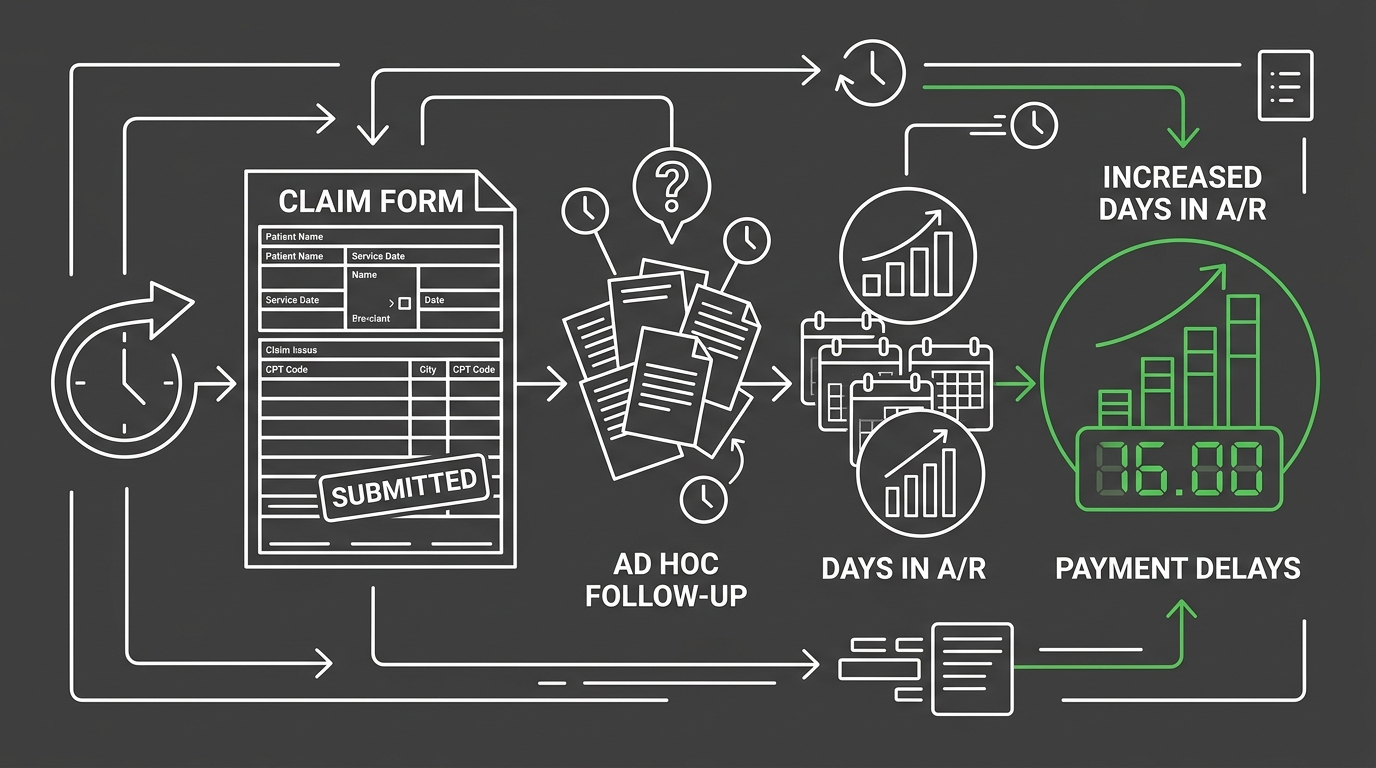
Days in A/R is the average number of days it takes to be paid for a service you gave. A/R means accounts receivable, or money owed to you. hfma.org defines it the same way: the average number of days it takes a provider to be paid for a service provided.
A claim no one works just keeps aging. Altair Health, in Accounts Receivable Metrics That Predict Financial Health, says a denial nobody works has no chance of being paid. It ages past 120 days, and once the appeal window closes, the revenue is lost.
Age matters too. Staffingly, in AR Over 120 Days: What Percentage Is Normal, says, “HFMA-referenced guidance is consistent that the probability of collecting a claim drops well below half once it passes 120 days.” HFMA is the Healthcare Financial Management Association.
I don’t count on EHR software to do this job. It sends claims out the door. I put a person on the denials, the appeals and the unpaid balances, because I don’t trust any tool to do that well on its own. If you already have old balances, read Resolving Aged Chiropractic Insurance Balances: A Complete Guide.
Daily: Charge Lag and New Denials
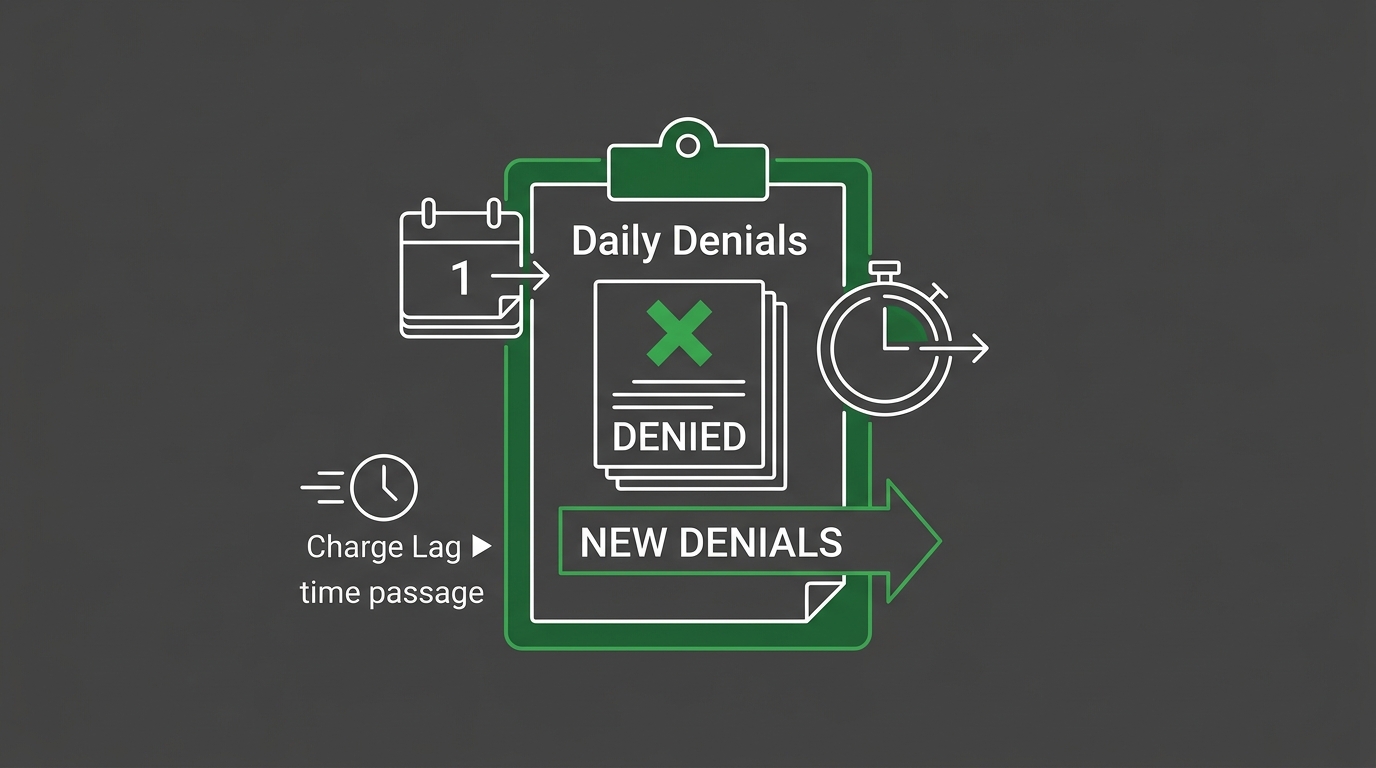
Charge lag and new denials get a look every day. Altair Health says they belong in a daily review. A first-pass denial is a claim turned down the first time it is sent, and each one restarts the collection clock and shrinks your window to fix the claim.
Charge lag is the wait before a visit is charged. The Medical Group Management Association (MGMA) has timing for it. Altair Health says the guidance is for clinicians to close encounters within 72 hours and for staff to post charges within two days.
Monthly: Reading Aging by Bucket and by Payer
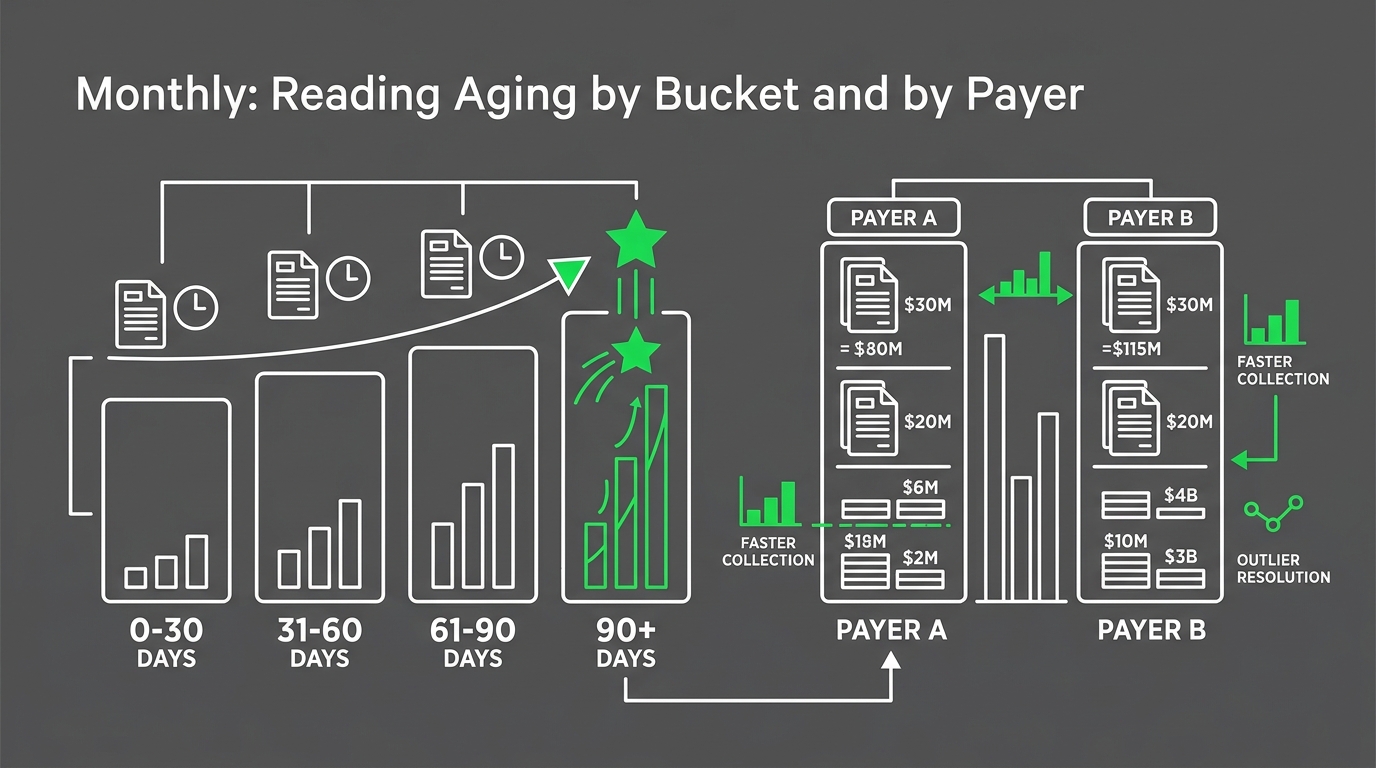
A bucket is a group of unpaid claims of the same age. The buckets are 0-30, 31-60, 61-90, 91-120, and over 120 days. Staffingly says to read your aging report, the report of how old the money owed to you is, by bucket. Then split each bucket by payer, every single month.
Watch how balances move from one bucket to the next. Altair Health says a balance that slides from 30 to 60 days in your aging report can mean a claim nobody followed up on.
The payer split matters because one payer can hide behind a good average. Altair Health gives the example of a practice whose claims average 49.94 days overall while its Medicaid claims average 75 days.
Once you can read the report, How to Triage a Chiropractic AR Aging Report shows you what to do first.
Benchmarks That Show the Workflow Is Working
Targets tell you if your routine is paying off. Net collection rate is the share of what you are owed that you actually collect. The table below lists each metric, its benchmark and where it comes from. HealthCell’s Days In A/R: Formula, Benchmarks, And How To Lower It explains days in A/R in more detail.
| Metric | Benchmark | Source |
|---|---|---|
| Days in A/R | Below 50 at minimum; 30 to 40 preferable | American Academy of Family Physicians (AAFP), via Altair Health |
| Days in A/R, median vs better performers | 47 days for the median practice; 36 for better-performing practices | MGMA 2024 Cost and Revenue Survey, via HealthCell |
| Net collection rate | 95% at minimum; average 95% to 99%; highest performers at least 99% | AAFP, via Altair Health |
| A/R over 90 days | Below 10% of total | HFMA, via HealthCell |
| A/R over 120 days | Healthy target at or under about 10% of total AR; multispecialty median near 13.5% | Staffingly, citing MGMA data |
| A/R by age, multispecialty Better Performers | More than 70% under 30 days; only 8.1% past 120 days | MGMA 2020 data, via Altair Health |
| Denial rate | 5% to 10% industry average; below 5% more desirable | AAFP |
Sending a claim is not the finish line. I count the job done only when money lands in your practice’s account, so I judge billing by what gets collected, not by how many claims went out. That is why net collection rate sits in the table.
Working the 90-to-120 and Over-120 Buckets
Push hardest on the 90-to-120 bucket. Staffingly says, “The move is to work the 90-to-120 bucket hardest, because that is the last window where a claim is still highly collectible.”
Some of your claims will already be past 120 days. For those, Staffingly says to sort the pile by insurance payer, dollar value and denial reason. Then work the ones you can still recover first.
Next, set an alert. Staffingly says, “The move is a hard threshold on the over-120 bucket, at or near 10 percent, that trips an alert the moment the bucket crosses it, long before the days-in-AR average reacts.” You can read more in AR Over 120 Days: What Percentage Is Normal.
The 90-to-120 push, the over-120 sort and the alert are the three moves Staffingly lays out for your aged claims.
Writing the Workflow Down as a Playbook
Your standing plan for following up on money owed to you should be written down as a playbook. Staffingly says it should record how often you read the reports by age group and by payer, the limit that sets off the alert, how you work the 90-to-120 day window, and how you decide which over-120 day claims come first.
That gives you four things to write down:
- How often you read the reports, by age group and by payer.
- The limit that sets off the alert.
- How you work the 90-to-120 day window.
- How you decide which over-120 day claims come first.
What an Embedded Billing Partner Adds to the Workflow
At Bushido Billing, a dedicated biller works with your practice. We say, “Dedicated biller assignment and weekly communication are structural — not optional upgrades.” You can see how the work is done on our Medical Billing Services page.
Weekly communication is our standard practice. Every week, you get a weekly update, a short, easy-to-read report card.
You’ll also get a detailed report showing claims billed, payments posted, outstanding questions, a live link to your insurance accounts receivable (the money insurers owe you), insurance denials and next steps, and the status of both current tasks and finished ones.
We are platform-agnostic. We have confirmed that we work with JaneApp, ChiroTouch, Genesis and Olympus. Our ability to work within any EHR means the practice keeps control of its own infrastructure.
Your dedicated biller and the weekly communication aren’t extras you pay more for. They’re part of how Bushido Billing works.
Some people see regular updates as a nice-to-have. We don’t. Proactive communication is a sign of a billing partner that is working as it should, not a luxury.
Frequently Asked Questions
How is days in A/R calculated?
HealthCell puts it this way: days in A/R (accounts receivable, the money owed to you) is the total money owed to you divided by your average daily charges. Your average daily charges are your gross charges over the last 90 days, divided by 90. Gross charges are the full amounts you billed.
Does a Medicare revalidation lapse affect AR follow-up?
The Centers for Medicare & Medicaid Services (CMS) says to send your revalidation application to your Medicare Administrative Contractor (MAC) within 6 months of your due date. That helps you avoid a hold on your Medicare payments and a possible deactivation of your Medicare billing privileges.
Should someone look at the aging report every week?
Yes. Condesa Financial Group says your collections staff should review the aging report weekly, focused on any balance past 30 days. The aging report is the list of unpaid bills by age.
What does a billing partner need from the practice to keep the workflow running?
A minimum level of help from you. Bushido Billing needs access to your electronic health records, quick turnaround on documentation, and providers who are available to answer questions.
That’s the whole list from us: records access, fast documentation and providers who can answer questions.
Run the Routine With a Chiropractic Specialist
Everything above fits in a written playbook: the reports you read, the alert, and how you work the 90-to-120 and over-120 day claims. A chiropractic specialist can help you run it.
Bushido Billing handles insurance billing for chiropractic practices. We also offer a service we call cleanup and recovery, plus staff billing training. Every week, you get a weekly update. Want to see how we would run this routine for your practice? Book a Call