

Why Do PI Liens Take Longer to Settle Than Standard Chiropractic Claims?
Personal injury liens take longer to settle than standard chiropractic claims because they aren't insurance claims.
Standard claims submit, adjudicate, and pay. PI liens wait for a legal settlement that won't happen until the patient reaches maximum medical improvement (MMI), fault is determined, and all parties negotiate a final payout.
The timeline can stretch from a few months to well over a year. If the case goes to trial, it extends to two years or more.
But the delay isn't just the legal process.
It's also a structural failure in how PI liens are handled by volume-first billing companies.
These claims require proactive follow-up, direct communication with attorneys, and documentation linking every treatment to medical necessity. That work doesn't fit into a high-throughput billing model.
So the lien sits. It ages. And the practice assumes someone's working it.
A medical lien is a legal claim that ensures the provider gets paid from the settlement proceeds. But only if someone manages it through every phase — from treatment to MMI, MMI to demand, negotiation, and settlement or trial.
Most billing companies de-prioritize PI liens because they cost more to work than they're worth in a volume model.
That's not a legal delay. That's a process failure.
Last Updated: May 23, 2026
- What Makes a Personal Injury Lien Different from a Standard Insurance Claim?
- How Long Does a PI Lien Actually Take to Settle?
- Why Volume-First Billing Models Abandon PI Liens
- How Specialty Billing Prevents PI Lien Abandonment
-
Frequently Asked Questions
- What is the average timeline for a chiropractic PI lien to settle?
- How does a chiropractor's documentation impact the PI settlement time?
- What are the key differences in process between a PI lien and a standard insurance claim?
- Why is direct communication with the personal injury attorney so critical for lien recovery?
- How can our practice avoid PI claims being de-prioritized or abandoned by a generalist billing company?
- The Real Cost of Waiting
What Makes a Personal Injury Lien Different from a Standard Insurance Claim?
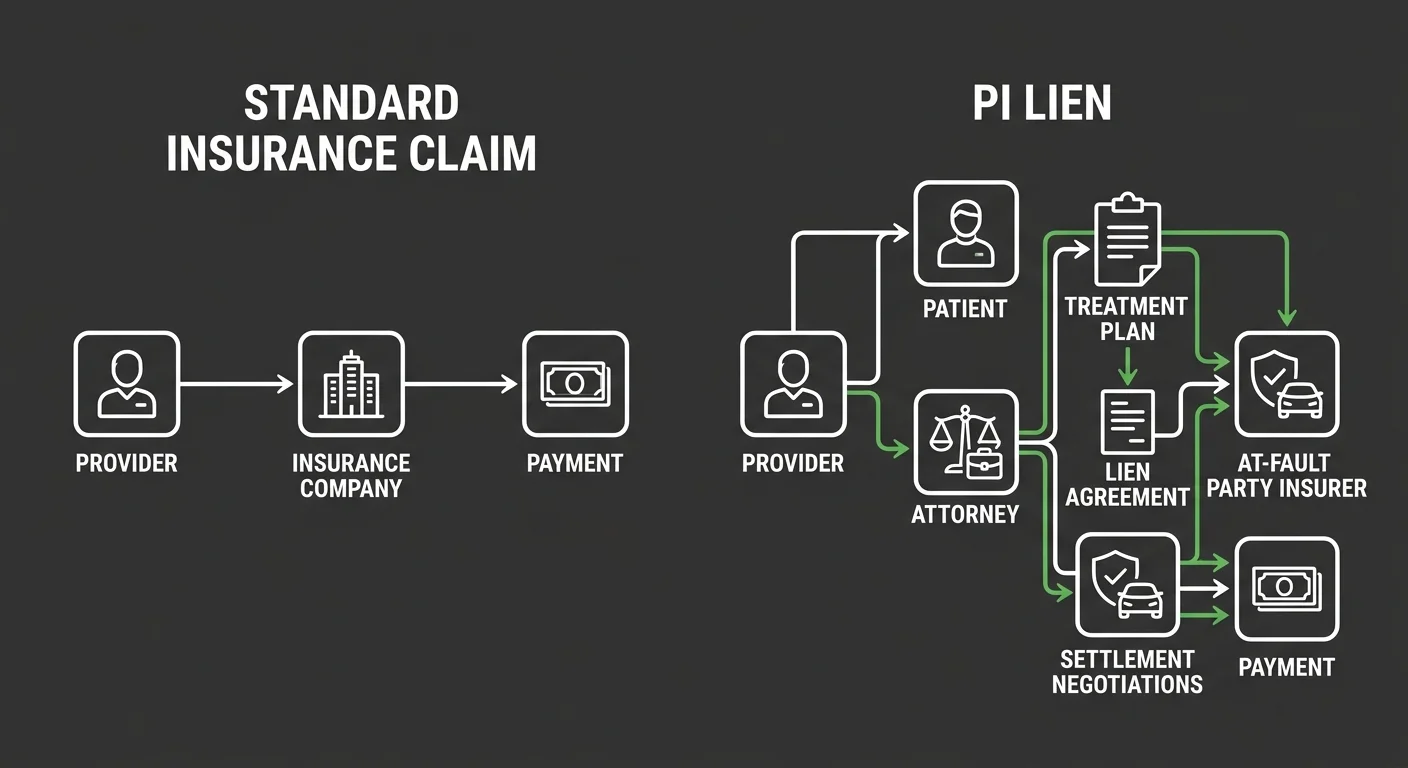
Standard chiropractic claims follow a predictable path. You submit. The payer adjudicates. You get paid or you appeal.
A PI lien doesn't follow that path. There's no payer on the other end waiting to process anything. There's a legal case. Your payment doesn't exist until that case settles.
Third-Party Liability
Standard insurance claims are first-party. The patient's insurance pays for the patient's treatment. Fault doesn't matter. Coverage is the only question.
PI liens involve third-party liability. Someone else caused the injury. That party's insurance is responsible. Proving fault happens in a legal process, not a claims process.
That's the structural difference. You're not waiting on a payer. You're waiting on a settlement. And settlements don't run on billing timelines.
No Real-Time Adjudication
When you submit a standard claim, you get an answer. Paid, denied, or pending. The feedback loop is fast.
PI liens don't adjudicate in real time. The attorney negotiates the total settlement with the at-fault party's insurer. Your lien is a line item in that negotiation. You don't know what you're getting paid until the entire case resolves.
There's no denial to appeal. No EOB to review. Just silence. And that silence can last months or years while the case moves through its phases.
Documentation Requirements Are Higher
Standard claims need documentation that satisfies coverage policies. PI liens need documentation that satisfies a legal standard. Every treatment has to be defensible in front of an adjuster or a jury.
Opposing counsel will challenge medical necessity arguments. They'll argue overtreatment. They'll question whether the injury from the accident actually required the care you provided. Your documentation has to hold up under that scrutiny.
That's a higher bar than "covered under the patient's plan." It's a different kind of work. And most billing companies aren't structured to do it.
| Claim Type | Payer | Adjudication Timeline | Documentation Standard | Denial Appeal Process |
|---|---|---|---|---|
| Standard Insurance Claim | Patient's health insurance carrier — first-party coverage | Days to weeks — payer adjudicates and issues payment or denial | Must meet payer's coverage policies and medical necessity criteria | Direct appeal to the insurance carrier with additional documentation or medical records |
| Personal Injury Lien | At-fault party's liability insurance — third-party settlement proceeds | Months to years — payment occurs only after case settles or goes to trial | Must satisfy legal standard — defensible against opposing counsel's challenge of medical necessity and causation | No formal denial process — attorney negotiates total settlement amount, and lien is a line item in that negotiation |
How Long Does a PI Lien Actually Take to Settle?
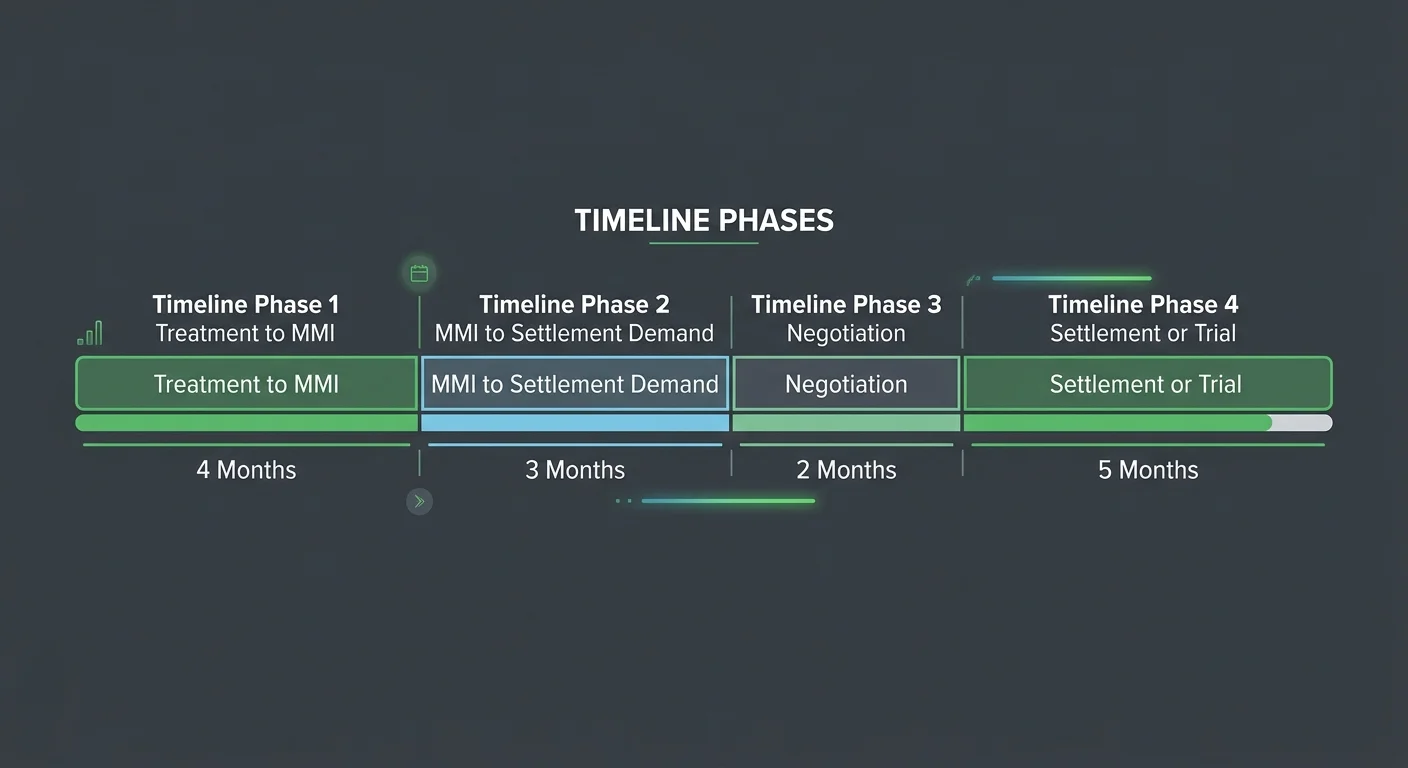
The timeline depends on the legal case — not the billing company.
Straightforward PI cases settle three to nine months after treatment ends. Complex cases stretch longer.
If the case goes to trial, you're looking at one to two years or more.
But here's what that timeline doesn't tell you.
How much of the delay is the legal process — and how much of it is your billing company doing nothing?
Most practices assume the wait is unavoidable. The legal timeline is real. The billing timeline — the months the lien sits unworked while someone should be coordinating with the attorney — is a process failure.
The Legal Timeline: MMI to Settlement
Settlement negotiations can't begin until the patient reaches maximum medical improvement (MMI).
That's the point where the injury has stabilized and the full extent of damages can be calculated. Before MMI, the attorney doesn't know what to demand. The at-fault insurer doesn't know what to offer.
Your lien exists during this phase. But you're not getting paid yet.
The attorney knows you treated the patient. The opposing counsel knows your lien is part of the total claim.
But your payment doesn't show up until the entire case settles.
Once the patient hits maximum medical improvement (MMI), the attorney sends a settlement demand to the at-fault party's insurer.
Then negotiations with insurance adjusters begin. That process takes weeks or months. Each side argues over liability, damages, and medical necessity.
If the parties don't agree, the attorney files a lawsuit. That adds more time.
Discovery, depositions, motions — all of it happens before the case either settles or goes to trial. The statute of limitations for personal injury creates a deadline, but it doesn't speed up anything inside that window.
The Billing Timeline: What Happens While the Case Is Pending
While the legal case moves forward, your billing company should be doing three things.
Confirming your lien is on file with the attorney. Verifying that your documentation supports every treatment you provided. Maintaining regular contact so you know the case status.
Most billing companies don't do any of that.
They file the lien. Then they wait.
No proactive follow-up. No documentation review. No communication with the attorney's office to confirm the lien amount is accurate or that the case is moving forward.
So the lien sits. Months pass. And the practice assumes someone's working it.
They're not.
That's the billing timeline failure. The case settles in under a year, but if your billing company never confirmed the lien, you won't see a dollar.
When Cases Go to Trial
If the case goes to trial, the timeline extends to one to two years or more.
Trials add discovery, depositions, motions, and court scheduling delays. Some cases take longer.
That's the longest path. And it's the path where most billing companies give up entirely.
They're not set up to track a claim for two years. They're not staffed to maintain attorney relationships through that kind of timeline.
So the lien sits. Not because the case was unwinnable. Because the billing company abandoned it.
| Timeline Phase | Duration | Key Activities | Billing Partner Role |
|---|---|---|---|
| Treatment to MMI | Weeks to months | Active treatment, documentation of medical necessity, patient reaches maximum medical improvement | File lien with attorney, verify documentation links every treatment to the accident |
| MMI to Settlement Demand | Weeks | Attorney calculates total damages, submits demand to at-fault insurer | Confirm lien amount is accurate and on file, maintain contact with attorney's office |
| Negotiation | Three to nine months after treatment ends (straightforward cases) | Attorney and at-fault insurer negotiate liability and damages, medical necessity may be challenged | Provide additional documentation if requested, verify lien remains enforceable throughout negotiation |
| Settlement or Trial | One to two years or more if litigation required | Case settles or proceeds to trial, final payout determined, lien paid from settlement proceeds | Track case status through trial if needed, coordinate with attorney to ensure lien is paid at settlement |
Why Volume-First Billing Models Abandon PI Liens
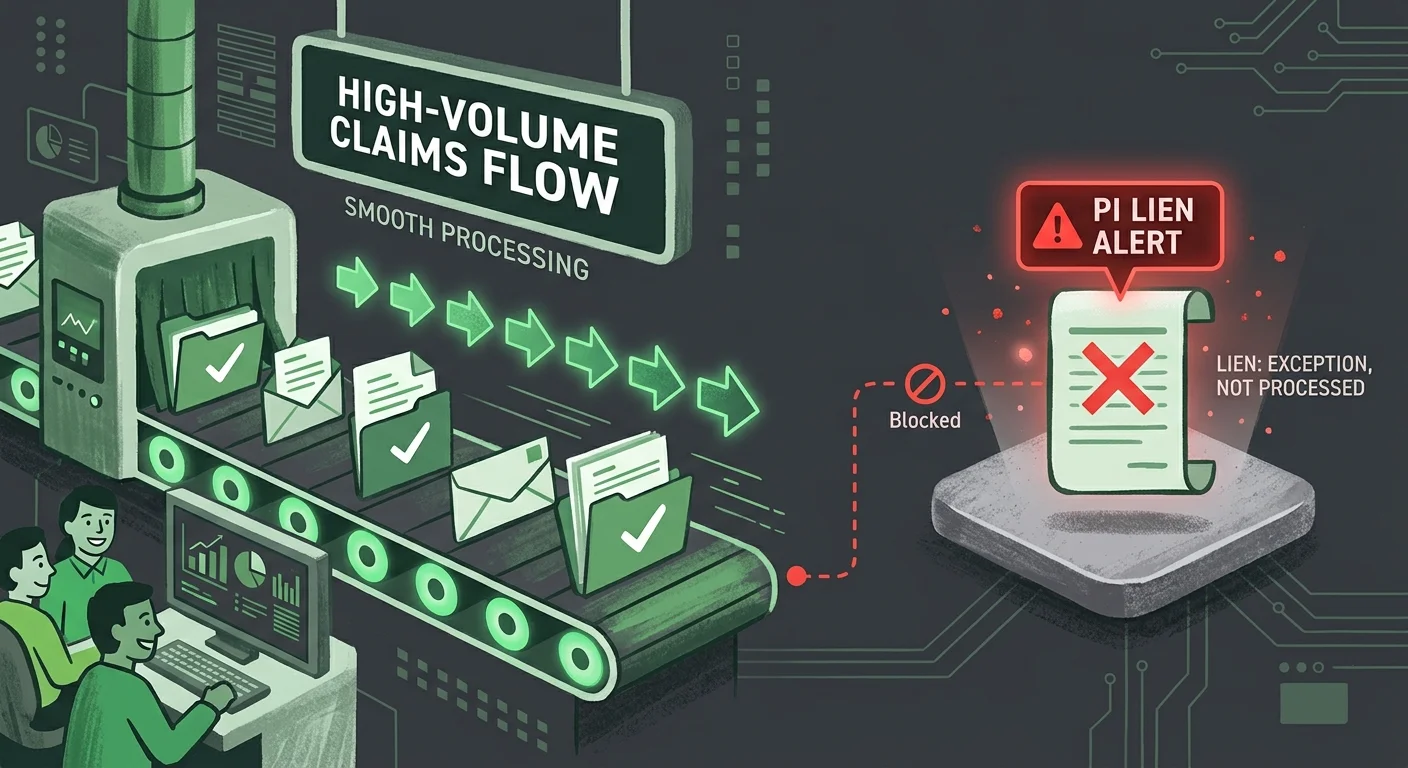
Here's the part most practices don't see.
The settlement delay is real. But the revenue loss is a billing failure, not a legal one.
Volume-first billing companies measure success by claims submitted per hour. Not by revenue recovered per claim.
PI liens break that model.
They demand proactive follow-up, attorney coordination, and documentation review that can span months or years. That work costs time. And in a volume model, time spent on one high-friction claim is time not spent submitting ten easy ones.
PI Liens Don't Fit the Volume Model
Standard chiropractic claims reward speed. Submit the claim, get it adjudicated, move on. The faster you process, the more revenue you generate.
PI liens don't reward speed. They reward persistence.
You can't rush the legal timeline. What you can do is stay engaged with the attorney, verify the lien is accurate, and confirm your documentation supports every treatment.
That's not fast work. It's careful work.
Volume-first billers aren't staffed for careful work. They're staffed for submission velocity.
So PI liens sit. Filed once, then forgotten.
The practice assumes the billing company is managing it. The billing company assumes the attorney will handle it. And months later, the lien has aged past the point where anyone remembers to follow up.
No Immediate Payment Means No Immediate Priority
Standard chiropractic claims pay within weeks. That immediate cash flow makes them high-priority in any billing operation.
PI liens don't pay until the case settles. That might be months away.
In a volume model, a claim that won't pay for six months isn't worth the same attention as a claim that pays next week. So it gets deprioritized.
The billing company moves on to claims that generate immediate revenue. The PI lien sits in the system, technically active, but no one's working it.
No one's calling the attorney. No one's verifying the lien amount matches the final bill.
And when the case settles, the lien is either missing from the settlement statement or the amount is wrong. That's not a legal delay. That's abandonment.
The High-Touch Work Gets Skipped
PI liens demand direct communication with the personal injury attorney's office. You need to confirm the lien is on file. You need to verify the lien amount. You need to stay updated on case status.
That's high-touch work.
Volume-first billing companies don't budget for high-touch work. They can't. Their pricing model assumes every claim follows the same automated workflow.
When a claim demands phone calls, emails, and manual documentation review, it breaks the cost structure. So they skip it.
The lien gets filed. Then nothing happens. The practice never hears that nothing's happening because the billing company doesn't communicate proactively. They treat silence as normal.
It's not. It's a red flag that the claim isn't being worked.
The documentation requirements for PI liens are stricter than standard chiropractic claims. Inadequate or poorly structured medical documentation is a primary reason for delays and disputes in personal injury claim settlements.
Every treatment has to be linked to the accident. Every session has to justify medical necessity. That's not a box you check once — it's a review process that happens before the lien is filed and again before the settlement demand goes out.
Volume-first billers don't do that review. They assume the provider's documentation is clean.
And when opposing counsel challenges medical necessity during negotiations, the billing company has no answer. The lien gets reduced or denied. Not because the care wasn't necessary. Because the documentation didn't prove it was.
| Billing Model Priority | Clean Standard Claims | PI Liens | Why the Difference Matters |
|---|---|---|---|
| Speed | High-priority — submit fast, get paid fast, move to the next claim | Low-priority — months-long wait before payment, no immediate cash flow | Volume models optimize for immediate revenue, so slow-paying claims get deprioritized regardless of total value |
| Workflow Fit | Automated submission, standardized documentation, predictable adjudication timeline | Manual attorney coordination, multi-step lien verification, documentation review that spans months | PI liens break the cost structure of automation-first billing operations |
| Communication Required | Minimal — payer sends EOB, billing company responds to denials if they happen | High-touch — ongoing contact with attorney's office to confirm lien status and case progress | Volume billers can't justify the labor cost of proactive communication on claims that don't pay for months |
| Documentation Standard | Must satisfy payer's coverage policies and coding requirements | Must satisfy legal standard — defensible under cross-examination, withstand medical necessity challenges | PI liens require documentation review that most billing companies skip entirely |
| Revenue Recovery Model | Submit claim, chase denial if needed, collect payment within weeks | File lien, maintain attorney relationship, verify settlement inclusion, recover payment at case close | The second model requires human expertise and long-term tracking — neither of which volume models budget for |
How Specialty Billing Prevents PI Lien Abandonment
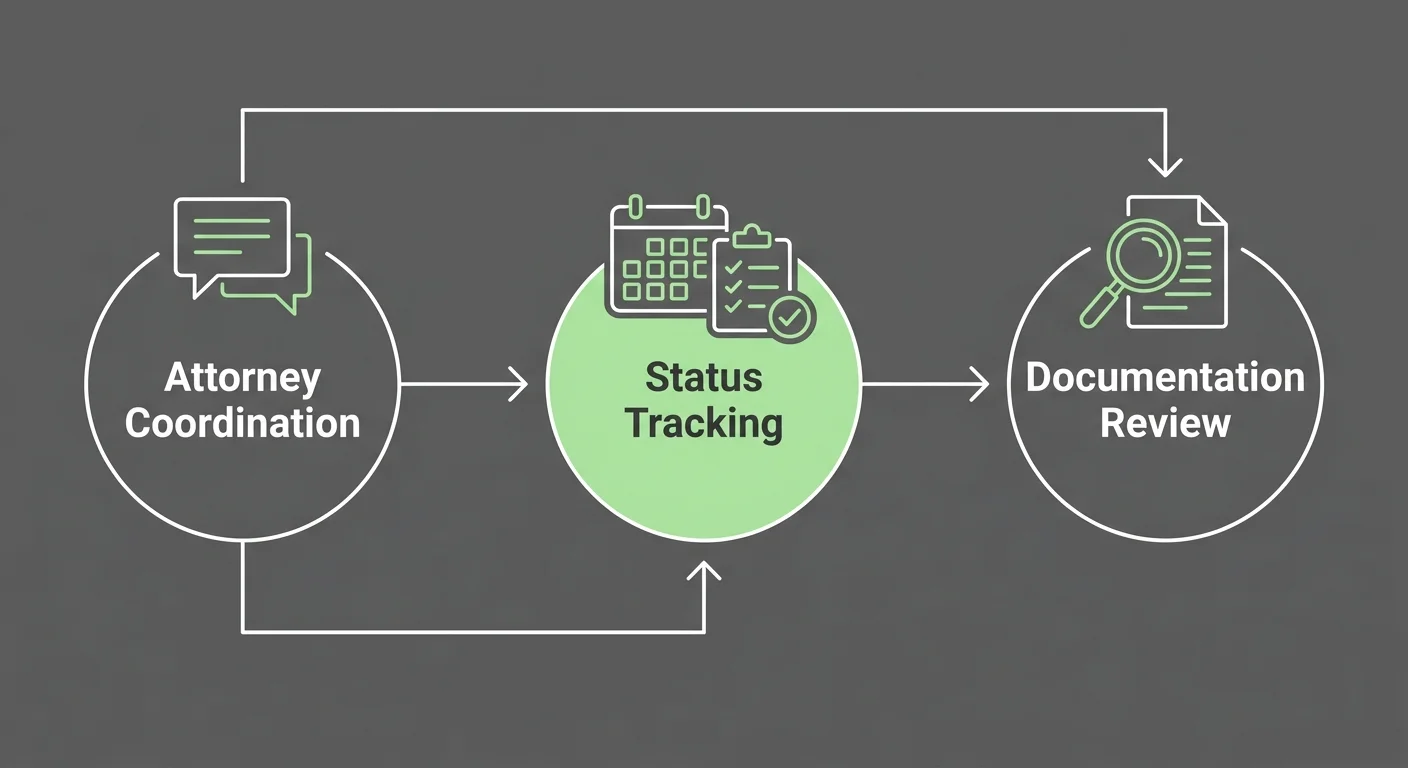
The legal timeline is what it is. But the billing timeline — and whether your lien gets paid — is entirely within your control.
Specialty billing doesn't eliminate the wait. It eliminates the abandonment.
A DC-founded embedded billing partner knows what PI liens require because they've run practices where those liens mattered. They've felt the revenue gap when a lien gets deprioritized. They're not treating your lien as an exception to their automated workflow. They're treating it as the high-value, high-friction claim it is. And they're staffed, incentivized, and structured to work it through settlement.
Direct Attorney Communication
The attorney handling the patient's case doesn't owe you proactive updates. They're working for the patient, not the provider.
If you want to know where the case stands, you ask.
Most billing companies don't.
They file the lien, then wait for the attorney to notify them when the case settles. That's not how attorney offices work. They're juggling dozens of cases. Your lien isn't their priority unless you make it one.
Specialty billing maintains direct communication with the attorney's office throughout the case.
They confirm the lien is on file. They verify the lien amount matches the final bill. They ask about case status, upcoming depositions, and settlement prospects.
That's how you maximize personal injury (PI) lien recovery — not by waiting for someone else to handle it, but by staying engaged until the settlement check clears.
Proactive Status Tracking
You can't control the legal timeline. You can control whether you know what's happening inside it.
Proactive communication means you're updated on case status before you ask.
You know when the patient hits MMI. You know when the settlement demand goes out. You know when negotiations start. You know when the case is close to resolution.
That visibility doesn't speed up the legal process. But it eliminates the months where a claim sits unworked because no one's watching it.
Volume-first billers treat silence as normal. Specialty billing treats it as a red flag.
If a case has been open for nine months and the attorney hasn't responded to status inquiries, that's a problem. And it's one a specialty biller will escalate.
The claim isn't sitting in limbo. Someone's actively working it. That's the difference.
Documentation That Holds Up Under Scrutiny
Opposing counsel will challenge your lien. They'll argue overtreatment, question medical necessity, and look for documentation gaps they can exploit to reduce the settlement amount.
Inadequate or poorly structured medical documentation is a primary reason for delays and disputes in personal injury claim settlements.
Every treatment has to be clearly linked to the accident. Every session has to justify why it was necessary.
If your documentation doesn't make that case, opposing counsel will use it against you. And your lien gets reduced or denied — not because the care wasn't legitimate, but because the documentation didn't prove it was.
Specialty billing reviews your documentation before the lien is filed and again before the settlement demand goes out.
They're not assuming it's clean. They're verifying it can withstand scrutiny.
That review doesn't happen in a volume model. It costs too much time. But it's the only way to protect your lien from challenges that could've been prevented.
The care was necessary. The documentation just has to show it.
Frequently Asked Questions
Here's what practices ask when they're deciding whether to keep PI liens in-house or hand them off to a specialist.
These aren't theoretical.
They're the exact friction points that determine whether your PI lien revenue gets recovered or abandoned.
What is the average timeline for a chiropractic PI lien to settle?
Settlement timelines range from a few months to more than a year. Most straightforward PI cases settle within three to nine months after treatment ends.
That's the legal timeline.
The billing timeline is different. It's whether anyone's working your lien while the case moves.
If your billing company isn't communicating with the attorney's office, your lien sits. The case settles. Your lien doesn't appear on the settlement statement.
That's not a slow legal system. That's a billing process that quit.
How does a chiropractor's documentation impact the PI settlement time?
Documentation decides whether your lien survives opposing counsel's review.
Every treatment has to link to the accident. Every session has to justify medical necessity. If your documentation doesn't make that case, opposing counsel challenges it—and your lien gets reduced or denied.
The impact isn't on timeline. It's on whether you get paid.
Specialty billing reviews your documentation before the lien is filed and again before the settlement demand goes out. Volume-first billing assumes it's clean.
When the documentation fails under scrutiny, the lien disappears. That's a documentation problem that became a revenue problem because no one reviewed it in time.
What are the key differences in process between a PI lien and a standard insurance claim?
PI liens involve third-party liability. That adds fault determination, attorney coordination, and direct negotiation with opposing counsel.
Standard claims follow an automated path. Submit the claim. The payer approves or denies. You appeal if needed.
PI liens don't work that way.
You're not billing the patient's health insurance. You're filing a lien against a future settlement. That means coordinating with the attorney's office, verifying the lien amount, tracking case status, and responding to opposing counsel's challenges.
None of that happens automatically. It requires human follow-up throughout the case.
Volume-first billing models can't sustain it. They're built for claims that resolve in weeks, not months.
Why is direct communication with the personal injury attorney so critical for lien recovery?
The attorney handling the patient's case doesn't owe you updates. They work for the patient, not the provider.
If you want to know where the case stands, you ask.
Most billing companies don't ask. They file the lien and assume the attorney will notify them when the case settles. That's not how attorney offices work. Your lien isn't their priority unless you make it one.
Direct communication means confirming the lien is on file, verifying the lien amount matches the final bill, and staying updated on case status throughout the process.
That's how you protect your lien from being missed or miscalculated when the settlement check clears. Without that communication, your lien sits in the attorney's file—and no one's verifying it made it onto the settlement statement.
How can our practice avoid PI claims being de-prioritized or abandoned by a generalist billing company?
You don't use a generalist billing company.
Volume-first models deprioritize PI liens because they don't pay immediately. The claim that pays next week gets worked. The claim that pays in six months gets filed and forgotten.
That's not a staffing problem. It's structural. Their pricing model can't sustain the high-touch, long-term follow-up that PI liens require.
A DC-founded specialist knows what PI liens are worth because they've run practices where those liens were the difference between profitability and loss.
They're staffed for the follow-up. They're incentivized to work the claim through settlement. And they communicate proactively so you know what's happening at every stage.
That's not an upgrade. That's the baseline for PI lien recovery.
The Real Cost of Waiting
The legal timeline is long. The billing timeline doesn't have to be.
Most practices lose revenue on PI liens not because the case took too long to settle. They lose it because no one was working the lien while they waited.
The claim sat in the system. The attorney moved on to other cases. The billing company assumed someone else was handling it.
And when the settlement finally came through, the lien was either missing or wrong.
That's not a legal delay. That's a process failure.
Here's the callback: the lien sits not because the courts are slow. It sits because no one was working it.
And in a volume-first billing model, that someone never showed up.
You can't speed up the legal system. You can't force opposing counsel to settle faster. You can't control when the patient hits MMI or when the attorney files the demand.
But you can control whether your lien is accurate, whether your documentation is airtight, and whether someone's staying in contact with the attorney's office throughout the process.
That's where specialty billing makes the difference. Not by shortening the timeline — by working inside it.
PI liens take longer because the legal process is complex.
But they fail because the billing process is broken.
Volume-first models can't sustain the kind of high-touch, long-term follow-up that PI liens require. They're not staffed for it. They're not incentivized for it. And they're not built to communicate when a claim isn't moving.
A DC-founded billing partner knows what's at stake. They've lived the cash flow disruption that happens when PI liens don't get recovered.
They're not treating your lien as an edge case in an automated workflow. They're treating it as the high-value, high-friction claim it is. And they're working it until it pays.
The timeline is what it is. The question is whether anyone's working your claim inside it.
You know PI liens are worth the effort. The question is whether your billing company is actually working them — or whether the lien sits while you assume someone else is handling it. A practice assessment shows you which PI claims are sitting unworked, where your lien process breaks down, and what it's costing you in recoverable revenue.
© 2026 Bushido Billing. All Rights Reserved | Web Design by iTech Valet