

How to File a Chiropractic Lien That Insurance Payers Cannot Ignore?
A chiropractic lien is a legal claim against a patient's future personal injury settlement or judgment that secures your right to payment for services rendered. You file it by submitting the required paperwork to the patient's attorney, the at-fault party's insurance carrier, and any other parties with a financial interest in the case. The mechanics are simple. The outcome isn't.
Most chiropractors file the lien document and assume the job's done.
It's not.
Insurance adjusters reduce or challenge liens when the medical necessity isn't clear, the documentation is incomplete, or the provider missed a state-specific deadline. They're hunting for gaps. If your treatment notes don't support every visit you billed, the adjuster cuts it. If you didn't coordinate with the patient's attorney to secure a Letter of Protection, the lien has no contractual backing. If you missed the notice deadline, the lien isn't perfected and the payer can ignore it entirely.
To file a chiropractic lien that insurance payers can't ignore, you need four pillars: Medical Necessity Proof, Compliance with State-Specific Lien Requirements, Coordination with the Attorney's Letter of Protection, and Formal Notice to All Parties. Each pillar reinforces the others. Miss one, and the lien becomes negotiable. Hit all four, and you've created a claim the adjuster can't reduce without exposing the carrier to legal risk.
The difference between a lien that gets paid and one that gets cut isn't the claim form.
It's the documentation strategy behind it.
Last Updated: May 23, 2026
- What Is a Chiropractic Lien and Why Insurance Payers Try to Reduce It
- The Four-Pillar Documentation Strategy That Makes a Lien Defensible
- How to Perfect a Chiropractic Lien Step-by-Step
- Common Mistakes That Make Liens Ignorable—and How to Avoid Them
-
Frequently Asked Questions
- What is the difference between a chiropractic lien and a regular medical bill?
- What are the most common mistakes chiropractors make when filing a PI lien that cause it to be ignored?
- How does a Letter of Protection (LOP) from an attorney strengthen a chiropractic lien?
- Can an insurance company legally reduce the amount paid on a valid chiropractic lien?
- How long does it typically take to get paid on a chiropractic lien after a personal injury case settles?
- What Happens After You File
What Is a Chiropractic Lien and Why Insurance Payers Try to Reduce It

A chiropractic lien is a legal claim against a patient's future personal injury settlement or judgment to secure payment for services rendered. It gives you the right to get paid directly from any settlement, award, or verdict the patient receives.
It's not a courtesy.
It's a legal mechanism designed to ensure you're compensated when the patient can't pay upfront because the at-fault party's insurance hasn't settled yet.
But filing the paperwork doesn't guarantee payment.
Insurance adjusters know most liens are filed by volume-first billers who treat the lien as just another submission. No defense strategy. No documentation rigor. No follow-through.
So they challenge them. They reduce them. They wait for providers to walk away.
The gap between submission and enforcement is where most chiropractic revenue disappears in PI cases.
If your lien can't survive scrutiny from an adjuster trained to minimize payout, you won't get paid—even when the settlement clears.
The difference isn't the form you file. It's the documentation strategy behind it.
Understanding Medical Liens
Medical lien laws are determined at the state level. The requirements for filing, notice, and enforcement vary significantly from one state to another. Some states impose specific statutes of limitations for filing a lien after treatment ends. Others enforce detailed notice requirements you can't skip.
These aren't optional. They're legal prerequisites.
Miss one, and your lien isn't perfected.
Perfecting a lien means taking every formal legal step required to make the lien valid and enforceable against all parties.
That includes filing the correct documents, providing written notice to the patient, their attorney, and the at-fault party's insurance carrier, and meeting your state's deadline.
If any step is skipped, the lien is vulnerable to dismissal. And adjusters know exactly which steps to check.
This is why generalist billing companies struggle with Personal Injury (PI) Lien Billing.
They don't track state-specific lien statutes. They don't monitor filing windows. They submit the form and assume it's handled.
It's not.
Why Adjusters Challenge Liens
Adjusters challenge liens for one reason: they can.
If the documentation doesn't prove medical necessity, they'll argue the treatment was excessive, duplicative, or unrelated to the accident. If the lien wasn't filed correctly, they'll argue it's unenforceable. If the provider didn't coordinate with the attorney, they'll negotiate the reduction behind your back.
Thorough documentation proving medical necessity is the primary defense against attempts by insurance adjusters to reduce or deny a lien. Contemporaneous and detailed S.O.A.P. notes are the evidence that supports every treatment decision you made.
Without them, your lien is just a number on a spreadsheet.
Easy to cut. Easier to ignore.
Volume-first billers don't build medical necessity arguments. They don't have the time, the expertise, or the incentive.
High-friction, high-value claims like PI liens cost more to work than their model allows. So they file the lien, submit the bill, and move on.
When the adjuster sends the reduction notice, there's no one left to fight it.
| Lien Component | What It Does | Why Adjusters Target It |
|---|---|---|
| Medical Necessity Proof | Demonstrates that every visit was clinically justified and directly tied to treating injuries from the accident | Adjusters look for gaps in documentation that allow them to classify visits as maintenance care or overutilization, cutting the bill without challenging the entire lien |
| Compliance with State-Specific Lien Requirements | Ensures the lien is filed within statutory deadlines and follows all procedural rules for the jurisdiction | Missing a filing deadline or notice requirement gives adjusters legal grounds to argue the lien isn't enforceable, eliminating their obligation to pay |
| Coordination with the Attorney's Letter of Protection | Establishes a contractual agreement between the provider and the attorney that the lien will be paid from the settlement | Without an LOP, the adjuster knows there's no binding obligation to honor the lien, making it easier to reduce or ignore |
| Formal Notice to All Parties | Perfects the lien by notifying the patient, attorney, at-fault party's insurer, and any other parties with a financial interest in the case | Incomplete notice allows adjusters to claim they weren't properly informed of the lien, creating a procedural defense against payment |
The Four-Pillar Documentation Strategy That Makes a Lien Defensible
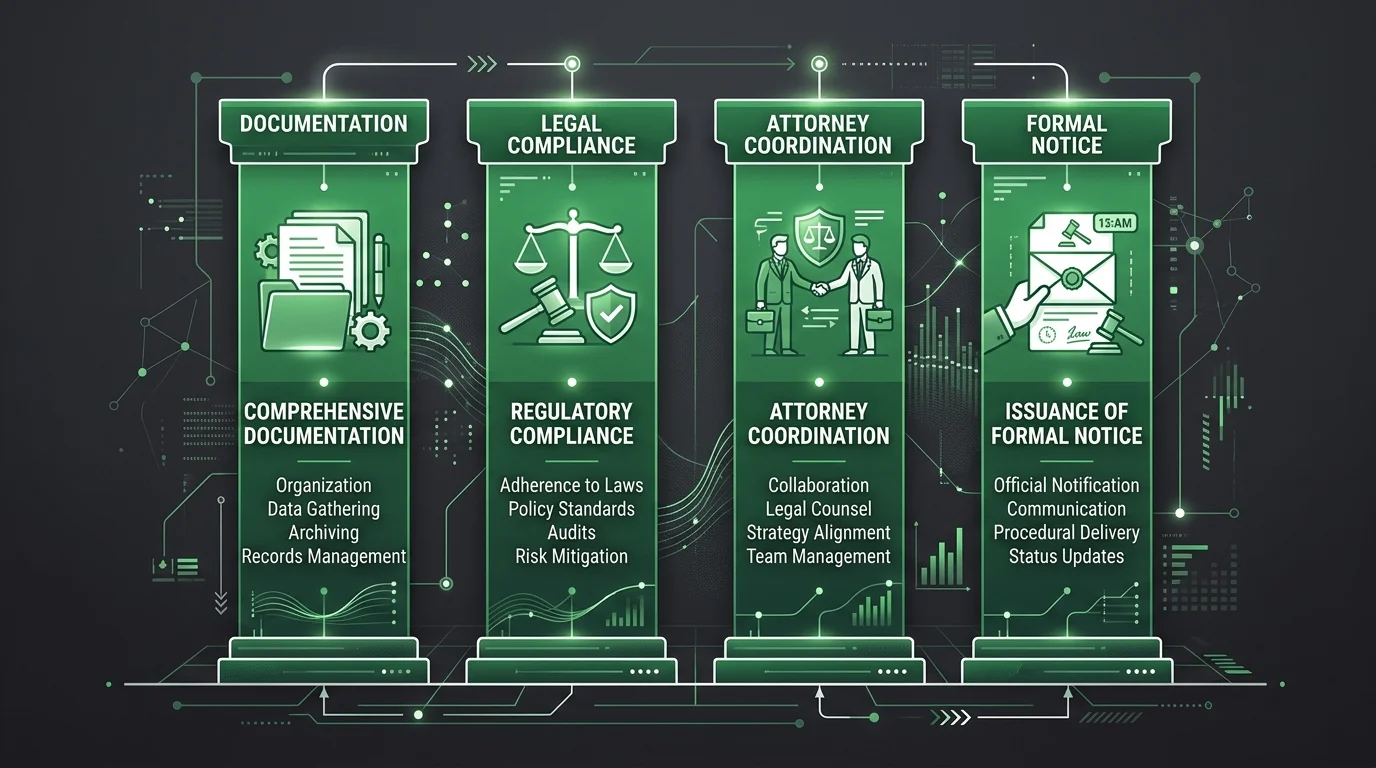
Most chiropractors file a lien and hope for the best.
What actually works is a documentation framework built before the claim is ever filed.
A defensible lien isn't created when you submit the paperwork.
It's built during every patient visit. Every S.O.A.P. note. Every coordination call with the patient's attorney.
The four pillars below aren't a checklist you run through after treatment ends. They're the structure you operate inside from day one.
Miss one pillar, and you've handed the adjuster a way to reduce your claim.
Hit all four, and you've created a lien the carrier can't challenge without exposing itself to legal risk.
Pillar 1: Medical Necessity Proof
Adjusters attack liens on one ground: overutilization.
Every visit you bill must be supported by contemporaneous clinical findings that justify the frequency, duration, and type of treatment.
If your notes don't show objective improvement, functional progress, or a clear rationale for continuing care, the adjuster will argue you overtreated and cut the bill.
Your S.O.A.P. notes are the evidence.
'Contemporaneous' means you're documenting on the same day as the visit — not three weeks later when you're trying to reconstruct what happened.
'Detailed' means you're recording subjective complaints, objective findings, your clinical assessment, and the plan for continued care.
Generic templates that say 'patient improving' don't prove anything. Specific measurements, functional assessments, and documented changes in pain or mobility do.
If you're treating a motor vehicle accident patient for ongoing neck pain and reduced cervical range of motion, your notes need to show baseline measurements at the initial visit, progress at each subsequent visit, and the clinical reasoning for the treatment plan.
The moment your documentation stops showing meaningful improvement or a clear therapeutic goal, you've lost the medical necessity argument.
This is where properly document medical necessity becomes the difference between a lien that's paid in full and one that's slashed.
Volume-first billers don't build this level of documentation rigor because it's time-intensive and doesn't scale across generalist practices.
A DC-founded partner understands that the notes you write today are the evidence you'll defend with later.
Pillar 2: Compliance with State-Specific Lien Requirements
Lien laws vary state to state.
Some jurisdictions have filing deadlines within a specific window after the first treatment date. Others have notice requirements that mandate written notice to the patient's attorney, the at-fault party's insurance carrier, and any health insurer with insurance subrogation rights.
Miss the deadline or skip a required recipient, and the lien isn't enforceable.
Perfecting a lien is the formal process of taking all necessary legal steps to ensure the lien is valid and enforceable.
This includes providing formal written notice to the patient, their attorney, and the at-fault party's insurance carrier.
Miss the deadline or skip a required recipient, and the lien isn't perfected. An unperfected lien is unenforceable.
The carrier knows this. The adjuster will challenge it.
Compliance with state filing requirements isn't a billing task — it's a legal task.
If your billing partner doesn't track the statutory deadlines and notice protocols for every jurisdiction where your patients' cases are filed, you're relying on hope instead of process.
And hope doesn't hold up when the adjuster denies the lien on procedural grounds.
Pillar 3: Coordination with the Attorney's Letter of Protection
A Letter of Protection (LOP) is the attorney guarantees payment for your bill from the future settlement.
It's a contractual agreement that bridges the gap until the case resolves.
It's not a formality. It's the legal foundation that backs your lien and signals to the carrier that the attorney has committed to paying your bill out of the settlement proceeds.
Without an LOP, your lien is just a claim you filed.
With an LOP, it's a contractual obligation the attorney agreed to honor.
That distinction matters when the adjuster is deciding whether to negotiate or pay.
Coordination with the attorney isn't a one-time event.
You need to know when the case is moving toward settlement so you can confirm your lien balance is current and documented. You need to ensure the attorney has your most recent billing and treatment records before negotiations begin. You need to verify that the Letter of Protection (LOP) is still active and reflects the full scope of care you've provided.
If the attorney doesn't have updated information, the lien amount they negotiate on your behalf won't match what you're actually owed.
Pillar 4: Formal Notice to All Parties
Formal written notice to the patient, their attorney, and the at-fault party's insurance carrier isn't a courtesy.
It's the legal trigger that perfects the lien and makes it enforceable.
Notice does two things. First, it informs every party with a financial stake in the settlement that you have a claim against the proceeds. Second, it creates a paper trail that protects you when the carrier later argues they didn't know your lien existed.
Notice must be timely, complete, and compliant with state-specific lien statutes.
Timely means you're sending it within the statutory window — some states require notice within days of the first treatment, others allow more flexibility.
Complete means you're sending it to every required party, not just the attorney.
Compliant means you're following the format and delivery method state law mandates, whether that's certified mail, electronic filing, or another mechanism.
If you treat a patient under a personal injury lien and you don't send formal notice to the at-fault party's carrier, the carrier can argue they had no knowledge of your claim when they issued the settlement check.
That's grounds for denial.
Notice isn't just a procedural step — it's the legal action that makes your lien unignorable. And it has to comply with HIPAA compliance requirements when you're sharing medical records and billing information as part of the lien process.
| Documentation Pillar | Core Requirement | What Happens If Missing |
|---|---|---|
| Medical Necessity Proof | Contemporaneous S.O.A.P. notes documenting objective findings, functional improvement, and clinical rationale for every visit | Adjuster argues overutilization or maintenance care, leading to significant claim reduction or full denial |
| Compliance with State-Specific Lien Requirements | Filing within statutory deadlines and following mandated notice protocols for the jurisdiction where the case is filed | Lien is unperfected and unenforceable—carrier challenges validity on procedural grounds and refuses payment |
| Coordination with the Attorney's Letter of Protection | Active LOP on file and ongoing communication with the attorney to ensure lien balance reflects current treatment scope | Lien treated as an informal claim with no contractual backing—adjuster has no obligation to honor it during settlement |
| Formal Notice to All Parties | Timely, complete written notice sent to the patient, attorney, and at-fault party's carrier per state law | Carrier argues lack of knowledge of the lien and excludes it from settlement distribution—provider loses payment priority |
How to Perfect a Chiropractic Lien Step-by-Step
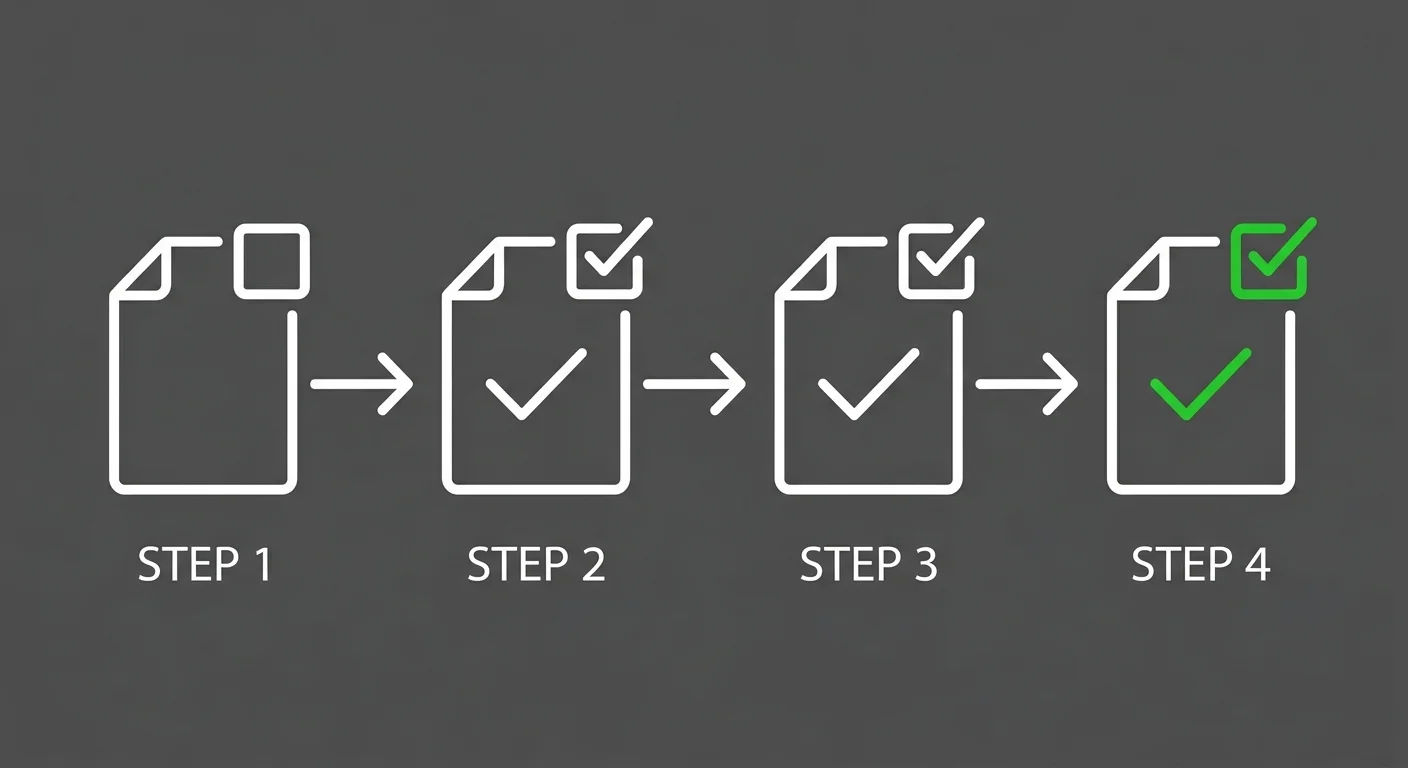
With the four documentation pillars in place, the filing process becomes a series of checkpoints. Not guesswork.
You're not hoping the lien gets paid. You're executing a defensible strategy that eliminates the adjuster's ability to challenge it on procedural or clinical grounds.
Perfecting a lien means taking every legal step required to make your claim enforceable against all parties. That includes formal written notice to the patient, their attorney, and the at-fault party's insurance carrier.
The four steps below aren't optional.
They turn a submitted form into an enforceable legal instrument.
Step 1: Obtain the Letter of Protection
A Letter of Protection (LOP) is a contractual agreement that bridges the gap until a personal injury case is resolved. The patient's attorney guarantees payment for medical treatment from a future settlement.
You don't start treating a PI patient without one. And you don't file a lien without verifying the LOP is current.
The LOP isn't issued by your office. It's provided by the patient's attorney.
Your job is to confirm you've got a signed, dated LOP on file before you begin treatment. The document should specify the scope of care covered, the agreement to pay from settlement proceeds, and the attorney's acknowledgment that your lien will be honored when the case resolves.
No LOP? You're treating on spec. That's not a lien. That's hope.
If the attorney is unresponsive or the LOP is incomplete, don't assume it'll get handled later.
You're building the legal foundation for your lien right now.
A missing or defective LOP gives the carrier grounds to argue there's no contractual obligation to pay you. Get the document before the first adjustment, not after the case settles.
Step 2: File the Lien Document
Filing the lien document is the formal act that creates your legal claim against the settlement. The form, the deadline, and the filing location are all governed by state law.
Some states require you to file with the court where the personal injury case is pending. Others let you file directly with the attorney or the insurance carrier. Some jurisdictions have specific forms. Others accept a general notice of lien as long as it contains the required information.
The required information typically includes the patient's name, the date and location of the accident, a description of the treatment provided, the total amount owed, and a statement that you're claiming a lien against the settlement.
You're also required to attach supporting documentation — itemized billing, treatment dates, and in some cases a summary of the medical necessity for the care provided.
Generic billing summaries don't cut it. You need detail that ties every charge to a documented clinical rationale.
Missing the filing deadline is one of the most common reasons liens fail.
If your state requires the lien to be filed within a certain number of days after the first treatment or after the accident date, and you miss that window, the lien isn't enforceable.
The carrier knows this. The adjuster will check the filing date against the statute. Late? They'll deny it on procedural grounds. No amount of documentation will save it.
Step 3: Provide Written Notice
Providing formal written notice of the lien to the patient, their attorney, and the at-fault party's insurance carrier is the step that perfects the lien and makes it unignorable.
Notice must go to every party with a financial interest in the settlement. That includes the patient, the patient's attorney, the at-fault party's insurance carrier, and in some cases the patient's health insurer if they've got insurance subrogation rights against the settlement.
Subrogation is the legal right insurance companies hold to pursue a third party that caused a loss to the insured. This can create competition for settlement funds between a health insurer and a provider with a lien.
If the patient's health insurer paid for some of the treatment and you're claiming a lien for the rest, both of you have a claim against the settlement.
Notice to the health insurer protects your position. It ensures they can't argue they weren't aware of your lien when they filed their subrogation claim.
The method of delivery matters. Some states require certified mail with return receipt. Others allow electronic filing or delivery via the attorney.
Check the state statute. Use the required method. Keep proof of delivery.
If the carrier later argues they never received notice, your proof of delivery defeats the argument. And notice isn't just about compliance — it's about creating a paper trail that shows every party was informed, every deadline was met, and every procedural requirement was satisfied.
Step 4: Monitor the Case and Maintain Documentation
Filing the lien and sending notice aren't the end of the process. They're the beginning.
Personal injury cases can take months or years to settle. During that time your lien balance can change, the patient's treatment status can evolve, and the personal injury settlement process can move through multiple stages of negotiation.
If you're not monitoring the case, you won't know when settlement is imminent, when the attorney needs updated records, or when the carrier is preparing to issue a payout.
Monitoring means staying in contact with the patient's attorney. You need to know when the case is moving toward mediation, arbitration, or trial.
You need to confirm the attorney has your most recent billing and that your lien balance is accurately reflected in their records. You need to verify the treatment records supporting the lien are complete, current, and attached to the claim.
If the attorney is negotiating with outdated information, the lien amount they secure won't match what you're owed.
Maintaining documentation throughout the life of the case means you're updating your records every time the patient's treatment status changes, every time a new bill is generated, and every time the lien balance increases.
You're keeping copies of every notice you sent, every filing you submitted, and every communication you had with the attorney or the carrier.
If the adjuster challenges the lien at settlement, you need to produce a complete, chronological record that shows you followed every procedural requirement and documented every clinical decision. That's the difference between a lien that's paid and one that's reduced or denied.
| Perfection Step | Action Required | Timeline | Who Is Notified |
|---|---|---|---|
| Obtain the Letter of Protection | Secure a signed, dated LOP from the patient's attorney before the first treatment. Verify the document specifies scope of care, payment from settlement proceeds, and the attorney's acknowledgment of the lien. | Before first adjustment—no exceptions | Your billing office and clinical staff review; no external notice required at this stage |
| File the Lien Document | Submit the formal lien claim per state law—court filing, direct submission to attorney, or carrier notification. Include patient name, accident details, treatment summary, itemized charges, and documentation of medical necessity. | Within statutory filing window—varies by state; often days to weeks after first treatment or accident date | Court clerk (if court filing required), patient's attorney, and your internal compliance log |
| Provide Written Notice | Send formal written notice of the lien to the patient, the patient's attorney, the at-fault party's insurance carrier, and the patient's health insurer if subrogation applies. Use the delivery method required by state statute. | Immediately after filing the lien document; must meet state-mandated notice deadlines | Patient, patient's attorney, at-fault party's carrier, patient's health insurer (if applicable) |
| Monitor the Case and Maintain Documentation | Stay in contact with the patient's attorney throughout the settlement timeline. Update billing records, confirm lien balance accuracy, and maintain copies of all notices, filings, and communications. | Ongoing until settlement is paid—cases can take months to years | Internal billing team and patient's attorney; periodic updates shared as the case progresses toward mediation or settlement |
Common Mistakes That Make Liens Ignorable—and How to Avoid Them

Even a correctly filed lien can be ignored if you make one of the three mistakes adjusters actively look for.
The distinction between filing paperwork and building a defensible claim runs through every stage of the lien process.
A lien that's filed on time but lacks documented medical necessity gets reduced. A lien that has strong clinical records but misses the state deadline gets denied. A lien that satisfies both but fails to coordinate with the attorney gets paid late or not at all.
These aren't edge cases. They're the three most common reasons liens fail.
Adjusters don't ignore liens because they're unfamiliar with the law.
They ignore them because providers hand them procedural or clinical grounds to do so.
The mistakes below are what carriers count on. Avoiding them is what makes your lien unignorable.
Mistake 1: Gaps in Documentation
Your documentation isn't optional defense. It's the only defense.
If your treatment records have gaps — missing visit notes, incomplete examinations, vague subjective complaints, or no documented progression — the adjuster will argue the care wasn't medically necessary.
And when the average personal injury settlement sits around $20,235, the carrier is hunting for any reason to reduce the lien and preserve settlement funds for their insured. Your incomplete S.O.A.P. notes are the opening they're looking for.
Gaps in documentation don't weaken your lien. They eliminate it.
If you can't prove each visit was clinically indicated, the adjuster classifies the care as maintenance or over-utilization. That's grounds for denial.
Carriers have a financial incentive to challenge every line item that isn't bulletproof. So they do.
The fix isn't retroactive. You can't reconstruct clinical rationale after the case settles.
Medical Necessity Proof is built at every visit, in real time, with contemporaneous notes that document objective findings, functional limitations, and treatment response.
If your notes don't connect the treatment plan to measurable clinical outcomes, you're not building a defensible lien. You're building a target.
Volume-first billing companies don't monitor documentation quality during the treatment phase. They file the lien at the end and hope it sticks.
That's not billing. That's hoping.
And hope doesn't hold up when the adjuster reviews your records and finds three weeks of identical S.O.A.P. notes with no documented change in condition.
Mistake 2: Missing State Filing Deadlines
Lien laws are set at the state level. The requirements for filing, notice, and enforcement vary significantly from one state to another. Some states have specific statutes of limitations for filing a lien after treatment ends. Others have detailed notice requirements.
If you miss the filing deadline by even one day, the lien isn't enforceable.
The carrier knows this. The adjuster will check the filing date against the statute. If you're late, they'll deny it on procedural grounds. No amount of documentation will save it.
This is where Compliance with State-Specific Lien Requirements stops being a checklist item and becomes the difference between getting paid and getting ignored.
The deadline isn't negotiable. The statute doesn't allow extensions.
If your billing partner doesn't track state-specific timelines for every open lien, you're relying on luck. And luck isn't a strategy.
The fix is systemic. You need a process that flags the filing deadline the moment the Letter of Protection is signed, monitors the treatment timeline, and submits the lien document before the window closes.
If you're finding out about the deadline after it's passed, you've already lost the revenue.
Deadlines don't care about your workflow. They're statutory. Miss them and the lien dies.
Mistake 3: Failure to Coordinate with the Attorney
Coordination with the Attorney's Letter of Protection isn't optional.
The attorney controls the settlement timeline, the negotiation strategy, and the disbursement process. If you're not in regular contact with the attorney's office, you won't know when the case is moving toward settlement, when the carrier is requesting updated records, or when your lien balance needs to be confirmed.
And if the attorney negotiates the case with outdated billing, the lien amount they secure won't match what you're owed.
This is the mistake that costs practices the most revenue — not because the lien gets denied, but because it gets reduced without their knowledge.
The attorney negotiates a settlement, the carrier agrees to a lien reduction as part of the deal, and the practice finds out when the check arrives. No consultation. No approval. Just a unilateral reduction justified by the argument that the provider wasn't engaged in the process.
If you're not coordinating, you're not protecting your lien. You're leaving the negotiating chiropractic lien reductions conversation to people who don't have your financial interest at stake.
The fix is proactive communication. You need to know when the attorney is preparing for mediation, when the carrier is reviewing your records, and when the settlement is imminent.
Bushido Billing's weekly communication model exists specifically to surface these moments before they become problems.
If your billing partner only communicates when there's a crisis, you're finding out about lien reductions after they've already been negotiated. That's not billing. That's damage control. And it's too late.
Frequently Asked Questions
The same questions come up in every practice.
Here's what chiropractors ask — and what the answers mean for your revenue.
These aren't academic.
They're the decision points where you either protect your revenue or assume the adjuster will do it for you.
One path recovers full payment. The other accepts reductions you never approved and timelines you can't predict.
What is the difference between a chiropractic lien and a regular medical bill?
A regular bill requests immediate payment from the patient, their insurance, or both.
A lien is a legal claim against a patient's future personal injury settlement or judgment. It secures payment for services rendered. The healthcare provider gets paid directly from any settlement, award, or verdict the patient receives.
The bill depends on the patient's ability to pay now. The lien depends on the case settling later.
That's why liens require a different documentation standard. You're not just proving you provided care. You're proving that care was medically necessary in a legal context where adjusters will challenge every visit that isn't airtight.
The billing strategy is different because the payer's incentive is different.
What are the most common mistakes chiropractors make when filing a PI lien that cause it to be ignored?
Gaps in Documentation, Missing State Filing Deadlines, and Failure to Coordinate with the Attorney.
Those are the three mistakes adjusters count on.
If your records have missing visit notes, incomplete exams, or no documented progression, the adjuster argues the care wasn't medically necessary. If you miss the state-specific filing deadline — even by one day — the lien isn't enforceable, and the carrier denies it on procedural grounds. If you don't coordinate with the attorney, the settlement gets negotiated without your input. You find out about the lien reduction when the check arrives.
These mistakes don't weaken your lien. They kill it.
Adjusters don't ignore liens because they're unfamiliar with the process. They ignore them because providers hand them procedural or clinical grounds to do so.
The fix isn't retroactive. It's systemic. You need documentation built in real time, deadlines tracked from the moment the Letter of Protection is signed, and communication with the attorney's office until the settlement closes.
How does a Letter of Protection (LOP) from an attorney strengthen a chiropractic lien?
A Letter of Protection is a tool in personal injury cases where a patient's attorney guarantees payment for medical treatment from a future settlement. It functions as a contractual agreement that bridges the gap until a case resolves.
It formalizes the relationship between you, the patient, and the attorney — and it creates a documented obligation the adjuster can't ignore.
Without an LOP, you're billing on hope. With one, you're billing on a signed agreement that the attorney will prioritize your lien when the settlement is negotiated.
The LOP also signals to the carrier that you're not going away and that the attorney is involved in ensuring payment. That changes the adjuster's math.
A lien backed by an LOP isn't a request. It's a secured claim.
And secured claims don't get ignored the way unsecured bills do.
Can an insurance company legally reduce the amount paid on a valid chiropractic lien?
Yes. Carriers reduce liens all the time.
The question isn't whether they can. It's whether you've given them grounds to do it.
If your documentation has gaps, if you missed a filing deadline, or if you weren't coordinating with the attorney during settlement negotiations, the carrier will argue the lien isn't valid or that the care wasn't medically necessary. They'll reduce it and wait to see if you challenge.
Most providers don't. That's what they count on.
The average personal injury settlement amount is approximately $20,235. The value of a settlement directly affects the funds available to satisfy a chiropractic lien. Carriers have a financial incentive to reduce every lien that isn't airtight.
The fix is building a lien that eliminates their grounds to reduce it.
If your documentation proves medical necessity, your filing satisfies state deadlines, and your attorney coordination kept your lien balance current, the adjuster has no procedural or clinical basis for a reduction.
That's what makes a lien unignorable. It's not that they can't reduce it. It's that they can't justify it.
How long does it typically take to get paid on a chiropractic lien after a personal injury case settles?
The timeline depends on the settlement process, not the billing process.
Personal injury cases settle when the attorney, the carrier, and the patient agree on terms. That timeline varies based on the severity of the injury, the complexity of the case, and the negotiation strategy. The settlement could close in months or take years.
What you control isn't how fast the case settles. It's how fast you get paid after it does.
If your lien is documented, filed on time, and coordinated with the attorney, you're in the disbursement plan the moment the settlement is finalized. If any of those pillars is missing, the carrier disputes the lien, the attorney negotiates a reduction, or the disbursement is delayed while you provide additional records.
That's the difference between getting paid when the settlement closes and chasing payment for months afterward.
Filing the lien doesn't guarantee a timeline. Building a defensible lien guarantees you're first in line when the money clears.
What Happens After You File
Filing the lien isn't the finish line.
It's the starting gun.
What happens after you file determines whether you recover the full balance, accept a negotiated reduction, or watch the settlement close without your name on the disbursement check.
The difference isn't luck. It's process.
The adjuster reviews your lien the moment the settlement enters final negotiation. They're hunting for procedural gaps, clinical weaknesses, and coordination failures.
If your documentation proves medical necessity, your filing satisfies state deadlines, and your attorney coordination kept your lien balance current — the adjuster has no grounds to reduce it.
If any of those pillars is missing, the adjuster doesn't negotiate.
They reduce unilaterally. Then they wait to see if you challenge it.
Most providers don't. That's what they count on.
Here's where the distinction between filing paperwork and building a defensible claim decides the outcome. Submission gets you into the settlement conversation. The documentation strategy behind it keeps you there.
Volume-first billers submit the form and move on.
A DC-founded partner treats the lien as a living claim that requires monitoring, coordination, and real-time updates until the settlement check clears.
One approach hopes for the best. The other builds an unignorable position.
If you're filing liens but not tracking case timelines, not coordinating with attorneys, and not maintaining contemporaneous documentation throughout the treatment phase — you're not protecting revenue.
You're creating opportunities for adjusters to reduce it.
Filing the lien is necessary. Making it unignorable is strategic.
And strategy requires a billing partner who understands that the real work begins after the paperwork is submitted.
Filing liens is one thing. Getting paid on them is another. A practice assessment shows you whether your current billing operation is building defensible liens or just submitting paperwork—and what that gap is costing you in recoverable revenue. Practices that know their lien process recover more. Practices that assume the form is enough don't.

© 2026 Bushido Billing. All Rights Reserved | Web Design by iTech Valet