

Why Generalist Billing Software Fails at Managing Complex Personal Injury Liens?
Generalist billing software fails at managing complex personal injury liens because it's built for speed, not complexity. These platforms optimize for fast submission and high claim volume. They process clean, predictable claims where payment arrives in 30 to 90 days. Personal injury cases don't work that way. Settlement can take a few months to a few years. Standard AR tracking tools can't handle that.
The problem isn't that these systems are bad at billing. Their volume-first business model can't support the labor-intensive, relationship-dependent work that PI lien management requires. Generalist software lacks dedicated modules for tracking legal case status, attorney communications, and settlement negotiations. Those are the exact workflows that determine whether a practice recovers full payment or writes off thousands in uncollected revenue.
Every PI case is a multi-party negotiation. The provider, the patient, the attorney, the insurer, and sometimes multiple liable parties all have competing interests. Up to 80% of medical bills contain errors. That problem gets worse when billing spans multiple providers, multiple accident dates, and a settlement structure that won't resolve for months or years. Generalist software treats this complexity as an exception, not a workflow.
The average cost of a non-fatal medically consulted injury in 2021 was $31,100. These aren't small-value claims. They're high-stakes recovery opportunities that require proactive attorney communication, lien reduction negotiation, and appeal expertise when payers deny on medical necessity grounds. Automation can't do that. Volume-first software doesn't budget for it. Practices that rely on generalist platforms for PI lien billing lose revenue — sometimes over 10% — because the software abandons the claims that cost the most to work but pay the most when recovered.
Last Updated: May 23, 2026
- Where Generalist Billing Software Breaks Down
- The Volume-First Design Model
- Attorney Relationship Management Requires Human Expertise
- What Specialty PI Lien Management Looks Like
-
Frequently Asked Questions
- What specific features for PI lien management do generalist billing platforms typically lack?
- Why does automated follow-up fail for personal injury claims compared to manual expert management?
- Can a specialized PI lien billing service integrate with my existing EHR software?
- What is the difference between a medical lien and a letter of protection in a PI case?
- How do billing errors in personal injury cases impact attorney relationships and final settlement amounts?
- Where This Leaves You
Where Generalist Billing Software Breaks Down
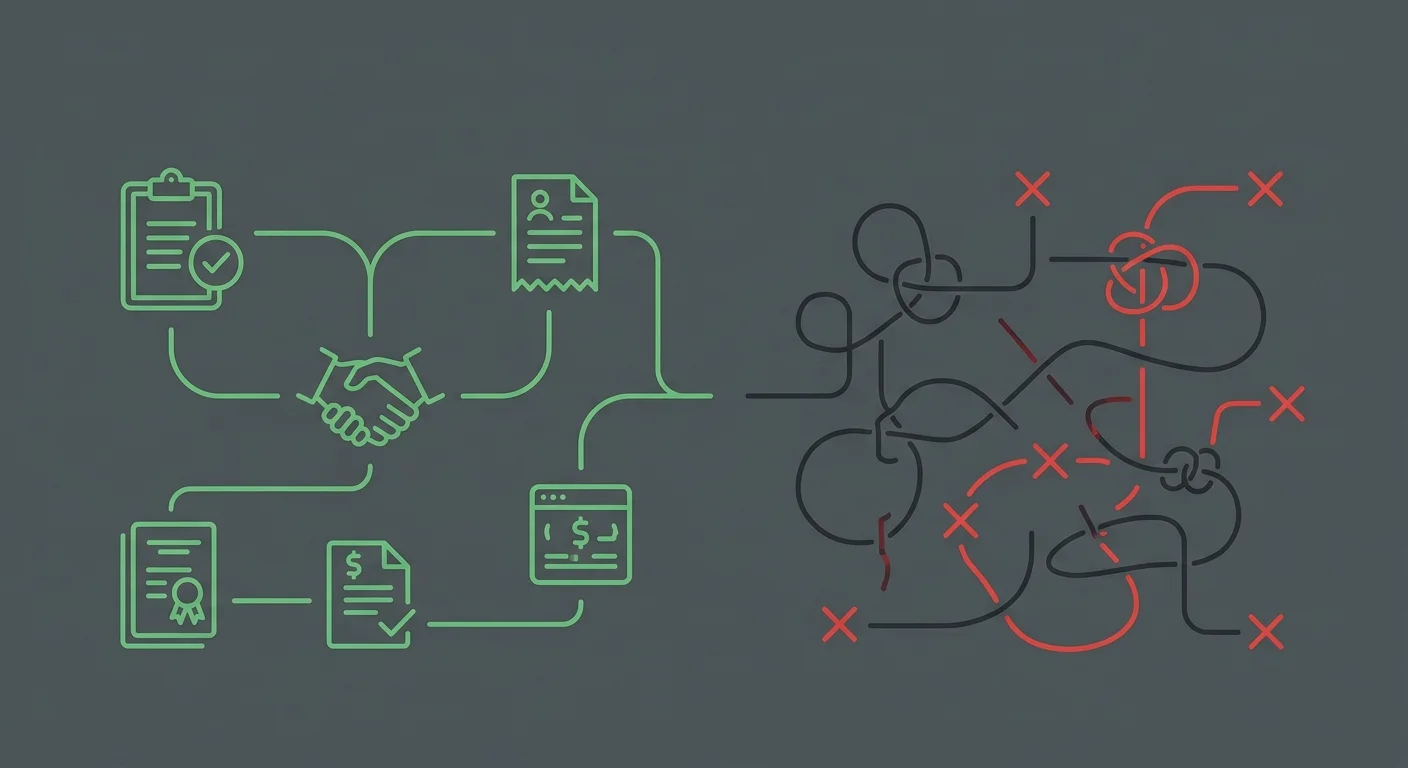
Here's where the breakdown starts.
Personal injury cases run on legal timelines. Settlement can take a few months to a few years. Generalist billing software runs on accounts receivable aging reports that assume payment arrives in 30 to 90 days.
Once a claim ages past that window, it drops off the active dashboard. The software flags it as stale. The practice assumes someone's working it.
No one is.
The infrastructure isn't there either.
Generalist billing software has no dedicated modules for tracking legal case status, attorney communications, or settlement negotiations. There's no field for the attorney's contact information. No workflow for lien reduction tracking. No alert when the case settles and payment is due.
These aren't feature gaps. They're the core functions that determine whether the practice gets paid at all.
So practices build workarounds. Spreadsheets. Manual notes in the EHR. Sticky notes on a desk.
The software can't hold the information the biller needs, so the biller holds it somewhere else—outside the system, outside the workflow, outside any accountability structure.
That's not a billing process. That's a breakdown waiting to cost money.
| Billing Feature | Standard Insurance Claims | PI Lien Requirements | Generalist Software Support |
|---|---|---|---|
| AR Timeline Tracking | 30–90 day payment cycle | Multi-year case resolution with unpredictable settlement dates | Fixed aging buckets; no long-term case tracking |
| Attorney Communication | Not applicable | Ongoing coordination with legal counsel on case status and lien reduction | No dedicated fields or workflows |
| Settlement Negotiation Tracking | Not applicable | Real-time updates on settlement progress and payment release | No functionality for legal milestones |
| Lien Reduction Management | Not applicable | Negotiation and documentation of agreed-upon lien reductions | No module for reduction tracking or attorney approval |
| Multi-Party Billing Coordination | Single payer relationship | Coordination across provider, patient, attorney, insurer, and liable parties | Single-payer architecture; no multi-stakeholder workflow |
| Payment Status Alerts | Automated reminders tied to aging buckets | Manual follow-up triggered by external legal events | No customizable alert system for non-standard timelines |
The Volume-First Design Model
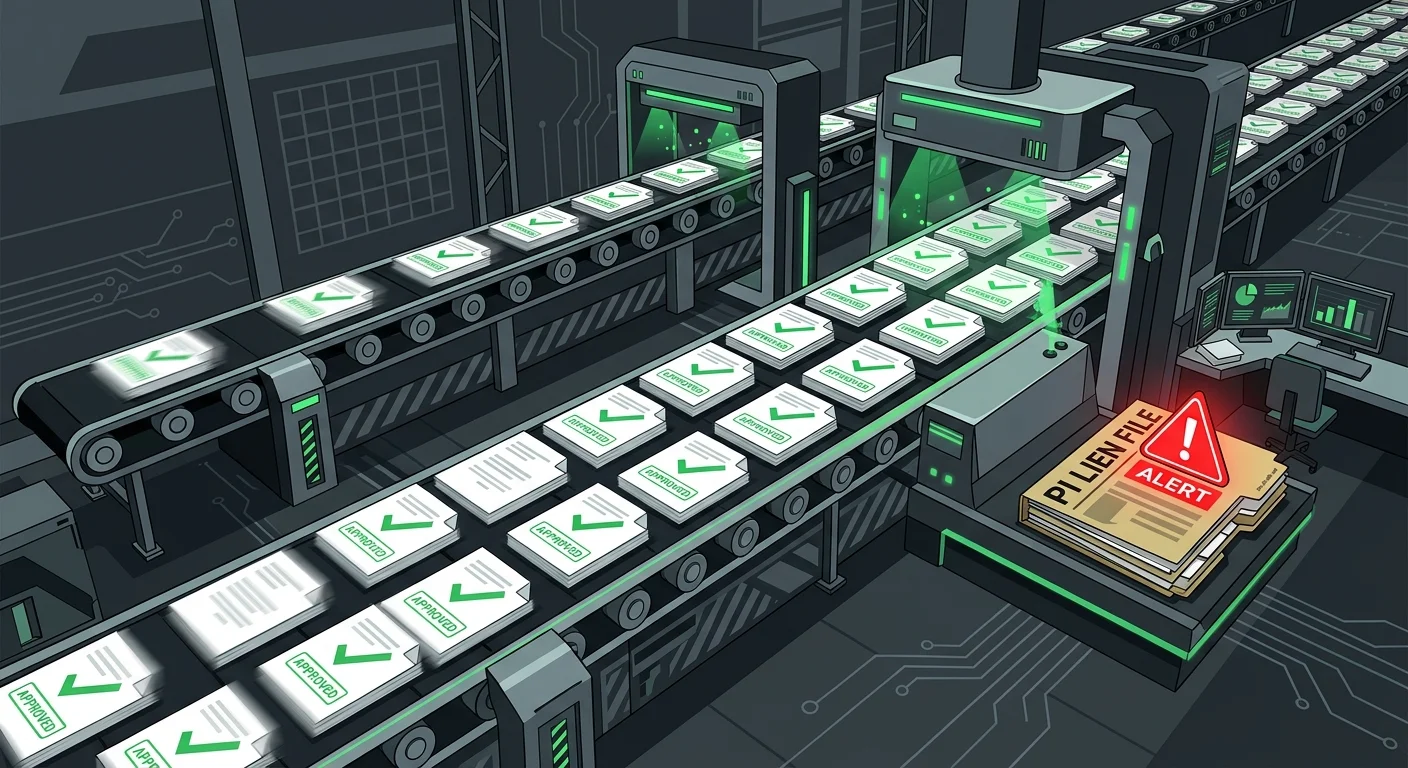
The failure isn't accidental. It's architectural.
Billing software built for volume optimization can't profitably support the manual work that complex claims require. Clean claims — standard diagnosis codes, routine documentation, predictable payers — get processed fast. That's the business model. High throughput, low touch, profit on scale.
That model works for most medical billing. But it can't survive personal injury liens.
Personal injury liens require human judgment at every stage. Attorney coordination. Settlement timeline tracking. Lien reduction negotiation. Multi-step appeals when payers deny on medical necessity grounds.
None of that scales the way a volume model needs it to.
So the software deprioritizes it. Not because it's broken. Because it's expensive.
Here's the thing. Generalist platforms aren't trying to fail at PI lien management. They're optimizing for a different outcome entirely.
Fast submission beats revenue recovery in their profitability equation.
And once you understand that, the gaps stop looking like bugs. They start looking like design decisions.
Standard AR Tracking Doesn't Work for Multi-Year Settlements
Standard AR tracking works when payment shows up in 30 to 90 days.
It collapses when settlement drags out for a few months to a few years.
Most billing platforms flag aging claims as overdue after 90 days — then drop them from active follow-up queues. The software writes the claim off. The practice assumes someone's still working it.
Nobody is.
The claim ages out of the tracking window. No workflow brings it back. No alert fires when the legal case settles. No trigger coordinates with the attorney's office.
The biller has to remember to check manually. In a high-volume practice, that doesn't happen.
So the practice loses revenue it never sees coming.
The settlement happens. The attorney's office pays the lien. But the biller doesn't know to invoice — or invoices late, after the funds are already distributed.
That's not a training problem. It's structural incompatibility between the software's AR model and the reality of PI case timelines.
Why Automation Fails at Medical Necessity Appeals
Automation handles straightforward denials. Coding errors, missing documentation, duplicate claims.
It can't handle medical necessity arguments.
Complex PI claims face higher scrutiny, and when a payer denies on medical necessity grounds, the appeal needs a clinician's judgment and a narrative connecting the treatment to the accident. Software can't write that.
And generalist platforms don't budget for the human time it takes.
The average initial denial rate sits between 5% and 10%, but that number climbs for PI cases — and the appeals process costs more labor than the volume model allows. So the claim gets abandoned. Not officially. It just never gets worked.
Practices fail to collect as much as 11 percent of their revenue this way. Most of that leakage comes from unworked denials.
The reality: denial management and appeals for complex claims require expertise automation can't replicate.
The software knows the claim was denied. It doesn't know how to fight back.
That gap — between submission and recovery — is where practices using generalist platforms lose the most money on PI liens.
| Claim Characteristic | Volume Model Priority | PI Lien Reality | Outcome |
|---|---|---|---|
| Claim submission speed | Optimized—fast throughput drives profitability | Secondary to accuracy and attorney coordination | PI claims submitted fast but incorrectly get denied, costing more to appeal than they save in speed |
| AR tracking window | 30-90 days—claims outside this range flagged as stale | Multi-year settlement timelines require active tracking throughout case lifecycle | Claims age out of the system's follow-up queue before settlement, causing revenue write-offs |
| Denial handling | Automated rejection triage—fixes coding errors and missing fields | Manual appeals with medical necessity narratives and provider documentation | Complex denials go unworked because the volume model doesn't budget for human appeal time |
| Attorney communication | Not tracked—no dedicated workflow for third-party coordination | Ongoing relationship management and settlement notification protocol required | Practices miss settlement deadlines and lien reduction opportunities because there's no system to manage attorney touchpoints |
| Profit driver | Scale—process the highest number of clean claims per biller hour | Recovery rate—maximize payment on high-value, high-friction claims | Volume platforms abandon PI liens because working them reduces throughput without improving their profitability metric |
| Communication cadence | Minimal—software assumes payer response is the only milestone | Proactive—practice must coordinate with attorney, patient, and insurer throughout case progression | Silence from the billing system means the practice doesn't know when the case settles or when to invoice |
Attorney Relationship Management Requires Human Expertise
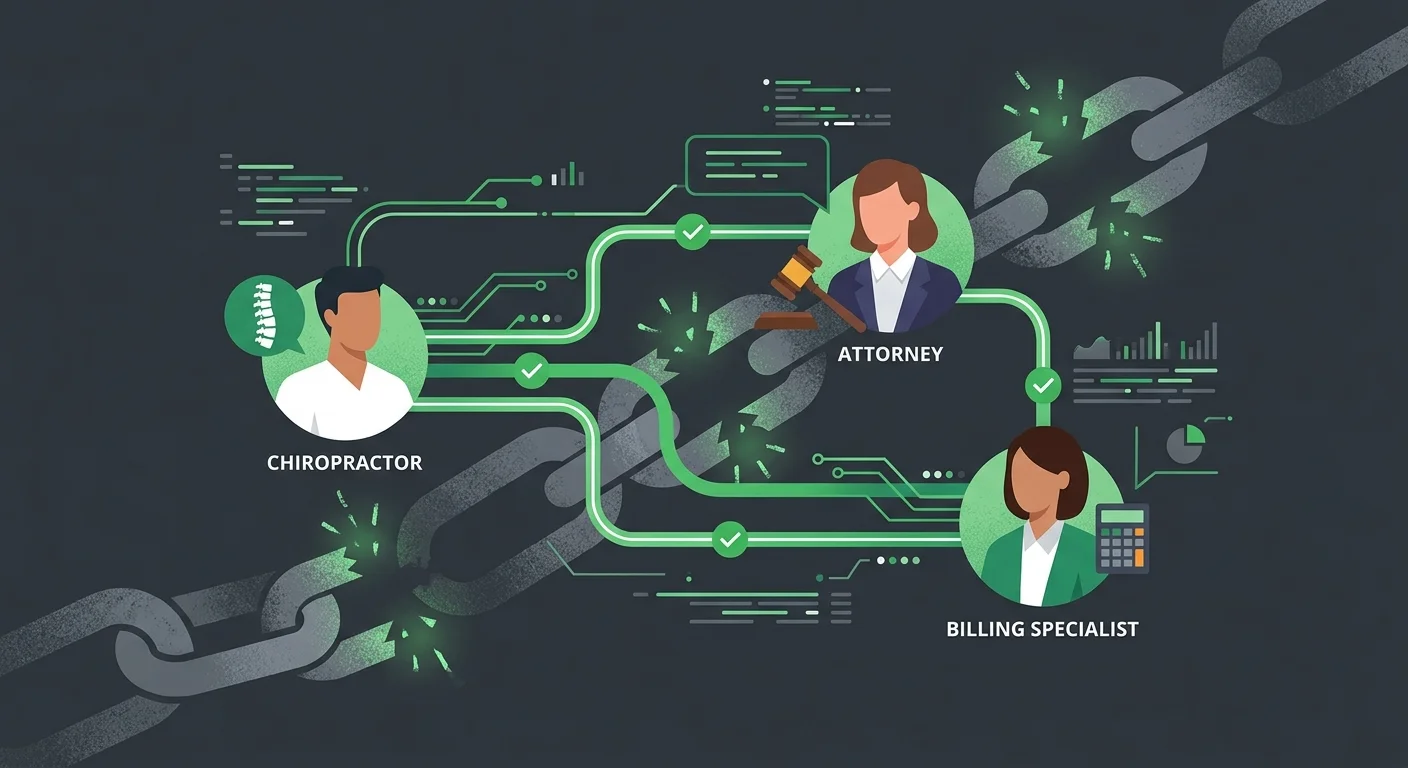
Attorney relationships determine whether a practice gets paid on a PI lien.
Not the software. Not the claim submission speed.
The relationship.
When a practice bills under a letter of protection, payment doesn't come from the payer. It comes from the attorney's settlement proceeds.
That means the biller isn't just managing claims. They're coordinating with a legal team that has its own timeline, its own priorities, and its own client to protect.
One missed communication — one failure to update the attorney on a balance change or a lien adjustment — can delay payment for months or kill the relationship entirely.
There's no workflow for logging a call with the attorney's paralegal. No alert when the case status shifts from active litigation to settlement negotiations. No structured way to track lien reduction requests or document what was verbally agreed before the final settlement check gets cut.
That's not a feature gap. It's a relationship management failure that costs practices real revenue and credibility with the referral sources they depend on.
The Missing Communication Layer
Here's what happens in practice.
The attorney's office calls to confirm the outstanding balance before settlement. The biller pulls the number from the software. But the software doesn't show the lien reduction that was negotiated three weeks ago, because there's no field to track it.
The biller quotes the wrong amount. The attorney's office pays less than expected — or worse, routes the check to collections instead of the practice because the balance discrepancy looks like a billing error.
And the practice never knows it happened until the revenue doesn't show up.
By then, the settlement funds are distributed. The case is closed.
There's no mechanism to recover the shortfall.
That's not an edge case. It's the predictable outcome when you try to manage multi-party legal settlements with software designed for 30-day insurance claims.
The communication layer doesn't exist. So the biller builds workarounds — or doesn't — and the practice loses money on claims that should've been straightforward once the case settled.
Why Error Rates Compound in PI Cases
Now layer in the error rate.
Up to 80% of medical bills contain errors — and that's across all billing, not just PI cases. But personal injury billing compounds the problem because every claim involves multiple treatment dates, multiple providers, and a settlement structure that doesn't resolve for months or years.
Each layer introduces another point of failure.
The patient sees the chiropractor, the physical therapist, the radiologist, and the orthopedist. Each provider bills separately. Each one uses a different documentation standard.
The attorney's office collects all the bills to calculate the settlement demand. And if one bill has a coding error, an incorrect date of service, or a balance that doesn't match the letter of protection amount, the entire settlement timeline stalls while someone tracks down the correction.
Generalist software doesn't flag these discrepancies before they reach the attorney. It submits the claim. It tracks the balance.
But it doesn't cross-check the lien amount against what was documented in the legal case file, because that workflow doesn't exist in a volume-first platform. So errors propagate — and by the time they surface, they're damaging attorney relationships the practice spent years building.
One bad billing experience can cost a practice an entire referral pipeline. Software doesn't understand that risk. A human biller does.
| Error Type | Standard Claim Impact | PI Lien Impact | Software Detection |
|---|---|---|---|
| Incorrect patient date of birth | Claim denied; corrected and resubmitted within days | Attorney calculates settlement demand using wrong bill; entire negotiation timeline stalls | Not flagged—software submits what's entered |
| Coding error (wrong CPT or diagnosis) | Payer denies; automated edit catches it on next scrub | Attorney's demand letter includes incorrect procedure cost; undermines case credibility | Partial—flags some codes, misses context-specific errors |
| Balance discrepancy between ledger and lien amount | Reconciled internally before statement goes out | Attorney pays reduced amount based on outdated lien figure; practice loses negotiated balance | None—no cross-check between lien tracking and billing ledger |
| Missing or incomplete documentation for service | Payer requests records; practice responds within appeal window | Attorney requests records for demand package; delayed response kills referral relationship | Not tracked—software doesn't monitor attorney requests |
| Duplicate charge posted to account | Internal audit catches it; credit issued before billing cycle closes | Attorney's office flags overbilling; questions practice integrity and pulls future referrals | Inconsistent—depends on manual review protocols |
| Treatment date falls outside accident date range | Payer denies as unrelated; corrected with amended claim | Opposing counsel uses date inconsistency to argue treatment wasn't accident-related; weakens entire case | None—software doesn't validate treatment dates against legal case timeline |
What Specialty PI Lien Management Looks Like
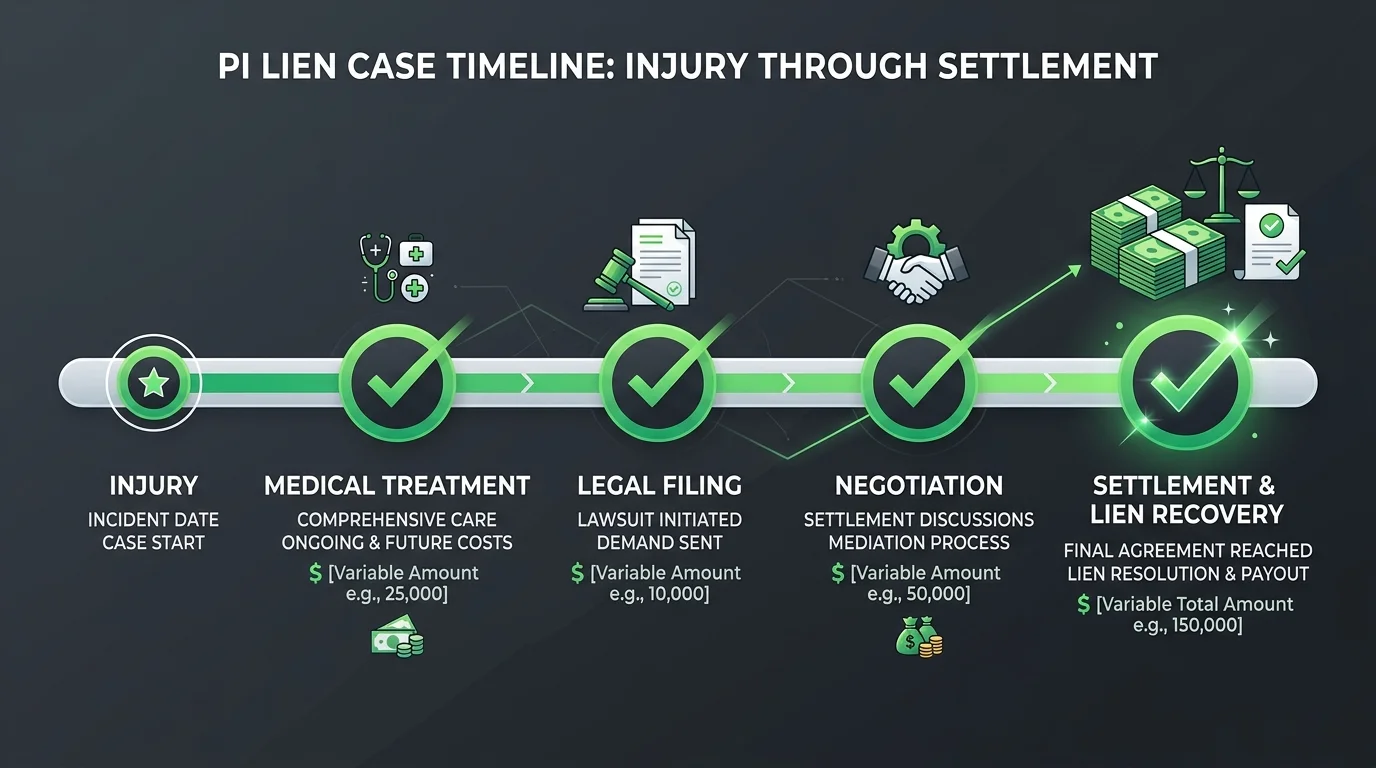
The alternative isn't better software. It's a different operating model—one built around human expertise instead of automation.
Specialty PI lien management doesn't try to automate the parts that require judgment. It assigns dedicated billers who understand the legal timeline, coordinate with attorneys proactively, and track case milestones outside standard AR workflows.
The expertise is the product. The communication is the infrastructure.
And the performance-based model ensures the biller's incentives match the practice's revenue recovery goals.
Here's what that looks like in practice. Not theory. Not marketing copy. The actual operational difference between volume-first software and expert lien management that recovers revenue on high-complexity claims.
Case Status Tracking and Legal Coordination
A dedicated biller doesn't just submit the claim and wait. They track the legal case from the moment the letter of protection is signed.
They know which attorney's office is handling the case. They know whether the case is in active treatment, litigation, or settlement negotiation.
And they know when the case status changes—because they're in communication with the attorney's staff on a regular cadence.
That's the structural difference. Generalist platforms track the claim. Specialty management tracks the case—the legal entity that determines when and how the practice gets paid.
When the attorney's office reaches a settlement, the biller already knows. They've been coordinating the entire time.
There's no scramble to pull balances or reconcile lien amounts at the last minute. The work was done weeks earlier, and the attorney's office has the updated figures before the settlement check gets cut.
And when something changes—a new treatment date, a balance adjustment, a payer denial that affects the lien amount—the biller communicates it immediately. Not next month. Not when someone remembers to check.
Immediately.
That level of coordination requires human judgment and HIPAA-compliant workflows that no generalist software automates effectively. It's why practices using specialty billing partners don't lose revenue to communication breakdowns the way practices using software-only solutions do.
Lien Reduction Negotiation
Lien reduction is a negotiation, not a transaction.
The attorney's office asks the practice to reduce the outstanding balance so the patient gets a larger share of the settlement. The practice has to decide—on the spot—whether to accept, counteroffer, or hold firm.
That decision affects cash flow, patient satisfaction, and the long-term referral relationship with the attorney.
Generalist software can't handle that conversation. There's no workflow for it. No field to document what was discussed, what was agreed to, or what the final lien amount became after negotiation.
So the biller writes it down somewhere else—or doesn't write it down at all—and the practice bills the wrong amount when settlement comes through.
Practices can fail to collect as much as 11 percent of their revenue this way, and lien reduction mismanagement is a significant contributor.
A specialty biller documents every step. They know what the original lien was. They know what reduction was requested. They know what was agreed to verbally and what was confirmed in writing.
And when the settlement check arrives, the amount matches—because the biller managed the negotiation with the same rigor they apply to the claim itself.
No surprises. No shortfalls. No angry calls from the attorney's office because the billed amount doesn't match what was negotiated three weeks ago.
Performance-Based Alignment
The performance-based model solves the fundamental misalignment that generalist platforms can't fix.
When a billing company gets paid a percentage of collections—not a flat fee per claim submitted—they don't get paid unless the practice gets paid.
That changes everything.
Volume-first platforms profit from throughput. Submit more claims, bill more clients, scale the operation. Whether those claims actually get paid is someone else's problem.
But a performance-based partner profits from recovery. The more revenue they collect for the practice, the more they earn.
That's not a marketing line—it's a structural incentive that aligns the billing partner's work with the practice's actual financial outcome.
So when a PI lien requires extra time to appeal a denial, coordinate with an attorney, or negotiate a lien reduction—the specialty biller does the work, because it's profitable for both parties.
The average cost of a non-fatal medically consulted injury sits at over thirty thousand dollars, and that's the revenue at stake on every PI case. A volume model deprioritizes that claim because it's labor-intensive. A performance model prioritizes it because it's high-value.
The economics dictate the behavior. And the behavior determines whether the practice actually recovers the money it's owed.
Frequently Asked Questions
You've seen the breakdowns. You know why generalist software can't handle PI lien billing.
Now here are the questions practices ask when they're deciding whether to keep bleeding revenue or move to a partner who recovers it.
These aren't hypothetical.
They're the exact friction points that surface when you realize the current system isn't working—and you want to know what a functional alternative looks like.
What specific features for PI lien management do generalist billing platforms typically lack?
Why does automated follow-up fail for personal injury claims compared to manual expert management?
Automated follow-up triggers on aging balances.
But PI claims don't age predictably. The settlement timeline gets dictated by the legal case—not the claim submission date.
So automated systems send reminders to patients who can't pay yet. They escalate claims to collections when the money is still months away. And they generate false urgency that damages attorney relationships.
A human biller coordinates with the attorney's office directly. They know when the case settles. They don't waste effort chasing revenue that isn't available yet.
Can a specialized PI lien billing service integrate with my existing EHR software?
Yes. Specialty PI lien billing integrates with your EHR the same way your current billing system does.
The biller accesses patient data, claim history, and documentation through standard EHR interfaces. The difference isn't technical compatibility—it's workflow design.
The specialty partner tracks legal case status outside your EHR. They coordinate with attorneys outside the software. And they manage lien reductions through direct communication—not through fields your EHR was never designed to support.
What is the difference between a medical lien and a letter of protection in a PI case?
A medical lien is a legal claim against a settlement. The provider treats the patient, the patient doesn't pay, the provider files a lien—and when the settlement pays out, the lien gets satisfied.
A letter of protection is an agreement where the attorney guarantees payment from the settlement and the provider agrees to wait.
Both require coordination with the attorney's office. Neither works when managed through generalist billing software.
How do billing errors in personal injury cases impact attorney relationships and final settlement amounts?
Billing errors stall settlement timelines.
The attorney can't finalize the demand until all medical bills reconcile. One incorrect balance delays the entire case. And when errors surface after settlement, the attorney's office has to reopen negotiations—which damages trust and signals the practice doesn't manage billing competently.
That costs future referrals.
Up to 80% of medical bills contain errors, and in a multi-provider PI case that error rate compounds. A specialty biller catches those errors before they reach the attorney.
Where This Leaves You
The question isn't whether generalist billing software can handle PI liens. It's whether you're willing to keep losing revenue while waiting for it to work.
Every claim that sits unworked ages past the point of return. Every settlement that closes without accurate coordination leaves money on the table. Every attorney relationship damaged by billing errors costs you a referral pipeline you can't rebuild with software alone.
Here's the thing.
The volume-first business model isn't a bug you can patch with a workflow update or a custom field. It's the architecture. The software makes money processing thousands of straightforward claims at scale—and that's the same structural limitation that makes it incapable of recovering revenue on high-complexity, high-value personal injury liens.
You're not using the wrong features.
You're using the wrong tool for the wrong job. No amount of training, customization, or workaround documentation changes the fact that the platform wasn't built for this kind of work—and can't be retrofitted to do it well.
So the real decision isn't about software.
It's about whether you treat PI liens as a revenue stream worth protecting with human expertise and proactive communication—or as an administrative hassle you hope resolves itself eventually.
Because the cases don't manage themselves. The attorneys don't wait indefinitely for corrected bills. And the revenue you're owed doesn't recover on its own while the software tracks a balance that's already wrong.
That's not a failure of execution. It's a failure of alignment. And alignment is the one thing specialty revenue cycle management was built to fix.
A practice assessment shows you exactly where your PI lien revenue is leaking—which claims are sitting unworked, which attorney relationships need repair, and what it's costing you in recoverable dollars every month you stay on a volume-first business model that wasn't built for this work. You don't fix complex lien billing by switching platforms. You fix it by switching to a partner who recovers the revenue. Schedule a discovery call to see what's still in your AR. Every week you wait is a week recoverable revenue ages past the point of return.
© 2026 Bushido Billing. All Rights Reserved | Web Design by iTech Valet