

How to Correctly Use the G2211 Add-On Code for Complex Chiropractic Visit Management?
G2211 is a HCPCS complexity add-on code Medicare implemented on January 1, 2024 to compensate providers for the cognitive work required during outpatient visits involving longitudinal, ongoing patient care. It is not a routine modifier. It is a reimbursement signal that says: this patient relationship requires continuous, complex management — and that clinical work has a separate value.
The code attaches to an outpatient evaluation and management service when the provider is managing an ongoing condition across visits. A single-episode encounter does not qualify. Medicare draws that line clearly, and its auditors hold it.
There are hard restrictions. G2211 cannot be reported on the same date of service when the E/M visit is billed with modifier 25. That pairing is prohibited. A claim submitted that way gets denied — and repeated violations invite audit exposure that goes well beyond the individual claim.
For chiropractors, the coding picture is more layered. Medicare already requires the AT modifier on any active spinal manipulation claim to confirm the service is active, acute, and medically necessary. G2211 sits on top of that requirement. Both must be supported simultaneously — and the documentation behind each must be distinct, specific, and clinically defensible.
The CDC recognizes spinal manipulation as a preferred non-pharmacologic intervention for chronic musculoskeletal pain. The reimbursement framework is catching up to that clinical reality. G2211 is part of that shift.
The code does not reward intent. It rewards documentation. Bill G2211 with visit notes that demonstrate genuine ongoing clinical complexity, and the practice captures reimbursement it legitimately earned. Bill it without documentation to match, and the liability builds quietly — until an audit makes it loud.
G2211 is a documentation discipline first. Billing comes second.
Last Updated: June 22, 2026
- • What G2211 Actually Is — and Why It Arrived in 2024
- • Why Generic Billing Systems Get G2211 Wrong
- • The Documentation Standard G2211 Actually Requires
- • What It Takes to Keep a G2211 Claim Defensible
-
• Frequently Asked Questions About G2211 Chiropractic Billing
- • Can chiropractors bill the G2211 add-on code for all Medicare office visits?
- • What specific documentation must a chiropractor record to support G2211 complexity?
- • Does G2211 apply to routine maintenance adjustments or only active therapeutic care?
- • Can G2211 be billed on the same service date alongside the AT modifier?
- • How do Medicare administrative contractors audit G2211 usage within allied health specialties?
- • What happens to G2211 claims when the billing company uses automation-forward processing?
- • The Bottom Line on G2211 and Your Practice Revenue
What G2211 Actually Is — and Why It Arrived in 2024
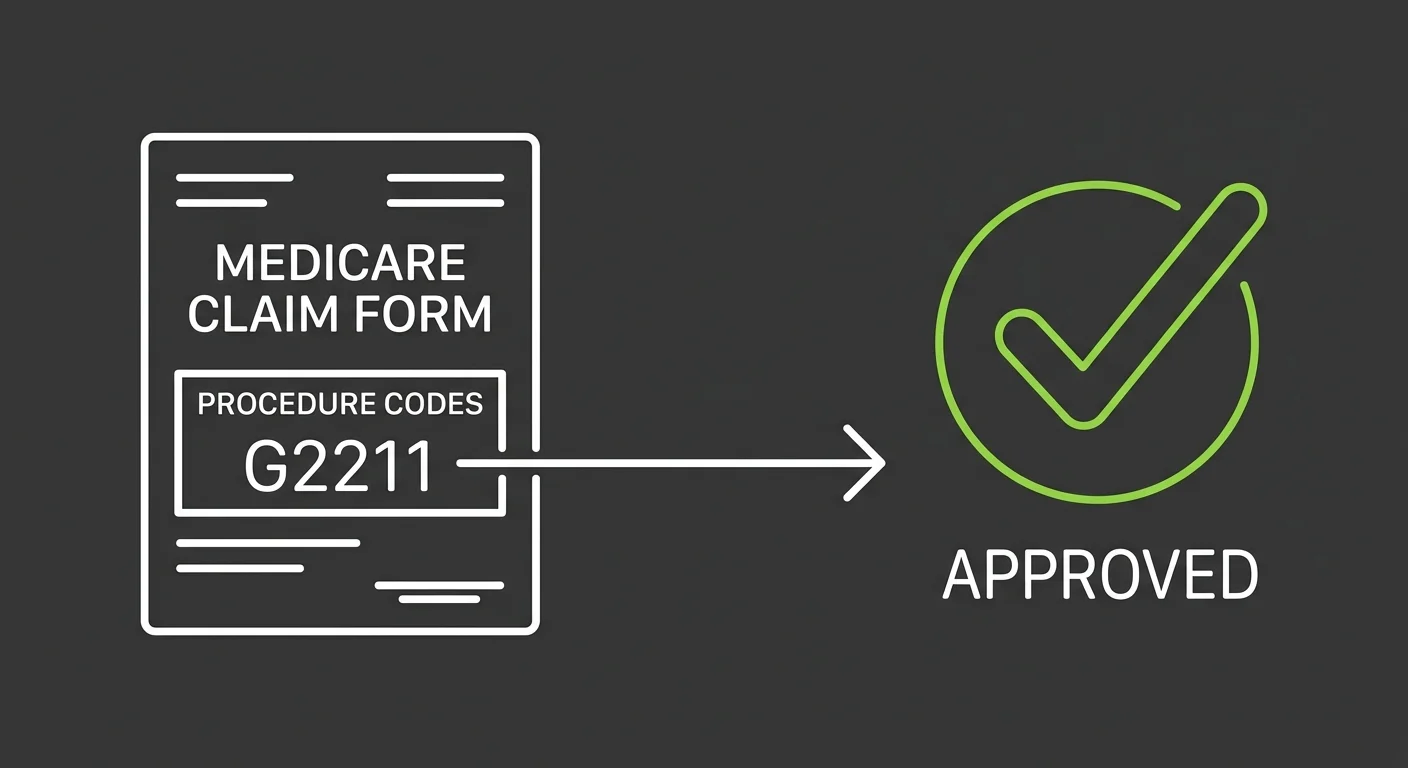
G2211 is a HCPCS add-on code, and CMS published the final rule implementing it effective January 1, 2024. That wasn't a procedural footnote. It was Medicare formally acknowledging something chiropractic practices have known for years: managing a patient's ongoing, complex condition takes more cognitive work than a single-episode visit — and that work deserves its own line on the fee schedule.
The code attaches to an outpatient evaluation and management service when the visit reflects a continuous, longitudinal patient relationship. Not a one-time encounter. Medicare draws a hard line between those two scenarios. G2211 belongs on one side of it.
But there's a prohibition baked directly into the code. G2211 cannot be billed when the E/M service on the same date carries modifier 25 restrictions. That pairing isn't a gray area. It's a denial — and repeated submissions that way will draw scrutiny well beyond a single claim. Knowing the prohibition is step one. Understanding why it exists is what separates a practice that bills G2211 correctly from one that hands CMS an audit trigger.
The Problem G2211 Was Designed to Solve
Here's the gap G2211 was built to close. Medicare's fee schedule was paying the same rate for a provider managing a patient's chronic, evolving condition over months as it paid for a provider handling a one-time, straightforward visit. The cognitive burden wasn't the same. The documentation burden wasn't the same. The reimbursement was.
G2211 closes that gap — partially. It compensates for the additional work of managing a patient across time: tracking a condition across multiple visits, adjusting a care plan as the patient's status changes, and building documentation that reflects a real ongoing clinical relationship. Not a series of disconnected encounters dressed up to look like one.
For chiropractic practices, this matters directly. The services delivered to long-term Medicare patients — spinal management, ongoing musculoskeletal care, progressive rehabilitation — are exactly the clinical scenarios G2211 was designed to recognize. That's the reimbursement opportunity. The audit target comes when the documentation behind the code doesn't hold up to scrutiny. And that risk is only growing under the 2026 Medicare regulatory updates.
Why Most Explanations of G2211 Are Incomplete
Most explanations of G2211 stop at the definition. It's a complexity add-on. It went live in 2024. It reimburses for cognitive work. All of that is accurate. None of it tells a chiropractic practice how to apply the code without handing Medicare an audit target.
What those explanations leave out is the lock-and-key reality of how this code actually functions. G2211 is the key to reimbursement for longitudinal complexity. But the clinical documentation has to be the exact right lock — specific, defensible, and aligned with what CMS defines as genuine ongoing complexity. Use an automation shortcut or a generalist biller who treats G2211 as a routine toggle, and the key doesn't just fail to open the door. It triggers an audit that locks down your entire revenue stream.
| Code / Modifier | What It Represents | Medicare Eligibility Requirement | Audit Risk If Misused |
|---|---|---|---|
| G2211 (HCPCS Add-On Code) | Reimbursement for the additional cognitive and documentation work required when managing a patient's ongoing, complex condition across multiple visits — distinct from a single-episode encounter | Must attach to an outpatient E/M service reflecting a continuous, longitudinal patient relationship; cannot be billed with modifier 25 on the same date of service | Repeated billing without documentation of genuine ongoing complexity invites claim denials and escalating audit scrutiny across the entire patient account |
| AT Modifier | Confirmation that chiropractic spinal manipulation on a Medicare claim is active, acute, and medically necessary — not maintenance care | Required on every Medicare spinal manipulation claim to establish medical necessity; absence results in automatic denial | Applying AT to maintenance-level visits — or omitting it from active-care visits — creates a documentation conflict that flags the practice for medical necessity review |
| Modifier 25 | Signals that a separate, significant evaluation and management service was performed on the same date as a distinct procedure | Permitted in specific clinical scenarios, but its presence on the same claim as G2211 is a hard prohibition — the pairing is structurally disallowed under CMS rules | Billing G2211 alongside modifier 25 on the same date of service guarantees denial; pattern repetition triggers broader claim review beyond the individual date |
| E/M Service (Outpatient) | The evaluation and management visit that G2211 attaches to — the base code through which the complexity of the patient relationship is documented and reported | Must reflect a visit involving a patient with an ongoing condition requiring continuous clinical management; cannot be a routine, single-purpose encounter | Attaching G2211 to E/M visits that lack documentation of longitudinal complexity creates a mismatch between the code submitted and the clinical record — a primary audit trigger |
Why Generic Billing Systems Get G2211 Wrong
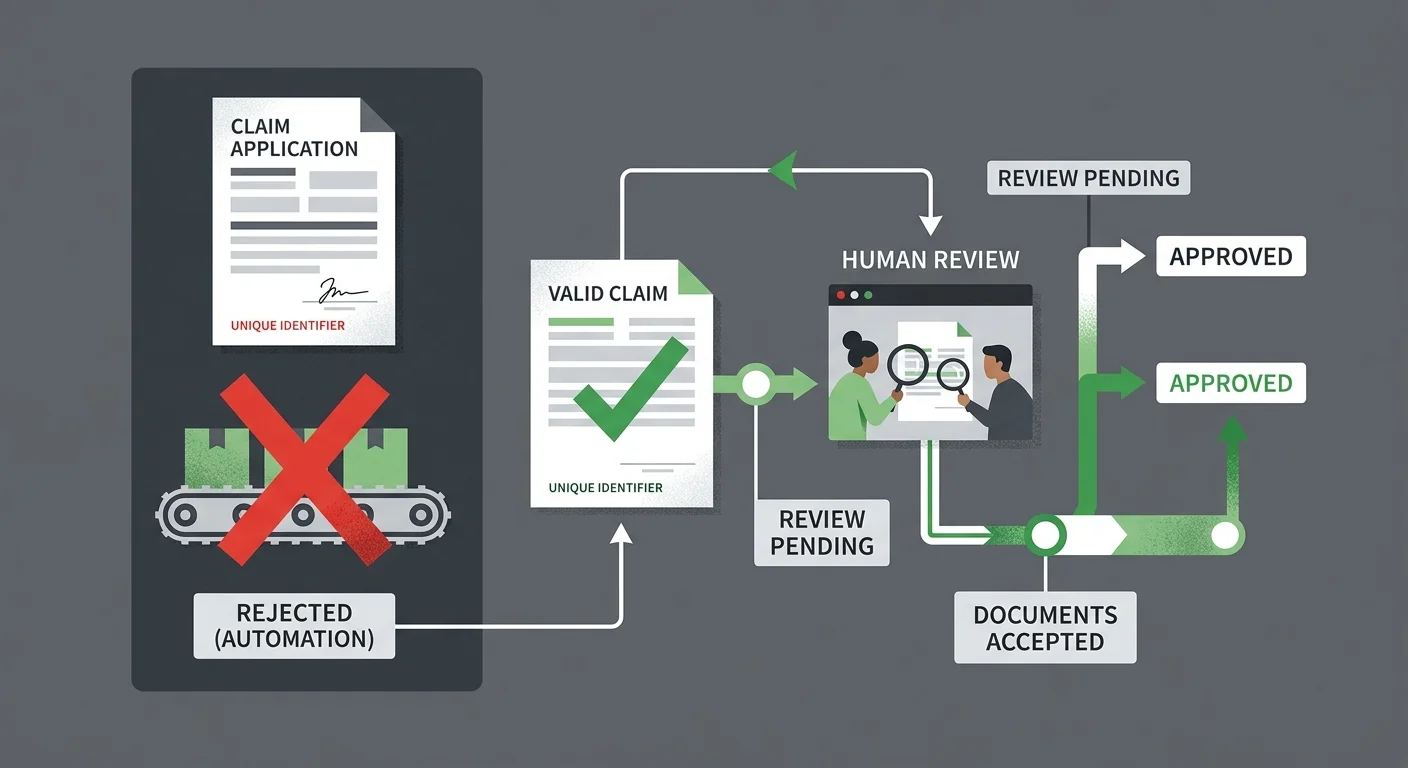
Knowing what G2211 is doesn't protect you.
The real damage comes from how most billing systems handle it — and what that handling costs practices that don't see the problem until an auditor does.
Generic billing systems are built for speed. Clean claim in, payment out.
G2211 isn't a clean claim. It's a complexity argument — and complexity arguments require human judgment, documentation review, and a working knowledge of how G2211 intersects with the AT modifier requirement. That's not something any automation engine consistently delivers. So the code gets appended like a routine modifier, and the documentation behind it gets treated the same way.
And here's what that produces.
Practices bill G2211 as a routine add-on. The documentation behind it doesn't hold up to CMS standards. The exposure builds quietly — until an audit makes it impossible to ignore.
The Volume-First Model and the G2211 Trap
The volume-first model has one metric: how many claims go out the door.
Not how much revenue comes back. Not whether the claims that require a real argument — like G2211 — are documented well enough to survive scrutiny. Just throughput.
So here's what the volume-first model does to G2211: it treats the code as a toggle.
Patient qualifies on the surface? Append it. Move on. The documentation review that actually determines whether the claim is defensible — the part where a biller asks whether the visit notes reflect a genuine longitudinal relationship, not just a repeat visit — that review never happens. It costs more time than a high-throughput model will ever budget for.
G2211 doesn't tolerate that shortcut.
Medicare's prohibition against billing it alongside a modifier 25 E/M on the same date is the most obvious disqualifier — but it's not the deepest one. The deeper problem is that chiropractors face layered modifier requirements: the AT modifier must already confirm the service is active, acute, and medically necessary. G2211 then has to be supported by documentation that reflects a separate, distinct complexity layer on top of that. A generic system doesn't distinguish between those two documentation burdens. It submits both and hopes.
That's not billing. That's accidental liability.
The practices that get audited on G2211 aren't always the ones that billed it fraudulently. They're the ones whose billers treated a complexity code like a routine modifier — and never checked whether the documentation actually supported the claim.
The key went into the wrong lock. And the door didn't just stay shut. It triggered an alarm.
Who This Billing Approach Is Not For
This approach isn't for every practice. And that's deliberate.
If your first question about a billing partner is what's your rate — stop there. That's not the right conversation for what G2211 compliance actually requires.
A claim-level billing process built around G2211 compliance requires real cooperation from your practice — EHR access, documentation turnaround, and provider availability when a claim needs clinical clarification.
If you want billing that runs in the background with zero input from your end, you'll get exactly what that model produces. On a code as documentation-dependent as G2211, that means denied claims, audit exposure, and revenue you legitimately earned left permanently unrecovered.
G2211 is not passive income. It's an active documentation discipline.
Practices that treat it as a set-it-and-forget-it modifier will lose revenue they legitimately earned — and create liability doing it.
If that's the model you're looking for, this isn't the right fit.
| Billing Approach | How G2211 Is Handled | Documentation Standard Applied | Likely Audit Outcome |
|---|---|---|---|
| Volume-first automation platform | Treated as a routine toggle — appended whenever a patient appears to qualify on the surface | No documentation review performed; visit notes are submitted as-is regardless of whether they reflect genuine longitudinal complexity | High audit exposure; claims lack the clinical narrative CMS requires to defend the complexity argument |
| Generalist billing company | Applied inconsistently — biller lacks specialty knowledge of how G2211 intersects with chiropractic-specific modifier requirements | Generic E/M documentation standards applied; AT modifier and G2211 complexity layers treated as equivalent rather than distinct requirements | Elevated denial rate; repeated same-day modifier errors create a pattern that draws broader scrutiny beyond individual claims |
| EHR-native billing module | Submitted automatically when the system detects a qualifying visit type — no human judgment applied | System confirms claim submission, not claim defensibility; no review of whether visit notes demonstrate an ongoing longitudinal relationship | Claims pass initial submission but fail on audit; the documentation trail reveals a series of disconnected visits, not a managed complex condition |
| Chiropractic-focused specialist billing | Evaluated on a claim-by-claim basis — applied only when visit documentation demonstrably supports a continuous, complex patient relationship | Documentation reviewed against CMS complexity criteria before submission; AT modifier and G2211 requirements treated as separate, stackable burdens each requiring distinct clinical evidence | Defensible claim record; audit exposure is contained because the documentation matches the code's requirements before the claim goes out |
The Documentation Standard G2211 Actually Requires
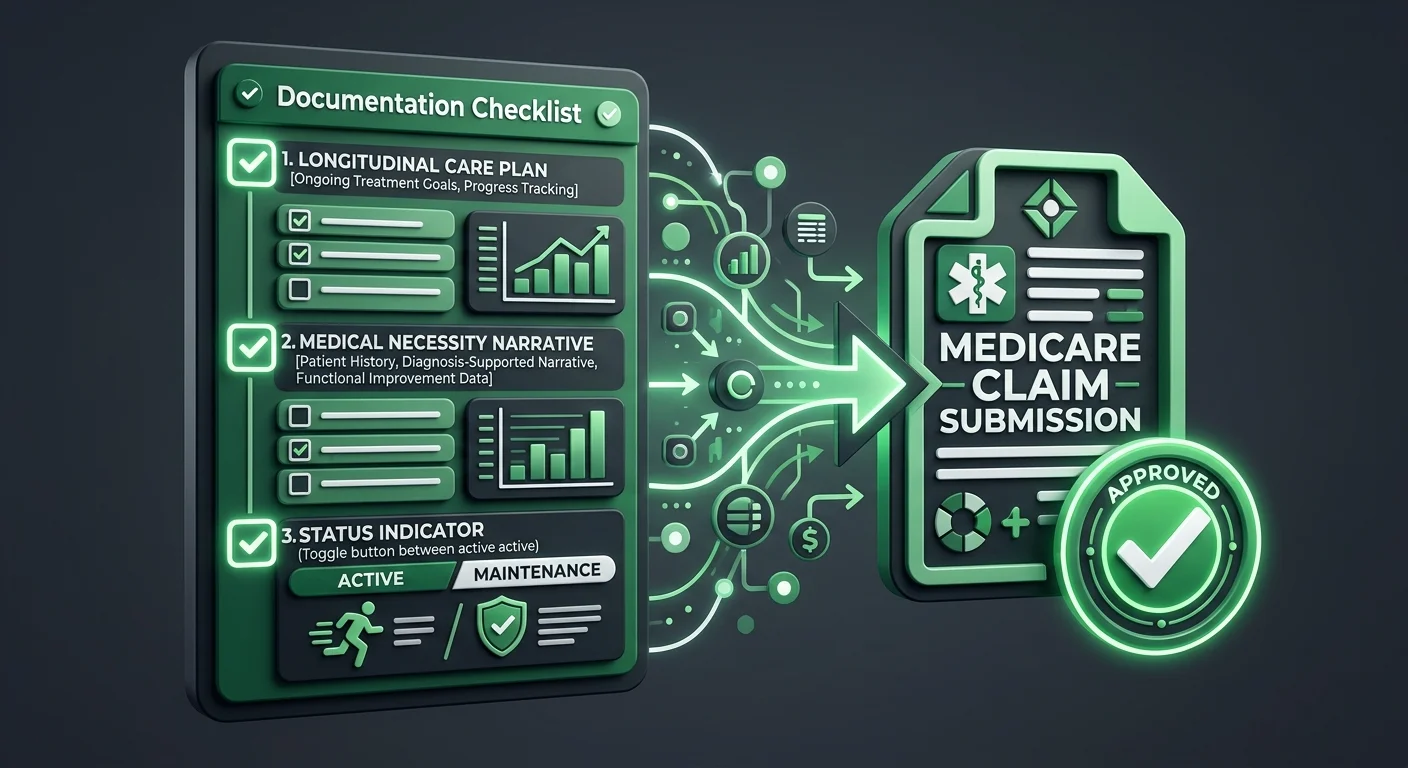
So what does correct G2211 documentation actually look like?
Not what the EHR auto-populates. Not what most billers assume. What CMS actually requires before that claim leaves your practice.
CMS didn't build G2211 to be bolted onto a routine visit.
It was built for a specific clinical reality: a provider managing an ongoing, complex patient relationship across multiple visits. The record has to prove that reality exists. Not suggest it. Not approximate it. Prove it.
Here's the test: G2211 is the key. The visit record is the lock.
When the documentation is built around a single encounter instead of a longitudinal relationship, the key doesn't fit. No billing system — automated or otherwise — can manufacture that fit after the claim goes out.
Clinical Elements CMS Requires in the Record
CMS wants the record to prove this patient requires ongoing clinical management.
Not that they showed up again. That there's a longitudinal relationship — and that it's documented clearly enough to hold up on review.
The notes have to show the evolving clinical picture: how the patient's condition is tracking across visits, how the care plan has shifted in response, and what clinical reasoning drove the decisions made at this encounter.
A note that documents today's treatment without anchoring it to the broader relationship doesn't support G2211. It supports a standalone visit. That's a different claim — and CMS treats it as one.
This is why the active-versus-maintenance distinction isn't an administrative side task. It's the foundation the G2211 claim stands on.
A record that can't clearly separate an active, complex care episode from routine maintenance care can't support the longitudinal complexity argument CMS requires. If that line isn't explicit in the notes, the claim is indefensible on review. That's where practices get hurt — not by intent, but by documentation that doesn't hold up when someone actually reads it. The place to build that foundation starts with documenting active vs. maintenance care.
The AT Modifier and G2211: How the Interaction Works
G2211 and the AT modifier do not serve the same purpose.
Treating them as interchangeable is one of the most expensive documentation errors a chiropractic practice can make.
The AT modifier confirms one specific thing: the spinal manipulation service is active, acute, and medically necessary. It is a necessity signal directed at the manipulation procedure itself.
G2211 operates on an entirely different layer. It captures the cognitive and clinical complexity of managing this patient longitudinally — attached to the evaluation and management service, not the manipulation.
Two separate documentation burdens. Two separate arguments. Neither substitutes for the other.
When both codes are on a claim, the documentation has to carry two separate arguments independently. The AT modifier documentation confirms the manipulation was necessary. The G2211 documentation confirms the E/M visit reflected genuine ongoing complexity.
One record cannot do both jobs.
Billers who don't understand that distinction submit claims with one argument where two are required. And the one that's missing is always G2211.
The Modifier 25 Restriction You Cannot Ignore
This restriction is not subtle.
G2211 cannot be billed when the evaluation and management service on the same date carries modifier 25. Full stop. No exception. No gray area. No workaround.
Modifier 25 signals that a separately identifiable E/M service was performed on the same day as a procedure. That is a different clinical scenario than the longitudinal complexity G2211 is designed to capture. The two are mutually exclusive — not by policy preference, but by design.
Submitting both isn't an oversight a payer quietly corrects. It's a pattern auditors flag. Repeated violations move a practice from a denied claim to a scrutinized account.
A billing operation that misses this isn't managing G2211. It's building liability with it — one claim at a time.
| Documentation Element | Required for G2211? | Clinical Notes Placement | Consequence If Missing |
|---|---|---|---|
| Longitudinal relationship narrative | Yes — required | Progress notes section — explicitly connects this visit to prior visits, references treatment history, and describes how the care plan has evolved across the ongoing relationship | Claim reads as a standalone visit, not a complex longitudinal case — G2211 is indefensible on review |
| Evolving clinical picture and condition tracking | Yes — required | Subjective and objective sections — documents how the patient's condition is changing or persisting across the care episode, not just today's presenting complaint | No evidence of ongoing complexity; auditor has no basis to distinguish this encounter from a routine repeat visit |
| Clinical reasoning for care plan adjustments | Yes — required | Assessment and plan sections — explains what clinical decisions were made at this encounter and why, anchored to the broader ongoing case management | Documentation supports a procedural visit only; the cognitive complexity layer G2211 captures is absent from the record |
| Active vs. maintenance care distinction | Yes — required | Medical necessity statement — explicitly identifies the episode as active, complex care rather than maintenance or palliative management | CMS cannot confirm the visit meets the longitudinal complexity threshold; claim is vulnerable to denial and audit flagging |
| AT modifier necessity documentation | Yes — but serves a separate purpose | Separate notation confirming spinal manipulation was active, acute, and medically necessary — must stand independently from G2211 complexity documentation | Two distinct documentation burdens collapse into one; the G2211 argument is weakened even if the AT modifier rationale is present |
| Modifier 25 absence confirmation | Yes — structural billing requirement | Billing review checkpoint — confirms no modifier 25 E/M is being reported on the same service date before G2211 is appended | Automatic disqualification from G2211 reimbursement; repeated violations shift the account from a denied claim to an audited practice |
What It Takes to Keep a G2211 Claim Defensible
Documentation doesn't defend itself.
What determines whether G2211 goes out clean — or goes out and starts building audit exposure — is the structure of the billing operation behind it. Intention doesn't factor in. Structure does.
High-volume billing doesn't track individual patients. Claims just get processed.
Careful claim review starts from knowing your patient panel. Which cases carry genuine longitudinal complexity. Which documentation patterns have held up under prior review. Which visit notes need clinical clarification before G2211 goes out the door.
That's not a relationship perk. That's the operational basis for billing a complexity code correctly.
The difference between those two models is not a feature comparison. It is the difference between a billing operation that protects G2211 revenue and one that quietly manufactures audit exposure every time the code is used.
The chiropractic practices that survive CMS scrutiny on G2211 are the ones whose billing partner was in the record before the claim was submitted.
Not after the denial arrived.
Why Claim-by-Claim Review Matters
When the same biller handles your claims week over week, something shifts.
They stop processing visits in isolation. They start recognizing patterns — which patients carry the longitudinal complexity that genuinely supports G2211, which notes reflect a real ongoing relationship, and which documentation gaps are going to surface as problems before the claim reaches the payer.
That's not a checklist. That's institutional knowledge built by continuity.
That recognition doesn't come from software. It comes from continuity.
Automation applies codes based on surface triggers. It doesn't ask whether the record actually reflects the clinical reality CMS requires to support a complexity argument. A dedicated biller reads the record the way an auditor will — not the way a submission engine does.
That's the problem at the center of the auto-coding risk in EHR systems.
The result at the claim level is straightforward. G2211 goes out only when the documentation supports it — independently of whatever the AT modifier requires.
Both arguments are present. Both hold up under review.
That doesn't happen by accident. It happens when the same person reviews the same practice's claims with enough context to know the difference between genuine longitudinal complexity and a repeat encounter that doesn't qualify.
How Catching Errors Early Prevents Denials
G2211 errors don't announce themselves. They compound.
Under-documented longitudinal complexity rarely triggers a denial on the first claim. It builds a billing profile. And that profile eventually draws a retrospective audit — one that reaches back across dozens of claims before anyone in the practice knew there was a problem.
By the time it's visible, the exposure is already done.
Weekly communication changes that trajectory.
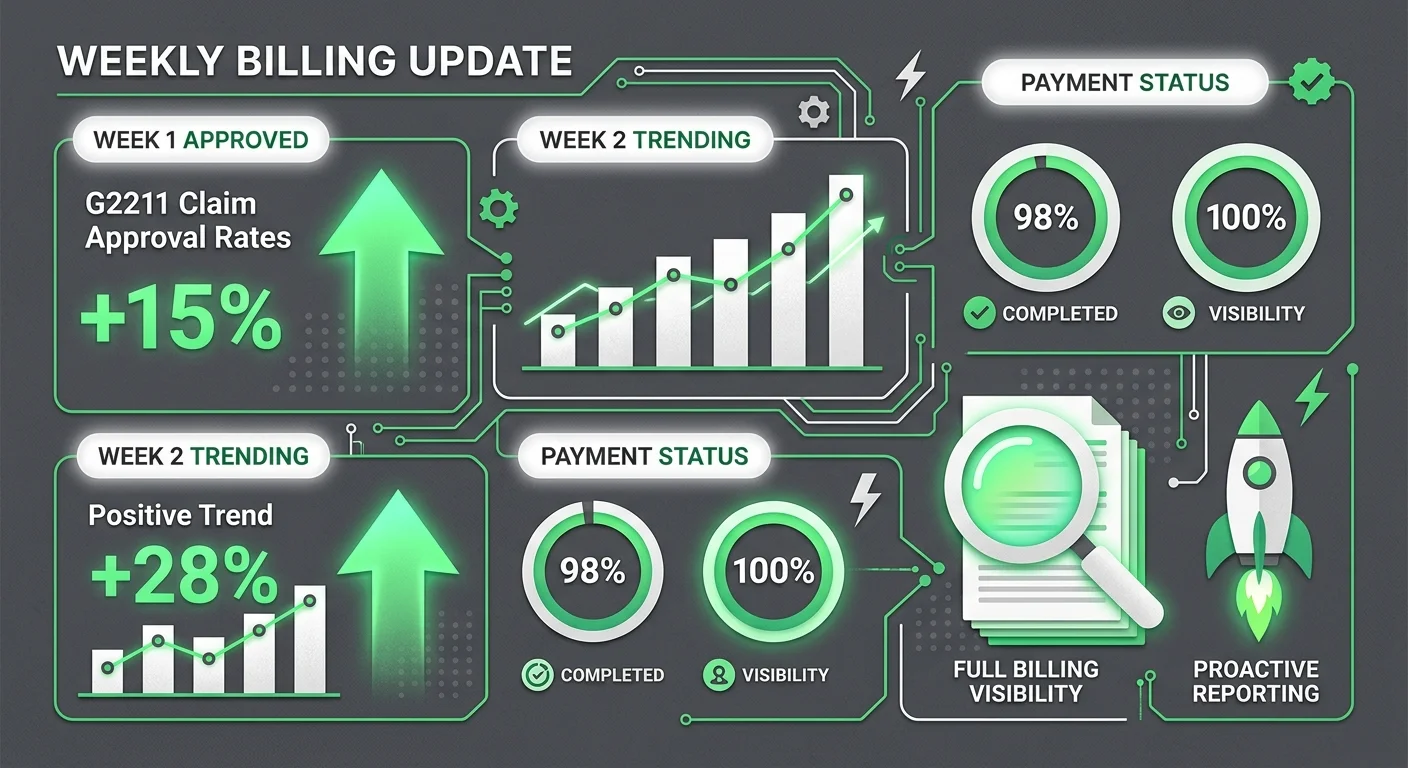
When a billing partner surfaces documentation patterns every week — this visit note doesn't reflect an ongoing relationship, this record supports the AT modifier but not the G2211 layer, this patient file needs clarification before the next submission — the practice corrects the problem before it becomes a pattern.
Not after the audit letter arrives. That's the structural advantage of a billing partner that communicates by design, not when asked.
What Handling a G2211 Denial Looks Like
A G2211 denial is not the end of the claim. It is the beginning of a documentation argument.
The difference between a practice that recovers that revenue and one that writes it off is whether their billing operation knows how to build the appeal — and whether the underlying record supports one.
Working a G2211 denial means going back into the visit record, identifying which element of the complexity argument the payer rejected, and determining whether the documentation can be clarified — or whether the note simply doesn't support the code.
Both outcomes matter. The first opens a recoverable appeal. The second surfaces a documentation gap that, if corrected, protects every future claim.
Neither happens in a volume model. A complex denial costs more time than the throughput model budgets for it. So the claim gets written off — and the practice never finds out what it lost or why.
Here's the operational reality: G2211 is the reimbursement mechanism CMS built specifically to compensate for longitudinal complexity. But the code only pays when the documentation is already there to back it up — visit by visit, before the claim goes out.
That requires a billing partner who knows the practice, reviews documentation before submission, surfaces problems weekly, and works denials with clinical fluency.
That's not a description of a billing feature. That's how Bushido Billing operates — built that way by design, not assembled as an add-on.
| G2211 Risk Scenario | Surface-Level Billing | Careful Claim Review | Revenue Impact |
|---|---|---|---|
| Under-documented longitudinal relationship — visit notes reflect a single encounter rather than an ongoing complex care episode | Submits G2211 based on code eligibility flags in the EHR; no review of whether the record actually reflects longitudinal complexity | Reviews the visit note against the patient's documented care history before submission; flags notes that don't support a longitudinal complexity argument and requests clinical clarification | Surface-level billing creates a pattern of indefensible G2211 claims that build audit exposure over time; careful review protects revenue and prevents retrospective review |
| G2211 submitted alongside modifier 25 on the same date of service — a hard CMS prohibition | Applies codes based on surface-level triggers without cross-checking modifier pairing restrictions; violation passes through submission undetected | Cross-checks every claim for modifier 25 conflicts before submission; G2211 is removed from any same-date E/M service carrying modifier 25 | Surface-level billing results in denied claims and a flagged billing pattern; careful review eliminates the pairing error at the source before it compounds |
| AT modifier and G2211 documentation treated as a single argument — one record built to satisfy both | Submits both codes without verifying that the documentation independently supports the manipulation necessity claim and the E/M longitudinal complexity claim | Confirms that two separate, independently defensible documentation arguments exist before submitting both codes on the same claim | Surface-level billing submits claims with one argument where two are required; careful review ensures both reimbursements are defensible and recoverable on appeal |
| G2211 denial received — payer rejects the longitudinal complexity argument | Writes off the denial or submits a generic appeal without identifying which element of the complexity argument failed | Reviews the denial rationale, identifies the specific documentation gap, determines whether the record supports an appeal or requires a clinical correction, and acts on both outcomes | Surface-level billing results in permanent revenue loss; careful review either recovers the denied claim or corrects the documentation pattern that will cost the practice on future submissions |
| Active care vs. maintenance care boundary unclear in visit notes — record doesn't explicitly distinguish the two | Processes the claim without flagging the ambiguity; if the distinction isn't visible to the submission engine, it doesn't exist in the workflow | Identifies documentation that fails to clearly establish active, complex care before G2211 is submitted; surfaces the gap to the provider before the claim reaches the payer | Surface-level billing sends an indefensible claim to a payer who will reject it on review; careful review prevents the submission error and preserves the practice's audit profile |
| High-volume patient panel — biller has no context for which patients carry genuine longitudinal complexity | Applies G2211 uniformly based on code criteria without clinical context for individual patient relationships | Builds patient-level familiarity over time; distinguishes which cases reflect genuine ongoing complexity versus repeat encounters that don't qualify, and codes accordingly | Surface-level billing creates indiscriminate G2211 usage that inflates audit risk across the entire patient panel; careful review applies the code precisely where it's defensible |
Frequently Asked Questions About G2211 Chiropractic Billing
Knowing the rules is one thing. Running claims under them is another.
That gap is exactly where most G2211 errors live — and where most practices have no idea they're exposed.
These are the questions that surface when G2211 moves from concept to claim. No hedging. No gray area manufactured where none exists.
Can chiropractors bill the G2211 add-on code for all Medicare office visits?
No. G2211 is not a universal add-on you append to every Medicare office visit.
It applies to outpatient E/M services where the provider is genuinely functioning as the continuing, longitudinal care manager for a patient with ongoing or complex conditions. A routine episodic visit doesn't qualify. A follow-up that doesn't reflect real clinical complexity doesn't qualify.
The visit note has to independently carry the argument that this patient's case required the cognitive complexity CMS designed the code to compensate — that's the standard CMS locked in when it made G2211 effective January 1, 2024. If the note can't stand on its own, the code doesn't belong on the claim. Full stop.
What specific documentation must a chiropractor record to support G2211 complexity?
Three things have to be explicit. First, the patient has an ongoing condition — not a single acute episode — that requires longitudinal management. Second, this specific visit reflected genuine clinical complexity in how that condition was evaluated, not a routine follow-up. Third, the provider's role is that of a continuing care manager, not a one-time intervention.
Here's where practices get burned: a note that documents the spinal manipulation and satisfies the AT modifier does not automatically satisfy G2211. Those are two separate documentation arguments.
The G2211 layer requires its own explicit case for the complexity of the E/M component. CMS expects that argument to stand entirely alone — separate from the manipulation documentation, separate from the necessity signal the AT modifier carries. One note cannot serve both without being built to do both.
Does G2211 apply to routine maintenance adjustments or only active therapeutic care?
G2211 does not apply to routine maintenance care. That's not a gray area.
Maintenance care holds a patient's current status. It's not actively addressing an acute, complex condition requiring ongoing clinical management. CMS built G2211 to compensate the cognitive work of managing longitudinal complexity — and maintenance care sits entirely outside that framework.
At the manipulation level, maintenance care is already excluded from Medicare-covered chiropractic services. So the G2211 documentation argument — ongoing complexity, longitudinal relationship — cannot be constructed around a visit that is functionally maintenance.
Practices applying G2211 to maintenance visit patterns are not billing aggressively. They are building audit exposure across every claim in that pattern. That's the distinction that matters.
Can G2211 be billed on the same service date alongside the AT modifier?
Yes — but only when the documentation independently supports both. That condition matters more than most practices realize.
The AT modifier and G2211 operate on entirely different layers. The AT modifier addresses the spinal manipulation: active, acute, medically necessary. G2211 addresses the E/M component: the longitudinal complexity of managing this patient's ongoing condition. One record cannot carry both arguments by default. Two separate claims require two separate documentation builds.
Here's the hard restriction: G2211 cannot be billed when the E/M service on the same date carries modifier 25. CMS is explicit on this. That pairing is a structural billing error — not a judgment call, not a gray area. Modifier 25 signals a separately identifiable E/M on the same day as a procedure. That is a different clinical scenario than the longitudinal complexity G2211 exists to capture.
Submitting both is a pattern auditors flag. Repeated violations move a practice from a denied claim to a scrutinized account.
How do Medicare administrative contractors audit G2211 usage within allied health specialties?
Medicare administrative contractors audit G2211 by looking for patterns — not isolated claims.
A single G2211 claim with solid documentation rarely draws scrutiny. A practice that applies G2211 across high claim volume where visit notes don't consistently reflect longitudinal complexity builds a utilization profile that invites retrospective review.
Auditors ask a direct question: is this provider actually functioning as the continuing, longitudinal care manager for complex patients? Do the visit notes look substantively different from episodic care records — or do they read like repeat encounter documentation with a complexity code appended?
Chiropractic and allied health specialties face additional scrutiny because the longitudinal complexity argument is less intuitive to reviewers who associate chiropractic with episodic manipulation. That's exactly why documentation discipline isn't optional for practices carrying G2211 volume. Billing review with genuine clinical fluency in chiropractic coding isn't a premium add-on — it's the operational minimum.
What happens to G2211 claims when the billing company uses automation-forward processing?
Automation applies codes based on surface-level triggers in the record. It cannot evaluate whether the documentation independently supports the complexity argument G2211 requires.
The result is predictable. G2211 goes out on claims where the visit note satisfies the trigger condition but not the full CMS eligibility standard. Those claims either deny immediately — or pass initial review and become audit targets later. Neither outcome is visible in real time to a practice running claims at volume without clinical review.
It compounds from there. Automation doesn't catch the modifier 25 restriction in every edge case. It doesn't flag documentation gaps before submission. And it doesn't work complex denials when they arrive — because working a G2211 denial means going back into the clinical record and building a documentation argument the automated system was never equipped to assess.
Practices using automation to manage G2211 aren't billing the code. They're scheduling future denials and audit exposure at the same time.
The Bottom Line on G2211 and Your Practice Revenue
G2211 is not a code you append. It is a clinical argument you build — visit by visit, record by record, across a longitudinal relationship that CMS requires you to prove existed before the claim was ever submitted.
The practices that get paid for that complexity are the ones whose documentation reflects it precisely.
The practices that get audited are the ones whose billing operation treated it like a toggle.
So here's the question every G2211 claim is actually asking: who reviewed your records before that claim went out?
Not automation. Automation processes what it can process — and stops there. Not a volume-first biller. They don't have the capacity, and high-complexity claims aren't worth their time to work.
What it takes is continuity across your patient panel, real clinical fluency at the AT modifier boundary, and a review structure that catches problems before they compound. That's the difference between a paid claim and a denial you didn't see coming.
The 2026 Medicare audit environment isn't a future risk to plan around. It's the current standard — and right now, there are practices carrying G2211 exposure they haven't accounted for yet.
Bushido Billing was built to close that gap before the denial arrives. Not after.
If your billing operation isn't reviewing documentation at that level, you're not unlocking reimbursement. You're building the case against yourself. The key only works when the lock is right.
So here's the question your billing operation can't dodge: is someone reviewing the clinical record before G2211 goes out — or is the code firing on a trigger and quietly building your audit exposure claim by claim? If you don't know the answer, that's the answer.
Book a Call to see how your G2211 claims are actually being handled

© 2026 Bushido Billing. All Rights Reserved | Web Design by iTech Valet