

Professional AR Cleanup vs. Hiring In-House: Which Recovers Revenue Faster?
Professional AR cleanup and hiring in-house are not the same decision.
They address the same surface problem — unpaid claims and aging accounts receivable. But the timelines, cost structures, and recovery outcomes are completely different.
AR cleanup is the systematic process of reviewing, reworking, and recovering unpaid or underpaid insurance claims. It targets aging accounts receivable that have gone unworked — denials never appealed, claims submitted incorrectly, payments short-processed without follow-up. The goal is to recover as much of that revenue as possible before claims age past the point of return.
The clock on aged AR does not pause.
Claims that are recoverable at 90 days become significantly harder to collect at 180 days. Some become uncollectible. Every week a claim sits unworked, it moves closer to gone.
Hiring in-house means recruiting, training, and ramping a billing employee to handle that recovery work internally. The appeal is control. But the hiring timeline alone extends over months — and the AR keeps aging while the practice posts the job listing.
A chiropractic-specialist billing partner starts differently. Human experts working exclusively in chiropractic revenue cycle management understand the coding rules that drive the highest denial rates — including AT modifier requirements for active versus maintenance care and the compliance patterns that federal reviewers target most aggressively. They begin working claims immediately. There is no ramp period.
The cost comparison shifts further when total employment costs enter the picture. Benefits, payroll taxes, and administrative overhead can add 30% to 40% on top of base salary. A performance-based billing partner is compensated on what they actually recover — not on what they submit.
For chiropractic practices evaluating which path recovers revenue faster, the answer is consistent: the specialist partner is working your AR while the in-house hire is still in training.
Last Updated: August 17, 2026
- • What AR Cleanup Actually Involves — and Why the Clock Starts Now
- • The Real Cost of Hiring In-House for AR Recovery
- • How a Specialist AR Cleanup Partner Works Differently
- • Where the Two Paths Diverge: Complex Claims and Chiropractic-Specific Rules
-
• Frequently Asked Questions
- • Why is chiropractic AR cleanup faster when handled by a specialist partner compared to in-house staff?
- • What are the hidden costs of hiring in-house medical billers for a chiropractic practice?
- • How does a specialist AR cleanup identify revenue lost to incorrect AT modifier usage?
- • Will working with a billing partner mean our practice loses control over patient billing data?
- • What is the first step in transitioning from an in-house billing team to a professional chiropractic billing partner?
- • The Verdict: Which Path Actually Gets Your Practice Paid
What AR Cleanup Actually Involves — and Why the Clock Starts Now
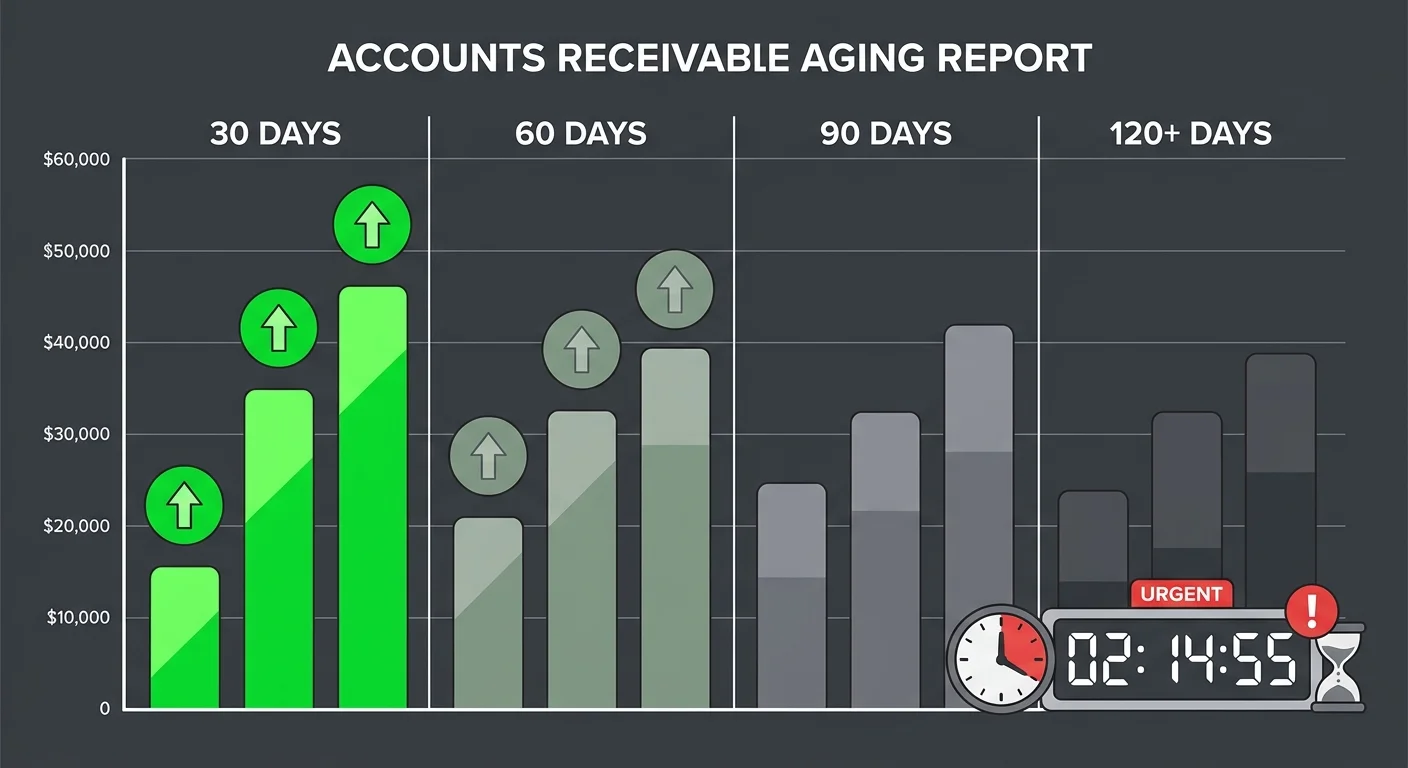
AR cleanup is not a backlog project.
It's a countdown.
Insurers have timely filing deadlines. Payers close appeal windows. Documentation gets harder to reconstruct the longer it sits. What's collectible at 90 days becomes a real fight at 180 days — and beyond that, you're looking at write-offs.
That window doesn't wait for your hiring decision. It closes on its own schedule.
What Counts as Aged AR — and What's Still Recoverable
Aged AR means unpaid or underpaid claims sitting unworked past standard collection timelines — the 90-day, 120-day, and 180-day aging buckets. Not all of it is gone. But the recovery window is narrower than most practice owners expect when they finally look at the report.
Recoverability comes down to three things: whether the payer's filing deadline has passed, whether the denial reason is workable, and whether the documentation still supports the original claim. A comprehensive practice audit draws that line clearly — separating what can still be recovered from what has already aged past return. Most practices are surprised by how much is still in play.
Here's the part that doesn't show up in the AR report: the cost of unworked claims isn't just the revenue that didn't come in. It's the time that was never available to catch them. NIH data quantifies how much non-clinical administrative overhead consumes practitioner hours daily — time that should be on patients, not on insurance paperwork nobody's following up on.
Why Submission Speed Is Not the Same as Revenue Recovery
Most billing operations measure success at submission. Clean claim goes out, box gets checked, and that's where the tracking stops.
But revenue recovery is everything that happens after submission — the denial review, the appeal, the corrected coding, the follow-up on silence. None of that is automated. Someone has to work it. And when the Medicare Physician Fee Schedule conversion factor shifts annually, as published analysis confirms, any claims management system that doesn't adjust immediately creates a new layer of underpayments quietly stacking in the AR — waiting for someone who's actually paying attention.
Practices with the cleanest AR reports aren't submitting more claims.
They're working the ones that came back wrong. That's a fundamentally different skill — and it's the one that determines whether aged AR becomes collected revenue or a permanent write-off.
| AR Age Bucket | Typical Recoverability | Primary Obstacle | Required Action |
|---|---|---|---|
| 0–60 Days | Strong — most claims still within filing window | Lack of follow-up on initial denials or underpayments | Review denial reason, correct coding or documentation, resubmit promptly |
| 61–90 Days | Moderate to strong — workable with the right documentation | Denial patterns go untracked; no one assigned to appeal | Audit denial reasons by payer, prioritize high-value claims, initiate appeals |
| 91–120 Days | Moderate — filing windows narrowing depending on payer | Insufficient documentation to support medical necessity on appeal | Reconstruct documentation where possible, escalate complex denials to specialist review |
| 121–180 Days | Limited — some claims still recoverable, many approaching write-off risk | Appeal windows closing; payers less responsive to late submissions | Triage by payer rules, concentrate effort on highest-value salvageable claims |
| 180+ Days | Low — most payers have closed filing and appeal windows | Timely filing deadlines passed; documentation increasingly difficult to reconstruct | Write-off analysis to identify any remaining avenues; process audit to prevent recurrence |
The Real Cost of Hiring In-House for AR Recovery
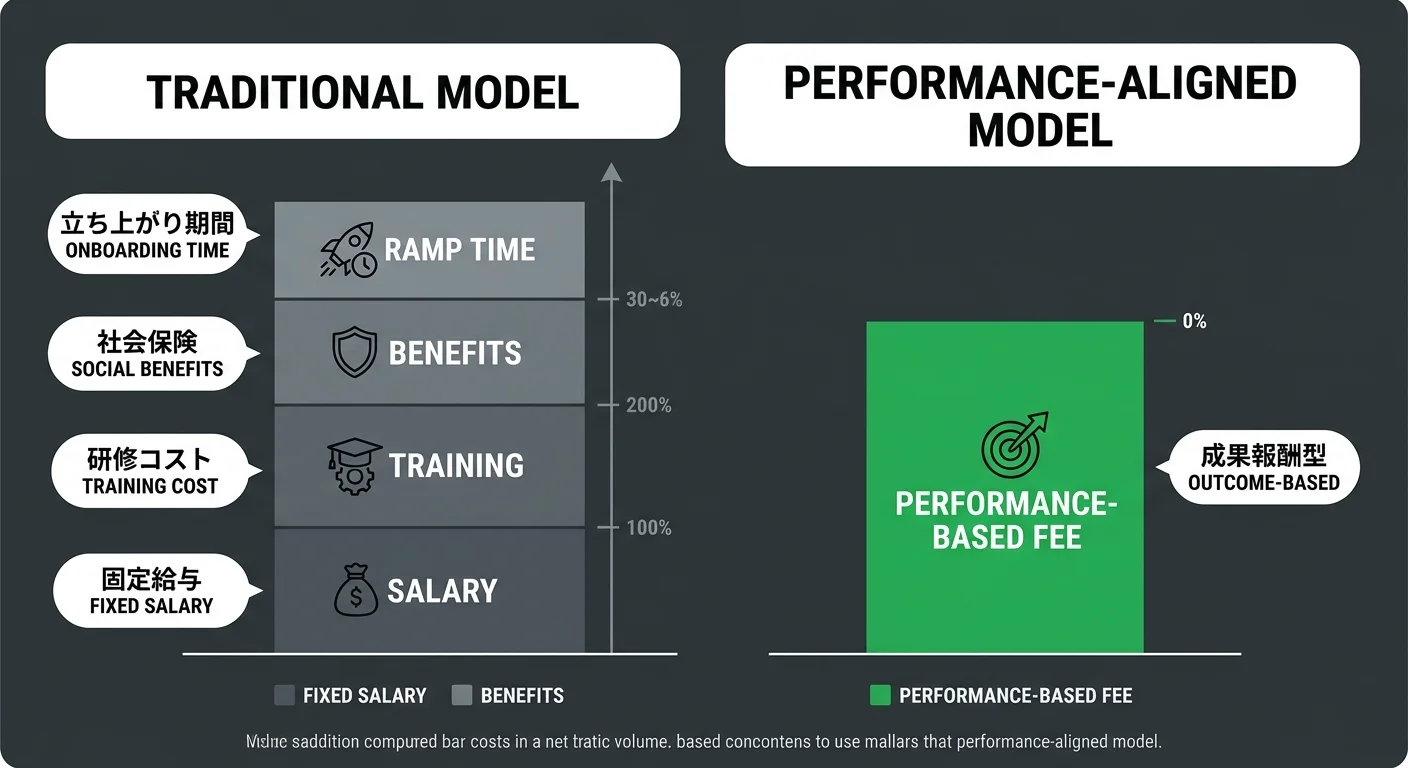
Hiring in-house feels like control. It looks responsible. But the actual cost — measured in overhead, ramp time, and AR that keeps aging while the search runs — is almost never what the practice calculated when it posted the job.
The number practices focus on is base salary. That number is almost never the real number.
According to SBA cost analysis, internal staff hiring costs can rise by an additional 30% to 40% beyond base salary once benefits, payroll taxes, and administrative overhead enter the picture. That delta does not appear on the job posting. It shows up later — in the budget, and in the AR that kept aging while the practice was making the hire.
The Overhead No One Calculates Before Posting the Job
The number on the offer letter is not the number. Benefits, payroll taxes, and administrative overhead add 30% to 40% on top of that base salary commitment. For a billing role, that overhead is not hypothetical. It kicks in before the new hire has touched a single claim — and it compounds every week the AR sits unworked.
Then there's the time cost. Posting the role, reviewing candidates, running interviews, checking references — none of that is billable work. All of it pulls practice leadership away from clinical operations. Research through the National Institutes of Health confirms practitioners are already losing meaningful patient-facing time to insurance paperwork. Adding a full hiring cycle to that load doesn't fix the problem. It buries it deeper.
A professional chiropractic billing partner doesn't carry those overhead costs. The compensation model is performance-based — payment tied to what actually gets recovered, not what gets submitted. That structure matters most when AR is aged and every recovered dollar is in a race against the payer's appeal window.
The Ramp-Up Gap: What Happens to AR While You Wait
Here's what the hiring conversation almost never names: the new employee doesn't start working AR on day one. They spend weeks learning the EHR, the payer mix, the coding patterns, and the documentation standards specific to chiropractic billing. That ramp period is real time. And during that real time, your AR keeps aging.
The clock on aged AR doesn't pause during onboarding. Claims sitting in the 90-day bucket when the job was posted move to 120 days. Claims already at 120 days start approaching the thresholds where payer appeal windows close and documentation becomes harder to reconstruct. What was recoverable when the hiring decision was made may not be recoverable by the time the new hire is ready to work it.
A specialist working exclusively in chiropractic revenue cycle management starts immediately. No ramp. No learning curve on AT modifier rules or payer-specific appeal protocols. The first week is recovery work — not orientation.
Who Is Not the Right Fit for This Decision
This isn't the right decision for every practice. And being direct about that matters more than trying to make it fit.
If the first question in the evaluation is about rate, this isn't the right conversation. The recovery difference between a generalist in-house hire and a chiropractic-specialist partner isn't determined by monthly cost. It's determined by how much aged AR gets recovered before it becomes unworkable. Rate is a cost question. Recovery is a revenue question. Those aren't the same calculation — and conflating them is how practices lose money while thinking they're saving it.
And if a practice expects zero engagement — no EHR access cooperation, no documentation support, no availability when denied claims need clarification — neither path works. Effective AR recovery is a working relationship. Practices that disengage from the process get disengaged results. That's true regardless of who handles the billing.
| Cost Category | In-House Hire | Specialist Billing Partner |
|---|---|---|
| Base Compensation | Fixed salary regardless of recovery performance | Performance-based — compensated on what is actually recovered |
| Total Employment Cost | Base salary plus benefits, payroll taxes, and administrative overhead adds significant cost beyond the offer letter | No benefits load, no payroll taxes, no administrative overhead — cost is tied directly to revenue returned |
| Ramp-Up Period | Weeks to months of learning the EHR, payer mix, and chiropractic-specific coding rules before meaningful AR work begins | Begins working claims immediately — no orientation period, no learning curve on AT modifier rules or payer appeal protocols |
| Specialty Knowledge | General billing skills that may not cover chiropractic-specific requirements such as modifier compliance, PI lien workflows, or Medicare documentation standards | Deep chiropractic revenue cycle expertise built in — the rules that drive the highest denial rates are already understood before the first claim is touched |
| AR During the Hiring Process | Claims continue aging while the search, interviews, and hiring process run — recovery opportunity narrows before the hire begins | Recovery starts in the first week — the window on aged claims is not lost to a search timeline |
| Turnover Risk | Staff attrition restarts the ramp process and leaves AR unworked during the gap | Dedicated billing relationship with redundancy built in — no single-point-of-failure risk when a staff member leaves |
| Communication Structure | Reporting depends on internal management culture — no structural accountability to produce it | Proactive weekly updates are a structural feature — the practice knows what is happening with its claims without having to ask |
How a Specialist AR Cleanup Partner Works Differently

Here's the thing: this isn't really a speed comparison.
It's an incentive comparison. A chiropractic-specialist billing partner isn't running a mixed workload across a dozen specialties. Their entire operation is built around the claim types that drain the most revenue from practices like yours.
OIG reviews have documented that chiropractic billing carries higher rates of compliance errors and denial patterns than most specialties. Active therapeutic modifier misuse is one of the most frequently targeted issues.
A generalist biller doesn't arrive knowing those patterns. They learn on your claims — or they don't learn at all. A chiropractic-specialist partner already works inside them. That's not a small distinction.
And that distinction compounds when AR is already aged.
The claims a volume-first operation walks away from — complex denials, modifier disputes, cases where a medical necessity argument is the only path to payment — those are exactly the claims a specialist is built to recover. That's not a niche edge case. That's where the recoverable revenue lives.
Performance Alignment: Why the Incentive Structure Changes Everything
A performance-based billing partner gets paid on what they actually recover. Not on what they submit. Not on claim volume.
That changes everything about how they work.
When a billing partner's compensation is tied directly to collections, a complex aged claim isn't a cost center to avoid. It's the job.
There's no internal logic that makes abandoning a difficult denial the rational move. Every recoverable claim carries weight. Walking away from it means leaving money on the table — their money, not just yours.
So the hardest claims don't get deprioritized. They get worked.
And federal compliance data from OIG backs this up. The claims most prone to billing errors and modifier misuse are the same ones that require the most human follow-through to correct.
Volume-first models don't budget time for that follow-through. So it doesn't happen. The claim ages, then dies.
A performance-aligned partner doesn't have that version of the trade-off. Every hour spent working a difficult denial connects directly to what gets recovered. Practices that understand this — especially those working through what it means to onboard a billing partner after an audit — carry that alignment into the ongoing relationship from day one.
Dedicated Biller Assignment and Weekly Communication as Structure, Not Extras
Dedicated biller assignment isn't a customer service perk.
It's a decision about how information moves inside a billing relationship. And that decision has real consequences for how fast — and how completely — you recover.
When one biller is assigned to a practice, that person knows the payer mix, the documentation patterns, and the recurring denial reasons. They are not reconstructing context on every call.
That institutional knowledge is what makes recovery faster. It is also what makes weekly communication updates meaningful — not generic status reports, but specific information about what was worked, what came back, and what is moving.
Proactive weekly communication isn't a luxury. It's how problems get surfaced before they compound into cash flow disruptions.
HIPAA-compliant data handling requires that electronic health records be maintained with administrative, technical, and physical safeguards. A dedicated biller who communicates consistently is the human layer that keeps those standards operational — not as a compliance checkbox, but as a functioning practice.
Silence from a billing relationship isn't professionalism. It's a structure that hides problems until they become crises. By then, the recoverable window on a lot of those claims has already closed.
| Capability | Volume-First Generalist Biller | Chiropractic Specialist Partner |
|---|---|---|
| AT Modifier & Chiropractic Coding | Applies general coding knowledge — modifier rules learned on the job, inconsistently applied across payer types | Works exclusively inside chiropractic modifier rules daily — active vs. maintenance care distinctions are not a learning curve, they are the baseline |
| Complex Denial Recovery | Deprioritizes high-friction denials — time cost exceeds what a volume model budgets, so aged complex claims are abandoned | Structured to recover complex denials — performance-based compensation means there is no rational incentive to abandon a workable claim |
| Payer-Specific Appeal Protocols | Uses generalist appeal templates — not calibrated to chiropractic payer behavior or the documentation patterns those payers require | Applies chiropractic-specific appeal strategies built from payer patterns encountered repeatedly across the specialty |
| Dedicated Practice Knowledge | Rotates across multiple specialties — no persistent institutional knowledge of a single practice's payer mix or coding tendencies | Assigns one dedicated biller per practice — that person knows the claim history, the recurring denial reasons, and the documentation standards without re-learning them on every engagement |
| Proactive Communication | Reports reactively — practices learn about problems when they ask, or when a crisis surfaces in cash flow | Communicates proactively on a weekly cadence — problems surface early, before they age into write-offs |
| Personal Injury Lien Billing | Treats PI liens as edge cases — billing workflows are not designed for the documentation and follow-through these cases require | Manages PI lien workflows as a defined service line — the complexity is expected, not exceptional |
| Performance Alignment | Compensated on time or flat retainer — recovery volume does not directly affect the biller's compensation | Compensated on collections — recovering more is not discretionary effort, it is the structural incentive driving every decision |
Where the Two Paths Diverge: Complex Claims and Chiropractic-Specific Rules

The gap between an in-house hire and a chiropractic-specialist doesn't show up on clean claims. It shows up hardest on the claims your practice can least afford to lose.
Generalist staff handle what generalist training covers. Clean claims. Standard coding. Payers who follow a normal remittance schedule.
But the moment a claim involves an AT modifier dispute, a personal injury lien workflow, or a Medicare fee schedule adjustment that was never applied — the gap opens. That's where aged AR compounds fastest. That's where revenue disappears without anyone naming it.
A chiropractic-specialist works inside these claim types every day. That expertise isn't something you develop during an onboarding period. It's already there — and that's what separates a complex denial that gets collected from one that becomes a permanent write-off.
AT Modifier Errors: The Denial Pattern Generalists Miss Most
Here's the thing about the AT modifier: the rule itself isn't complicated. The application is. Every day, in every claim, someone has to make a judgment call about which visits qualify — and whether the documentation actually supports that call.
The coding guidelines are unambiguous: the AT modifier applies only during active therapeutic treatment — not maintenance care. That distinction looks clean on paper. But in an actual chiropractic practice, where a patient's care moves between active and maintenance phases on an individual basis, applying it correctly across hundreds of claims requires specialty attention. Federal reviews have documented this directly: chiropractic billing carries elevated compliance errors and denial rates, with AT modifier misuse among the most frequently cited issues.
When a generalist in-house hire misapplies the AT modifier — or misses that it was omitted entirely — the denial isn't random. It's a predictable outcome of applying general billing knowledge to a specialty rule. Practices that track how denial patterns translate to payer negotiation leverage understand this clearly: the pattern has to be named before it can be fixed. A chiropractic-specialist tracks AT modifier compliance as a core function — not an edge case that surfaces when a denial lands. It's built into how every claim gets worked.
Personal Injury Lien Billing and Why It Requires Specialty-Level Handling
Personal injury lien billing doesn't follow the same rules as standard insurance claims. Payment is contingent on case resolution — not a remittance schedule. The payer is often an attorney's office or a settlement fund. That changes the documentation requirements, the follow-up cadence, and the entire risk profile of the case.
A generalist in-house hire who hasn't worked PI lien cases isn't just unfamiliar with the workflow. They don't know the risk profile. Liens can age for months or years. Documentation requirements are stricter than standard claims. Coordination between the practice, the patient, and legal representation requires consistent follow-through that most billing training doesn't cover.
When those cases stall, the revenue doesn't vanish overnight. It sits on the AR report, aging, while no one with lien experience decides what to do with it.
A chiropractic-specialist who handles PI lien cases regularly already knows the documentation standards, the coordination protocols, and the timelines. That experience doesn't transfer through a training period — it comes from having worked hundreds of those cases. Practices looking for chiropractic billing services that include PI lien handling need a partner who has already built that workflow. Not one who'll figure it out alongside them.
Medicare Fee Schedule Updates and What Happens When Your Biller Isn't Watching
Annual updates to the Medicare Physician Fee Schedule conversion factor directly change what your practice gets paid. A biller who isn't adjusting promptly doesn't create a visible error — they create a quiet layer of underpayments that compounds in the AR before anyone notices.
An in-house hire who isn't actively tracking CMS updates will submit claims at the wrong rate. That's not negligence — it's a bandwidth problem. Staying current with Medicare fee schedule changes is a full-time responsibility stacked on top of the billing work itself. Most in-house billers are already managing more than they can track.
Fee schedule compliance is one of the first things that slips. The practices that stay current are the ones whose billing partner treats regulatory monitoring as built-in — not something they get to when they have time.
That monitoring also makes recovery work defensible. When a specialist identifies that underpayments trace back to a fee schedule adjustment that was never applied, they can reconstruct and resubmit with documentation to support it. Practices working with compatible chiropractic EHR billing platforms close that loop faster — but only when the human watching the claims is already fluent in CMS update cycles. Software doesn't catch a rate error it was never programmed to flag. A specialist does.
| Claim Type | Complexity Driver | In-House Risk | Specialist Advantage |
|---|---|---|---|
| AT Modifier Disputes | Requires daily judgment calls distinguishing active therapeutic treatment from maintenance care on a claim-by-claim basis | Generalist staff apply standard billing knowledge to a specialty-specific rule, producing predictable denial patterns | Specialist tracks AT modifier compliance as a core workflow function — applied consistently across every claim, not escalated when flagged |
| Personal Injury Lien Billing | Payment is contingent on case resolution; payer is often legal representation rather than an insurance carrier following standard remittance | Unfamiliar risk profile — generalist staff lack exposure to lien timelines, documentation standards, and coordination protocols with legal parties | Specialist already operates inside PI lien workflows — documentation requirements, coordination protocols, and timeline expectations are built in, not learned during recovery |
| Medicare Fee Schedule Adjustments | Annual CMS conversion factor updates require prompt claims management adjustments — a full-time monitoring responsibility layered on top of active billing work | Fee schedule compliance is among the first responsibilities to slip when in-house staff are already at capacity — underpayments compound quietly before anyone notices | Specialist treats regulatory monitoring as a structural part of the work — can identify, reconstruct, and resubmit underpayments tied to missed rate adjustments |
| Aged Complex Denials | High-friction claims requiring medical necessity arguments, multi-step appeals, and documentation corrections — each taking more time than a volume model budgets | Volume-first or generalist operations deprioritize these claims because working them costs more time than the throughput model allows — claims age and die | Performance-aligned specialist has structural incentive to recover every workable claim — the complex denial is the work, not a cost center to route around |
| Maintenance vs. Active Care Documentation | Patient care transitions between active and maintenance phases individually — applying the distinction consistently across hundreds of claims demands specialty attention | Without specialty training, documentation gaps go undetected until a denial surfaces — by which point the claim may already be aging | Specialist monitors documentation patterns against coding requirements in real time — catches the gap before it becomes a denial rather than after |
Frequently Asked Questions
Every practice comparing professional AR recovery to in-house hiring circles the same three questions. Speed. Cost. Control. Here is what those questions actually mean — and what the answers require you to sit with.
These are not hypothetical objections. The decision to wait has a dollar amount. Every week the AR sits is a week the workable claims get older and the recoverable window gets smaller.
Why is chiropractic AR cleanup faster when handled by a specialist partner compared to in-house staff?
Speed comes from what a specialist already knows on day one. AT modifier compliance, payer-specific denial patterns, personal injury lien documentation standards — that is not learned during the engagement. It is already operational when the work starts.
An in-house hire builds that same knowledge while the backlog ages. The ramp period is not a planning abstraction. It is real time, and the clock on aged AR does not pause while it runs.
The performance-aligned model closes the gap further. When a billing partner's compensation depends on what actually gets collected, complex aged claims get prioritized — not set aside. That incentive structure is what separates fast from faster.
What are the hidden costs of hiring in-house medical billers for a chiropractic practice?
The visible cost is the salary. But benefits, payroll taxes, and administrative overhead add 30% to 40% on top of base compensation. That number does not appear in the job posting. It shows up later — in the budget, and in the AR that kept aging while the practice was making the hire.
There is also a compliance cost that rarely enters the calculation. Federal reviews have documented elevated denial rates and billing errors in chiropractic claims, with AT modifier misuse among the most cited issues. A generalist hire who is not fluent in chiropractic-specific rules does not just cost salary. They cost the revenue that walks out through the errors they never catch.
That is the hidden number. And it compounds.
How does a specialist AR cleanup identify revenue lost to incorrect AT modifier usage?
The AT modifier applies only during active therapeutic treatment phases — not maintenance care. A specialist reviews existing claims against that standard and identifies where the modifier was misapplied, omitted, or unsupported by documentation on file.
That is not a one-time scan. It is a pattern analysis. When a denial cluster traces back to AT modifier misuse, a specialist can reconstruct documentation, resubmit correctable claims, and flag the documentation practice that created the pattern — so it stops producing the same denials going forward.
Federal reviews have flagged AT modifier misuse as a recurring compliance issue in chiropractic billing. Practices that catch it through a structured review stop losing revenue on a problem that was never random — it just went unaddressed.
Will working with a billing partner mean our practice loses control over patient billing data?
Control over patient billing data is a HIPAA compliance requirement — not a feature a billing partner can opt out of. Electronic health records require administrative, technical, and physical safeguards regardless of who handles the billing. A professional billing partner operates inside those standards as a structural condition.
What changes is not control. It is visibility. A dedicated biller assigned to the practice communicates what is happening with claims every week. That is more information than most in-house arrangements actually produce.
Practices that feel most in control of their billing are the ones whose billing partner tells them clearly what is moving — and what is not. Silence is not control. It is the absence of information dressed up as stability.
What is the first step in transitioning from an in-house billing team to a professional chiropractic billing partner?
The first step is a structured review of the current AR. What is in it, how old it is, which claims are still workable, and which have already aged past the point of return. That assessment answers the foundational question: how much revenue is recoverable, and under what conditions.
From there, the transition is a working handoff. EHR access, payer credentials, documentation protocols — these move through a clear intake process. Practices that show up as partners in that process move through it faster.
The goal is not to replicate the in-house setup. It is to replace it with something structurally built to recover what the in-house setup left behind — and to stop creating the same backlog again.
The Verdict: Which Path Actually Gets Your Practice Paid
Here's the honest answer: in-house hiring feels like control because it's familiar.
But familiar is not the same as functional.
The question was never whether a practice could staff billing internally. It was whether that path actually gets the aged, complex claims paid — before they cross from difficult to gone.
Every day a denied AT modifier claim, an unworked personal injury lien, or a fee schedule underpayment sits untouched, it ages. And aged AR does not hold its value.
An in-house hire needs weeks — sometimes months — to recruit, onboard, and learn the specialty patterns that determine which claims are worth fighting. That ramp time is not free. It is paid in recoverable revenue that does not wait for anyone.
A chiropractic-specialist billing partner starts knowing what to work and why it matters. The performance-aligned model does the rest. When compensation depends on what actually gets collected, the hardest claims are not overhead to avoid. They are the job.
Practices that recover AR fastest are not the ones who hired the most. They are the ones who stopped asking the wrong question.
This is not in-house versus professional recovery. It is a question of whether the people working the claims are structurally motivated to collect them.
Bushido Billing was built around that answer. The backlog is real. The revenue is still recoverable — some of it. But that window is not permanent.
The clock on aged AR does not pause.
Some of that AR is still recoverable. Not all of it — but more than most practices think. The longer it sits, the less that's true. Bushido Billing starts with a structured review: what's in the backlog, what's still workable, and what it will actually take to collect it. Book a Call to see what's still on the table.

© 2026 Bushido Billing. All Rights Reserved | Web Design by iTech Valet