

How to Use Audit Data to Negotiate Better Rates with Private Insurance Payers?
Audit data negotiates better insurance rates when a chiropractic practice organizes its clinical records, denial histories, and code pairing documentation into a structured case — one that gives a commercial payer a specific, evidence-based reason to adjust contracted fee schedules.
That data already exists in every active practice. Modifier usage records, SOAP note documentation, denial patterns, service-line histories — all of it is generated in the course of treating patients. The problem is not a shortage of evidence. The problem is that most practices never convert it into an argument.
Private commercial payers mirror Medicare standards when auditing documentation for active clinical progression. That means the same clinical records that justify care to a patient also justify a rate increase to a payer — if they are clean, organized by denial category, and presented systematically rather than dumped as raw transaction history.
Practices that attempt unilateral rate negotiations without this documentation consistently fail to secure adjustments. Payers have no obligation to move without evidence. Presenting granular claims history — cost-of-service data, patient density by payer, denial resolution outcomes — gives a practice negotiating weight that a generic fee schedule request cannot produce.
Clinical documentation errors and modifier misapplications are leading triggers for insurer payment rejections in chiropractic billing. A targeted audit surfaces those patterns. And when it does, it accomplishes two things at once: it identifies recoverable revenue inside existing AR, and it documents the complexity of care that payers have historically underpaid.
Targeted audits of claim structures regularly capture unbilled revenue that generic processing systems leave behind. That same output — organized by payer, service line, and denial category — becomes the evidence package a practice brings to a fee schedule renegotiation.
FTC and DOJ antitrust guidelines require individual practices to independently compile and present their own clinical performance data when negotiating reimbursement rates with commercial payers. This cannot be automated. Software processes claim volume. It cannot synthesize denial trend metrics into a structured legal argument. Human analysis of practice audit data is required to transform raw transaction histories into a case a payer takes seriously.
The audit trail is already built. The question is whether anyone is using it.
Last Updated: August 17, 2026
- • Why Your Audit Data Is Already a Negotiation Asset
- • Why Generic Billing Systems Can't Build Your Negotiation Case
- • Building the Negotiation File: What to Compile Before You Contact a Payer
- • Navigating Antitrust Rules and the Limits of What You Can Do Alone
-
• Frequently Asked Questions
- • How much historical audit data must a chiropractic practice compile before initiating commercial fee schedule negotiations?
- • What are the specific points of failure when attempting to extract payer denial metrics from generic EHR software?
- • Why do unilateral rate renegotiation attempts with private insurers consistently fail without specialty-specific billing documentation?
- • How does a strong AT modifier audit history protect a chiropractic clinic against private payer underpayments?
- • What is the realistic timeline for a billing partner to leverage audit trends into finalized contract adjustments?
- • The Paper Trail That Pays You Back
Why Your Audit Data Is Already a Negotiation Asset
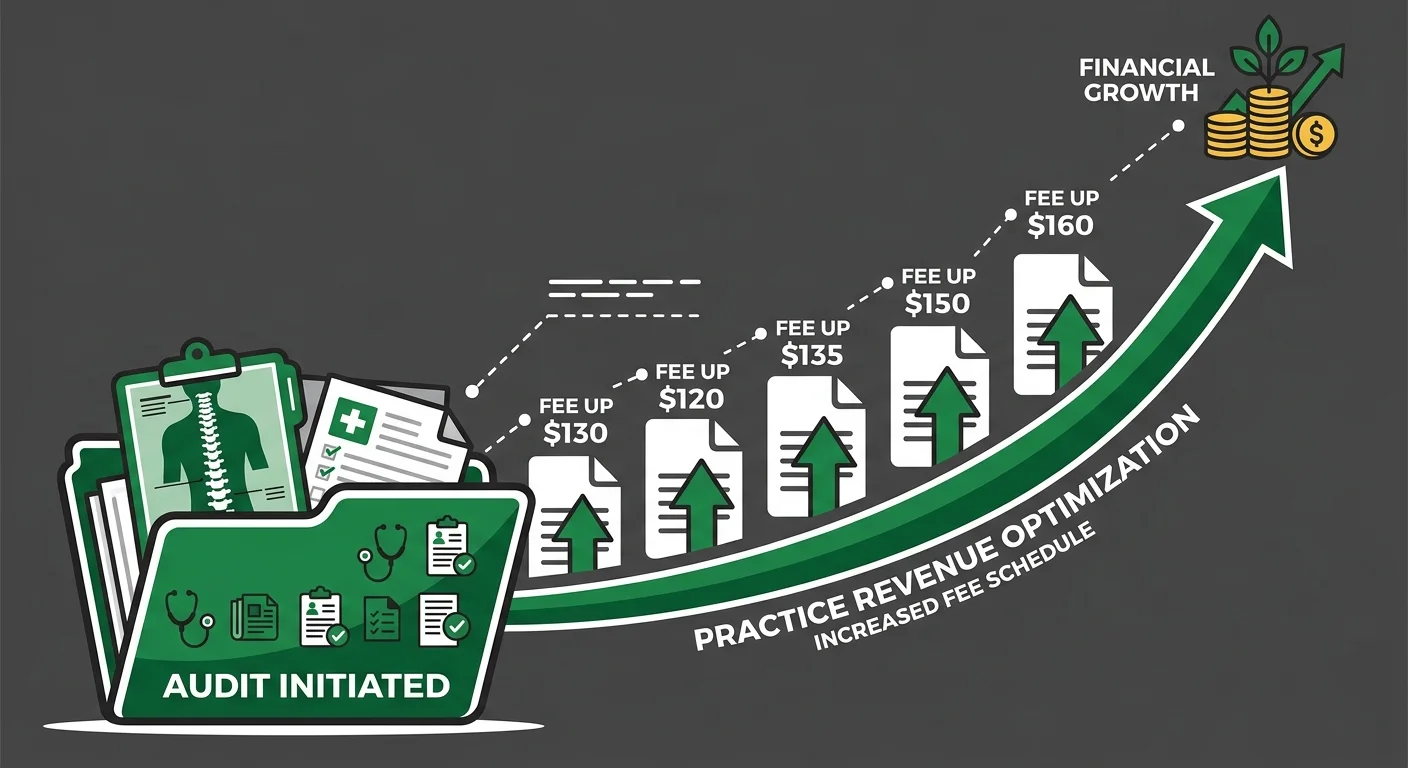
Every chiropractic practice is sitting on a negotiation asset it has never used.
The SOAP notes, modifier records, denial histories, and code-pairing logs inside the billing system are not administrative paperwork. They are a structured case for why commercial payers owe more.
Here's the thing: the clinical documentation that proves medical necessity to a Medicare auditor is the exact same documentation that forces a private payer to take a rate conversation seriously. Private commercial payers mirror Medicare standards when auditing documentation for active clinical progression. That means the records a practice already generates — every week, with every patient — are already doing double duty.
Most practices just don't know it.
But audit data only becomes a negotiation asset when someone organizes it, interprets it, and presents it with specialty-level precision.
Raw transaction logs don't move payers. A structured evidence package — built from denial trends, service-line density, and documented clinical progression — does.
What Payers Actually Respond To
Payers don't respond to rate requests. They respond to evidence. NIH-published research confirms that managed care contract evaluations can secure higher fee schedule adjustments when practices present granular claims history — and that unilateral negotiations fail when clinics cannot produce clean cost-of-service and patient density metrics.
That isn't a negotiating style. It's the threshold for getting a payer to engage at all.
So the question isn't whether a practice deserves higher reimbursement. The question is whether it can prove it.
Payers evaluate the complexity of care, the consistency of documentation, and the resolution rate on prior denials. Without that data in hand, a rate renegotiation is just a request. And payers ignore requests.
Published clinical documentation guidance makes the standard explicit: claim submissions using modifiers must adhere strictly to established documentation policies to prove medical necessity and survive payer audits.
That standard doesn't disappear at the negotiating table. It becomes the benchmark payers use to decide whether a practice's rates move at all. Meeting it isn't optional — it's the entry point.
Why Most Practices Never Use What They Already Have
The audit trail that surfaces hidden AR revenue is often the same evidence needed for fee schedule negotiations.
Most practices never connect those two functions. They treat a billing audit as a cleanup exercise — file the findings, move on.
That's the gap. Denial patterns don't get categorized by payer. Modifier misapplication history doesn't get compiled into a performance record. Cost-of-service data stays buried in reports no one has time to synthesize.
And when a payer contract comes up for renewal, the practice has nothing concrete to bring to the conversation — beyond the fact that it wants to be paid more. That's not a negotiation. That's a wish.
Bushido Billing's approach to chiropractic billing and revenue cycle management is built around exactly this problem.
The records already exist. What's missing is the specialty-level expertise to read them, organize them, and turn them into a case a commercial payer cannot dismiss.
| Audit Data Type | What It Reveals | Negotiation Leverage It Creates |
|---|---|---|
| AT Modifier Usage Records | Whether active care vs. maintenance care distinctions are consistently documented across all treating providers | Demonstrates to commercial payers that the practice meets the same clinical documentation threshold Medicare requires — making rate downgrades harder to justify |
| Denial Trend History by Payer | Which payers are systematically underpaying or denying specific service lines — and whether those patterns repeat across claim cycles | Provides a payer-specific evidence trail that transforms a generic rate request into a documented pattern of underpayment requiring correction |
| SOAP Note Completeness Records | Gaps in clinical justification that triggered prior rejections, and where documentation consistently met or exceeded payer thresholds | Establishes the practice's clinical rigor as a measurable standard — evidence that care complexity is real, not asserted |
| Cost-of-Service Data by Service Line | The actual cost of delivering care relative to the contracted reimbursement rate per payer | Gives the practice a factual baseline to argue that current rates do not reflect the true cost of delivering specialty physical medicine care |
| Patient Density Metrics by Payer | The volume and frequency of patients treated under each commercial contract, segmented by payer | Signals to payers the practice's patient volume commitment — and the economic consequence of losing that relationship over a rate dispute |
| Denial Resolution Outcomes | The rate at which previously denied claims were successfully appealed, and the clinical documentation that supported each resolution | Proves the practice's billing operation is proactive and competent — a factor commercial payers weigh when evaluating whether a practice warrants preferred rate tiers |
Why Generic Billing Systems Can't Build Your Negotiation Case
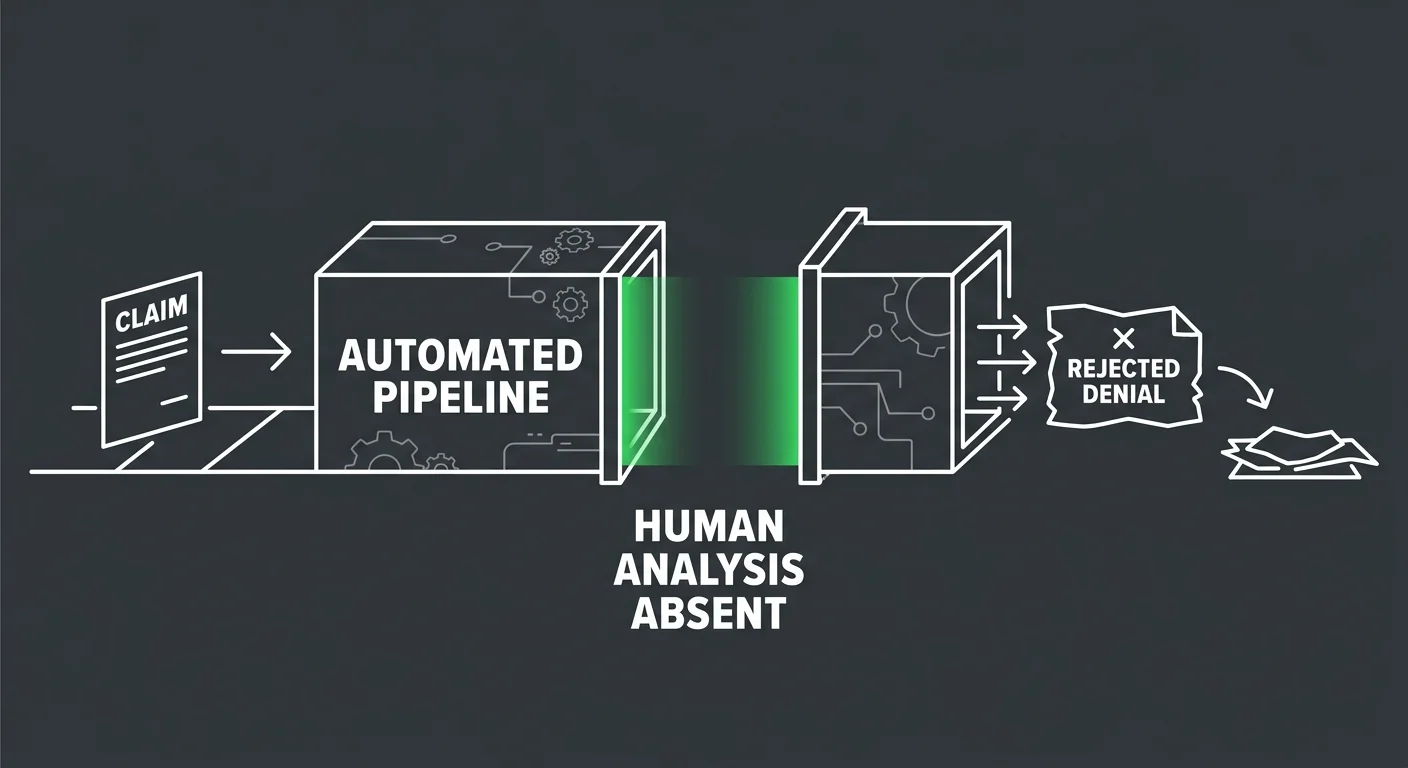
Most practices assume their EHR is handling billing. It isn't. Not in any way that matters when a payer contract comes up for review.
Software platforms process claim volume. That's what they're built for — moving clean claims through the pipeline efficiently. But the moment a claim requires interpretation, the moment a denial pattern needs synthesis, the moment a payer contract demands evidence, the software has nothing to offer. It was never designed to.
But the deeper problem isn't what software misses on a single claim. It's what it never builds over time. NIH research on outpatient billing confirms that systemic billing and coding discrepancies cause significant revenue leakage — and that targeted audits of code pairings regularly capture unbilled revenue that generic processing systems leave behind. Software doesn't track those patterns. It just keeps submitting.
What Submission Software Actually Does — and Doesn't Do
Here's the thing: submission software does one thing well. It sends claims. Eligibility confirmation, payer formatting, clearinghouse routing — that's the full scope.
What it cannot do is read a denial, categorize it by payer and modifier type, compare it against six months of denial history, and flag a pattern worth documenting for a rate negotiation. That requires human analysis. EHR software compatibility with a billing workflow is a real operational concern — but compatibility is not capability. A connected system still can't think.
Human analysis turns raw transaction histories into a case a payer takes seriously. Practices that confuse submission with billing find out the difference when a contract comes up for renewal and they have nothing concrete to show. Running a fee schedule research audit — one that maps code-level reimbursement gaps and payer-specific underpayment patterns — makes immediately clear why software can't run one.
The Denial Pattern Problem No EHR Can Solve
Denial patterns are information. They tell you which payers are flagging which modifier combinations, which service lines are getting downgraded, and which documentation gaps are creating recoupment risk. That's actionable intelligence. But only if someone is actually reading it — and reading it with specialty-level context.
Generic EHR systems record denials. They don't read them. There's a real difference between a denial sitting in a report no one synthesizes and a denial trend categorized by payer, organized by modifier, and compiled into a performance record. The first is noise. The second is ammunition.
That synthesis requires someone who understands the specialty well enough to know which denial patterns actually matter — and why a given payer keeps triggering them. A weekly communication cadence with an embedded billing specialist surfaces those patterns in real time, instead of letting them pile up in a report no one reviews. Software doesn't build a negotiation case. It builds a backlog.
| Capability | Automated EHR / Billing Software | Specialty Billing Partner with Audit Expertise |
|---|---|---|
| Claim submission | Formats and routes clean claims to the clearinghouse efficiently | Submits claims with modifier precision appropriate to chiropractic-specific coding requirements |
| Denial processing | Records denials in a report — no categorization, no pattern analysis | Categorizes denials by payer, modifier type, and service line to identify actionable trends |
| Audit data synthesis | Cannot synthesize raw transaction histories into structured arguments or performance records | Compiles denial histories, cost-of-service data, and code-pairing gaps into an organized evidence package |
| Payer-specific pattern tracking | Treats each claim in isolation — no longitudinal view across payer behavior | Tracks denial trends by payer over time, surfacing which contracts consistently underperform |
| Fee schedule negotiation support | No capability — software has no pathway from data to negotiation strategy | Organizes clinical performance records into a structured case for commercial rate renegotiation |
| Documentation compliance monitoring | Flags formatting errors at submission — cannot evaluate clinical documentation quality | Reviews documentation against specialty-specific standards, including modifier application and medical necessity criteria |
Building the Negotiation File: What to Compile Before You Contact a Payer
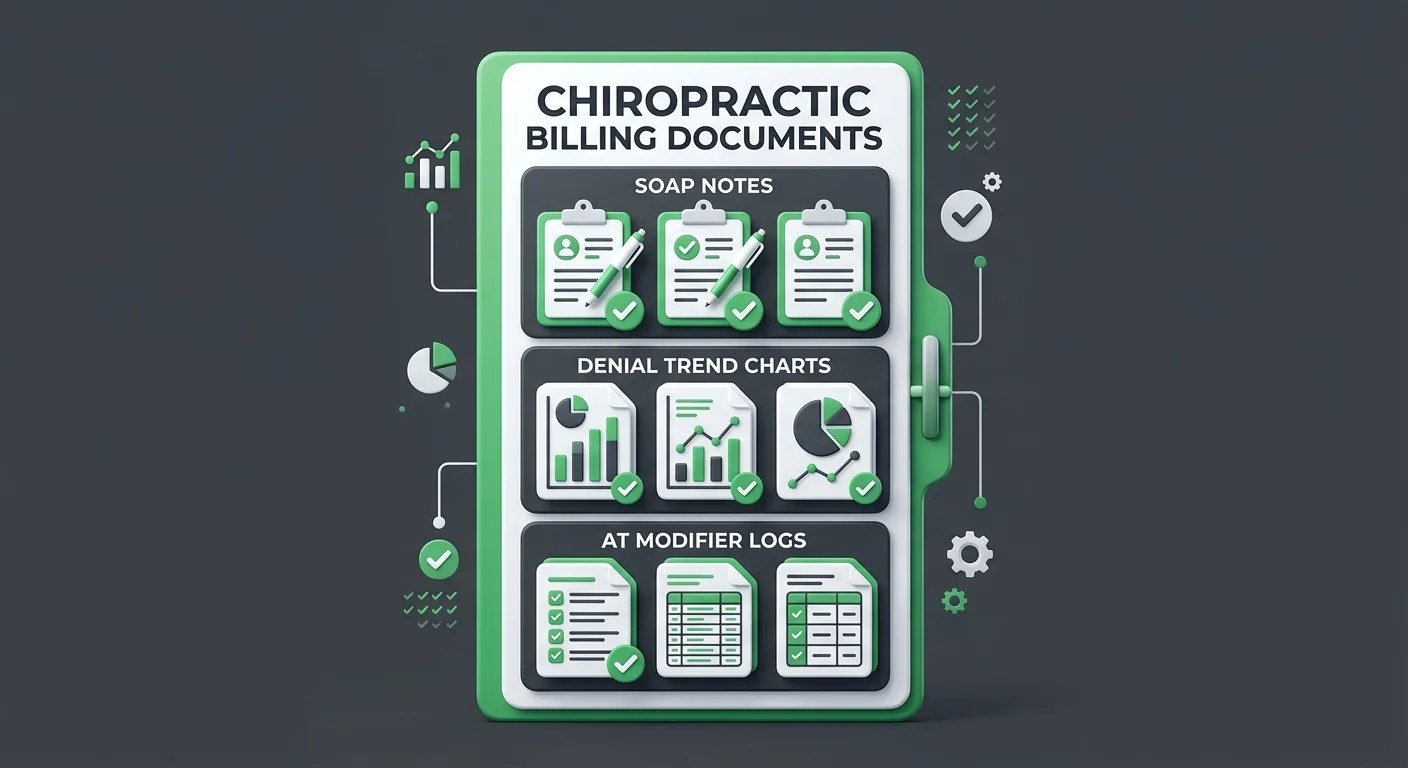
So what does the case actually require?
Start with what payers evaluate. Then work backward.
A negotiation file isn't a billing report.
It's a structured evidence package — organized by payer, service line, and clinical category — that makes the complexity of your care legible to someone whose job is to pay out as little as possible. That's the audience. Build for them, not for yourself.
That package has specific inputs.
Practices that show up without them are guessing. Practices that walk in with a complete file are negotiating. Those are not the same conversation — and payers know which one you're having within the first five minutes.
Clinical Documentation That Survives Payer Scrutiny
The foundation of any negotiation file is clinical documentation. And the standard isn't forgiving.
CMS is explicit: claim submissions using the AT modifier must adhere strictly to established documentation policies to prove medical necessity and survive payer audits. That same threshold governs what a commercial payer will accept as justification for a higher rate tier. The bar doesn't move because the context changed.
Private commercial payers mirror Medicare standards when auditing documentation for active clinical progression. That's not a coincidence — it's policy alignment.
Every SOAP note referencing acute or corrective care, every objective functional marker, every documented progression toward discharge — that's simultaneously a compliance record and a commercial negotiation asset. Your practice is already generating this material. Most practices just never organize it into something a payer has to reckon with.
But NIH clinical review data is unambiguous on where practices fall short: a high percentage of specialty denials trace directly to failure to state functional goals and objective progress markers in patient files. Standard documentation audits surface that gap immediately — and so does a commercial payer reviewer.
A practice that can show its documentation consistently clears that bar across hundreds of encounters has something concrete to bring to a rate conversation. A practice audit reveal hidden revenue in your current AR is often what surfaces whether the documentation standard is actually being met — or just assumed.
Denial Trend Reports: Turning Rejection Patterns into Rate Arguments
Denial trend reports are where the negotiation argument takes shape.
Not the raw denial count. The pattern. Which payers are flagging which modifier combinations. Which service lines are getting downgraded consistently. Which documentation gaps are triggering recoupment risk across multiple claim types. That's the specificity a payer actually responds to — because it signals you know what they're doing.
Targeted audits of code pairings regularly capture unbilled revenue that generic processing systems leave behind. Organized by payer and denial category, those same findings become evidence of a systematic underpayment pattern — not a one-off dispute.
That reframe matters. A single denied claim is a billing problem. A documented pattern across six months of claims is a contract conversation. Payers know the difference. Your practice needs to walk in knowing it too.
Why AT Modifier Histories Are Your Sharpest Tool
AT modifier histories occupy a specific position in any chiropractic negotiation file.
They don't just document individual claim decisions. They build a longitudinal record of clinical complexity that payers can't easily dismiss — because the record spans encounters, not arguments.
The AT modifier requires documented SOAP notes showing acute or corrective care — not maintenance. That's the compliance requirement.
But a practice with a clean, consistent AT modifier history is doing something beyond compliance. It's demonstrating — across every relevant encounter — that its patients present with complexity that justifies active treatment billing. That's not a request for a rate increase. That's a performance record. Payers treat those two things very differently.
Clinical documentation errors and modifier misapplications are leading triggers for insurer payment rejections. That's the exposure side.
But a practice that can show the inverse — sustained AT modifier compliance across a defined period, with denial rates trending downward — has turned its audit history into a credibility signal. The audit that exposes gaps internally is the same record that forces a payer to take the rate conversation seriously. A fee schedule research audit is where that record gets assembled — not as an afterthought, but as the starting point.
| Negotiation File Component | Source | Why Payers Take It Seriously |
|---|---|---|
| SOAP Note Documentation Archive | Clinical records organized by encounter type, date range, and payer | Demonstrates consistent medical necessity documentation across active treatment episodes — the same standard commercial payers use when auditing for clinical progression |
| AT Modifier Compliance History | Claims data filtered by modifier type, organized chronologically by payer | Establishes a longitudinal performance record showing sustained modifier accuracy — reframes rate negotiation from a request into a documented credibility signal |
| Denial Trend Report by Payer and Modifier | Denial data categorized by payer, service line, and denial reason code | Converts isolated claim rejections into a documented pattern of systematic underpayment — a single denial is a billing problem; a six-month trend is a contract conversation |
| Code Pairing and Billing Error Audit | Targeted audit of procedure code combinations and claim-level discrepancies | Reveals unbilled revenue and coding gaps that generic processing systems miss — and shows the payer that the practice operates with clinical and coding precision |
| Functional Goals and Outcome Documentation | Patient file excerpts showing objective progress markers and discharge targets | Directly addresses the documentation gap most commonly cited in specialty denials — practices that can show consistent functional goal documentation remove the payer's easiest objection |
| Payer-Specific Reimbursement Comparison | Fee schedule data mapped against current contracted rates by CPT code | Makes the underpayment gap concrete and code-level specific — shifts the negotiation from a general rate complaint to a line-item discrepancy the payer must address |
Navigating Antitrust Rules and the Limits of What You Can Do Alone
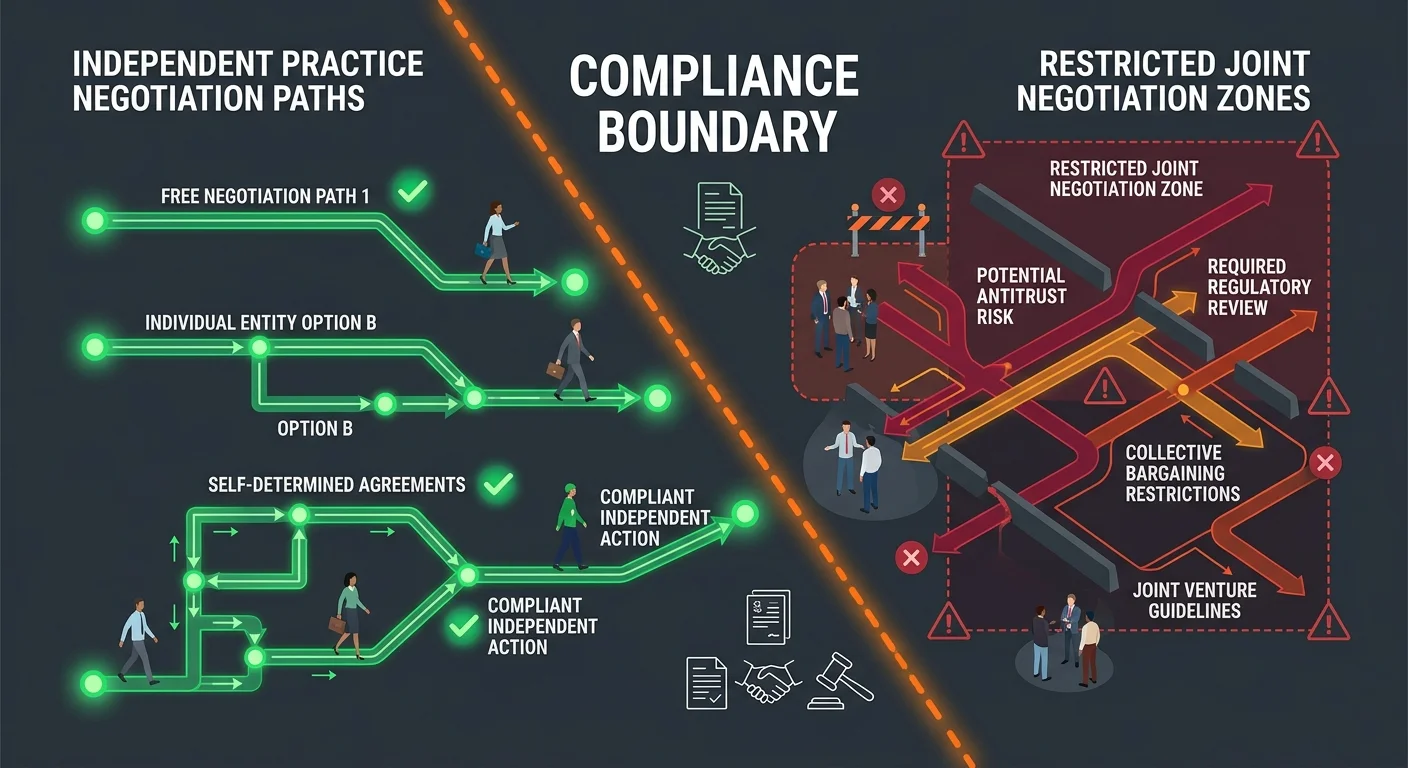
Here's the thing most practices never see coming: the audit data is ready, the case is solid, and then the legal rules land.
There are hard boundaries governing how independent providers can bring that data to a commercial payer. Crossing them — even without knowing they exist — creates an exposure that has nothing to do with billing.
The line between a legitimate rate negotiation and an antitrust violation isn't always visible from inside a practice.
Individual practices must independently compile and present their clinical performance and audit data to justify higher rate tiers. That word — independently — is doing more legal work than most practice owners realize. It's not a stylistic preference buried in guidance documents. It's the boundary.
So the audit data matters. The clinical record matters. But FTC guidance draws a hard line between individual advocacy and anti-competitive price coordination — and that line governs who's in the room, not just what's in the file.
What FTC and DOJ Guidance Actually Means for Your Practice
Joint negotiations between independent providers are heavily restricted under FTC and DOJ joint statements. That's not a technicality buried in regulatory fine print.
A group of practices can't collectively agree on a target rate and approach a payer as a bloc — not even informally, not even when every practice in the room has identical justification for the increase. The restriction is categorical. The moment the negotiation becomes coordinated, the legal exposure shifts.
But that restriction doesn't limit what a single practice can do with clean internal data. Managed care contract evaluations confirm that presenting granular claims history can secure higher fee schedule adjustments.
A practice that walks into a rate conversation alone — with a well-organized audit file — is doing exactly what the rules allow. The distinction that determines the outcome isn't legal standing. It's whether the file was built by someone who understands the specialty well enough to make it legible to a payer's contracting team.
The stakes extend beyond the negotiation itself. Unilateral payer contract negotiations fail when clinics can't produce clean cost-of-service and patient density metrics. That data requirement doesn't change based on who's doing the negotiating.
What changes is whether someone with specialty-level expertise has organized that data into a form a payer's contracting team can evaluate — and act on. That's not a legal question. That's a capability question. And most practices are walking into those conversations without the file that would give them any standing.
Who This Rate Negotiation Path Is Not For
This rate negotiation path isn't for every practice. Being direct about that upfront saves time on both sides.
If the first question about working with a billing partner is what the rate is — this is not the right conversation.
Not because the question is wrong. Because the answer tells you nothing about whether the practice ends up with a better contract. Process, documentation depth, and specialty expertise determine negotiation outcomes. Rate determines cost. Those are different conversations, and conflating them is how practices end up with the cheapest option and the same underpayment problem.
And if the goal is a one-time audit that clears a backlog and hands control back to whatever created the backlog — the negotiation value won't show up.
Building the kind of audit record that moves a commercial payer requires sustained, organized documentation over time. That's a working relationship. Practices that treat it like a transaction get transaction results: a cleaner AR report and the same contracted rate they started with.
Practices ready to approach it differently are the ones that actually get to the table.
| Negotiation Approach | Permitted Under FTC Guidance | Practical Outcome Without Audit Data |
|---|---|---|
| Single practice negotiating independently using its own audit file | Yes — fully permitted; the foundational model under FTC guidance | Fails without organized claims history, denial trend data, and documented cost-of-service metrics — payer has no basis to adjust rates upward |
| Group of independent practices agreeing on a target rate before approaching a payer collectively | No — constitutes anti-competitive price coordination under FTC and DOJ joint statements | Creates legal exposure regardless of audit data quality; the data itself becomes irrelevant if the negotiation structure violates antitrust rules |
| Single practice using specialty-specific denial pattern data to document systematic underpayment by a specific payer | Yes — individual advocacy grounded in documented clinical performance | Weakens significantly without payer-segmented denial reports; a generalized claim of underpayment carries no weight in a contracting conversation |
| Practice presenting AT modifier compliance history across multiple encounters to justify active treatment billing complexity | Yes — longitudinal clinical performance data is individual to the practice and legally appropriate to present | Collapses without a sustained documentation record; a spotty modifier history undermines the credibility of the rate argument entirely |
| Practice using a billing partner to organize and present audit data on its behalf in a payer contracting discussion | Yes — representation of an individual practice does not constitute joint negotiation | Loses effectiveness if the billing partner lacks specialty-level knowledge of chiropractic coding, modifier rules, and payer-specific denial patterns |
| Practice referencing competitor rate structures or industry-average fee schedules as the basis for a rate request | Restricted — referencing external rates without individual practice data risks anti-competitive framing | Fails as a standalone argument; payers respond to a practice's own documented clinical performance, not to generalized market comparisons |
Frequently Asked Questions
These questions come from practice owners who are past the 'why.' They know their audit data matters. What they're still working through is the mechanics — how much, which kind, and what to do when the system they've been relying on was never built to surface it.
These aren't hypothetical edge cases. They're the friction points that separate practices that actually renegotiate their commercial fee schedules from practices that submit the same claims at the same contracted rate — indefinitely.
How much historical audit data must a chiropractic practice compile before initiating commercial fee schedule negotiations?
There's no magic claim count. What commercial payers evaluate is consistency — whether the documentation holds up across a representative period, not whether a specific number of claims has been filed.
What moves a contracting team is a clean, organized record showing sustained clinical complexity and modifier compliance over time. Individual practices must independently compile and present their own clinical performance data to justify higher rate tiers. That means the file needs to show a pattern. Not a snapshot.
A practice with six to twelve months of well-organized denial trend data, AT modifier histories, and code-pairing records is in a meaningfully stronger position than one sitting on years of unanalyzed claims in a generic system. Volume matters far less than whether the data has been structured into something a payer's contracting team can actually evaluate — and act on.
What are the specific points of failure when attempting to extract payer denial metrics from generic EHR software?
Generic EHR platforms are claim submission tools. Full stop. They process volume. They don't synthesize denial trends by payer, flag modifier misapplication patterns, or organize code-pairing discrepancies into anything a contracting team can use.
The failure point is extraction. The data exists inside those systems — but pulling denial metrics by payer category, isolating AT modifier rejection rates, and cross-referencing documentation gaps against specific service lines requires analysis that no automated pipeline performs. Standard documentation audits reveal the lack of clinical justification needed to appeal commercial payer downgrades. But only when someone is actually looking for it.
Software reports what happened. It doesn't tell you why it happened, which payer is driving the pattern, or what that pattern means for a rate conversation. That gap — between recorded data and interpreted evidence — is where specialty-specific human analysis earns its place.
Why do unilateral rate renegotiation attempts with private insurers consistently fail without specialty-specific billing documentation?
Because the payer's contracting team has no obligation to move without evidence. And most practices walk in without it.
Unilateral payer contract negotiations fail when clinics can't produce clean cost-of-service and patient density metrics. That's not a negotiating posture — it's a structural data requirement. A rate request without supporting documentation gives a payer no legal or contractual reason to adjust the fee schedule. So they don't.
But presenting granular claims history can secure higher fee schedule adjustments. The word granular matters. A general appeal to fairness doesn't move a contracting team. A well-organized audit file — showing documented clinical complexity, sustained modifier compliance, and a denial trend that reflects systematic underpayment — is a different conversation entirely. Payers respond to evidence. Practices that arrive without it aren't negotiating. They're requesting.
How does a strong AT modifier audit history protect a chiropractic clinic against private payer underpayments?
A consistent AT modifier history does two things at once. It defends individual claims. And it builds a longitudinal record of clinical complexity that's very difficult for a payer to dismiss at the contract level.
The AT modifier must be supported by documented SOAP notes indicating acute or corrective care rather than maintenance care. A practice that holds that standard across hundreds of encounters — and can demonstrate it through an organized audit record — isn't just protecting those claims. It's proving that its patient population consistently presents with the complexity that active treatment billing reflects. That's a performance record. Payers treat that differently than they treat a rate request.
Clinical documentation errors and modifier misapplications are leading triggers for insurer payment rejections. A practice that shows the inverse — sustained AT modifier compliance with a declining denial rate — has converted its audit history into a credibility argument. That's the record that makes a rate conversation harder for a payer to deflect.
What is the realistic timeline for a billing partner to leverage audit trends into finalized contract adjustments?
The timeline depends entirely on where the audit file starts. A practice with organized, well-documented claims history moves faster than one that needs to build that record from scratch.
But the negotiation itself isn't the long part. Presenting granular claims history to a payer's contracting team — once that file is properly built — is a defined process. What takes time is the audit work that produces a file clean enough to bring to that conversation without exposing gaps the payer can use against the practice.
Here's the honest framing: the billing partner isn't accelerating the negotiation. They're building the foundation that makes the negotiation possible. A practice that rushes the timeline by bringing an incomplete file to the table typically ends up back at the same contracted rate — or flagged for a documentation review. The audit file has to be ready before the conversation starts. That's not a scheduling problem. It's a sequencing problem.
The Paper Trail That Pays You Back
The paper trail isn't optional. It's the only thing a chiropractic practice actually controls when a commercial payer decides what your care is worth — and whether that number ever moves.
Every SOAP note. Every modifier history. Every denial trend report. That's either evidence you own or a position you've permanently given up.
Here's the thing: the audit that exposes your billing gaps is the same audit that forces a payer to take the rate conversation seriously. That's not a coincidence. It's the mechanism.
The documentation that proves medical necessity internally is the exact record that demonstrates clinical complexity externally. One file. Two uses. Practices that get this don't treat billing audits as administrative cleanup — they treat them as the foundation of every commercial negotiation that follows.
But that file doesn't build itself. It takes sustained, organized documentation over time — curated by someone who understands the specialty well enough to know which data points move a payer's contracting team and which ones don't. That's what Bushido Billing does. Not claim submission. Not volume processing. The structured, specialty-specific analysis that turns a practice's clinical history into a negotiation asset.
Your audit trail is already built. The question is whether anyone is using it.
The denial patterns are in the system. The modifier histories are there. The clinical records that prove complexity to a Medicare auditor — and should be proving it to every commercial payer on your panel — are sitting in your EHR right now.
What's missing is the specialty-level analysis that organizes it into something a payer's contracting team is required to respond to. The gap between an equitable fee schedule and the one you're currently accepting isn't a documentation problem. It's a decision about whether to use what you've already built.
Your audit trail exists. The real question is whether it's being used — or just sitting in your billing software while contracted rates stay flat. The practices that move their commercial fee schedules are the ones that built that record before a payer conversation was on the calendar. Book a Call to find out what your audit data is actually worth — and what it would take to make a payer take it seriously.

© 2026 Bushido Billing. All Rights Reserved | Web Design by iTech Valet