

What Are the Most Common Attorney Objections to Chiropractic PI Lien Settlements?
The most common attorney objections to chiropractic PI lien settlements are "Your Charges Are Too High Compared to Other Providers," "Medical Necessity Wasn’t Properly Documented," "The IME Report Contradicts Your Treatment Plan," and "We Need You to Reduce the Lien to Close the Settlement." These aren’t walls. They’re signals. Every objection is a narrative gap the attorney sees in the case file. Or a valuation gap they see in the billing data. Or a communication gap they experience with your billing partner. Approximately 95% of personal injury cases in the United States are settled out of court. Most PI lien recoveries happen through negotiation. That negotiation rests on three things: the attorney’s ability to justify your charges to the insurer, the strength of your documentation proving medical necessity, and the alignment between your biller and the attorney’s settlement strategy. When any of those three fail, you get an objection. The "too high" objection stems from the reasonable and customary standard. That compares your charges to what other local providers charge or what health insurers typically accept. The "medical necessity" objection comes from gaps in your clinical documentation. The IME objection is almost always the result of an insurance-funded exam designed to question the necessity or duration of your treatment. The "reduce to close" objection is the attorney’s way of saying the settlement math doesn’t work unless you accept less. In many states, if you refuse, the attorney can file a motion with the court to have a judge determine a reasonable payment. These objections are not legal roadblocks. They’re communication and valuation breakdowns. And they’re predictable.
The Four Attorney Objections That Cost Providers the Most Revenue
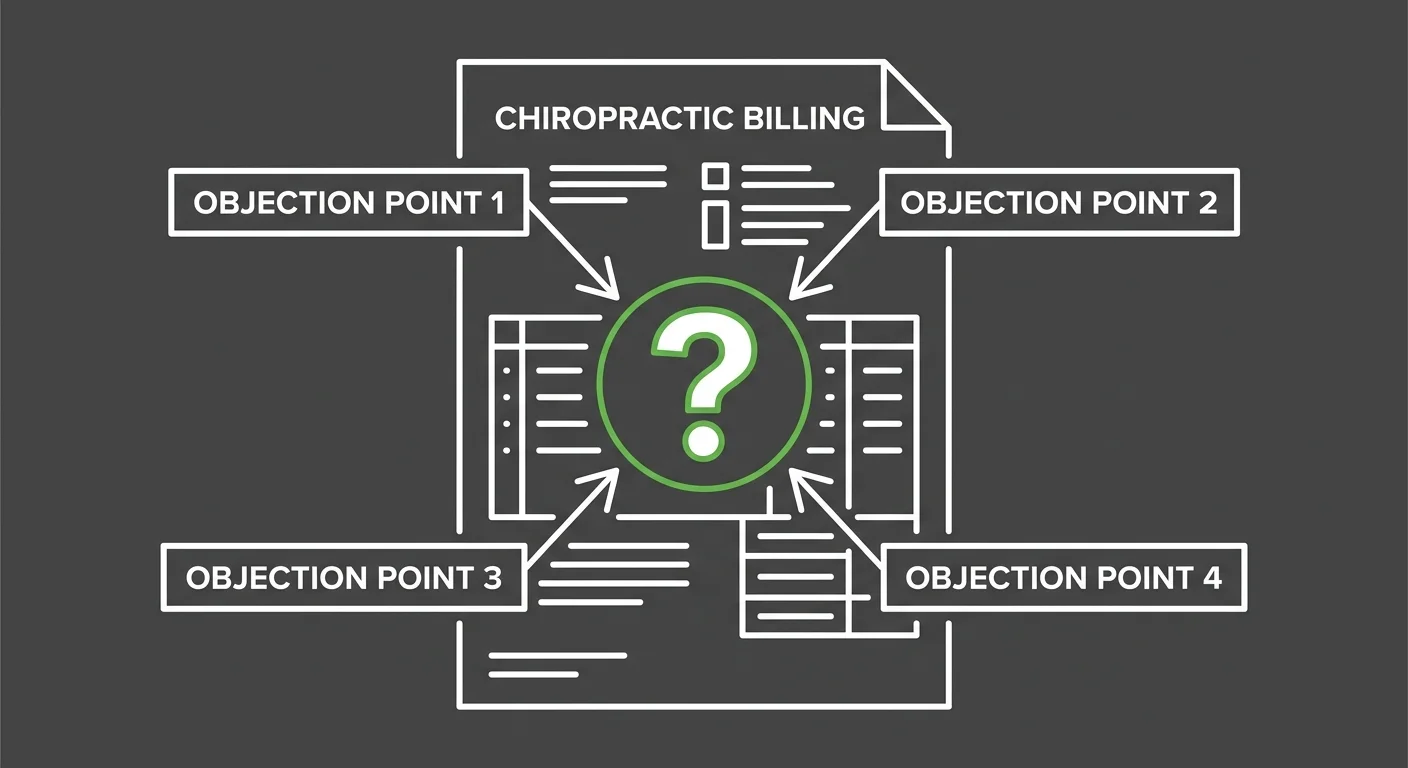
Every objection an attorney raises is a symptom.
It’s not a legal technicality. It’s not a negotiation tactic.
It’s a signal that something in the case narrative, the billing data, or the communication chain broke down before the attorney ever picked up the phone.
The four objections below aren’t rare edge cases. They’re the structural friction points that cost chiropractic practices the most revenue in PI lien recoveries.
And they’re predictable enough that a billing partner who knows the specialty can prevent most of them before they ever appear.
Here’s what each one actually signals – and what your billing partner should’ve done to kill it before the attorney ever saw it.
Objection 1: ‘Your Charges Are Too High Compared to Other Providers’
This objection isn’t about fairness.
It’s about the reasonable and customary medical charges standard – the yardstick attorneys and insurers use to decide whether your billing survives scrutiny. If your charges sit above what local providers bill or what health insurers accept, the attorney knows the insurer will fight. Hard.
That fight costs the attorney time and leverage.
The signal: your biller didn’t anchor your charges to market data before the lien went out.
A specialty billing partner knows the reasonable and customary range for your region. They flag outliers before the attorney sees them. A volume-first biller submits whatever you charged and hopes nobody asks.
The fix isn’t reducing your fee schedule.
It’s working with a billing partner who justifies your charges with regional benchmarking data, explains why your clinical protocols require higher-touch care, and communicates that justification to the attorney before the objection lands.
Not after.
Objection 2: ‘Medical Necessity Wasn’t Properly Documented’
Attorneys don’t reverse-engineer your treatment rationale from sparse notes.
If your documentation doesn’t clearly explain why the patient needed the frequency, duration, and modality you provided, the attorney can’t defend it.
And if they can’t defend it, they won’t.
This objection is a documentation gap.
The attorney is telling you that your clinical records don’t build the case for medical necessity documentation that an insurer or defense attorney will accept. Not that your care wasn’t necessary. That the file doesn’t prove it was.
A specialty billing partner reviews your documentation before the lien goes out. They flag weak narratives.
They know what insurers and attorneys look for in PI cases: objective findings, functional improvement tracking, and treatment goals tied to the injury. A generalist biller doesn’t read the notes. They bill what you reported and move on.
Objection 3: ‘The IME Report Contradicts Your Treatment Plan’
Independent Medical Exams are paid for by the insurance company. That creates a structural bias.
The IME physician is hired to question the necessity or duration of treatment. Their report is designed to undermine your clinical judgment. When an attorney says the IME contradicts your plan, they’re not siding with the IME. They’re warning you the insurer now has a weapon to devalue the claim.
This objection signals that your documentation didn’t preemptively counter the Independent Medical Examination (IME) reports.
A strong PI billing partner anticipates the IME. They build your clinical file with objective data, outcome measures, and evidence-based protocols that stand up to scrutiny. A weak billing partner assumes your notes are fine and lets the IME set the narrative.
You can’t fight the IME after the fact.
You fight it before it’s ordered by building a clinical file that’s airtight. That’s the difference between a billing partner who understands PI workflows and one who treats every case like a standard insurance claim.
Objection 4: ‘We Need You to Reduce the Lien to Close the Settlement’
Most providers hear this objection as coercion.
But it’s not. It’s math. The attorney is telling you the settlement offer doesn’t leave enough room to pay your full lien, cover the client’s damages, and still justify the case economically.
In many states, if you refuse to negotiate, the attorney can file a motion with the court to have a judge determine a reasonable payment.
The signal: the settlement strategy wasn’t aligned with your lien amount early enough.
A specialty billing partner communicates with the attorney’s office throughout the case. Not just when the settlement check arrives. They know the case value, the insurance policy limits, and the settlement range before the lien is finalized.
A volume biller submits the lien and waits.
The question isn’t whether you should reduce the lien.
The question is whether your billing partner positioned your lien correctly from the start – so the attorney never had to ask.
That alignment separates embedded billing partners from transactional ones. And it protects your revenue when attorney negotiation tactics turn aggressive.
| Attorney Objection | What It Really Signals | The Gap It Exploits |
|---|---|---|
| Your Charges Are Too High Compared to Other Providers | Your billing wasn’t anchored to the reasonable and customary standard for your region before the lien was submitted | The gap between your charges and what other local providers charge or what insurers typically accept – a gap your biller should’ve flagged and justified proactively |
| Medical Necessity Wasn’t Properly Documented | Your clinical notes don’t build a defensible case narrative that the attorney can use to justify your treatment plan to the insurer | The documentation gap between what you provided clinically and what the file proves you provided – a gap your biller should’ve identified before the lien was filed |
| The IME Report Contradicts Your Treatment Plan | Your clinical file didn’t preemptively counter the insurance-funded exam designed to question the necessity or duration of your care | The narrative gap between your documentation and the IME’s conclusions – a gap your biller should’ve anticipated and closed with objective data and evidence-based protocols |
| We Need You to Reduce the Lien to Close the Settlement | The settlement math doesn’t work because your lien amount wasn’t aligned with the case value and insurance policy limits early in the case | The communication gap between your billing partner and the attorney’s office throughout the case – a gap that leaves you negotiating from a position of weakness instead of alignment |
Why Volume-First Billers Amplify These Objections Instead of Solving Them
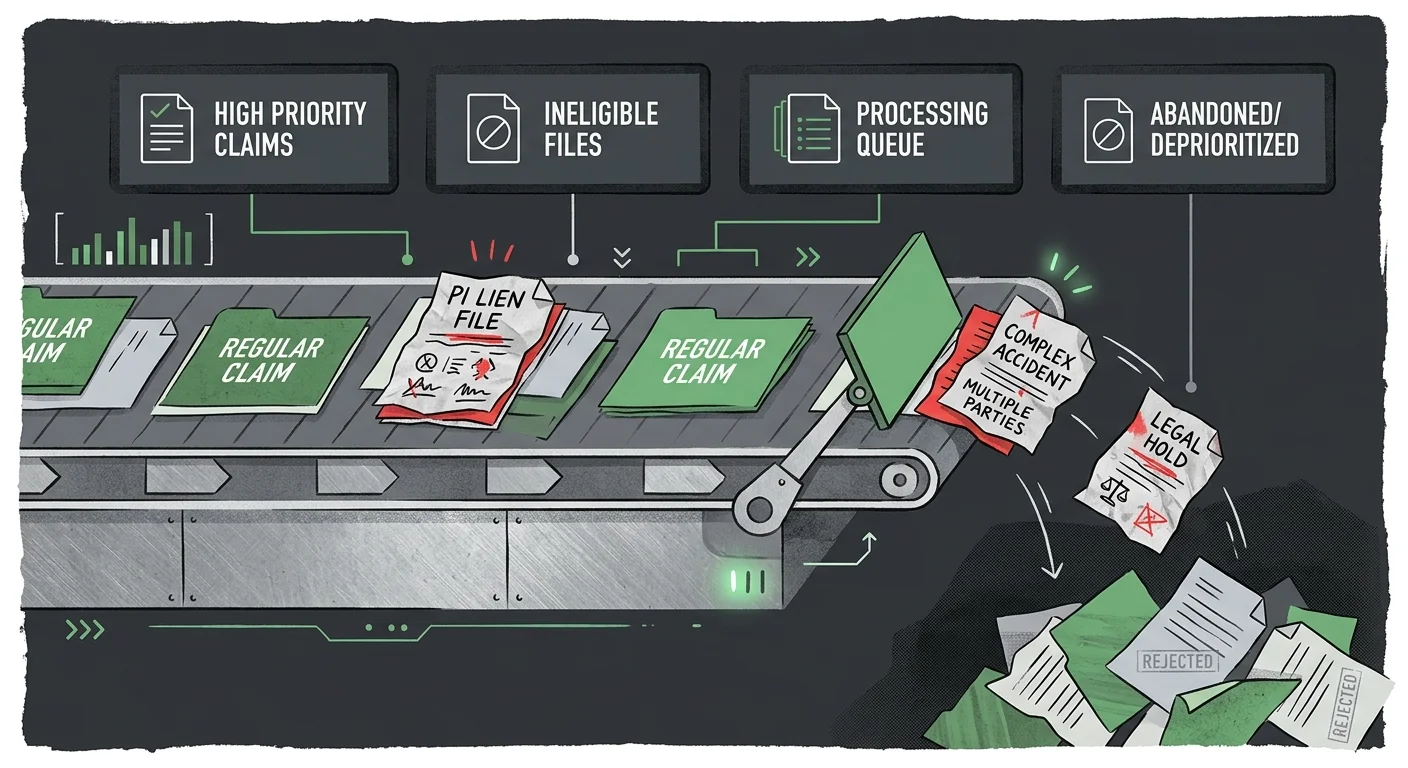
Volume-first billing companies don’t solve attorney objections.
They amplify them.
The model is built for throughput. Not recovery.
Clean claims get processed fast. High-friction PI claims that need documentation review, attorney coordination, and medical necessity arguments? Those get shoved to the back of the queue. They cost more to work than the model can afford.
So the claim sits. The objections stack up. And when the attorney finally calls, the biller has no file history, no context, and no plan.
That’s not a service gap.
It’s a structural failure. And it’s why most practices lose the most revenue on the claims that should’ve been worth the most.
High-Complexity PI Claims Don’t Fit the Volume Model
Volume models optimize for submission speed.
They measure success by how many claims leave the building. Not by how much money your practice collects. That works fine for clean diagnosis codes, standard visit counts, and payers who don’t push back.
But PI liens aren’t standard claims.
They need regional benchmarking to justify charges. They need documentation audits to kill medical necessity objections before they surface. They need proactive communication with the attorney’s office so settlement strategy and lien amount stay aligned.
None of that fits a high-throughput operation.
So the volume biller submits the lien and walks away.
No documentation review. No attorney outreach. No IME prep.
And when the objections land, the practice gets a voicemail saying the attorney wants a cut. No context. No counter-argument. And no billing partner willing to argue for the full amount.
The claim that should’ve recovered the most revenue becomes the one that gets dropped first.
Not because it wasn’t defensible. Because defending it didn’t fit the billing company’s cost model.
Silent Billing Relationships Leave Attorneys with Unanswered Questions
Silence from your billing company isn’t professionalism.
It’s a structure that buries problems until they become chiropractic personal injury lien recovery crises.
When an attorney calls with an objection, they’re not looking for a billing department that takes messages.
They’re looking for a specialist who knows the case, understands the documentation, and can answer the objection on the spot. If your biller can’t do that, the attorney assumes the lien isn’t worth defending.
And they stop fighting for it.
A specialty billing partner communicates proactively throughout the case.
They know the attorney’s name, the case status, the settlement range, and the objections before they’re ever raised. A volume biller waits for the phone to ring.
And by the time it does, the objection has hardened into a position the attorney won’t budge from.
| Volume-First Billing Approach | Impact on Attorney Objections | Revenue Outcome for Provider |
|---|---|---|
| Submits the lien with no documentation review or regional benchmarking data | Attorney receives objection from insurer claiming charges exceed reasonable and customary rates with no data to counter it | Provider pressured to reduce lien amount or accept delayed payment while biller offers no defense strategy |
| No proactive communication with attorney’s office during case progression | Attorney has no relationship with billing contact and no context when objections arise, defaults to negotiating down rather than defending up | Provider loses settlement leverage because billing partner can’t answer objections in real time or provide supporting documentation on demand |
| Treats PI liens as standard insurance claims with no IME preparation or medical necessity audit | IME report contradicts treatment plan with no counter-narrative in clinical file, attorney can’t defend care rationale to insurer or opposing counsel | Lien value reduced or eliminated entirely because documentation gaps can’t be fixed retroactively after IME is filed |
| Assumes settlement alignment happens automatically with no early-case coordination on policy limits or case value | Attorney forced to request lien reduction at settlement because total lien exceeds recoverable damages, creating adversarial dynamic at worst possible time | Provider accepts reduced payment under time pressure or risks court adjudication with no billing partner strategy to protect full lien amount |
How Specialty Billing Eliminates the Gaps That Create Objections
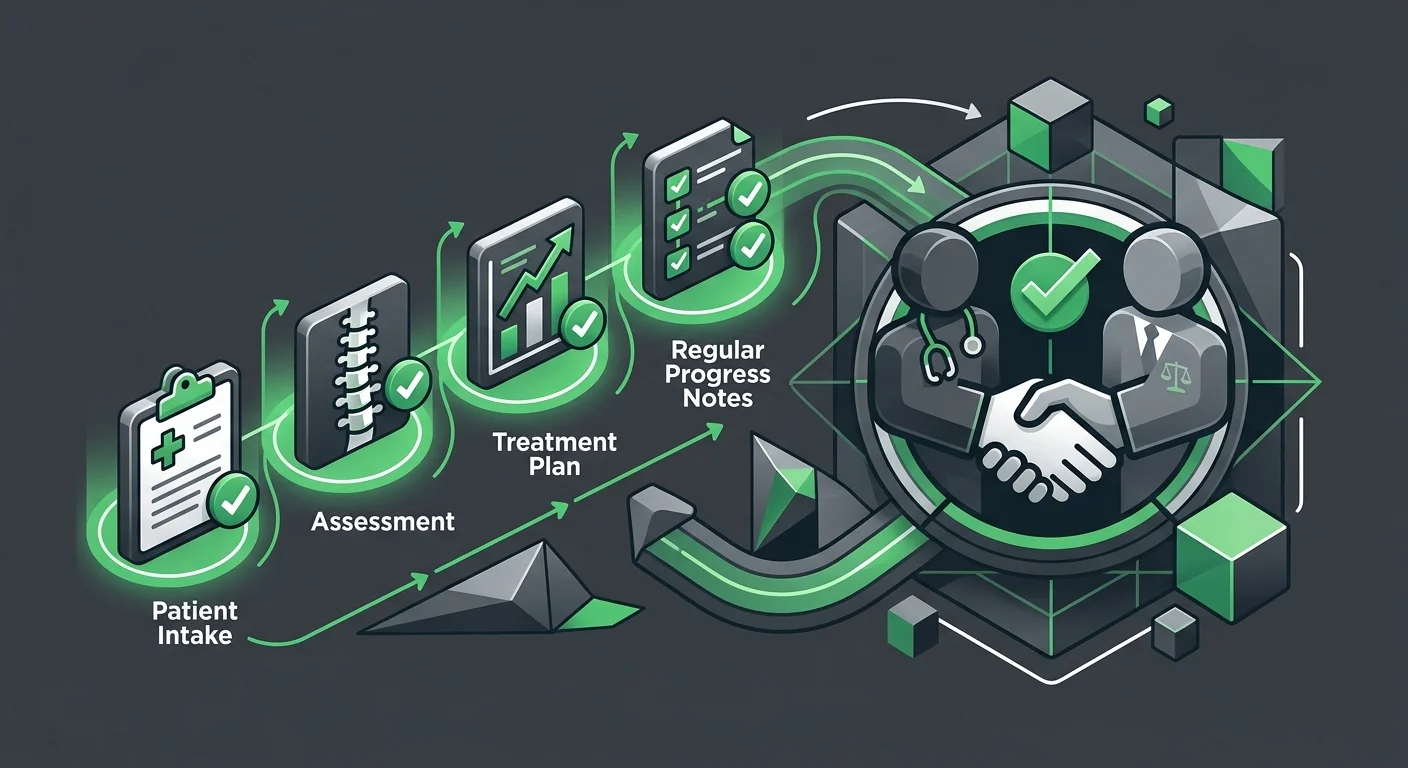
Attorney objections don’t appear because the attorney is difficult.
They appear because your billing partner didn’t close the gaps that create them.
A specialty billing partner knows the four objections in the previous section aren’t random. They’re predictable structural failures.
And predictable failures can be stopped before they start.
Here’s how a DC-founded billing partner eliminates the gaps that volume-first billers leave open.
Geographic Billing Data and Defensible Charge Justification
The reasonable and customary value of medical services is a key factor in PI negotiations. It’s often determined by what other local providers charge or what health insurers typically accept. If your biller doesn’t know that range before the lien is filed, you’re guessing.
And guessing costs you ground.
A specialty billing partner keeps geographic billing data for chiropractic services in your area. They know what other DCs charge. They know what insurers accept. They know where your fee schedule sits relative to the defensible range.
That data lets them justify your charges before the attorney sees a number that looks high and assumes it won’t survive negotiation.
This isn’t about lowering your fees. It’s about anchoring them to market reality so the attorney can defend them.
A volume biller doesn’t have that data. A specialty partner does. And that difference is what keeps "Your Charges Are Too High Compared to Other Providers" from ever landing.
Proactive Medical Necessity Documentation Before Objections Arrive
Medical necessity objections don’t happen because your care wasn’t necessary.
They happen because your documentation didn’t prove it was. Effective management of whiplash-associated disorders, a common PI diagnosis, requires an evidence-based approach including manual therapy and exercise. But if your notes don’t show objective findings, functional tracking, and clear treatment goals tied to the injury, the attorney can’t argue that to the insurer.
A specialty billing partner reviews your clinical documentation before the lien is submitted. They flag weak narratives. They flag missing objective data. They flag treatment plans that don’t tie frequency and duration to measurable improvement.
And they tell you what needs to be corrected while you can still fix it.
A generalist biller doesn’t read the notes. They bill what you reported and assume the attorney will handle the rest.
That assumption is what creates "Medical Necessity Wasn’t Properly Documented" objections. And by the time you hear it, it’s too late to go back and rebuild the narrative.
Embedded Communication with Attorneys Throughout the Case
The difference between a billing partner who prevents objections and one who just processes claims is communication.
State laws, such as California’s fair claims settlement practices regulations, require insurers to act in good faith and attempt to reach prompt, fair, and equitable settlements. But good faith doesn’t happen on its own. It happens when your billing partner knows the case status, the settlement range, and the attorney’s strategy – and aligns your lien with all three before the settlement offer lands.
A specialty billing partner doesn’t wait for the attorney to call with an objection. They communicate throughout the case. They know the attorney’s name. They know the case value. They know the policy limits.
And they adjust the lien strategy in real time so the settlement offer and the lien amount don’t crash into each other at the finish line.
That proactive communication is what prevents "We Need You to Reduce the Lien to Close the Settlement" from ever becoming an ultimatum. Because the lien was aligned with the case economics from the start.
And that alignment is the structural difference between a partner who helps you maximize personal injury (PI) lien recovery and one who just sends invoices and waits for checks.
| Objection Prevention Strategy | How It Works | Attorney Response Shift |
|---|---|---|
| Geographic Rate Benchmarking Before Lien Submission | Billing partner maintains local chiropractic fee data and compares your charges to defensible regional ranges before filing the lien | Attorney never raises ‘too high’ objection because charges are already anchored to market reality and can be defended with data |
| Pre-Submission Clinical Documentation Review | Billing partner audits your treatment notes for objective findings, functional progress tracking, and treatment goals tied to the injury before the lien goes out | Attorney receives a case file with clear medical necessity narrative – no documentation gaps for opposing counsel or IME to exploit |
| Ongoing Attorney Office Communication Throughout the Case | Billing partner maintains direct contact with the attorney’s office to track case status, settlement range, and policy limits in real time | Attorney views your billing partner as a collaborative specialist who understands the case economics – not a vendor who only sends invoices |
| Lien Strategy Aligned to Settlement Economics Early | Billing partner adjusts lien amount and timing based on known settlement range and policy limits so the lien doesn’t exceed what the case can support | Attorney never has to request a reduction because the lien was sized correctly from the start – eliminates the ultimatum before it forms |
When to Accept a Reduction and When to Hold the Line

Not every objection is worth fighting.
And not every objection signals a billing failure.
The question isn’t whether you should ever reduce a lien. The question is whether you’re reducing it for the right reason – and whether your billing partner gave you the strategic context to make that call.
A volume biller hands you an attorney’s demand and asks what you want to do.
A specialty partner hands you the case economics, the documentation strength, the settlement range, and a recommendation.
Those aren’t the same conversation.
Here’s how to know when a reduction protects your revenue long-term – and when holding the line is the only defensible move.
The Legal Reality: Can an Attorney Force a Lien Reduction?
No.
An attorney can’t force you to reduce your lien.
But in many states, if you don’t agree to a reduction, the attorney can file a motion with the court to have a judge determine a reasonable payment.
That’s not a threat. It’s a procedural reality.
And it’s the attorney’s way of saying they’ll let a third party decide what your services were worth if you won’t negotiate.
The risk isn’t that you’ll lose the entire lien. The risk is that the judge will look at your documentation, compare your charges to regional benchmarks, and decide that your fee schedule was inflated relative to what the case can support.
If your documentation is weak or your charges are high compared to local norms, that motion becomes a billing audit you didn’t prepare for. And the outcome is worse than the reduction the attorney originally requested.
A specialty billing partner knows when your documentation can survive that motion. And when it can’t.
A volume biller doesn’t have the expertise to evaluate that risk. So they pass the decision to you without context – and you’re left guessing whether holding the line protects your revenue or sets you up for a worse outcome.
Strategic Reduction: When a Small Concession Protects the Relationship
Sometimes a small reduction closes the case, preserves the attorney relationship, and protects future referrals.
That’s not weakness. That’s strategy.
If the settlement offer is limited by policy caps, and the lien reduction is the difference between the client accepting the offer or walking away, a 10-15% concession can be the move that keeps the attorney sending you cases.
The question isn’t whether you’re giving up revenue. The question is whether the relationship is worth more than the discount.
A specialty billing partner helps you identify bad PI cases before they close – so you’re not making that decision blindly on every settlement.
They know which attorneys send high-quality cases with defensible injuries and reasonable settlement ranges. And they know which ones send low-policy-limit cases that’ll require reductions every time.
If the attorney has a track record of sending solid cases and this reduction is the exception, not the pattern, the strategic move is to accept the reduction, document the concession, and preserve the referral source.
But if the attorney is asking for reductions on every case, that’s not a settlement strategy. That’s a billing partner who didn’t prequalify the referral source.
And the solution isn’t more reductions. It’s better case intake.
A DC-founded billing partner knows the difference – and they won’t let you waste clinical time on cases that structurally can’t support your lien.
Holding the Line: When Your Documentation and Charges Are Defensible
If your documentation is strong, your charges are defensible, and the attorney’s objection is based on a lowball IME or insurer pressure, you hold the line.
State laws, such as California’s Fair Claims Settlement Practices Regulations, require insurers to act in good faith and attempt to reach prompt, fair, and equitable settlements.
If the insurer is negotiating in bad faith, using a biased IME to undervalue medically necessary care, or pressuring the attorney to cut liens on defensible treatment, your billing partner should be prepared to document that and push back.
A specialty billing partner doesn’t just submit liens. They defend them.
They know when an objection is legitimate and when it’s a negotiation tactic – and they don’t cave to pressure tactics that aren’t grounded in the case reality.
The signal that you should hold the line: your billing partner reviewed your documentation before the lien was submitted, confirmed your charges sit within the reasonable and customary range for your area, and believes the objection is a negotiation tactic, not a legitimate valuation gap.
If all three are true, a reduction isn’t protecting revenue. It’s giving it away.
And a billing partner who won’t defend a defensible lien isn’t a partner. They’re a processor.
The difference is whether they align their performance with your recovery or whether they just move claims and assume you’ll absorb the losses.
That alignment is what separates embedded billing from transactional service. And it’s why attorney objections aren’t walls. They’re signals – signals that your billing partner either eliminated the gaps or left them open for someone else to exploit.
Frequently Asked Questions
The defensive strategies are clear. Now address the specific tactical questions providers ask when objections arrive.
These are the questions every chiropractic practice handling PI liens eventually faces. The ones your billing partner should answer before you have to ask them.
If you’re Googling these answers mid-settlement, your billing partner already failed you.
How do I respond when a PI attorney says my chiropractic bill is too high compared to other providers?
You anchor your response to what other local providers charge. Not what the attorney thinks is reasonable.
The reasonable and customary value of medical services is determined by geographic billing data and what health insurers typically accept in your area. If your fee schedule sits within that range, the objection isn’t legitimate. It’s a negotiation tactic.
A specialty billing partner maintains regional benchmarking data for your zip code. They can show the attorney – in writing – that your charges fall within the accepted range for similar providers.
That’s not a defense. That’s documentation. And it ends the objection.
If your biller can’t produce that data, they’re guessing. And you’re negotiating from weakness.
What specific documentation is most effective at defending medical necessity against an opposing IME report?
The best defense against an IME report is clinical narrative that connects your treatment plan to the mechanism of injury and shows functional improvement over time.
IME reports focus on whether treatment was medically necessary. If your documentation shows only visit dates and CPT codes, the IME wins.
But if your documentation shows the patient’s range-of-motion deficits at intake, the functional goals you set, the therapeutic interventions you applied, and the objective measurements that tracked improvement – the IME report becomes opinion versus evidence.
For whiplash-associated disorders, one of the most common PI diagnoses, evidence-based management includes manual therapy and exercise. If your treatment plan reflects that standard and your notes document why each phase was necessary, the IME’s conclusion that care was excessive doesn’t hold up.
A specialty billing partner reviews your clinical notes before the lien is submitted. They flag narrative gaps that’ll give an IME traction.
A volume biller submits what you send and hopes it’s enough. It usually isn’t.
Can a personal injury attorney legally force me to reduce my lien to close a settlement?
No. An attorney can’t force you to reduce your lien.
But in many states, if you don’t agree to a reduction, the attorney can file a motion with the court to have a judge determine a reasonable payment. That’s not a threat. It’s a procedural option.
And if your documentation is weak or your charges are high relative to local benchmarks, the judge’s determination could be worse than the reduction the attorney originally requested.
The attorney isn’t forcing you. They’re offering you a number they believe avoids litigation. Whether you accept it depends on whether your documentation can survive judicial review – and whether your billing partner has the expertise to evaluate that risk.
A specialty billing partner tells you whether holding the line protects your revenue or sets you up for a worse outcome. A volume biller tells you it’s your decision and leaves you guessing.
What is the best way to establish that my charges are reasonable and customary for my geographic area?
You establish that your charges are reasonable and customary by providing the attorney with regional fee schedule data showing what other local providers charge for the same services.
Health insurers use geographic billing data to determine accepted rates. If your charges sit within that range, they’re defensible. If they’re significantly higher, the attorney has a case – and you’ll need to justify the premium with superior documentation or specialized care.
A specialty billing partner maintains benchmarking databases for every region they serve. They can produce a regional fee schedule comparison in under an hour.
That comparison is the documentation that ends the ‘your charges are too high’ objection before it becomes a negotiation.
If your billing partner can’t provide that data, you’re defending your lien with your opinion. And the attorney’s opinion carries more weight than yours in a settlement negotiation.
How can my clinic proactively structure PI cases to minimize attorney objections before they even happen?
You minimize attorney objections by prequalifying the referral source, documenting medical necessity from day one, and aligning your lien strategy with the case economics before the settlement offer lands.
Most objections don’t surface at settlement. They were baked into the case from intake.
The attorney sent you a low-policy-limit case with a soft-tissue injury and no liability dispute – and your billing partner didn’t flag it as a weak lien candidate. Or your clinical documentation focused on symptom relief instead of functional restoration – and nobody told you that narrative gap would cost you at settlement.
A specialty billing partner evaluates case strength at intake. They know which attorneys send high-quality cases with defensible injuries. They know which case types produce settlement ranges that can support your lien. And they know what documentation standards the attorney will need to defend medical necessity when the insurer pushes back.
That proactive structure is what prevents objections from happening in the first place.
A volume biller waits for the settlement and reacts to whatever the attorney says. A specialty partner eliminates the gaps before the objections exist.
And that’s the difference between billing and revenue cycle management.
Where This Leaves Your Practice
These objections aren’t walls. They’re signals.
Every objection is a narrative gap the attorney sees in the case file, a valuation gap they see in the billing data, or a communication gap they experience with your billing partner. And the right partner closes those gaps before they cost you.
The difference between a practice that absorbs PI revenue losses on every settlement and one that recovers what it’s owed isn’t the quality of the clinical care.
It’s whether the billing partner understands what attorneys actually need to defend your lien – and whether they’re structured to deliver it proactively.
A volume-first biller treats PI liens like high-friction exceptions. They submit the invoice. They wait for the settlement. And when the objection comes, they hand it to you without context and ask what you want to do.
That’s not billing. That’s abdication.
A specialty billing partner knows the objections before they’re raised.
They anchor your charges to regional data. They review your documentation for narrative strength. They communicate with the attorney throughout the case so the lien aligns with settlement economics before the offer lands.
And when an objection does surface, they’ve already evaluated whether your documentation can survive it – so you’re not making strategic decisions blindly.
That’s the structural difference between embedded partnership and transactional service. One eliminates the gaps. The other leaves them open for someone else to exploit.
The gap that matters most isn’t in your clinical notes or your fee schedule.
It’s whether your billing partner’s performance is aligned with your revenue recovery – or whether they get paid regardless of what you collect.
The question isn’t whether attorney objections will happen.
The question is whether your billing partner sees them coming – and whether they’re equipped to prevent the ones that shouldn’t exist and defend the ones that don’t hold up.
If you’re fielding objections you can’t contextualize, reducing liens you can’t evaluate, or losing revenue on cases your billing partner never flagged as weak – you don’t have a billing partner.
You have a claim processor.
And the difference between the two is whether the objections stop – or whether they just keep coming.
These objections aren’t walls. They’re signals.
And the question isn’t whether you can defend your lien. The question is whether your billing partner gave you the tools to know when you should.
If you’re managing PI liens without regional benchmarking data, without proactive attorney communication, and without a partner who can tell you the difference between a defensible objection and a negotiation tactic-you’re not protecting your revenue. You’re guessing.
A practice assessment shows you where the gaps are in your current PI billing operation. And what it’s costing you in recoverable revenue every time an objection lands that shouldn’t have existed.
© . All Rights Reserved | Web Design by iTech Valet