

What Are the Warning Signs That My Current Billing Company Is Failing Me in 2026?

If something feels off with your billing company, that instinct is worth paying attention to.
Many clinic owners describe a gut sense that things aren't working long before the numbers confirm it. Maybe communication has slowed. Maybe your AR keeps growing despite steady patient volume. Maybe you can't get straight answers about how your claims are performing.
These aren't minor annoyances. They're often early signals that your billing relationship needs attention.
The good news? There are concrete ways to evaluate what's happening. Industry benchmarks exist for clean claim rates, denial rates, and AR aging. When you know what healthy looks like, you can have real conversations about where things stand.
Billing has gotten more complex in 2026. The 2026 Medicare Physician Fee Schedule introduced new documentation requirements. The FY 2026 ICD-10-CM update added 487 new diagnosis codes effective October 1, 2025. Social Determinants of Health documentation requirements expanded significantly.
Chiropractic audits have increased too. Inadequate documentation gets cited in the majority of payment recoveries.
A billing company that worked fine three years ago may be struggling to keep up. This article will help you spot the warning signs, understand the benchmarks, and figure out whether the issues are fixable.
When Communication Starts to Slip

Communication is usually the first thing to change when a billing relationship is under strain.
You might notice responses taking longer than they used to. Or you're not getting proactive updates anymore. Sometimes there's a new contact person, and the transition feels bumpy.
These shifts can happen for understandable reasons. Billing companies deal with staff turnover, busy seasons, and operational challenges like any business.
The question is whether it's a temporary bump or a sign of something deeper.
When you're working toward maximizing insurance reimbursements, clear communication makes everything easier. You make better decisions when you know what's happening with your claims.
What Good Communication Looks Like
A billing partner working well for you will keep you informed without you having to chase them.
This means regular reporting on a predictable schedule. Weekly or monthly, depending on your preference and practice size.
When issues come up, your billing company should tell you and explain what they're doing about it. You shouldn't discover problems by accident.
Response times matter too. Most practices find 24-48 business hours works well for routine questions. If you're routinely waiting much longer, it's worth discussing expectations directly.
Patterns Worth Noting
Some communication patterns suggest a deeper conversation is needed.
If your primary contact keeps changing without explanation, institutional knowledge about your practice may be getting lost. Each new person has to learn your workflows, payers, and preferences from scratch.
If questions about claims or metrics consistently get vague or delayed responses, that's worth noting. A billing team confident in their work is usually happy to share details.
That said, approach these conversations with curiosity rather than accusation. There may be reasonable explanations. Asking directly often gets more useful information than assuming the worst.
The Real Impact
When communication breaks down, practical problems follow.
Missed appeal deadlines mean lost revenue. Payer policy changes that aren't communicated lead to preventable rejections. Unanswered questions leave you making decisions without the information you need.
According to the Healthcare Financial Management Association, practices should aim for days in AR between 30-40. Every week of delayed communication on stuck claims pushes money further into aging buckets where collection gets harder.
If you're experiencing communication challenges, consider scheduling a dedicated conversation to discuss what's happening and what both sides need.
Reading Your AR Report
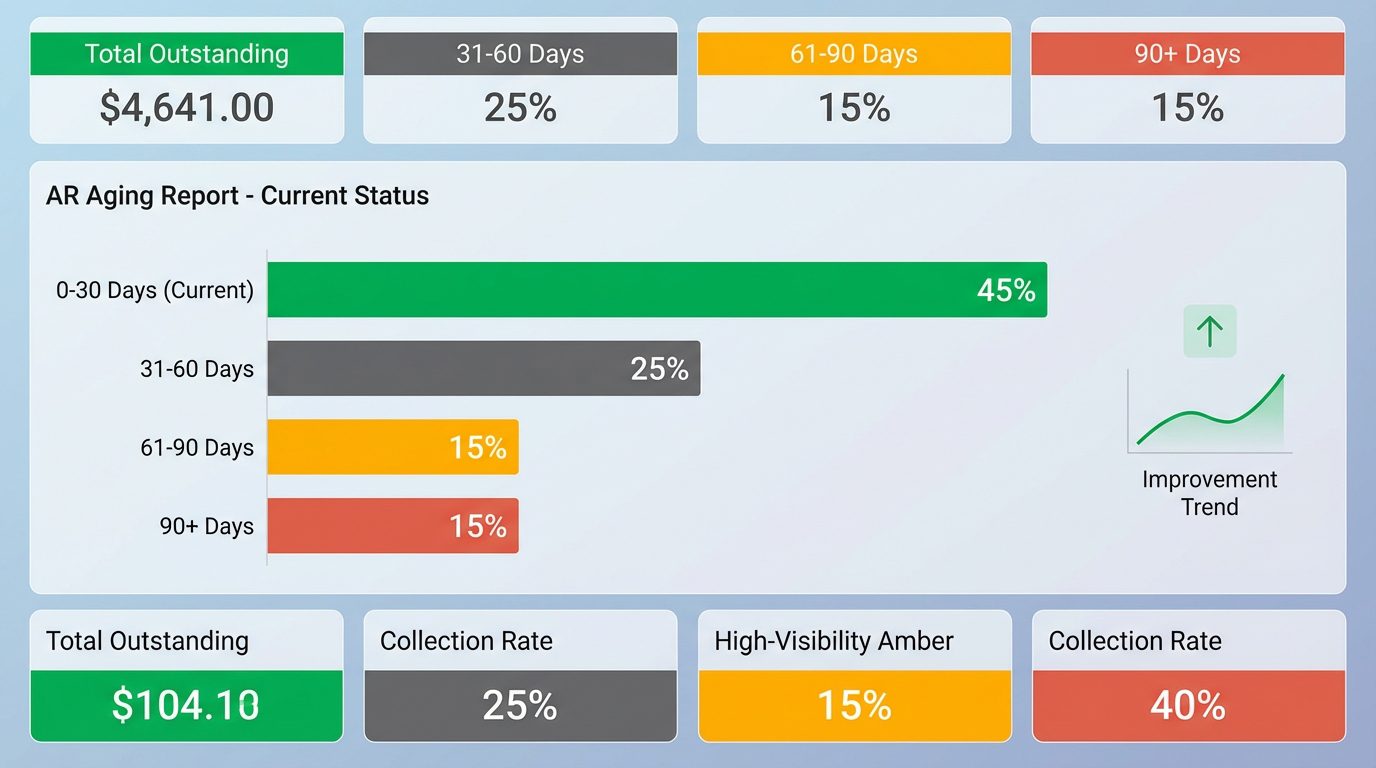
Your AR report tells an honest story about how your billing is performing.
It shows where your money is, how long it's been sitting there, and whether claims are moving or stuck.
The challenge is that AR reports can feel overwhelming if you're not sure what you're looking at. Understanding what healthy AR looks like helps you have better conversations with your billing company.
When you're focused on identifying revenue leakage, your AR report is one of the most valuable tools you have.
Understanding AR Benchmarks
Industry standards from MGMA and HFMA provide useful reference points.
Generally, days in AR should fall between 30-40 days. Well-performing practices often achieve closer to 30.
The distribution across aging buckets matters as much as the total:
| 0-30 days | 50-60% of total AR | Less than 40% |
| 31-60 days | 20-25% of total AR | More than 30% |
| 61-90 days | 10-15% of total AR | More than 20% |
| 90+ days | Less than 10-15% | More than 20% |
If your distribution looks significantly different from these ranges, it's worth asking what's driving the numbers.
Patterns to Watch For
Look at your AR report over time, not just single snapshots.
An AR that looks roughly the same month after month while you continue seeing patients may indicate money is aging out at about the same rate new claims come in.
Some specific patterns worth noting:
- Claims from certain payers consistently appearing in older buckets
- The same denial reason codes showing up month after month
- Large balances sitting at specific aging thresholds without movement
These patterns don't necessarily mean something is wrong. There may be good explanations. But they're worth asking about.
Questions to Ask
When you review AR with your billing company, useful questions include:
- What's your plan for claims in the 60+ day buckets?
- Are there specific payers causing delays?
- What percentage of aged claims are appealed versus written off?
- What's the typical timeline for resolving stuck claims?
A billing partner working your AR systematically should be able to walk you through what's happening.
If you use Jane App or ChiroTouch, ask how their reporting aligns with what you see in your own system. Consistent numbers build confidence.
.
Making Sense of Denial Rates

Denials are a normal part of medical billing. Every practice experiences them.
The question isn't whether you have denials. It's whether your rate is healthy and whether denied claims are being worked.
Industry data shows chiropractic practices often experience denial rates around 15% or higher when billing isn't managed systematically. That reflects the complexity of chiropractic billing: strict medical necessity rules, modifier requirements, and payer scrutiny.
Practices with organized billing processes typically perform much better than that average.
Denial Rate Benchmarks
Industry standards from HFMA suggest initial denial rates should be below 5%. Rates up to 8% are still acceptable for most practices.
Here's a general framework:
| Less than 5% | Strong performance |
| 5-8% | Acceptable, room for improvement |
| 8-10% | Worth investigating patterns |
| Above 10% | Systematic issues likely present |
If your denial rate is higher than you'd like, the next step is understanding what's driving it. Are denials concentrated in certain categories? Are the same issues coming up repeatedly?
Common Denial Categories
Different denial types point to different root causes.
Eligibility denials happen when claims go out for patients whose coverage changed. These are often preventable with verification before services. Having systems for automated insurance benefit verification can significantly reduce this category.
Modifier errors are common in chiropractic billing. The AT modifier required for Medicare claims is a frequent culprit. Consistent modifier mistakes may indicate a need for additional training or process improvements.
Medical necessity denials are trickier because they're tied to documentation. Your billing company can flag documentation gaps before submission. But the clinical documentation itself is something you and your team control.
Beyond the Initial Rate
A billing company might have a reasonable initial denial rate but still leave money on the table if denied claims aren't appealed.
According to industry research, the majority of denied claims are recoverable with proper appeals.
Useful questions for your billing company:
- What percentage of denied claims do you appeal?
- What's your success rate on appeals?
- How long does a typical appeal take?
If they're not tracking appeal rates and outcomes, or if denied claims are getting written off without appeal attempts, there may be revenue that could be captured.
Getting Clear on Transparency

Transparency in billing isn't about distrust. It's about having the information you need.
When it comes to solving common medical billing challenges, visibility into your claims is foundational. You shouldn't have to wonder whether things are going well.
A billing partner confident in their work is usually happy to share details. Access to data demonstrates the value they're providing.
Information You Should Have
Your billing company should be able to provide clear answers about your account.
Reasonable metrics to request:
- Clean claim rate (healthy practices see 95%+)
- Denial rate by category
- Days in AR with aging bucket detail
- Net collection rate (typically 95-97% for well-performing practices)
You should also have access to your clearinghouse portal to see claim statuses independently. Your billing company's reports should align with what you see in your own EHR.
If requesting this information creates friction, that's worth noting. These are standard metrics any billing operation should track.
Verification Without Conflict
Having independent access to verify reports isn't about catching mistakes.
It's about building confidence in the relationship. Everyone working from the same understanding of how things are going.
If you use Jane App or ChiroTouch, these platforms offer reporting features that let you run your own queries. Periodically comparing what you see to what your billing company reports is healthy practice.
Most good billing partners will support and even encourage this.
Evaluating Specialty Expertise

Chiropractic and PT billing have specific requirements that differ from general medical billing.
The modifiers are different. Medical necessity rules are more stringent. Payers scrutinize these claims more closely.
A billing company that primarily handles primary care or hospital billing may struggle with your claims. Even if they're competent in their main area.
The FY 2026 ICD-10-CM update introduced nearly 500 new diagnosis codes. Medicare continues refining requirements around maintenance care and PART criteria. Keeping up requires focused attention on your specialty.
Signs Expertise May Be Lacking
Some patterns suggest your billing company may not have deep chiropractic or PT expertise.
Consistent Medicare denials for maintenance care or missing AT modifiers indicate unfamiliarity with Medicare chiropractic requirements. According to OIG audit data, maintenance care issues are among the most common reasons for payment recoveries.
Personal injury claims require different workflows than standard insurance billing. Lien management, attorney communication, settlement tracking. If PI claims consistently age without progress, your billing company may lack this experience.
If basic specialty questions get vague or uncertain answers, that's worth noting.
Questions to Assess Fit
Questions that help you understand specialty expertise:
- How many chiropractic or PT practices do you serve?
- What percentage of your clients are in our specialty?
- How do you stay current with Medicare chiropractic requirements?
- What's your experience with personal injury billing?
Confident, specific answers suggest genuine expertise. Vague responses or requests to research and get back to you may indicate gaps.
Platform Knowledge
Your billing company should understand your specific EHR.
Whether you use Jane App, ChiroTouch, Genesis, or another platform, there are reporting features, claim submission workflows, and integration capabilities specific to each system.
A billing partner with experience across multiple platforms can often spot optimization opportunities that single-platform specialists miss.
Putting Together Your Assessment
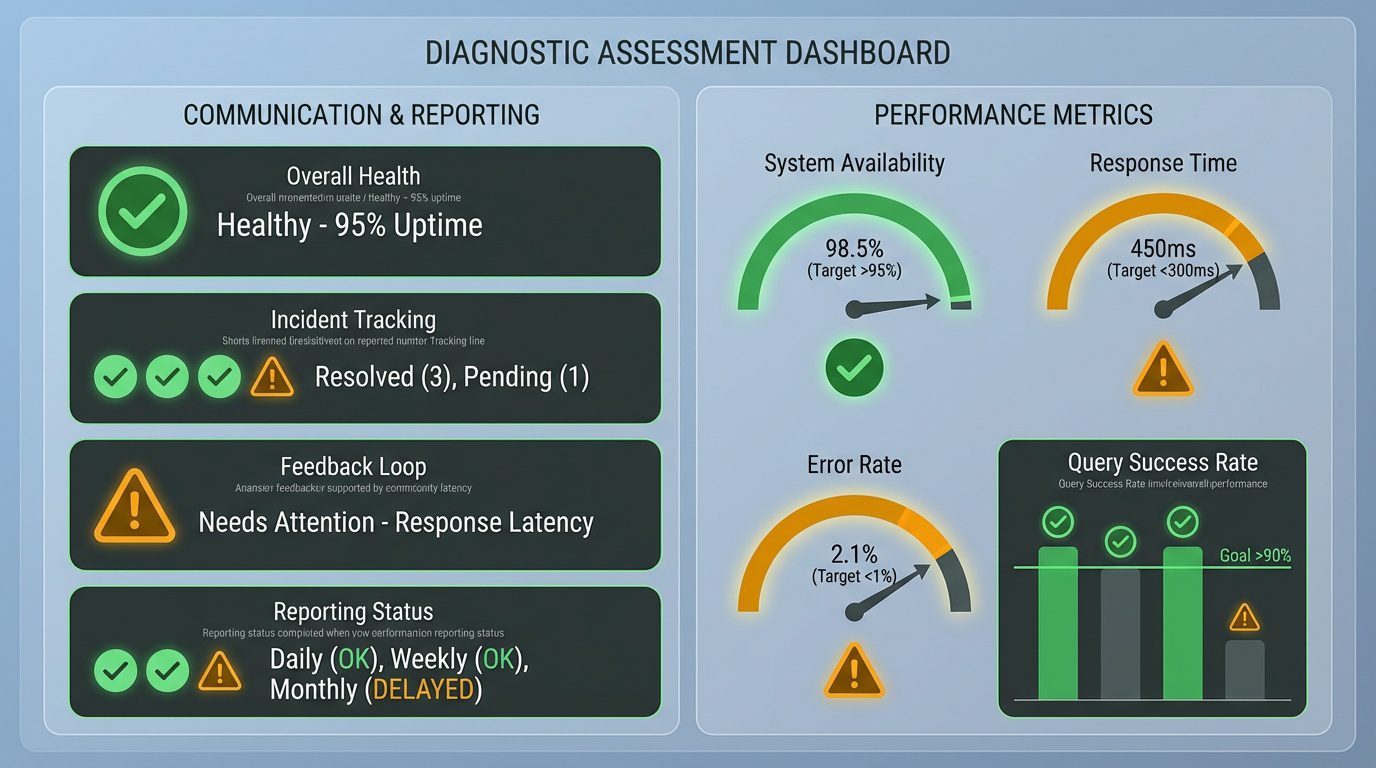
A systematic approach helps you distinguish between isolated issues and patterns that suggest deeper problems.
Not every concern indicates a failing relationship. But consistent issues across multiple areas deserve attention.
A Framework for Evaluation
Consider performance across these key areas:
| Response time | Within 24-48 hours | Consistently over a week |
| AR aging (90+ days) | Less than 15% | More than 20% |
| Clean claim rate | 95% or higher | Below 90% |
| Denial rate | Less than 8% | Above 10% |
| Reporting | Regular and proactive | Only when requested |
| Data access | Readily provided | Restricted or delayed |
| Specialty questions | Confident answers | Vague or uncertain |
If you're seeing concerns in multiple areas, it may be worth a focused conversation about what's happening and what changes might help.
Estimating What's at Stake
Understanding financial impact helps you prioritize.
If your 90+ day AR is significantly higher than the 10-15% benchmark, calculate the dollar amount. Claims in that bucket have reduced collection probability.
If your denial rate is 15% when it should be 5%, consider what that means on your monthly charges. That's significant administrative burden even if most are eventually collected.
Having the Conversation
If you've identified concerns, approach your billing company directly with specifics rather than general complaints.
Share the data you're seeing. Ask for their perspective.
A billing company committed to the relationship will want to understand your concerns and work on them. If they're defensive or can't explain, that tells you something too.
Thinking About What Comes Next

If you've identified significant concerns, you may be wondering whether to fix the relationship or find a new partner.
Both options have merit depending on your situation.
When Improvement Is Possible
Some situations suggest the relationship may be fixable.
If your billing company acknowledges the issues and seems genuinely willing to work on them, that's positive. If problems are recent rather than long-standing, there may be specific causes that can be addressed.
Consider a defined evaluation period. Maybe 90 days. With specific metrics you'll both track.
Document what improvement looks like so you can assess progress objectively. Regular check-ins help ensure momentum.
When Change May Be Necessary
Some situations suggest staying probably isn't the right choice.
If communication has broken down to the point where you can't get basic questions answered, the relationship has effectively ended.
If performance has declined over time without improvement despite conversations, patterns are unlikely to change.
If you've lost confidence that your billing company has your interests in mind, trust is hard to rebuild.
What Transition Involves
Switching billing companies is often less disruptive than people expect.
Data migration between modern systems is typically straightforward. A new billing partner will review existing AR with fresh eyes and often finds opportunities in claims that weren't being worked.
Transition usually involves 2-4 weeks of overlap. A good new partner will coordinate the handoff to minimize disruption.
When evaluating options, look for:
- Demonstrated expertise in your specialty
- Willingness to work with your existing EHR
- Clear reporting and communication processes
- References from similar practices
Frequently Asked Questions
What is a normal clean claim rate for a chiropractic clinic?
Industry benchmarks indicate a healthy clean claim rate should be 95% or higher. Well-performing practices often hit 98%.
According to HFMA standards, providers should aim for rates approaching 98%.
If your rate is consistently below 95%, claims are going out with preventable errors. Common causes include eligibility gaps, missing modifiers, and incorrect diagnosis codes.
How often should a billing company send me AR reports?
Most practices find monthly works well. Some prefer weekly for closer monitoring.
Reports should include aging buckets (0-30, 31-60, 61-90, 90+ days), denial trends, and notes on what's being done about aged balances.
Beyond scheduled reports, you should be able to request specific information and get responses within a reasonable timeframe.
Why might my billing company be slow to respond?
Communication delays happen for various reasons. Staff transitions, busy periods, operational challenges.
If slow responses have become the norm, have a direct conversation. Ask what's happening and discuss turnaround times that work for both sides.
A quality billing partner should respond to routine inquiries within 24-48 business hours.
What if my complex claims aren't being worked?
If straightforward claims resolve quickly while Medicare, PI, or other complex claims sit for months, ask what's happening.
Complex claims require more expertise and time. A billing partner with specialty experience should have processes for working these systematically.
Understanding what's happening with complex claims helps you evaluate whether additional expertise is needed.
What AR aging percentage should concern me?
Industry benchmarks say AR over 90 days should be less than 10-15% of total receivables.
Claims get harder to collect as they age. Many payers have timely filing limits. Once exceeded, denials are permanent regardless of merit.
If your 90+ day AR is elevated, ask what's driving it and what the plan is.
How do I evaluate my billing company's performance?
Request key metrics: clean claim rate, denial rate by category, days in AR, net collection rate.
Compare against benchmarks.
Review AR reports for patterns. Look for stuck claims, recurring denial codes, balances that don't move.
If you use Jane App or ChiroTouch, run reports from your system and compare.
What denial rate should I expect?
Chiropractic practices without systematic billing often see denial rates of 15% or higher.
Practices with organized processes typically stay well below that. HFMA and MGMA benchmarks suggest under 5% is achievable. Above 10% usually indicates issues.
Understanding denial rate by category helps identify where improvements are possible.
How can I verify my billing company's reports?
Request clearinghouse portal access to see claim statuses independently.
Run reports in your EHR and compare to what your billing company provides.
If numbers don't align, ask for clarification.
Independent verification builds confidence in the data you're using to make decisions.
Conclusion
Evaluating your billing company doesn't have to be adversarial.
The goal is understanding whether you're getting what you need. Identifying opportunities for improvement. Whether that means working with your current partner or finding a better fit.
The warning signs in this article are starting points for assessment, not automatic reasons to make changes. Many issues can be resolved with clear communication.
What matters most is having the information you need to make good decisions.
When you know what healthy billing looks like, you can have productive conversations about where things stand. And when you're confident your billing partner is genuinely working for you, that's a huge weight off your shoulders.
The clinic owners who successfully convert leads into patients are often those who've gotten billing sorted. They're free to focus on what they do best: patient care.
If you're reading this and thinking "I'm not sure where I stand," you're not alone.
Most clinic owners we work with felt the same uncertainty before they got clarity on their billing situation.
That's why we offer a free discovery call. It's a chance to talk through your current situation and understand what's working, what might need attention, and what your options are.
We'll help you understand:
- Where your claims might be getting stuck
- What's causing denials or delays
- Whether your AR is healthy or needs attention
- How your current process compares to best practices
- What a partnership with Bushido would actually look like
Book a Call — no pressure, no obligation, just a straightforward conversation about your billing.
Clarity about where you stand is the first step toward getting where you want to be.
SCHEDULE YOUR FREE DISCOVERY SESSION TODAY.


Copyright 2026 | All rights reserved | Web Design by iTech Valet