

Why Is My Office Manager’s Burnout Linked to Our AR Aging Report?
Your office manager’s energy and your AR aging report are more connected than they might seem. When unpaid claims sit in the 60, 90, or 120-day buckets, each one represents follow-up work-research, phone calls, documentation, resubmissions-that takes time away from everything else.
Here’s how it typically works: a claim that doesn’t pay on the first submission needs attention. Your office manager looks into why, calls the payer, gathers additional information, and follows up again later. One claim might take a couple hours spread across a few weeks. Multiply that by a few dozen aging claims, and you’ve got a significant portion of someone’s week.
The good news is that reducing chiropractic denial rates at the front end tends to keep AR healthier downstream. When claims are prepared well before submission, fewer come back needing rework.
MGMA benchmarks suggest that organized practices keep Days in AR under 30-35 days. When that number climbs toward 45 or 50, it usually means someone is spending considerable time on follow-up-time that could go toward other parts of the practice.
The relationship works both ways: when billing processes are organized and reliable, AR tends to stay manageable-and your office manager has more room to focus on patients, scheduling, and the work that makes your practice run smoothly.
This article walks through how AR aging connects to staff workload, what early signals look like, and what options can help create a more sustainable situation for everyone.
How AR Aging Connects to Daily Workload
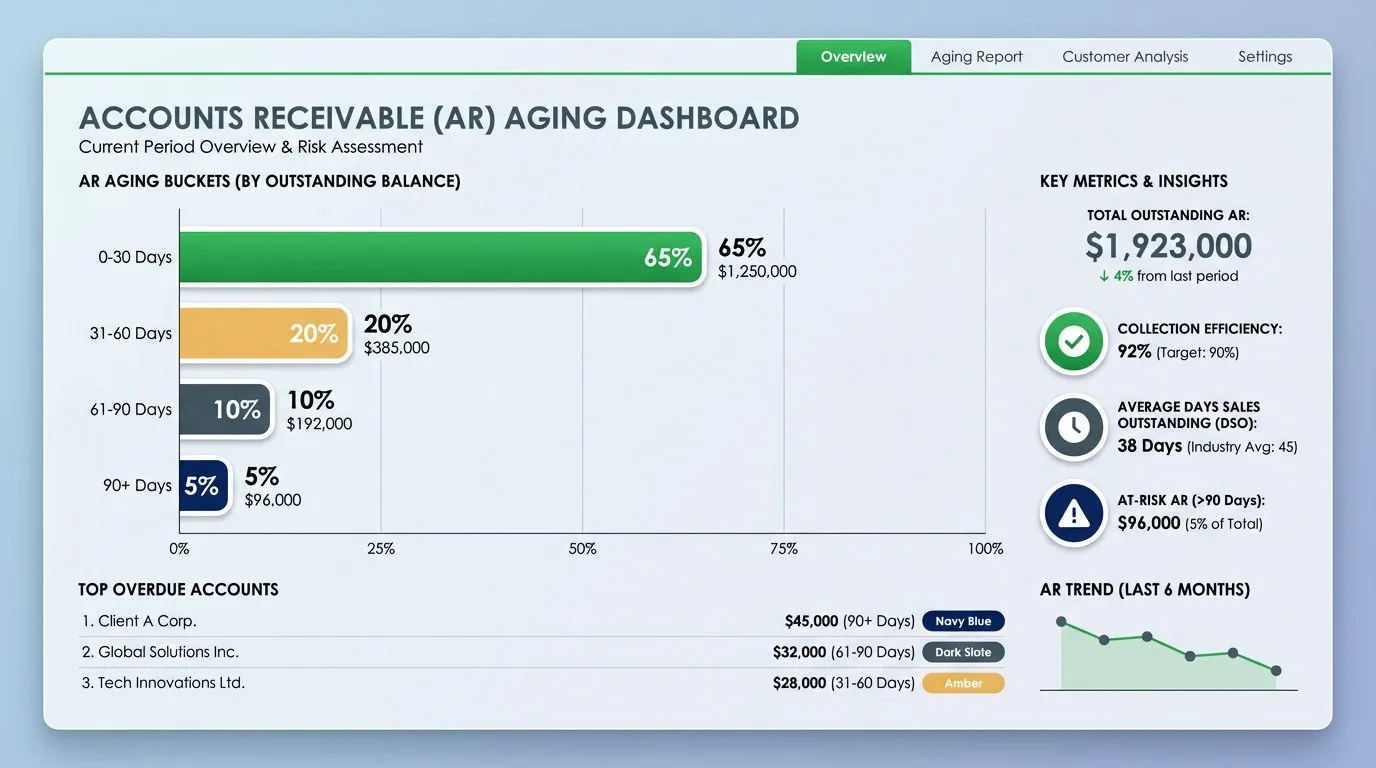
The connection between your AR report and your office manager’s day is straightforward. Each claim that ages past 30 days needs attention-and that attention takes time.
What Happens as Claims Age
Claims don’t just sit quietly in aging buckets. Industry data shows that the likelihood of collecting on a claim decreases as it ages past 60 days. At 90 days, many claims approach payer filing deadlines.
But beyond collection probability, there’s the practical matter of what each aging claim requires:
- Looking into it: Your office manager checks the EOB, reviews documentation, and figures out what happened.
- Making contact: Calling the payer often means 20-45 minutes waiting before speaking with someone who can help.
- Resolving it: Gathering additional documentation, making corrections, or preparing an appeal.
- Checking back: Following up in a few weeks to confirm the issue was actually resolved.
A single aging claim can easily require 2-3 hours of attention over several weeks. That adds up.
The Math on Rework
The administrative cost per denied claim has been increasing-reaching $57.23 in 2023, up from $43.84 the year before. These figures reflect the staff time and effort that goes into working each issue.
When initial denial rates reach 11-12%, a practice submitting 500 claims monthly has roughly 55-60 claims needing follow-up beyond the initial submission.
That’s in addition to check-in, phones, scheduling, patient questions, and everything else your office manager handles.
When Follow-Up Takes Over
Research from Google Cloud and Harris Poll found that medical office staff spend an average of 34 hours weekly on administrative tasks.
When a large portion of that time goes to working unpaid claims, other things get compressed. Follow-up calls get pushed back. Patterns in denials go unnoticed. New claims don’t get reviewed as carefully before submission.
This isn’t about effort or capability-it’s about how time gets divided when there’s a lot to do.
Understanding that distinction is the first step toward finding a more organized approach.
Understanding What Your AR Report Is Telling You
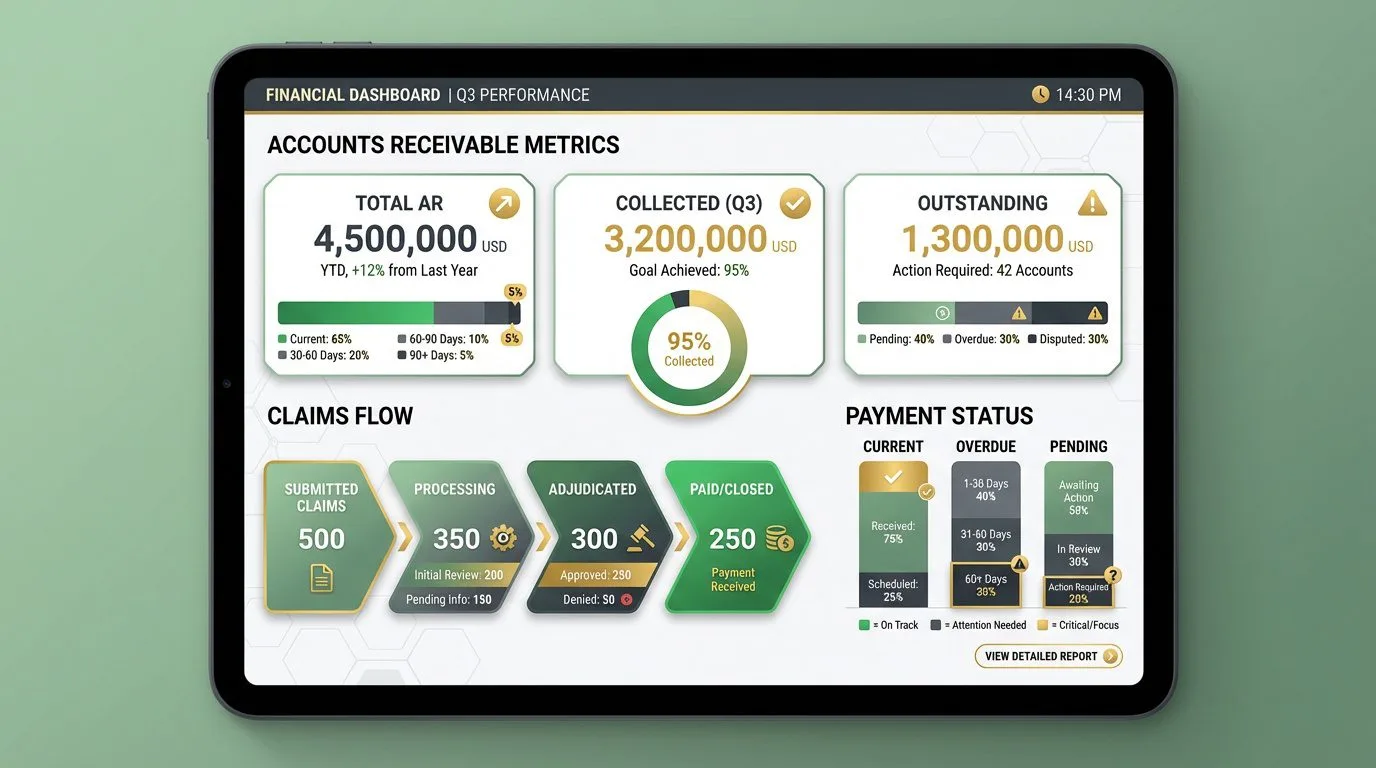
Your AR aging report can tell you quite a bit about how your billing process is working—if you know what to look for.
What Each Bucket Means
A standard AR aging report organizes outstanding balances by time: 0-30 days, 31-60 days, 61-90 days, and 90+ days. Each bucket tells a different part of the story.
| AR Bucket | Healthy Range | What It Usually Means | Workload Note |
|---|---|---|---|
| 0-30 Days | 70-80% of total AR | Claims moving through normally | Minimal follow-up needed |
| 31-60 Days | 10-15% of total AR | Some claims need attention | Moderate follow-up |
| 61-90 Days | 5-8% of total AR | Recovery takes more effort here | More time per claim |
| 90+ Days | Under 10% of total AR | Lower recovery likelihood | Highest effort per claim |
When your 90+ day bucket grows past 15-20% of total AR, it often signals that follow-up work has outpaced current capacity. That’s useful information—it points toward where support might help.
Calculating Days in AR
Days in AR measures how long, on average, it takes to collect payment after providing services.
Days in AR = Total Accounts Receivable ÷ Average Daily Charges
You can find average daily charges by dividing total gross charges over the past 90 days by 90.
MGMA standards suggest that organized practices keep Days in AR at or below 30 days. When this number climbs past 40-45 days, more staff time is going toward following up on unpaid claims.
The Clean Claim Rate Connection
Your clean claim rate—the percentage of claims paid on first submission—is an upstream number that often predicts what your AR will look like downstream.
Industry benchmarks suggest 95% as a target. Many practices operate closer to 85%, which means a steady flow of rejections needing correction.
Here’s how the math works:
- 500 claims monthly at 95% clean rate = 25 claims needing rework
- 500 claims monthly at 80% clean rate = 100 claims needing rework
That 15-point difference means 75 additional claims requiring attention every month. Over a year, that’s 900 extra claims—each needing research, calls, and follow-up.
Working on clean claim rates at the front end is often more efficient than adding follow-up capacity at the back end. It’s a more sustainable way to keep AR healthy and workload manageable.
Recognizing Early Signs

When workload starts affecting your team, signs usually appear gradually. Noticing them early gives you more options.
What to Watch For
Grant Thornton’s State of Work survey found that 38% of healthcare workers point to inefficient processes as contributing to burnout. When billing processes need attention, your office manager often absorbs that extra work.
Some signs that workload may be affecting your team:
- Putting things off: Delaying AR report reviews. Postponing payer calls until later in the week.
- Details slipping: More errors in claim submission. Information entered incorrectly. Documentation incomplete.
- Visible frustration: Tension during insurance calls. Comments about being behind or unable to catch up.
- Other things sliding: Patient interactions getting shorter. Front-desk tasks getting delayed.
These are signals about workload, not about your team member’s abilities or commitment.
Looking at the Full Picture
When these signs show up, it helps to step back and look at everything your office manager handles:
- Patient check-in and checkout
- Phone calls and scheduling
- Insurance verification
- Claims submission
- Denial follow-up and appeals
- Patient balance questions
- AR monitoring and reporting
Experian Health’s State of Claims 2025 report found that 54% of healthcare providers say claim denials are increasing. When denial volume grows, follow-up work grows too-even when everything else stays the same.
The question worth asking isn’t whether your office manager is capable. It’s whether the current workload distribution makes sense long-term.
The Retention Angle
Staff turnover in healthcare administrative roles runs between 30-40% annually, according to industry research. Front-office and billing positions consistently rank among the highest-turnover categories.
MGMA polling found that 29% of practices reported higher turnover in 2025, with front-office staff frequently mentioned.
When experienced team members leave, the costs extend beyond recruiting:
- Knowledge about payer requirements and patient relationships goes with them
- AR follow-up pauses during the transition
- New team members need months to get up to speed
- Claims submitted during training may have more errors
Supporting your current team usually makes more sense—practically and financially—than working through turnover cycles.
What’s Changing in 2026

The administrative side of billing has been gradually shifting. Several factors make 2026 a good year to think about how your billing processes are set up.
More Consistent Claim Review
Payers have been refining how they review claims. Industry reports indicate that denials tied to requests for additional information increased by 9% between 2022 and 2024.
These aren’t random denials-they reflect more consistent application of documentation requirements. Documentation that was accepted a couple years ago may now need additional support.
For office managers handling follow-up, this means more detailed work per claim.
Documentation Requirements Keep Evolving
ICD-10 coding continues moving toward greater specificity. Requirements around Social Determinants of Health and anatomical detail mean “unspecified” diagnosis codes get more scrutiny.
For chiropractic practices, this shows up as:
- More detailed SOAP notes to support medical necessity
- Closer attention to proper modifier usage on Medicare claims
- Clearer documentation distinguishing maintenance from active care
- More frequent reviews of chiropractic-specific codes
Each documentation gap can become a denial, and each denial adds to the follow-up list.
How These Factors Add Up
Here’s how these changes work together:
| Factor | Effect on Denials | Effect on AR | Effect on Staff Time |
|---|---|---|---|
| More consistent claim review | Higher initial denial rate | More claims enter 30+ day buckets | More research per claim |
| Prior authorization expansion | Authorization delays | Longer payment timelines | More verification work |
| Documentation requirements | More medical necessity denials | Appeals needed for payment | More time gathering support |
| Increased review activity | Post-payment reviews | Some amounts held pending | Time on review responses |
Each factor adds a bit to workload. Together, they create conditions where current resources may benefit from additional support—whether through better systems, clearer processes, or specialized help.
Approaches That Help
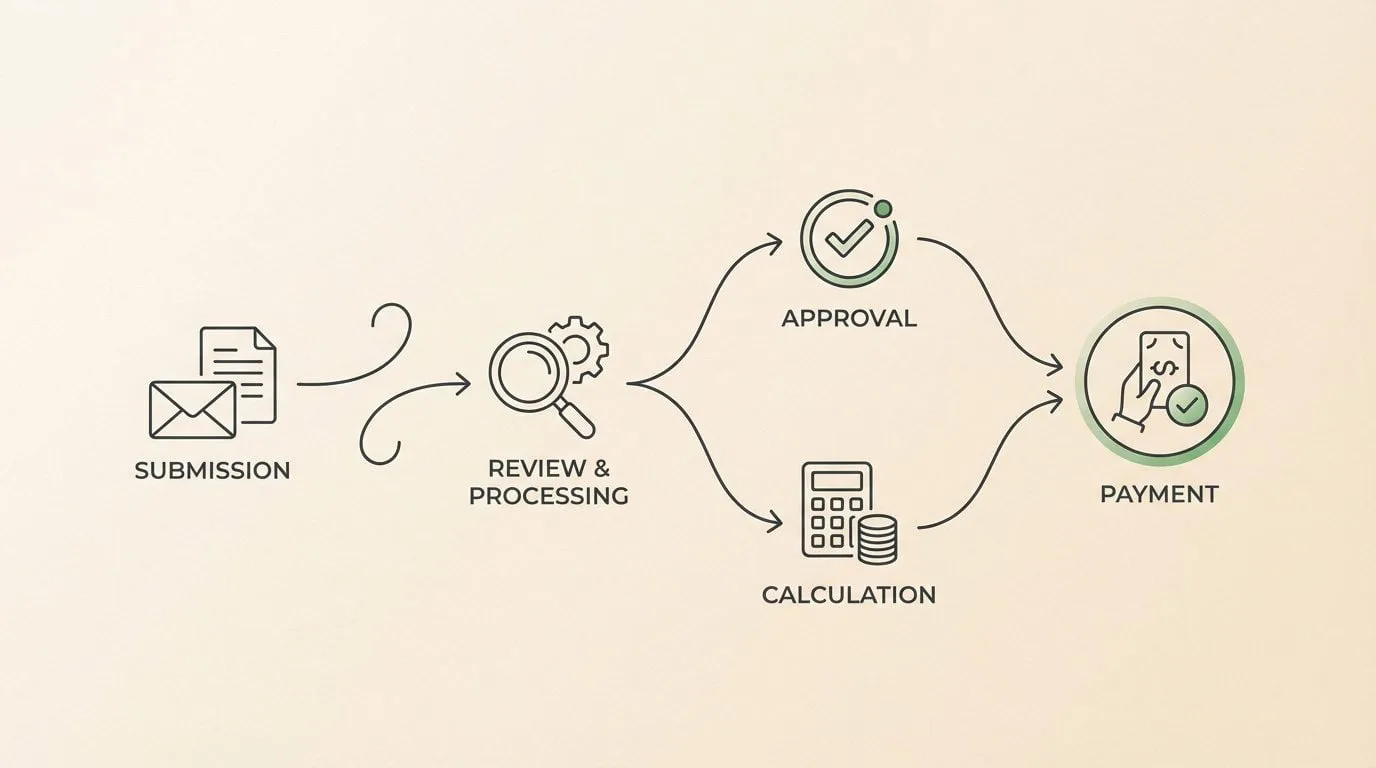
The most effective approaches address why AR ages in the first place, rather than just managing the follow-up.
Prevention Over Rework
Every hour spent preparing claims well saves multiple hours of follow-up work. The math is straightforward:
- Clean claim submission: Minutes of staff time
- Denied claim resolution: 2-3 hours spread across weeks
Practices that focus on the front end-identifying revenue leakage before claims are submitted-tend to see healthier AR and more manageable workloads.
Effective prevention approaches include:
- Eligibility verification before every visit: Catching coverage issues before service prevents claims that won’t be paid.
- Prior authorization tracking: Making sure authorizations are obtained and documented before applicable services.
- Claims review before submission: Checking for errors before claims reach payers.
- Coding clarity: Making sure diagnosis codes match services and meet payer requirements.
Denial pattern review: Looking at denied claims monthly to spot systematic issues.
Matching Resources to the Work
Payers invest significantly in their claim review processes. They have teams focused specifically on payment accuracy and documentation.
Your office manager handles billing alongside patient care, phones, scheduling, and operations. That’s a different kind of role.
This mismatch isn’t about anyone’s capability. It’s about how specialization works. Someone handling billing full-time, with systems designed for that purpose, can often maintain results that are hard to achieve when billing is one responsibility among many.
When Specialized Support Makes Sense
Several indicators suggest that current billing resources might benefit from additional support:
- Days in AR consistently above 40-45 days
- 90+ day bucket growing month over month
- Denial rate above 10% without improvement
- Office manager showing signs of workload strain
- Turnover in billing or front-office roles
- Practice owner spending significant time on billing questions
A specialized billing partner—one with deep expertise in chiropractic and allied health billing—can take the AR work off your internal team. This isn’t about replacing your office manager. It’s about redirecting their time toward patient experience, practice growth, and work that benefits from their knowledge of your patients and community.
The human element in billing matters for complex situations: PI claims, appeals requiring clinical context, Medicare documentation questions. Human judgment applied by specialists who handle billing full-time often produces different results than human judgment spread across many responsibilities.
Building Something Sustainable

When billing runs smoothly, your team has more capacity for the work that directly affects patients. Both support each other.
What Organized Billing Looks Like
Well-run billing operations share several characteristics:
- Clear ownership: Someone is responsible for billing outcomes-whether internal staff or an external partner-with dedicated focus.
- Regular review: AR reports reviewed weekly rather than monthly. Issues spotted early.
- Realistic workload: Billing responsibilities sized to match available capacity.
- Documented processes: Clear workflows that don’t depend on any single person’s memory.
- Transparent communication: Practice owners informed about billing status without needing to dig for it.
When these elements are in place, AR tends to stay healthy and staff workload stays manageable.
Using Your AR Report Proactively
Your AR aging report can serve as an early indicator:
| What to Watch | What It May Point To | Helpful Response |
|---|---|---|
| 30-60 day bucket increasing | Something changed in submission or payer processing | Look into it before claims age further |
| 90+ day bucket growing | Follow-up capacity not keeping pace | Consider whether current resources are enough |
| Concentration by payer | One payer causing most aging | Review processes for that payer specifically |
| Concentration by CPT code | Certain services generating denials | Check coding, documentation, payer requirements |
| Concentration by denial reason | Systematic issue in billing process | Address the root cause |
The goal is to act early rather than react late.
Redirecting Your Office Manager’s Time
Every hour your office manager spends on insurance follow-up is an hour not spent on patient experience.
Consider two approaches:
Current situation: Office manager spends 15-20 hours weekly on AR follow-up. Check-in feels rushed. Calls go to voicemail. New patient processes get shortened.
Adjusted situation: Billing handled systematically—either through right-sized internal resources or outside support. Office manager has time for thorough check-ins, proactive patient communication, thoughtful scheduling.
Same practice. Same patient volume. Different distribution of your team’s time and attention.
Reading Your AR for Opportunities
Understanding your AR report helps you spot where revenue may be delayed:
- 90+ day bucket: Claims here have lower recovery likelihood. Worth prioritizing before filing deadlines pass.
- Denial patterns: Recurring issues by payer or code point to opportunities for systematic improvement.
- Days in AR trend: Is this number stable, improving, or gradually climbing? The trend matters as much as the current number.
Regular attention to these indicators helps you address things while they’re still manageable.
Frequently Asked Questions
What is a normal AR aging percentage for a chiropractor?
For a well-organized chiropractic practice, industry benchmarks suggest keeping 70-80% of accounts receivable in the 0-30 day bucket. Claims over 90 days should represent no more than 15-20% of total AR.
Best-performing practices maintain Days in AR under 30-35 days. When more than 25% of your AR ages past 60 days, it usually points to an opportunity to streamline your billing process.
How many hours a week should an office manager spend on AR follow-up?
In an organized practice with reliable billing processes, AR follow-up typically takes 5-8 hours weekly for average patient volume.
When office managers spend 15-20+ hours weekly on unpaid claims, it often signals that upstream improvements-better claim preparation, systematic denial tracking-could reduce that workload.
Does outsourcing billing reduce office staff burnout?
Working with a specialized billing partner can meaningfully reduce office staff workload by handling claims submission, denial follow-up, and AR management.
This frees your office manager to focus on patient experience, scheduling, and the parts of the job that benefit from their knowledge of your patients and community. The key is choosing a partner with specific expertise in chiropractic and allied health billing.
What are the first signs of billing-related burnout in an office manager?
Early signs include putting off AR report reviews, less attention to claim details, visible frustration during payer calls, and comments about feeling behind.
You might also notice other responsibilities getting less attention as billing tasks take priority. These are signals about workload—not reflections of your team member’s abilities.
How does a clean claim rate affect staff morale?
A strong clean claim rate (95% or above) means fewer rejections coming back for correction.
When claims go through smoothly the first time, your office manager spends less time on rework and more time on activities that feel productive. It’s a reliable way to make the billing portion of their job more manageable.
Can a high AR report lead to office manager turnover?
It can be a contributing factor. A consistently high AR aging report represents ongoing follow-up work that’s hard to manage alongside other responsibilities.
Administrative roles in healthcare see 30-40% annual turnover, and workload is often mentioned as a factor. Supporting your team with organized systems or specialized help can make a real difference in retention.
How do I read my AR report to find revenue leakage?
Focus on three areas.
First, look at your 90+ day bucket-claims here have lower recovery rates and may be approaching filing deadlines.
Second, look for patterns by payer, CPT code, or denial reason to spot systematic issues.
Third, calculate Days in AR by dividing total AR by average daily charges. Numbers above 35-40 days suggest opportunities to improve how claims move through your system.
Moving Forward
The connection between your AR aging report and your office manager’s workload is practical and addressable. When AR grows, follow-up work grows. When the workload exceeds what’s manageable, both revenue and team wellbeing are affected.
The relationship works the other way too. Organized improvements to billing processes-better front-end verification, denial prevention, or specialized support-reduce both AR aging and staff workload.
Your office manager deserves a workload that allows them to do their best work. Your practice deserves consistent claims management that keeps revenue flowing steadily. These goals support each other.
Understanding where your current AR stands is a good starting point. The right response depends on what you find and what resources make sense for your practice.
If you’re looking at an AR report that’s been climbing, or noticing that billing follow-up is taking more of your office manager’s time than it should, you’re in good company. Most clinic owners we work with have been in a similar spot.
That’s why we offer a free discovery call. It’s a straightforward conversation about your current billing situation-what’s working, what could work better, and what options might make sense.
We’ll help you understand:
- Where your claims might be getting delayed
- What’s contributing to denials or slow payments
- Whether your AR is healthy or could use some attention
- How your current process compares to what we typically see
- What working with Bushido would actually look like
Book a Call – no pressure, no obligation. Just a clear conversation about your billing.
When billing runs smoothly, your office manager can focus on the work that brought them to healthcare-and your practice can focus on patients.
SCHEDULE YOUR FREE DISCOVERY SESSION TODAY.

© . All Rights Reserved | Web Design by iTech Valet