

Why Do Enterprise Chiropractic Groups Struggle with AR Aging Reports?
Enterprise chiropractic AR aging reports grow for one reason: the claims driving that aging aren’t being worked. They’re being abandoned.
Not by negligence. By design.
Billing software processes what it can process. When a claim requires a medical necessity argument, a documentation correction, or a modifier clarification, the automated workflow has no pathway for it. The claim sits. Then it ages. Then it expires.
The aging report doesn’t alert you. It just records the damage.
Chiropractic billing carries a specific set of rules that generalist systems routinely misapply. Medicare covers active, corrective spinal manipulation but strictly excludes maintenance therapy. Getting that distinction right on every claim, at every location, requires specialty-level oversight that no clearinghouse automates. Federal audits have found billing error rates for chiropractic services as high as 82 percent. That is not a technology problem. That is a human oversight problem.
Documentation errors and specialized coding mismatches drive over 50 percent of specialty practice medical billing denials. For enterprise groups managing multiple providers across multiple locations, that figure compounds. One modifier error becomes a systemic pattern. One uncorrected documentation gap repeats across hundreds of claims.
By the time a practice sees the 90-day and 120-day columns filling up, the window to recover those claims is already narrowing.
The root cause is structural. Volume-first billing models measure performance by submission speed, not by revenue recovery. High-complexity denials – the ones requiring human judgment, clinical context, and multi-step appeals – cost more to work than a volume operation budgets for. So they get deprioritized. The aging report grows. The practice assumes someone is working it.
Nobody is.
Resolving enterprise chiropractic AR aging requires a billing partner with chiropractic-specific expertise and a dedicated, proactive process for every denial – not just the ones that are easy to clear.
What an AR Aging Report Is Actually Telling Your Practice
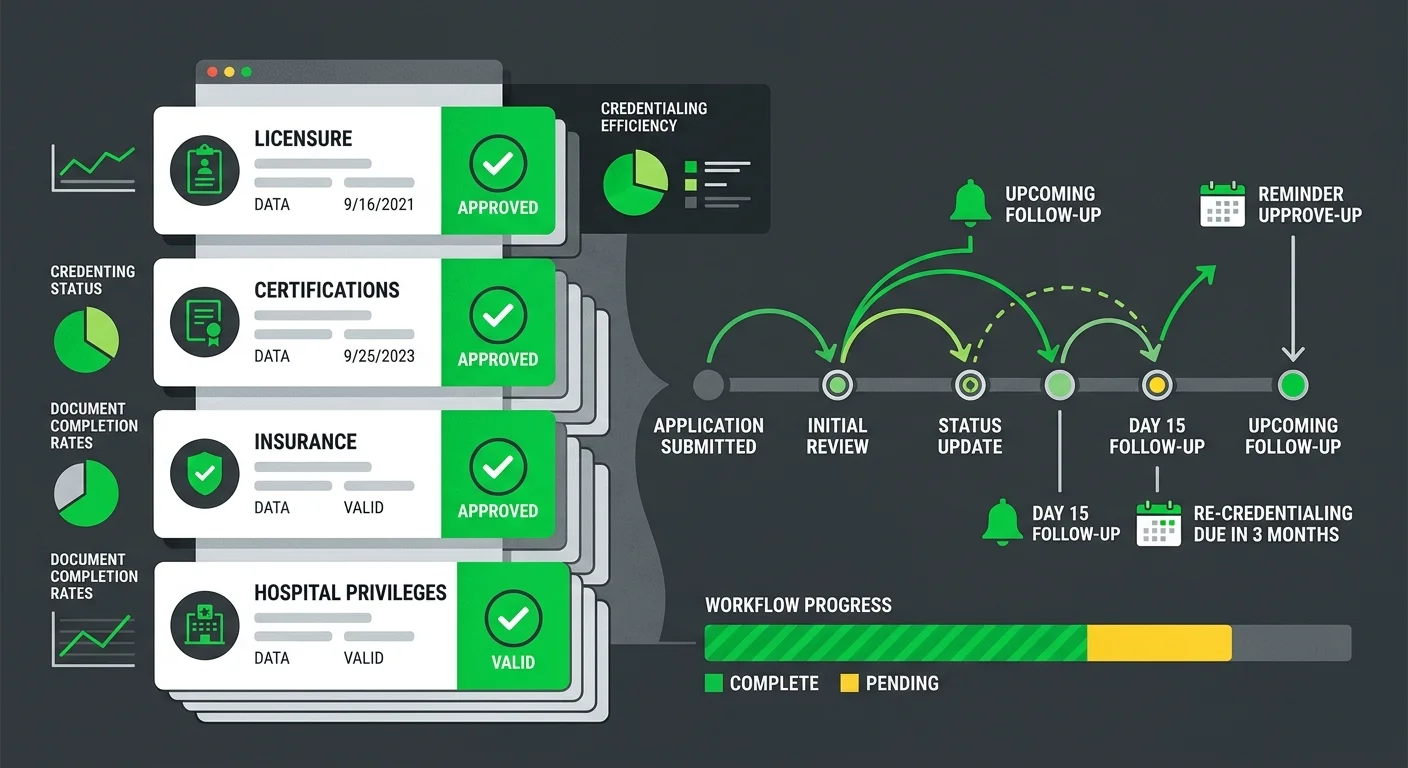
An AR aging report is not a billing problem.
It’s a ledger of decisions that were never made.
Every claim sitting in the 90-day or 120-day column hit a wall. The payer didn’t just reject it outright. Someone needed to file the appeal, correct the documentation, argue medical necessity – and nobody did.
The report doesn’t tell you that. It shows you a number. The number keeps growing.
Published billing compliance data from HHS OIG put chiropractic billing error rates as high as 82 percent.
That’s not a chiropractor problem. It’s a complexity problem. The claims environment for chiropractic care is genuinely difficult – and that difficulty doesn’t resolve itself at submission. It compounds every time a human doesn’t step in.
Why Most Billing Operations Measure the Wrong Thing
Most billing operations are measuring submissions. Claims out. First-pass acceptance rate.
Nobody’s measuring resolution. What percentage of denied claims actually got worked. What percentage came back as revenue.
That’s where enterprise chiropractic groups bleed out. GAO’s published findings on inadequate billing controls tied weak administrative oversight directly to hundreds of millions in noncompliant chiropractic payments – annually.
The money isn’t lost at submission. It’s lost in the silence after the denial comes back.
And it gets worse when you scale across multiple locations without specialist billing oversight. One modifier error at one clinic doesn’t stay at one clinic. It becomes the pattern across all of them.
By the time the AR report shows you the damage, the recovery window on your oldest claims is already closing.
The aging report doesn’t alert you. It just records the damage.
An embedded billing partner with chiropractic-specific expertise reads that report differently – not as a historical record, but as a diagnostic. Every aged claim column is a question: who was supposed to work this, and why didn’t they?
| AR Aging Bucket | Claim Status Signal | Recovery Likelihood | Action Required |
|---|---|---|---|
| 0-30 Days | Claim submitted; payer review in progress | High – claim is active and within timely filing window | Monitor for payer response; confirm clean submission and correct modifier usage |
| 31-60 Days | Denial received or no response from payer | Moderate – appeal window is open but narrowing | Identify denial reason; initiate appeal or documentation correction immediately |
| 61-90 Days | Denial unworked or appeal not filed | Reduced – timely filing deadlines approaching for most payers | Escalate to specialist review; medical necessity argument or documentation resubmission required |
| 91-120 Days | Claim deprioritized or lost in billing queue | Low – most payer appeal windows have closed or are closing | Audit claim history for recoupment opportunity; evaluate write-off versus secondary billing path |
| 120+ Days | Claim effectively abandoned by billing workflow | Minimal – recovery requires manual intervention and payer exception | Full billing audit required; root cause must be identified to prevent pattern from repeating across all locations |
Why Submission Volume Metrics Mask Growing AR Problems

Submission volume is the wrong scorecard.
It tells you how many claims went out. It tells you nothing about how many came back – or what happened to them when they did.
Here’s the assumption most enterprise groups make: a high clean claim rate means billing is working.
It doesn’t. Clean claim rate measures the front end of the process. The AR aging report measures everything the clean claim rate never captures – the denials, the underpayments, the claims that came back wrong and never got corrected.
That’s the gap where revenue disappears.
Not at submission. After it.
Why Most Billing Operations Measure the Wrong Thing
Most billing operations are built to move claims forward. They’re not built to chase what falls behind.
Submission speed is a metric every clearinghouse can track. And every full-service billing arrangement gets measured against it. But submission speed has no relationship to how much money the practice actually recovers. Those are two different conversations – and most enterprise groups are only having one of them.
NIH research on specialty billing found that documentation errors and specialized coding mismatches represent over 50 percent of specialty practice medical billing denials.
For an enterprise group running multiple providers across multiple locations, those denials don’t arrive as a crisis. They arrive quietly – as a column on an aging report that nobody is actively working. Scale doesn’t reduce that problem. It buries it deeper.
The metrics that matter – denial resolution rate, recovery rate on aged claims, the KPIs that actually predict chiropractic enterprise health – are rarely what billing software surfaces by default. The default dashboard is built for throughput reporting, not revenue recovery.
So the dashboard looks clean. And the aging report keeps growing.
Submission volume rewards throughput. It obscures failure.
A billing operation can submit thousands of claims, post a high clean claim rate, and still leave a six-figure AR problem buried in the 90-day and 120-day columns. Because nobody is tracking what didn’t get resolved.
The report grows. The practice waits. The recovery window closes.
| Billing Performance Metric | What It Actually Measures | What It Misses | AR Aging Impact |
|---|---|---|---|
| Clean claim rate | The percentage of claims accepted on first submission without a technical rejection | What happens to claims after they are denied – whether they are appealed, corrected, or abandoned | A high clean claim rate can coexist with a growing 90-day and 120-day AR column if denials are never worked after submission |
| Submission volume | How many claims were sent out in a given period | How many of those claims were actually paid, partially paid, or resolved after denial | High submission volume creates the appearance of a functioning billing operation while aged, unresolved claims accumulate silently in the background |
| Denial rate | The percentage of submitted claims that were rejected by a payer on first pass | Whether denied claims were ever appealed or corrected – a low denial rate says nothing about denial resolution | Practices with low denial rates still develop deep AR aging problems when the denials that do occur are deprioritized rather than worked |
| Days in AR (average) | The average number of days across all open claims before payment is received | The distribution of claims by age bucket – a healthy average can mask a growing concentration of claims in the 90-day and 120-day columns | An improving average days-in-AR figure can still accompany significant revenue loss if the oldest, most complex claims are being written off rather than recovered |
| Denial resolution rate | The percentage of denied claims that were successfully appealed, corrected, and paid after initial rejection | This metric is the one that directly reflects revenue recovery – and it is the one most billing software does not surface by default | When denial resolution rate is not tracked, the AR aging report becomes the only visible indicator of failure – and by then, the recovery window on the earliest claims is already closing |
The Chiropractic-Specific Denial Triggers That Age Fastest
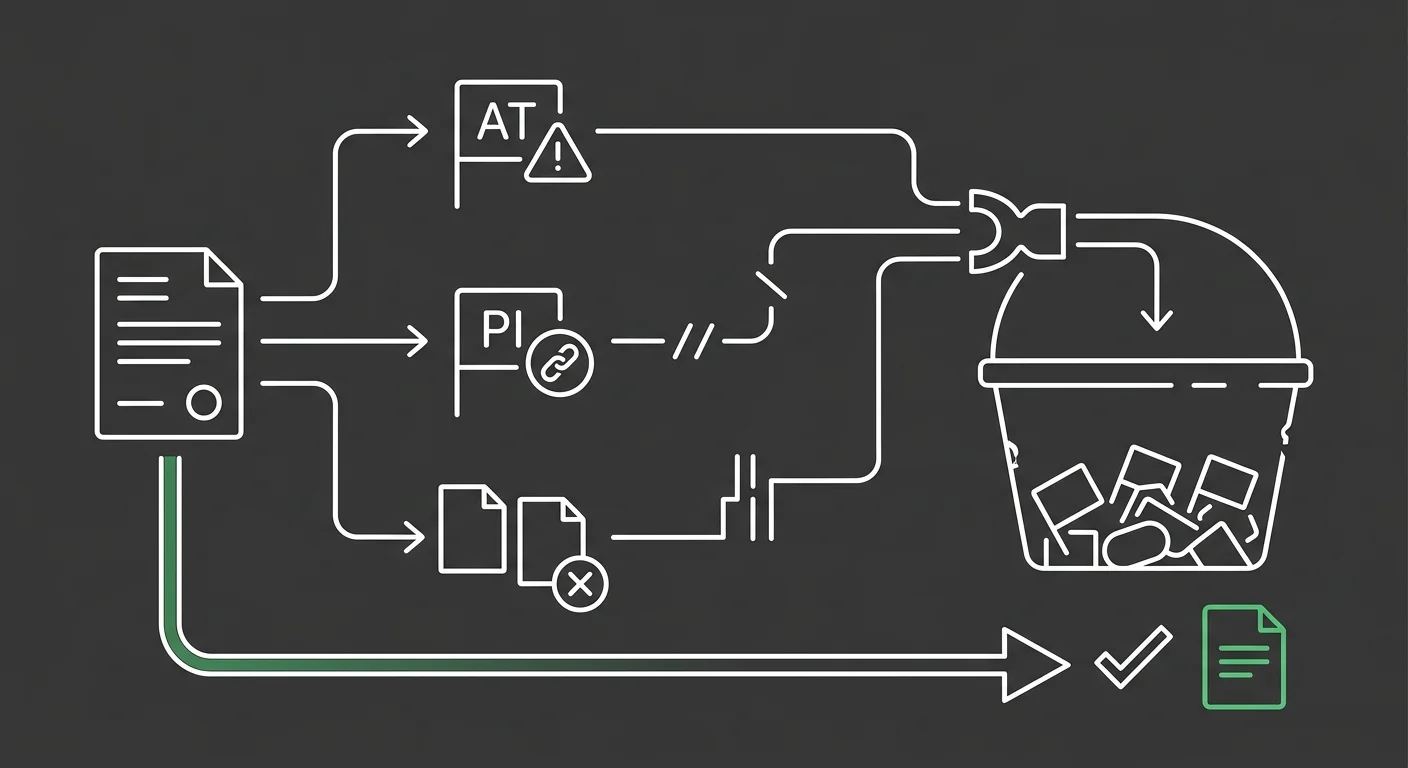
Denials don’t age randomly. They follow a pattern – and for chiropractic practices, that pattern traces back to the same claim types every single time.
These aren’t edge cases. They’re predictable. The same claim types. The same denial reasons. The same recovery windows – closing while nobody’s watching.
According to NIH research, documentation errors and specialized coding mismatches account for over 50 percent of specialty practice medical billing denials. For enterprise chiropractic groups, that number doesn’t show up as one bad claim. It shows up as a column on the aging report that keeps growing – because nobody is actively working what’s inside it.
AT Modifier Errors and Medicare Coverage Rules
The AT modifier is the most consequential billing distinction in chiropractic Medicare claims. It separates covered active care from non-covered maintenance therapy. Get it wrong – or miss it entirely – and the claim is dead on arrival.
Medicare coverage guidelines are not ambiguous on this. CMS National Coverage Determination 150.1 draws a clear line: Medicare covers active, corrective spinal manipulation and excludes maintenance therapy. That distinction has to land correctly on every claim, for every patient, at every location. There is no workaround, and there is no appeals pathway when the documentation doesn’t support active care.
Standard EHR platforms aren’t built to audit this distinction. They submit what the provider documents. So if the documentation is ambiguous – or the modifier is missing – the platform sends the claim anyway. The denial comes back. Then the claim sits. Nobody in the system flags it as a pattern. Nobody works it.
At scale, this becomes a systemic failure. One location applies the modifier inconsistently. The error propagates across providers. By the time it surfaces in the aging report, dozens of claims are already past straightforward recovery. That’s not a software gap. That’s the absence of specialist human oversight – someone reading the aging report as a diagnostic tool, not a historical record.
Personal Injury Lien Claims and Payer Complexity
Personal injury lien billing is the second major denial trigger. It’s also the one most billing operations simply stop working. PI lien claims require coordination across multiple payers, attorneys, and settlement timelines. They don’t resolve on a standard billing cycle – and most billing systems have no pathway for what happens when they don’t.
Generalist billing systems have no workflow for this. The claim sits in a pending state. Nobody follows up. The settlement timeline extends. The claim ages past 90 days, then past 120. The software logs it. Nobody works it.
These are the claims that compound enterprise AR aging fastest. High-value. High-friction. Impossible to resolve without specialist knowledge of PI lien workflows. An enterprise group running multiple locations without dedicated chiropractic billing expertise watches these claims age – and assumes they’re being handled – right up until the aging report makes the damage impossible to ignore. By then, a significant portion of that recovery window is already gone.
| Denial Trigger | Claim Type Affected | Root Cause | Automation Can Resolve? | Human Review Required? |
|---|---|---|---|---|
| AT Modifier Error | Medicare chiropractic claims | Provider documents ambiguous care level; EHR submits without modifier audit | No | Yes – specialist must distinguish active care from maintenance therapy per claim |
| Maintenance Care Submitted as Active Care | Medicare chiropractic claims | Documentation fails to establish medical necessity for ongoing treatment | No | Yes – requires clinical review and appeal with supporting documentation |
| Personal Injury Lien Billing | PI lien claims across multiple payers | No standard billing cycle; resolution depends on settlement timelines and attorney coordination | No | Yes – requires dedicated PI lien workflow and ongoing multi-party follow-up |
| Spinal Subluxation Level Specificity | All chiropractic diagnostic coding | Insufficient ICD-10 specificity in provider documentation; generalist billers miss chiropractic-specific requirements | No | Yes – specialist must audit documentation for required level and laterality detail |
| Multi-Location Modifier Inconsistency | Claims across enterprise clinic network | Modifier application varies by provider and location without centralized specialty oversight | No | Yes – requires systematic cross-location audit and standardized documentation protocols |
How Multi-Location Growth Multiplies Denial Risk
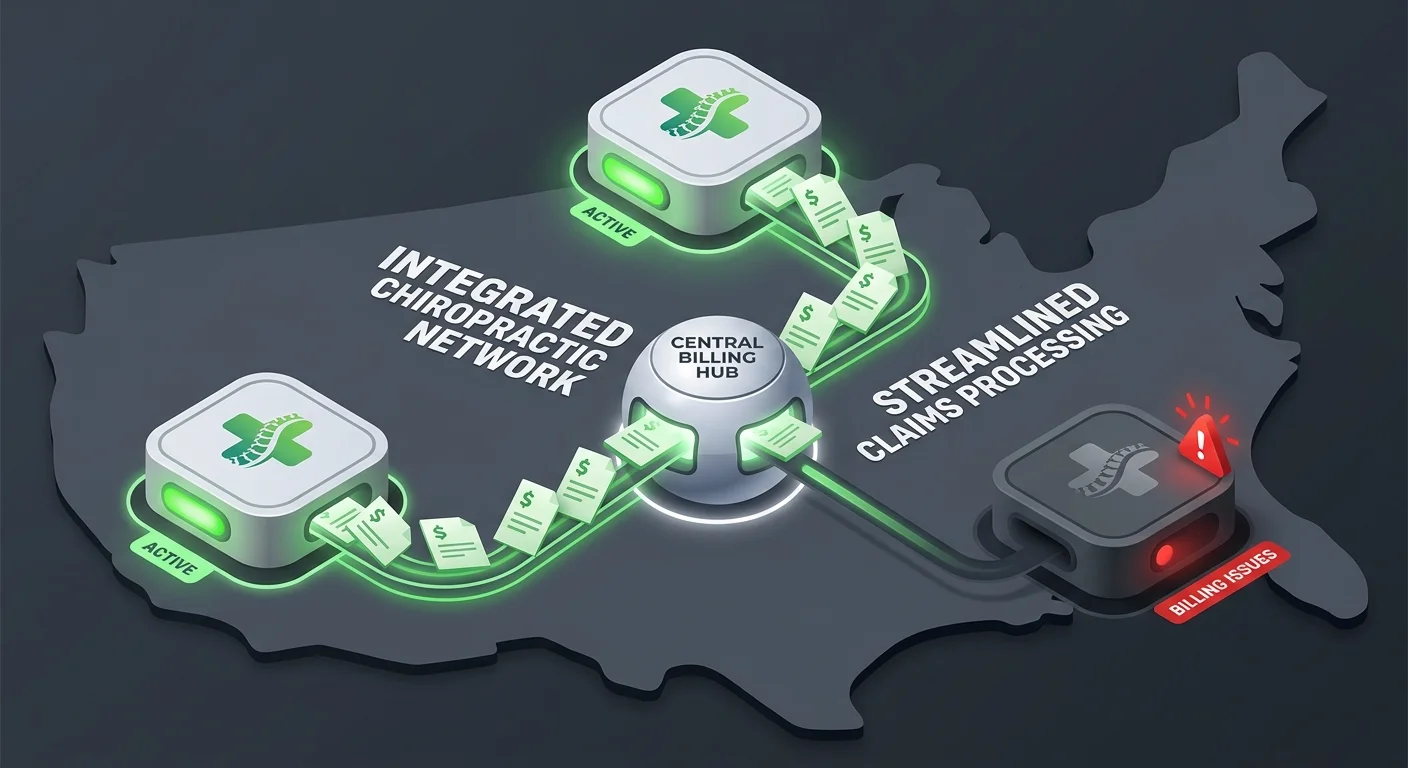
Adding locations doesn’t spread the risk. It multiplies it.
Every failure point from the section above – AT modifier errors, PI lien claims sitting in pending, documentation gaps – doesn’t stay contained to one clinic.
When a group scales without upgrading its billing oversight model, each new location inherits the same vulnerabilities. The error rate doesn’t grow linearly. It compounds.
The GAO found that inadequate billing controls contributed to hundreds of millions in noncompliant chiropractic payments annually.
That number doesn’t come from solo practitioners working out of a single clinic. It comes from enterprise environments – exactly the kind where billing oversight failed to keep pace with clinical growth. More locations. Same broken controls. Bigger exposure.
Documentation Fragmentation Across Clinic Locations
More providers means more treatment plans. More treatment plans means more documentation. And documentation is the first thing that falls apart when nobody’s enforcing standards at every location.
Documentation standards drift the moment they aren’t actively enforced at every location.
One provider documents spinal subluxation with sufficient level-specificity. Another doesn’t. The billing system processes both submissions the same way. The denial comes back on the second claim. Nobody flags it as a pattern.
It shows up in the aging report three months later – multiplied across every provider at every location who had the same documentation habit.
Here’s what most enterprise groups get wrong when they scale: centralizing billing data feels like control. It isn’t.
The data is unified. The errors are not. And the question of centralized vs. decentralized billing matters here – because a centralized model without specialty oversight just aggregates the documentation failures faster. One clinic documents correctly. Another doesn’t. The billing system treats both submissions identically – until the denial comes back and nobody catches the pattern.
NIH-published research puts documentation errors and specialized coding mismatches at over 50 percent of specialty practice medical billing denials. Fragmented multi-location documentation makes every one of those triggers harder to catch before the claim goes out – and harder to appeal once it comes back rejected.
Why In-House Staff Cannot Absorb Enterprise AR Volume
Most enterprise groups assume in-house staff will scale with the practice. They won’t.
Front desk staff and in-house administrative teams are already running scheduling, patient intake, and insurance verification. They’re not billing specialists. Nobody hired them to be.
AR recovery on complex denials past 60 days requires dedicated bandwidth – not generalist bandwidth. When claim volume doubles across new locations, those teams don’t get sharper. They get buried. The complex work – appeals, documentation corrections, medical necessity arguments – gets pushed to tomorrow. Tomorrow becomes next month. Next month becomes the aging report.
The pressure to scale a multi-location chiropractic practice without expanding administrative headcount is exactly what exposes this gap.
Billing workload grows with each new provider. Staff capacity doesn’t. So the dropped tasks aren’t random – they follow a pattern. Complex denials get deprioritized. Appeals don’t get filed. Documentation corrections sit until the payer window closes.
And that’s where the silent ledger accelerates.
The aging report records every dropped denial. The in-house team doesn’t have the hours or the specialty knowledge to work them. The claims age. The recovery window closes.
The practice keeps assuming someone is handling it – because nobody has said otherwise. That silence isn’t reassurance. It’s the gap where the KPIs for scaling a chiropractic enterprise that actually matter go completely unmeasured.
| Practice Scale | Billing Oversight Model | Documentation Consistency Risk | Projected AR Aging Exposure |
|---|---|---|---|
| Single-location practice | Owner-operator or one in-house biller with direct provider access | High – documentation issues surface quickly and are corrected at the source | Limited – denial patterns are visible and workable before claims age past recovery |
| Two to three locations | Centralized in-house team managing all locations remotely | Moderate – documentation drift begins as provider habits vary across clinics without active enforcement | Elevated – complex denials start accumulating in the 60-to-90-day column as bandwidth thins |
| Four to six locations | In-house team or generalist billing company handling volume across sites | High – no standardized documentation audit process; errors multiply across providers before patterns are identified | Significant – PI lien and AT modifier claims age past standard recovery windows without dedicated specialist follow-up |
| Seven or more locations | Generalist RCM firm or fragmented in-house model with no vertical chiropractic oversight | Critical – documentation inconsistency is systemic; each new location inherits existing error patterns without correction | Severe – enterprise AR aging report reflects compounding denial backlog that automated systems log but do not resolve |
| Enterprise scale (any size) | Embedded chiropractic-specialist billing partner with dedicated biller assignment and structured weekly reporting | Controlled – documentation standards are actively enforced at every location with direct provider communication | Managed – denial patterns are identified early, worked proactively, and resolved before claims age past recovery |
What the AR Aging Report Reveals About Your Billing Infrastructure
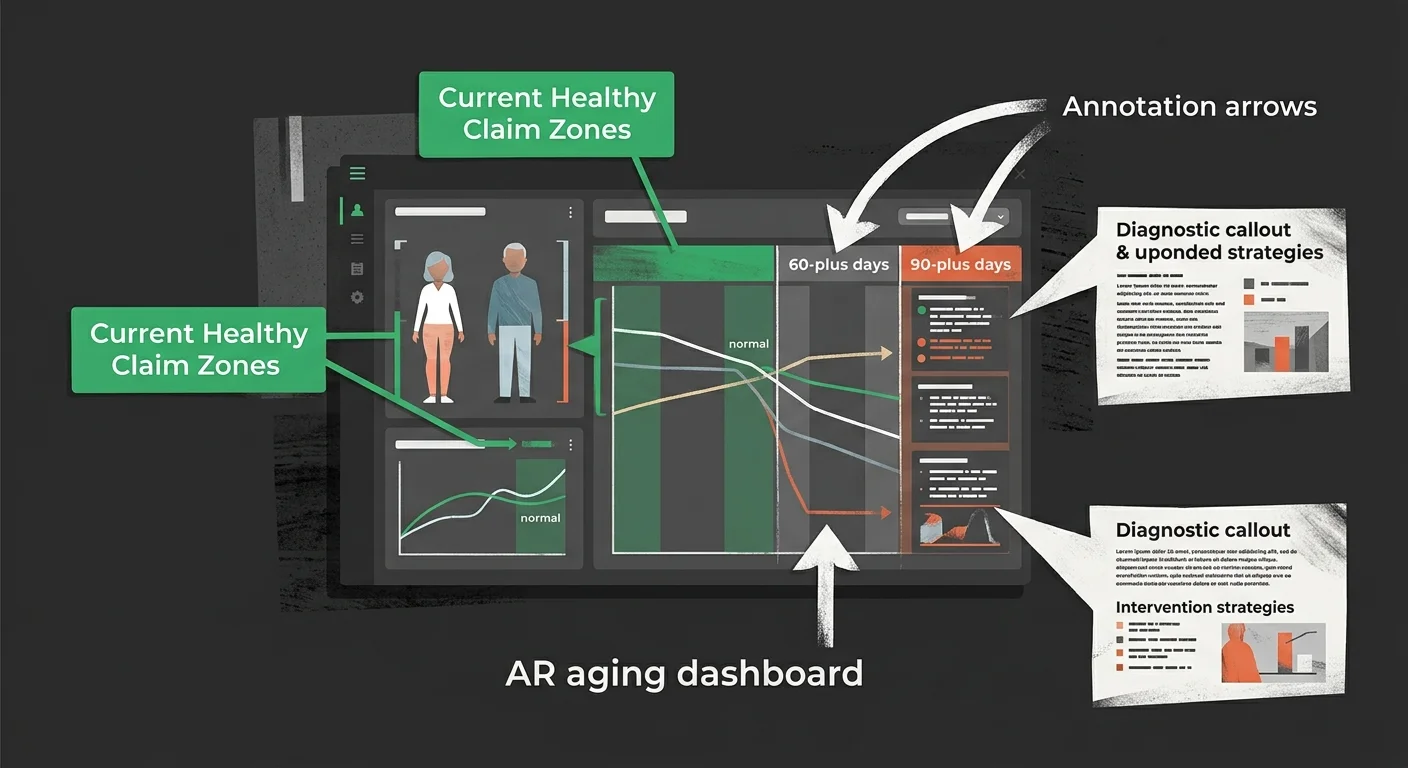
The AR aging report is not a billing problem.
It’s a diagnostic. It tells you exactly where your billing infrastructure broke down – and how long ago.
Most enterprise groups read the aging report wrong. They see the 60-day and 90-day columns and assume those claims are still in motion.
They’re not. Those columns represent claims that already stopped moving.
And they stopped moving because no one with the right specialty knowledge was watching them. HHS OIG audits found billing error rates for chiropractic services as high as 82 percent. That’s not a rounding error. That’s what systemic oversight failure looks like – repeated across every location, at scale.
The report doesn’t alert you when a claim dies. It just records it – quietly, in a column that keeps growing.
By the time someone asks why the numbers look the way they do, the recovery window on the oldest claims is already gone.
Reading the 60-Plus and 90-Plus Day Buckets Correctly
The 60-plus day bucket is where denial patterns become visible.
The 90-plus day bucket is where they become unrecoverable.
Once a claim hits 90 days without resolution, you’re in a different category entirely. Documentation requirements increase. Appeal pathways tighten. Payer timely filing limits start closing off – permanently.
Automation has no pathway for any of this. A clearinghouse processes what it can process. When a claim requires a medical necessity argument or a documentation correction, the software moves on. The claim doesn’t.
A specialist can still recover it at 90 days. But only if they get there before the window shuts. And most of the time, nobody’s watching the clock.
Weak administrative controls contributed to hundreds of millions in noncompliant chiropractic payments annually – according to GAO. Those dollars didn’t disappear at submission.
They disappeared in the 60-plus and 90-plus buckets. Sitting unworked. While the billing operation posted clean claim rates and the practice assumed everything was running fine.
Weekly updates on AR bucket movement aren’t a reporting preference. They’re the only mechanism that catches this before the damage becomes permanent.
The Anti-Persona Trap: When Practices Disengage from Billing Oversight
There’s one practice behavior that accelerates AR aging faster than any individual denial trigger.
Disengaging from billing oversight entirely.
Practices that treat billing as a hands-off function produce exactly the AR aging reports described above. No EHR access cooperation. No documentation turnaround discipline. No provider availability when an appeal needs a clinical clarification.
Here’s what that looks like in practice: a claim requires a documentation correction. The billing team flags it. The provider is unavailable. The deadline passes. The claim ages into the 90-plus bucket – not because the billing operation failed, but because no one answered.
That’s not a billing company problem. That’s a structural disengagement from the process that makes recovery possible in the first place.
If a practice’s first question about a billing partner is rate – with zero follow-up on process, documentation requirements, or how denials actually get resolved – that practice isn’t ready for the kind of partnership that actually works the aging report down.
This isn’t a judgment. It’s a structural incompatibility.
The practices that get AR under control stay in it. They show up for the process. They don’t hand off accountability along with the claims – because billing doesn’t work that way, and the aging report proves it.
| AR Aging Signal | What It Reveals About Billing Operations | Corrective Action | Timeline to Assess |
|---|---|---|---|
| High 60-plus day bucket volume | Claims stopped moving after submission – no specialist follow-up, no appeal pathway, no documentation correction in progress | Audit each claim in the bucket individually; identify whether denial was received, ignored, or never flagged by the billing system | Immediate – within the current billing cycle |
| 90-plus day claims with no activity notes | Billing operation is logging claims, not working them – the difference between a clearinghouse and a billing partner | Escalate to specialist review; assess timely filing limits per payer before appeal windows close permanently | Urgent – recovery window narrows with each passing week |
| Consistent denial patterns across multiple locations | Documentation standards are fragmented – providers at different clinics are submitting claims with inconsistent coding specificity and modifier use | Standardize documentation protocols at each clinic; assign dedicated oversight to catch pattern errors before submission, not after | 30 to 60 days to identify pattern; ongoing to enforce |
| PI lien claims sitting in pending with no resolution progress | No specialist workflow exists for multi-payer coordination – the billing operation has no pathway for claims that don’t resolve on a standard cycle | Assign dedicated PI lien billing oversight with attorney and payer coordination capability; these claims cannot be worked by a generalist system | Ongoing – PI lien timelines extend well beyond standard billing cycles |
| AT modifier errors appearing across claims | Specialty coding oversight is absent – maintenance care and active care are not being differentiated correctly at the provider documentation level | Review modifier application across all providers; implement pre-submission documentation checks specific to Medicare chiropractic coverage rules | Immediate review; documentation correction before next submission cycle |
| AR report showing growth month over month despite stable patient volume | Revenue is leaving the practice through unworked denials, not through patient non-pay – the billing infrastructure is processing claims but not recovering revenue | Separate submission metrics from collection metrics in reporting; measure what was recovered, not just what was submitted | Structural – requires a change in how billing performance is measured and reported |
Frequently Asked Questions
So now you know why it happens. The harder question is what you do when the 90-plus column is already full.
These are the questions that come up once the aging report stops looking like background noise. The answers below don’t hedge.
How long does it typically take to recover aged chiropractic AR?
It depends on what drove the aging – and how old the claims are when someone finally looks.
Modifier errors and documentation gaps need human-led audits and targeted appeals before any payment moves. That work takes time. And the older the claim, the narrower the window.
Claims past 90 days are in a high-effort, low-return category. Appeal pathways start closing. Documentation requirements go up. Standard clearinghouse tools have no workflow for complex clinical denials – so the software isn’t working those claims. Nobody is.
A specialist can recover aged AR. But practices that catch the pattern at 60 days recover far more than the ones who notice it at 120.
Why do automated EHR workflows fail to collect on chiropractic claims past 90 days?
No. And this is where the assumption breaks down.
EHR platforms are submission tools. The claim goes out, the clearinghouse logs it as sent, and that is the full extent of what the software was built to do. It cannot read a denial reason, construct a medical necessity argument, correct a documentation deficiency, or resubmit with supporting clinical evidence. That sequence requires human judgment.
Past 90 days, the claim isn’t just denied. It has aged into a category the software has no workflow for. It sits there. The practice assumes someone is working it. No one is.
What documentation errors flag enterprise chiropractic groups for audits?
Two documentation failures draw the most audit attention at the enterprise level.
The first is insufficient spinal subluxation level-specificity – documenting a region instead of a precise vertebral level. The second is AT modifier misapplication on Medicare claims. CMS National Coverage Determination 150.1 is unambiguous: Medicare covers active, corrective spinal manipulation and strictly excludes maintenance therapy. The AT modifier is what separates the two. Apply it inconsistently across providers – or omit it entirely – and the audit exposure scales with the group.
Research published in NIH found that documentation errors and specialized coding mismatches represent over 50 percent of specialty practice billing denials. Enterprise groups with uniform, repetitive treatment plans across multiple locations concentrate that risk in one place. HHS OIG audits have recorded chiropractic billing error rates as high as 82 percent. That figure reflects what happens when documentation oversight fails to keep pace with clinical volume.
Can an in-house administrative staff effectively work high-volume aged accounts receivable?
Not at scale. In-house administrative staff handle scheduling, intake, insurance verification, and daily operations. That is the job they were hired to do. Working complex denials past 60 days requires dedicated bandwidth and specialty knowledge that front desk teams don’t have – and were never expected to carry.
When claim volume doubles across new locations, in-house teams don’t get more effective. They get more stretched. Appeals, documentation corrections, medical necessity arguments – those are the first tasks dropped when the day fills up.
The in-house team isn’t failing. They’re doing exactly what they were hired to do. The gap is that nobody hired a specialist to do the rest.
How does scaling to multiple locations compound chiropractic billing denial rates?
Scaling multiplies documentation inconsistency. One provider documents spinal subluxation with sufficient level-specificity. Another doesn’t. The billing system processes both submissions the same way. The denial comes back on the second claim. Nobody flags it as a pattern – because no one is watching for patterns across locations.
Documentation errors and coding mismatches represent over 50 percent of specialty practice billing denials. In a single-location practice, documentation drift is a single-location problem. In an enterprise group, the same drift runs across every provider at every site – compounding in the aging report until it becomes a cash flow event.
Centralizing billing data doesn’t fix fragmented documentation. It just makes the errors easier to count after they’ve already aged past recovery.
What a Functioning Enterprise RCM Model Looks Like
The AR aging report is always a history lesson.
It tells you what happened to claims nobody with the right expertise was watching – across every provider, every location, at scale.
But the fix isn’t a better report. It’s a different model entirely.
A functioning enterprise RCM model starts with one recognition: documentation errors and specialized coding mismatches drive the majority of specialty practice denials. That’s not a setup problem. It doesn’t get fixed at onboarding and stay fixed.
It’s an ongoing pattern – running across every provider, every location, every treatment plan that touches Medicare’s strict line between covered active care and excluded maintenance therapy.
The difference between a billing operation that works and one that silently bleeds is whether someone is reading those patterns in real time. Before the claim ages past the recovery window. Before the 90-day column becomes a write-off.
Bushido Billing is built on exactly that model. Not submission volume. Not clean claim rates.
Recovery – on the complex denials, the PI lien claims, the AT modifier disputes that automated systems log and abandon because they cost too much to work.
The aging report doesn’t alert you. It just records the damage.
The moment a specialist is reading that report as a diagnostic – every week, across every location – the silent ledger stops being silent. That is what a functioning enterprise RCM model looks like. The question is whether yours is built that way right now.
Your aging report isn’t warning you. It’s recording what already went wrong.
The claims in your 60-plus and 90-plus buckets didn’t drift there. They were abandoned – by software that couldn’t argue medical necessity, by generalist billers who didn’t know what an AT modifier error looks like, by a system that processes submissions and calls it billing.
If you don’t know what’s sitting in your AR right now, someone should tell you. Book a Call to see exactly what’s aged, what’s still workable, and what it’s going to take to get it back.
Book a Call to see what’s sitting in your AR

© . All Rights Reserved | Web Design by iTech Valet