

How to Perform a Fee Schedule Research Audit to Maximize Per-Visit Reimbursement?
A chiropractic fee schedule research audit is a systematic clinical review of a practice’s charge structure, payer contracts, and modifier usage – measured against CMS benchmark rates and regional payment data – to identify the gap between what the practice bills and what it is entitled to collect per visit.
The audit covers four core areas: verifying that procedure codes and charge amounts align with the current CMS Physician Fee Schedule; confirming that the AT modifier is applied correctly on all Medicare active therapy claims; cross-referencing private payer contract rates against regional benchmarks; and building a corrected fee schedule with a structured implementation plan.
Most chiropractic practices are not collecting at the ceiling of their allowable reimbursement. Systematic audits consistently uncover under-coding and documentation errors that account for a 15-20% reduction in revenue collection. The problem is not always incorrect billing – it is incomplete billing, misconfigured charge amounts, and modifier patterns that leave money behind on every visit.
On the Medicare side, documentation integrity is the core risk. An HHS Office of Inspector General review found that up to 82 percent of analyzed chiropractic Medicare claims did not meet specific documentation requirements. That gap is not isolated to low-volume or poorly managed practices. It reflects a systemic pattern in which documentation and modifier discipline have not kept pace with the rules governing what Medicare will actually pay.
A fee schedule is not a static price list. CMS updates it annually, adjusts it by geography, and private payer contracts drift further unless actively monitored. A fee schedule research audit measures where a practice currently sits against its allowable reimbursement ceiling – and establishes a deliberate plan to close that distance.
What a Chiropractic Fee Schedule Research Audit Actually Measures
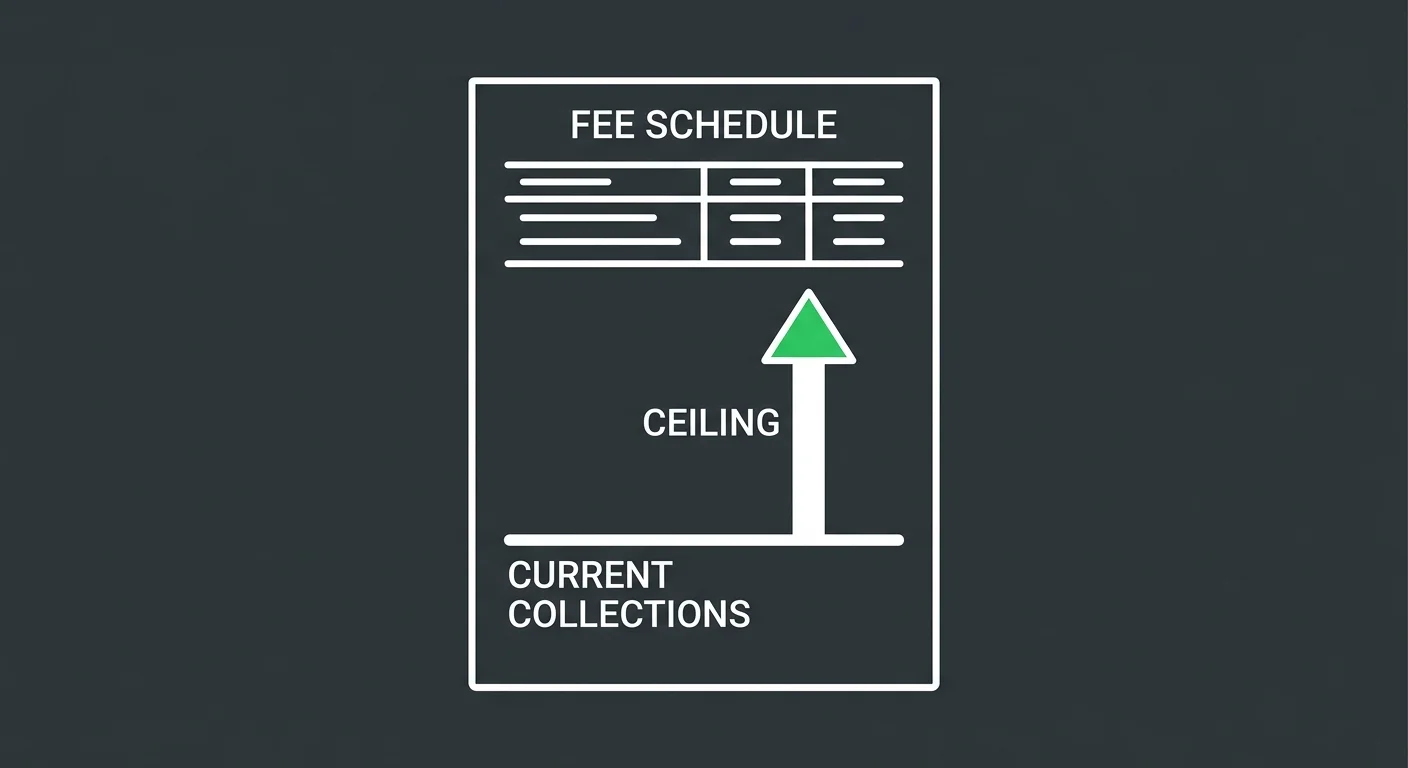
Most practices think they’ve done a fee schedule review. They pull a report from their EHR, see codes and charge amounts, and call it finished.
That’s a software printout. It is not an audit.
A real audit measures four things at once: whether your charge amounts reflect the current CMS Physician Fee Schedule, whether modifier usage is accurate and defensible on every claim, whether your private payer contract rates hold up against regional benchmarks, and whether the corrected structure can be implemented without disrupting active claim flow.
None of those four are optional. Each one affects the others – and if any one is broken, the ceiling stays where it is.
Here’s the thing: correct codes with outdated charge amounts still leave money behind. Accurate modifiers on a contract that was never benchmarked still leave money behind.
An audit finds the ceiling. Everything else is just counting what already came in.
The Difference Between a Fee Schedule and a Fee Schedule Audit
A fee schedule is the list of procedures a practice bills and the charge amounts attached to each code. That list exists in every EHR.
An audit is something different. It’s the process of determining whether those amounts – and the clinical documentation behind them – are aligned with what payers, Medicare and commercial alike, are actually obligated to pay.
The CMS Physician Fee Schedule updates every year and adjusts by geography. Private payer contracts don’t follow that automatically – they drift unless someone forces a renegotiation.
The American Chiropractic Association is direct on this point: aligning clinical codes with regional payer contract structures prevents routine underpayments and the administrative friction that compounds behind them. Most practices have never done that alignment. Not once. Not systematically.
That gap – between what your fee schedule currently says and what proper benchmark alignment would produce – is what a fee schedule research audit actually measures.
Not theoretical. Not aspirational. It’s the difference between what your practice collects today and what it’s contractually entitled to collect.
Why Most Practices Never Reach Their Reimbursement Ceiling
The ceiling exists. The problem is no one has measured it.
Most practices fall short of their reimbursement ceiling for the same three reasons: charge amounts set years ago and never updated, modifier patterns applied by habit instead of clinical necessity documentation, and private payer contracts signed at credentialing and never opened again.
A forensic review of hidden revenue in AR surfaces this pattern consistently. The AR shows the symptom. The fee schedule is the root cause.
A performance-aligned chiropractic billing company doesn’t treat those gaps as background noise. They’re predictable. They’re fixable.
The ceiling your practice has never reached isn’t a stretch goal. It’s revenue your practice already earned – and never collected.
| Element Reviewed | What It Measures | Revenue Impact When Missed |
|---|---|---|
| CMS Physician Fee Schedule Alignment | Whether current charge amounts reflect the most recent annual CMS benchmark rates and geographic payment adjustments | Charge amounts set below the current benchmark leave recoverable revenue on every claim – permanently, until corrected |
| AT Modifier Application and Medical Necessity Documentation | Whether the Active Therapy modifier is applied correctly and supported by clinical documentation that distinguishes active care from maintenance care | Medicare claims without proper AT modifier use or supporting documentation are subject to denial, repayment demand, or OIG scrutiny |
| Private Payer Contract Rate Alignment | Whether contracted rates with commercial insurers hold up against current regional benchmarks – or whether they have drifted below what the market supports | Contracts signed at credentialing and never revisited systematically underpay the practice on every commercial claim, compounding over years |
| Procedure Code Accuracy and Specificity | Whether clinical codes reflect the actual services rendered with the specificity required by payer policies – or whether under-coding patterns have become habitual | Under-coded claims collect less per visit than the documentation would support, creating a persistent revenue gap that compounds across the entire patient volume |
| Corrected Fee Schedule Implementation Readiness | Whether a corrected fee schedule can be operationalized within active claim flow – accounting for payer rules, EHR configuration, and staff workflow | A corrected fee schedule that is not systematically implemented reverts to old patterns within weeks, erasing the audit’s findings before they produce results |
Why EHR Automation Misses the Real Reimbursement Ceiling
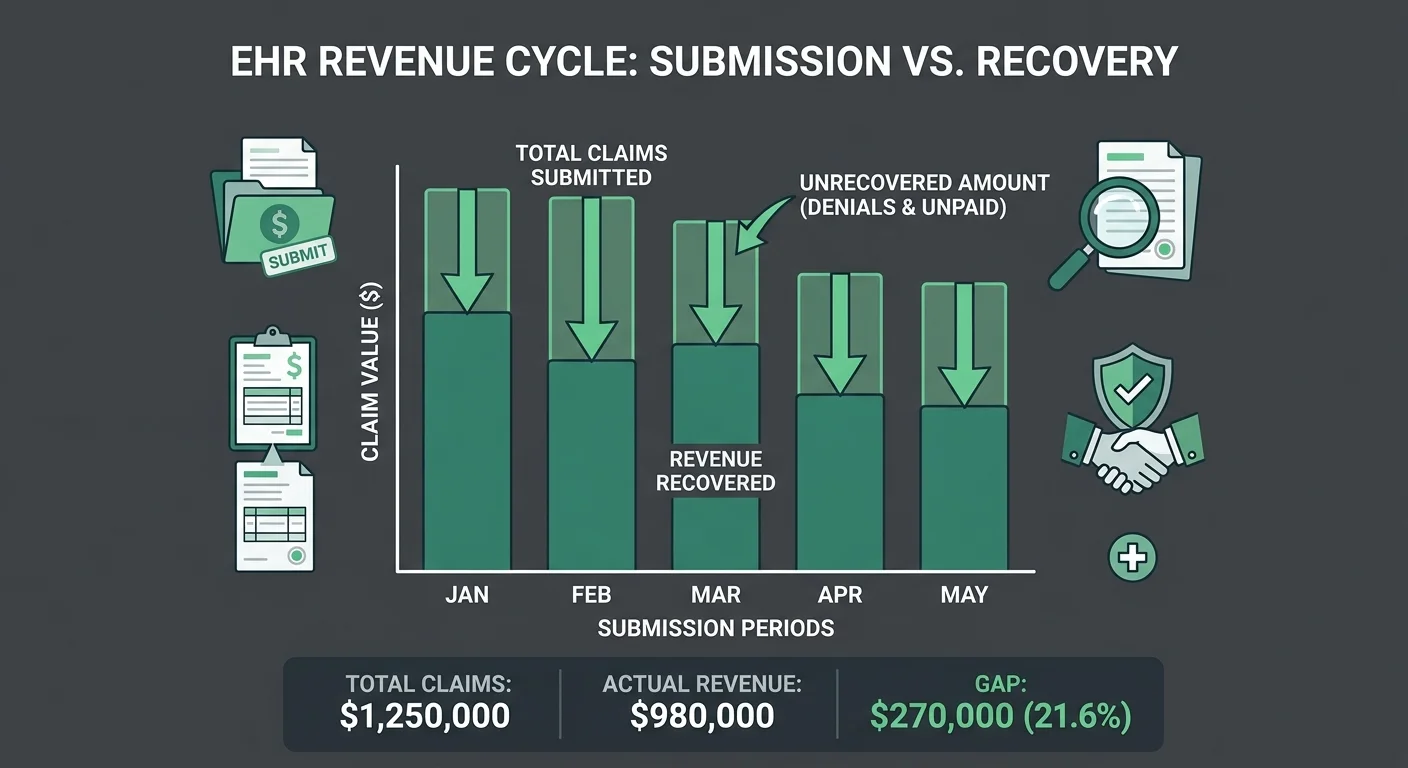
Here’s the question most practice owners never ask: why is the ceiling still out of reach when the claims are going out clean?
It’s not the codes. It’s the system submitting them – and that system was never designed to find the ceiling in the first place.
EHR platforms are claim submission tools. They move data from a clinical record to a clearinghouse. They do not measure what that data is worth, whether it’s properly documented, or whether the attached charge amount reflects current benchmark rates.
That distinction matters. What a professional billing audit uncovers is not just a different view of the same data – it is the answer to a structurally different question. A software report measures what came in. An audit measures what the practice was entitled to collect. Only one of those questions finds the ceiling.
What EHR Platforms Are Actually Built to Do
EHR platforms are built to produce a submittable claim. Capture the encounter. Attach the codes. Route it through the clearinghouse. That’s the entire design mandate – and it ends there.
That design doesn’t include checking whether your charge amount still holds up against updated geographic benchmarks. It doesn’t confirm that the AT modifier carries defensible clinical necessity language. It doesn’t cross-reference a private payer contract rate against what the current market actually supports.
Those are audit functions. No EHR performs them.
Software optimizes for throughput. It does not optimize for ceiling. And the ceiling is exactly what the audit is measuring.
The Billing Gaps Automation Structurally Cannot Close
The gaps automation leaves open aren’t random – they’re structural and they compound over time.
Charge amounts get set at go-live and drift below benchmark as CMS updates annually. Modifier application becomes habit rather than clinical judgment. Private payer contracts signed at credentialing never get revisited – because payers aren’t going to volunteer a rate increase.
None of that triggers an alert. The EHR processes the claim exactly as submitted.
Charge amount too low? It sends the low amount. AT modifier missing? The claim goes out without it. The system has no mechanism to flag what the practice was entitled to bill – and didn’t.
This isn’t a software failure. It’s a scope failure. Documentation risk sits exactly where software stops.
Published analysis found that up to 82 percent of analyzed chiropractic Medicare claims didn’t meet specific documentation requirements. That number doesn’t come from false submissions. It comes from documentation that was incomplete, imprecise, or missing the clinical specificity that medical necessity review demands.
Chiropractic billing is under active federal scrutiny – not occasionally, but structurally. Ongoing federal oversight identifies chiropractic services as a recurring focus area because improper payment rates keep showing up at the same high levels.
An EHR report doesn’t surface that exposure. A billing audit does.
Who This Audit Is Not For
This audit is not for every practice. That’s not a disclaimer. It’s a structural reality.
If the practice runs primarily on cash pay with minimal insurance billing, there’s no meaningful fee schedule target to measure against. If the practice won’t provide EHR access, support documentation review, or engage on modifier decisions, the audit produces findings that nobody acts on.
This engagement requires real participation. A zero-involvement arrangement isn’t this arrangement.
And if the goal is a one-time report with no intention of acting on it, this is the wrong conversation.
The audit identifies the ceiling. Reaching it requires implementation. Those are two separate commitments – and skipping the second one makes the first one useless.
| Billing Task | EHR Automation Handles It | Requires Human Audit Review |
|---|---|---|
| Claim submission to clearinghouse | Yes – core function | Not required; submission is automated |
| Charge amount verification against current CMS geographic benchmarks | No – amounts set at go-live and not auto-updated | Required; benchmark drift is invisible to the EHR |
| AT modifier application with defensible medical necessity language | No – modifier is applied as coded, not reviewed for clinical sufficiency | Required; documentation must hold up to payer and federal review |
| Private payer contract rate cross-reference against regional market data | No – contract rates are not stored or monitored by the EHR | Required; payers do not volunteer rate increases after credentialing |
| Documentation gap identification for Medicare compliance | No – the EHR processes whatever is entered; it does not flag incomplete clinical specificity | Required; incomplete documentation is the leading driver of improper payment findings |
| Corrected fee schedule build with implementation sequencing | No – the EHR has no mechanism to model what the practice is entitled to collect | Required; the gap between current collections and the reimbursement ceiling requires deliberate reconstruction |
The Four Audit Phases Every Chiropractic Practice Needs
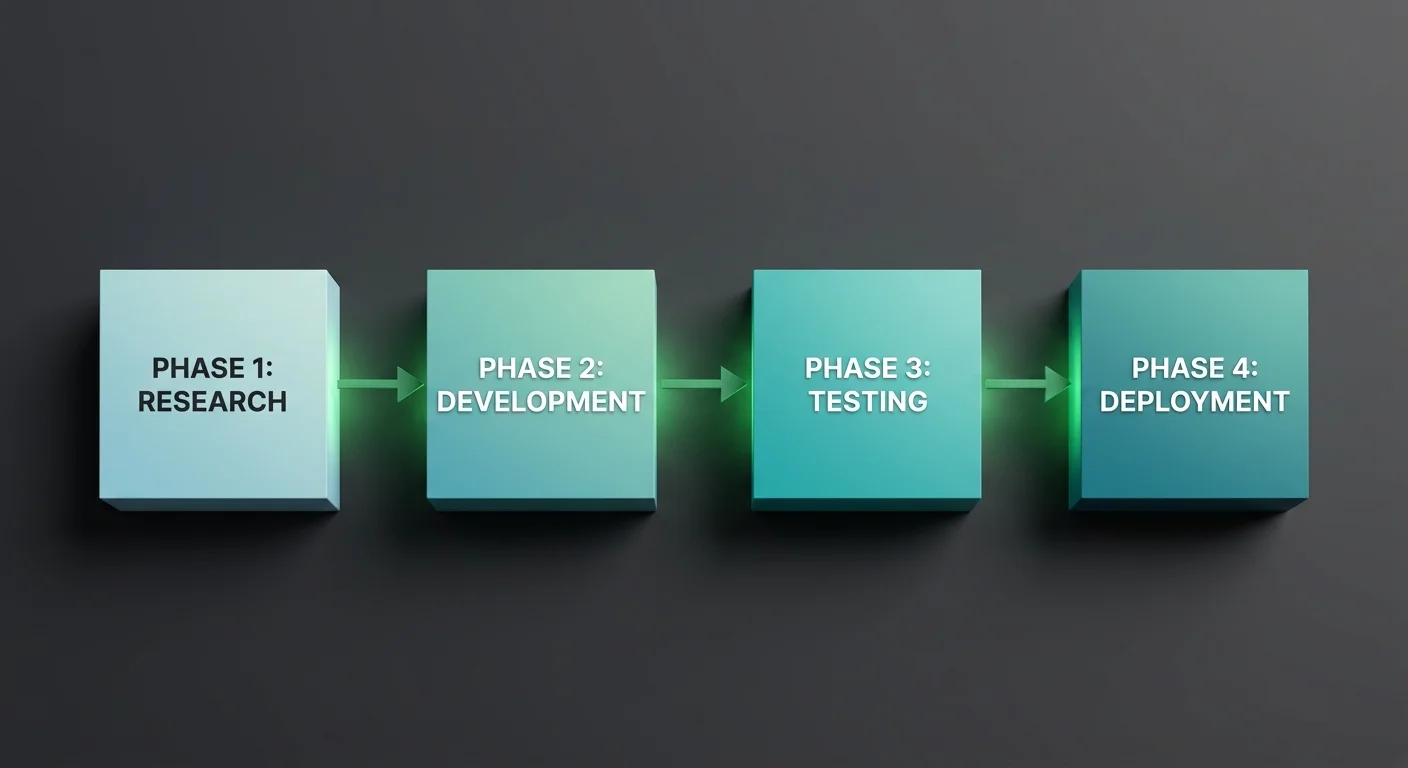
This isn’t a single sweep. It’s four sequential phases – each one built on the accuracy of the last. Skip one and you’re not auditing. You’re guessing.
Each phase targets a distinct layer of the ceiling: what the fee schedule should say, whether the documentation supports it, whether private payers are honoring it, and whether the corrected version actually gets implemented. A comprehensive practice audit and recovery follows this exact sequence – not because it’s convention, but because each phase depends on the integrity of the one before it. Pull one thread loose and the whole finding falls apart.
Phase 1: Benchmark the Current Fee Schedule Against CMS and Regional Data
Phase 1 is about establishing a number. A real one. The practice needs to know the gap between what it’s currently charging and what the CMS Physician Fee Schedule actually supports – code by code, adjusted for its geographic region. That’s where the audit starts.
CMS updates the Physician Fee Schedule every year and adjusts rates by geography. Most practices set their charge amounts once – at go-live or during credentialing – and never look at them again. That’s not an oversight. That’s a structural drift problem. Every year without a benchmark comparison is another year the ceiling moves further above what the practice is actually billing.
The output is a code-by-code comparison: current charge amount against the current CMS allowable, adjusted for geography. That’s the foundation. Without it, nothing else in the audit has anything to measure against.
Phase 2: Audit AT Modifier and Medical Necessity Documentation
Phase 2 is where most practices carry the most exposure – and where they have the least visibility into it. The AT modifier is mandatory on Medicare active therapy claims to separate active care from maintenance care, which CMS excludes from coverage entirely. If the modifier is missing, misapplied, or unsupported by the documentation behind it, the claim fails. No exception. No appeal pathway for a documentation gap that should have been caught before submission.
The audit doesn’t just check whether the modifier is present. It checks whether the clinical documentation supports it – whether the notes carry enough specificity to survive medical necessity review. A modifier sitting on a claim backed by vague, boilerplate documentation isn’t a defensible claim. It’s a liability that hasn’t surfaced yet.
Modifier presence and modifier defensibility are two different standards. Most automated systems check the first. The audit checks both.
Phase 2 also catches maintenance care documentation submitted as active care. It’s one of the most common and costly errors in chiropractic Medicare billing. Finding it here – before a payer audit does – is the entire point of running Phase 2 first.
Phase 3: Cross-Reference Private Payer Contracts Against Benchmark Data
Private payer contracts are the third layer of the ceiling – and the most negotiable one. The benchmark data from Phase 1 becomes the leverage here. Phase 3 cross-references every active payer’s contracted rate against regional benchmarks, identifying where the practice is accepting payment below what the market supports. Most practices have no idea that gap exists until it’s quantified.
Most practices signed their payer contracts during credentialing and never renegotiated. Payers don’t volunteer rate increases – that’s not how the relationship works. Knowing how to use audit findings in payer contract negotiations starts with knowing exactly what the benchmark data shows. Phase 3 builds that comparison for every active contract so the practice walks into a renegotiation with numbers, not assumptions.
The gap between contracted rates and benchmark rates is not theoretical – it is recoverable. Phase 3 quantifies it by payer, by code, and by volume. That output is a negotiation asset, not just an internal finding.
Phase 4: Build the Corrected Fee Schedule and Implementation Plan
Phase 4 is where findings become action. A corrected fee schedule gets built – updated charge amounts, verified modifier protocols, a payer-by-payer rate priority list – and sequenced for implementation without disrupting the claims already in flight. This is the step that separates an audit from a report.
Sequencing matters as much as the corrected schedule. Changing charge amounts mid-cycle without accounting for claims already in the pipeline creates reconciliation errors that offset the recovery. Phase 4 produces a rollout plan that protects in-flight revenue while the updated fee schedule takes effect – so the fix doesn’t create a new problem on the way in.
The ceiling stops being a measurement here. The audit identified it. The corrected fee schedule defines it. The implementation plan is how the practice actually reaches it – and keeps it.
| Audit Phase | Primary Focus | Key Output | Risk if Skipped |
|---|---|---|---|
| Phase 1 – Benchmark the Current Fee Schedule Against CMS and Regional Data | Establish the gap between current charge amounts and CMS-supported rates for each code in the practice’s geographic region | Code-by-code comparison of current charges against current CMS allowables, adjusted by geographic practice cost indices | All subsequent phases lose their reference point – there is no baseline to measure modifier risk, payer gaps, or corrected amounts against |
| Phase 2 – Audit AT Modifier and Medical Necessity Documentation | Verify that the AT modifier is present, correctly applied, and backed by clinical documentation that satisfies medical necessity review | Modifier compliance assessment with documentation defensibility rating for each reviewed claim type | Modifier errors and documentation gaps go undetected until a payer or federal audit surfaces them – at which point the exposure is already established |
| Phase 3 – Cross-Reference Private Payer Contracts Against Benchmark Data | Identify where contracted payer rates fall below regional benchmarks, by code and by payer volume | Payer-by-payer rate comparison that quantifies the gap between contracted rates and benchmark-supported rates – ready for negotiation | The practice continues accepting below-market rates from every payer that was never renegotiated – and payers do not volunteer the difference |
| Phase 4 – Build the Corrected Fee Schedule and Implementation Plan | Convert audit findings into a corrected fee schedule and a sequenced rollout plan that protects in-flight revenue during transition | Updated charge amounts, verified modifier protocols, payer-prioritized rate targets, and a phased implementation schedule | Findings remain a report – the corrected ceiling is identified but never reached, and the same revenue gaps resume under the new fee schedule |
Common Coding Errors a Fee Schedule Audit Uncovers
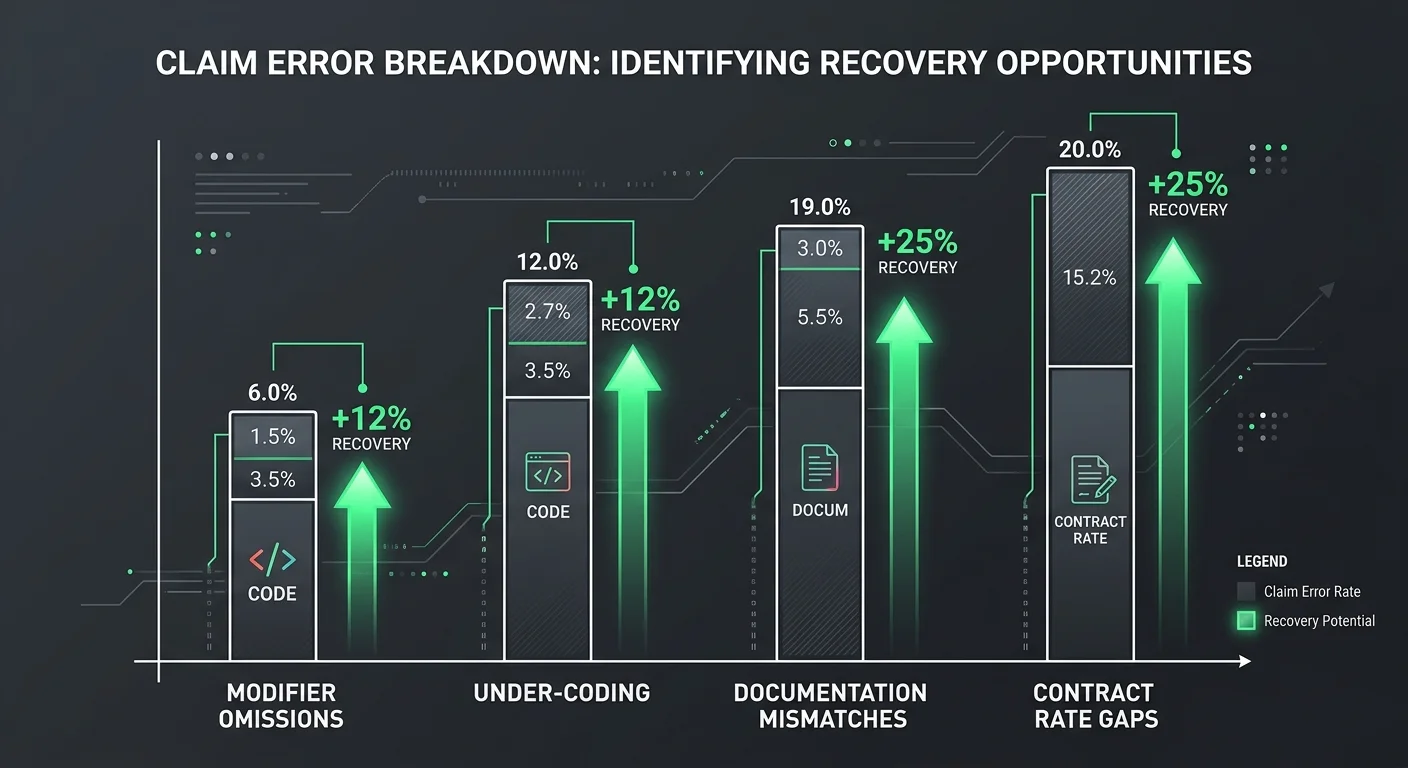
These aren’t random mistakes. They’re structural ones – patterns worn into billing workflows by habit, by software default, and by the absence of anyone whose job is to find the ceiling.
Most practices never catch these on their own. Not because the errors are hidden. Because no one in the workflow is assigned to find them – and by the time the warning signs a billing audit is overdue show up in the numbers, the pattern has already been running for months.
NIH research puts a number on it: systematic practice audits identify under-coding and documentation errors that account for a 15-20% average reduction in revenue collection. That revenue wasn’t lost to a denial. It was never billed. It accumulates every month the pattern goes unchecked – quietly, invisibly, until someone actually runs the measurement. For related context, see What Are the Top 5.
AT Modifier Omissions and Misapplication on Medicare Claims
The AT modifier isn’t a technicality. It’s mandatory on every Medicare active therapy claim – CMS requires it to separate active care from maintenance care, which Medicare doesn’t cover. Miss it, and the claim fails. Include it without documentation that holds up to review, and you’ve submitted a liability disguised as a clean claim.
The audit catches both AT modifier failures – not just one. Most automated claim scrubbers check whether the modifier is present. That’s the easy check. What they don’t check is whether the documentation behind it reflects the clinical specificity that medical necessity review actually demands. A modifier sitting on a boilerplate note isn’t a defensible claim. It’s a denial waiting for a reviewer to notice it.
An HHS OIG audit found that up to 82 percent of analyzed chiropractic Medicare claims did not meet documentation requirements. That’s not a fraud story. It’s a documentation habits story – incomplete notes, maintenance care submitted as active care, modifiers present but unsupported by the clinical record. Chiropractic billing remains under active OIG compliance scrutiny because these patterns recur at scale. No automated system flags them before submission. The audit does.
Under-Coding, Upcoding Risk, and Documentation Mismatches
Under-coding is the quieter error. And the more expensive one. When clinicians default to lower-complexity codes because the documentation feels easier to defend, the practice takes a reduced reimbursement on every claim carrying that pattern. That’s the same 15-20% revenue reduction that accumulates invisibly – not from denials, but from codes that were never billed at the rate the visit actually supported.
Upcoding risk runs the other direction. When documentation doesn’t clearly support the code billed – whether from template-driven notes or imprecise clinical language – the practice is exposed to recoupment and federal scrutiny. The fee schedule research audit checks both directions: codes billed below what the documentation supports, and codes billed above what it can defend. That bidirectional review is exactly what using audit data to negotiate insurance payer rates requires – the findings have to hold on both ends.
Documentation mismatches are the third pattern – and the one federal reviewers find most useful. Here’s what that looks like: a code on the claim the visit notes don’t clearly support, or a level of care documented in the chart that never made it into the charge. These are exactly what federal oversight is designed to find. The audit finds them first. And the corrected fee schedule gets built around documentation that holds – not documentation that just processes.
| Coding Error Type | How It Occurs | Reimbursement Consequence | Audit Detection Method |
|---|---|---|---|
| AT Modifier Missing or Misapplied | Automated claim scrubbers check for modifier presence but do not verify whether the clinical documentation supports active care status – notes are boilerplate or lack the specificity medical necessity review demands | Claim denial or recoupment on Medicare active therapy claims; repeated misapplication triggers payer-level audit scrutiny across the entire account | Manual review of modifier presence against the clinical documentation behind each claim – both the modifier and the note must meet the active care standard independently |
| Maintenance Care Submitted as Active Care | Clinical language in visit notes does not clearly distinguish between ongoing maintenance and active treatment phases; template-driven documentation accelerates the pattern | Claims paid initially but flagged during retrospective payer or federal audits, resulting in recoupment demands and elevated compliance exposure | Line-by-line comparison of visit note language against CMS active care definitions – flags visits where the documented clinical picture does not support the active therapy designation |
| Clinician Under-Coding | Providers default to lower-complexity codes because the documentation feels easier to defend or because the EHR workflow defaults to a standard code regardless of visit complexity | Reduced reimbursement on every claim carrying the pattern – the practice accepts a lower ceiling than the documented care level supports, and the gap compounds across months of claims | Code-by-code comparison of billed procedure codes against the complexity and specificity documented in the corresponding visit notes – surfaces every visit where the documentation supports a higher code than was submitted |
| Documentation-to-Billing Mismatch | The clinical record and the billing record diverge – a charge appears on the claim that is not clearly supported by visit notes, or a level of care documented in the chart was never reflected in the submitted code | Dual exposure: underbilling where documented care exceeds the billed code, and audit liability where the billed code exceeds what the documentation can defend – both directions carry financial consequence | Cross-reference of every submitted charge against the corresponding clinical record; flags divergences in both directions and produces a corrected code set aligned to what the documentation actually supports |
| Charge Amounts Set Below Current CMS Allowables | Practice set charge amounts at go-live or during credentialing and never revisited them – annual CMS fee schedule updates and geographic rate adjustments accumulate unreviewed over time | The practice bills below the reimbursement ceiling for every affected code; payers pay what is billed rather than the allowable, locking in a structural underpayment that grows with each year charges go unreviewed | Benchmark comparison of current charge amounts against the current CMS Physician Fee Schedule allowables adjusted for the practice’s geographic region – produces a code-by-code gap report that defines the recoverable ceiling |
Frequently Asked Questions About Chiropractic Fee Schedule Audits
Most practitioners understand the audit well enough to start it. What stops them is the questions they ask first.
These are those questions.
- What a fee schedule research audit actually is
- How often the practice needs to run one
- Why the EHR cannot replace it
- What coding errors it consistently uncovers
- How audit findings become leverage with private payers
What is a chiropractic fee schedule research audit?
It’s a forensic, human-led review of a practice’s charge amounts, modifier usage, clinical documentation, and private payer contract rates – measured against verified benchmarks from the CMS Physician Fee Schedule, which CMS updates annually with geographic cost adjustments.
It is not a compliance checklist. It is not a software-generated claim summary.
It is a code-by-code analysis that finds where the practice is billing below what it is entitled to collect – and builds a corrected fee schedule to close that gap systematically.
How often should a chiropractic practice perform a fee schedule audit?
At minimum, once a year – timed to the annual CMS Physician Fee Schedule update. That update adjusts both payment rates and the geographic practice cost indices that determine what a practice in a specific region is actually entitled to collect. Miss the update window and the practice spends the next twelve months billing against a stale ceiling.
But the annual cycle is the floor, not the finish line. An audit is also warranted after any significant payer contract renewal, after the practice’s service mix shifts, or after collections decline in ways the software reports can’t explain.
The fee schedule is a living document. The practices that treat it as static are the ones still wondering why collections aren’t where they should be.
Why can’t our EHR software handle a fee schedule audit automatically?
EHR software is a claim submission tool. It sends the claim. It does not audit the ceiling.
A fee schedule research audit requires human judgment: cross-referencing charge amounts against current CMS allowables, evaluating whether clinical documentation actually supports the AT modifier on Medicare claims, and identifying under-coding patterns that automated scrubbers are not built to detect.
Research on PubMed documents that systematic practice audits identify under-coding and documentation errors leading to a 15-20% average reduction in revenue collection – errors the software generating those claims never flagged.
The software optimizes for throughput. The audit optimizes for what the practice is actually owed.
What are the most common chiropractic coding errors a fee schedule audit uncovers?
Four patterns show up consistently: AT modifier misapplication, under-coding, documentation mismatches, and maintenance care submitted as active care.
On Medicare claims, CMS rules require the AT modifier to distinguish active therapy from maintenance care, which is excluded from coverage entirely. An HHS OIG audit found that up to 82 percent of analyzed chiropractic Medicare claims did not meet specific documentation requirements. That is not a fringe finding – it is the baseline.
Under-coding is the quieter pattern. Clinicians default to lower-complexity codes because the documentation feels safer to defend, and the practice accepts a lower reimbursement rate on every claim carrying that habit.
Documentation mismatches – where the clinical record and the billing record diverge – are exactly what federal oversight is designed to find. The audit finds them first.
How can we use fee schedule audit data to negotiate better rates with private commercial payers?
The benchmark data from Phase 1 – code-by-code CMS allowables adjusted for the practice’s geographic region – doesn’t stay internal. It becomes the foundation for every payer conversation the practice needs to have.
Phase 3 runs each payer’s contracted rate against that benchmark and produces a gap analysis: payer by payer, code by code, showing exactly where contracted rates fall below what the regional market supports. That output is not a report. It is a negotiation asset with a specific number behind it.
Knowing how to use audit data to negotiate better rates with private insurance payers starts with knowing the gap. The audit makes that gap visible and puts a dollar figure on it.
Payers don’t volunteer rate increases. The practice has to bring the data – and the audit is where that data comes from.
The Ceiling Is Real – Now Build to It
The ceiling is real.
It’s in the fee schedule CMS publishes every year. It’s in the payer contracts already sitting in a filing cabinet. It’s in the documentation the practice has on file right now.
The audit doesn’t create it. It finds it. And every month that passes without finding it is another month the practice collects less than it earned.
The four phases aren’t a one-time event. Benchmarking against CMS and regional data, auditing the AT modifier and medical necessity documentation, cross-referencing private payer contracts, building the corrected fee schedule and implementation plan – that sequence doesn’t end with a report. It’s the structure of a billing operation that actually holds the ceiling over time.
Reaching the ceiling takes the audit. Holding it takes an embedded billing partner who treats the corrected fee schedule as a living standard – not a filed report collecting dust in a shared drive.
The decision isn’t whether to audit.
It’s whether the practice keeps accepting what it has been paid – or finds out what it was owed all along.
Bushido Billing was built around that second decision. Practices that make it stop leaving money behind. The ones that don’t keep calling the floor the ceiling the practice has never reached.
The gap is real. The number is calculable. The only question is whether the practice is ready to find out exactly how much it’s been leaving on the table – and what it takes to stop. Book a call to see where your reimbursement ceiling actually sits.

© . All Rights Reserved | Web Design by iTech Valet