

Is an Old Chiropractic Claim Actually Uncollectible, or Just Unworked?
Most denials are potentially avoidable, and many are never resubmitted. Learn how to tell an unworked chiropractic claim from a dead one, and what to check first.
A Change Healthcare study cited in Physicians Practice found that roughly 86% of denials are potentially avoidable, yet in 65% of cases, providers never resubmit denied claims. A Physicians Practice A/R primer explained that every practice should track its days in A/R (how many days money owed to the practice stays unpaid) and monitor the percentage of receivables in each aging bucket on a monthly basis. If your first-pass resolution rate is lagging, the most productive first step is to log and categorize every denial your practice receives.
Why ‘Uncollectible’ Often Means ‘Never Resubmitted’
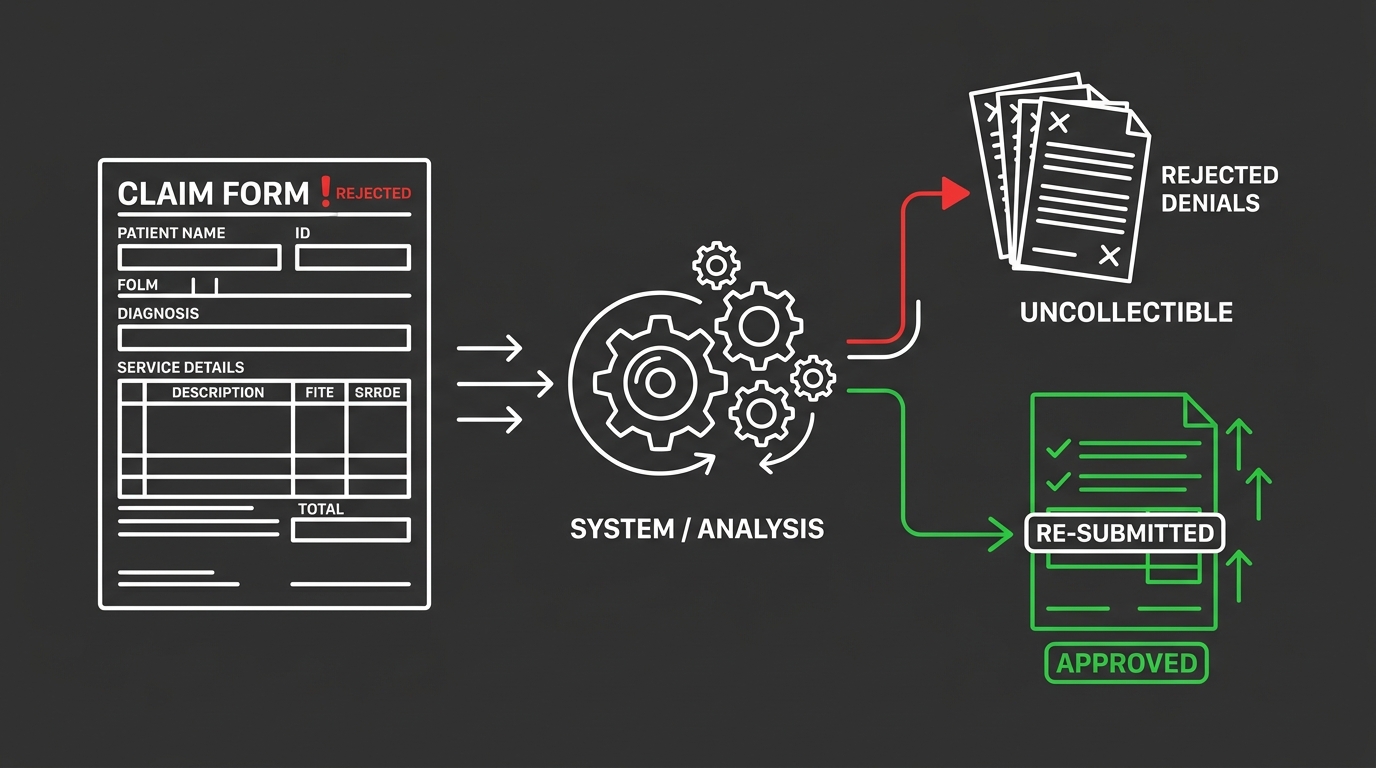
A Change Healthcare study, cited in Physicians Practice (Claim denials, patient collections and the revenue cycle), found that roughly 86 out of 100 denials (86%) are potentially avoidable. Yet in 65 out of 100 cases (65%), providers never resubmit the denied claim. So the claim you wrote off may not be dead. It may just be one nobody sent back.
Time is the other problem. Nirmitee says that by the time denials are found, reviewed and lined up to be reworked, many are already past the payer’s timely filing window. That window is the deadline for filing a claim.
I don’t judge a billing partner by its fee. Firms that compete on price tend to lean on huge volumes of easy claims and skip the tough, labor-heavy ones that are often worth the most. I’d rather see your hard claims worked, whatever the fee.
If you have an aged claim in front of you, read Rework or Write Off: Deciding an Aged Claim’s Next Step.
Checking Whether the Claim Was Ever Worked
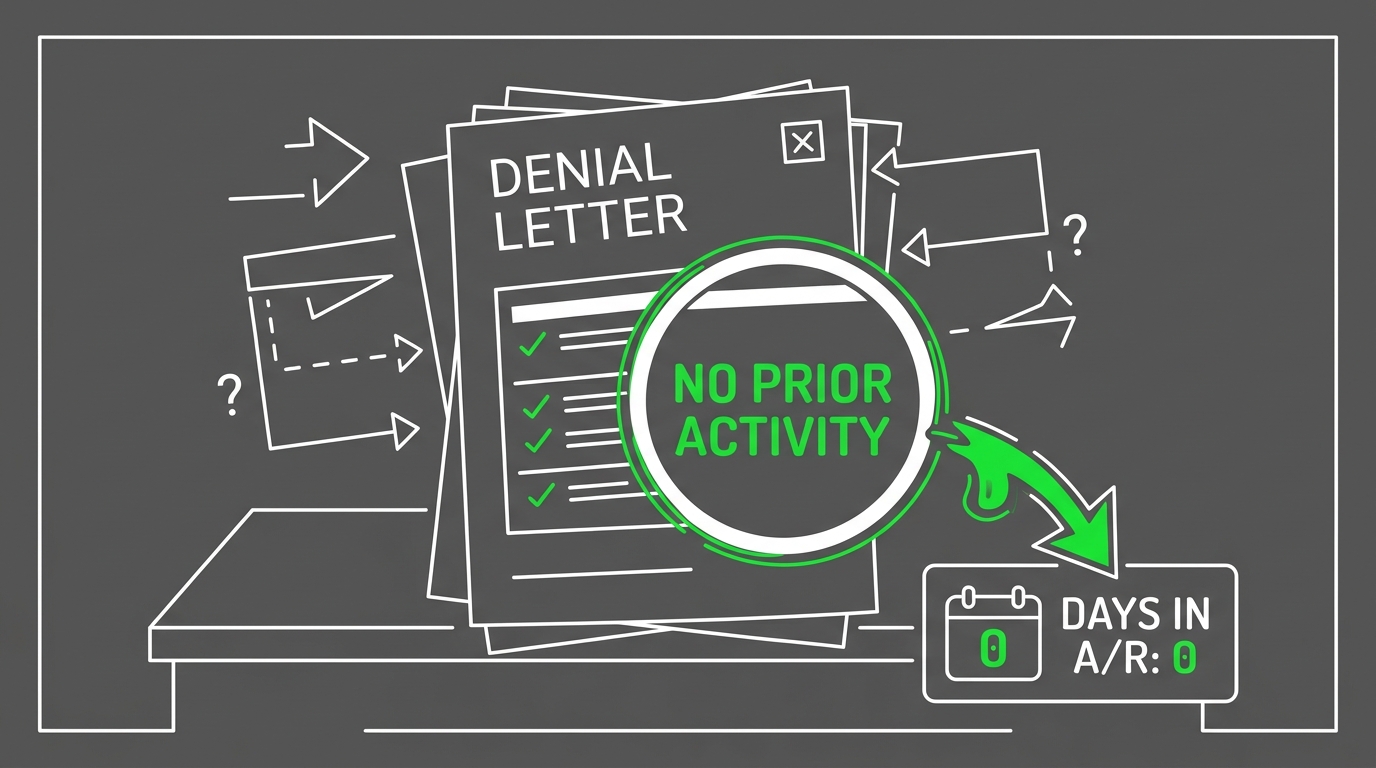
A Physicians Practice A/R primer says every practice should track its days in A/R. It should also watch the percentage of owed money in each aging bucket, every month. The healthiest practices aim to keep at least 80 out of 100 (80%) of their total A/R in the zero-to-30-day group.
Your own reply time matters too. Physicians Practice says to answer documentation requests from your billing department within 24 hours. Delays at that step can push a claim from the 45-day mark to 90 days before anyone notices.
These three checks help show whether anyone followed up on a claim:
| Check | What it tells you |
|---|---|
| Share of A/R in the 0-to-30-day bucket | The healthiest practices aim to keep at least 80% there |
| Monthly days in A/R and share in each bucket | Physicians Practice says to track both every month |
| Reply time on billing documentation requests | Reply within 24 hours; delays can push a claim from the 45-day mark to 90 days before anyone notices |
For a step-by-step walk through old balances, see Resolving Aged Chiropractic Insurance Balances: A Complete Guide. The numbers above come from Physicians Practice: Claim denials, patient collections and the revenue cycle.
Reading What the Payer Actually Said
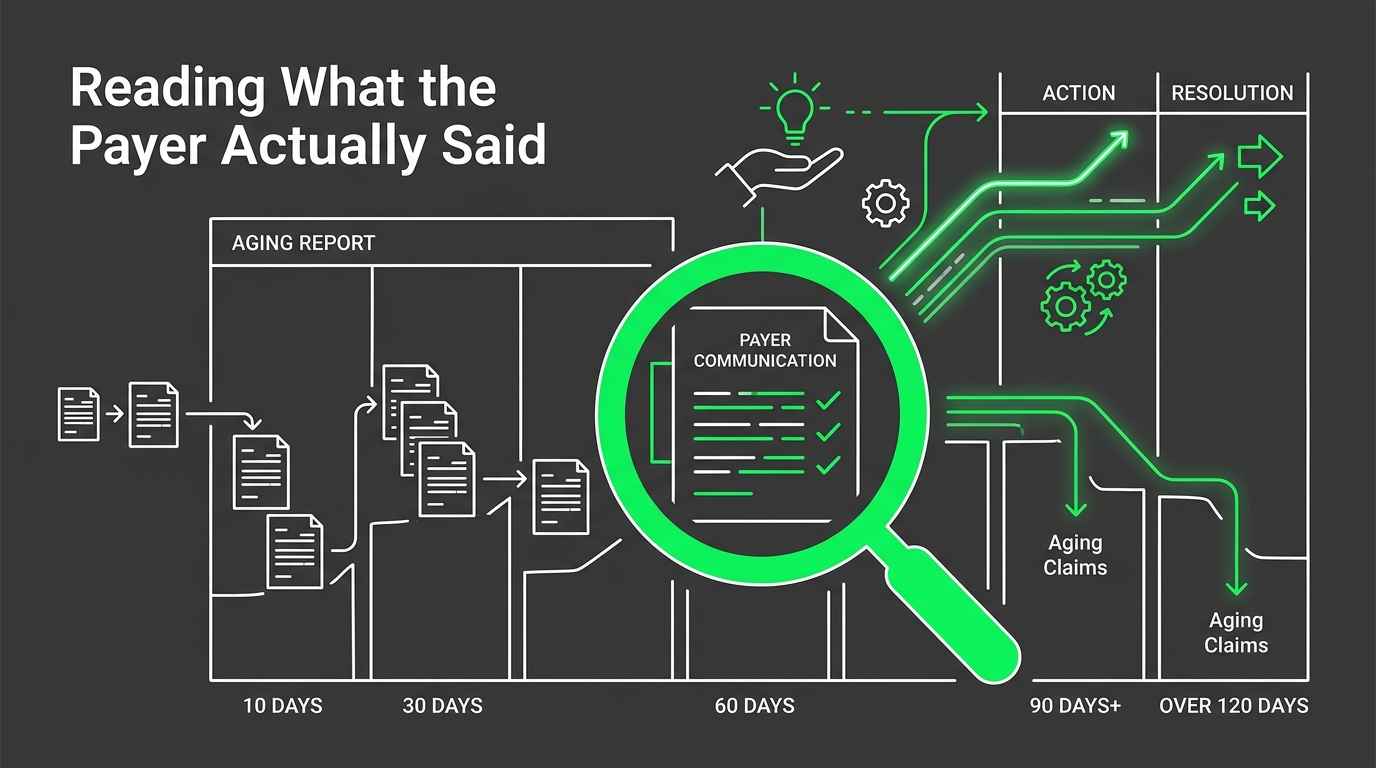
Start with a list. Physicians Practice says that if your first-pass resolution rate is lagging, the most useful first step is to log every denial your practice gets and sort them into categories.
Then read the code. For Medicare, the Centers for Medicare & Medicaid Services (CMS) says a new set of generic reason codes and statements has been added for Part A, Part B and a third category. They’re approved for use across all prior authorization, claim reviews (both before and after payment) and pre-claim reviews. Compare the code with what you filed, and you can tell a dead end from a gap you can fix.
I let software get a claim out the door, but I don’t let it answer a denial. I put a person on every denial, appeal and unpaid balance, because I don’t trust any tool to make those calls alone.
Medicare Exceptions That Can Keep an Old Claim Alive
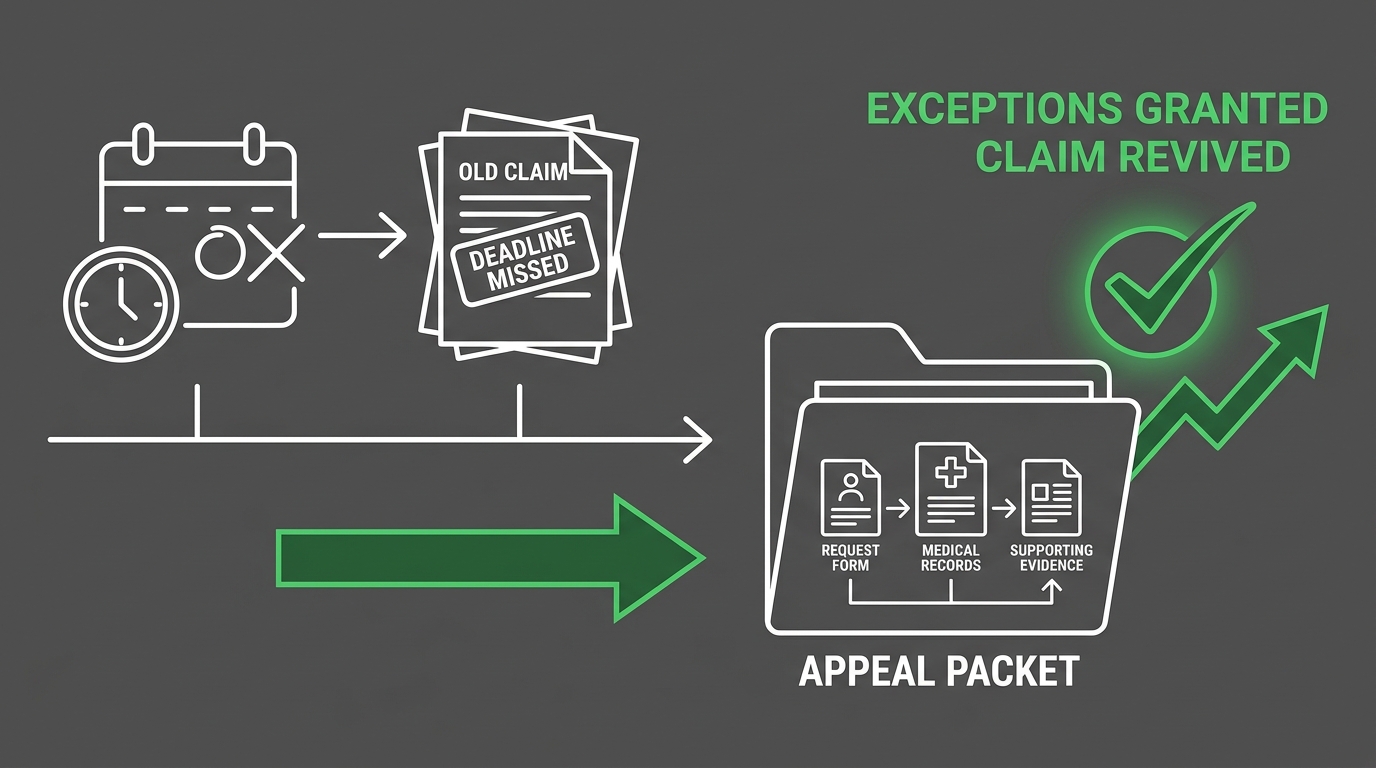
A Medicare claim that missed its deadline is not always finished. There are late-filing exceptions, and there is a way to ask for a reopening when new evidence shows up. The time windows for reopening are set out in the CMS Manual System transmittal on good cause for reopening; check it for the exact time limits. The late-filing exceptions are listed on the CMS Medicare Learning Network page Exceptions for Late Filing.
When you’re deciding what to do with an aged claim, Rework or Write Off: Deciding an Aged Claim’s Next Step can help.
Late-Filing Exceptions
The CMS Medicare Learning Network says Medicare allows 4 exceptions to the timely filing requirement. Two of them are below.
- Administrative error. This applies if missing the filing deadline was caused by an error or false statement by an employee, a Medicare contractor, or an agent of the Department that performed Medicare functions and acted within the scope of its authority.
- Retroactive Medicare entitlement. This applies when the patient wasn’t entitled to Medicare at the time of the service. Later, the patient gets notice of Medicare entitlement that reaches back to or before the date of service.
New Evidence as Grounds to Reopen
CMS lists new and material evidence as one ground for good cause: evidence that was not available or known when the decision was made and that may lead to a different conclusion.
Why Claims Go Unworked: No One Owns the Denials
Physicians Practice reported a consultant’s advice: pick someone in your office with an analytical mind to specialize in researching denials and pursuing appeals. Don’t mix that work in with routine claims processing. The point is that denial work gets its own owner.
In the billing setups I see, the client hears nothing unless they chase it, and I don’t read that as one person’s slip. I treat it as the way those relationships are built. So I don’t offer excuses for it; I fix the structure so that every denial has an owner. You can read how the work is done on the Medical Billing Services page.
Frequently Asked Questions
What are the most common reasons claims get denied?
Physicians Practice lists four of the most frequent causes. They are wrong or missing patient information collected at registration, coding errors (including unbundling and mismatched diagnosis codes), lapsed or missing prior authorizations, and claims sent after the payer’s filing deadline has passed. When you sort your denials, look for these four first.
Are Medicare denial reasons easier to understand than they used to be?
Yes. In 2015 the Centers for Medicare & Medicaid Services (CMS) began to standardize the reason codes and statements for certain services. As a result, you see more consistency, and claim denials are easier to understand. Use the code on each Medicare denial as your starting point.
Can a practice get an AR cleanup without signing a full contract?
Yes. Bushido Billing offers starter services, such as audits and cleanup work, that you can get without committing to a full contract.
What does cleaning up unpaid claims involve?
Bushido Billing says it will do detailed reporting that includes any unpaid insurance claims, and it will follow up on and clean up each claim. Ask for that report so you can see which claims were touched.
Telling an Unworked Claim From a Dead One
A claim is unworked if it was never resubmitted, it has slid into an old aging bucket, or a documentation request waited too long. A claim is dead only after someone has read the payer’s reason and checked the exceptions. I don’t treat a sent claim as the finish line. I count a claim when money lands in the practice’s account, and I judge billing by what is collected, not by how many claims were sent.
Bushido Billing exists to recover the revenue that the industry’s volume-first, automation-forward model routinely abandons, particularly on the high-friction, high-value claims where chiropractic practices lose the most money. Human expertise handles the claims that automation cannot. Our work includes cleaning up unpaid insurance claims and account auditing.
Do you want people to work the claims that automation leaves behind? Book a Call.