

What is the Real Cost of In-House Billing for a Chiropractic Clinic in 2026?

The real cost of in-house billing for a chiropractic clinic in 2026 typically ranges from $55,000 to $85,000 annually. This is the Total Cost of Ownership—far more than just the salary on a paycheck.
Most clinic owners underestimate what they're actually spending. They see the base salary and assume that's the number.
It's not.
When you add employer payroll taxes, health insurance, paid time off, software licenses, clearinghouse fees, training, and workspace overhead, a $45,000 salary becomes a $65,000+ expense.
And that's before accounting for staff transitions or claims that don't get worked properly.
The 2026 regulatory environment makes this calculation even more relevant. The 2025 Medicare fee schedule introduced a 2.8% cut to core chiropractic spinal manipulation codes (98940-98942), compressing margins further. Add updated ICD-10 coding requirements effective October 2025 and rising claim denial rates (now averaging 11-15% across the industry), and billing expertise matters more than ever.
This guide walks through every component of the in-house billing equation. By the end, you'll have the information you need to decide whether keeping billing internal makes financial sense for your practice.
Understanding the True Salary Picture
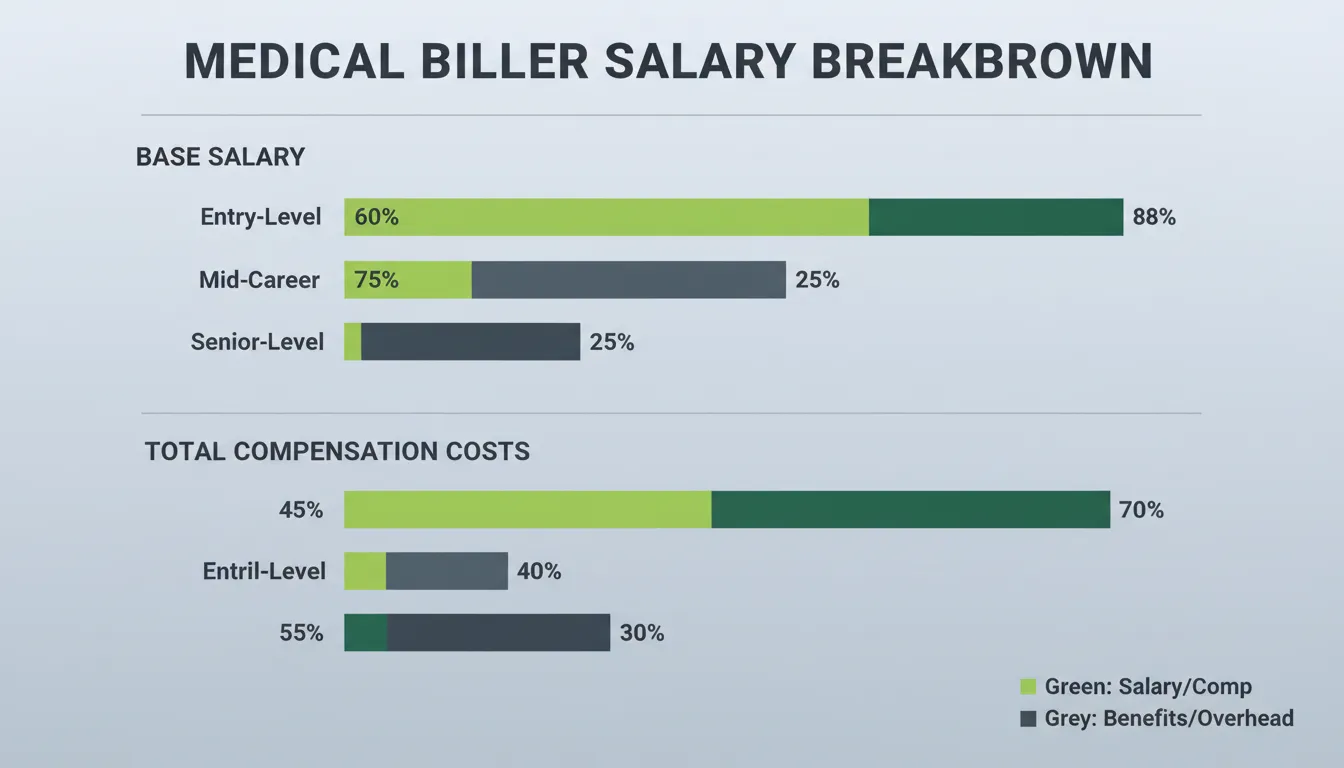
Understanding the actual cost of a medical biller starts with recognizing that the salary number is just the beginning. The real expense includes everything required to employ, equip, and support that person.
Base Salary Ranges in 2026
Medical biller salaries vary significantly by location, experience, and certification status.
According to current data from Glassdoor and Salary.com, here's what you can expect:
- Entry-level billers (1-2 years experience) typically earn $35,000-$42,000 annually. They require significant training and supervision during the first year, and their learning curve affects productivity during onboarding.
- Mid-level billers (3-5 years experience) command $42,000-$50,000 annually. They can work more independently but still need regular updates on coding changes and payer policies.
- Experienced billers (5+ years) with chiropractic-specific experience earn $50,000-$60,000+ annually. These professionals are in high demand and increasingly difficult to find.
Geographic location creates substantial variation. Billers in California, Massachusetts, and the District of Columbia earn 10-15% above national averages.
The challenge for chiropractic practices is finding someone with specialty-specific experience. Chiropractic billing involves unique coding requirements, Medicare AT modifier rules, and documentation standards.
Generalist billers may not have encountered these. That means investing in training time or paying premium rates for specialized experience.
Employer Payroll Taxes Add 7.65% Automatically
Every dollar you pay in wages comes with mandatory employer contributions.
Many clinic owners forget to include these in their calculations.
For 2025/2026, employers must contribute:
- Social Security tax at 6.2% of wages up to $176,100 (rising to $184,500 in 2026). This applies to every paycheck until the employee reaches the wage cap.
- Medicare tax at 1.45% of all wages with no cap. This percentage applies to the full salary regardless of how much the employee earns.
- Federal Unemployment Tax (FUTA) at 0.6% on the first $7,000 of wages. The cap limits total FUTA expense, but it still adds to your cost early each year.
- State Unemployment Tax (SUTA) varies by state, typically 1-6% on the first $7,000-$15,000 of wages. Your rate depends on your state and claims history.
On a $45,000 salary, employer payroll taxes alone add roughly $3,400-$4,000 to your annual cost.
This isn't optional. It's a legal requirement.
Benefits Represent a Significant Investment
Health insurance represents the largest benefit expense for most employers.
According to the Kaiser Family Foundation's 2025 Employer Health Benefits Survey, average employer contributions now reach:
- Single coverage: approximately $8,000 annually for the employer portion. This covers only the employee and represents the minimum for practices offering health benefits.
- Family coverage: approximately $20,000 annually for the employer portion. Many employees with families need this option, significantly increasing your benefits cost.
Beyond health insurance, typical benefits packages include:
- Paid time off averaging 10-15 days annually. This represents both a direct cost (paying for non-working time) and an indirect cost (coverage needs when the biller is away).
- Retirement contributions of 3-5% matching if offered. Competitive packages often include this, though not all small practices provide it.
- Workers' compensation insurance as required in most states. Administrative roles typically carry lower premiums than clinical positions.
A comprehensive benefits package can add $10,000-$15,000 to your annual cost for a single employee.
Practices that don't offer competitive benefits may find it harder to attract qualified billers. That can lead to higher turnover costs over time.
Overhead Costs That Add Up Quietly

Beyond salary and benefits, in-house billing requires infrastructure, tools, and ongoing investment.
These costs accumulate quietly throughout the year.
Software and Technology Expenses
Your biller needs tools to do their job effectively.
Typical technology expenses include:
- EHR and practice management software running $200-$500 monthly depending on your platform. Most systems charge based on features and user counts.
- Clearinghouse fees of $50-$150 monthly for electronic claim submission through services like Claim.MD. This handles the connection between your practice and insurance payers.
- Eligibility verification tools costing $50-$100 monthly for real-time insurance checks. Verifying coverage before appointments helps prevent denials.
- Additional seat licenses if your EHR charges per user. Adding a dedicated biller may require purchasing another license.
- Computer hardware and monitors representing $1,000-$2,000 initial investment plus replacement every 3-4 years.
Annual technology costs for a single biller position typically range from $4,000-$8,000.
If you're considering switching chiropractic EHR software, the transition period may temporarily increase these costs while you maintain both systems.
Training and Continuing Education
Medical billing isn't a static skill set.
Every year brings coding updates, payer policy changes, and new compliance requirements.
For 2026 specifically, practices need to address:
- FY 2026 ICD-10-CM updates effective October 1, 2025. These include 487 new codes, 28 deletions, and 38 revisions.
- Medicare conversion factor changes affecting reimbursement calculations. The 2026 conversion factor is $33.40 for most providers.
- Expanded documentation requirements for Social Determinants of Health (SDOH) Z-codes.
- Updated MIPS quality reporting thresholds rising to 75 points to avoid penalties.
Training costs include:
- Coding certification courses running $500-$2,000 for initial certification. Certified billers typically produce more accurate claims.
- Annual continuing education of $300-$600 for required CEU credits. Maintaining certification requires ongoing investment.
- Payer-specific training representing time spent learning each insurance company's unique requirements.
Most in-house billers receive minimal ongoing training because practices don't budget for it.
This can lead to preventable claim denials and compliance questions.
Workspace and Administrative Overhead
Every employee needs space, supplies, and administrative support.
Often-overlooked workspace costs include:
- Office space allocation, whether calculated as rent per square foot or opportunity cost of space that could serve patients.
- Furniture and equipment including a desk, ergonomic chair, and filing cabinets.
- Office supplies covering paper, postage for patient statements, and miscellaneous materials.
- Management time representing hours you or your office manager spend supervising and handling billing-related issues.
These costs vary by location but typically add $3,000-$6,000 annually.
What Happens When Your Biller Leaves

Staff transitions represent one of the most significant variables in the in-house billing equation.
When a biller departs, the effects extend beyond finding a replacement.
The Revenue Cycle During Transitions
When your biller gives notice, your revenue cycle doesn't pause smoothly.
The transition creates a gap that affects multiple aspects of your operation.
During this period, practices typically experience:
- New claims not being submitted on their usual schedule. Even if someone covers basic tasks, they likely won't maintain the same pace.
- Denials accumulating without follow-up. Denial management requires familiarity with your accounts—knowledge that doesn't transfer instantly.
- AR aging as unpaid claims sit longer than they should. Without active attention, older claims get older.
- Patient billing questions going unanswered or handled less efficiently.
- Payment posting delays creating reconciliation challenges.
The average transition period lasts 4-6 weeks. That's from departure until a replacement is hired, trained, and working at capacity.
For a practice collecting $30,000 monthly, that gap can delay $20,000-$45,000 in revenue.
Claims not followed up within timely filing windows become permanently uncollectible. Insurance companies won't pay claims submitted after their deadlines.
Current Healthcare Turnover Patterns
Medical billers and coders experience notable turnover compared to other administrative roles.
According to MGMA research, 70% of medical practices report turnover either the same or lower than last year. But 29% report increases.
The healthcare sector saw a quits rate of 2.2% in 2024.
Billers and coders experience particular movement due to remote work expansion. Many experienced professionals have transitioned to fully remote roles with insurers, health systems, or third-party companies.
For smaller practices, this creates competition. You're working to attract talent alongside organizations offering:
- Fully remote work arrangements
- More comprehensive benefits packages
- Higher base salaries supported by economies of scale
- Clearer career advancement paths
When you find a good biller, keeping them becomes its own ongoing effort.
The Full Cost of Finding a Replacement
Replacing a departing employee involves more than posting a job.
According to the Society for Human Resource Management, replacement costs typically equal 6-9 months of the departing employee's salary.
Replacement expenses include:
- Recruiting costs covering job postings, recruiter fees if used, and time spent reviewing applications and interviewing.
- Onboarding and training investment as your new hire learns your systems, payers, and workflows. Productivity runs below normal during this period.
- Productivity gaps during the learning curve, which typically lasts 3-6 months for full effectiveness.
- Claim issues during the learning period as the new biller works through unfamiliar situations.
- Overtime or temporary help to cover the gap.
If your $45,000 biller leaves, expect to invest $22,000-$40,000 in replacement costs.
If turnover happens more than once in a few years, those costs compound.
How Billing Quality Affects Revenue
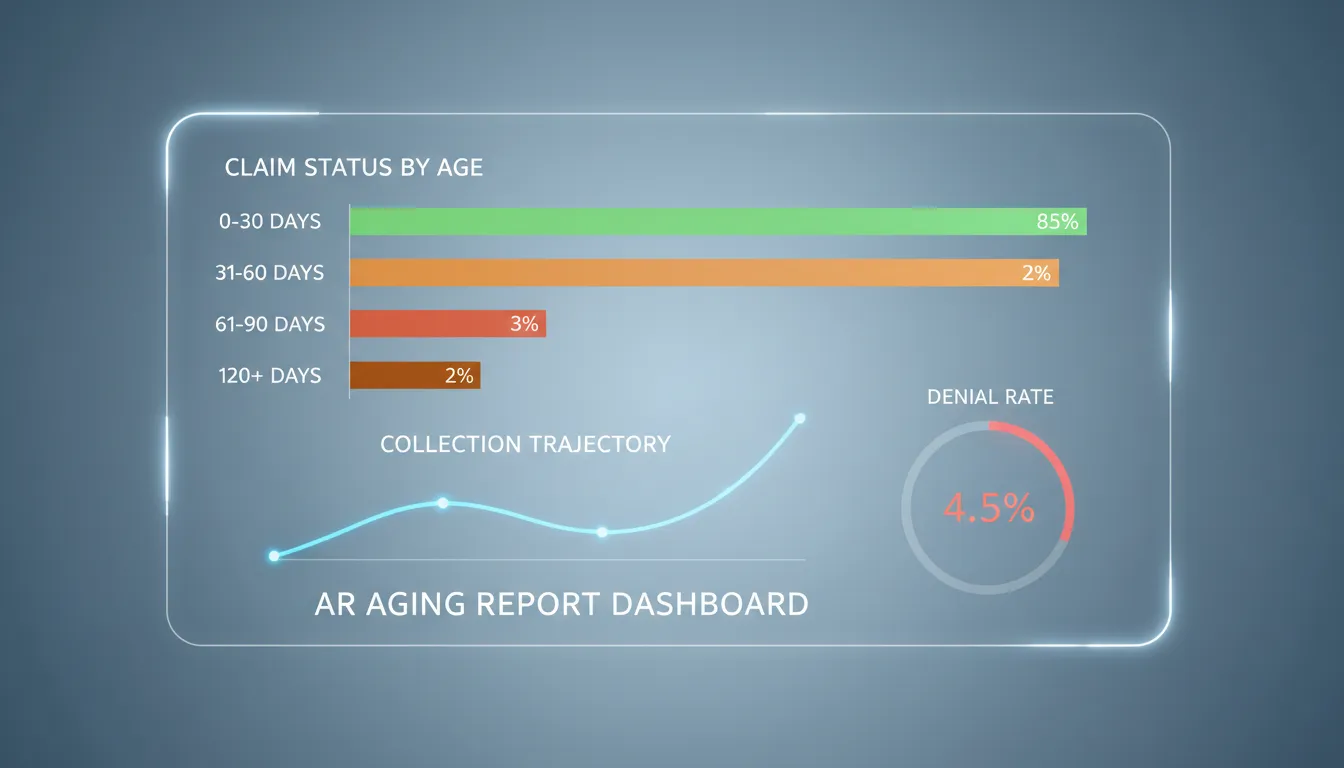
Beyond direct employment costs, billing quality directly affects how much revenue you collect.
The difference between adequate billing and excellent billing shows up in your bank account.
Current Denial Rate Patterns
Claim denials have become an increasingly significant challenge across healthcare.
Recent data provides useful context:
- Initial denial rates reached 11.8% in 2024, up from 10.2% previously according to OS Healthcare research.
- Commercial payer denials rose by 1.5% year-over-year.
- Medicare Advantage denials increased by 4.8% from 2023 to 2024.
- 41% of healthcare providers now report denial rates of 10% or higher.
For chiropractic practices, denial risk concentrates in several areas:
- Medical necessity documentation that doesn't clearly support treatment
- Coding issues on spinal manipulation codes (98940-98942)
- Missing or incorrect modifiers, particularly the AT modifier for Medicare
- Eligibility verification gaps
- Prior authorization requirements not identified or fulfilled
Every denied claim requires rework. If your biller is already at capacity, finding time for denial follow-up becomes difficult.
Understanding the Impact of Denied Claims
Hospitals spent an estimated $19.7 billion in 2024 working on denied claims.
While your practice operates at a smaller scale, the principle applies. Every denial requires time to address, and many go unworked because no one has capacity.
A systematic approach to denied claims can recover 60-70% of initially denied revenue.
But that recovery requires:
- Time to identify and categorize denials by type and reason code
- Knowledge of payer-specific appeal processes
- Documentation gathering and resubmission
- Follow-up tracking until resolution
In-house billers juggling daily claims, payment posting, patient billing, and phone calls often find denial management falling to the bottom of the list.
AR Aging and Collection Timing
Your accounts receivable report provides a clear view of your billing operation's health.
The importance of running chiropractic AR reports regularly cannot be overstated. The data reveals patterns while they're still addressable.
Healthy AR benchmarks for chiropractic practices:
| 0-30 days | 70-75% of total AR |
| 31-60 days | 15-20% of total AR |
| 61-90 days | 5-10% of total AR |
| 90+ days | Less than 5% of total AR |
When claims age beyond 90 days, collection probability decreases significantly.
At 120 days, you may collect less than 50% of what you billed—if you collect anything.
Many practices with in-house billing discover substantial amounts sitting in aged AR. This represents real revenue that could be supporting the practice but instead sits waiting.
Navigating the 2026 Regulatory Environment
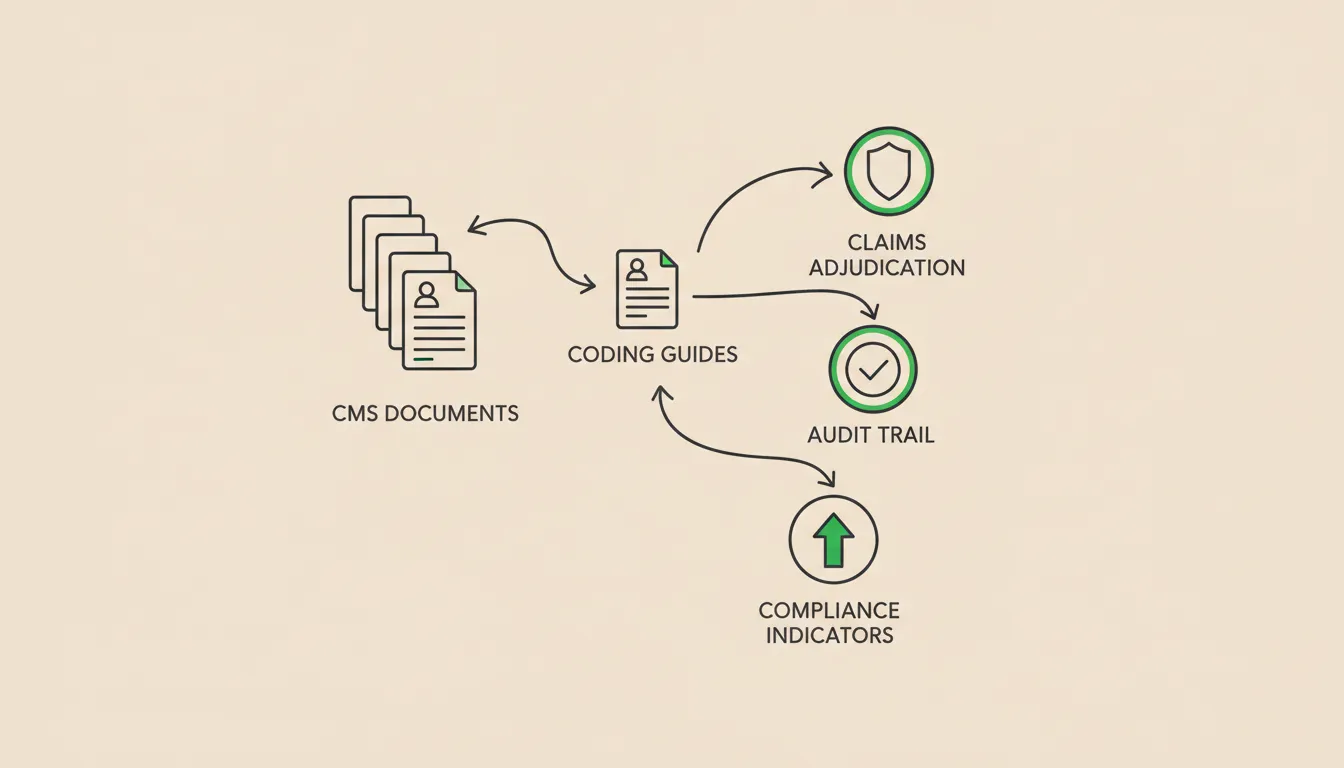
The regulatory environment in 2026 adds complexity that directly affects billing operations.
Staying current isn't just about avoiding problems. It's about ensuring you receive the reimbursement you've earned.
Medicare Payment Updates
The 2026 Medicare Physician Fee Schedule includes several changes relevant to chiropractic practices.
Key updates:
- Conversion factor for non-APM participants: $33.40 (3.26% increase from 2025's $32.35)
- Conversion factor for qualifying APM participants: $33.57 (3.77% increase)
- Practice expense rebalancing affecting non-facility versus facility payment rates
These increases follow years of relatively flat or declining Medicare rates.
The 2025 fee schedule included a 2.8% cut to chiropractic spinal manipulation codes (98940-98942). While 2026 shows improvement, every dollar matters.
Understanding Medicare billing for chiropractors has never been more important. The AT modifier requirement, active versus maintenance care documentation, and medical necessity standards all present denial opportunities if not handled correctly.
ICD-10 Coding Changes
The FY 2026 ICD-10-CM updates took effect October 1, 2025.
The update introduced 487 new codes, 28 deletions, and 38 revisions.
While core chiropractic spinal and extraspinal codes remain unchanged, several updates affect practices:
- Expanded abdominal and pelvic pain codes now require greater location specificity. R10.2 is no longer a complete code.
- New Social Determinants of Health (SDOH) Z-codes can support medical decision-making when relevant.
- Updated laterality requirements will result in automatic denials if ignored.
Payers increasingly use automated systems to identify claims with outdated or incorrect codes.
A biller who hasn't updated their knowledge—or whose EHR superbills haven't been refreshed—will generate preventable denials.
Understanding chiropractic billing code differences and staying current on updates requires dedicated attention.
Compliance Considerations
With Medicare and commercial payers refining their review processes, compliance awareness matters.
The Office of Inspector General (OIG) and commercial payer audit activity focus on:
- Documentation supporting medical necessity
- Proper use of modifiers
- Billing patterns that differ from peer averages
- Coding accuracy consistent with documentation
A biller without current compliance training may inadvertently create issues through unbundling, modifier misuse, or submitting claims without adequate documentation support.
Prevention through proper training is more efficient than addressing problems after they occur.
Calculating Your Total Cost of Ownership
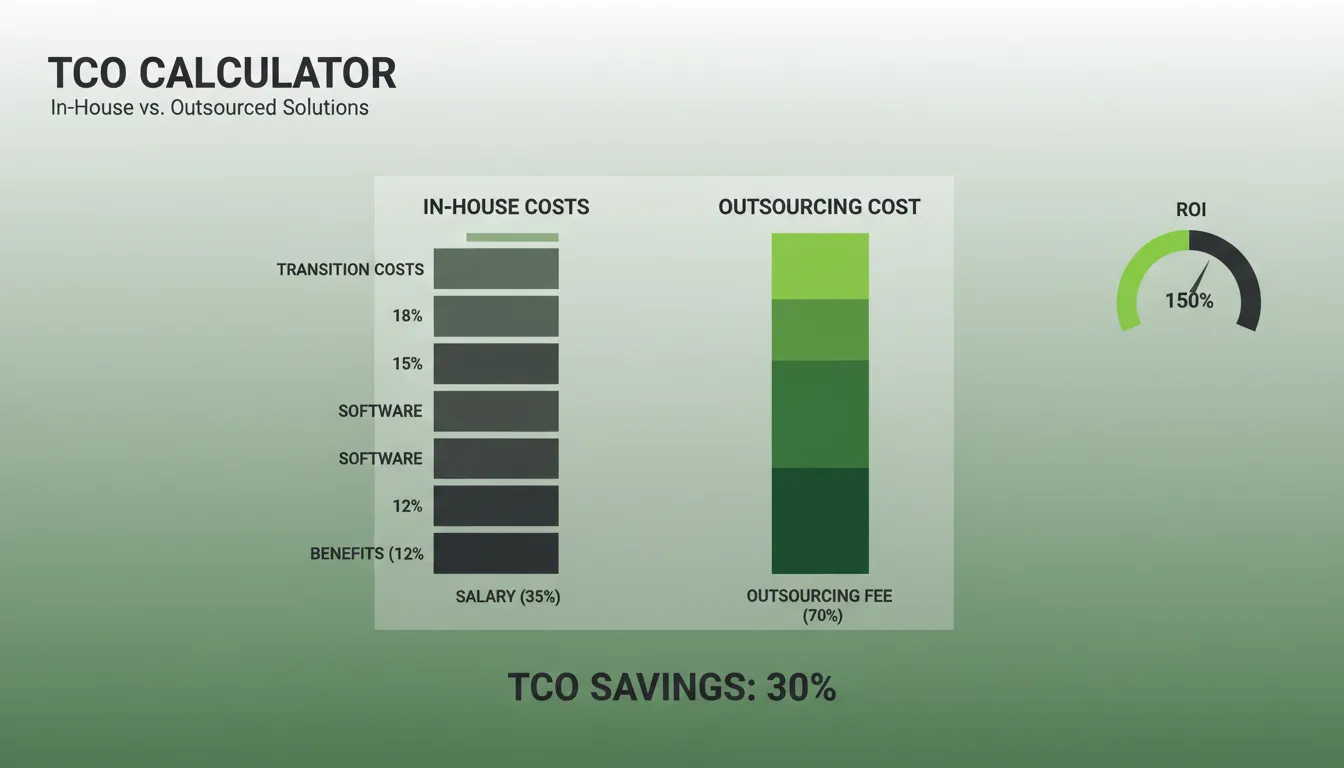
Now let's assemble the complete picture.
Use this framework to calculate what in-house billing actually costs your practice.
The TCO Calculation Framework
Start with these direct and indirect cost categories.
Direct Employment Costs:
- Base salary: $42,000-$55,000 (varies by market and experience)
- Employer payroll taxes (7.65%): $3,200-$4,200
- Health insurance contribution: $8,000-$10,000
- Other benefits (PTO, retirement): $2,000-$4,000
- Workers' compensation: $500-$1,000
Technology and Infrastructure:
- EHR and software licenses: $3,000-$6,000 annually
- Clearinghouse and verification tools: $1,200-$3,000 annually
- Hardware and equipment: $500-$1,000 annually (averaged)
- Workspace allocation: $2,000-$5,000 annually
Training and Development:
- Initial training period (reduced productivity): $2,000-$4,000
- Continuing education: $500-$1,000 annually
- Management oversight time: $1,000-$3,000 (opportunity cost)
Transition Factors:
- Turnover cost averaged over 3 years: $7,000-$15,000 annually
Claim and collection gaps: Variable, often $5,000-$20,000+ annually
Sample TCO Calculation
For a scenario with a $45,000 base salary:
| Base salary | $45,000 |
| Payroll taxes (7.65%) | $3,442 |
| Health insurance | $8,500 |
| Other benefits | $2,500 |
| Workers' comp | $700 |
| Software/technology | $4,500 |
| Training/education | $1,000 |
| Workspace overhead | $3,000 |
| Management time | $2,000 |
| Transition reserve (annualized) | $8,000 |
| Subtotal: Direct Costs | $78,642 |
| Collection gaps (estimate) | $10,000+ |
| Estimated Total Cost of Ownership | $88,000+ |
This doesn't include the mental energy you spend on billing oversight.
That has real value even if it doesn't appear on a spreadsheet.
Comparing Outsourcing Options
Professional billing services typically charge 5-10% of collections.
For a practice collecting $25,000 monthly:
| Lower tier | $25,000 | 5% | $1,250 | $15,000 |
| Mid-range | $25,000 | 7% | $1,750 | $21,000 |
| Higher tier | $25,000 | 10% | $2,500 | $30,000 |
Even at the higher tier, outsourced cost represents roughly 35% of what in-house billing actually costs.
The calculation shifts for higher-volume practices. At $50,000 monthly collections, a 10% fee equals $60,000 annually—approaching in-house TCO, but without the turnover risk or management burden.
For practices considering changing medical billing partners, the transition typically takes 2-4 weeks with experienced professionals.
Making the Right Decision for Your Practice

The right answer depends on your specific situation.
Here's how to think through the decision clearly.
When In-House Billing Can Work Well
In-house billing makes sense in certain situations:
- You have a capable, reliable biller who understands chiropractic billing and plans to stay long-term. The right person makes in-house billing sustainable.
- Your practice volume is small enough (under $15,000 monthly collections) that the full-time TCO may not be justified.
- You have established systems for training, backup coverage, and oversight. This infrastructure takes intentional effort to build.
- You genuinely prefer direct control over every aspect of your operation and are willing to invest the management time.
Even when these conditions exist, running the numbers helps confirm whether in-house represents the best use of resources.
Signs That Your Current Approach Needs Attention
Consider evaluating your approach when you observe:
- AR aging drifting above healthy benchmarks, with more than 25% of claims over 60 days
- Denial rates climbing above 5%
- Your biller showing signs of being overwhelmed
- Yourself spending significant time on billing oversight
- Claims not being followed up within timely filing windows
- Difficulty covering when your biller is away
- Training on coding updates hasn't happened recently
These patterns suggest the operation isn't performing at its potential.
Whether the solution is adding resources, restructuring responsibilities, or exploring alternatives, something needs to change.
The Value of Specialized Billing Support
Effective billing partnerships provide dedicated expertise focused on collections.
This approach offers:
- Billing specialists focused exclusively on claims, denials, and collections. Specialization allows depth that generalists can't maintain.
- Built-in coverage so sick days, vacations, and departures don't stop your revenue cycle.
- Ongoing training on payer changes, coding updates, and compliance requirements.
- Consistent denial management and AR follow-up as part of standard workflow.
- Clear reporting so you understand your revenue cycle health.
- Relief from the ongoing management burden.
An effective insurance verification process prevents problems before they start.
Understanding insurance denial codes and their meanings ensures issues get resolved promptly.
These specialized skills represent the difference between adequate billing and billing that consistently performs.
Frequently Asked Questions
Is it cheaper to outsource medical billing or keep it in-house?
For most chiropractic practices collecting over $20,000 monthly, outsourcing is typically more cost-effective.
Outsourced billing services charge 5-10% of collections. This often costs less than an in-house biller's full expense—salary plus benefits, software, training, and overhead.
The break-even point varies by practice size and local salary costs. Most practices find outsourcing costs 25-50% less than true in-house TCO.
What is the average salary for a chiropractic medical biller?
As of January 2026, average medical biller salary in the United States ranges from $41,814 to $55,437 annually.
This depends on experience and location.
However, base salary represents only 60-70% of true cost when you add payroll taxes, benefits, software, and training.
How much should I pay for chiropractic billing software?
Chiropractic billing software typically costs $200-$500 monthly for cloud-based solutions.
Add clearinghouse fees of $50-$150 monthly.
Annual software costs often total $3,000-$8,000 including EHR integration, training, and support.
Platforms like Jane App and ChiroTouch offer varying pricing tiers.
What are the hidden costs of hiring an internal biller?
Hidden costs include employer payroll taxes (7.65%), health insurance ($8,000-$10,000 annually), paid time off, training, software licenses, and workspace overhead.
Add the 4-6 week cash flow impact when a biller leaves.
These can add 30-40% to base salary expense.
Management time is another cost that's easy to overlook.
How does staff turnover affect my chiropractic clinic's cash flow?
When a medical biller leaves, practices experience a 4-6 week period where claims processing slows.
New claims may not be submitted on schedule. Denials accumulate. AR ages.
This transition can delay $10,000-$30,000+ in revenue depending on volume.
Replacement costs typically equal 6-9 months of the departing employee's salary.
Is a billing company or an office manager better for my revenue?
A dedicated billing service typically produces better revenue cycle results.
Their entire focus is claims, denials, and collections.
Office managers juggle multiple responsibilities. They rarely have time to stay current on coding updates, payer policies, and denial patterns.
Clear role separation usually works best.
Can I use Jane App or ChiroTouch with an outside billing service?
Yes.
Most reputable chiropractic billing services are platform-agnostic. They work with Jane App, ChiroTouch, Genesis, and others.
A qualified partner should have staff trained specifically on your software.
This ensures smooth integration without requiring you to change systems.
What denial rate is normal for chiropractic practices?
Industry data shows initial denial rates averaging 10-15% across healthcare.
Some commercial payers and Medicare Advantage plans deny 17-20% initially.
Well-managed practices with proper documentation and coding typically achieve rates under 5%.
Rates above 5% suggest opportunities for improvement.
Moving Forward with Clear Information
The real cost of in-house billing extends well beyond the paycheck.
When you calculate true Total Cost of Ownership—salary, taxes, benefits, technology, training, transition factors, and collection performance—most practices find they're investing $70,000-$90,000+ annually.
That investment may make sense for your practice. Or you may find alternative approaches offer better value.
The key is making the decision with complete information.
The 2026 regulatory environment adds weight to this calculation. Medicare changes, ICD-10 updates, and rising denial rates all require expertise that takes real effort to maintain.
Understanding your actual costs is the first step.
Whatever approach you choose, make sure you're comparing complete pictures—not just visible line items.
If you've worked through this analysis and found yourself wondering whether your current setup is optimized, you're not alone.
Many practice owners reach this point after realizing the full scope of what billing involves.
If you're thinking "this makes sense, but I don't have time to sort through it all," that's a common situation.
That's why we offer a free discovery call. It's an opportunity to discuss your current billing situation and gain clarity on what's working and what options exist.
We can help you understand:
- Where your claims might be encountering delays
- What's contributing to denials in your practice
- Whether your AR aging fits healthy benchmarks
- How your current process compares to best practices
- What working with Bushido would look like
Book a Call — no pressure, no commitment, just a straightforward conversation about your billing.
Because having clear information about your options makes every decision easier.
SCHEDULE YOUR FREE DISCOVERY SESSION TODAY.


Copyright 2026 | All rights reserved | Web Design by iTech Valet