

How Do I Transition My Chiropractic Practice to a New Billing Partner in 2026?

Switching billing partners follows a straightforward process. Document where you are now. Select the right partner. Prepare your credentials. Run both systems in parallel. Complete the handoff.
Most transitions take about 30 days.
The process is more manageable than it sounds. With a clear plan, your revenue keeps flowing while you make the change.
Many practices actually see collections improve during the transition. A fresh set of eyes often catches issues that were costing money.
If you're thinking about changing medical billing partners, this guide walks you through each phase.
The 2026 regulatory environment includes updates to the Medicare Physician Fee Schedule and ICD-10 codes effective October 2025. A billing partner who stays current helps your practice capture reimbursement correctly.
But the transition process itself stays the same regardless of when you switch.
Why Clinic Owners Consider Switching

Understanding why practices make this decision helps you evaluate whether it's right for your situation.
Communication Has Broken Down
The trigger usually isn't one big problem.
It's the accumulation of small ones. Emails that go unanswered. Follow-ups that don't happen. The nagging sense that nobody is actually watching your claims.
Clinic owners often describe feeling like they're "hoping for the best" with their billing.
That uncertainty wears on you.
A billing partner should function like part of your team. Someone who keeps you informed. Someone who flags issues before they become problems. Someone who responds when you have questions.
Clear communication isn't a bonus feature. It's foundational.
Denials Are Adding Up
When claims keep getting denied, something in the process needs attention.
Maybe documentation isn't supporting the level of service billed. Maybe eligibility verification happens inconsistently. Maybe coding errors slip through.
A billing partner with chiropractic experience understands what trips up claims in your specialty.
Things like proper AT modifier usage for Medicare. Documentation of medical necessity. Correct diagnosis code selection.
The goal isn't perfection. It's having someone who knows what to look for.
Staff Changes Keep Disrupting Things
If you've handled billing in-house, you know what happens when your billing person leaves.
There's a scramble to cover the work. A learning curve for whoever takes over. A period where claims pile up or mistakes increase.
This pattern hits smaller practices especially hard.
Training someone new. Hoping they know what they're doing. Starting over when they move on.
It's exhausting.
Working with a billing partner means there's always coverage. If someone on their team is out, others step in. Your revenue cycle doesn't depend on any single person.
Documenting Your Starting Point
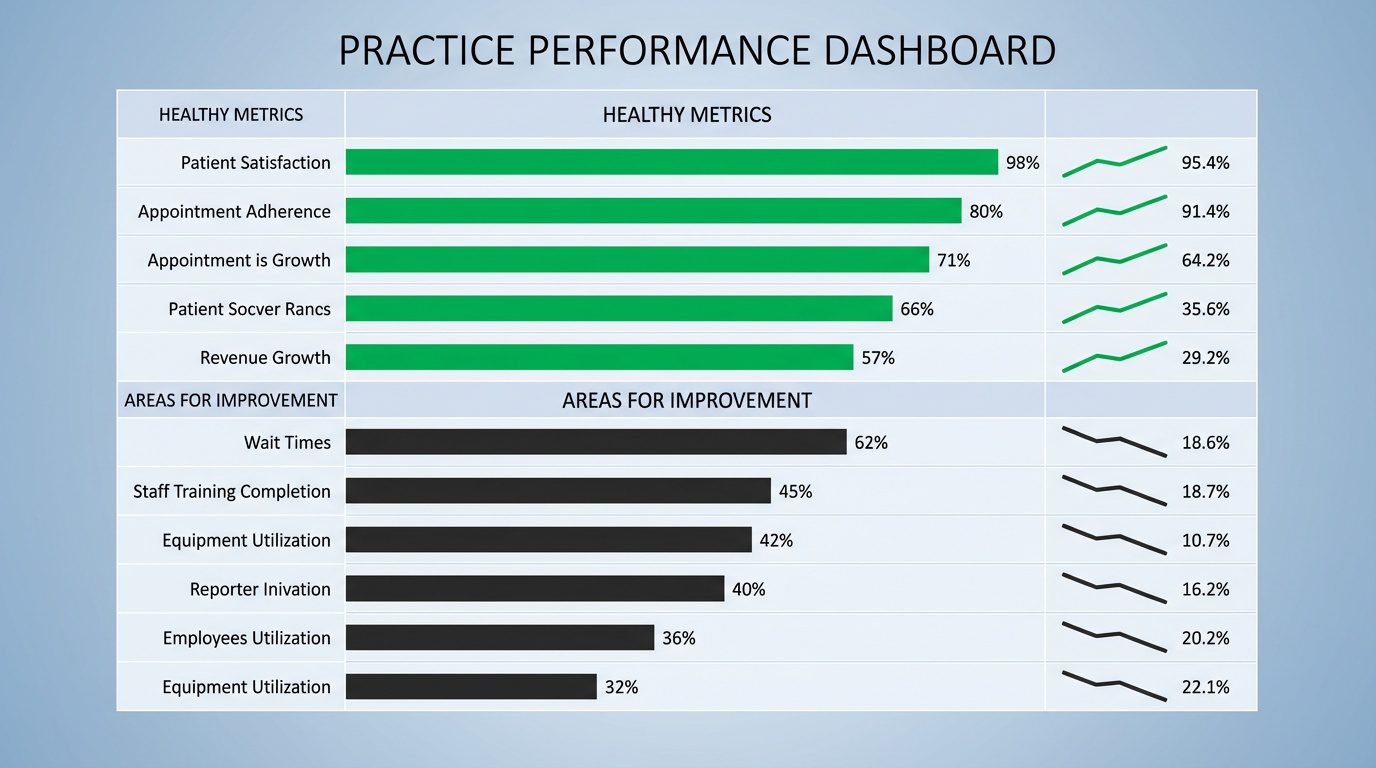
Before you change anything, take stock of where you are.
These baseline numbers serve two purposes. They help you identify what needs to improve. And they give you a way to measure whether the switch actually made things better.
Key Metrics Worth Tracking
Pull reports covering the past six months for these indicators:
- Collection Rate - What percentage of expected reimbursement actually comes in. Healthy practices see 95% or higher.
- Days in AR - How long claims take to resolve on average. Under 30 days is good. Over 50 suggests follow-up isn't happening consistently.
- First-Pass Acceptance Rate - How often claims go through without rejection on the first try. 95% or better is a reasonable target.
- Denial Rate - What percentage of claims get denied. Above 8% means there's room to improve.
AR Aging Breakdown - How outstanding balances distribute across 0-30, 31-60, 61-90, and 90+ day buckets. Claims over 90 days become much harder to collect.
Running Your AR Report
Your insurance accounts receivables report shows where money is stuck and why.
Look for patterns.
Are certain payers consistently showing aged claims? Are denied claims being reworked or just sitting? Is there a backlog of claims billed but not paid?
This information helps your new partner understand what they're walking into.
If there's significant cleanup work, that affects the timeline.
Understanding Your Current Workflow
Take a few minutes to map how claims move through your practice now.
Who enters charges? When does eligibility verification happen? What's the process when something gets denied?
Even if your current workflow has problems, documenting it prevents important details from getting lost.
Your new partner can identify what to keep, what to fix, and what to rebuild.
Finding the Right Billing Partner

The partner you choose matters more than the switching process itself.
A good fit brings chiropractic-specific knowledge, works with your existing technology, and communicates clearly.
Why Specialization Matters
Chiropractic billing has requirements that general billing companies sometimes miss.
Medicare's AT modifier rules. The distinction between active and maintenance care. Modifier usage for spinal manipulation codes.
These details affect whether claims get paid.
When evaluating potential partners, ask about their chiropractic experience specifically.
How many chiropractic practices do they work with? Do they understand CMT coding and documentation requirements? Can they handle Personal Injury cases with attorney correspondence and liens?
A billing company serving many specialties might not have deep expertise in any of them.
Look for partners where chiropractic and allied health are a core focus.
Working With Your Existing Software
Some billing companies require you to use their software.
This creates a problem. If you're ever unhappy with their service, switching again means changing your entire practice management system.
Platform-agnostic billing partners work with whatever EHR you already have.
Whether that's Jane App, ChiroTouch, Genesis, Olympus, or something else—they adapt to your workflow.
This matters beyond convenience.
If you're in the middle of switching chiropractic EHR software, a billing partner who can manage both systems keeps your claims moving.
The Discovery Conversation
Before you commit, a good billing partner will want to understand your situation.
This initial conversation should feel like a consultation rather than a sales pitch.
They'll likely review your AR aging, look at denial patterns, and ask about your EHR.
You'll want to ask about their communication style. What reporting will you receive? How do they handle situations when claims need provider input?
Pay attention to how this conversation feels.
Do they listen? Do they ask thoughtful questions?
This is a preview of what working together will be like.
What Your New Partner Will Need
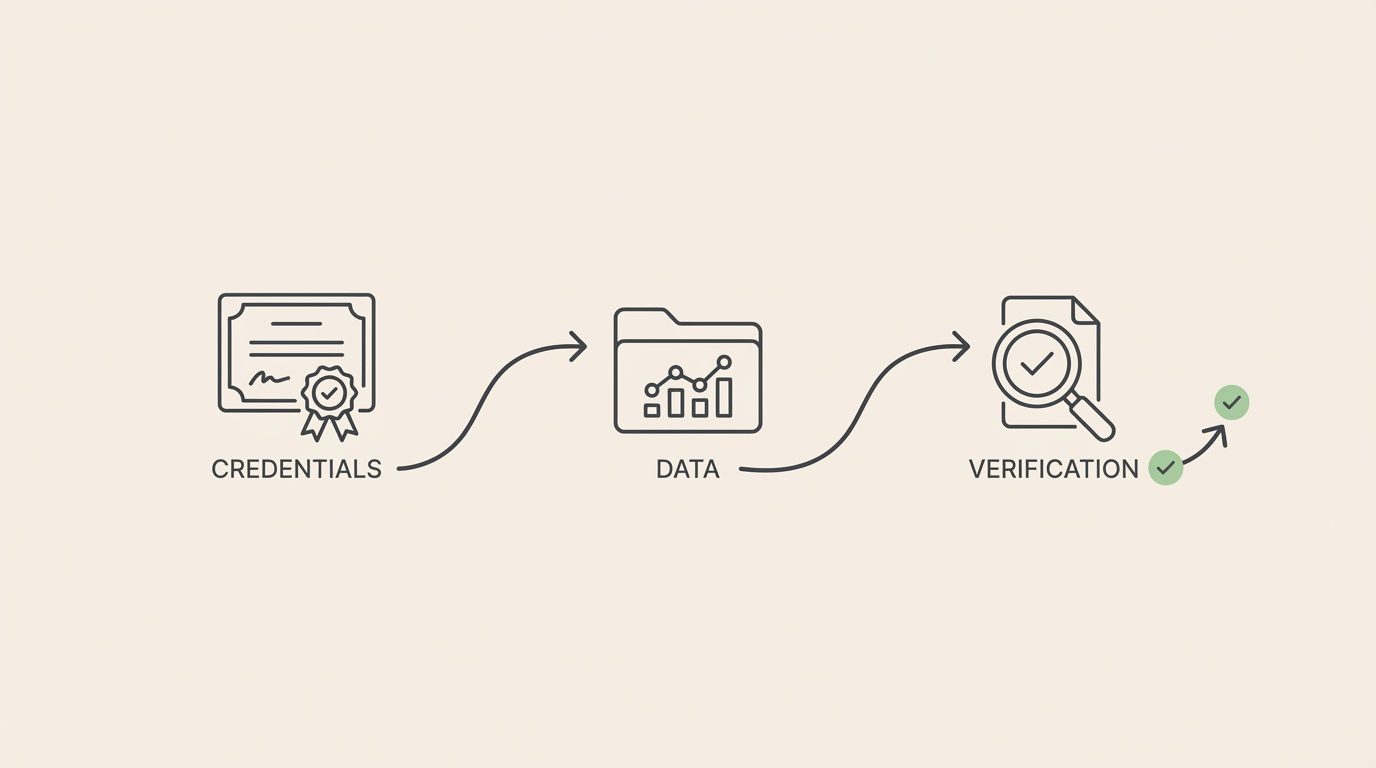
Once you've chosen a partner, the transition requires gathering specific documentation.
Having these materials ready accelerates the timeline.
Credentials and Access
Your new billing team will need:
- EHR Login Credentials - User accounts with billing access. Some practices create dedicated billing accounts rather than sharing provider logins.
- Clearinghouse Information - Account details for your current clearinghouse (like Claim.MD, Office Ally, or your EHR's integrated option), including payer ID lists.
- Provider NPIs and Tax ID - National Provider Identifier numbers for each provider plus your practice's tax identification.
- Fee Schedules - Your established rates for CPT codes.
- Payer Contracts - Copies of contracted rates with commercial payers, workers' compensation, or auto insurance.
ERA/EFT Details - How Electronic Remittance Advice and Electronic Funds Transfer are currently set up.
Clearinghouse Considerations
Your clearinghouse sits between your practice and insurance payers.
It standardizes claim formats and checks for errors before submission.
When switching clearinghouses, make sure the new one has active connections to all payers you bill regularly.
Missing payer connections cause claim rejections that delay payment.
Deciding What Transfers
Talk with your new partner about exactly what data moves over:
- Open claims and their current status
- Patient demographic and insurance information
- Historical claim data for identifying patterns
- Any pending appeals or resubmissions
The scope affects both timeline and complexity.
A partner taking over your entire AR has more setup work than one handling only new claims.
Handling Your Existing AR
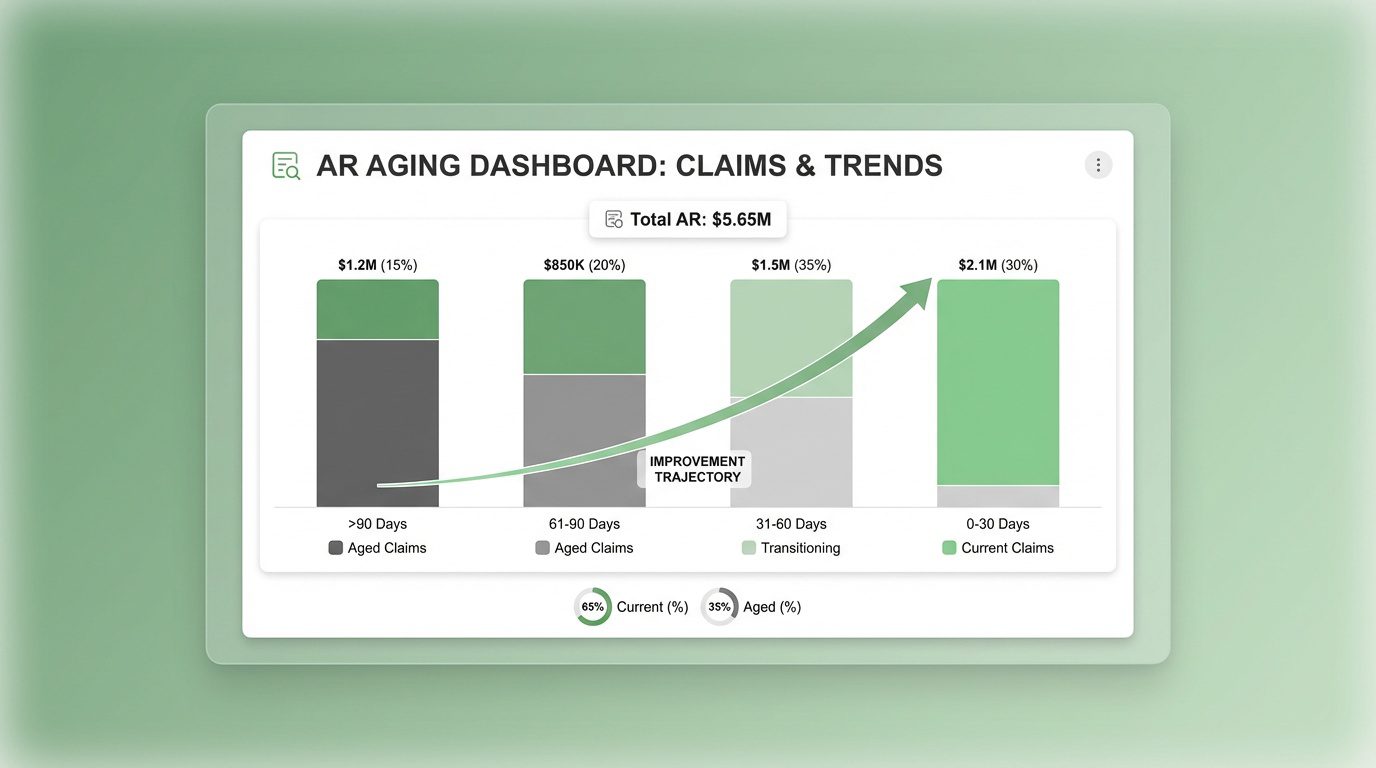
One of the biggest concerns about switching is losing money on claims already in progress.
With proper planning, this doesn't happen.
The transition can actually become an opportunity to clean up balances that have been sitting.
What Happens to Outstanding Claims
Your aging AR should transfer completely to your new billing partner.
This isn't a fresh start where everything gets written off.
The recovery process involves reviewing every aged claim. Identifying why it wasn't paid. Correcting and resubmitting with appropriate documentation. Appealing improperly denied claims while there's still time.
Recent claims typically have high collection rates.
Claims over 120 days become harder to recover. That's why having someone actively working them matters.
Running Systems in Parallel
Most transitions include a 2-3 week period where both billing systems operate at the same time.
Your new partner handles claims for current dates of service. Your old billing company continues working existing AR (or hands it over, depending on the agreement).
This overlap ensures nothing falls through the cracks.
At a defined cutoff point, full responsibility transfers.
Choosing the first of a month simplifies things. It creates clean separation and aligns with reporting periods.
Keeping Claims Moving
A systematic approach to denied claims during transition keeps revenue flowing.
Your new partner should have a plan for denials during the parallel period. They should maintain momentum on current claims while addressing legacy issues. And they should communicate clearly when claims need provider input.
Most practices see measurable improvement within 60-90 days.
How quickly things improve depends partly on how much cleanup existed at the start.
2026 Regulatory Context

The 2026 environment includes several regulatory updates worth understanding.
A billing partner who stays current helps ensure claims are submitted correctly.
Medicare Fee Schedule Updates
The 2026 Medicare Physician Fee Schedule includes changes relevant to chiropractic practices.
The conversion factor for most providers increased to $33.40. That's about 3.26% higher than 2025.
CMS also finalized efficiency adjustments affecting how certain services are valued.
Your billing partner should understand how these changes apply to your specific service mix.
ICD-10 Updates
The FY 2026 ICD-10-CM update took effect October 2025. It added 487 new codes.
For chiropractic practices, relevant changes include expanded Social Determinants of Health (SDOH) Z-codes and more specific requirements for certain pain codes.
According to industry analysis, properly using Z-codes can support medical decision making and strengthen claims.
A billing partner familiar with these updates uses them appropriately.
Documentation Standards
Documentation requirements continue to evolve.
Maximizing chiropractic revenue through documentation means clinical notes support the level of service billed. Subluxation is clearly documented. Functional outcomes tie to treatment goals.
A billing partner who understands these requirements can flag potential issues before claims are submitted.
That reduces denials rather than just reacting to them.
The Transition Timeline
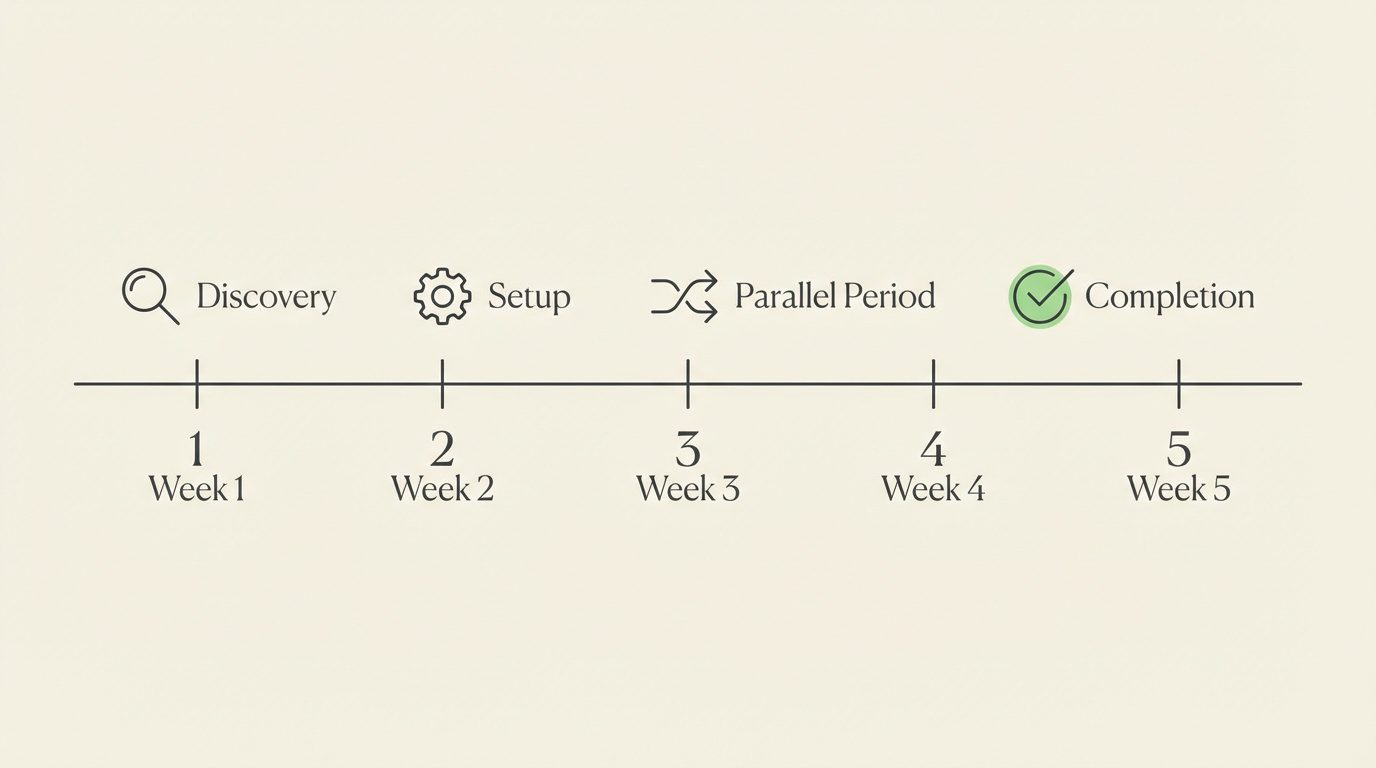
A typical transition follows a structured timeline.
Knowing what to expect at each phase helps you plan.
| Discovery | Week 1-2 | Credentials, AR review, transition plan |
| System Setup | Week 2-3 | Access testing, clearinghouse verification |
| Parallel Billing | Week 3-4 | Both systems running, frequent check-ins |
| Full Transition | Week 4-5 | Complete handoff, reporting established |
| Review Period | Day 30-90 | Performance monitoring, adjustments |
Week 1-2: Discovery and Documentation
The transition starts with thorough discovery.
Your new billing partner reviews your situation. They collect credentials. They develop a specific plan.
During this phase, expect an initial discovery conversation, collection of EHR and clearinghouse access, review of AR aging and denial patterns, and a documented transition plan with milestones.
This is also when to tell relevant staff about the change.
Your front desk needs to know how patient billing questions will be handled.
Week 2-3: System Setup and Testing
Your new partner configures their systems to work with your EHR and clearinghouse.
This includes creating user accounts, testing access, verifying clearinghouse connections, updating ERA routing, and confirming payer enrollments.
Technical testing happens here. Test claims get submitted to verify everything routes correctly.
Connection issues get resolved before live claims enter the system.
Week 3-4: Parallel Operation
Both systems run at the same time.
Your new partner handles new dates of service. Existing AR gets addressed according to your agreement.
Communication increases during this period. Check-ins happen more frequently. Claims needing provider attention get flagged immediately.
Week 4-5: Full Transition
At the agreed cutoff date, full responsibility transfers.
This includes all aging AR, ongoing reporting, and regular communication.
Some practices complete the transition earlier—as soon as week 3 for straightforward situations.
More complex transitions may extend to 60 days.
30/60/90 Day Reviews
The transition isn't complete until you've verified improvement.
Schedule reviews at 30, 60, and 90 days. Compare performance against your baseline. Identify any emerging issues. Adjust as needed.
By 90 days, you should see movement in the right direction.
Insurance Verification During the Switch

Your effective insurance verification process should continue without interruption.
Gaps here lead to denials that add to the workload.
Maintaining the Verification Workflow
Confirm with your new partner exactly how verification will work from day one.
Who performs eligibility checks? How do results get documented? What happens when coverage issues are identified?
Real-time eligibility verification through your clearinghouse should continue uninterrupted.
If your new partner uses a different clearinghouse, make sure connections are tested before going live.
Common Issues to Watch For
The transition period creates opportunities for verification gaps.
Keep an eye out for patients whose coverage changed during the switch. Watch for coordination of benefits situations that weren't flagged. Note any Medicare beneficiaries requiring AT modifier verification.
Document issues that arise so your billing partner can address root causes.
Medicare Considerations
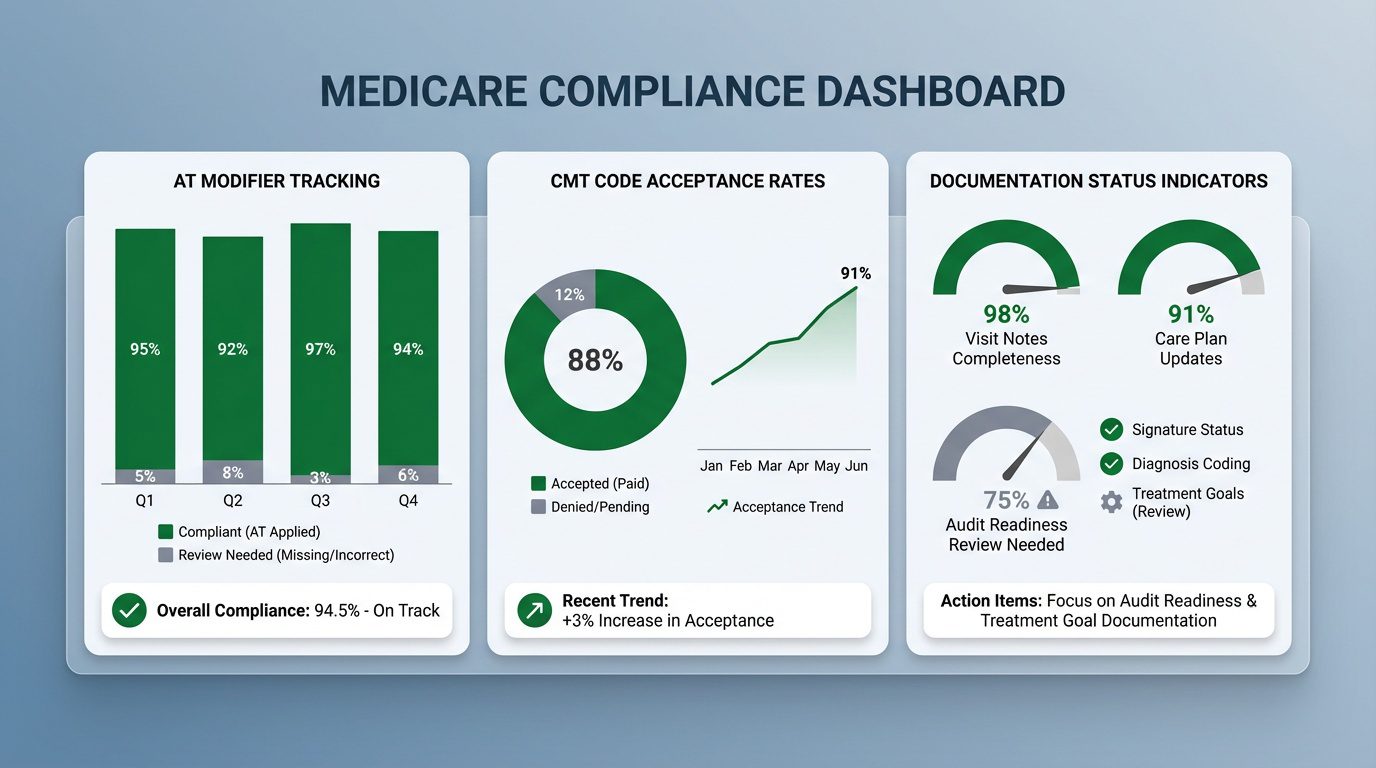
Medicare billing for chiropractic involves specific requirements.
Your billing partner needs to understand these from the start.
AT Modifier and Active Care
Medicare covers spinal manipulation only when services are considered active treatment.
The AT modifier indicates this. Documentation must support the designation.
Your billing partner should verify AT modifier usage for every Medicare CMT claim. They should understand the distinction between active treatment and maintenance care.
Medicare billing requirements for chiropractors include specific documentation standards that experienced partners navigate routinely.
Enrollment Verification
During the transition, verify that your PECOS information is current.
Your new billing partner may need access to update enrollment details, particularly for ERA routing.
Use the switch as an opportunity to confirm all provider enrollments are active and accurate.
Comparing In-House and Outsourced Billing

If you're switching billing companies, you may also be reconsidering whether outsourcing makes sense.
Understanding the real costs helps with that decision.
What In-House Billing Actually Costs
The cost goes beyond salary.
Factor in benefits and employment taxes. Software and clearinghouse fees. Training and continuing education. Coverage during vacation and sick time. Productivity loss during turnover.
When all expenses are included, in-house billing often costs $3,000-$5,000 per provider monthly.
Outsourced billing typically runs 5-8% of collections. That may represent savings, especially when turnover has been a recurring challenge.
When Outsourcing Makes Sense
Outsourcing tends to work well when your in-house team is stretched thin. When denial rates keep climbing. When turnover keeps disrupting your revenue cycle. When your practice grows faster than your billing capacity.
It's not just about offloading work.
It's about accessing expertise and systems that a solo in-house biller can't replicate.
Hybrid Approaches
Some practices keep a staff member who handles charge entry while outsourcing claims submission, follow-up, and denial management.
This keeps someone local who knows patients while bringing in external expertise for complex work.
A good billing partner adapts to your preferred approach.
| Monthly Cost | $3,000-$5,000 per provider | 5-8% of collections |
| Turnover Impact | High | Low—team coverage |
| Specialized Expertise | Depends on individual | Built into service |
| Regulatory Updates | Your responsibility | Partner's responsibility |
| Scalability | Requires additional hires | Included |
What to Watch Out For

Not every billing company delivers what they promise.
Knowing what to look for helps you make a good choice.
Long Contracts
Be thoughtful about companies requiring multi-year contracts with significant termination fees.
A partner confident in their service earns your continued business through performance.
Month-to-month arrangements or shorter initial terms give you flexibility if the relationship isn't working.
Fee Structures
Some billing companies advertise low rates but add fees for setup, clearinghouse access, reports, or per-claim charges.
These extras can significantly increase actual cost.
Ask for a complete fee breakdown before committing.
Transparent partners charge a straightforward percentage with no surprises.
Software Requirements
Billing companies that require proprietary software create switching costs down the road.
Platform-agnostic partners work with your existing systems.
That keeps your options open.
References
Ask for references from practices similar to yours. Same specialty. Comparable size. Similar payer mix.
Then actually call them.
Ask about communication, responsiveness, and whether they've seen measurable results.
Frequently Asked Questions
How long does it take to switch chiropractic billing companies?
A typical transition takes about 30 days when properly planned.
This includes discovery (Week 1-2), system setup (Week 2-3), parallel billing (Week 3-4), and full transition (Week 4-5).
Complex transitions with large AR backlogs may extend to 60 days.
Will I lose my aging AR if I switch billing partners?
No. Your aging AR should transfer completely.
Dedicated AR recovery services can typically reclaim 80% or more of aged claims through systematic follow-up, appeals, and payer communication.
The transition is actually an opportunity to clean up balances that may have been sitting.
What credentials does a new billing team need from my EHR?
They'll need EHR login credentials, clearinghouse information and payer IDs, provider NPIs and tax identification, fee schedules, payer contracts, and ERA/EFT details.
A platform-agnostic partner works with your existing EHR without requiring software changes.
How do I notify insurance payers that I am changing my billing service?
Most payers don't require formal notification since provider credentials stay the same.
However, update ERA routing so payments post correctly. Verify clearinghouse connections. Confirm direct deposit arrangements remain intact.
Is it better to switch billing companies at the start of a new month?
Yes.
Beginning-of-month transitions create clean cutoff points, align with reporting periods, and avoid mid-cycle confusion.
Many practices also avoid the January deductible reset or end-of-year holidays.
Can I keep using Jane App or ChiroTouch when I switch billing partners?
Absolutely.
A platform-agnostic partner integrates with your existing EHR.
You shouldn't have to change software to change billing partners.
What questions should I ask during a discovery session?
Ask about first-pass claim acceptance rates for chiropractic practices. How they handle Medicare AT modifier requirements. Their average days in AR. How they'll manage your existing aging claims. What reporting you'll receive. Whether they specialize in chiropractic. How they handle PI and lien cases.
How does the 2026 Medicare fee schedule impact my transition timing?
The 2026 fee schedule includes a 3.26% conversion factor increase and new efficiency adjustments.
Working with a billing partner who understands these changes helps ensure correct reimbursement.
But the transition process works the same regardless of timing.
Conclusion
Switching billing partners doesn't have to be complicated.
Document your starting point. Choose a partner who understands chiropractic billing and works with your existing software. Follow a structured timeline.
Most practices see improvement within 90 days.
The process is straightforward. The relief of having billing handled well is worth the effort.
If you're wondering whether a change makes sense for your practice, a conversation is a good place to start.
We offer a free discovery call where we can talk through your current situation and help you understand your options.
We'll look at where claims might be getting stuck. What's causing denials or delays. Whether your AR is healthy or needs attention. How your current process compares to what we typically see. What working with Bushido would look like.
Book a Call — no pressure, no obligation.
Just a straightforward conversation about your billing.
Sometimes the right answer is that you don't need to switch. We'll tell you that if it's true.
SCHEDULE YOUR FREE DISCOVERY SESSION TODAY.


Copyright 2026 | All rights reserved | Web Design by iTech Valet