

What Order Should Aged Claims Be Worked In: Dollar Value or Age?
Should you work aged claims by dollar value or by age? See what the sources say and how to combine both, then work the list through to payment.
Versapay says every bucket transition (from 30 to 60, 60 to 90, and so on) is a measurable drop in collection probability, so the further an invoice moves right in your aging schedule, the higher the risk of non-payment. Wisdom says to filter by oldest date, then sort within each bucket (age group) by highest balance, and to focus on claims close to timely filing limits and on larger balances that would make a real difference when collected. Wisdom also says the aging of AR (accounts receivable, money owed) shows where to spend limited follow-up time, and a few claims in the 90-day bucket can be worth more than pages of small balances in the current bucket.
Why Aged Claims Need an Ordering Rule
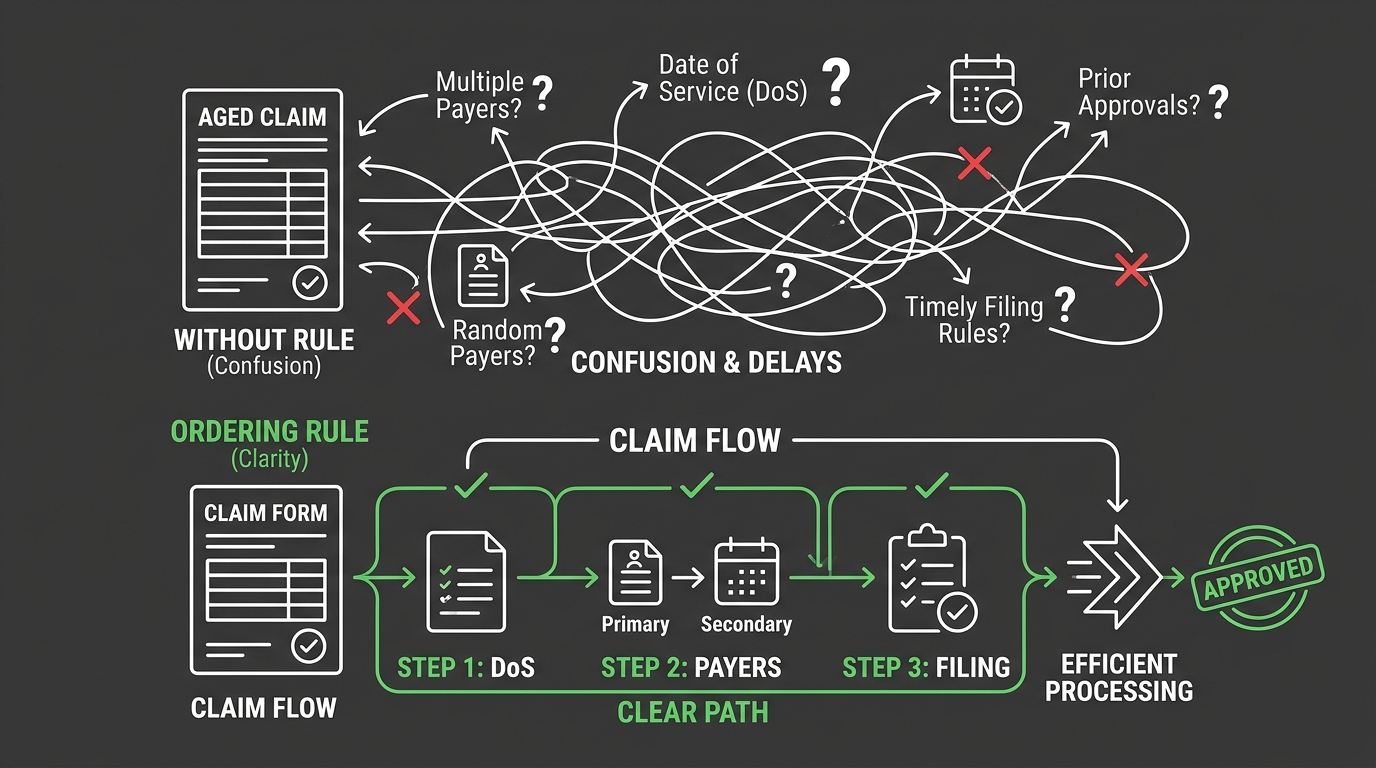
Healthcare has few standards here. hfma.org says that because there have been few standards for accounts receivable (money owed) for patient services, the industry follows a variety of practices, and those often differ from each other.
Accounts receivable aging reports have always helped teams read customers’ payment behavior and decide which accounts to chase first. But Versapay says that choice rested on dollar amounts or days overdue, not on the actual risk that an invoice goes unpaid. Keep in mind that Versapay is writing about general business receivables, not healthcare. You can find it at Accounts Receivable Aging Report: How to Read Risk and Prioritize Collections.
Before you choose an order, you need to know how to read the report itself. That’s covered in How to Triage a Chiropractic AR Aging Report.
The Case for Working the Oldest Claims First
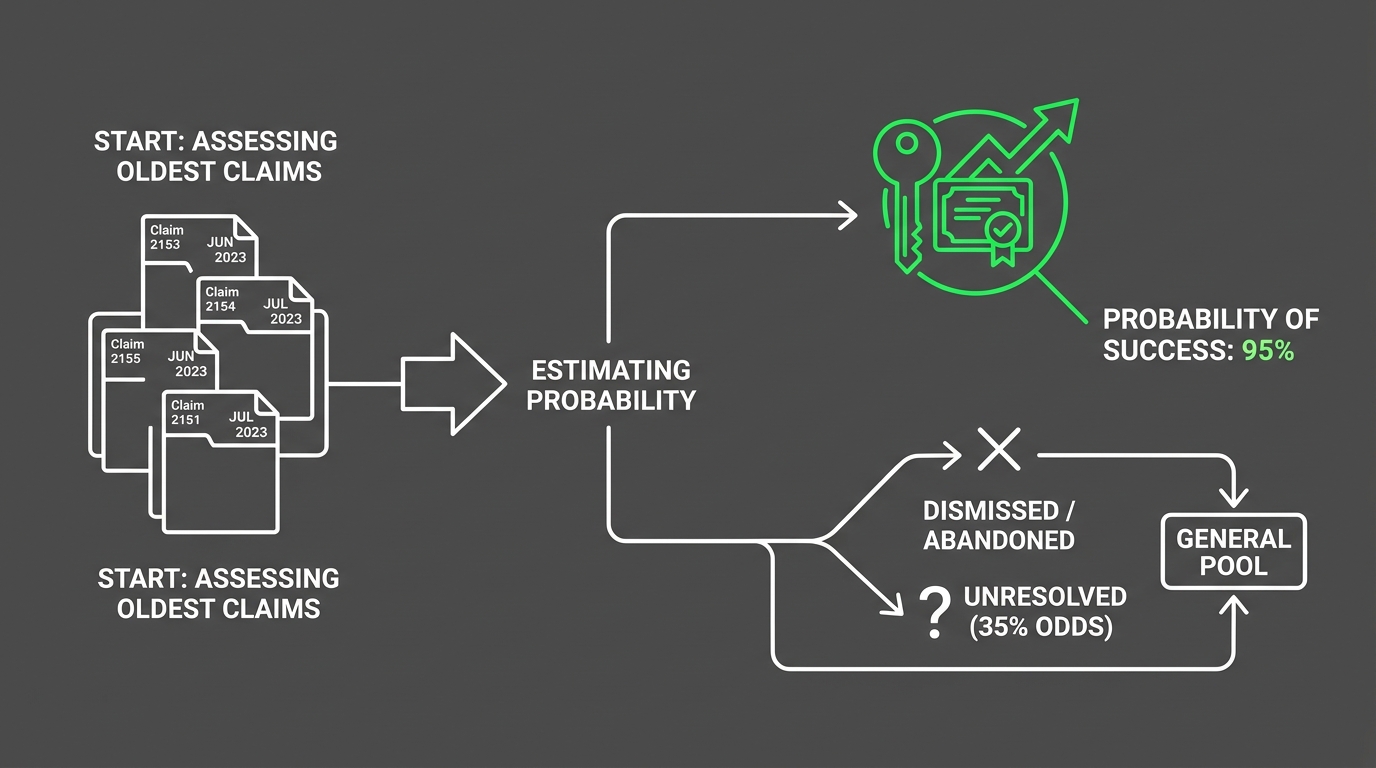
The first argument is about odds. Versapay says aging reports show which customers have gone the longest without paying and how much each one owes. That lets you decide who to contact first by days overdue and dollar amount.
Versapay also says every bucket transition (from 30 to 60, 60 to 90, and so on) is a measurable drop in collection probability. The further an invoice moves to the right in your aging schedule, the higher the risk of non-payment. Both points are on Versapay’s page, Accounts Receivable Aging Report: How to Read Risk and Prioritize Collections.
This next piece is general-business data, not healthcare data. Jumpstart Partners points to a 2022 analysis of 250,000 invoices. It found the chance of collecting fell from roughly 85 to 90 percent at 31 to 60 days past due to only 20 to 30 percent beyond 120 days, without any action to collect.
The Case for Working the Biggest Balances First
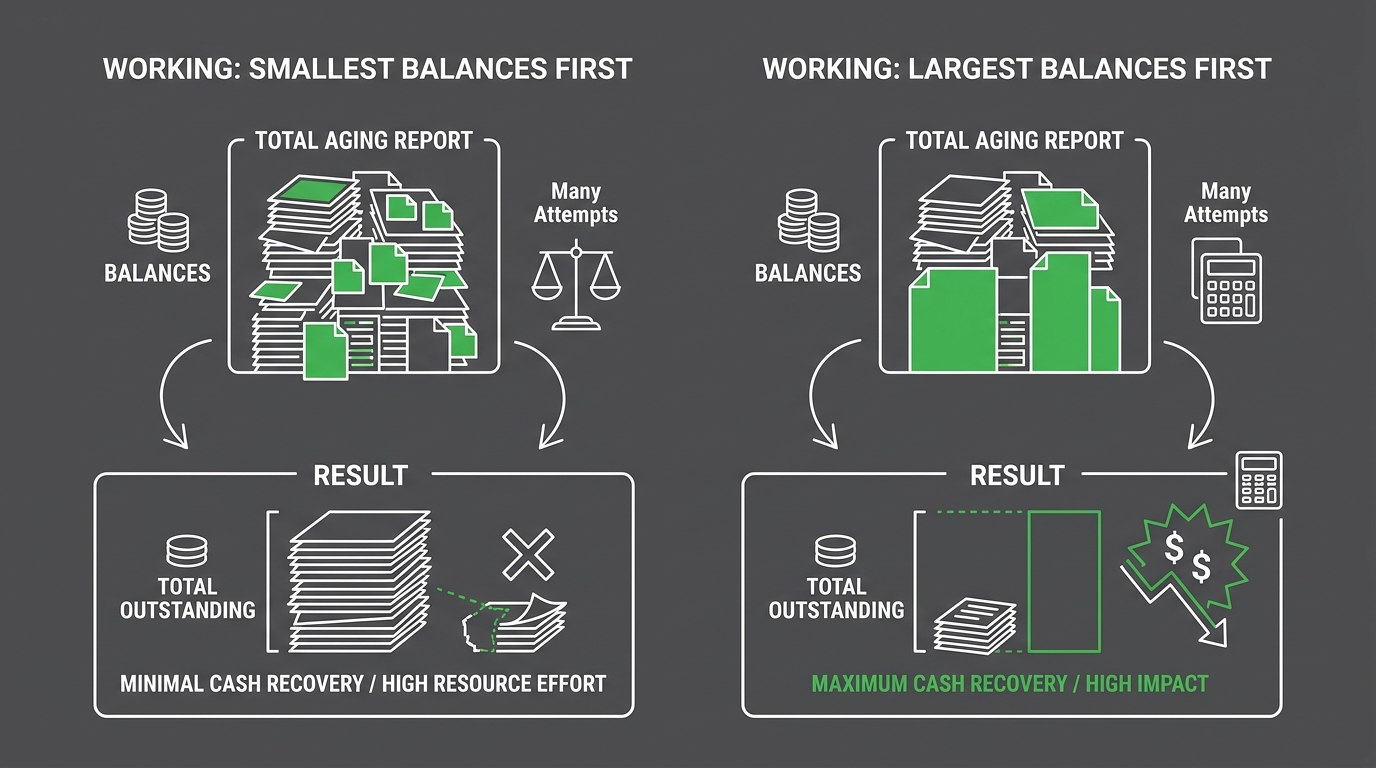
The second argument is about dollars. Wisdom says the aging of accounts receivable (money owed) shows you where to spend your limited follow-up time. A few claims in the 90-day bucket can be worth more than pages of small balances in the current bucket. You can read it in Wisdom’s AR Aging Report Explained.
Sorting by balance also shows you where the money sits. Condesa Financial Group says to sort your aging report (the list of unpaid bills by how old they are) by total balance first, and only then read it by age.
Say one customer makes up most of the 61–90 day group. Condesa calls that a relationship conversation. The same dollar amount spread across twenty customers is a process failure. See Condesa’s page, How To Do an Accounts Receivable Aging Analysis.
Combining Them: Oldest First, Then Highest Balance in Each Bucket
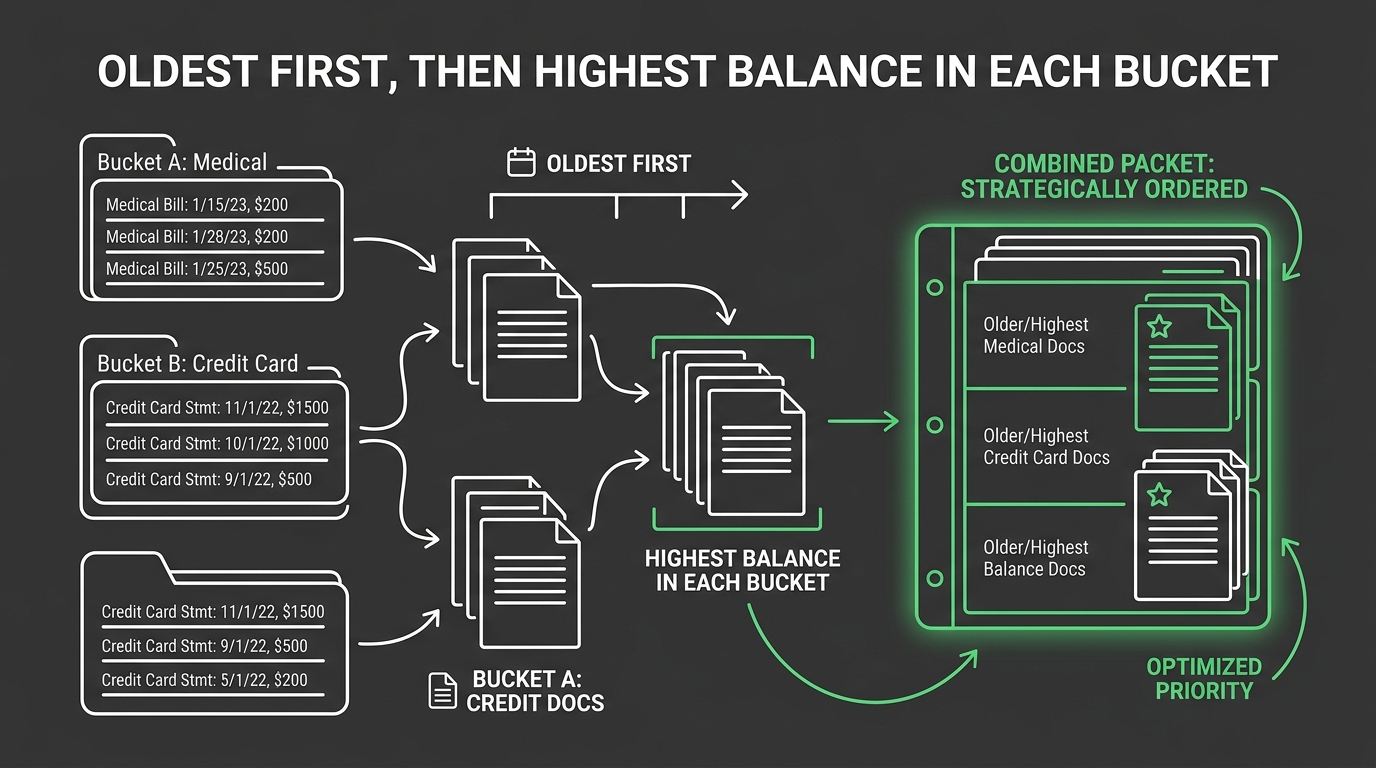
You don’t have to pick one. The sources give a few ways to put age and dollars together.
Wisdom’s advice is to filter by oldest date, then sort within each bucket (age group) by highest balance. Focus on claims close to timely filing limits, and on larger balances that would make a real difference when collected. For dental billing, Wisdom also says to go after high-dollar claims over 90 days old first, then review high-dollar claims over 30 days old. Both are on Wisdom’s page, AR Aging Report Explained.
Jumpstart Partners says to contact the oldest high-value invoices first. But don’t ignore smaller balances if they show a repeated billing or payment problem. Jumpstart also says to start by sorting the overdue invoice report by age, value, customer importance, and dispute status. That is in Accounts Receivable Aging: A SaaS Guide.
The table lays out the methods side by side.
| Ordering method | What to work first | Where the advice comes from |
|---|---|---|
| Oldest first, then highest balance | Filter by oldest date, then highest balance within each bucket; claims close to timely filing limits and larger balances | Wisdom |
| High dollar within aged claims | High-dollar claims over 90 days, then review high-dollar claims over 30 days | Wisdom (dental billing) |
| Oldest high-value first | Oldest high-value invoices, without ignoring smaller balances that reveal a repeated billing or payment problem | Jumpstart Partners |
| Several factors at once | Sort by age, value, customer importance and dispute status | Jumpstart Partners |
Sorting the List Is Not the Same as Working It
Wisdom puts it simply. Reviewing the aging report means reading the totals. Working it means calling, correcting, appealing, and resolving balances. You can read Wisdom’s page here: AR Aging Report Explained. And if you’re stuck on a claim that won’t move, see Rework or Write Off: Deciding an Aged Claim’s Next Step.
I treat electronic health record (EHR) software as the thing that gets claims out the door, not as a full billing operation. Denials, appeals and chasing unpaid claims don’t go to a tool. They get a person’s judgment. Software can sort your list, but people should resolve the claims.
Technology has a real but limited role here, and I’m glad to automate routine, error-free claims. When a claim needs someone to show why care was medically necessary, or needs an appeal written for that one denial, I put a skilled person on it. Let routine sorting run on its own, and save judgment for the hard aged claims.
That’s how we build our process at Bushido Billing: human-led, with tools in a supporting role. You can see how the work is done on our Medical Billing Services page.
Frequently Asked Questions
Does a good days-in-A/R number mean there’s no problem with old claims?
No. The American Academy of Family Physicians (AAFP) says good overall days in accounts receivable (A/R), meaning how long money stays owed to you, can hide elevated amounts in older receivables. That’s why it says to use the “A/R greater than 120 days” benchmark, which looks at money owed that is older than 120 days. Check that number next to your overall one so old claims can’t hide.
Does a small total in the 90-plus bucket matter?
Yes, it can. Condesa Financial Group says a clean-looking $12,000 in the 90-plus day group can be forty small invoices from forty customers. That points to a process failure spread across the whole book of accounts. On the flip side, it says one $180,000 invoice in the 61–90 day group can look like a collections crisis when it’s really one talk with one customer. Count how many accounts make up each total, not just the dollar amount.
How fast do the odds of collecting fall as a balance ages?
Fast. Jumpstart Partners, citing U.S. Census Bureau data, says 26 percent of receivables (money owed) can’t be collected after 90 days, 70 percent after 180 days, and 90 percent after one year. Jumpstart says this was reported in Sage’s accounts receivable management guide. These are general business figures, not healthcare ones, so use them as a reason to work your older balances early.
What’s wrong with prioritizing from a manual aging report?
It limits you to rough measures. Versapay says a manual aging report leaves you setting follow-up priorities by blunt measures like days overdue or total dollar amount, because the process can’t show anything sharper. So use days and dollars together, and look at what sits behind each balance before you decide who to call first.
Work the Sorted List Until the Money Lands
The order is simple. Filter by oldest date, then sort within each bucket by highest balance. Focus on claims close to timely filing limits and on larger balances that would make a real difference when collected. But remember that reviewing the report means reading totals, while working it means calling, correcting, appealing, and resolving balances.
A claim isn’t done when it goes out. It’s done when the money lands in your practice’s account. I judge billing by what gets collected, not by how much activity happened or how many claims were sent. Bushido Billing’s people do that work for chiropractic and allied health practices. We handle full-service insurance billing, cleaning up unpaid insurance claims, and fixing and appealing denied claims. Want people to work your oldest and biggest claims through to payment? Book a Call