

Why Generalist Billers Misinterpret Chiropractic Clinical Notes
Why generalist billers misread chiropractic notes, and what proving medical necessity actually requires before a claim reaches a payer.
Generalist billers misinterpret chiropractic clinical notes because they lack the clinical training to translate chiropractic-specific terminology and treatment logic into the language insurers require for medical necessity. Chiropractic documentation runs on its own clinical dialect, built around concepts like subluxation, spinal segment dysfunction, and phased treatment plans that move from active correction toward stabilization. A biller without chiropractic training reads those notes as generic musculoskeletal complaints, not as evidence supporting a specific, payer-recognized diagnosis and treatment rationale. The claim goes out technically submitted but clinically unproven, because the note was transcribed rather than translated into the framework a payer uses to weigh necessity. Insurers do not simply confirm that a code and a diagnosis are present. They check whether the documentation shows the treatment was necessary, appropriate, and distinguishable from care that maintains a condition rather than corrects it. Chiropractic notes carry the markers that draw that line: functional limitation, objective findings, and progress toward measurable goals. A biller unfamiliar with chiropractic protocols often cannot tell which elements of a note satisfy that standard and which fall short, and the result is a claim built on an incomplete translation of the clinical record. Medical necessity in chiropractic billing is not implied by the existence of a diagnosis code. It has to be shown outright, through documentation that ties clinical findings to the specific treatment provided, in language structured the way payers require it. Billers without chiropractic-specific training routinely miss that requirement, no matter how much general billing experience they bring.
Why Chiropractic Notes Speak a Different Clinical Dialect
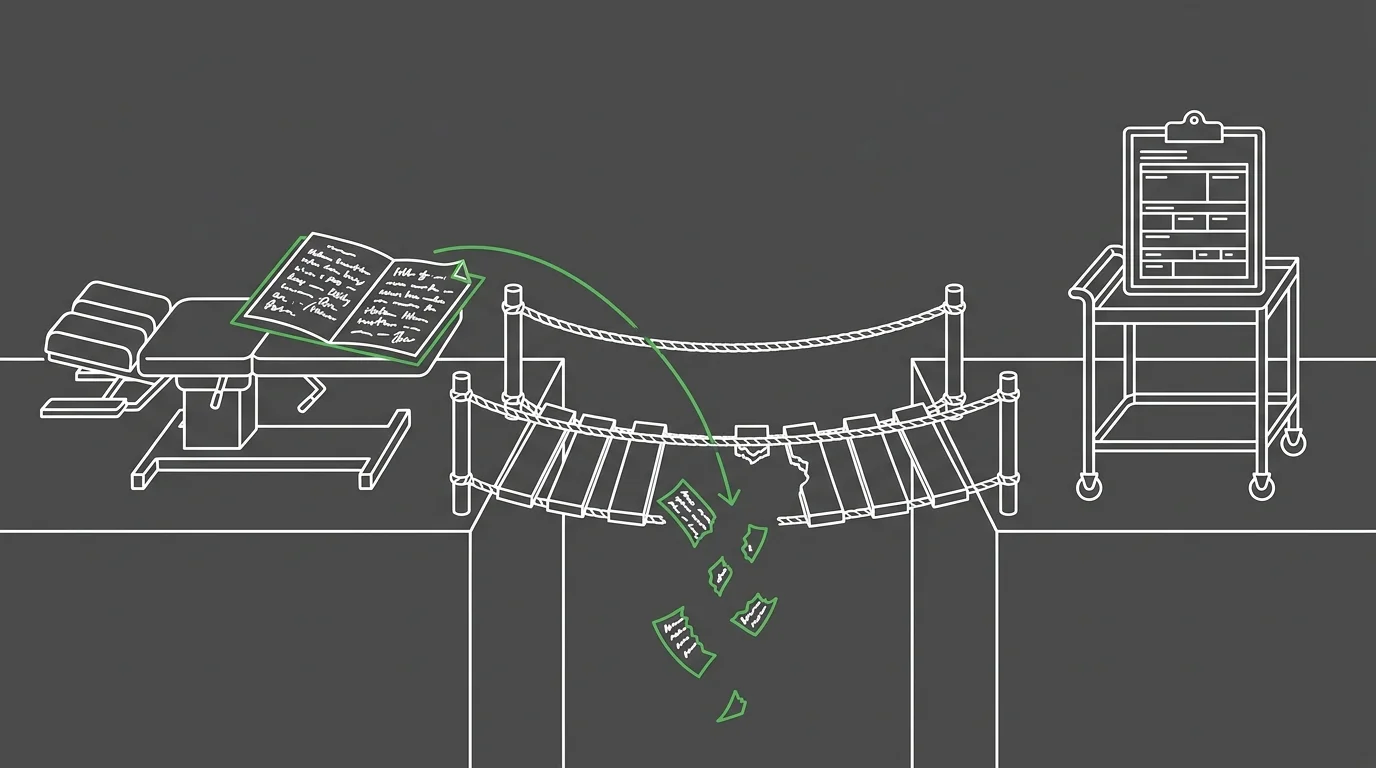
That translation gap is not a minor clerical issue. It is the mechanism behind denials that look, on paper, like clean submissions.
A generalist biller reads a chiropractic note the way they'd read any musculoskeletal chart, running it through the same terminology filters used everywhere else. But chiropractic language doesn't map onto that filter, which is exactly why a closer look at what goes wrong when generalist agencies handle chiropractic claims shows the same failure pattern repeating across payers.
Where the Dialect Gets Lost in Translation
The breakdown starts with vocabulary, not intent. A biller reading "subluxation" as a loose synonym for back pain has already lost the case before the claim ever reaches a payer.
Generalist billers are often trained to look for patterns and codes common in general medicine, which can cause them to overlook the specific nuances of chiropractic care. That training was never built for this dialect, so it filters out the exact details a payer is scanning for.
The Vocabulary Generic Medical Dictionaries Don't Carry
A generic medical dictionary treats spinal terms as descriptive, not diagnostic. Chiropractic notes use them as evidence markers tied to a specific treatment rationale, and a biller who reads them as description alone strips the claim of its proof.
Terms like phased care, functional deficit, and corrective versus stabilizing treatment carry payer-facing weight in chiropractic documentation. Without that context, a biller cannot tell which phrase in the note is doing the necessity argument's actual work. The claim moves forward, but the argument inside it never does.
Why Pattern Matching From General Medicine Breaks Down Here
Pattern matching works when the underlying diagnostic logic is shared across specialties. Chiropractic care does not share that logic, so a biller applying general-medicine patterns is measuring the wrong thing entirely.
Most billing errors trace back to a basic misread of the treatment goals and clinical markers unique to chiropractic services. Correcting that misread is exactly what How to Prove Medical Necessity for Chiropractic Care is built to do, by spelling out what the documentation actually has to demonstrate.
The Documentation Standard Generalist Billing Skips
Here's what generic training won't tell you: medical necessity in chiropractic care can't be implied. It has to be shown in the note itself, plainly and in order.
Generic training was never built to check for that structure. It scans for filled fields, not for whether those fields prove anything.
As CMS reports, insufficient documentation accounted for 95.5% of improper payments for chiropractic services in the 2024 reporting period.
And that gap between filled and proven is exactly where a clean-looking claim collapses on review.
| Documentation Component | What It Establishes | Where Generalist Review Misses It |
|---|---|---|
| Subluxation-Level Finding | The specific spinal segment and dysfunction the treatment plan is correcting, tied to an objective clinical marker | Read as a generic musculoskeletal complaint instead of a diagnosis-specific finding requiring its own proof |
| Functional Limitation Statement | How the condition restricts a measurable activity, giving the payer a baseline to judge progress against | Treated as background narrative rather than the evidence that anchors the entire necessity argument |
| Phase-of-Care Classification | Whether the visit represents active correction or stabilizing care, which determines how a payer evaluates the claim | Left unclassified because generalist review does not know the distinction carries billing weight |
| Objective Progress Marker | Measurable change since the prior visit or baseline, showing the treatment is producing correction rather than upkeep | Skimmed past as routine charting instead of flagged as the proof a payer is scanning for |
| Treatment-to-Finding Link | The direct connective language tying the specific service billed to the specific clinical finding it addresses | Assumed to exist because a code and a diagnosis are both present, when the note never states the connection explicitly |
The Four-Part Structure a Defensible Note Follows
A defensible note follows four parts, every time: the objective finding, the functional deficit it causes, the treatment rationale tied to that deficit, and a modifier that matches all three. How to Identify When a Billing Company breaks down what a note looks like when one of those parts goes missing.
Generic review confirms that four boxes are filled. It never checks whether they agree with each other, and that agreement is the part that actually decides whether a claim survives.
Why the Generic Coding Playbook Fails on a Chiropractic Chart

When a note lacks that structure, generalist playbooks reach for a fix that creates a new problem. Modifier 59 gets applied to force separate payment on services that were never meant to stand alone.
A typical case is therapeutic services such as massage or soft-tissue mobilization, billed alongside other treatment on the same visit. Modifier 59 is often misused in exactly that scenario, and it turns a documentation gap into a coding red flag instead of closing it.
Findings published through this published analysis show modifier 59 is often misused in chiropractic billing when applied to therapeutic services such as massage or soft-tissue mobilization — one expert assessment rather than a study finding.
That is not a workaround. It is a generic playbook substituting a blunt code override for the specific clinical proof the note was supposed to carry, which is what a Billing Services approach is built to catch before submission.
The Active-Care and Maintenance-Therapy Line Payers Actually Draw
One line decides more denials than any other in chiropractic billing: active/corrective treatment versus maintenance therapy. Medicare requires the AT modifier on claims for active/corrective care, and requires its absence on maintenance claims. A biller who cannot read that distinction in the clinical notes will apply the modifier by habit instead of by evidence.
| Claim Category | Modifier Requirement | Clinical Basis Required |
|---|---|---|
| Active/Corrective Treatment | AT modifier required | Documentation showing treatment for acute or chronic subluxation |
| Maintenance Therapy | Billed without AT modifier | Documentation showing care that maintains rather than corrects a condition |
| Therapeutic Services (massage, soft-tissue mobilization) | Modifier 59 frequently misapplied | Distinct treatment rationale separating the service from other same-visit care |
How the Modifier Gets Attached Without the Clinical Reasoning Behind It
Generic billing playbooks treat the AT modifier as a default setting for anything chiropractic. The modifier gets attached because the code is chiropractic, not because the note shows active correction. As the Medicare Benefit Policy Manual reports, chiropractic claims for active/corrective treatment must include an AT modifier, while claims for maintenance therapy must be billed without it. That gap between attachment and justification is exactly where the maintenance-therapy line collapses.
What a Misread Modifier Actually Costs a Claim
A misread modifier does not just risk one claim. It signals to a payer that the entire documentation pattern cannot be trusted, echoing the same modifier-59 pattern already at work in these claims. Every subsequent submission from that same clinical record inherits the suspicion.
How Payer Rules Changed the Ground Under Chiropractic Claims
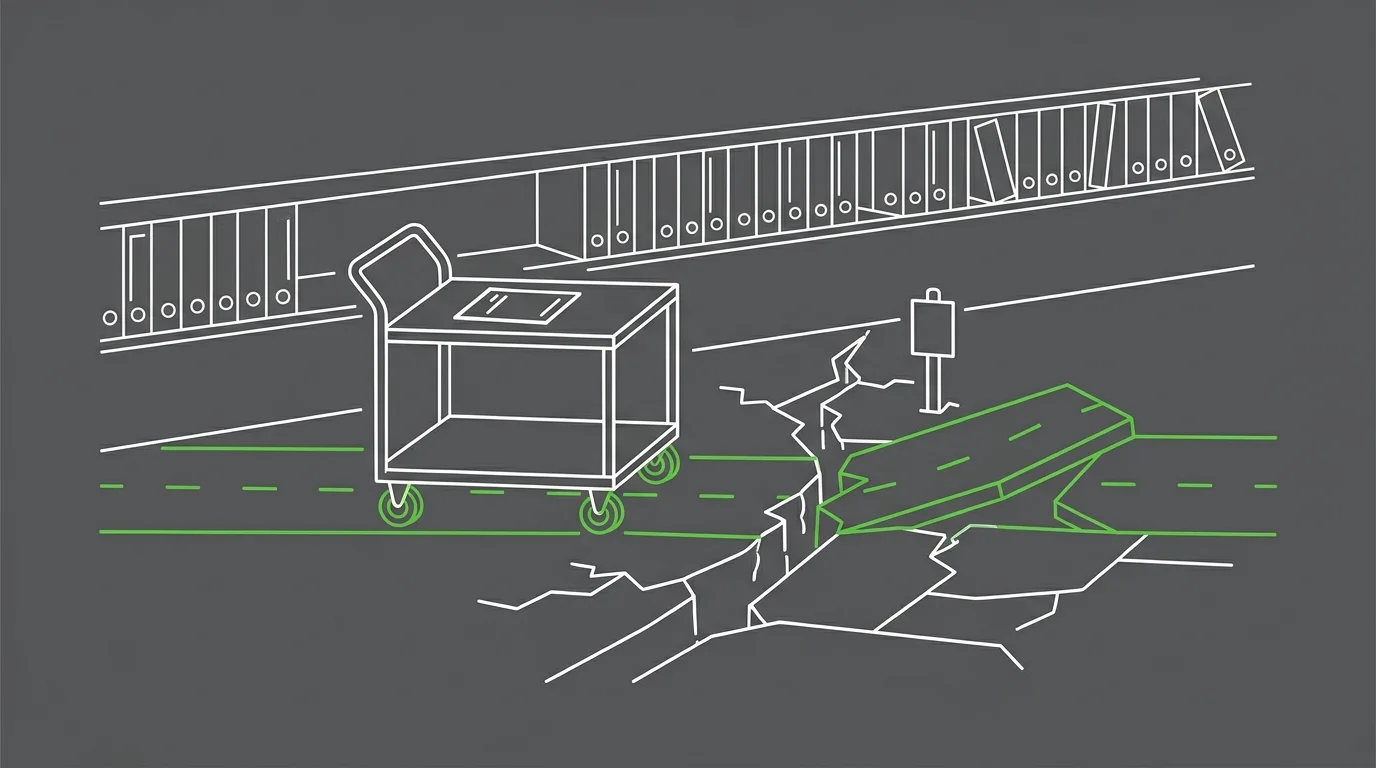
Payer scrutiny of chiropractic claims did not arrive all at once. It arrived in stages, and each stage changed what a note had to prove.
| Year | Claims Processing Change | Effect on Chiropractor-Ordered Claims |
|---|---|---|
| 2009 | CMS began using claims processing edits to issue an informational message to alert a billing provider that a chiropractor was not eligible to order an item or a service billed. | Claims moved forward with a warning attached, not a denial, so a biller reading the outcome as harmless was still technically correct. |
| 2014 | CMS began using claims processing edits to deny claims for items and services ordered by chiropractors. | The same informational pattern from 2009 now triggers an outright denial, closing the gap a generalist biller may still assume exists. |
| Ongoing | Medical necessity must be explicitly proven in the clinical notes, not just implied by a diagnosis code. | A note that only implies necessity fails review the same way an unordered chiropractor claim once only earned a warning. |
Reading a Chart the Way a Payer's Reviewer Reads It
On October 5, 2009, CMS started flagging chiropractor-ordered items and services, but only as an informational message to the billing provider. That warning stage ran for years before it had teeth. Findings published through HHS show CMS did not begin using claims processing edits to deny claims for items and services ordered by chiropractors until January 6, 2014, though informational messages had been in use since October 5, 2009. So a biller trained on the old, softer standard still reads charts as if a warning is the worst thing that can happen.
The Four Pieces of a Note a Reviewer Looks for First
A reviewer hits a note looking for four things: the diagnosis, the functional finding, the treatment rationale, and the modifier that ties all three together. Generalist training confirms each field is filled. It never checks whether they agree with each other.
Frequently Asked Questions
Some questions come up every time a note gets misread this way. Here are the direct answers.
What are the most common mistakes generalist billers make with chiropractic SOAP notes?
Generalist billers most often mistranslate functional findings and progress markers into generic descriptive language. That strips the note of the exact proof a payer scans for, and the claim moves forward without its evidence intact.
How does chiropractic-specific terminology like subluxation lead to claim denials?
A biller reading subluxation as loose shorthand for back pain treats a diagnostic marker as description. That misread erases the treatment rationale the term was meant to support, and the payer denies a claim that never actually made its case.
What is the difference between active treatment and maintenance care for insurance purposes?
Active treatment corrects a documented condition and requires the AT modifier. Maintenance therapy preserves an existing state and must be billed without it, so misreading which one a note describes flips the modifier the wrong way.
Why can't a biller just use the diagnosis code to justify a chiropractic claim?
A diagnosis code names the condition. It never explains why continued treatment was necessary, and payers want documentation tying clinical findings to the treatment rendered. A code alone can't carry that argument.
What are the key components of a clinical note required to prove medical necessity for chiropractic care?
A defensible note ties an objective finding to a functional limitation, states the treatment rationale, and matches the modifier to that evidence. Drop any one piece and the necessity argument falls apart, even when the code and diagnosis are correct.
When did Medicare start denying claims tied to chiropractor-ordered items instead of just flagging them?
Starting in 2009, CMS used informational messages to flag chiropractor-ordered items without denying them. The claims processing edits that actually denied those claims didn't begin until 2014 — a shift many generalist playbooks still underestimate.
Where This Leaves the Chart on Your Desk
A chiropractic note is a clinical dialect. It only clears review when someone translates that dialect into the payer's language of medical necessity, instead of just transcribing what's on the chart.
Generic training was never built for that translation. It checks boxes instead of reading meaning, and the gap surfaces as denials that looked clean the day they went out.
Closing that gap takes clinical fluency, not one more generic pass at the same chart. If the note on your desk needs that kind of read, talk it through with us.