

New Medicare Documentation Standards for Spinal Manipulation Codes
Medicare's documentation standards for spinal manipulation demand proof of active treatment. See what the rules require and why generalist billing misses it.
Medicare's documentation standards for spinal manipulation codes require the patient record to prove active treatment. Maintenance care does not qualify. Medicare Part B covers manual manipulation of the spine only when it is performed to correct a subluxation. The primary diagnosis on the claim must be subluxation. It must also identify the specific spinal level, either directly or through an accepted descriptive term. The diagnosis alone is not enough. The record must build a complete evidentiary case. That case begins with an initial visit history that establishes the mechanism of injury or onset. It continues with a treatment plan containing measurable, functional goals. Progress notes at each visit must track objective clinical findings tied to those goals. The AT modifier, used on CPT codes 98940 through 98942, identifies the service as active or corrective treatment rather than maintenance therapy. The record must support that designation with evidence of clinical improvement. A clearly reasonable expectation of improvement can also support it. Treatment that continues without measurable change in the patient's condition shifts from active care into maintenance therapy. Medicare does not reimburse maintenance therapy under this benefit. Each visit note must state the specific level of subluxation treated that day. Each note must also connect that day's service to the diagnosis and treatment plan on file. These standards apply to every chiropractic practice submitting spinal manipulation claims under Medicare Part B. Practice size and billing structure do not change them. The documentation determines whether a submitted claim is paid, denied, or flagged for additional documentation review.
What Counts As Active Treatment Under Medicare's Spinal Manipulation Rules

CMS sorts spinal manipulation claims into two categories, and only one of them gets paid. Active treatment and maintenance care can look identical in the exam room, but on paper they read like two different patients.
Active treatment is care expected to produce measurable, functional improvement within a reasonable timeframe. Maintenance care holds the patient where they are instead of moving them forward. Medicare doesn't cover it.
Where Subluxation Documentation Has to Start
Every Medicare chiropractic claim starts with the same diagnosis requirement. According to CMS, the primary diagnosis must be subluxation, and it must include the level, either stated or identified by a term describing subluxation.
So the level can't be implied by the adjustment itself. A record that says subluxation without naming the level fails before anyone even opens the treatment plan.
Why the Treatment Plan Carries the Weight
Per the Medicare Benefit Policy Manual, Medicare covers chiropractic care only for manual manipulation of the spine to correct a subluxation, and all other services a chiropractor furnishes or orders aren't covered. That coverage is narrow on purpose, and the treatment plan is the evidence that proves a claim fits inside it.
The plan has to tie measurable, functional goals to the subluxation level already on file. Every visit note afterward has to connect back to those goals, not just repeat the diagnosis. For the full documentation chain tying these pieces together, the guide to active treatment billing for chiropractors breaks down how each requirement fits with the next.
What the Claims Data Says About Chiropractic Documentation Failure
The documentation requirements above exist because the claims data left Medicare little choice. According to CMS, insufficient documentation accounted for 95.5% of improper payments for chiropractic services during the 2024 reporting period. That's not a rounding error; it's larger than every other category combined.
An earlier review by the HHS Office of Inspector General found that the improper payment rate for chiropractic services ranged from 43.9 percent to 54.1 percent, with estimated overpayments of $257 million to $304 million a year. OIG didn't tie that range to one cause, so read it as a measure of claims that didn't meet Medicare's rules, not as proof of intent.
| Finding | Figure | What It Signals |
|---|---|---|
| Insufficient Documentation | 95.5% of improper payments (2024 reporting period) | The dominant failure mode in Medicare chiropractic claims, far outweighing coding or necessity errors |
| Overall Improper Payment Rate | 43.9 percent to 54.1 percent (earlier OIG review) | Close to half, by OIG's estimate |
| Estimated Annual Overpayments | $257 million to $304 million per year (earlier OIG review) | The dollar side of the improper payment range above |
| Multi-Year Error Pattern | Highest improper payment rate among Medicare Part B services, 2010 to 2015 | Six straight years at the top, not a single-year anomaly |
Why This Error Rate Keeps Reappearing
This isn't a new or isolated finding. According to the HHS Office of Inspector General, CMS's Comprehensive Error Rate Testing program identified chiropractic services as having the highest improper payment rates among Medicare Part B services from 2010 to 2015.
Six straight years of the same finding point to a structural problem, not a bad year. Active treatment standards are specific, and they're easy to miss under a generalist approach. Practices looking to close that gap can start with the steps for capturing active care documentation now.
Why 'Any Biller Can Handle Chiropractic Claims' Doesn't Hold Up
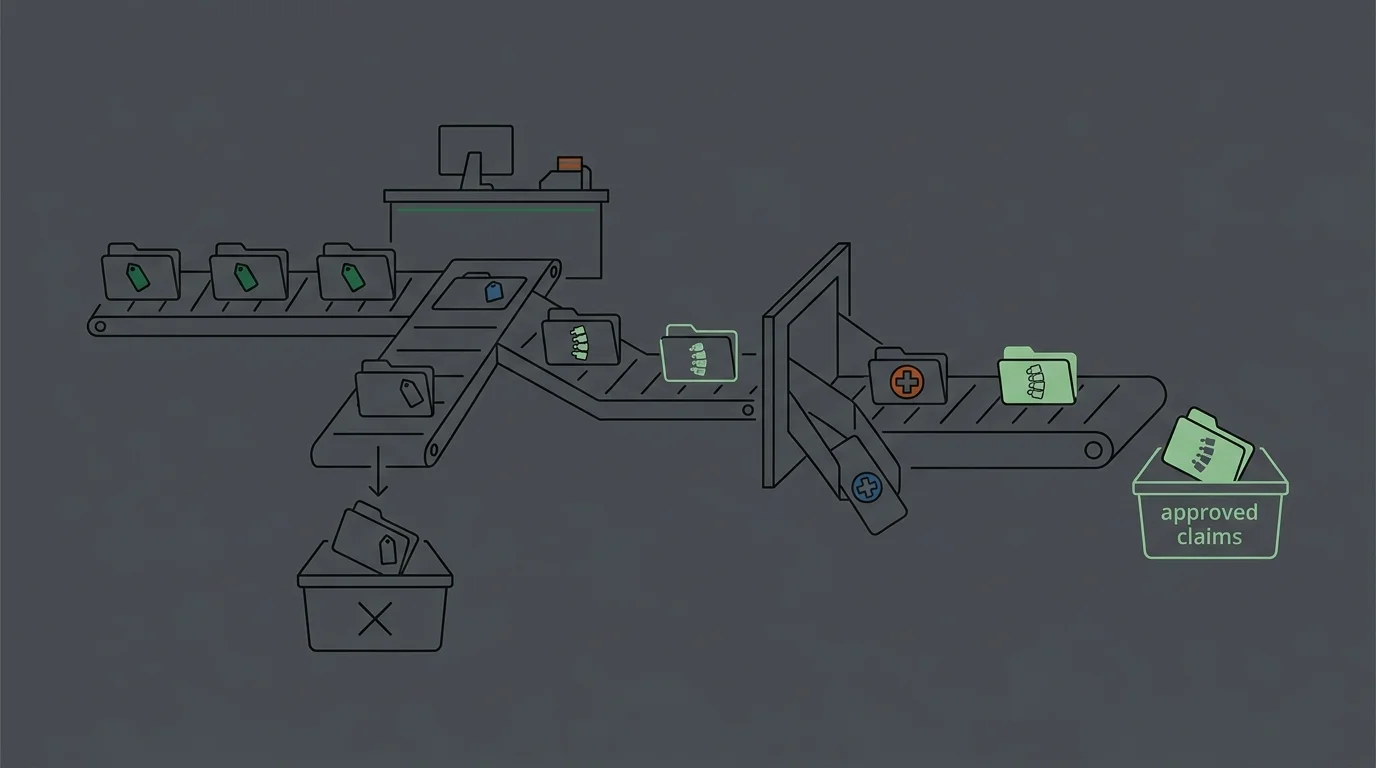
Chiropractic billing keeps getting treated like it's interchangeable with general medical billing. The claims data doesn't back that up.
So yes, a generalist process can format a clean claim. What it can't reliably do is judge whether a progress note actually proves active treatment, and that call takes specialty-level familiarity with Medicare's subluxation and AT modifier standards.
| Billing Approach | How Active Treatment Gets Documented | Where It Breaks Down |
|---|---|---|
| Generalist medical billing | Scans for required fields and correct codes, treating a chiropractic claim the same as any other specialty submission | Cannot distinguish a progress note that proves active treatment from one that only describes ongoing care, so maintenance therapy slips through coded as active treatment |
| Template-driven documentation workflows | Relies on standard note templates to capture subluxation level, AT modifier use, and treatment plan goals | Templates record that a field was filled, not whether the clinical content inside it actually supports the active treatment standard Medicare requires |
| Specialty-level chiropractic billing | Reads each progress note against the active treatment versus maintenance care distinction before a claim is submitted | Depends on a biller who understands subluxation documentation and AT modifier rules well enough to catch the gap before it becomes a denial |
How a Generalist Billing Process Breaks on Maintenance Versus Active Care
That's why Medicare's documentation rules can feel like a moving target from inside a chiropractic practice. A generalist billing process treats every claim the same way. It scans for missing fields instead of reading the clinical substance behind them.
The distinction between active treatment and maintenance care is the central compliance challenge in chiropractic Medicare billing. A biller who can't recognize that distinction on the page can submit maintenance care as if it were active treatment, and CMS says the AT modifier must not be used when maintenance therapy was performed. Clearing up the myths about Medicare spinal manipulation billing starts with retiring the assumption that any billing process can read that distinction correctly.
What an EHR Can and Cannot Verify About Active Treatment
Software doesn't read notes. An EHR can timestamp a visit, store a diagnosis code and fill the AT modifier field, but it can't tell whether the note behind that field actually proves active treatment.
That call belongs to a human reader who knows Medicare's subluxation and functional-goal standards cold. Software submits claims. Deciding whether the evidence inside a claim will hold up under review is a different skill entirely, and data entry doesn't cover it.
Where the AT Modifier Fits in the Claim
Here's what the AT modifier actually does: it tells Medicare the visit was active or corrective care, not maintenance therapy. CMS says the modifier doesn't by itself prove a service was reasonable and necessary, and contractors may still deny the claim after medical review.
A claim can leave the system clean and still fail on content. When it does, AR cleanup and revenue recovery becomes the work of reading what the software missed and building the appeal from the records made at the time of each visit.
Building a Documentation Workflow That Holds Up to Review
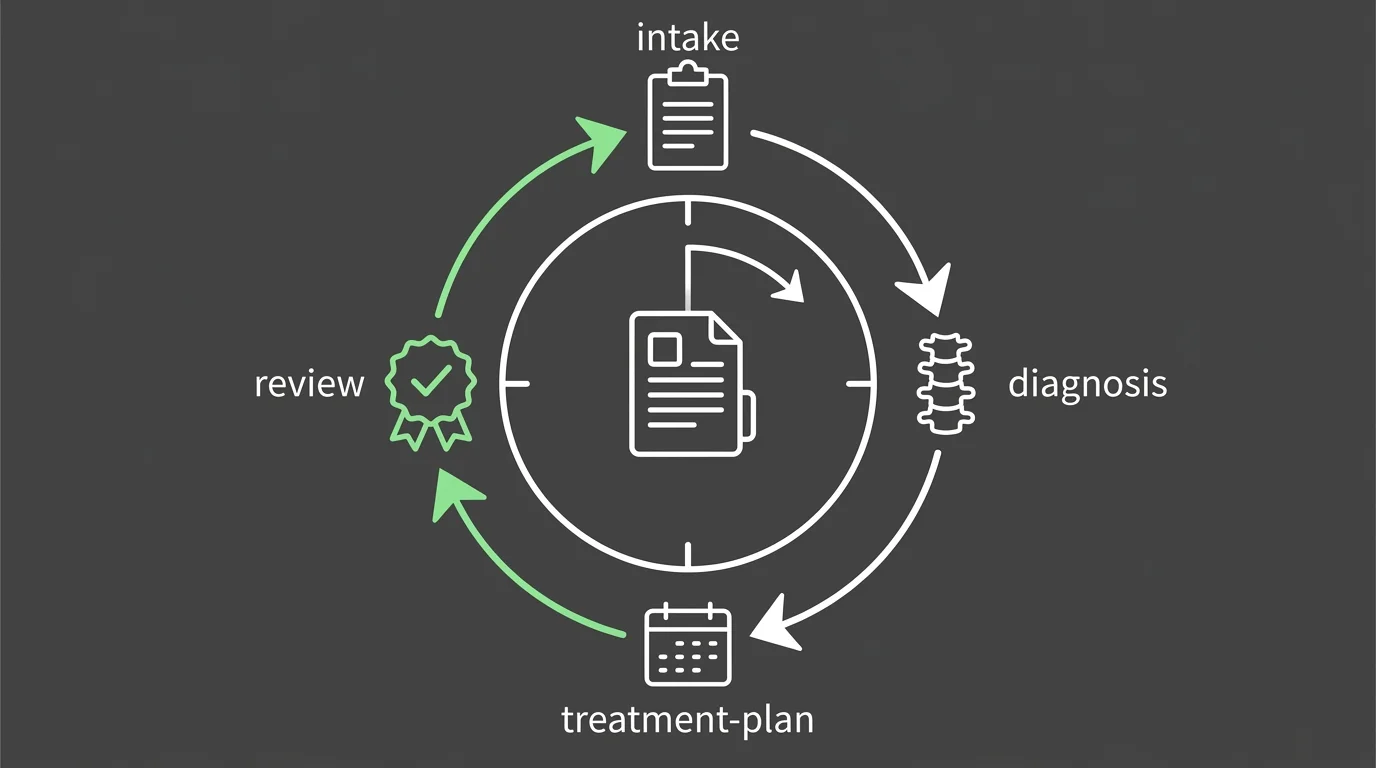
A workflow holds up to review when it treats documentation as evidence, not paperwork. Every visit note has to answer the same question a reviewer will ask: does this prove active treatment occurred.
| Workflow Step | What Gets Verified | Record It Produces |
|---|---|---|
| Diagnosis Verification | Subluxation is stated or identified at the correct spinal level and matches the primary diagnosis on file | A diagnosis line that ties every subsequent note back to a documented subluxation level |
| Treatment Plan Review | Measurable and functional goals are still active, with progress checked against those goals as care goes on | An updated plan showing whether the patient is tracking toward the stated goals or has plateaued |
| Visit-Level Documentation Check | Each progress note links the day's service to the treatment plan and shows objective findings tied to active treatment | A visit note that reads as evidence of corrective care rather than a routine maintenance entry |
| AT Modifier Confirmation | The clinical content behind the modifier actually supports active or corrective treatment, not just a checked field | A claim where the AT modifier matches what the underlying note can prove on review |
| Pre-Submission Compliance Pass | The full record is read as a reviewer would read it, checking for the gap between a clean claim and a defensible one | A submission package built to hold up if Medicare requests supporting documentation |
Structuring the Treatment Plan Review Cycle
A treatment plan review cycle checks progress against the stated functional goals throughout care, not just at the start. That review has to confirm the subluxation level documented at intake still matches what each subsequent note supports. Generalist billers produce generalist results, and a review cycle run without specialty-level familiarity with Medicare's active treatment standard will miss the exact pattern that turns a clean claim into a denial.
Chiropractic billing requires that kind of specialty judgment at every review point, not just at submission. A method built for general medical claims cannot consistently catch where active care has quietly drifted into maintenance therapy.
Frequently Asked Questions
These standards raise specific, recurring questions once practices start applying them to daily charting. The answers below address the mechanics without restating what the article already covers.
What is the single most common documentation error that leads to Medicare denials for spinal manipulation?
Two gaps to check first: a note that names subluxation without the spinal level, and a treatment plan with no measurable functional goals. Either one leaves the record unable to prove active treatment.
How does CMS define the difference between active treatment and maintenance care for chiropractic services?
The Medicare Benefit Policy Manual says care becomes maintenance once further improvement can no longer reasonably be expected and treatment turns supportive instead of corrective. Maintenance therapy isn't payable; active treatment is the corrective care that comes before that point.
If a claim for spinal manipulation is denied for documentation, what are the immediate next steps?
Pull the denial reason first and compare it against the treatment plan and subluxation level on file. Appeal with the records made at the time of the visit, never with notes changed after the denial. If those records truly don't support active treatment, fix the documentation habit for future visits, not the old chart.
Can EHR software automatically ensure documentation meets current Medicare standards?
No. An EHR can timestamp a visit and populate the AT modifier field, but it cannot judge whether the note underneath actually proves corrective care. That judgment call still requires a human reader trained on Medicare's standards.
How often should a practice self-audit its chiropractic documentation?
Tie it to the treatment plan, not the calendar: check the chart every time the plan is reviewed and before any claim with the AT modifier goes out. Waiting until a denial arrives means the review happened too late to matter.
What specific information must appear in the treatment plan to satisfy Medicare requirements?
The plan needs measurable, functional goals tied to the diagnosed subluxation level, reviewed and updated as care progresses. Every subsequent visit note has to connect back to those goals, not just the diagnosis.
Do the current documentation standards change how the AT modifier is used on spinal manipulation codes?
No change to the AT modifier shows up in the CMS guidance cited here. It still marks a visit as active or corrective treatment, and CMS says it must not be used for maintenance therapy. A modifier attached without evidence of active treatment is the pattern that leads to denials.
Where Specialty-Level Documentation Expertise Actually Pays Off
Medicare documentation is not paperwork trailing behind the clinical work. It is the evidence file a reviewer opens to decide whether a claim gets paid.
That file has to prove active treatment on its own terms, visit by visit. A generalist process can check boxes and fill modifiers, but it can't consistently tell a note that proves corrective care from one that only describes maintenance. And that gap is where compliance stops being about avoiding audits and starts deciding whether a practice's revenue cycle holds up without preventable denials pulling it apart.
Specialty-level documentation expertise closes that gap because it reads the clinical substance behind every claim, not just the fields on it. So the question isn't whether the notes are complete. It's whether they prove active care. To see how a practice's own documentation holds up against that standard, book a call with Bushido Billing.