

Should Your Practice Drop Medicare Enrollment? What to Know
Should a chiropractic practice drop Medicare enrollment? PAR and non-PAR status change revenue and claims, and chiropractors can't opt out of Medicare.
A chiropractic practice can't drop out of Medicare entirely, because Medicare's opt-out law doesn't count chiropractors as physicians, so the real choice is between participating (PAR) and non-participating (non-PAR) status. That choice depends on patient demographics, documentation discipline, and administrative capacity. A participating provider accepts Medicare's allowed charge as full payment and receives standard reimbursement, which is 80 percent of that allowed charge after the patient's deductible is met. A non-participating provider still submits claims and treats Medicare patients, but can charge up to the limiting charge, a ceiling set at 115 percent of the Medicare Physician Fee Schedule amount for non-participating suppliers. That gap between PAR and non-PAR status changes who collects the difference, how claims are submitted, and how much upfront collection falls on the practice itself. The decision also intersects with documentation requirements distinguishing active treatment from maintenance care, since Medicare reimburses only the former. Administrative burden, claim denial exposure, and the practice's existing revenue cycle infrastructure all factor into whether a status change improves or damages net collections. There is no single correct answer independent of a practice's specific patient mix, billing capability, and documentation accuracy. The choice functions as a structural fork affecting cash flow, compliance exposure, and patient access simultaneously, requiring evaluation against the practice's actual claims data rather than general industry sentiment.
What Medicare Enrollment Status Actually Controls
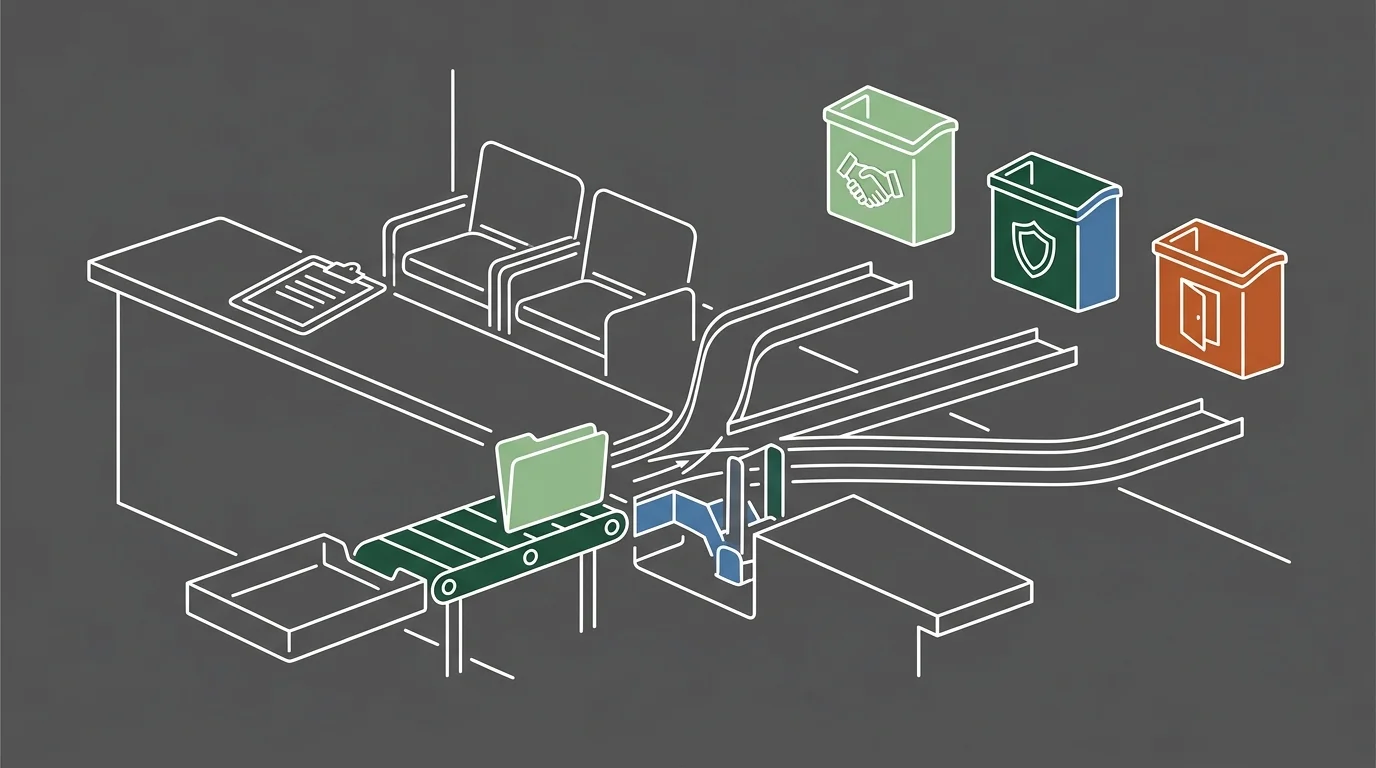
Enrollment status isn't a side detail. It decides who absorbs the gap between billed and allowed charges, how fast a claim gets paid, and who carries collection risk on every single visit.
That control shifts the moment a practice moves between PAR and non-PAR status. The reimbursement math and the claim workflow change, but the documentation standard separating payable care from denied care stays fixed, and the complete guide to billing active treatment under Medicare covers that standard in full.
Why PAR Status Is Treated Like a Default Instead of a Decision
Most practices land on PAR status once and never look at it again. That default gets called the safe choice, but it's really just the unexamined one.
So the real tension sits between wanting more control over reimbursement and worrying about a smaller patient panel. Few practices ever test that worry against their own claims data before settling into whatever status they started with.
Why Generalist Billing Systems Treat Every Payer the Same
Generalist billing systems run one workflow for every payer, Medicare included. That single template misses the AT modifier logic and active-versus-maintenance documentation that decide whether a Medicare chiropractic claim gets paid.
And those rules don't carry over from a general medical billing template. A system built to treat every payer alike can't reliably separate payable active care from denied maintenance care, and a chiropractor's guide to Medicare billing misunderstandings shows exactly where that gap turns up.
The Hidden Cost of Billing Medicare Like Every Other Payer
An EHR can submit a perfectly clean claim. What it can't do is decide whether that visit should've been billed as active care at all.
That gap is where revenue quietly slips away. Submission is mechanical. The judgment behind a payable Medicare claim isn't.
What an EHR Submits Versus What a Denial Requires
Claim submission software checks formatting, codes, and modifiers against a rules engine. It does not read a progress note and ask whether the documentation actually supports medical necessity.
Denial responses, appeals, and the AR follow-up behind them all need a person weighing payer-specific language against the chart. Treating EHR output as a finished billing process is exactly where a generalist system stalls, and that holds no matter what the 2026 fee schedule means for chiropractic reimbursement.
The Transaction Cost Gap Between Insurance Billing and Direct Payment
Billing an insurer costs more than collecting a payment directly, and the gap is wide.
A 2021 paper by Scheinker et al. in Health Services Research cites Tseng's 2018 estimate that billing insurance companies for physician services costs about 14.5% of the total, compared with about 2% for a commercial credit card payment. That's the administrative weight insurance billing carries before a claim ever reaches a decision. And Medicare chiropractic claims add AT modifier logic and active-versus-maintenance review on top.
Where Medicare Chiropractic Claims Actually Get Denied

Denial does not start at the payer. It starts at the chart, when documentation cannot support what the modifier claims.
According to CMS, the improper payment rate for Medicare chiropractic services in the 2024 reporting period was 33.6%, with a projected improper payment amount of $178.3 million. A claim that clears submission can still end up counted in that number.
Once a claim holds up, reimbursement follows a fixed rule. According to CMS, the Medicare payment is 80 percent of the allowed charge after the deductible is met. Getting paid at that rate still takes a clean claim first, and working the denied charges that pile up is the job of AR cleanup and revenue recovery.
How Non-Participating Status Changes What a Practice Can Charge
Going non-PAR doesn't mean billing Medicare patients the same old way at a new rate. It means the practice now works under a hard ceiling on what it can collect for every visit.
| Status | Who Bills the Patient | Charge Ceiling |
|---|---|---|
| Participating (PAR) | Medicare pays the practice directly after the deductible is met, and the patient owes only the standard coinsurance share. | The practice accepts Medicare's allowed charge as payment in full and cannot bill above that amount. |
| Non-Participating (Non-PAR) | The practice still submits the claim to Medicare and can bill the patient, but never above the limiting charge. | The practice can charge up to the limiting charge and no more. |
| Full Opt-Out | Not an option for chiropractors under Medicare's opt-out law. | No private-contract path exists for a chiropractor. |
The Limiting Charge Ceiling and What It Means for Patient Billing
That ceiling is the limiting charge. According to CMS, a non-participating supplier can't charge the patient more than the limiting charge, which is 115% of the Medicare Physician Fee Schedule amount for non-participating suppliers. Billing above it isn't aggressive pricing, it's billing out of compliance, so the front desk has to track two numbers on every non-PAR claim: the allowed charge and the limiting charge.
What an Active Care Documentation Trail Has to Prove

A clean claim isn't the same as a payable one. Medicare pays for active treatment and never for maintenance care, so the chart has to prove which one happened on that date of service.
The AT Modifier and the Active Versus Maintenance Line
Adding the AT modifier doesn't make a visit active care. CMS says the modifier doesn't by itself prove a service was reasonable and necessary, and contractors may still deny the claim after medical review. The note still has to show what the modifier claims.
Sequencing a Status Review Before a Practice Changes Enrollment
Start a status review with the claims data, not a hunch about reimbursement. Pull denial patterns, AT modifier accuracy, and collection timelines before anyone touches enrollment status. That work belongs to a person reading charts against payer rules, not a system that only checks whether the claim was formatted right.
Frequently Asked Questions
Once the PAR versus non-PAR decision gets real, the same mechanical questions keep coming up. These answers settle them.
What is the difference between being a participating (PAR) vs. non-participating (non-PAR) Medicare provider?
PAR status means Medicare's allowed charge is full payment on every claim. A non-PAR provider still bills Medicare and treats Medicare patients, and more of the collection work shifts onto the front desk.
Can a chiropractor legally opt out of Medicare completely?
No. Medicare's opt-out law doesn't count chiropractors as physicians, so a chiropractor may not opt out and treat Medicare patients under a private contract. The only real choices are participating or non-participating status.
If I become a non-participating provider, can I still see Medicare patients?
Yes. Non-PAR status doesn't block a practice from treating Medicare patients. Claims still go out and still get paid, just under a different charge structure.
How does the Medicare limiting charge affect what I can bill patients as a non-PAR provider?
The limiting charge is 115% of the Medicare Physician Fee Schedule amount for non-participating suppliers, and it's the most a non-PAR practice can bill a Medicare patient for a service.
What are the claim submission requirements if my practice is non-participating?
Non-participating practices still submit claims to Medicare on the patient's behalf. The claim still needs an accurate AT modifier and documentation proving active treatment, since that standard does not change with enrollment status.
Does changing my Medicare status affect how I handle Medicare Advantage plans?
Medicare Advantage plans run under their own contracts, separate from traditional Medicare's PAR and non-PAR rules. A status change with traditional Medicare does not automatically alter a practice's standing with any Medicare Advantage payer.
If I drop participation, can I re-enroll as a PAR provider later?
Yes, re-enrollment as a PAR provider is available through the standard Medicare participation process. Switching status is not a one-way door, but each change should follow a fresh review of claims data rather than a reaction to one bad quarter.
The Status Decision Isn't the Hard Part
So the real fork in the road was never PAR versus non-PAR. It was whether the system behind either path can read a chart and tell active treatment from maintenance care before a claim ever goes out.
A generalist system can format that claim, but it can't judge it. And judgment is exactly what the AT modifier, the limiting charge, and the improper payment rate all come back to.
A practice should pick PAR or non-PAR once its own claims data backs the move, not a minute before. If the billing behind that call needs a second set of eyes first, book a call with Bushido Billing.