

Common Mistakes That Delay Commercial Payer Re-Credentialing
Learn why commercial payer re-credentialing stalls, the data errors that trigger rejections, and how silent approval queues put revenue at risk.
Commercial payer re-credentialing is often delayed by small administrative lapses rather than major errors, including outdated CAQH attestations, mismatched provider data across payer and practice records, lapsed license or insurance documentation, and missed or unanswered payer correspondence. Re-credentialing is the periodic process by which a commercial payer re-verifies a provider's qualifications to confirm continued eligibility for network participation. Unlike initial credentialing, re-credentialing carries an assumption of simplicity because the provider is already known to the payer, and that assumption is precisely what allows small inconsistencies to go unnoticed until a deadline is missed. A single outdated phone number, a lapsed CAQH re-attestation, or an unanswered payer request for updated documentation can each independently stall an otherwise complete file. These are not one-time events. Re-credentialing is a recurring cycle tied to specific deadlines set by each commercial payer, and it must be tracked proactively rather than handled reactively when a notice finally arrives. Common failure points include data mismatches between a provider's NPI record and payer files, incomplete or incorrectly linked group affiliations, failure to re-attest CAQH profiles on the schedule CAQH sets, and communication gaps where a payer's request for clarification sits unanswered because no one at the practice is monitoring the queue. Each of these causes shares a common mechanism: a small, correctable detail is left unaddressed long enough to become a missed deadline. The result is a lapse in network participation status, a disruption in claims processing, and a period during which a provider's services may not be reimbursable at in-network rates. Preventing these delays requires continuous monitoring of payer-specific timelines and documentation requirements, not periodic review.
What Re-Credentialing Actually Resets, and Why Clinics Treat It Like a Formality

Re-credentialing isn't a box a practice ticks once. It's a recurring cycle that repeats on each commercial payer's own schedule for as long as a provider stays in network.
Every cycle resets the payer's confirmation that a provider still meets its participation standards. Call one cycle finished business, and the next one shows up with nobody watching.
Why Clinics Treat Re-Credentialing as a Formality
Clinics treat re-credentialing as a formality because the provider is already known to the payer. That familiarity feels like safety, so the file gets less scrutiny than it did the first time.
That assumption is the real danger. The paperwork isn't. A lapsed detail sits quietly until a deadline closes, which is why the ongoing work of credentialing maintenance has to stay active between deadlines, not just in the weeks before them.
The Silent Queue: How Communication Gaps Turn Small Errors Into Lapses
Here's what actually stalls a lot of files: not a blown deadline, but a small inconsistency nobody flagged. The deadline is just where it finally surfaces.
Think of a mismatched address, a stale fax number, or a payer email nobody answered. None of them sinks a file alone. Left sitting, they stack into exactly the gap that stops it cold.
Why a Quiet Status Page Is Not the Same as a Managed Timeline
A payer portal with no new activity looks like a file resting safely in review. But it can just as easily be a file stuck behind a request nobody has opened.
A silent status page is not a managed timeline. Proactive communication is the signal that a file is actually moving, while silence is what lets a correctable detail sit until it becomes a lapse. That is the real case for planning ahead for commercial re-credentialing instead of waiting on a portal to speak first.
The Data Fields That Break Applications Before a Human Ever Reviews Them
An application does not fail because a reviewer judges it harshly. It fails because a single field does not match across two systems that were never checked against each other.
That mismatch is rarely a dramatic error. It is the same pattern already in play elsewhere in a file: a small inconsistency that sits unnoticed until something downstream depends on it.
| Data Field | Common Error | Downstream Effect |
|---|---|---|
| NPI Record | Provider identifiers on file do not match what the payer has stored for the same provider | File is flagged as inconsistent and routed for manual review instead of moving through automatically |
| CAQH Attestation Date | Profile is left unattested past its re-attestation date, on the schedule CAQH sets, even though the data looks complete | Payer treats the entire profile as unconfirmed and stalls the file without issuing a direct alert |
| Group Affiliation Link | Provider is incorrectly linked, or not linked at all, to the correct practice or group record | Claims tied to that provider process as if the provider is unaffiliated, stalling the credentialing file behind it |
| Contact Information | Phone number, fax, or email on file is outdated and no longer reaches anyone at the practice | Payer requests for clarification go unanswered, and the file sits idle until someone notices |
| License and Insurance Documentation | Expiration dates lapse or renewed documents are never uploaded to replace the expired version | Payer treats credentials as unverified, which halts the file regardless of how complete the rest of it is |
CAQH Attestation and Why It Fails Quietly
CAQH attestation shows this pattern more clearly than anything else. A profile can look complete and sit untouched for months. It can still be the one reason a payer stalls a file without ever saying so.
That's why a practical timeline for clinic re-credentialing has to account for re-attestation windows on their own schedule, not on the provider's.
How Payer Notification Schedules Compare to What a Practice Actually Needs to Track
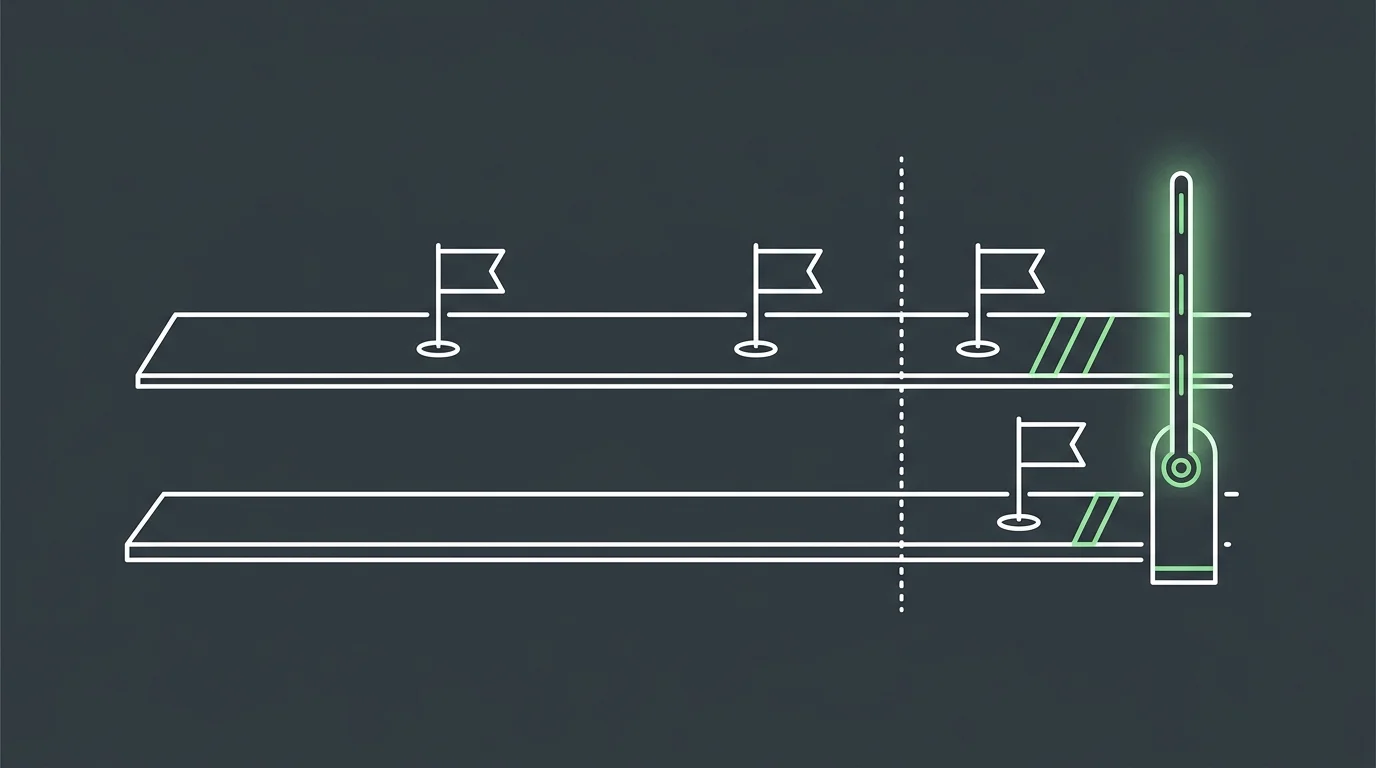
A payer's notice is not a tracking system. It is a courtesy, and treating it as the only safeguard hands control of the timeline to someone else.
What a Revalidation Notice Schedule Looks Like in Practice
Indiana Medicaid sends revalidation notices with instructions 90, 60 and 30 days before a provider's revalidation due date. That's one state Medicaid program's rule, not a commercial standard, but it shows what a clear notice schedule looks like when a payer commits to one.
Even a schedule that good only tells a practice what the payer chose to send, never what the practice checked for itself.
Where Commercial Payer Timelines Diverge From That Model
Commercial payers don't share one published notice schedule, so a practice can't count on three letters arriving in time. That gap is exactly where denial management and appeals work begins for a practice that let a window close without ever seeing a warning.
What Happens Operationally the Moment a Provider Falls Out of Network
A lapsed status does not announce itself. The first sign is usually a denial, not a notice.
By then the provider has already been treating patients as if nothing changed.
The Billing and Claims Mechanics of an Out-of-Network Lapse
Once status drops, claims come back rejected or repriced at out-of-network rates, and the in-network rate a practice used to collect offers no protection. Recovering that revenue takes rebilling and appeals, and that work now sits behind the same silent queue that missed the deadline in the first place.
Rebuilding the Communication Loop: What a Managed Tracking System Looks Like
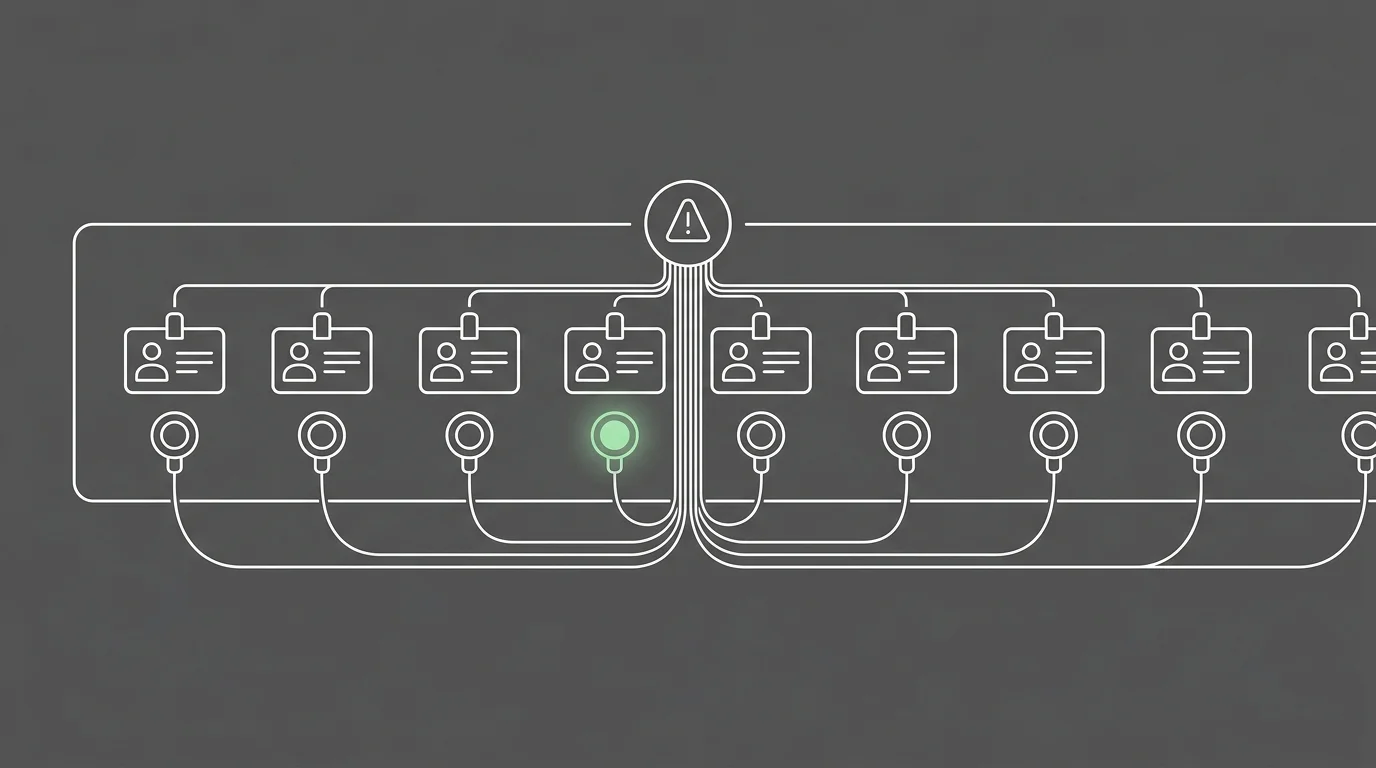
Communication defaults to silence in most billing relationships. That is a structural failure, not an oversight.
A tracking system closes that gap by replacing the silent queue with scheduled, two-way checkpoints that do not wait on a payer to speak first.
| Tracking Component | What It Monitors | Why It Replaces Silence |
|---|---|---|
| Master Payer Calendar | Every commercial payer's own re-credentialing deadline and CAQH re-attestation window, tracked on its own schedule | Replaces reliance on a payer's reminder letters with a timeline the practice owns and checks independently |
| Named Request Owner | Every open payer request or clarification, assigned to one person rather than left in a shared inbox | Closes the gap where an unanswered question sits unnoticed until it becomes a missed deadline |
| Group and Individual File Cross-Check | Individual provider timelines against the separate group affiliation deadlines tied to the practice itself | Prevents the seam between the two timelines from becoming the point where a multi-provider clinic loses track |
| Two-Way Checkpoint Reviews | Scheduled check-ins on file status rather than waiting for a portal or a payer to report activity | Turns a silent queue into a monitored one, so a stalled file surfaces before it becomes a denial |
Individual Versus Group Re-Credentialing: Where Multi-Provider Clinics Lose Track
Multi-provider clinics lose track right at the seam between individual and group files. Each provider re-credentials on a personal timeline, while group affiliation data runs on a separate deadline tied to the practice itself. Build a system around only one of those clocks, and it'll miss the other every time.
The Components of a Tracking System That Does Not Rely on Payer Reminders
A real tracking system starts with a master calendar built from each payer's own deadlines, not the payer's reminder schedule. It flags CAQH re-attestation windows before they go stale.
It assigns a named owner to every open payer request, so nothing sits unanswered in a queue.
Frequently Asked Questions
These questions come up often once the stakes get specific. Here are straight answers.
How far in advance should our clinic start the commercial payer re-credentialing process?
Start 90 to 150 days before the payer's re-credentialing date, and keep tracking between cycles. Waiting for a payer's notice means reacting instead of managing.
What is the single most common mistake that causes a re-credentialing application to be rejected?
No published count ranks the causes, but a data mismatch between a provider's record and the payer's file is a frequent one. It's rarely one large error, just one field that never matched.
Does our CAQH profile automatically handle re-credentialing with all our commercial payers?
No. A CAQH profile has to be re-attested on its own schedule, and each commercial payer still sets its own re-credentialing deadline that needs separate tracking.
If a provider's re-credentialing is delayed, can we still bill for their services?
Not safely. Status drops quietly, so confirm with the payer that the provider is still in network before more claims go out.
How does a specialized chiropractic billing partner help prevent re-credentialing delays?
A specialized partner replaces the silent queue with a named owner and a tracking calendar built from each payer's deadlines. That structure catches a stale attestation or unanswered request before it becomes a lapse.
What happens if we miss a re-credentialing deadline with a major payer?
A missed deadline usually means a lapse in network status. Claims get rejected or repriced, and recovering that revenue requires rebilling and appeals rather than a simple resubmission.
Where This Leaves a Practice's Credentialing Timeline
So the paperwork was never the real risk. The silence underneath it was.
A queue that shows no activity is not evidence of safety. It is evidence that nobody checked.
Communication is the structural fix, not a courtesy layered on top of it. A tracking system with a named owner and a two-way checkpoint replaces the silent queue before it can cost a provider its network status. That's the conversation worth having before the next deadline arrives, so book a call with Bushido Billing to start it.