

Is It Worth Appealing a Denied Claim, or Should You Write It Off?
Should you appeal a denied claim or write it off? See what rework costs, how often appeals win, and how to set a simple rule for your practice.
Practice Fusion says a $45 claim that costs $60 in staff time to fight is a rational write-off. It adds that practices routinely weigh the reimbursement amount against the cost to rework a claim, and for smaller claims, many decide the appeal isn’t worth the effort. Practice Fusion also cites American Hospital Association data showing that 54% of initially denied claims are eventually overturned and paid.
The Core Math: Rework Cost Against Claim Value
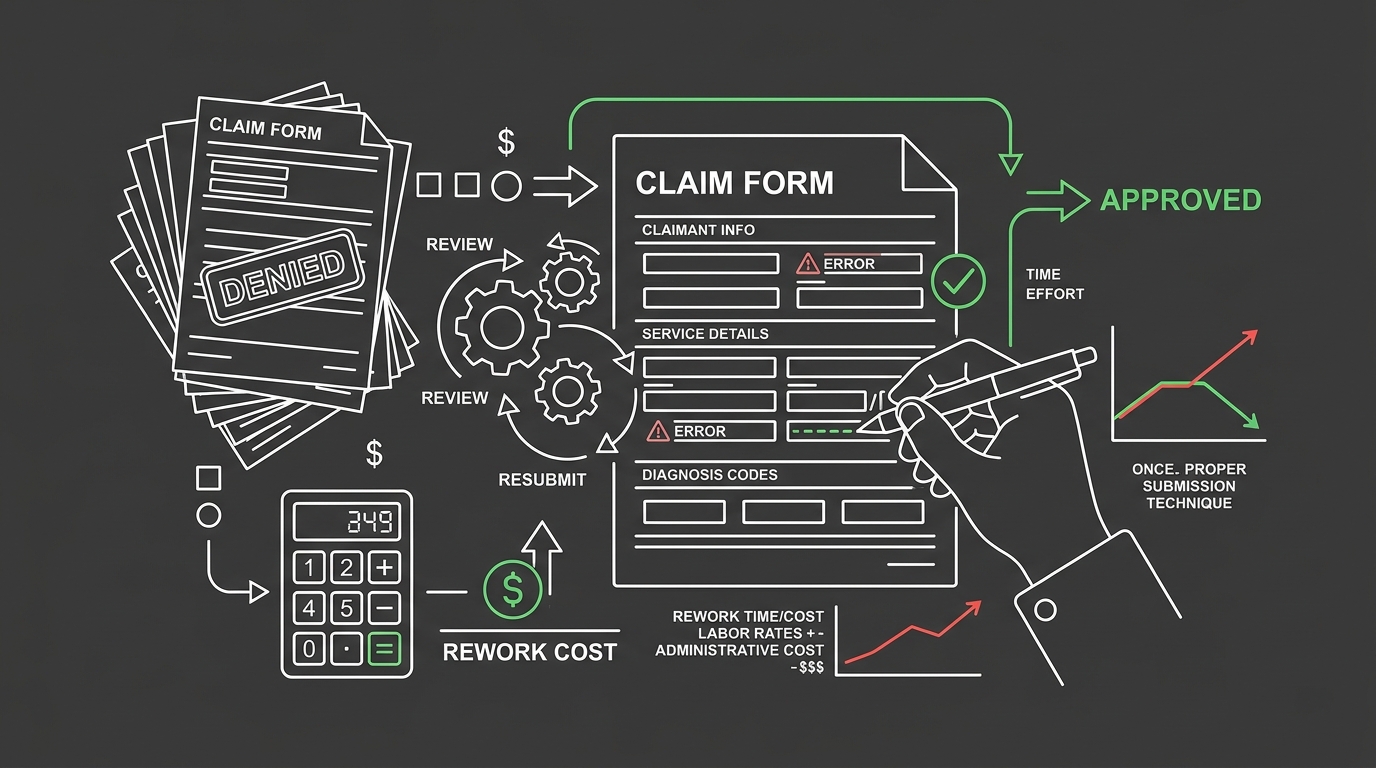
Start with what a denial costs you to fix. According to benchmarking figures from Practice Fusion, reworking one denied claim runs between $25 and $181, depending on how complex it is. A claim that goes out clean and stays clean costs roughly $6.50.
Now set that next to the claim. In Practice Fusion’s words, a $45 claim that costs $60 in staff time to fight is a rational write-off. It also says practices routinely weigh the reimbursement amount against the cost to rework it. For smaller claims, many decide the appeal isn’t worth the effort.
A writer in a Healthcare Financial Management Association (HFMA) article calls appeals a headache. They’re the longest and most expensive route to collect what you’re owed.
A claim isn’t done when it leaves your office. It’s done when the money lands in your account. So judge each appeal-or-write-off choice in recovered dollars, not in claims sent or hours kept busy.
For the full steps, read Handling Denied Chiropractic Claims and Appeals: A Complete Guide. The cost figures above come from Practice Fusion’s page, The Cost of Claim Denials in Medical Billing.
How Often Appeals Succeed
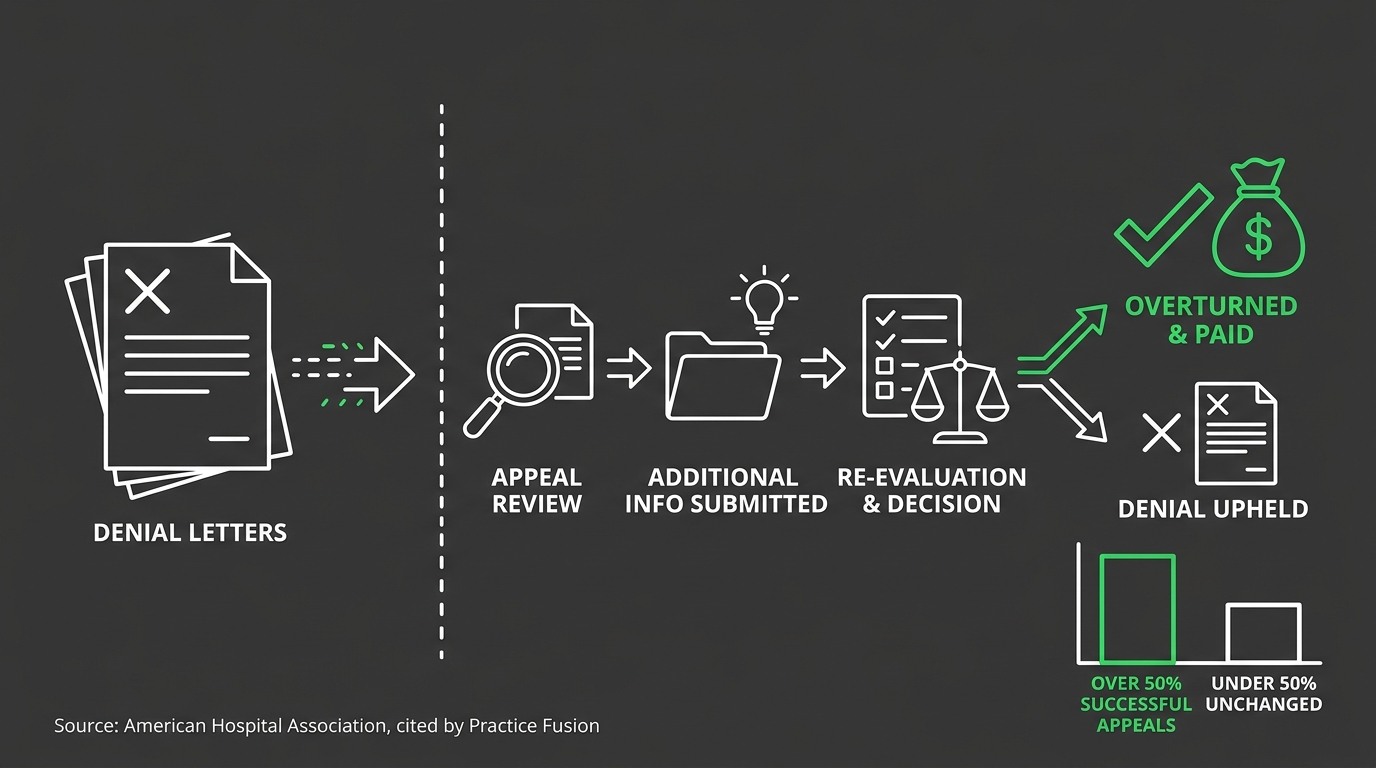
American Hospital Association data, as cited by Practice Fusion, shows that a little over half (54%) of claims denied at first are eventually overturned and paid.
Find-A-Code reports that in 2011, only 4.9% of Part B claim denials were appealed. Of the ones that were, seven in ten (70%) were overturned and decided in the provider’s favor.
An HFMA survey found that over the past two years, the median success rate for provider appeals of denied claims to private health plans dropped from a little over half (56 percent) to a little under half (45 percent). There’s good news too. HFMA says nine in ten (90 percent) of all denials are preventable, and two-thirds of those preventable denials can be successfully appealed.
The Health and Human Services (HHS) Office of Inspector General looked at Medicare Advantage. It found that Medicare Advantage Organizations overturned three out of four (75 percent) of their own denials.
The table puts these rates side by side.
| Payer or setting | Overturn rate | Source |
|---|---|---|
| Initially denied claims | 54% eventually overturned and paid | American Hospital Association data, via Practice Fusion |
| Part B claim denials appealed in 2011 | 70% of those appealed overturned in the provider’s favor | Find-A-Code |
| Provider appeals to private health plans | Median success rate dropped from 56% to 45% over the past two years | HFMA survey |
| Medicare Advantage Organizations’ own denials | 75% overturned by the organizations themselves | HHS Office of Inspector General |
Want more? HFMA’s Strategies for Proactive Denial Management and Prevention goes further. The Medicare Advantage numbers come from the Office of Inspector General report, Medicare Advantage Appeal Outcomes and Audit Findings Raise Concerns About Service and Payment Denials.
What Happens When Denials Go Unworked
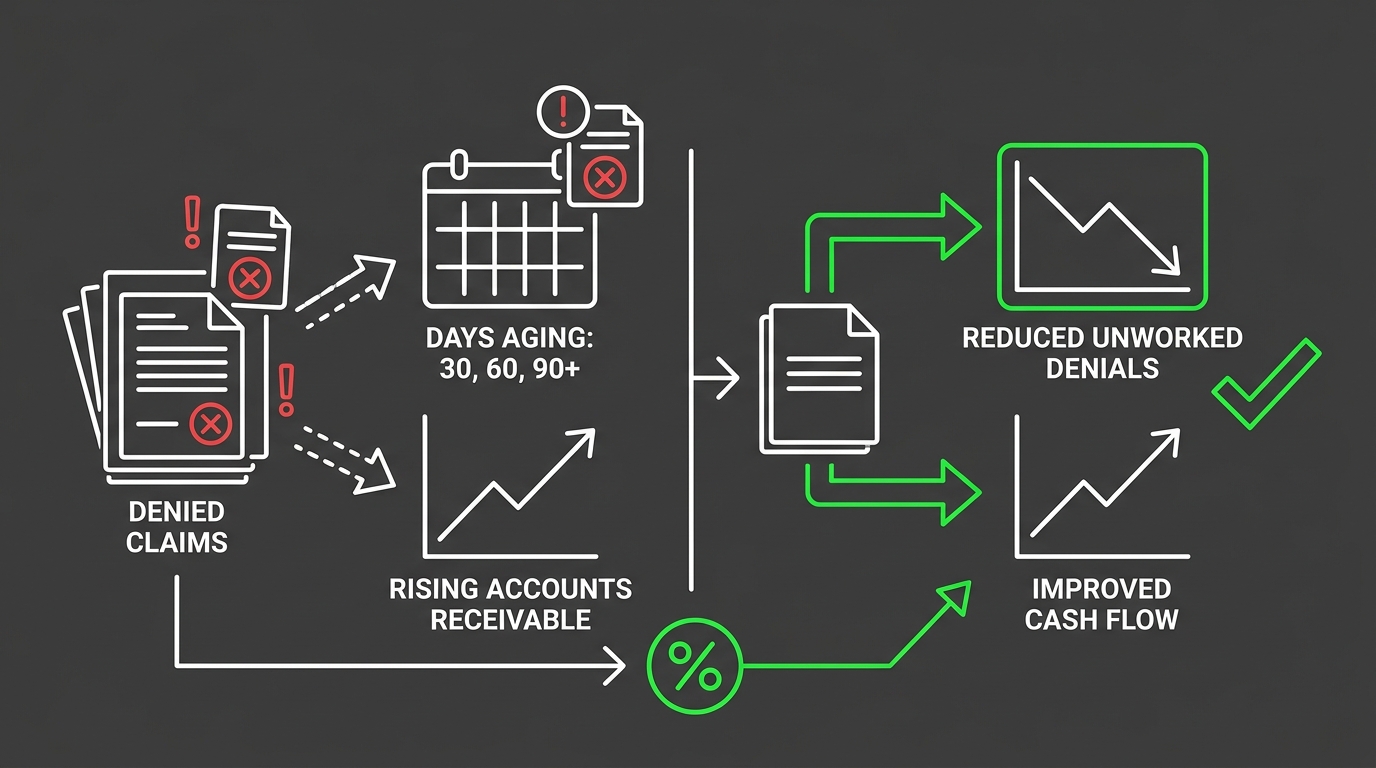
A Change Healthcare study, cited by Physicians Practice, found that roughly 86 out of 100 (86%) denials could potentially be avoided. Yet in about 65 out of 100 (65%) cases, the denied claims never get sent in again.
Physicians Practice reports that research consistently shows that for every dollar that stays unpaid past 120 days, you can expect to recover roughly 10 cents.
The HHS Office of Inspector General looked at Medicare Advantage and found that during 2014-16, people on the plans and their providers appealed only 1 percent (about 1 in 100) of denials to the first level of appeal.
In 2023, according to Practice Fusion, providers spent an estimated $19.7 billion fighting claim denials. More than half of it, about $10.6 billion, went to arguing over claims that should have been paid correctly the first time.
HFMA puts both sides in one line. Failing to appeal a denial will ensure the organization is not paid. But fighting too many bad appeals puts an organization at risk of wasting money that could be spent on prevention efforts.
I don’t pick a billing partner by its fee. When I see a firm competing on being cheap, I expect it to lean on huge piles of easy claims and skip the tough, labor-heavy ones, which are often the claims worth the most. I don’t read what a practice pays its biller as any sign of how much money actually comes in.
For your practice, the takeaway is simple. A denial you don’t work is a denial you won’t be paid for.
The Physicians Practice article is Claim denials, patient collections and the revenue cycle.
When a Denial Is a Fix, Not an Appeal
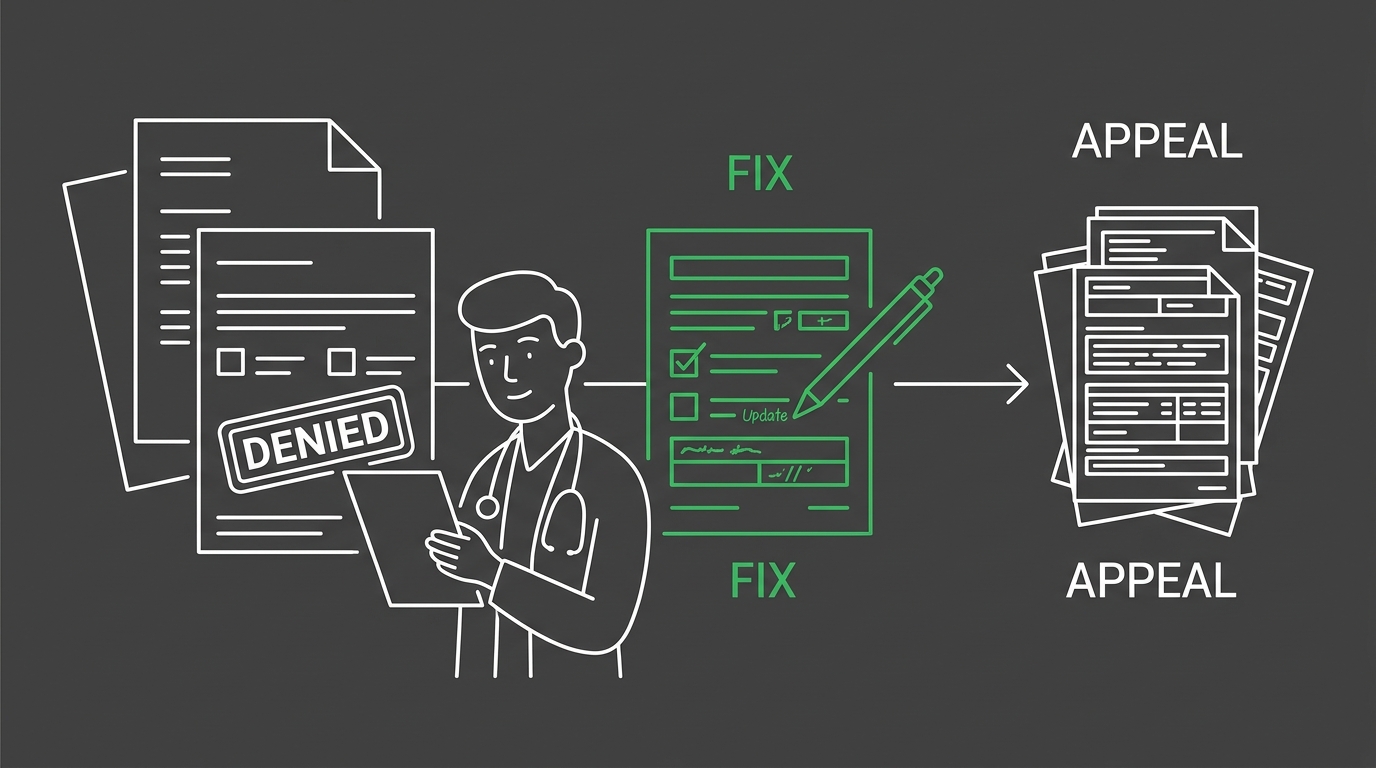
Not every denial needs a fight. Soft denials are claims rejected for problems that can be fixed, like missing information. You can correct them and send them in again. That’s a correction, not an appeal.
At Bushido Billing, people with expertise handle the claims that automation cannot.
Sending the same claim back with nothing changed is a different matter. Read Why Resubmitting an Identical Claim Rarely Overturns a Denial.
Set a Rule Instead of Deciding Case by Case
Practice Fusion says good appeals management means three things:
- Tracking each payer’s appeal deadline so claims you can still recover don’t expire.
- Using template appeal letters for the most common kinds of denials.
- Tagging every denial with a root cause so the same error stops happening again.
A practice-management consultant quoted in Physicians Practice adds a people tip. Designate someone in the office with the analytical temperament to specialize in researching denials and pursuing appeals. Don’t lump that work in with routine claims processing.
HFMA says provider organizations across the United States whose denial prevention programs represent best practices typically appeal 85 to 88 percent of denials.
I treat EHR software as the thing that gets claims out the door, not as a full billing operation. I put denials, appeals and unpaid balances in human hands, because I haven’t seen a tool do that well on its own. I want a person, not the EHR, deciding which denials to fight.
Why Thin Staffing Tilts Practices Toward Write-Offs
About 7 out of 10 (70%) providers dealing with staff shortages report rising denial rates, according to Practice Fusion. The same stretched teams that decide which denials to appeal are the ones trying to keep new claims going out the door.
The Centers for Medicare & Medicaid Services (CMS) site shares one more number. According to one study, the average doctor spends a total of 3 weeks a year on billing and insurance-related tasks.
If your team is short-staffed, that’s the squeeze. The people deciding which denials are worth appealing are also the ones trying to get new claims out.
To see how this work gets done, visit our Medical Billing Services page.
Frequently Asked Questions
How can a practice estimate what denials cost it each quarter?
Multiply your denied claim count by a cautious $25 rework cost. Then add the total value of the claims you wrote off. That’s the method Practice Fusion gives.
What clean-claim rate should a practice aim for?
Practice Fusion says to aim for a clean claim rate of 95% or higher, meaning at least 19 of every 20 claims are accepted on first submission.
Are other practices seeing denial rates rise too?
Yes. A poll of medical group leaders, reported by Physicians Practice, found that six in ten (60%) said their practices’ claim denial rates went up. Only 11% (about one in ten) had managed to bring those rates down.
What does days in accounts receivable measure?
It’s the average number of days it takes for a provider to be paid for a service the provider gave. That’s how hfma.org describes it.
Weigh the Cost Against the Odds
Whether a denial is worth working comes down to what it costs you against what you could get back. Bushido Billing says that question matters most on hard, high-value claims.
Bushido Billing exists to recover money that the industry’s volume-first, automation-forward billing model routinely leaves behind. It says this matters most on hard, high-value claims, where chiropractic practices lose the most money. At Bushido Billing, people with expertise handle the claims that automation cannot.
You can start with us in two ways. One is cleaning up and recovering unpaid insurance claims. The other is account auditing, which is our practice billing audit. Both are starter services, and you can use them without signing up for the full service. Both are on our services page.
Not sure where your unpaid claims stand? Start with an audit. You don’t have to sign up for the full service to do it.
Would you like to talk through your unpaid claims with a person? Book a Call