

Resolving Aged Chiropractic Insurance Balances: A Complete Guide
Learn how to sort, correct, and appeal aged chiropractic insurance balances, from denial types to Medicare Part B appeal levels and deadlines.
The two main types of denials are administrative and clinical, and they are appealed or fought in different ways. Check your documentation to make sure the procedures you billed are supported in the patient health record, then compare your documents to the ACA documentation guidelines. Each state is different, but you typically have 30, 60, or 90 days to appeal. For Medicare, a Medicare instruction numbered 3449 says every chiropractic claim with billing code 98940, 98941, or 98942 and a date of service on or after October 1, 2004 must include the Acute Treatment (AT) modifier if active/corrective treatment is being performed. The AT modifier must not be on the claim when maintenance therapy was provided. Claims without it are treated as maintenance therapy and denied.
Common Reasons Medicare Chiropractic Claims Are Denied
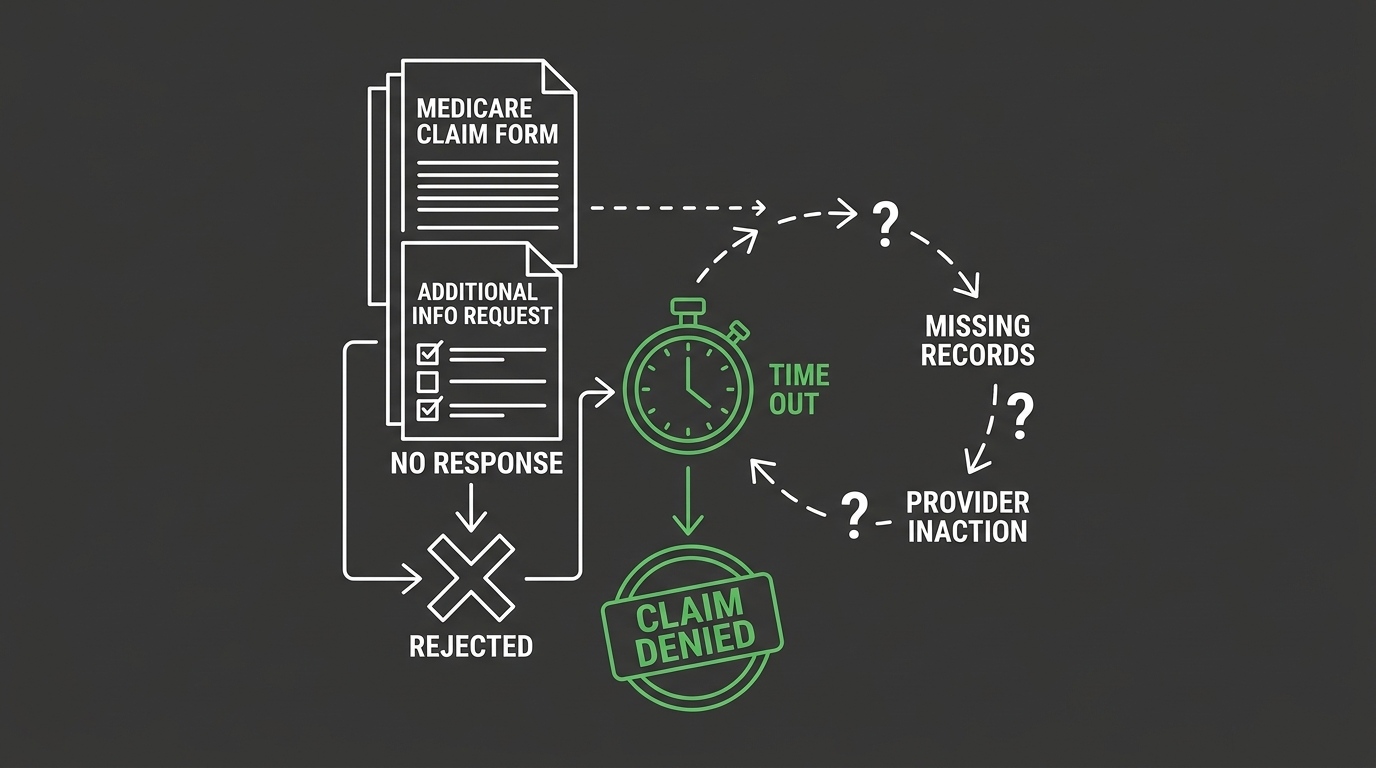
The Centers for Medicare & Medicaid Services (CMS) says failure to respond is a major reason for claim denials. It also names a few other common reasons:
- Missing or inadequate treatment plans
- An unclear chief complaint
- Failure to document all treated spinal regions
That list comes from a Medicare educational tool, the Medicare Documentation Checklist & Guidelines for Chiropractic Doctors (MLN1232664, April 2025, page 5 of 5). Its usage guidelines tell you to check the specific Local Coverage Determination (LCD) for your jurisdiction, because coverage and requirements may vary. They also say Medicare typically reimburses only 1 chiropractic manipulation for a patient each day. The CMS Medicare Learning Network also publishes Chiropractic Services: High Improper Payment Rate within Medicare FFS Part B.
Then there’s the Acute Treatment (AT) modifier. A modifier is a billing code add-on. Medicare instruction 3449 says every chiropractic claim with code 98940, 98941, or 98942 needs it, for dates of service on or after October 1, 2004, when you’re performing active/corrective treatment. If you’ve provided maintenance therapy, the AT modifier must not go on the claim. Leave it off and Medicare treats the claim as maintenance therapy and denies it.
I don’t accept that any billing firm can do chiropractic. The AT modifier, and the line between active care and maintenance care in your notes, is work for someone with chiropractic specialty knowledge. I won’t trust it to a generalist who sees it once in a while.
Sorting a Denial: Administrative or Clinical
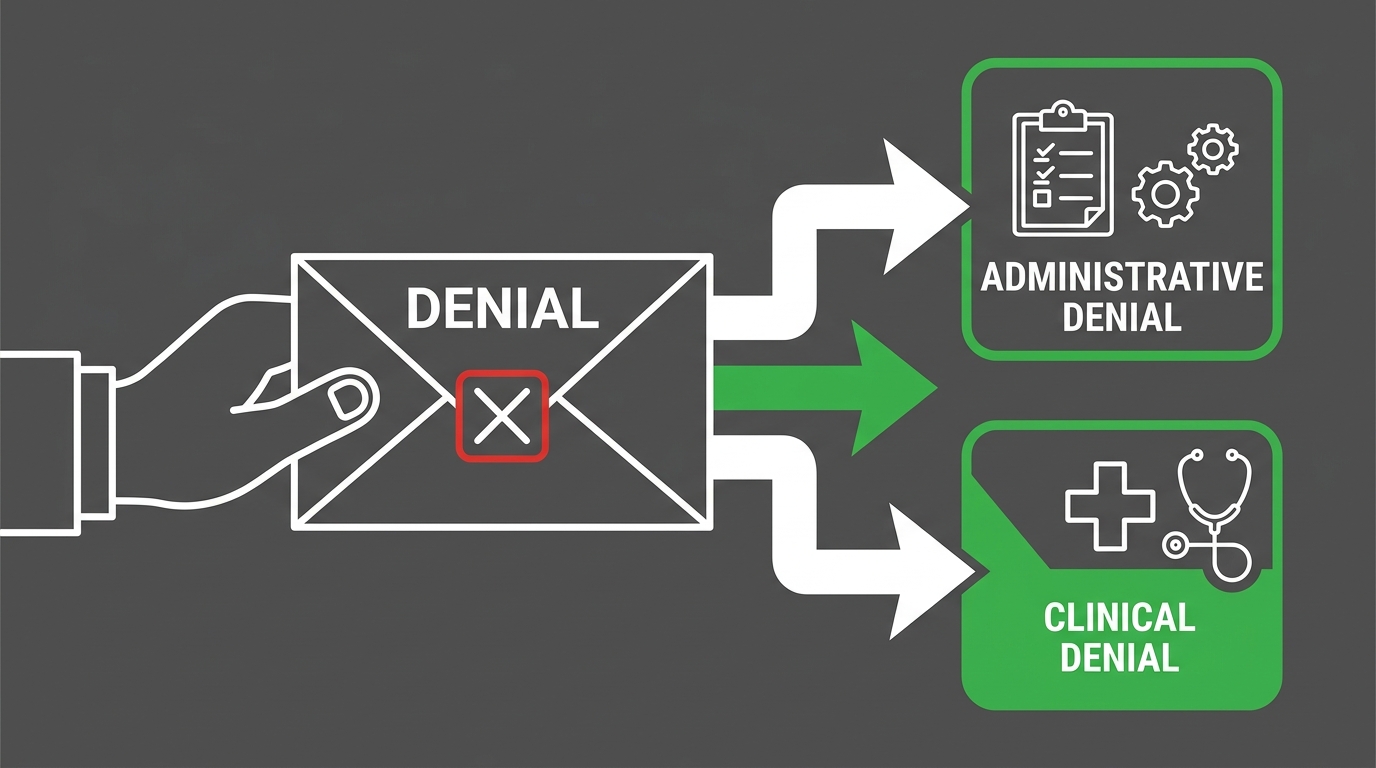
Denials come in two main types, administrative and clinical, and you appeal or fight them in different ways. The Chiropractic Resource Organization (chiro.org) shares this from ACA News in Appealing Claims Denials.
An administrative denial happens when there’s a mistake in the paperwork. A wrong identification number on the claim is one example. A technical error is another.
A clinical denial happens when an insurance company questions whether a procedure or treatment is medically necessary. It also happens when the insurer calls the procedure investigational or experimental. Missing prior authorization is another major reason for a clinical denial. Prior authorization is approval from the insurer before the service.
Correcting a Missing 25 Modifier on a Same-Day E/M Claim
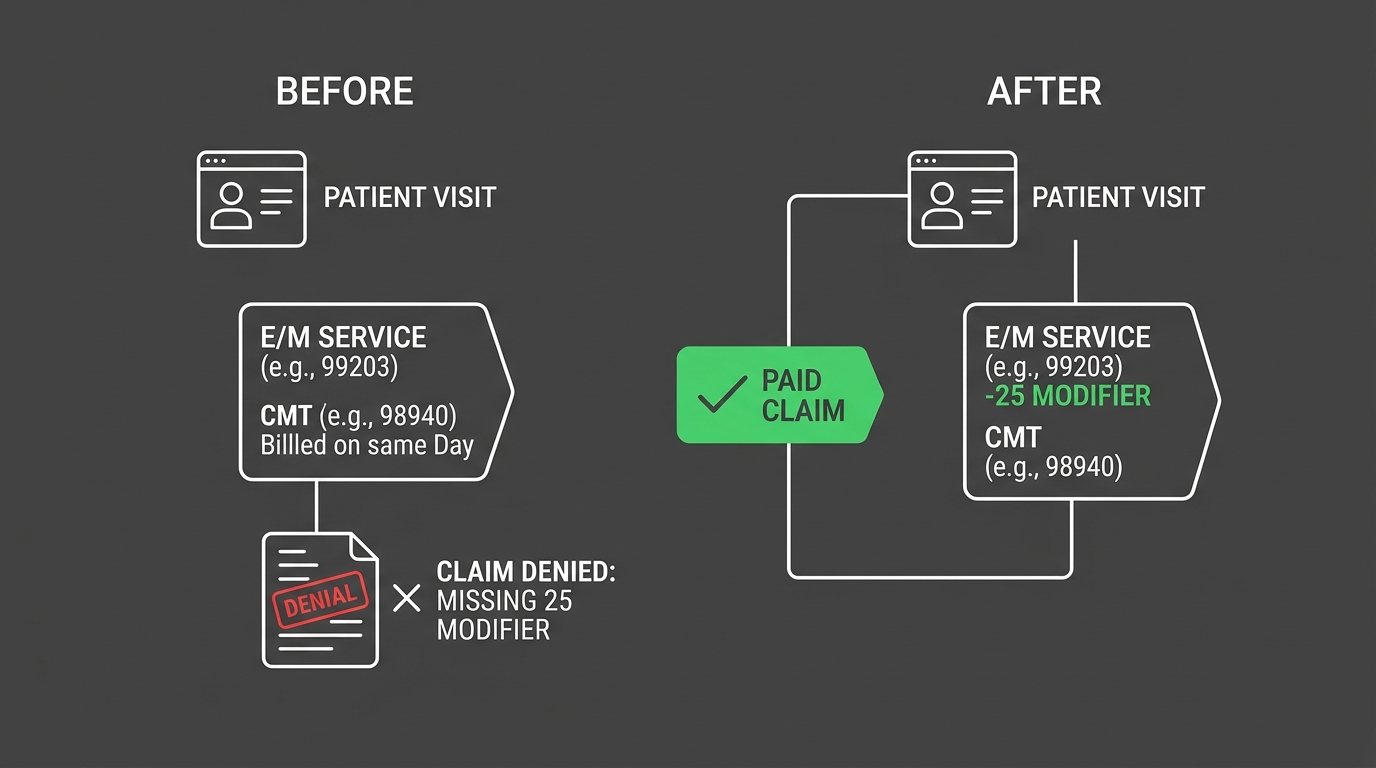
Many insurers will deny a claim that bills an evaluation and management (E/M) code and a chiropractic manipulative treatment (CMT) code on the same day. They believe the CMT code already has an evaluation and management part built into it.
The 25 modifier is an add-on code. If you forget to put it on the claim form, you can send a letter with an explanation and a corrected form.
I’m happy to let software handle routine claims that have no errors, and a missing modifier is a routine fix. When a claim needs judgment, I put a skilled person on it. That means showing why care was medically necessary, or writing an appeal that fits the denial. Technology gets a real role in my work, but a limited one.
Correcting a Medicare Claim After the Filing Limit Has Passed
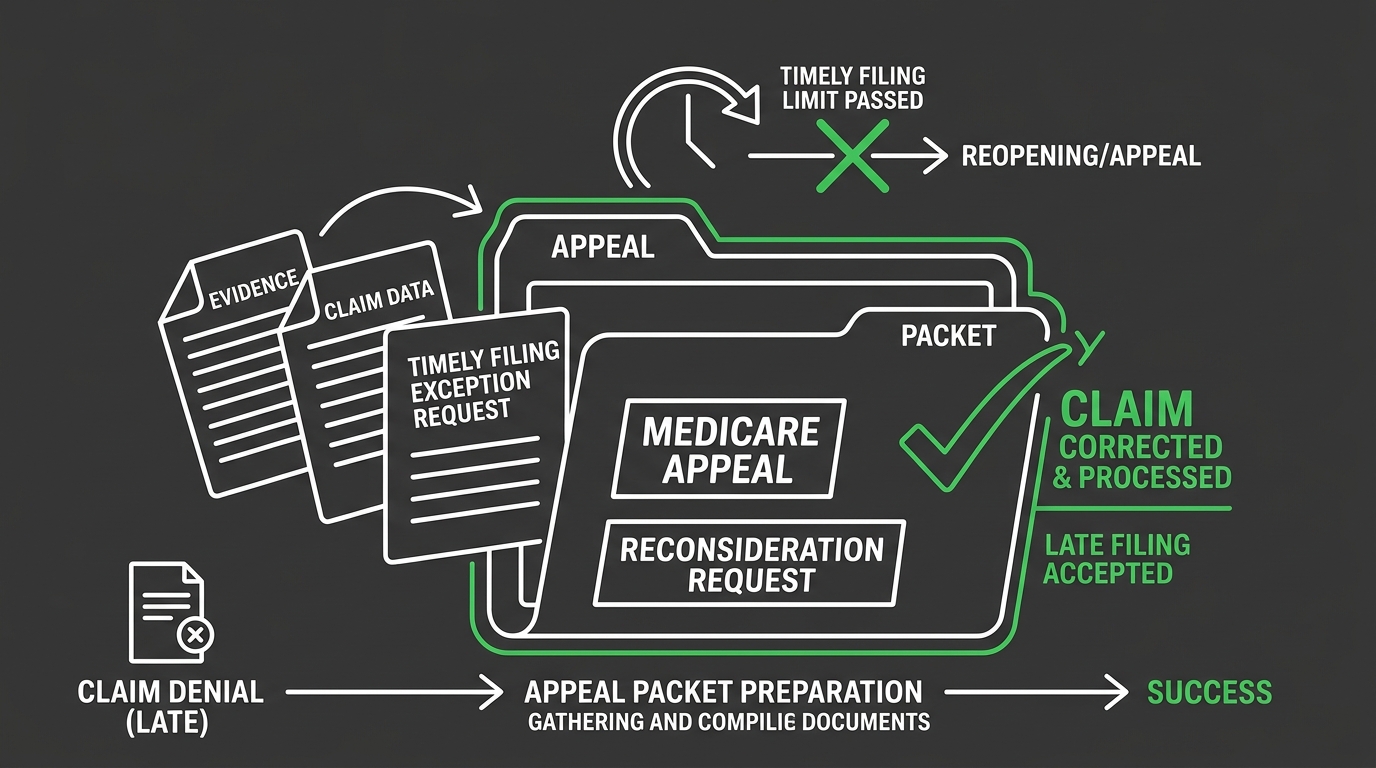
Sometimes you find a mistake after the claims timely filing limit has passed. Noridian Healthcare Solutions (Medicare JE Part A) says an adjustment bill is not allowed then. The provider must use the reopening process to fix the error.
One more rule: you can’t reopen a bill and appeal the same bill at the same time. Pick one path for each bill.
For the filing window itself, see How to Spot a Timely Filing Deadline Before It Expires and Timely Filing Limits by Payer: What Chiropractic Clinics Must Track. For Noridian’s own wording, see Timely Filing – JE Part A – Noridian.
Appealing a Clinical Denial From a Private Payer
Start with the chart. Check that the procedures you billed are supported in the patient health record. Then compare your documents to the ACA documentation guidelines. That advice comes from the Chiropractic Resource Organization (chiro.org), sharing ACA News.
Next, watch the clock. Each state is different, but you typically have 30, 60, or 90 days to appeal. Find your state’s limit and file inside it.
I never count on an EHR for this part. To me it’s a tool that sends claims. It doesn’t read a denial, match the chart to the guidelines, and build the case for why the care was needed. I put a person with good judgment on every clinical appeal, because no EHR writes one.
The Medicare Part B Appeal Levels and Their Deadlines
Medicare has five levels in its Part B appeals process. The table below lines up the first four levels with their filing deadlines and what to know at each one.
| Appeal level | Filing deadline | What to know |
|---|---|---|
| Redetermination (level 1) | 120 days from the initial claim determination; no minimum dollar amount | Contractors generally decide within 60 days of receiving the request |
| Reconsideration (level 2) | 180 days from the redetermination | The request must be in writing |
| ALJ hearing (level 3) | 60 days from receipt of the reconsideration notice | CMS assigns the cases; ALJs have 90 days to decide |
| Medicare Appeals Council (level 4) | 60 days from the ALJ hearing decision or dismissal | The request goes to the Department Appeals Board (DAB) |
At the first level, Dynamic Chiropractic says the person filing the appeal has 120 days from the date of the first claim decision. You don’t need a minimum dollar amount to ask for a redetermination. Contractors will generally give a decision within 60 days after they receive your request. It comes as either a letter or a revised remittance advice (the payment explanation). The 120 days is your time to file, and the 60 days is the contractor’s time to decide.
The second level is reconsideration. You must file a written reconsideration request within 180 days of the redetermination.
Third, you ask for a hearing before an administrative law judge (ALJ). The Chiropractic Resource Organization (chiro.org), sharing ACA News, says you have 60 days from the day you receive the reconsideration notice to file that request. The Centers for Medicare and Medicaid Services gives cases to these judges, and the judges have 90 days to give a decision. So the 60 days is your filing limit, and the 90 days is the judge’s time to decide.
The fourth level is the Medicare Appeals Council. You have 60 days from the date of the ALJ hearing decision or dismissal to file a request with the Department Appeals Board (DAB) for that review.
The first two levels come from Dynamic Chiropractic, in Medicare and the Chiropractic Practice, Part 6.
What Medicare Reviewers Look for in Chiropractic Documentation
The 2024 Medicare Fee-for-Service Supplemental Improper Payment Data, cited by the Centers for Medicare & Medicaid Services (CMS), puts the improper payment rate for chiropractic services at about 1 in 3 (33.6%). The projected improper payment amount is about $178 million ($178.3 million).
The CMS Medicare Learning Network reports why. The auditors said the improper payments came from services that were not medically necessary, were coded wrong, did not have enough documentation, or had no documentation to support what was billed.
In one audit, the HHS Office of Inspector General recommended that Etheredge Chiropractic set up adequate policies and procedures to make sure chiropractic services billed to Medicare are medically necessary and well documented in the medical records. You can read the report, Etheredge Chiropractic Received Unallowable Medicare Payments for Chiropractic Services.
I’d hire a biller who knows chiropractic over one who covers every specialty, because I expect middling results from the generalist. Chiropractic notes have their own documentation standards, the ones reviewers check, and I only trust specialists to meet them every time.
Before Closing a Balance: Appeal Improper Denials, Even One Claim
The Chiropractic Summit recommends and encourages chiropractors to appeal all improperly denied claims, even if it is only one claim. It notes that, historically, many chiropractors do not. That comes from Dynamic Chiropractic.
So before you close a balance, ask a simple question. Was it denied properly, or was it just never worked? Two guides can help you decide: Is an Old Chiropractic Claim Actually Uncollectible, or Just Unworked? and Rework or Write Off: Deciding an Aged Claim’s Next Step.
I don’t call a claim done because it went out the door. I call a balance resolved only when it’s paid and the money is in your account. I judge billing by what’s collected, not by how many claims were sent. To see how this work is done, read about Medical Billing Services.
Frequently Asked Questions
Can a non-participating chiropractor appeal a Medicare denial?
Only in a limited way. Dynamic Chiropractic says physicians who do not take assignment on claims have limited appeal rights. Check whether you took assignment on the claim before you plan an appeal.
Who has to file the Medicare claim, the practice or the patient?
You do. Medicare.gov says the law requires your doctor, provider, or supplier to file your Medicare claims.
What happens if we don’t send the records a Medicare contractor asks for?
One Medicare contractor reported that 75 percent (three out of four) of the records it asked for were not sent in. That leads to an automatic 75 percent denial rate. When records are requested, send them.
Can we add new evidence at a later Medicare appeal level?
Not always. Evidence you don’t submit at the reconsideration level may be left out of later appeal levels, unless you show good cause for sending it late. Put all of your evidence in at reconsideration.
Next Steps for Your Aged Balances
Here’s the path: sort the denial, check the window, correct it or appeal it, then see it through until the payment lands.
Bushido Billing offers full-service insurance billing and revenue cycle management (RCM) for chiropractic practices. We also offer denial management and appeals, and we specialize in billing for chiropractic and allied health practices. For you and your team, we have Medicare 101: Medicare Billing for Chiropractic Offices, a self-paced video course on bushidobilling.com about the Medicare billing process for chiropractic care.
Dr. Karen Hannah, DC, co-founder of Bushido Billing, is a chiropractor. I don’t treat that as marketing. I trust a billing partner more when someone at its head has stood on the clinical side, and I’d tell you to ask for that.
Want help working through your unpaid claims? Book a Call with our team.