

Rework or Write Off: Deciding an Aged Claim’s Next Step
Rework or write off an aged claim? Learn when reopening fits, when to appeal, and how to handle patient balances under a documented hardship policy.
Reopening is the faster route for a clerical or technical error, such as a wrong date of service, a missing modifier, or a transposed National Provider Identifier, where the underlying medical necessity or coverage decision is not in dispute. File a redetermination within 120 days when you have a genuine dispute over medical necessity or coverage. A reopening is a fix-it step that changes a binding decision that produced an overpayment or underpayment, even where that decision was correct on the record available at the time.
What You’re Deciding: Denials, Adjustments and the Cost of Rework
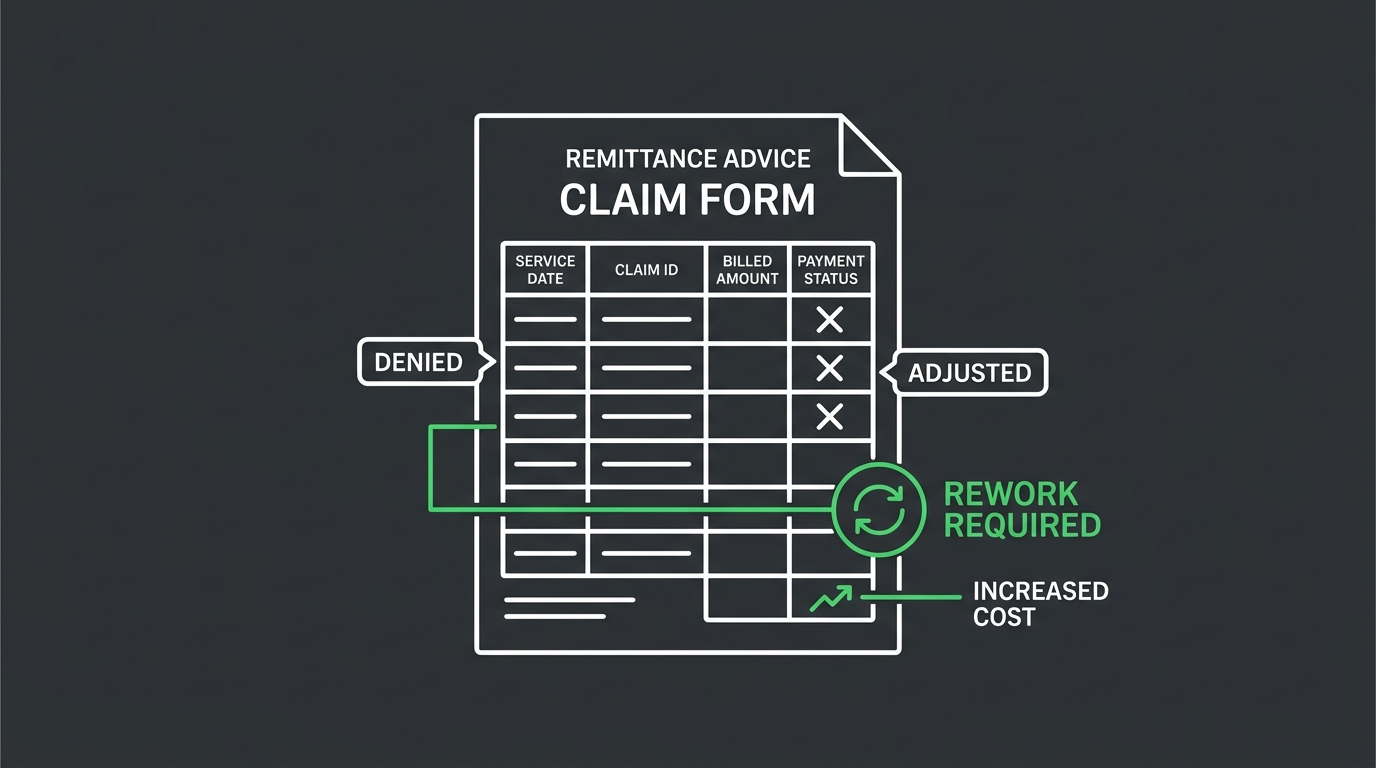
Start with what your remittance advice actually shows.
The Centers for Medicare & Medicaid Services (CMS) says an adjustment is any of these: denied, zero payment, partial payment, reduced payment, penalty applied, additional payment, or supplemental payment. One sending of the remittance advice can report payments and adjustments for multiple claims.
So an adjustment isn’t always a denial. It might be a zero, partial or reduced payment.
The Healthcare Financial Management Association (HFMA) describes a denied claim as one the health plan received and processed, then made a negative decision on.
Next, weigh the work. LigoLab cites an HFMA estimate that the average cost to rework a denied claim is $25. Put that number next to what the claim could still bring in.
I don’t count a claim as done when it goes out the door. It’s done when money lands in your practice’s account. That’s why I judge billing by collections, not by activity or claims sent. I choose rework or write-off by the money a claim can still return to you.
Want a closer look at whether an old claim is truly dead? Read Is an Old Chiropractic Claim Actually Uncollectible, or Just Unworked?
Reopening: The Route for Clerical and Technical Errors
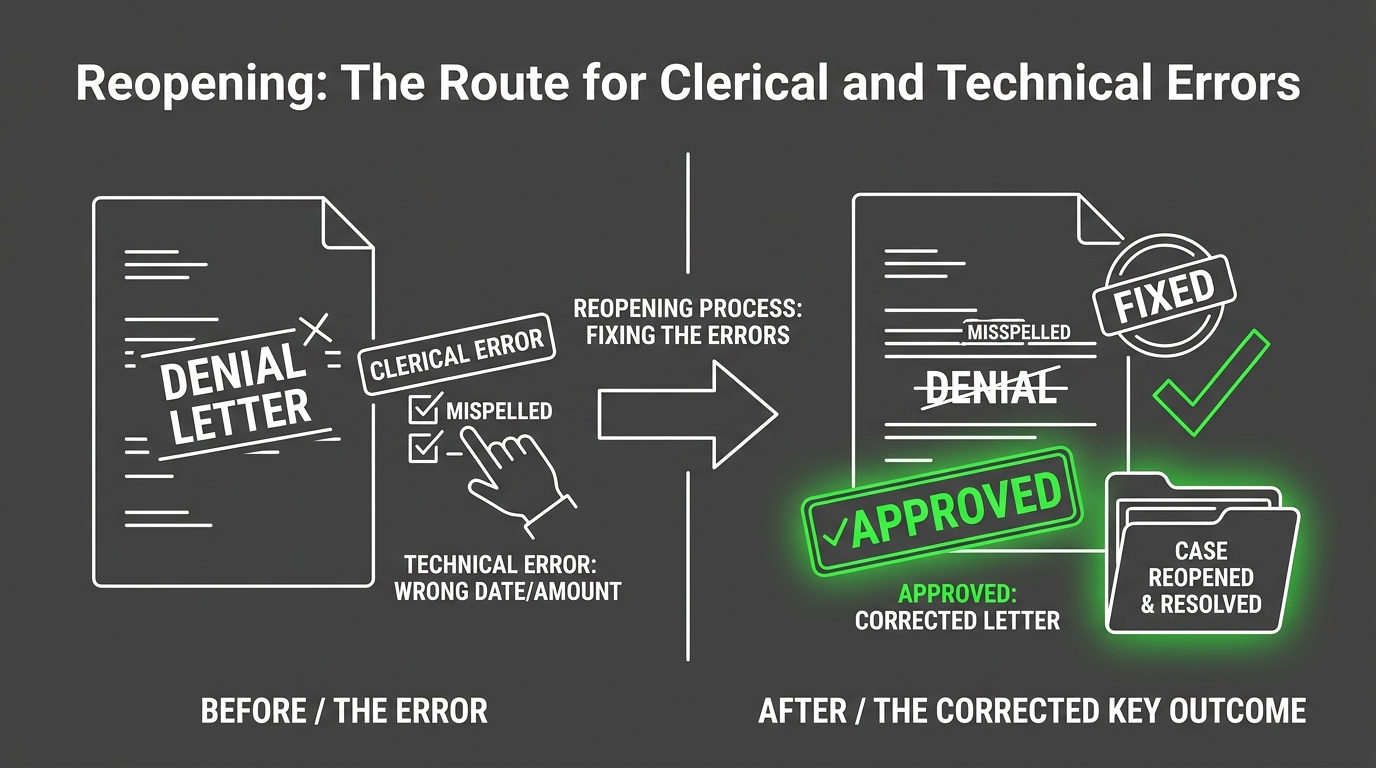
A reopening is a fix-it step. Health Law Alliance explains that it changes a binding decision that produced an overpayment or underpayment. That holds even when the decision was correct on the record available at the time.
Reopening is the faster route for a clerical or technical error. Think of a wrong date of service, a missing modifier, or a transposed National Provider Identifier. It fits when the underlying medical necessity or coverage decision is not in dispute.
Under a federal rule, section 405.980 of title 42 of the federal regulations, a Medicare contractor may reopen a decision for any reason within one year of the first decision. Under section 405.986, reopening for good cause stretches that window to four years. Good cause means new important evidence that was not available when the decision was made, or an obvious mistake that shows on the face of the record.
The table below lines up each situation with its route and the reopening windows.
| Situation | Route | Window |
|---|---|---|
| Wrong date of service, missing modifier or transposed NPI, medical necessity or coverage not in dispute | Reopening (the faster route) | Any reason: within one year of the initial determination; good cause: four years |
| New material evidence unavailable at the time of the determination, or an obvious error apparent on the face of the record | Good-cause reopening | Four years |
| Determination correct on the record available at the time but produced an over- or underpayment | Reopening as a remedial action | Any reason: within one year of the initial determination; good cause: four years |
If you have a long list of old claims, sort them first. How to Triage a Chiropractic AR Aging Report shows one way to do that. For the full source, see Medicare Claim Reopenings Versus Appeals: Which Route Applies from Health Law Alliance.
Appealing When Medical Necessity or Coverage Is Disputed
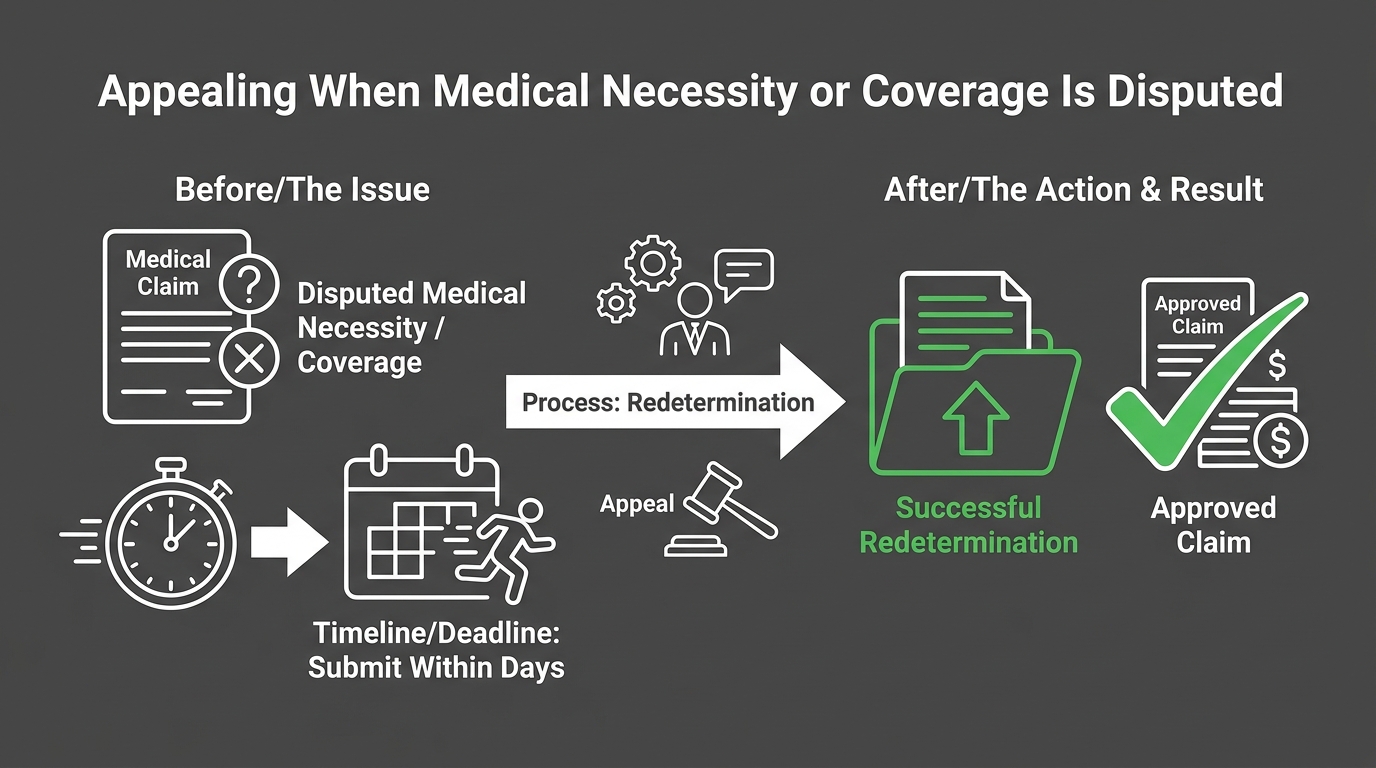
If you have a genuine dispute over medical necessity or coverage, that goes to redetermination, and you file it within 120 days. Resolving Aged Chiropractic Insurance Balances: A Complete Guide walks you through the appeal ladder.
Sometimes a reopening goes forward and produces a revised decision. When it does, section 405.982 of title 42 of the federal regulations says new appeal rights must come with that revised decision. Health Law Alliance covers both routes in Medicare Claim Reopenings Versus Appeals: Which Route Applies.
I let software handle routine claims that have no errors, and I stop it there. When an appeal has to argue why the care was medically necessary, or answer a denial with a tailored letter, I put a skilled person on the writing. Tech gets a real role in your billing, but never the judgment calls.
Patient Balances: The Limits on Waiving Copays and Deductibles
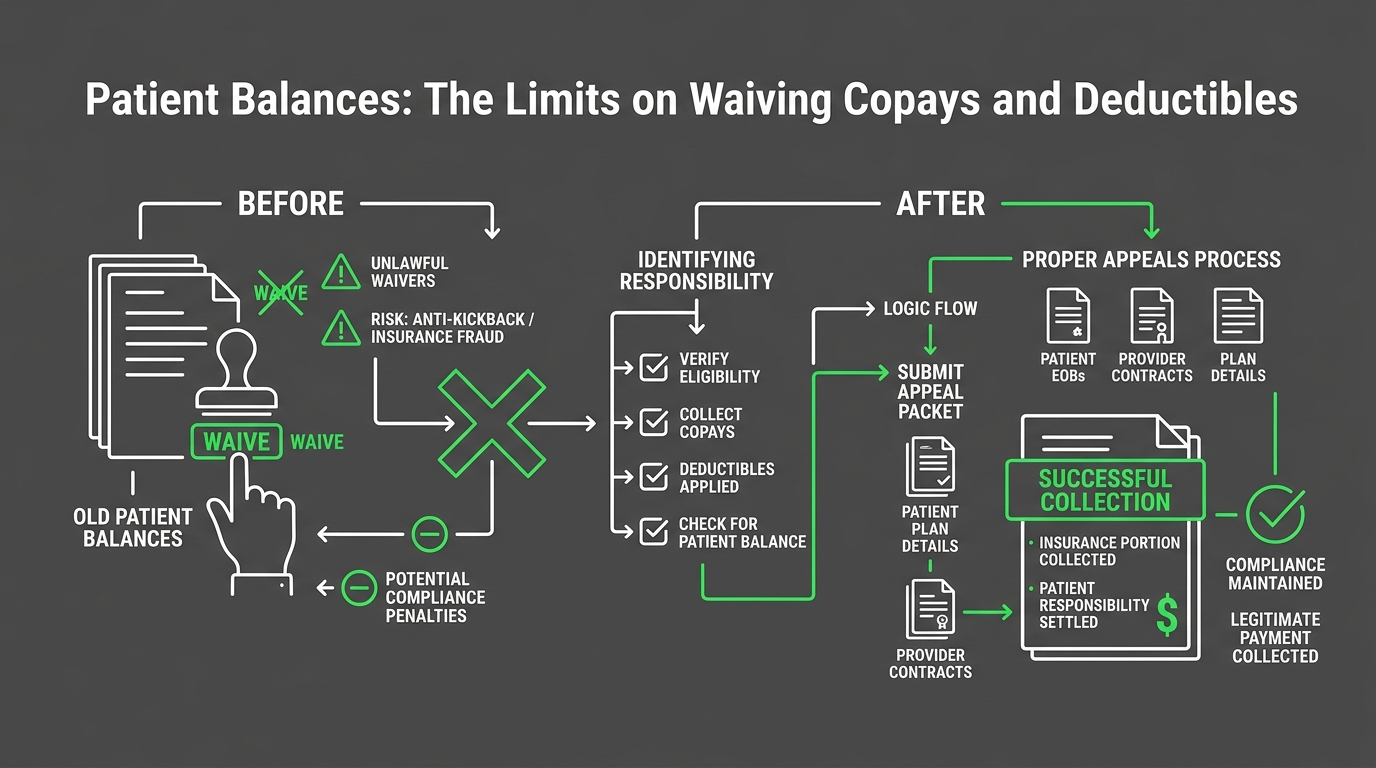
Not every old balance is an insurance problem. Some sit with the patient, and waiving a copay or deductible comes with rules.
A federal law, section 1320a-7a(i)(6)(A) of title 42 of the United States Code, says waiving a coinsurance or deductible is not a prohibited payment or benefit if all three of these are true:
- It is not advertised.
- Your practice does not routinely waive the amount.
- Your practice decides in good faith that the particular patient is in financial need, or has made reasonable collection efforts and failed.
A financial-hardship form that every patient signs, with no individual review of real finances, fails the good-faith requirement. The inspector general’s alert lists that exact practice as a sign of improper waiver.
Your payer contracts matter too. The American Academy of Pediatrics says billing companies should encourage providers to make a good faith effort to collect copayments, deductibles, and non-covered services from patients with federal insurance and patients with private insurance. Many private payers specifically require, in their contracts with practices, that providers collect copayments and deductibles. If you waive these fees for some patients as a policy, you may break the contract with the payer. It might also be insurance fraud.
For more, see Health Law Alliance on Waiving Copays and Deductibles: Beneficiary Inducement and Kickback Risk.
If a Balance Is Reduced: Hardship Policies That Hold Up
When a practice does reduce a balance, the American Academy of Pediatrics says each decision should follow the practice’s policy. It should be backed up with paperwork, such as an application form asking for a financial waiver, and that paperwork should be kept in the patient’s billing records.
The policy itself should rest on specific, objective money rules, such as the government poverty level.
Two sources can help with this. See Professional Courtesy and Discounts for Health Care Services from the American Academy of Pediatrics. See also Office of Inspector General: Waiving Co-pays or Co-insurance (LHD Billing Manual 2021) from the Maryland Local Health Department Billing Manual. To see how Bushido Billing does this work, visit the Medical Billing Services page.
Frequently Asked Questions
Can a Medicare contractor refuse to reopen a claim?
Yes. When a contractor decides not to reopen, that decision is binding, and it cannot itself be appealed. Asking for a reopening also does not extend the deadline to file a redetermination.
Can we ask for a reopening while an appeal on the same issue is pending?
No. Once a party files a valid appeal on an issue, no decision-maker has the power to reopen that issue until the appeal is exhausted. That includes the contractor, the higher appeal reviewers, and the Council.
Does routinely waiving balances after insurance pays create risk?
Yes, it can. Routinely waiving a patient’s copay or balance may seem like a harmless favor. The Maryland Local Health Department Billing Manual says it can actually be a violation of a provider’s contract with insurance companies.
Can a practice discount a patient’s fee without involving the insurer?
Discounts and professional courtesy may not be appropriate unless the total fee is discounted or reduced. In that case, the payer, such as Medicare, Medicaid, or any other private payer, should get its fair share of the discount or reduction.
Rework What Can Be Recovered, and Reduce Balances by Policy
Rework a claim while a reopening or appeal route is still open and the claim is worth more than the rework costs. Use reopening for clerical and technical errors. Use redetermination for a genuine dispute over medical necessity or coverage. Reduce a patient balance only under a documented policy.
Bushido Billing fixes and appeals denied claims through its denial management and appeals service, and gives as-needed billing help through its ad-hoc billing support. Want a second set of eyes on your aged claims? Book a Call