

Active Care vs. Maintenance Billing Under Medicare Rules Today
Medicare treats active and maintenance chiropractic care differently. See why the distinction drives denials, audits, and lost revenue.
Medicare separates chiropractic treatment into two categories, active care and maintenance care, and pays only for the first. Active care, also called active treatment, targets a specific condition with the expectation of measurable functional improvement within a reasonable and predictable timeframe. Maintenance care describes treatment that preserves a current state of function, prevents disease, or promotes wellness once therapeutic improvement has leveled off. Medicare does not cover maintenance care, and billing it as active treatment creates a compliance problem rather than a coding error. The distinction is not determined by the technique performed or the patient's diagnosis alone. It is determined by documentation showing a treatment plan, measurable goals, and evidence of ongoing clinical progress tied to those goals. Claims for active care must include the AT modifier, and that modifier tells Medicare the service is active treatment, though CMS says the modifier doesn't by itself prove the service was reasonable and necessary. A patient can move between active and maintenance status more than once, and each transition must be supported by updated documentation reflecting the current clinical picture. When functional improvement plateaus, continued treatment shifts to maintenance and is no longer billable to Medicare regardless of how the service is coded. Correctly classifying a visit requires evaluating clinical notes, outcome measures, and treatment history together, not applying a single rule to every claim. This evaluation sits at the intersection of clinical judgment and billing compliance, which is why the active versus maintenance distinction has to be applied with care on every chiropractic Medicare claim.
Why Medicare Draws a Hard Line Between Active and Maintenance Care
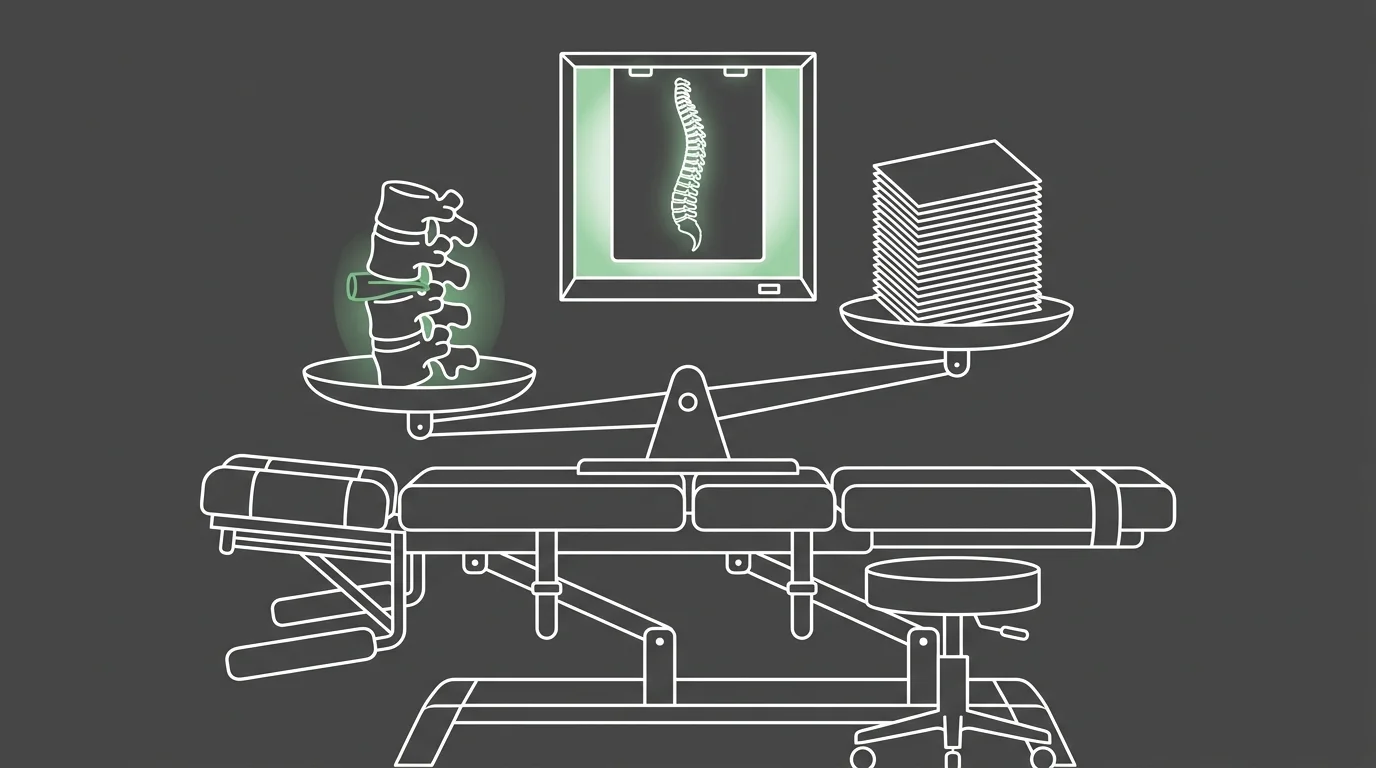
Active care versus maintenance care is a clinical judgment, and Medicare tests it through the documentation on every note.
Active care, or corrective treatment, exists to produce documented functional improvement for an acute or chronic condition, while maintenance care prevents disease, promotes health, and preserves quality of life once that improvement is no longer expected. No generalist billing system was built to catch the exact moment one turns into the other. For the bigger picture, see how Medicare's active treatment billing rules work.
The Subluxation Standard
Subluxation is the anchor diagnosis for Medicare chiropractic spinal manipulation claims. According to CMS, the primary diagnosis must be subluxation, with the level either stated or identified by a term describing it.
Leave the level out and a compliant service becomes an unsupported claim, no matter how well the manipulation was done. Medicare's own documentation standard sets that requirement, visit by visit.
Where the Line Gets Crossed Without Anyone Noticing
A claim rarely fails at the moment of treatment. It fails weeks earlier, in a note that quietly stopped tracking functional progress.
And nobody sees the shift as it happens. An active care adjustment and a maintenance adjustment look exactly alike on the table, so the paperwork is the only place the line ever gets drawn.
Why Generalist Billing Treats Maintenance Care Like an Afterthought
Generalist billing systems are built to move claims fast across specialties that never needed this distinction. So maintenance care gets coded like any other visit, because the workflow has no separate lane for it.
"Any billing company can handle chiropractic claims" is a market assumption, not something the claims data backs up. AT modifier rules and the active-versus-maintenance documentation standard demand specialty knowledge a generalist operation can't apply consistently at volume. That gap usually opens first at the front desk, which is why coaching intake staff on active care billing rules matters so much.
What the Error Rate Data Actually Shows
Federal reviewers find problems in chiropractic claims often. According to CMS, a Comprehensive Error Rate Testing (CERT) Program review in 2024 found errors in 33.6% of chiropractic claims. That figure doesn't name a cause for each error, but it shows how often a claim doesn't hold up once a reviewer reads the record.
A generalist process built for other specialties has no built-in way to catch that kind of gap before a claim reaches a payer. And a claim can only be judged on the record behind it, so the paperwork has to keep up with the care.
How a Flawed Claims Process Fails Under Audit Conditions
A claim passes submission and still fails. That gap is where the real damage shows up.
According to the HHS Office of Inspector General, Medicare inappropriately paid $178 million for chiropractic claims in 2006, representing 47 percent of claims meeting the study criteria. Those claims were paid first and reviewed later.
Submission isn't billing. Getting paid is billing, because a clearinghouse acceptance proves formatting, not medical necessity, and the review that actually tests the note arrives later under audit conditions a generalist process was never built to survive. That gap is the one at the center of what chiropractors get wrong about current Medicare rules.
Why an EHR Cannot Carry This Burden Alone

An EHR submits a claim. It does not argue a denial, work an appeal, or recover aging AR.
That split is where the assumption fails. Software handles the transaction; the judgment calls that keep a claim alive afterward belong to a person.
Medicare Administrative Contractor policy documents compound the problem. The level of subluxation already has to live in the note, and now the code that governs the claim often lives somewhere else entirely.
CMS states that codes are generally no longer included in the Local Coverage Determination and are instead found in Billing and Coding Articles.
No EHR template flags that split on its own. Practices needing help with chiropractic claim denials are usually the ones whose software never knew to look.
| Function | Standalone EHR Software | Specialty Chiropractic Billing Oversight |
|---|---|---|
| Diagnosis coding | Captures the subluxation diagnosis entered at check-in, with no prompt to verify the level is specified | Reviews the note against the Medicare standard before the claim leaves the building, catching a missing level before it becomes a denial |
| AT modifier application | Applies the modifier based on the code selected for the visit, not on whether the documentation supports active treatment | Confirms the clinical note actually demonstrates measurable functional improvement before the modifier is attached |
| Active-to-maintenance transition | Keeps billing the same way visit after visit unless someone manually changes the code | Flags a plateau in the progress notes so the provider can confirm the patient's status before the claim goes out |
| Policy location tracking | Stores a static code set tied to the Local Coverage Determination template it was built around | Tracks the current Billing and Coding Article separately from the Local Coverage Determination and updates claims when it changes |
| Denial and appeal handling | Reports the claim as submitted and considers the transaction complete | Works the denial, builds the appeal, and recovers aging accounts receivable the software never touches |
The Modifier and Coding Mechanics Behind Every Active Care Claim
The AT modifier, the subluxation level, and the right code set all have to line up before the claim goes out, not after it bounces back. That's a judgment call. And it gets made again on every single visit note.
| Documentation Element | Where It Lives in the Record | Why It Matters for the Claim |
|---|---|---|
| AT Modifier | Attached to the claim line for the spinal manipulation code | Tells Medicare the visit is active treatment, but doesn't by itself prove the service was reasonable and necessary |
| Subluxation Level | Stated in the clinical note, tied to a specific spinal region | A missing or unstated level turns a compliant service into an unsupported claim |
| Treatment Plan and Goals | Recorded at the start of active care and updated as care progresses | Shows the service is working toward a defined outcome rather than ongoing comfort |
| Functional Progress Notes | Documented at each visit against the stated goals | Proves improvement is still occurring, which is what separates active care from maintenance |
| Code Selection Reference | Found in the Billing and Coding Article rather than the coverage policy itself | Submitting against the wrong document produces a claim built on the wrong code before anyone reviews it |
How Coverage Determinations Are Actually Structured Today
The code that governs a chiropractic claim does not sit where most billers expect to find it. Coverage policy and billing instruction have been split into separate documents, and a claim built against the wrong one fails before a human ever reviews it.
A biller who only checks coverage rules misses the article that actually lists the codes. That is a structural trap, not a careless mistake. Catching it requires knowing both documents exist and checking both, every time.
Building a Defensible Record for Active Care
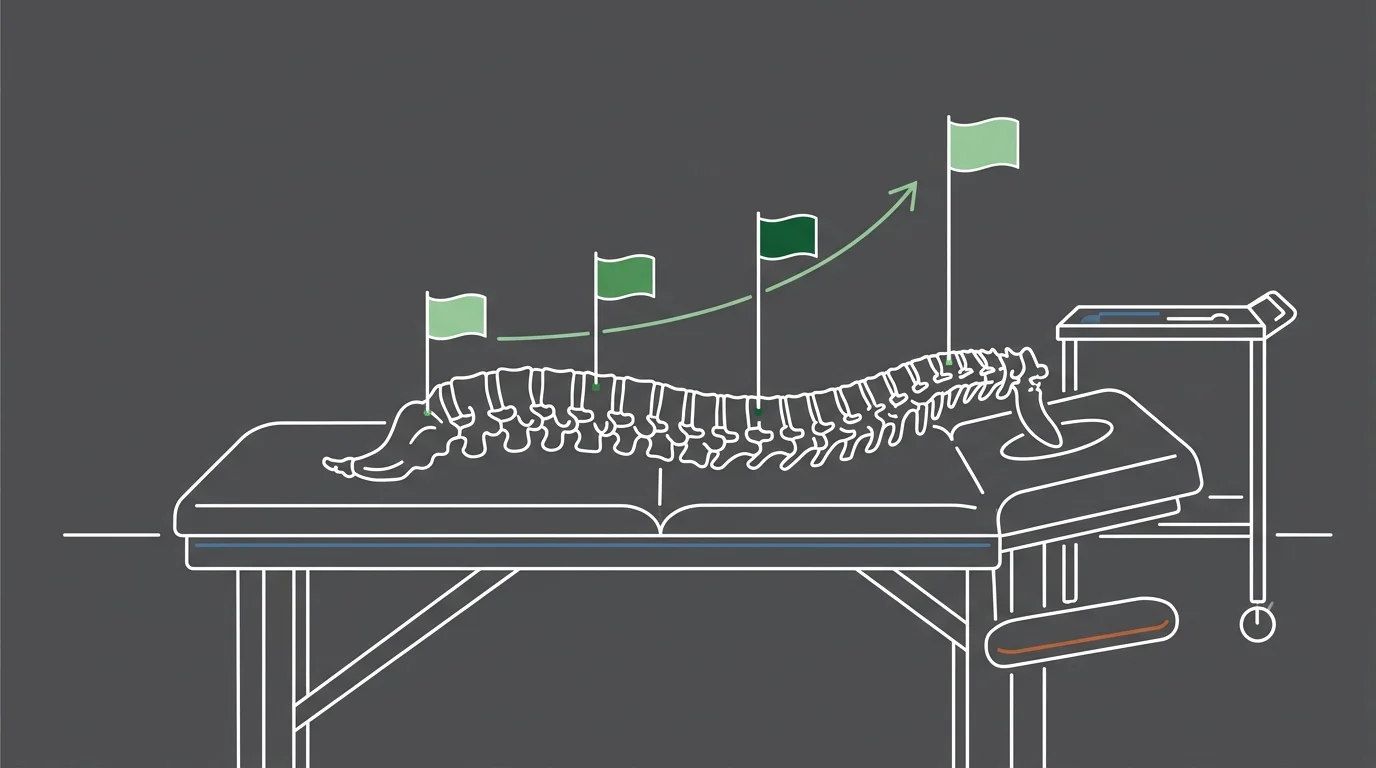
A defensible record does not happen by accident. It is built visit by visit, with every note tying back to the functional goal set at evaluation.
That discipline is clinical, not administrative. Billing confirms it; it does not create it.
| Visit Stage | Documentation Task | Risk If Skipped |
|---|---|---|
| Initial Evaluation | Establish a baseline condition with a specific diagnosis and measurable functional goals tied to it. | No baseline means no standard to measure improvement against, so every later visit has nothing to prove progress toward. |
| Each Treatment Visit | Record the AT modifier basis for that visit and note change against the functional goals set at evaluation. | A visit note without progress tied to the goal reads as maintenance, regardless of what the modifier on the claim says. |
| Periodic Reassessment | Document whether functional improvement is continuing, has plateaued, or has reversed. | Skipping reassessment leaves the transition from active to maintenance undocumented, so the audit finds the gap instead of the practice. |
| Status Change | Update the record the moment care shifts from active to maintenance, or back again if improvement resumes. | An unrecorded shift means claims keep going out coded as active care long after the clinical picture changed. |
| Pre-Submission Review | Confirm the AT modifier, subluxation level, and current code set all match the documentation on file. | A mismatch at this stage is the difference between a clean claim and a denial that triggers a closer look at every other claim like it. |
Sequencing the Record From Evaluation to Reassessment
The record starts at evaluation, with a baseline and measurable goals tied to a specific condition. Each reassessment either documents progress toward those goals or marks the point where progress stopped.
A generalist biller reading that sequence after the fact may not see where the notes stopped showing progress. A chiropractic-focused reviewer checks for that point before the claim goes out, so the provider can confirm the patient's status.
Frequently Asked Questions
These questions come up often. Here are straight answers.
What is the single biggest documentation mistake chiropractors make when billing for active care under Medicare?
The notes keep describing the manipulation and stop tracking progress toward a functional goal. Once progress drops out of the note, the claim has already crossed into maintenance. The code on the claim doesn't change that.
Can a patient's condition be reclassified from maintenance back to active care?
Yes, but only with a new evaluation showing a fresh baseline and a new functional goal. A reclassification without that documentation is just a different label on the same unsupported note.
How does Medicare define a significant functional improvement to justify continuing active care?
Medicare looks for a measurable, documented change tied to the condition being treated, not a general sense that the patient feels better. Outcome measures and reassessment notes are what carry that proof.
What happens during a Medicare audit if documentation for active care is found insufficient?
The claim gets reopened and the payment is reviewed against the note, not the treatment that was actually performed. If the note doesn't support what was billed, Medicare can take the payment back.
Does using an EHR system guarantee compliance with Medicare's active versus maintenance care rules?
No. An EHR can select a code and store a note, but it cannot judge whether that note still supports active care. That judgment call stays with a person who understands the standard, every visit.
The Line Doesn't Move. The Expertise Required to Hold It Does.
The line between active and maintenance care does not move. It's a clinical judgment made on every visit, and Medicare reads every note to see whether the record backs that judgment up.
Holding that line takes someone who already knows where it sits. Not a generalist operation moving claims across specialties that never required this distinction, and not an EHR template waiting for a human to catch what it cannot see.
Bushido Billing holds that line because it specializes in chiropractic and allied health billing, so Medicare's active-versus-maintenance standard isn't an exception bolted onto a generalist process. If a practice's notes keep crossing it, book a call with Bushido Billing.