

Chiropractic Credentialing and Enrollment Tracking: In-House vs Specialized Billing Partner
Chiropractic credentialing determines cash flow. See how in-house enrollment tracking compares to a specialized billing partner and what the choice actually
Chiropractic credentialing and enrollment tracking is the process of verifying a provider's qualifications with insurance payers and then continuously monitoring that provider's status so claims keep processing correctly. Handling this in-house means clinic staff or the chiropractor absorbs application submission, payer follow-up, CAQH re-attestation, and ongoing status monitoring alongside their existing duties. Partnering with a specialized billing entity means those same tasks move to a team whose primary function is managing payer relationships, tracking re-credentialing deadlines, and catching enrollment lapses before they interrupt claim payment. The distinction between the two models is not simply who fills out the paperwork. It is whether credentialing status is monitored continuously or checked only when a claim gets denied. In-house management often treats the initial application as the finish line, leaving re-attestation cycles, fee schedule updates, and payer-specific status changes unwatched between renewal notices. A specialized partner treats enrollment as a standing operational function, tracking each payer relationship on its own timeline and flagging expiration or re-credentialing windows before they lapse. Provider enrollment tracking specifically refers to this ongoing monitoring: confirming that a chiropractor's status with every contracted payer remains active, current, and free of gaps that would trigger automatic denials. The practical difference shows up in claim outcomes. A lapsed enrollment status, an unattested CAQH profile, or a missed fee schedule update can each independently cause a payer to reject claims regardless of clinical accuracy. Whether that gap gets caught proactively or discovered after a rejection depends entirely on which model a practice uses and how much dedicated attention enrollment status receives outside of the initial application period.
What Credentialing Actually Gates in a Chiropractic Practice
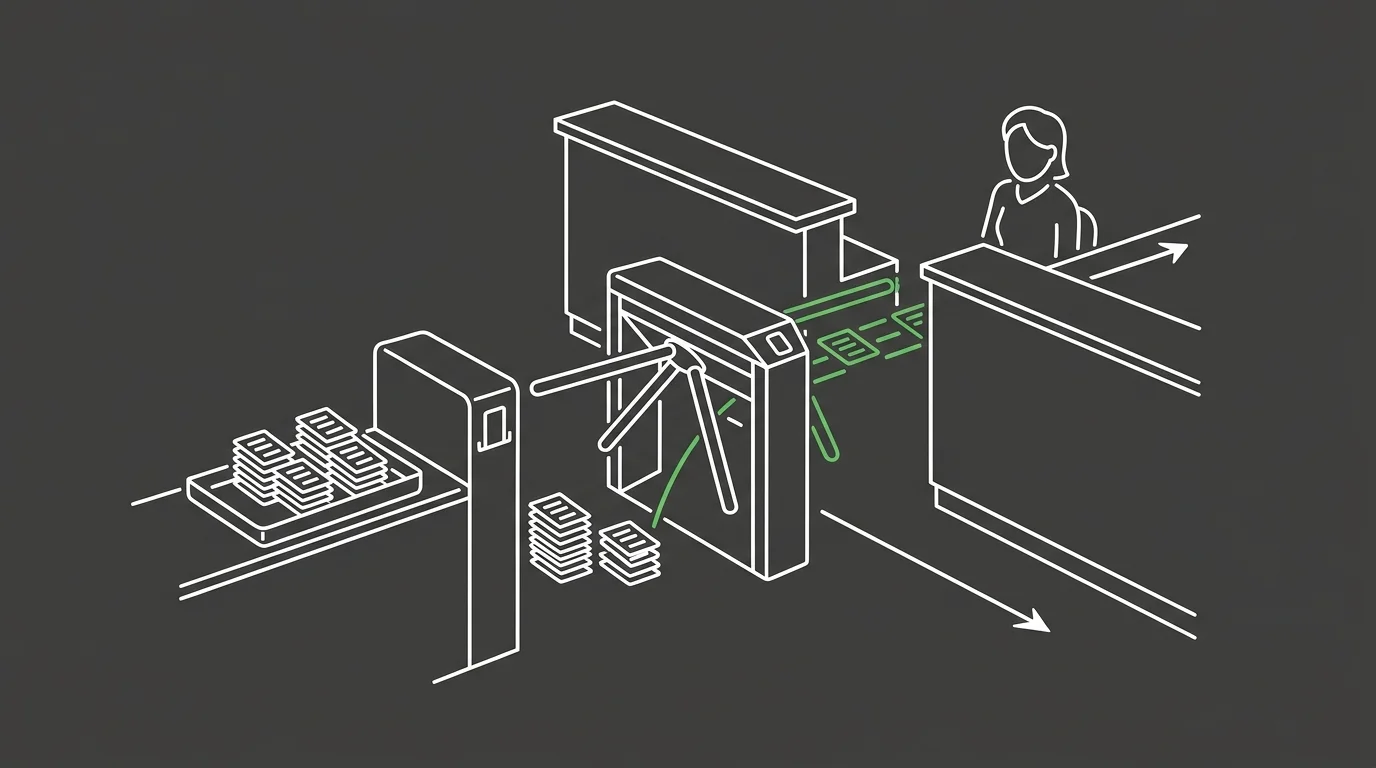
A gateway either lets revenue through or it doesn't. For every chiropractic practice, credentialing is that gateway — and what it gates is very specific.
Credentialing is the foundational gateway to a chiropractic practice's financial stability, determining which patients you can see and how you get paid. One status decides patient volume, reimbursement timing, and whether a payer will accept a claim at all.
The Payer Relationship Behind Every Claim
Every claim rests on a status that gets set once and rarely revisited. That status is the payer relationship itself — and it doesn't hold still just because the application was approved.
Fee schedules shift. Re-attestation windows open and close. Long before a claim ever exposes it, a payer's record of a provider can drift out of sync with reality — a mechanism examined further in how credentialing and enrollment status connect to reimbursement timing.
Where Enrollment Tracking Fits Inside Credentialing
Credentialing and enrollment tracking get treated as the same task. They aren't.
Provider enrollment tracking is the ongoing process of ensuring a chiropractor's status with each payer remains active and compliant, preventing unexpected claim denials. Credentialing opens the gate once. Tracking is what keeps it from swinging shut behind a practice that stopped watching it.
Where the Gate Gets Left Unlocked
An unlocked gate doesn't warn you. It just stays open to risk until something finally forces the issue.
Most practices don't lose enrollment status through a single dramatic error. They lose it through a habit: treating the approval letter as a finish line instead of a checkpoint.
Why 'Submit and Forget' Fails as a Credentialing Method
Submit and forget names the exact habit that leaves the gate unwatched. The application goes in, approval lands, and the file gets closed as if the relationship ended there.
Fee schedules don't move on the same clock as credentialing status, which is why this method misses them so often. A practice tracking approval alone, without watching what happens to reimbursement rates over time, as described in this breakdown of fee schedule renegotiation cycles, is only watching half the gate.
The Enrollment Data Behind the Decision
Two numbers settle what preference can't. One prices the labor. The other takes a choice off the table entirely.
| Role or Rule | Detail | Source Claim |
|---|---|---|
| Medical Biller and Coder | National median annual salary of $51,140 for staff handling billing and coding duties. | AllAlliedHealthSchools salary data |
| In-House Enrollment Staffing Cost | Same $51,140 median salary figure applies whether that staff member's time is spent on claims or on enrollment tracking. | AllAlliedHealthSchools salary data |
| Medicare Opt-Out Rule | Chiropractors are not eligible to opt out of Medicare, so enrollment status with this payer is a fixed obligation. | CMS |
Median Wage vs Enrollment Workload
Here’s the floor. Findings published through this published analysis show the national median annual salary for a medical biller and coder is $51,140 per year. That figure prices the role broadly, not the enrollment-tracking layer on its own — but it sets the baseline for what dedicated in-house attention costs a practice to staff.
Medicare's Fixed Rule for Chiropractic Enrollment
Chiropractors are not eligible to opt out of Medicare. According to CMS, chiropractors are not eligible to opt out of Medicare. That fixed rule means Medicare enrollment status can never be deferred or worked around, the kind of standing obligation covered in what distinguishes generalist enrollment vendors from chiropractic-specific support. The Bureau of Labor Statistics reported that the median annual wage for chiropractors was $79,200 in May 2025.
How an Enrollment Tracking System Is Actually Built

A tracking system is not software. It's a discipline applied to every payer relationship a practice holds, checked on a schedule instead of a hunch.
| Function | In-House Team | Specialized Partner |
|---|---|---|
| CAQH Profile Maintenance | Updated when someone remembers, often only after a payer flags it as expired | Reviewed on a standing schedule so attestation windows never lapse unnoticed |
| Re-Credentialing Deadlines | Tracked informally, if at all, alongside the clinician's existing clinical workload | Logged per payer with dedicated attention outside of any other role's duties |
| Fee Schedule Monitoring | Checked reactively when reimbursement looks off on a submitted claim | Watched continuously against each payer's own timeline, separate from credentialing status |
| Payer Status Verification | Confirmed at the point of initial approval, then rarely revisited | Verified on a recurring basis to catch lapses before a claim is ever submitted |
| Denial Root-Cause Review | Investigated case by case after a claim already bounces | Fed back into the tracking system so the same gap does not recur |
The Components of a Tracking System That Doesn't Drift
The components stay the same regardless of who runs them. A current CAQH profile, a calendar of re-attestation and re-credentialing windows, a record of each payer's fee schedule, and a standing check for lapses before a claim ever gets submitted. Drop any one piece and the gate stops being watched.
In-House Team vs Specialized Partner: Structural Comparison
Handling enrollment in-house or with a partner isn't just a cost question. It's a strategic call about where a practice's limited time and attention actually goes. That comparison, and what each model demands day to day, gets broken down in Billing Services.
How Silent Denials Start at the Credentialing Desk
A denial rarely announces itself as a credentialing problem. It shows up as a rejected claim, weeks after the actual failure occurred at the enrollment desk.
The Mechanics of a Status Lapse
A status lapse starts quietly. A re-attestation window closes, or a fee schedule updates, and nobody with eyes on that payer relationship notices. The claim submitted afterward gets denied, and the denial reason rarely points back to the real cause. By the time anyone traces it, the gate has already been shut for weeks.
Running the Enrollment Calendar Without Losing a Payer Date

An unwatched gate doesn't hold open on its own. It shuts the moment a date slips past unnoticed.
An enrollment calendar keeps every payer date in one view — so a practice sees the deadline coming instead of finding it in a denial.
| Cycle Task | Trigger | What Lapses Without It |
|---|---|---|
| CAQH Re-Attestation | Payer requires periodic profile confirmation on its own cycle | Profile goes stale, and payers begin treating claims as unverified |
| Re-Credentialing Window | Payer contract nears its renewal or expiration date | Enrollment status quietly expires, and claims submitted after that date deny |
| Fee Schedule Review | Payer updates its reimbursement rates independent of credentialing status | Claims keep processing but reimburse against an outdated rate |
| Medicare Enrollment Check | Provider information or practice location changes require reporting | Medicare enrollment record drifts out of sync, risking rejected claims |
Building the Master Enrollment Calendar
The master calendar starts with every payer relationship a practice holds, each one logged with its own credentialing anniversary and re-attestation window.
CAQH status, fee schedule review dates, and Medicare enrollment records all sit on that same calendar. Nothing gets tracked from memory.
The Re-Attestation and Re-Credentialing Cycle
Re-attestation and re-credentialing don't run on one shared clock. Each payer sets its own cycle, and missing either one reopens the exact gap this calendar exists to prevent.
A practice that tracks these dates as they arrive, rather than reacting after a claim bounces, keeps the gate open on every payer it depends on.
Frequently Asked Questions
A few questions come up on nearly every payer relationship a practice holds. Here's what actually answers them.
How long does it typically take for a chiropractor to get fully credentialed with major insurance payers?
Timelines vary by payer and by how complete the initial application is. What matters more than the exact wait is whether someone is tracking the file's status the entire time, not just at submission.
What are the most common mistakes a chiropractic office makes when managing credentialing in-house?
Treating the approval letter as the finish line is the failure that shows up most. Fee schedule changes, re-attestation windows, CAQH updates — they all go unwatched the moment attention moves somewhere else.
Is a CAQH profile mandatory for chiropractic credentialing with commercial insurance?
Most commercial payers require a current CAQH profile before they will process credentialing. An outdated or unattested profile can stall an otherwise complete application indefinitely.
How often do chiropractors need to go through re-credentialing with insurance networks?
Re-credentialing runs on each payer's own cycle, not one shared clock. Every contracted payer sets its own window, and miss one and you've reopened the exact gap continuous tracking exists to close.
Can a new chiropractor start seeing insured patients before credentialing is complete?
See patients before credentialing is done and reimbursement is at risk. A claim built on an unapproved status is a claim built to be denied, no matter how clean the clinical work is.
Are chiropractors able to opt out of Medicare like some other providers?
No. Medicare hands chiropractors no opt-out path the way it does some other provider types. That fixed obligation makes continuous enrollment tracking with Medicare a standing requirement, never a discretionary one.
What This Means
The gate doesn't ask permission before it closes. It closes on schedule, whether or not anyone is watching.
The choice between in-house and a specialized partner was never really about cost. It's about which model treats enrollment as a standing function instead of a finished task, and which one keeps every payer date in view before it lapses.
A disciplined system watches the gate continuously. That's the difference between credentialing as paperwork and credentialing as the revenue mechanism it actually is, and it's worth examining how that discipline applies to a specific practice's payer mix — see how Bushido Billing approaches credentialing and enrollment tracking.