

How Can a Doctor Regain Control of Their Billing Without Doing the Work?
A chiropractor regains billing control by embedding a dedicated specialist whose performance-based model makes proactive communication a structural requirement. The doctor’s job is to read the instruments – weekly AR updates, denial pattern reports, claim status – not to turn the wrenches.
That distinction matters. Delegation without abdication requires two things.
First, a billing partner with genuine chiropractic expertise. Someone who understands AT modifier rules, the documentation line between active and maintenance care, and which records federal audits scrutinize most closely.
Second, a communication structure that delivers visibility on a fixed schedule. The doctor should always know what is happening – without needing to ask.
This is not the same as stepping back and hoping everything runs itself. EHR administrative overhead is a documented driver of clinical burnout, and federal programs exist to reduce that burden because the problem is systemic. Handing billing to a volume-first operation that only calls when something breaks does not solve the burden. It transfers the anxiety without transferring the accountability.
The model that works assigns one dedicated biller to the practice. It aligns that biller’s compensation to collections, not submission volume. And it requires structured weekly updates – regardless of whether claims are flowing cleanly.
When communication is non-negotiable and expertise is specialty-specific, the doctor gets what they need: reliable visibility without the administrative load.
Control does not require doing the work. It requires knowing – at any point – exactly what is happening with the practice’s revenue.
What ‘Billing Control’ Actually Means for a Practice Owner
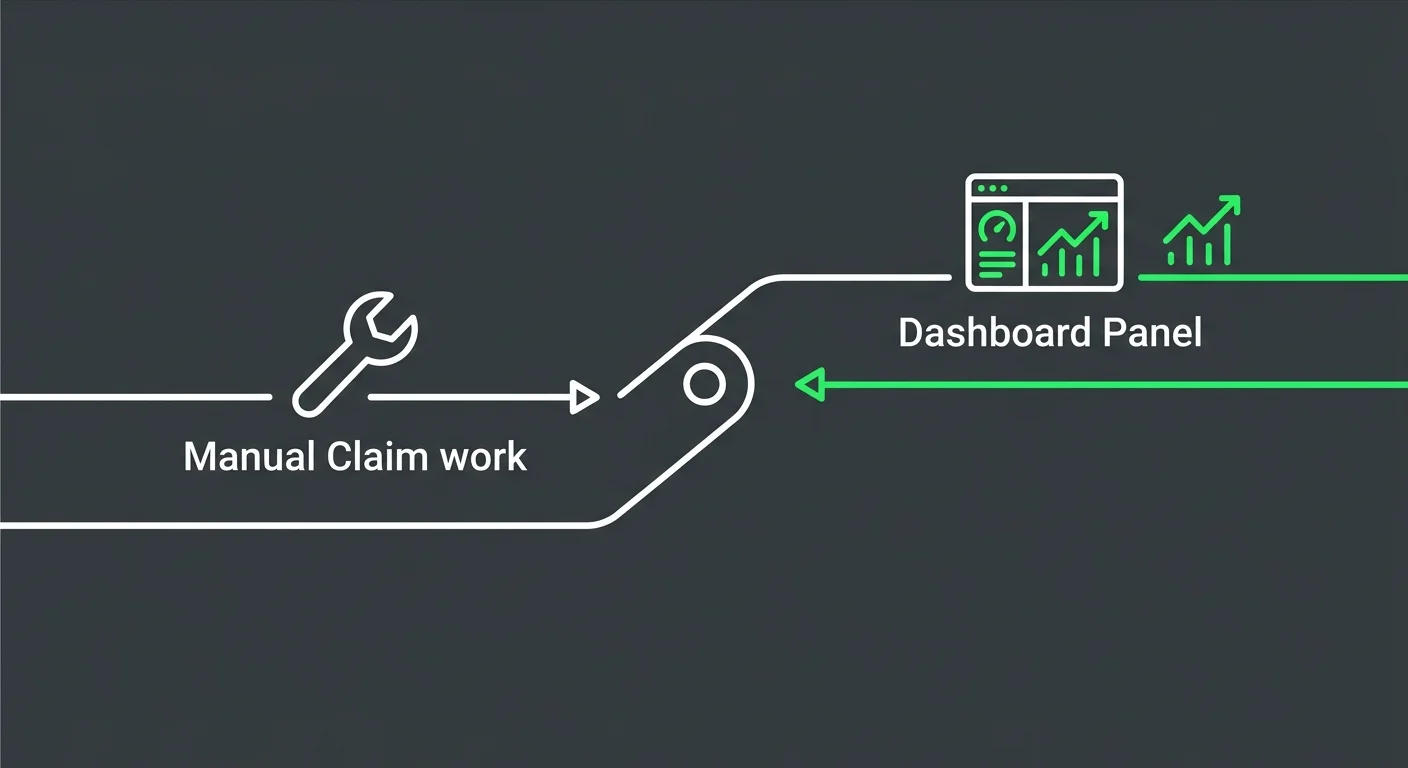
Most practice owners think billing control means knowing what got submitted.
That’s not control. That’s a submission log.
Real control means knowing what was paid, what was denied, and why – and exactly what is being done about it.
It means a problem surfaces before it becomes a cash flow crisis. Not after you’ve already felt it.
EHR documentation and insurance paperwork already consume a disproportionate share of a provider’s working week(https://pubmed.ncbi.nlm.nih.gov/38130797/). The goal of regaining billing control isn’t to add another task to that stack.
It’s to replace involvement with informed oversight. Those are not the same thing.
The Difference Between Doing the Work and Owning the Outcome
Think about a pilot at altitude. They don’t fix the engine mid-flight.
They read the instruments – fuel, altitude, pressure – and trust the systems behind those readings. The work belongs to the system. The oversight belongs to the pilot.
Billing works the same way.
The doctor’s job isn’t to touch the claims. It’s to read the instruments – and know, on a fixed schedule without having to ask, exactly what is happening with the practice’s revenue.
Owning the outcome means the numbers are yours to understand. Not yours to produce.
And that distinction has real consequences. Whether you have a dedicated biller versus a general billing pool determines how thoroughly your denials get worked. That’s not abstract. It’s the difference between revenue that comes back and revenue that quietly ages past the point of recovery.
Visibility vs. Involvement: Two Things Most Doctors Conflate
Here’s what costs practices the most: the assumption that stepping away from billing tasks means losing visibility.
It doesn’t. Those are two separate things.
Involvement means doing the work – pulling reports, chasing denials, verifying claims.
Visibility means getting structured, accurate information about what’s happening – without executing any of it yourself. One drains your week. The other runs your practice.
Eighty percent of clinic engagements at Bushido Billing start the same way – unworked aging AR, no follow-up, complete silence from the current billing relationship.
The practice wasn’t doing the billing work. But it also wasn’t receiving the information it needed to know billing was failing. That’s not a workload problem. That’s a visibility problem.
A structured, performance-aligned model closes that gap by making reporting non-negotiable – not a favor your billing partner does when they get around to it.
| Control Dimension | What It Looks Like When Working | What It Looks Like When Broken |
|---|---|---|
| AR Visibility | Aging report reviewed weekly – claims flagged by age bucket, payer, and status before they become unrecoverable | AR report exists but nobody reviews it – problems surface only when cash flow drops |
| Denial Transparency | Denial reasons tracked by pattern, communicated proactively, and worked with a documented appeal strategy | Denials accumulate silently – the practice learns about them when a payer closes the appeal window |
| Communication Cadence | Fixed weekly update delivered on schedule – no chasing, no silence, no waiting for a crisis to prompt a conversation | Updates arrive only when something goes wrong – or not at all |
| Performance Alignment | Biller compensation tied to collections – the billing partner’s incentive is revenue recovery, not submission volume | Biller measured by claims sent, not claims paid – high-friction denials get deprioritized because they cost more to work |
| Documentation Accountability | Active versus maintenance care distinctions documented correctly on every claim – modifier requirements met before submission | Documentation errors surface after denial – corrections reactive, not proactive, and sometimes past the filing deadline |
| Specialty Expertise | Biller understands chiropractic-specific rules – AT modifier requirements, personal injury lien workflows, payer-specific coding nuances | Generalist handles chiropractic claims the same way it handles any specialty – gaps in knowledge produce avoidable errors |
Why Stepping Back from Claims Usually Means Stepping into the Dark
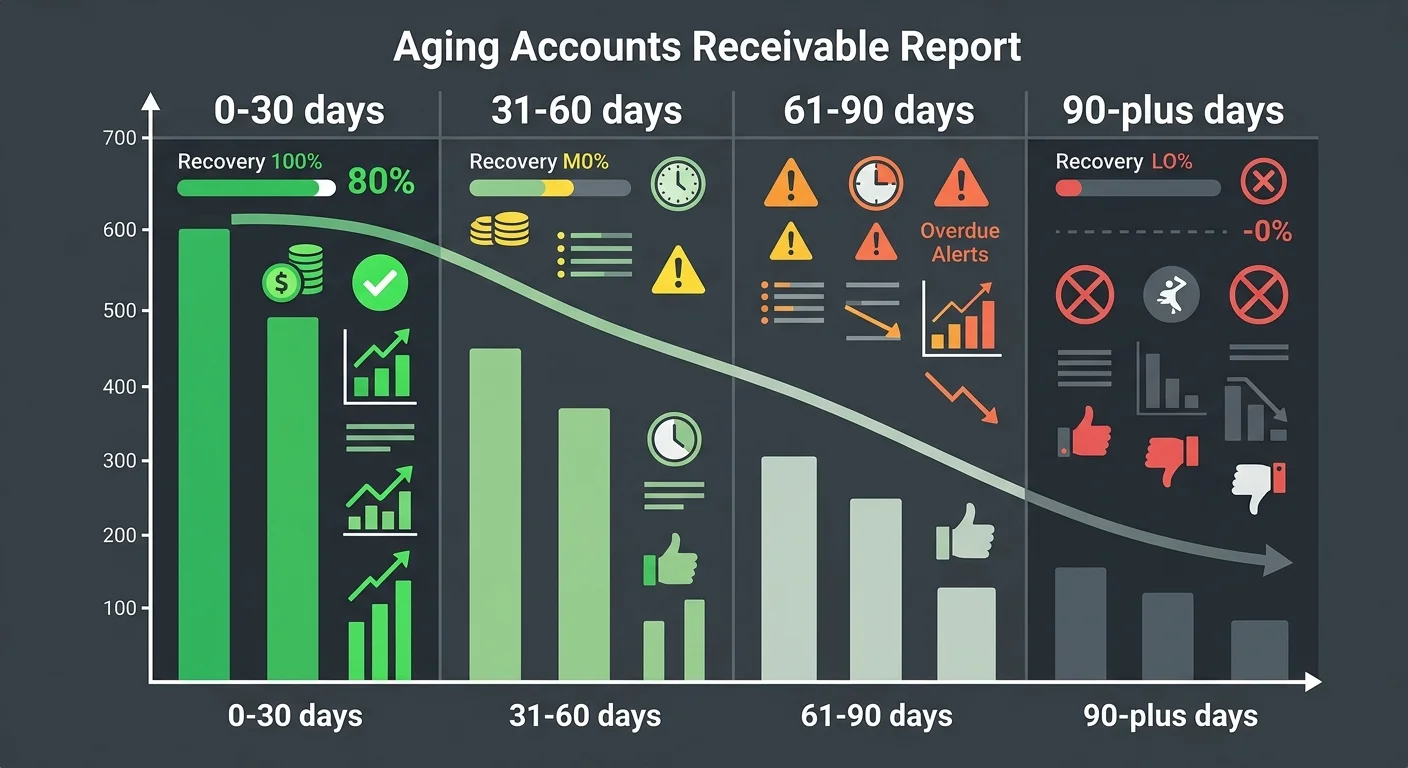
Stepping back from billing isn’t what kills a practice’s revenue visibility.
Handing it to a relationship with no reporting structure is.
Delegation isn’t the problem. The problem is what happens when nobody has a scheduled, non-negotiable obligation to tell the doctor what’s going on.
When there’s no fixed reporting cadence, the doctor goes dark. Not because they stopped caring – because the relationship was never built to keep them informed.
By the time the damage shows up in collections, the silence has already done its work.
So the real question isn’t whether a doctor can step back from claims.
It’s whether the billing relationship was ever designed to keep them informed.
Most weren’t.
Why Silence Is a Structural Problem, Not a Personality Flaw
Silence from a billing relationship feels like competence at first.
No news reads as good news. Claims are going out. The practice is running. The doctor has actual patient care to focus on.
So they don’t ask. And no one tells them.
Silence isn’t a sign things are running smoothly. It’s a sign of how volume-first billing operations are built.
When a model optimizes for submission throughput, communication costs time the model doesn’t budget for. The silence isn’t accidental – it’s structural. Federal research on administrative burden reduction makes this explicit: the status quo workflows are built around throughput, not provider visibility.
The vendor isn’t being negligent. They’re operating exactly as their model requires.
That’s why 80 percent of clinic engagements at Bushido Billing start the same way: the previous billing relationship went dark.
Unworked aging AR. Denials sitting untouched. No weekly update – no visibility, no early warning that revenue was quietly disappearing.
The practice wasn’t neglecting its billing. It just had no way to see that the billing was failing.
The weekly communication model exists to break that structure.
When reporting is scheduled and non-negotiable – delivered on a fixed cadence, not triggered by a crisis – the doctor gets the information they need before the problem compounds.
That’s the instrument panel working the way it should.
What Aging AR Looks Like From the Inside – and Why Most Owners Don’t See It
Aging AR doesn’t announce itself.
It accumulates quietly while the practice assumes someone is working it.
A claim denied at 30 days is harder to appeal at 60. At 90, some payers start closing the window entirely.
By the time an owner sees an aging AR report with a real backlog, months of recoverable revenue has already moved toward the point of no return.
The billing wasn’t failing loudly. It was failing silently – inside a relationship that had no requirement to report it.
That’s the dark most delegation attempts step into. Not the complexity of the claims.
The absence of a feedback loop.
A performance-aligned billing model closes that gap by making the feedback loop structurally non-negotiable. The doctor’s job is to read the instruments. But the instruments only work if someone is required – by the model itself – to keep them current.
| AR Age Bucket | Typical Recovery Rate | What Usually Happens Without Active Follow-Up |
|---|---|---|
| 0-30 days | Highest – claim is within standard follow-up window for most payers | Without active follow-up, denials sit unworked and correctable errors go unfiled; recovery is still fully viable if someone acts now |
| 31-60 days | Moderate – appeal windows remain open but are narrowing | Volume-first operations deprioritize aging claims in favor of new submissions; correctable denials begin accumulating without resolution |
| 61-90 days | Reduced – payer timelines begin closing; documentation requests become harder to fulfill | Without a dedicated biller tracking the claim, the practice typically has no visibility that recovery is at risk until a report is pulled |
| 91-120 days | Low – most payers treat claims in this range as late; appeal rights may be limited depending on contract terms | Silent billing relationships rarely surface these claims proactively; the practice learns about the loss after the window has closed |
| 120+ days | Near zero for many payers – claim is approaching or past the point of no return | AR that reaches this stage without active follow-up is rarely recovered; it becomes a permanent revenue loss that never triggered a single communication to the practice owner |
The Billing Complexity a Practice Owner Shouldn’t Have to Manage
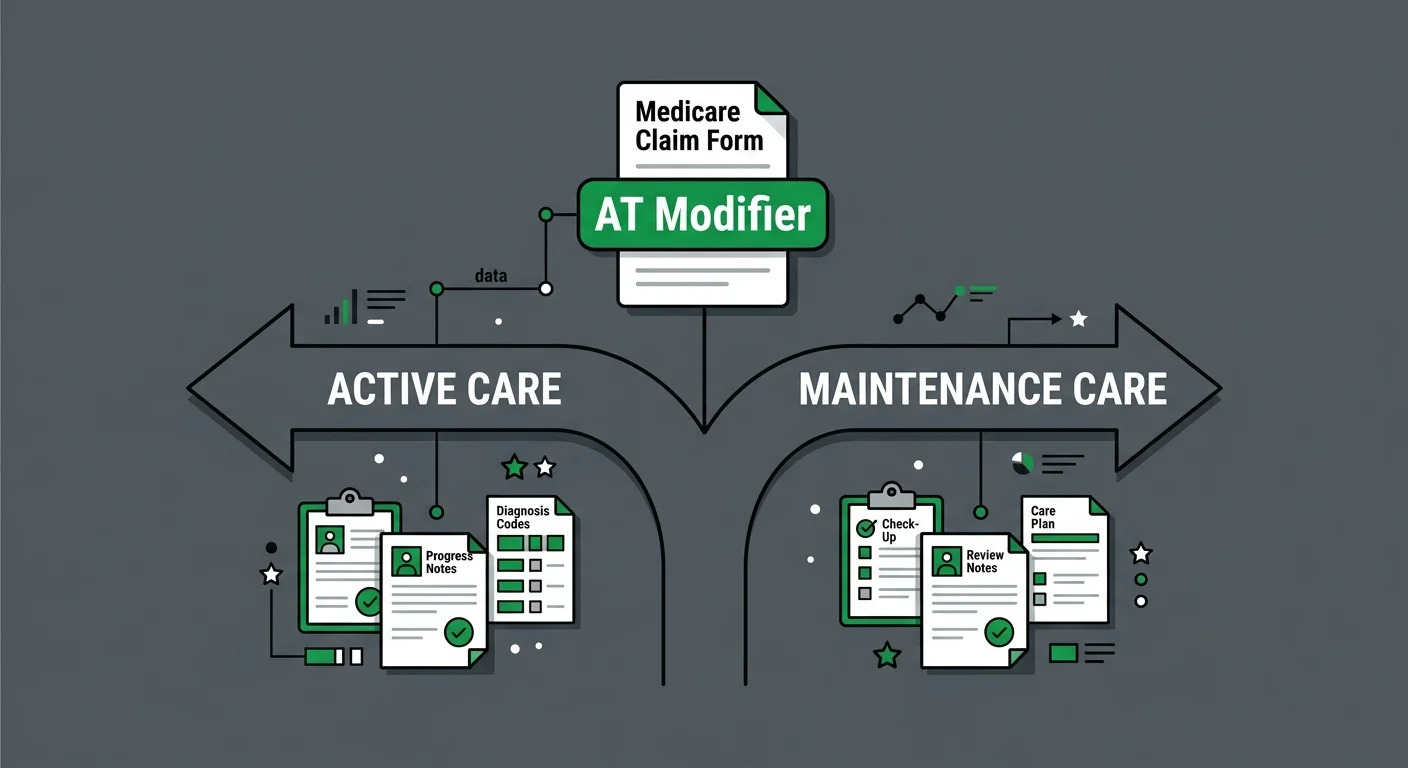
Chiropractic billing is not general medical billing with a different specialty code at the top.
It has its own regulatory architecture. Active treatment modifier rules. Documentation standards that separate therapeutic care from maintenance care. Federal audit scrutiny aimed precisely at the gaps a generalist biller won’t catch.
That complexity is real. And it belongs in the hands of someone trained to manage it – not someone guessing.
Most practice owners don’t see this layer until something goes wrong.
Claims go out. Payments come in – or don’t. And without specialty-level expertise reading the instruments, the reasons for the shortfall stay buried until they’ve already compounded.
An embedded billing partner with chiropractic-specific expertise doesn’t just submit claims.
They manage the regulatory precision those claims require. That’s the difference between a biller who moves volume and a specialist who protects revenue. Those are not the same job.
AT Modifier Rules and Active vs. Maintenance Care
The AT modifier is not optional.
Published CMS guidance confirms that CPT codes 98940, 98941, and 98942 for active treatment must carry the AT modifier on every Medicare claim. Miss it once and the claim denies. Miss it consistently and the practice has a documentation pattern that invites scrutiny – not just claim-by-claim, but across the entire billing history.
The active care versus maintenance care distinction makes that requirement harder to meet.
The American Chiropractic Association mandates clear functional progress records to prove a manipulation is medically necessary – not routine maintenance. ACA documentation guidelines draw that line at the chart note level. A generalist biller often can’t read it. And when they guess wrong, the claim is exposed.
Here’s what that costs.
When that line gets drawn incorrectly – or when supporting documentation is incomplete – the claim is vulnerable. Not just to an initial denial. To the kind of pattern audit that compounds across an entire billing history.
This is why real-time access to billing data matters well beyond convenience.
A practice owner who can see denial patterns as they emerge – not after a quarter of aging AR – can intervene before a documentation problem becomes a revenue problem.
The instruments only protect the flight if someone is reading them in time.
Why Chiropractic Billing Errors Show Up in Federal Audits
Federal audits of chiropractic billing don’t target bad actors.
They target documentation gaps. Reviewed audit findings from HHS-OIG show that a significant share of chiropractic claim denials trace directly to missing or insufficient medical necessity validation. The modifier is absent. The progress notes don’t support the manipulation. The active care distinction isn’t documented.
These aren’t complex problems. They’re consistent ones. And consistent problems have a source.
A volume-first billing operation doesn’t catch these patterns because catching them isn’t in the model.
It processes what comes in and submits what it can. The moment a claim needs a medical necessity argument or a documentation correction before it goes out, that work costs more time than the throughput model allows.
So the claim goes out incomplete. Or it doesn’t go out at all. The practice never hears about it either way.
The practice owner never sees that decision get made.
Chiropractic-specific complexity doesn’t disappear when billing is delegated. It either gets handled by someone trained to manage it – or it accumulates quietly in an aging AR report, waiting to surface as a problem the practice didn’t know it had.
Delegation without expertise isn’t control. It’s a delay.
| Billing Requirement | Chiropractic-Specific Rule | Consequence of Error | Who Must Track It |
|---|---|---|---|
| AT Modifier Compliance | CPT codes 98940, 98941, and 98942 for active Medicare treatment must carry the AT modifier on every claim | Claim denied on submission; repeated omissions create a documentation pattern that invites federal audit scrutiny | Chiropractic-trained biller with Medicare modifier expertise |
| Active vs. Maintenance Care Distinction | ACA guidelines require clear functional progress records establishing that each manipulation is medically necessary – not routine maintenance | Claim denied or recouped; insufficient documentation exposes the full billing history to pattern-level review | Specialty biller who understands where the clinical line sits and how to document it correctly |
| Medical Necessity Documentation | Progress notes must support the clinical justification for each manipulation before the claim goes out | Claim denied for lack of medical necessity; appeals require retrospective documentation that may not exist | Biller accountable for flagging documentation gaps before submission – not after denial |
| Denial Pattern Recognition | Recurring denial reasons across a billing history signal a systemic documentation or coding problem | Revenue loss compounds across months before the pattern surfaces in an aging AR report | Dedicated biller who tracks denial reasons by code and flags patterns to the practice owner on a regular schedule |
| PI Lien Billing Workflows | Personal injury claims operate under separate documentation, liability, and settlement timelines from standard insurance billing | Mishandled lien cases result in delayed or uncollected revenue that standard billing software cannot track | Specialist with personal injury lien experience – not a generalist operating outside their training |
| Regulatory Update Tracking | Medicare conversion factor adjustments and fee schedule changes affect reimbursement rates and modifier requirements year over year | Claims submitted under outdated codes or rates are underpaid or denied without the practice ever knowing a change occurred | Billing partner who monitors regulatory updates and applies them before they create a revenue problem |
What Embedded Billing Partnership Actually Requires From the Practice

Here’s what most practices don’t hear before they sign: this isn’t a black box.
A billing partnership isn’t something you drop work into and collect payments from. It’s a working relationship. And working relationships require something from both sides.
The practice brings three things: EHR access, documentation cooperation, and provider availability when a denial needs clinical context. The billing partner returns revenue recovery, regulatory precision, and structured reporting on a fixed schedule.
When either side withholds what the other needs, the model breaks. And the practice almost always absorbs the cost without knowing why.
EHR documentation and insurance paperwork are among the leading drivers of clinical burnout – National Institutes of Health research confirms it, and federal programs exist specifically to reduce that load.
The point of an embedded billing partnership is to remove the execution burden entirely – not add to it. But that only works if visibility stays intact.
The practice stops doing the tasks. It doesn’t stop watching the results.
Who This Model Is Not Built For
This model isn’t built for the practice that wants total disengagement.
Zero EHR cooperation. Zero documentation turnaround. Zero provider availability for appeals. That’s not outsourcing – that’s abandonment. Complex denials need clinical context. A biller can’t manufacture what the practice won’t provide.
It’s also not built for the practice looking for a one-time rescue.
What dedicated biller assignment delivers – the continuity, the pattern recognition, the accumulated knowledge of how a specific practice’s claims behave – compounds over time. A biller who knows your payer mix and documentation tendencies at month six produces meaningfully different outcomes than one who just started.
Practices that stay long enough to build that foundation get different results. Practices that want a single-cycle fix get exactly that – and nothing more.
And it’s not built for the practice that resists visibility.
Full AR transparency and scheduled reporting aren’t optional features. They’re how the model works. A practice uncomfortable with documented billing status, real-time reporting, or denial pattern reviews is telling you it wants silence.
Silence is exactly what this model is designed to replace.
What the Practice Provides – and What the Partner Returns
The practice brings three things: timely documentation, responsive communication, and EHR access that lets the biller do the job thoroughly.
None of that requires the doctor to manage claims. It requires the doctor to maintain the conditions under which claims can be managed well. Practices that understand this distinction from the start – ideally before the first 90 days with a new billing partner are over – get better results faster and fewer surprises later.
The partner returns structured reporting on a fixed schedule, denial pattern analysis, AR aging visibility, and the specialty-level expertise that keeps chiropractic claims compliant.
That last part isn’t interchangeable. The dedicated biller assignment model exists because a biller who knows one practice’s claim patterns, payer mix, and documentation tendencies produces different outcomes than a rotating pool processing volume.
One is built to move claims. The other is built to protect revenue.
The doctor’s job isn’t to maintain the engine. It’s to read the instruments – denial rates, AR aging, recovery trends – and make decisions from clarity.
That only works if the instruments are reliable. A partner built on volume throughput and silence doesn’t make them reliable. It keeps them out of sight.
Control isn’t about how much the doctor touches the process. It’s about how clearly they can see it – and whether the partner they’ve chosen is built to make sure they always can.
| Practice Responsibility | Billing Partner Responsibility | Shared Accountability Point |
|---|---|---|
| Provide timely EHR access so the biller can retrieve documentation, verify coding, and work denials without delays | Manage the full claims submission cycle – from coding accuracy to modifier compliance – without requiring provider involvement in execution | EHR access permissions are established at engagement and maintained throughout; the practice keeps access current, the biller uses it consistently |
| Return documentation corrections and clinical clarifications when a denial requires provider input to support a medical necessity argument | Identify which denials require clinical context, prepare the appeal framework, and submit the corrected claim once the provider’s input is received | Denial resolution timeline – the biller cannot close a clinical appeal without provider response; the provider cannot close it without the biller’s appeal structure |
| Maintain documentation standards that support the distinction between active therapeutic care and maintenance care on an ongoing basis | Track whether submitted claims reflect compliant documentation patterns and flag recurring gaps before they become an audit vulnerability | Documentation quality – the practice controls what goes into the record; the biller controls whether what goes in is sufficient to defend the claim |
| Review scheduled weekly updates and respond to flagged items that require a practice-level decision | Deliver structured reporting on a fixed schedule – AR aging, denial patterns, recovery trends – without waiting to be asked | Visibility cadence – the biller produces the instruments; the practice owner reads them and acts on what they show |
| Stay engaged at the information level – reviewing data, asking questions, and making decisions based on what the reports surface | Surface problems proactively, not reactively – communication is a structural feature of the model, not an optional service tier | Accountability loop – neither side can maintain billing health without the other staying present in their designated role |
Frequently Asked Questions
The structure is clear. The argument is made. Now come the questions practitioners actually ask – the ones that decide whether this kind of partnership is worth trusting.
No hedging. No ‘it depends.’ If a straight answer exists, it’s here.
How can a doctor delegate chiropractic billing without losing oversight?
Oversight doesn’t require touching every claim. It requires visibility across all of them.
The structure that makes delegation safe is specific: a dedicated biller – not a rotating pool – who reports on a fixed schedule, flags denial patterns as they emerge, and surfaces AR aging before it compounds. That’s the instrument panel. The doctor reads it. The biller maintains it.
When 80 percent of practices seeking help arrive with unworked aging AR and a billing vendor they stopped hearing from, the breakdown is almost never one bad claim. It’s the absence of a feedback loop that would have caught the problem three months earlier.
Oversight isn’t about checking every claim. It’s about having a system that tells you when something is wrong before it gets expensive.
What are the risks of using a general billing pool versus a dedicated biller?
A general billing pool processes volume. A dedicated biller builds pattern recognition.
That distinction compounds. A biller who handles one practice’s claims consistently learns how that practice’s payers behave – where documentation runs thin, which denial types keep recurring, which modifiers attract scrutiny. A rotating pool starts over every cycle.
For chiropractic, the gap is acute. AT modifier rules, active versus maintenance care documentation, personal injury lien workflows – these aren’t general billing skills. A pool covering dozens of specialties doesn’t develop the depth a chiropractic-focused specialist carries.
The claims that get deprioritized or dropped are almost always the complex ones. Those are also the most valuable.
Why is a weekly billing update essential for maintaining clinic cash flow?
Cash flow problems don’t announce themselves. They accumulate – in aging AR, in unworked denials, in claims that went out incomplete and never came back.
A weekly update breaks that silence on a fixed schedule. The practice doesn’t chase the biller for a status report. The report arrives. That’s what separates a functioning billing relationship from the pattern that drives most practices to start looking for a replacement.
80 percent of clinic onboarding is driven by unworked aging AR and silent vendor relationships. The weekly update isn’t a reporting preference. It’s the structural safeguard that prevents that outcome.
How do Medicare AT modifier rules affect billing performance?
The AT modifier is one of the highest-frequency compliance points in chiropractic billing. It’s also one of the most commonly mishandled.
CMS requires the AT modifier on CPT codes 98940, 98941, and 98942 for active treatment Medicare claims. A claim missing that modifier denies. Miss it consistently and the practice develops a documentation pattern that attracts scrutiny – not just claim by claim, but across the entire billing history.
Federal audit reviews show that a significant share of chiropractic claim denials trace directly to missing or insufficient medical necessity documentation. The modifier is absent. The progress notes don’t support the manipulation.
These aren’t complex problems. They’re consistent ones. A specialty-trained biller catches them before submission – not after denial.
Can a practice owner regain billing oversight without checking every single claim?
Yes. And the belief that oversight requires claim-level checking is exactly what keeps practice owners tangled in billing work they should have delegated.
The cockpit doesn’t require the pilot to inspect every bolt. It requires instruments that are accurate and a crew that’s accountable. For billing, those instruments are denial rate trends, AR aging by bucket, recovery percentages, and weekly status communication.
A practice owner reading those numbers every week is in control – whether or not they’ve looked at a single claim.
What breaks oversight isn’t delegation. It’s the absence of structured reporting from a partner built to provide it. Bushido Billing’s model is built around that structure – because the practices that arrive with the biggest revenue gaps are almost always the ones where the instruments went dark.
Delegation Without Abdication
Billing control isn’t about how much the doctor touches the process.
It’s about how clearly they can see it.
The clinic owner who knows their denial rate, their AR aging, and their recovery trend every single week – that person is in control. The one who assumes things are fine because nobody’s called with bad news? That’s not control. That’s hope.
The cockpit metaphor holds because it’s exact. A pilot doesn’t maintain the engine mid-flight – but the instruments have to be accurate, the crew behind them has to be accountable, and the feedback loop can’t be optional.
That’s the model. Not stepping away from responsibility. Staying informed without doing the work.
The doctor’s job is to read the instruments, not turn the wrenches. Bushido Billing is built to keep those instruments reliable – not to keep them out of sight.
Delegation without abdication isn’t a philosophy. It’s a structural requirement.
It only works when the billing partner is aligned, accountable, and communicating on a fixed schedule – without being asked every time.
If that’s not the relationship the practice has right now, that’s not a billing problem. That’s a visibility problem. And the real question isn’t whether something went wrong. It’s whether the relationship was ever designed to keep the doctor informed in the first place.
The instruments are either working or they’re not. Right now, you may not know which – and that uncertainty is the problem worth solving.
If the current billing setup isn’t built to keep you informed every week, it’s built to keep running without you. Those aren’t the same thing.
Book a Call to find out whether your current setup is designed to give you real oversight – or just designed to stay out of your way.

© . All Rights Reserved | Web Design by iTech Valet