

First-Level vs. Second-Level Appeals: What Is the Difference?
Learn how first-level and second-level appeals differ in Original Medicare, Medicare Advantage and commercial plans, including who reviews and key deadlines.
In Original Medicare, the first level of appeal is called a redetermination. It is a review of the claim by people who work for the Medicare Administrative Contractor (MAC) and who were not involved in the first decision on the claim. Any party to the redetermination who is not satisfied with the decision has 180 days to ask for a reconsideration, which is the second-level appeal. When you appeal to a health insurer, a first-level appeal is called an internal review because the appeal goes directly to your insurer. At the second level, your case is reviewed by people who were not involved in the original decision or in your first appeal.
First-Level vs. Second-Level Appeals at a Glance
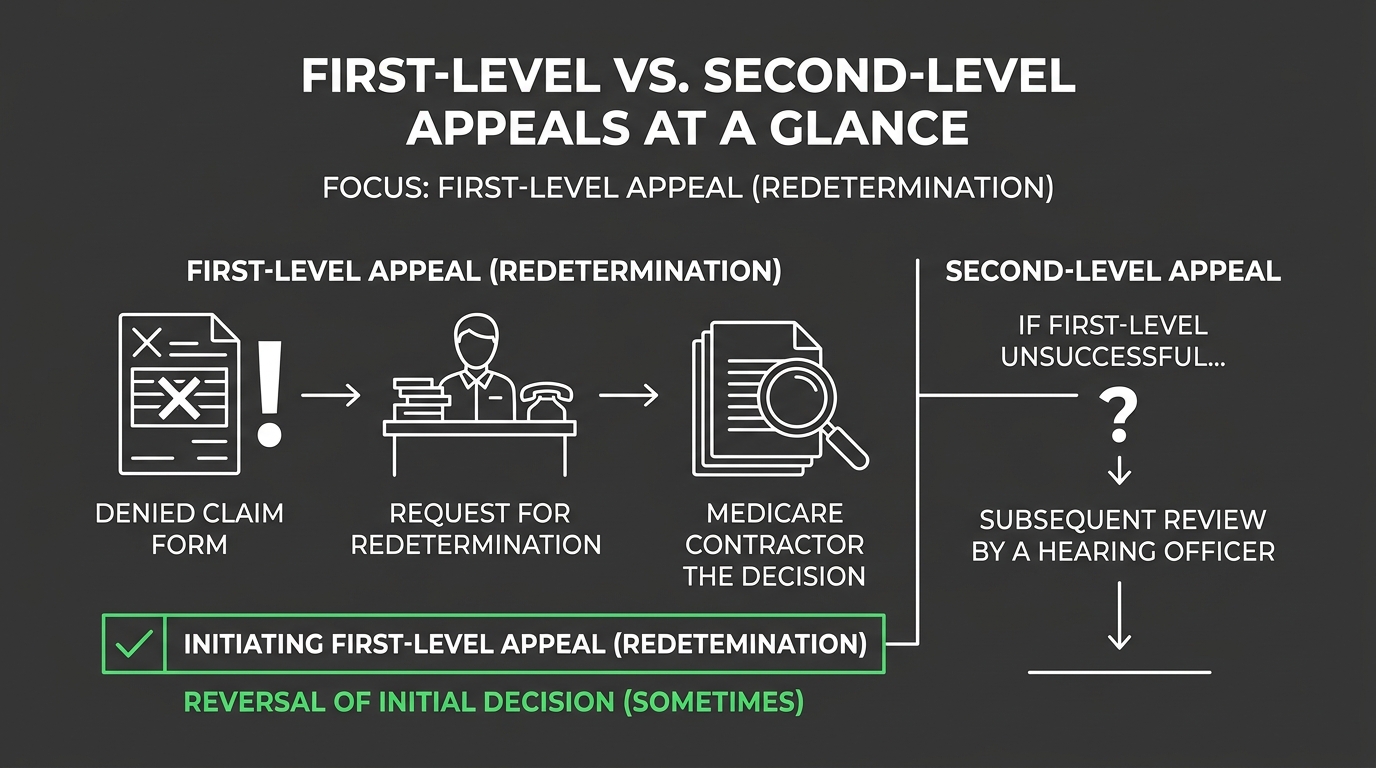
In Original Medicare, the first level of appeal is a redetermination. The Centers for Medicare & Medicaid Services (CMS) describes it this way: “A redetermination is a review of the claim by Medicare Administrative Contractor (MAC) personnel not involved in the initial claim determination.” The second level is a reconsideration. The American Hospital Association (AHA) says any party to the redetermination who isn’t satisfied with the decision has 180 days to ask for one.
A Medicare Advantage plan works differently. You, your representative, or your doctor or health care provider must file the level 1 appeal within 65 days of the date on the first denial notice the plan sent. If the plan upholds its denial at level 1, it automatically sends its reconsideration decision to an Independent Review Entity, and that starts the level 2 appeal. Medicare.gov lays this out on its page, Appeals in Medicare health plans.
For commercial plans, FAIR Health says the first level is an “internal review.” The appeal goes directly to your insurer. At the second level, your case is reviewed by people who were not involved in the original decision or in your first appeal.
The table below puts the three payer types side by side.
| Payer type | First-level appeal | Second-level appeal |
|---|---|---|
| Original Medicare | Redetermination by MAC personnel not involved in the initial claim determination | Reconsideration, requested within 180 days |
| Medicare Advantage | Level 1 appeal, filed within 65 days from the date on the initial denial notice | Level 2 appeal: if the plan upholds its denial, it automatically forwards its decision to an Independent Review Entity |
| Commercial health plans | Internal review: the appeal goes directly to your insurer | Review by people not involved in the original decision or the first appeal |
If you want the wider view of denials, read our guide, Handling Denied Chiropractic Claims and Appeals: A Complete Guide.
Filing a First-Level Medicare Redetermination
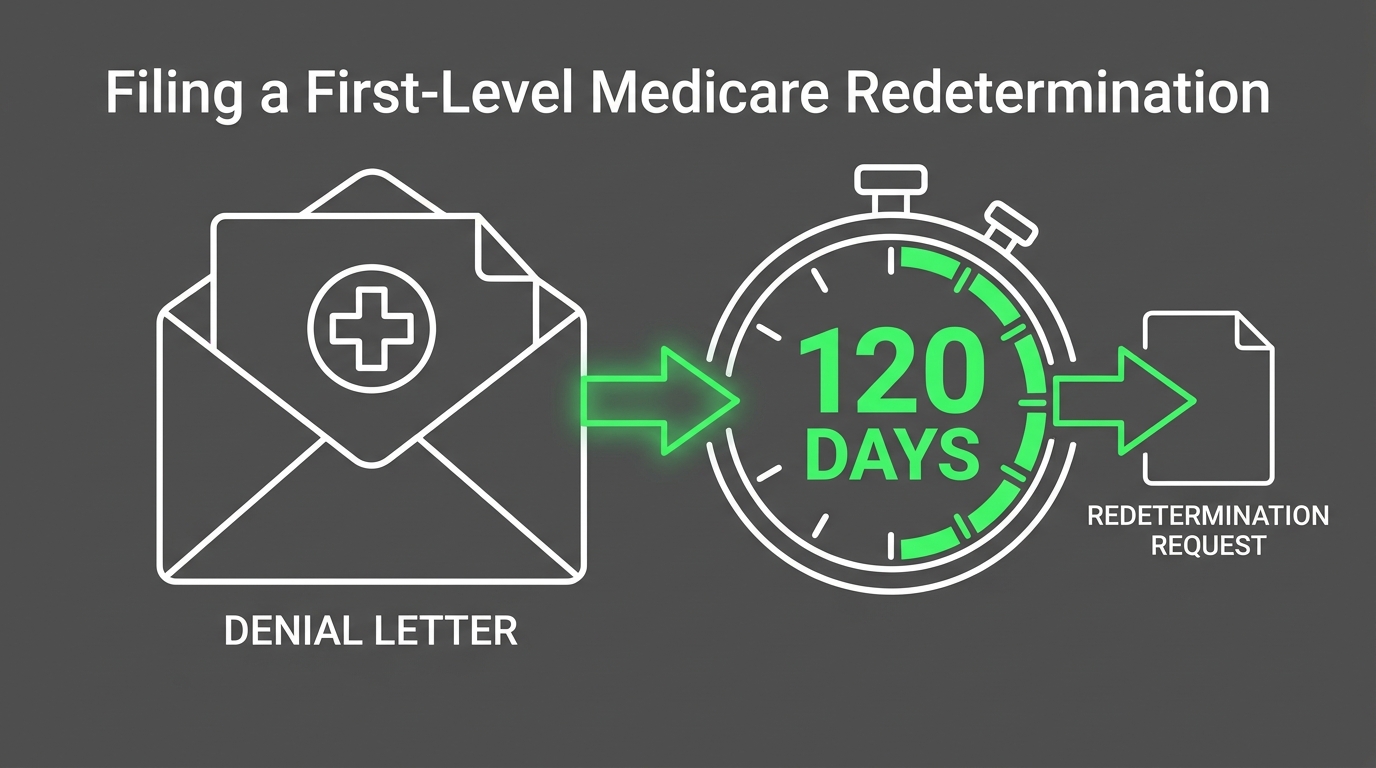
The deadline. The person filing the appeal has 120 days. The count starts on the date they received the first decision on the claim.
In writing. A redetermination must be asked for in writing. CMS says a party can ask in 2 ways.
The dollar rule. The claim does not have to be worth any minimum dollar amount for you to ask for a redetermination.
The destination. Send your request to the Medicare Administrative Contractor (MAC) that made the first decision on the claim. You can find that information on two claim notices, the Medicare Summary Notice (MSN) and the Remittance Advice (RA).
CMS explains these steps on its page, First Level of Appeal: Redetermination by a Medicare Contractor.
What the Redetermination Notice Tells You About the Second Level
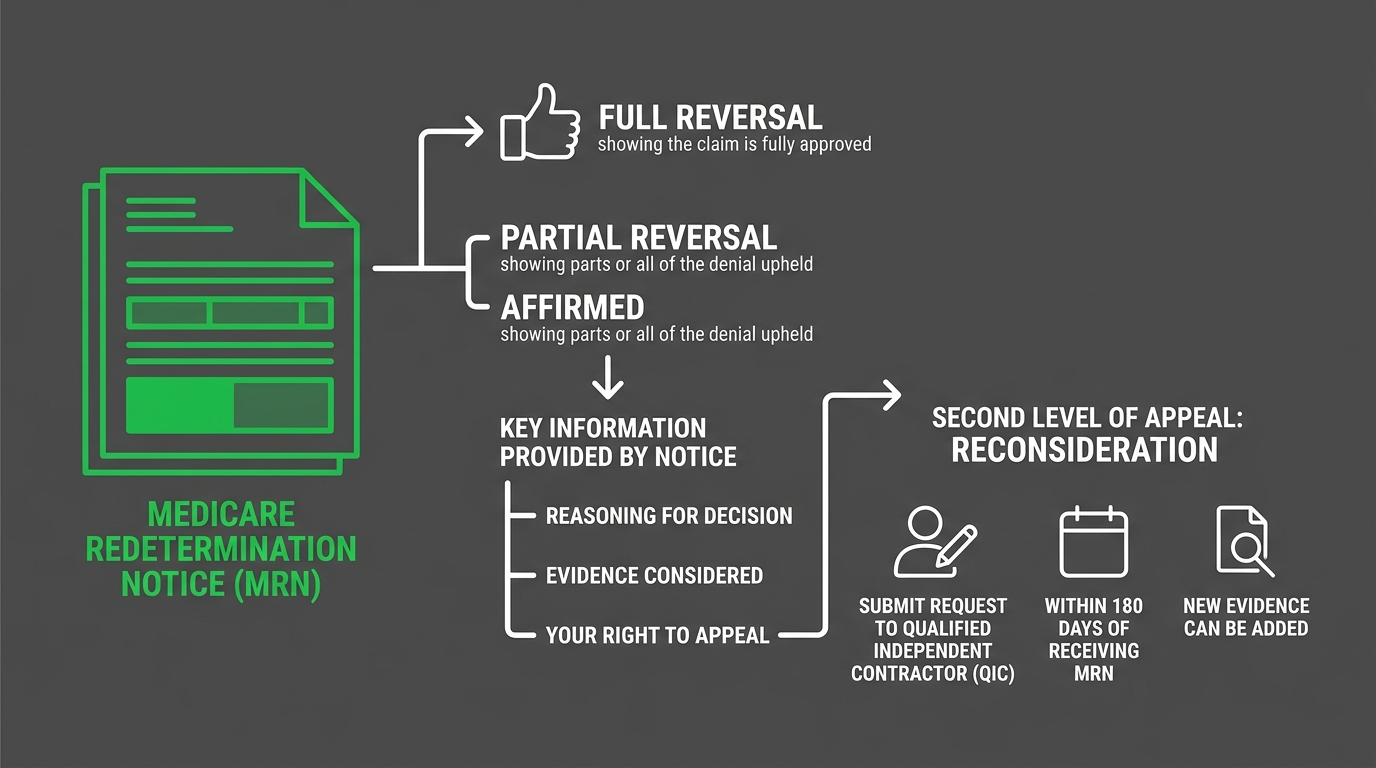
After the redetermination, you get a Medicare Redetermination Notice. The American Hospital Association (AHA) says the notice must explain how Medicare’s policies apply to your case. It must also explain how to ask for a reconsideration. The AHA covers the notice on its page, First-Level Appeal: Redetermination by Medicare Contractors.
Commercial Plans: Internal Levels, Then an Outside Review
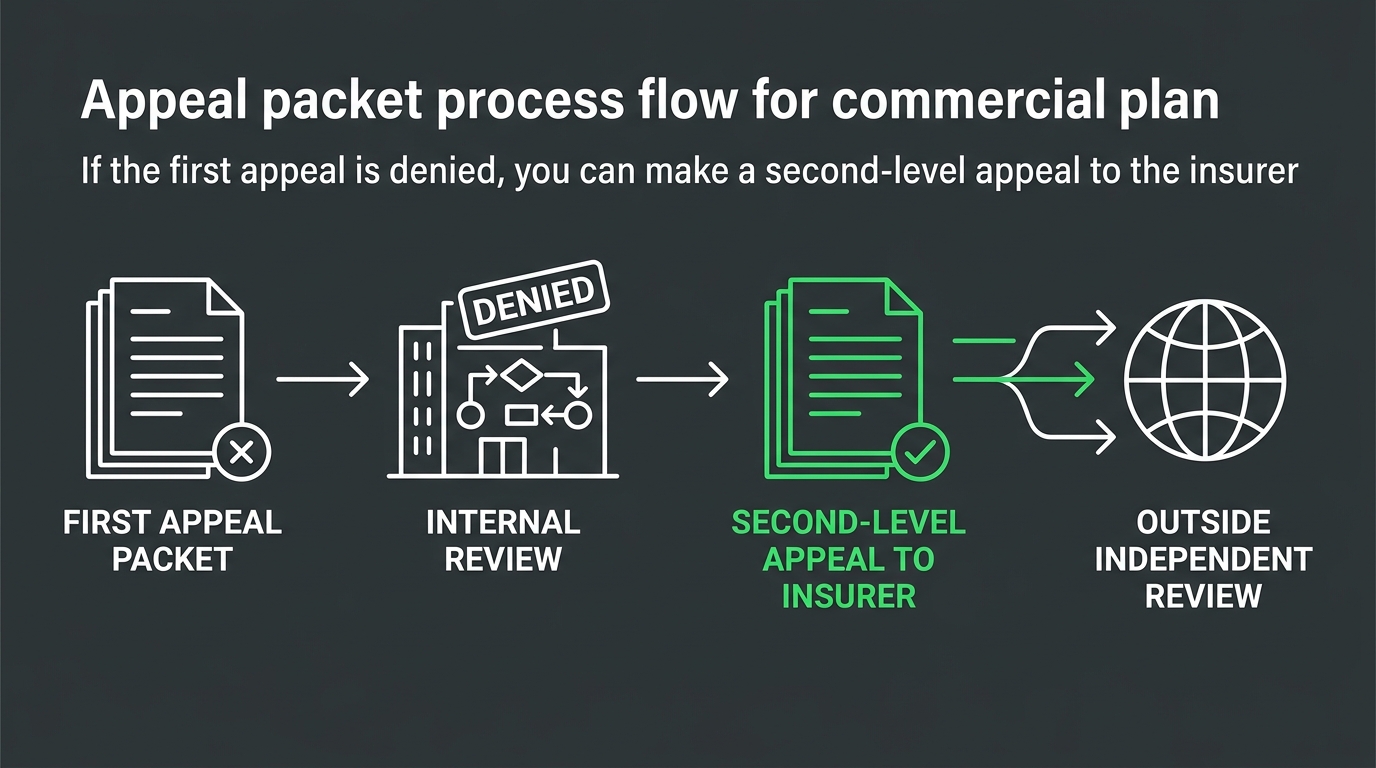
FAIR Health says that if the first appeal is denied, you can make a second-level appeal to the insurer. People who were not involved in the first appeal will review it.
If your claim is still denied after the internal appeals, most states let you begin an external appeal. We explain that step in How an External Review Differs From a Standard Payer Appeal.
At each level, different plans may have different timeframes and deadlines for sending in the appeal papers. Learn the dates for the plan you are dealing with. FAIR Health has more on its page, If Your Plan Doesn’t Pay (Appealing a Reimbursement Decision).
Beyond the Second Level
In a Medicare Advantage appeal, you have 60 days from the date of the Independent Review Entity’s decision to ask for a level 3 appeal. The Office of Medicare Hearings and Appeals makes that decision.
Level 5 is judicial review in federal district court. For 2026, Medicare.gov says the minimum dollar amount to get there is $1,960. You may be able to combine claims to reach that amount.
If a payer keeps a denial after an appeal, see What to Do After a Payer Upholds a Denial on Appeal. To see how our team does this work, visit our Medical Billing Services page.
Frequently Asked Questions
Can a minor claim error be fixed through an appeal?
Not through a Medicare appeal. CMS says MACs do not process claim corrections for minor errors and omissions through the appeals process.
What if the MAC dismisses a redetermination request?
CMS says a Qualified Independent Contractor’s review of a contractor’s dismissal of a redetermination request is binding and cannot be reviewed any further. The rule is 42 CFR 405.974(b)(3).
Do employer-sponsored plans follow special appeal rules?
They may. FAIR Health says the Employee Retirement Income Security Act (ERISA) sets specific rules about appeal timelines, your rights, and the kind of information your insurer must give you. Ask your plan if ERISA applies to it.
How many appeal levels does a Medicare Advantage plan have?
Five. Medicare.gov says that if you disagree with the decision at any level, you can generally go on to the next level.
Know Which Level You Are Filing
The first level is a fresh look inside the payer. In Original Medicare, that’s a redetermination by people at the Medicare Administrative Contractor who weren’t part of the first decision. The second level brings in new reviewers or an independent entity. In Original Medicare, you have 180 days after the redetermination to ask for a reconsideration. Know which level you’re filing before you send anything.
A sent appeal isn’t the finish line. We judge each appeal level by the money it brings back to your practice, not by how many appeals go out the door. Bushido Billing does full-service insurance billing for chiropractic practices, and we fix and appeal denied claims. Want help with a denial? Book a Call.