

How Long Do Payers Have to Respond to a Written Appeal?
See how long Medicare, ERISA plans and Medicare Advantage plans have to answer a written appeal, and what CMS suggests when a QIC decision runs late.
Medicare Administrative Contractors (MACs) generally issue a decision on a first-level appeal, called a redetermination request, within 60 days of the date they get it. For a post-service claim, which is a claim for care already received, an employer health plan has to decide the appeal within a reasonable time and no more than 60 days after it gets the request to review the denied claim. UnitedHealthcare Medicare Advantage has 60 calendar days to review and answer after it gets a completed payment reconsideration (appeal) request.
Original Medicare: How Long Each Appeal Level Has to Decide
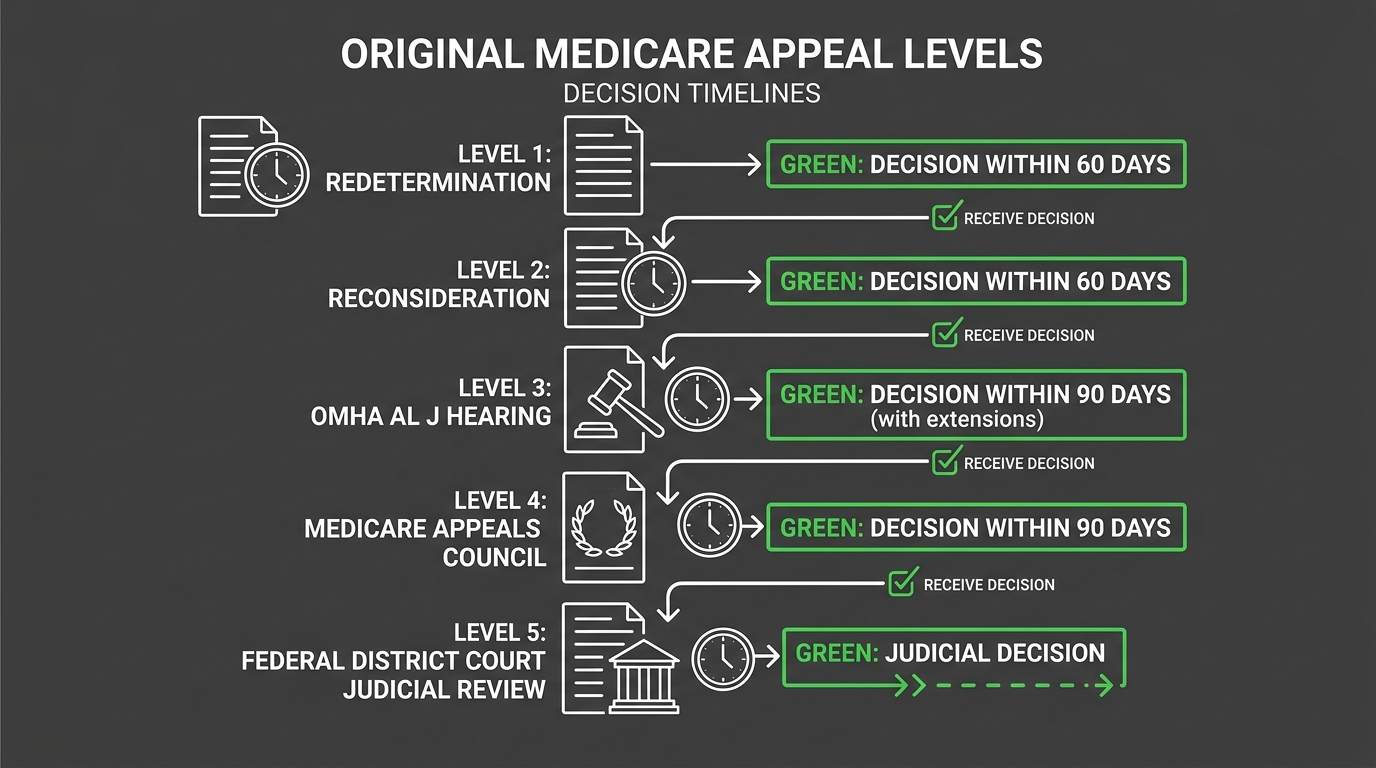
Each Original Medicare appeal level below has its own clock. For the full steps on denials, read Handling Denied Chiropractic Claims and Appeals: A Complete Guide. To get your papers ready before you send them, read How to Build a Defensible Appeal File Before You Submit It. The MAC, QIC and OMHA time limits come from Medicare Parts A & B Appeals Process MLN006562 (Sept 2025) from the CMS Medicare Learning Network. The extra time for more evidence at Level 1 comes from Medicare.gov.
The table below shows how long the decision-maker has at each level, and what late evidence does to the clock.
| Level | How long the decision-maker has |
|---|---|
| Level 1: MAC redetermination | Generally 60 days from the date it gets the request |
| More evidence sent after filing at Level 1 | An extra 14 calendar days each time (Medicare.gov) |
| Level 2: QIC reconsideration | Generally 60 days from the date it gets the request |
| Level 3: OMHA review | 90 days to complete its review and issue a decision, for Parts A and B appeals |
Level 1: Redetermination by the MAC
When you file a redetermination request, the MAC generally issues a decision within about two months (60 days) of the date it gets your request.
Medicare.gov says the MAC gets 14 more calendar days to decide each time you send more information or evidence.
Level 2: Reconsideration by the QIC
The Medicare reviewer at this level is called the QIC. It generally sends a decision to all parties within 60 days of the date it gets your reconsideration request.
If you send documents after you file, the QIC may take longer to decide. So put all the evidence you want reviewed in with your reconsideration request.
Level 3: OMHA Review
OMHA is the appeal office at this level. For Part A and Part B appeals, it has 90 days to finish its review and issue a decision.
In the CMS booklet, all references to days are to calendar days.
Employer Group Health Plans Under ERISA
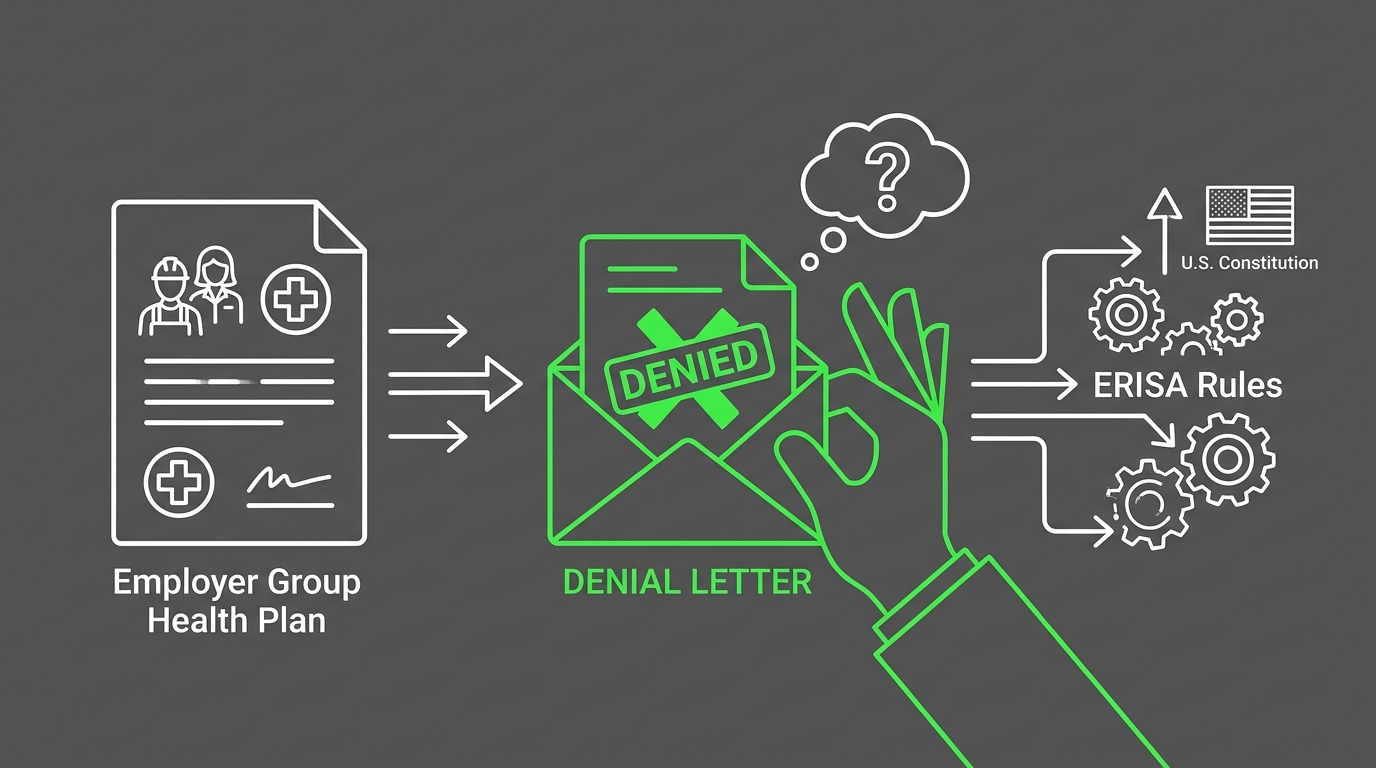
The rules for employer health plans come from the U.S. Department of Labor, Employee Benefits Security Administration. Two of its booklets explain them: Filing a Claim for Your Health Benefits and An Employer’s Guide to Health and Disability Benefit Claims.
Initial Decisions and Appeal Decisions
A post-service health claim is a claim for care you’ve already given. The plan has to decide it within a reasonable time, and no later than 30 days after it gets the claim.
The appeal gets its own window. If the plan denies that claim and you appeal, it has to decide the appeal within a reasonable time and no more than 60 days after it gets your request to review the denied claim.
You have at least 180 days, about six months, to file an appeal, whatever the reason for the denial. Your plan may give you longer, so check your Summary Plan Description or claims procedure.
A plan can require no more than two levels of review.
Plans With Two Levels of Appeal
If your plan requires two levels of appeal, the longest time allowed for each review is generally half of the time allowed for one review.
How long a plan has to review your appeal depends on the type of claim you filed. Check which type yours is before you count days.
Medicare Advantage: Windows for Non-Contracted Providers
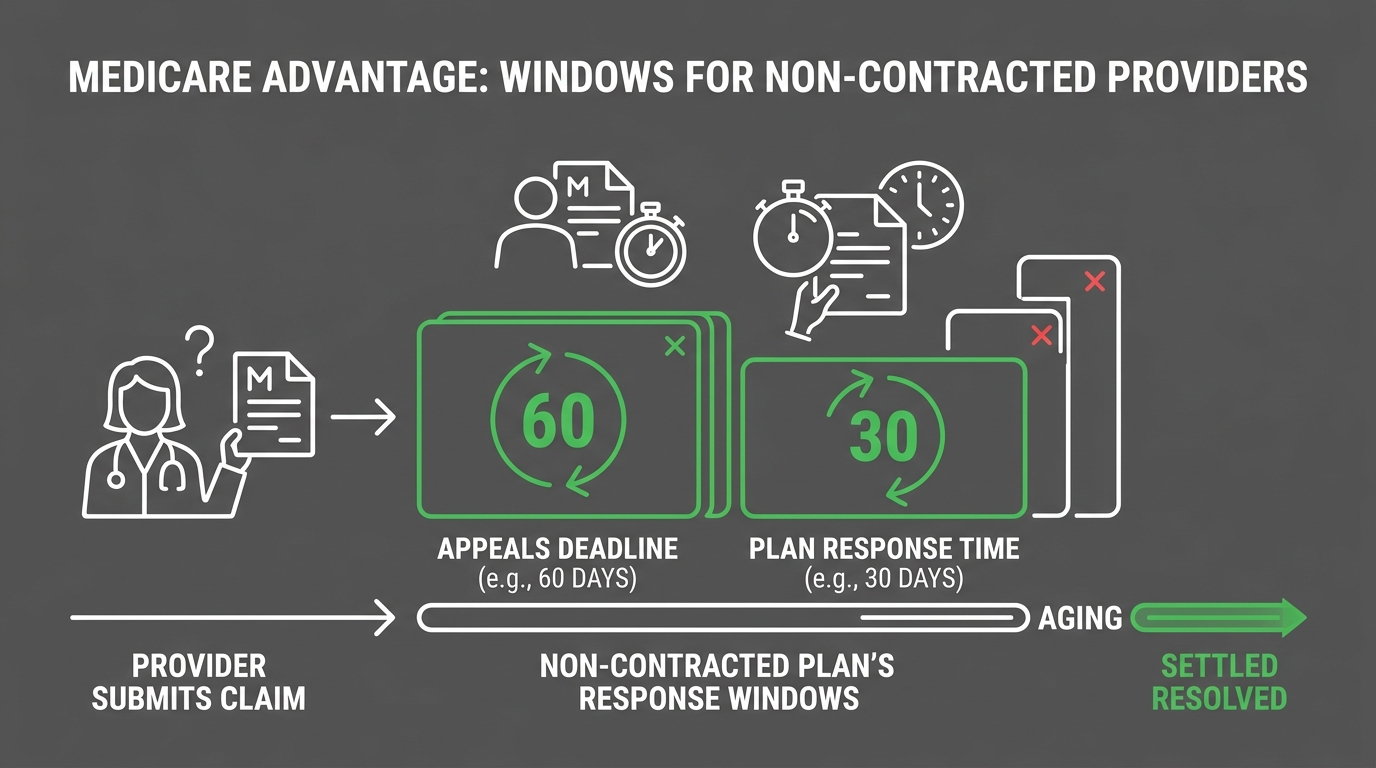
When you have no contract with a Medicare Advantage plan, the plan works on its own response windows. The UnitedHealthcare numbers come from Non-contracted care provider dispute and appeal rights (Medicare Advantage). The American College of Allergy, Asthma and Immunology (ACAAI) lays out the steps in Medicare Advantage appeals process explained.
The table below matches each type of request with the time the plan or judge has to respond.
| Request | Response window |
|---|---|
| UnitedHealthcare MA payment dispute | 30 calendar days after receiving the request |
| UnitedHealthcare MA payment reconsideration (appeal) | 60 calendar days after receiving a completed request |
| ALJ hearing on an MA appeal | 90 days after receiving a hearing request, by law (ACAAI); frequently delayed by a backlog of cases |
Plan Decisions on Disputes and Appeals
If you disagree with a denied claim, or if UnitedHealthcare paid for a different service or level of service than what was billed, you have 60 days from the denial date to file a payment reconsideration (appeal) request.
Once UnitedHealthcare Medicare Advantage has a completed request, it has 60 calendar days to review it and answer. If you send a payment dispute request instead, it has 30 calendar days.
ACAAI writes that a practitioner with no contract can ask for a reconsideration of a Medicare Advantage plan’s payment denial within 65 days of the remittance notification date. That’s the date on the payment notice. The plan must make its decision within 60 days.
Watch where each clock starts. UnitedHealthcare’s 60 days to file run from the denial date. ACAAI’s 65 days run from the remittance notification date.
After the Plan Upholds Its Denial
If UnitedHealthcare upholds all or part of its initial payment determination, it must forward the case to the CMS Independent Review Entity (IRE) for a second-level review.
ACAAI says the same thing in its own words. If a Medicare Advantage plan upholds its denial, the case is sent automatically to an independent review entity.
ACAAI also notes that, by law, the administrative law judge (ALJ) who hears the appeal must issue a decision within 90 days of getting a request for a hearing. Those decisions are frequently delayed, though, because of a backlog of cases.
When a Medicare QIC Decision Runs Late
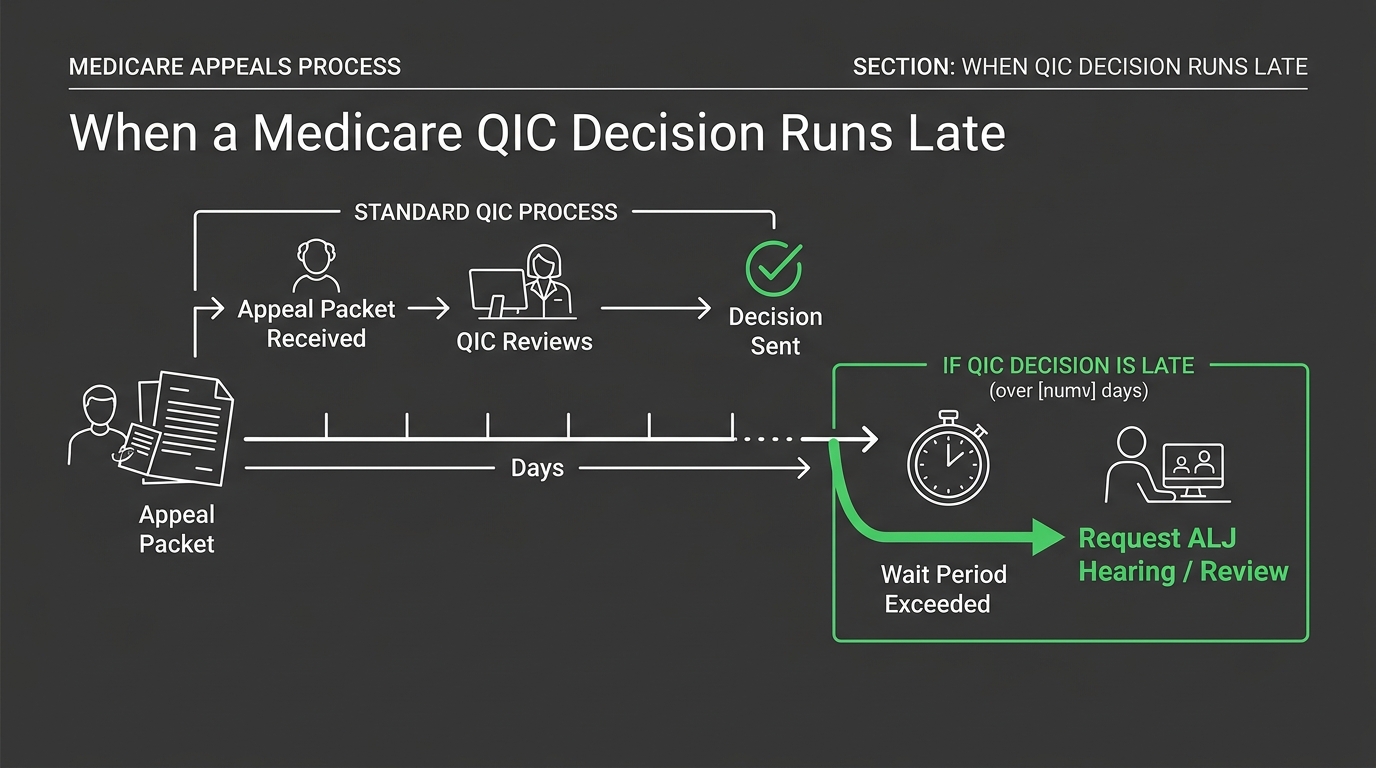
CMS says that, generally, the Qualified Independent Contractor (QIC) will send its decision to all parties within 60 days of getting the request for reconsideration. You can read the rules on Second Level of Appeal: Reconsideration by a QIC.
If 60 days pass and you still have no reconsideration decision, CMS suggests you think about waiting an extra 5 to 10 days to allow for mail delays. After that, you can move your appeal up to the Office of Medicare Hearings and Appeals (OMHA), the next appeal office.
Tracking Open Appeals Week to Week
I don’t read a billing partner raising a problem as a sign of weakness. I read it as proof they are working the account. Bushido Billing holds that proactive communication is a sign of a functioning billing partner, not a luxury. I treat silence as the thing that lets issues fester until they turn into cash flow emergencies, so I want every open appeal in a weekly update.
Our standard practice is weekly communication with you.
At Bushido Billing, weekly communication is standard practice. Every week, clients get a weekly update, a short, easy-to-read report card. You can see how the work is done on our Medical Billing Services page.
Frequently Asked Questions
Can an ERISA plan extend its appeal review time?
Only if the person who filed the claim agrees. A plan can make the review time longer with that consent. Without it, the plan can’t push the deadline out.
Do ERISA’s appeal timelines apply to government or church plans?
Not always. The U.S. Department of Labor, Employee Benefits Security Administration says its health claim rules generally apply to people who get health benefits from a private-sector employer plan. There are exceptions for plans run by government or most religious bodies. Check what kind of plan you’re dealing with before you rely on these dates.
Do weekends and holidays count toward ERISA appeal deadlines?
Yes. The time limits are counted in calendar days, so weekends and holidays count.
Can a Medicare reconsideration be requested by phone?
No. CMS says you have to ask for a reconsideration in writing.
How quickly must a Medicare Advantage plan pay a non-contracted provider’s original claim?
ACAAI says that for non-contracted allergists, a Medicare Advantage plan generally must pay 95 out of 100 (95%) “clean claims” within 30 days. All other claims, the ones that are not clean claims, must be paid or denied within 60 days.
Know Where Every Appeal Stands
Bushido Billing does full-service insurance billing, cleanup of unpaid insurance claims, and fixing and appealing denied claims for chiropractic and allied health practices. We make sure you can always know what’s happening with your insurance claims, so we follow up on claim status and tell you where things stand without you asking. Would you like to talk through how that would work for your practice? Book a Call