

How to Safely Transition EHR Credentials and Set 30-Day Chiropractic Billing Benchmarks
Learn how to safely transition chiropractic EHR credentials and set 30-day billing benchmarks that protect cash flow and catch denials early.
Safely transitioning EHR credentials during a chiropractic billing transition requires completing payer credentialing before claim submission begins, verifying that no Provider Transaction Access Number is deactivated prematurely, confirming electronic data interchange enrollment is active with each payer, and tracking specific 30-day benchmarks that reveal whether the new system is functioning correctly. A Medicare Part B Provider Transaction Access Number cannot be transferred to another Medicare enrollment once deactivated, because the Provider Enrollment, Chain, and Ownership System will not allow the reactivation to occur. This means credentialing sequencing determines whether claims can be submitted at all in the opening weeks of a transition. Electronic data interchange enrollment operates as a separate technical dependency from payer credentialing itself, and a gap between the two can halt claim transmission even after a provider is approved. The 30-day benchmark period functions as a diagnostic window rather than a formality. During this window, a practice should track claim submission volume, denial rates by category, and payment velocity to confirm the transition is protecting cash flow rather than threatening it. Accounts receivable aging is one of the clearest indicators available during this window, since a rising average days-in-A/R signals a bottleneck forming in claims processing, payer response, or data accuracy. Data migration between electronic health record systems introduces additional risk, since patient and financial records must map correctly into the new system without corruption or loss. Each of these elements, credentialing status, electronic data interchange enrollment, and accounts receivable tracking, determines whether the transition closes the cash flow gap or opens it wider during the first month.
What Actually Happens When You Transition EHR Credentials
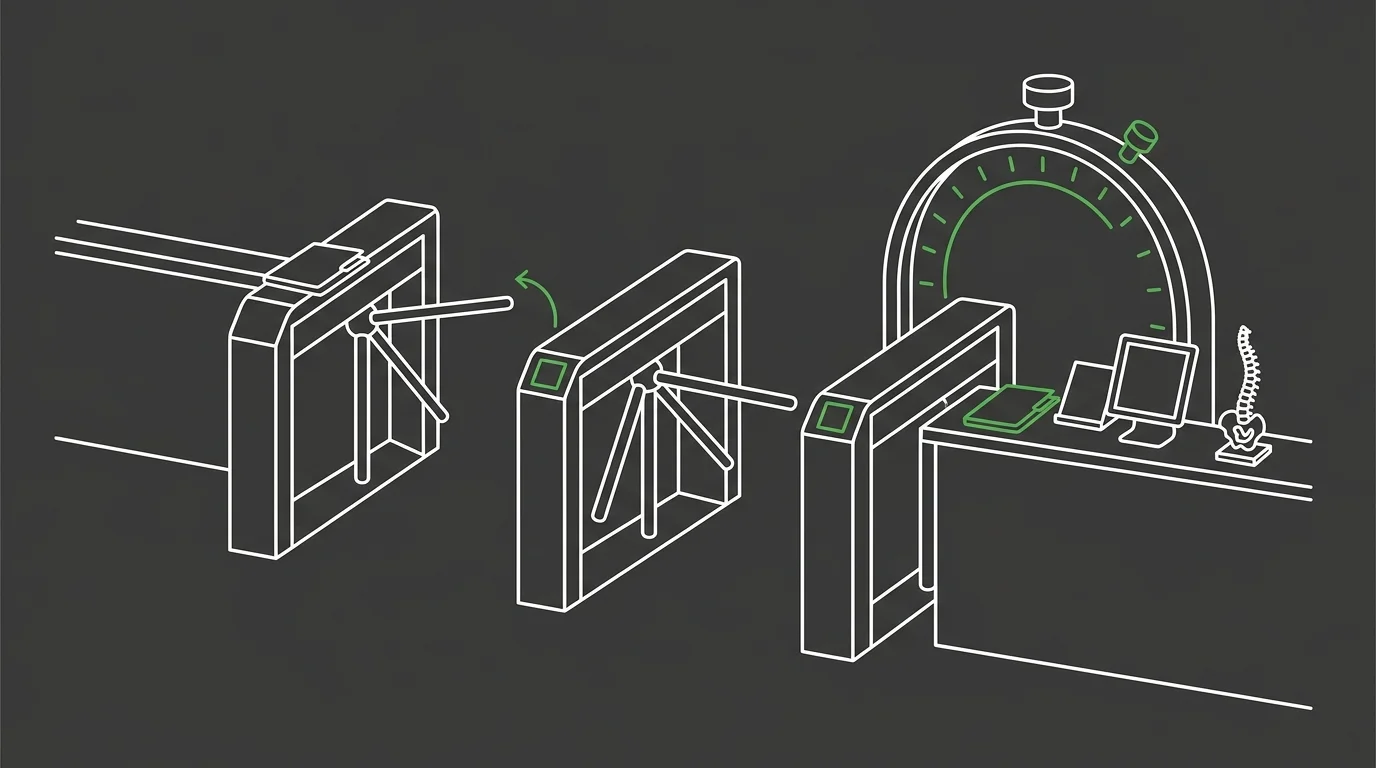
Transitioning EHR credentials means moving a practice's enrollment, payer approvals, and data records from one billing system to another, on a fixed timeline that does not pause for missed steps. It is not just an IT task. It is a critical moment that determines future financial stability and compliance for a chiropractic practice. Generalist billing agencies often treat this moment as clerical, which is one reason detailed in the failure points of non-specialist billing.
The door stays open only when the mechanics above are handled correctly. A 30-day benchmark is a set of key performance indicators used to measure the immediate success of a billing transition, focusing on claim submission, denial rates, and payment velocity. Those indicators either confirm the door is open or reveal it closing.
Why the PTAN Rule Changes Everything
The PTAN rule is not a footnote buried in a compliance manual. It is the single fact that makes credentialing sequencing non-negotiable during a transition.
Once a Medicare Part B PTAN is deactivated, that door does not reopen through the same enrollment. The system that governs reactivation was not built to reverse the decision.
Where Deactivation Actually Closes the Door
Deactivation closes the door at a specific, identifiable point. It happens when a provider's Medicare enrollment lapses or gets terminated before a new enrollment is properly staged behind it.
Here's the rule that leaves no room to argue. Here the reason is mechanical, not discretionary. Per CMS, a Medicare Part B PTAN cannot be transferred to another Medicare enrollment after it has been deactivated because the PECOS system will not allow this to occur.
How the Industry Treats Credentialing as a Checklist
Plenty of billing companies treat credentialing as a simple administrative checklist. Boxes get checked, forms get filed, and the process gets declared complete.
But that framing overlooks the nuanced requirements that can halt a practice's cash flow. A checklist has no field for irreversible timing, and irreversible timing is exactly what the PTAN rule creates.
Why Checklist Credentialing Fails Under Real Timelines
Real timelines do not move at checklist speed. Payer response windows, electronic data interchange enrollment, and PTAN status all move on their own schedules, and none of them wait for a form to be filed.
A checklist approach assumes every step is reversible if something gets missed. The PTAN rule proves that assumption wrong. For a clearer picture of what a credentialing transition should actually look like, see What to Expect from Your Chiropractic Billing Partner.
What the Data Migration Literature Actually Shows
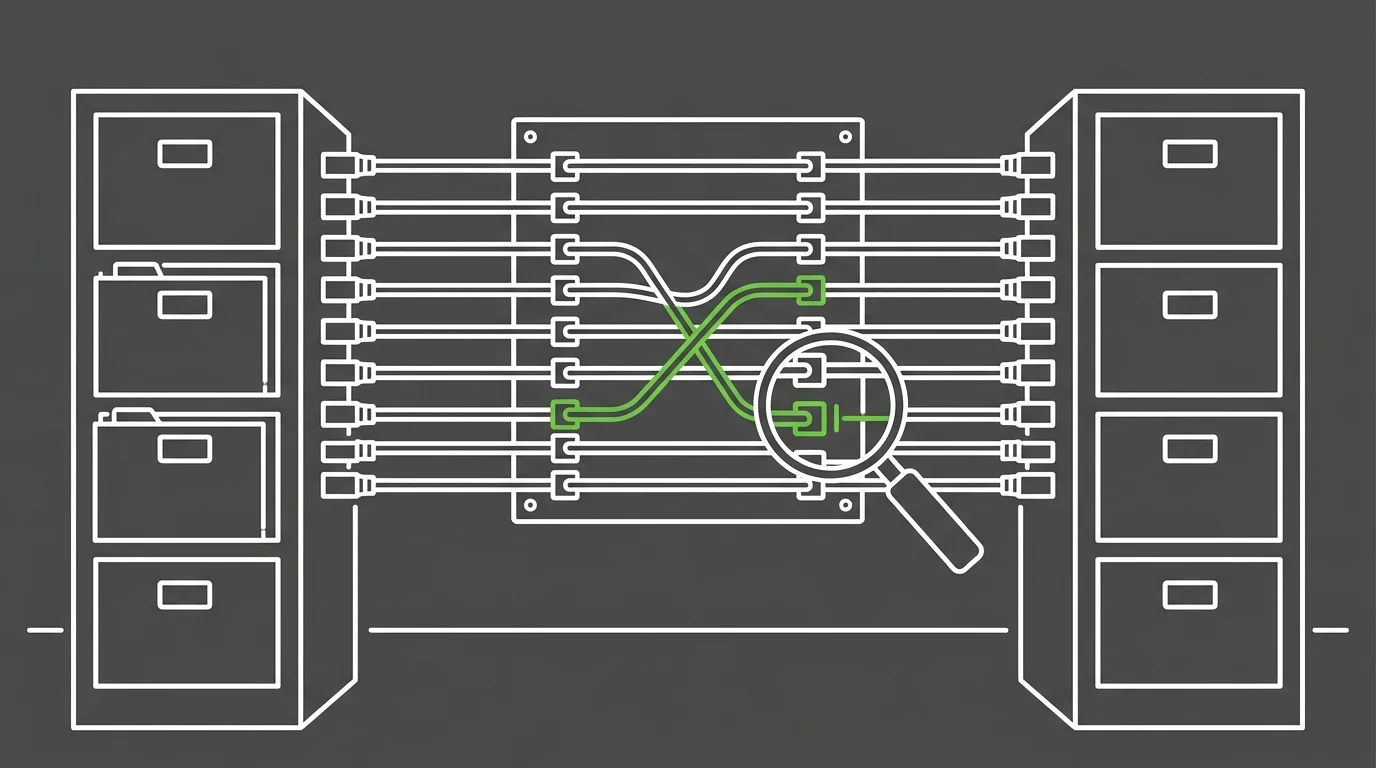
Credentialing sequencing isn't the only place a transition can lose ground. Move patient and financial records between electronic health record systems, and you inherit a risk profile all its own, separate from where payer approval stands.
Here's what the research actually says. A systematic review of peer-reviewed literature on EHR transitions found only 8 publications reporting on data migration outcomes at all. Published academic reference documents that 8 peer-reviewed publications reporting on data migration during EHR-to-EHR transitions were identified in a systematic review. That's thin evidence for something practices lean on so heavily to go smoothly.
Where Mapping Errors Actually Originate
Mapping errors don't start at the point of transfer. They start earlier, back in how fields were structured and labeled inside the system being left behind.
A field that held one kind of data in the old system can be misread as a different kind of data in the new one, and the error surfaces only once claims start failing. That is the same door-closing pattern seen in credentialing timing, applied to data instead of enrollment. How to Identify When a Billing Company walks through how these gaps get missed until cash flow already shows it.
What a 30-Day Benchmark Actually Measures
Miss the numbers and the door closes without a sound. A 30-day benchmark exists to make that closing visible before it turns permanent, and the first 30 days with a new chiropractic billing partner are the most telling, setting the standard for communication, transparency, and performance.
| A/R Performance Band | Days in A/R | What It Signals |
|---|---|---|
| High Performer | At or below 25 days | Credentialing sequencing and EDI enrollment are functioning correctly with no bottleneck forming |
| Healthy Benchmark | 30 to 40 days | The transition is on track and payment velocity matches the industry benchmark |
| Red Flag | 45 to 50 days or more | Revenue cycle bottlenecks have formed, signaling the 30-day window is closing on cash flow |
Why Accounts Receivable Days Is the Benchmark That Talks First
Accounts receivable days talks first because it compounds every single day. High performers stay at or below 25 days in A/R, the healthy benchmark sits in the 30–40 day range, and crossing 45–50 days is the red flag indicating bottlenecks. Per this published analysis, high-performing chiropractic practices maintain accounts receivable at or below 25 days, while the healthy benchmark sits in the 30–40 day range and crossing 45–50 days signals revenue cycle bottlenecks. Watch this number through the transition window and a practice sees the door's position in real time, not after a quarter has already closed.
What Denial Patterns Reveal in the First 30 Days
Denial patterns tell a different part of the story. A spike in a single denial category during the opening weeks usually points back to credentialing sequencing or electronic data interchange enrollment rather than clinical documentation, and the Billing Services a practice relies on should isolate that category fast.
How EDI Enrollment Determines Whether Any of This Runs on Time

Electronic data interchange enrollment is not a formality layered on top of credentialing. It is a separate gate, and both gates must open before a claim can move.
| Transition Step | Depends On | Typical Sequence Position |
|---|---|---|
| Payer Credentialing Approval | Application accuracy and payer processing timelines | Must be confirmed before claim submission begins |
| PTAN Status Verification | Confirming no premature deactivation occurred during transition | Runs parallel to credentialing, checked before any claims move |
| EDI Enrollment Activation | A separate technical approval, independent of credentialing status | Follows credentialing approval but must be verified, not assumed |
| First Claim Transmission | Both credentialing and EDI enrollment being fully active | Occurs only after both gates are confirmed open |
| 30-Day Benchmark Tracking | Claim submission volume, denial rates by category, and payment velocity | Runs continuously through the window, surfacing which gate is closed |
| Scorecard Metric | What It Tracks | Checked By Day |
|---|---|---|
| Claim Submission Volume | Whether credentialing sequencing and EDI enrollment are both active enough to let claims move at all | Early in the window, before either gate can be assumed open |
| Denial Rate By Category | Whether a denial pattern traces back to credentialing status or EDI transmission rather than clinical documentation | Weekly, so a spiking category surfaces while it can still be isolated |
| Payment Velocity | Whether approved claims are actually moving through to payment once both gates are open | Weekly, alongside denial tracking, to confirm the door stays open once it opens |
| Accounts Receivable Days | Whether a bottleneck is forming anywhere upstream, since a rising average reflects every gate at once | Continuously across the full window, since it compounds daily and reveals lag fastest |
Sequencing EDI Enrollment Against the Credentialing Timeline
Credentialing approval and electronic data interchange enrollment do not run on the same clock. A practice can be fully credentialed with a payer and still have no active transmission path, because the interchange enrollment behind that approval has not caught up. That gap is invisible until a claim is filed and rejected for a reason that has nothing to do with clinical documentation.
Building the 30-Day Scorecard Step by Step
A 30-day scorecard is built by tracking the same indicators already established: claim submission volume, denial rates by category, and payment velocity. Each one is checked weekly, not at the end of the window, so a stalled metric surfaces while there is still time to fix it. When accounts receivable days climbs or a denial category spikes, the root cause traces back to one of two gates. Either credentialing sequencing or electronic data interchange enrollment is the door that has not fully opened.
Frequently Asked Questions
These questions dig into the mechanics the article already put on the table. Each one closes a gap between what a transition promises and what the door actually does across those first 30 days.
What is the single biggest risk when transitioning EHR credentials to a new billing company?
The biggest risk is credentialing sequencing falling out of step with EDI enrollment and PTAN status. Let any one gate lag behind the others and claims stall before a denial pattern ever forms.
How long should a full provider credentialing process take with a new billing partner?
Timing shifts payer to payer, but speed was never the real question. Sequencing is. Skip staging the new enrollment before the old one deactivates, and you risk a door that will not reopen.
What specific billing KPIs should be tracked in the first 30 days after a transition?
Claim submission volume, denial rates by category, and payment velocity carry the most weight. Accounts receivable aging should be watched weekly, since a rising trend surfaces a bottleneck before it compounds.
Can old patient data and financial records be safely migrated to a new EHR system?
Yes, but mapping accuracy matters more than transfer speed. A field mislabeled in the old system carries that error into the new one, and it only shows up once claims start failing.
What happens to a revenue cycle if credentialing is delayed?
Delayed credentialing stalls claim submission at the source, and every day it stalls pushes accounts receivable further from the healthy range. The revenue cycle does not pause quietly. It backs up.
Why does a deactivated PTAN matter during a billing transition?
A deactivated PTAN cannot move to a new enrollment, full stop. That single procedural fact means sequencing has to land before deactivation, never after.
What does EDI enrollment have to do with claim payment speed?
EDI enrollment is the transmission path a claim actually travels once credentialing is approved. Without it, an approved provider still has no way to send a claim through.
Where This Leaves Your Cash Flow
That door metaphor was never decoration. Every PTAN rule, every EDI dependency, every A/R benchmark is a hinge, and a transition either respects those hinges or forces them shut.
Total transparency into credentialing mechanics and billing metrics is what keeps that door open. Jargon and process ambiguity are what slam it. A practice that can see its own PTAN status, its own EDI enrollment, its own A/R trend has a door it controls, not one a billing partner controls for it.
That is the standard a DC-founded peer is built to hold. If you want to see whether your own door is still open, book a call with Bushido Billing.