

What to Expect from Your Chiropractic Billing Partner in the First 30 Days
What happens in the first 30 days with a chiropractic billing partner: note translation, credentialing, HIPAA access, and reporting explained.
The first 30 days with a chiropractic billing partner center on three activities: secure system access, payer credentialing verification, and translation of clinical documentation into billable claims. During this period, the new partner establishes electronic access to the practice's health record system under a written business associate agreement, which satisfies the safeguard requirements that apply whenever protected health information moves to a third party. The partner also confirms the practice's standing with each payer it bills, since active credentialing status determines whether a claim can be submitted at all. Alongside these administrative steps, the billing team reviews how the practice documents chief complaints, treatment plans, and the spinal regions treated in each visit, because claims built on incomplete documentation are a leading cause of denial. This documentation review is not a formality. Chiropractic notes carry clinical detail that must be preserved accurately when converted into coded claims, and a partner unfamiliar with that translation introduces errors before a single claim reaches a payer. The first 30 days also typically produce an initial baseline report covering claim submission timelines, denial patterns from prior billing, and outstanding accounts receivable inherited from the transition. This baseline gives the practice a measurable starting point rather than an assumption about performance. Communication cadence is established early as well, with regular check-ins replacing one-time status updates. The period is not primarily about collecting new revenue. It is about building the systems, security protocols, and clinical understanding that make accurate, defensible billing possible for every month that follows.
What Actually Happens When a Chiropractic Practice Changes Billing Partners
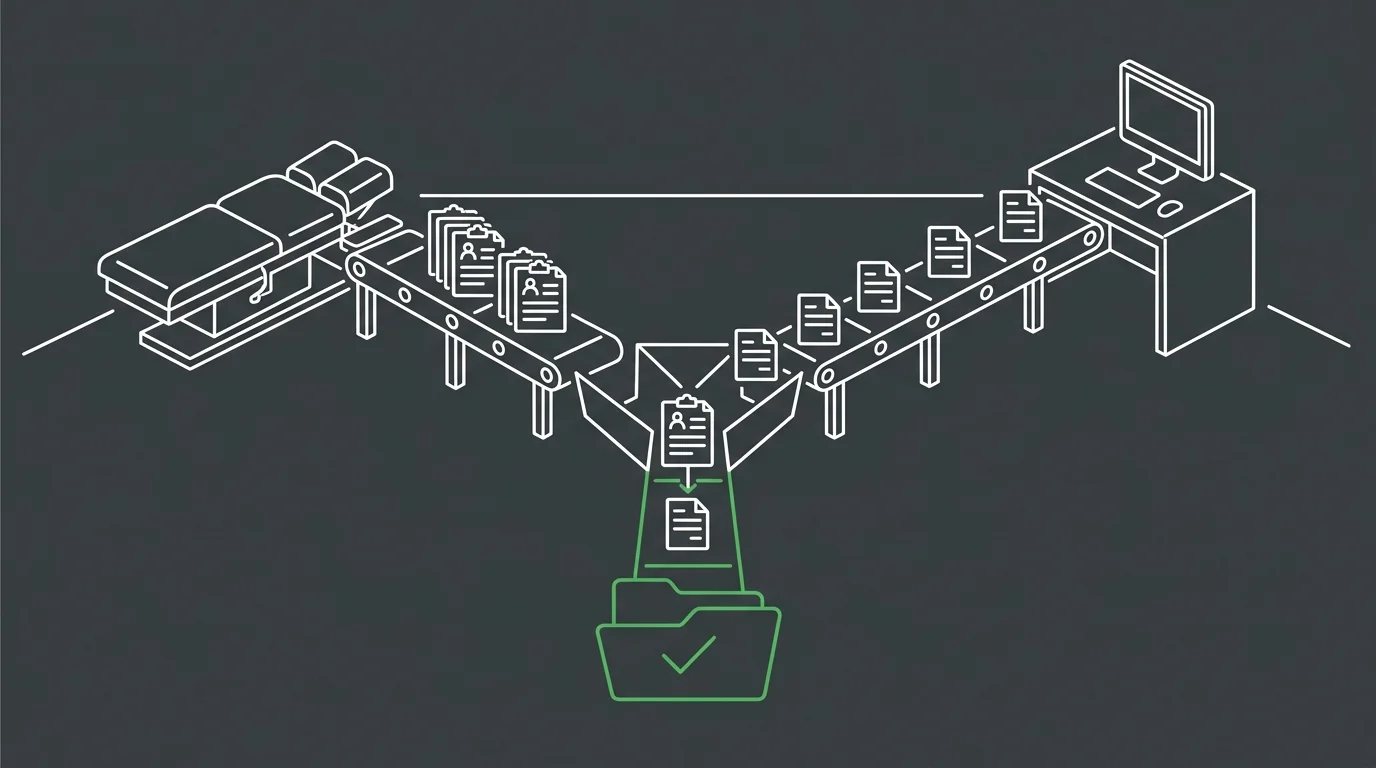
There are two ways to run this transition. One treats it as a data migration between computer systems. The other treats it as a translation between two clinical languages.
Only one of those models survives contact with a payer. Transitioning to a new chiropractic billing partner is a foundational business decision, not just an administrative hand-off.
The Two Teams Being Merged Into One Revenue Cycle
Credentialing, correctly understood, is the process of integrating two teams—your clinical staff and their billing specialists—into a single, efficient revenue cycle unit. That merger is where the translation work actually happens.
A biller who never learns to read a chiropractor's documentation the way a clinician writes it will misread the chart before the claim ever ships. Understanding why chiropractic claims trip up generalist billers explains what that misreading costs a practice downstream.
Why the First 30 Days Are Measured in Systems, Not Collections
Revenue in month one is not the scorecard. The first 30 days are less about immediate collections and more about establishing the systems, security, and communication that enable long-term financial health.
Those systems are what carry every claim after them. Skip the translation work now, and every denial traces straight back to this same starting point.
Why Treating This As a Data Migration Sets Up Claims to Fail
A data migration mindset treats every chiropractic note like a generic medical record. That assumption breaks the claim before it ever reaches a payer.
| Documentation Element | What Gets Missed | Result on the Claim |
|---|---|---|
| Chief complaint | A generic intake note instead of the specific clinical language a payer expects | Claim lacks medical necessity detail and draws a denial or request for records |
| Treatment plan | Frequency, duration, and clinical goals treated as boilerplate rather than case specific reasoning | Payer cannot verify ongoing necessity, and continued care gets flagged or cut off |
| Spinal regions treated | Each region documented in the note but not carried through to the coded claim | Coding understates the visit, and reimbursement falls short of the care delivered |
| Clinical progress notes | Subtle changes in patient response read as routine updates instead of billing signals | Claim history looks static, inviting scrutiny on medical necessity for continued treatment |
Where Generalist Note Translation Breaks Down
Generalist billing operations move fast because they treat documentation as a form to route, not a clinical statement to read. A How to Safely Transition EHR Credentials and Set process built around clinical translation catches what a volume-first workflow skips.
The Documentation Gaps That Turn Into Denied Claims
Denials trace back to specific documentation gaps, not random processing errors. CMS documents that missing or inadequate treatment plans, unclear chief complaint, and failure to document all treated spinal regions are common reasons for chiropractic claim denials. And those failure patterns hold true across chiropractic claims generally, not just Medicare submissions.
How Protected Health Information Moves Between Systems Without Breaking Compliance
Clinical accuracy gets a claim paid. Data access decides whether the practice ever gets sued for how that claim moved. Both pillars carry equal weight in the first 30 days.
The Written Assurances a Billing Partner Must Have Before Touching a Chart
No chart moves before a signed agreement exists. That is not a preference; it is a legal floor under the whole relationship.
Work available through the U.S. Code indicates a covered entity may disclose protected health information to a third-party billing company if the covered entity obtains satisfactory assurance that the business associate will appropriately safeguard the information through a written contract or other written agreement meeting applicable requirements.
That written agreement has to be executed before credentials are issued, not after access is already open.
What a Compliant Access Handoff Looks Like Step by Step
Access opens in a fixed order, not all at once. The signed agreement comes first, then scoped system credentials, then a documented record of exactly which charts the partner can see.
A biller that skips straight to system access without that sequence tends to skip the clinical reading step too, which is exactly what shows up in a breakdown of chiropractic documentation errors by generalist billing teams.
Building the Credentialing and Enrollment Timeline Payer by Payer

Credentialing almost never wraps up in a single moment. Payers move on their own clocks, so a practice can be live with one carrier and still pending with three more.
| Setup Task | Typical Timing Window | Dependency |
|---|---|---|
| Business associate agreement execution | Before any system access opens | Must be signed before chart data can be touched |
| Scoped system credential provisioning | Immediately after the agreement is signed | Depends on the agreement being finalized first |
| Payer credentialing verification for existing carriers | Runs in parallel with documentation review | Depends on prior credentialing records being confirmed as active |
| New payer enrollment applications, highest-volume payers first | Ongoing, staggered by payer response schedule | Depends on patient volume data to set application order |
| Claims submission to confirmed payers | Begins as soon as each payer confirms active status | Depends on payer-by-payer credentialing confirmation, not a single practice-wide date |
| Documentation review and translation training | Runs continuously alongside credentialing | Depends on access to prior clinical notes and chief complaint records |
What Runs in Parallel While Credentialing Is Pending
Holding every claim until the last approval lands wastes a window that's already open. Claims ship to the payers where credentialing is confirmed, while documentation review and system access keep running in the background for the rest. That parallel setup keeps revenue moving instead of stalling behind the slowest payer on the list.
The Order Payer Applications Should Actually Go Out In
Order beats speed here. Applications go out first to the payers carrying the highest patient volume, so any approval delay hits the smallest slice of claims possible. A Billing Services approach that plans this sequence on purpose sidesteps the stall points a first-come, first-served habit builds in.
Measuring Whether the First 30 Days Actually Worked
A clean 30-day setup doesn't hand you one tidy number to point at. It shows up in whether the checklists closed on schedule and whether every handoff had a name attached to it. Proactive communication and transparent checklists are what mark a successful transition, and that's how no critical step gets missed.
| Metric | What It Signals | Source of the Figure |
|---|---|---|
| Checklist completion rate | Whether proactive communication and transparent checklists closed on schedule, with no critical step missed | Transition process tracking |
| Denial rate tied to missing treatment plans or unclear chief complaint | Whether documentation gaps that commonly cause chiropractic claim denials are shrinking instead of repeating | Claim denial pattern review |
| Denial rate tied to undocumented spinal regions | Whether claims now document all treated spinal regions, closing a documented cause of denial | Claim denial pattern review |
The Metrics That Matter More Than a First Check
First-month collections tell you almost nothing yet. What matters is whether the denial patterns tied to incomplete chief complaints and undocumented spinal regions are shrinking instead of repeating. That trend line is the real scorecard, because it proves the translation work is holding under payer scrutiny.
Migrating Open Claims and Unresolved Accounts Receivable Without Losing Revenue
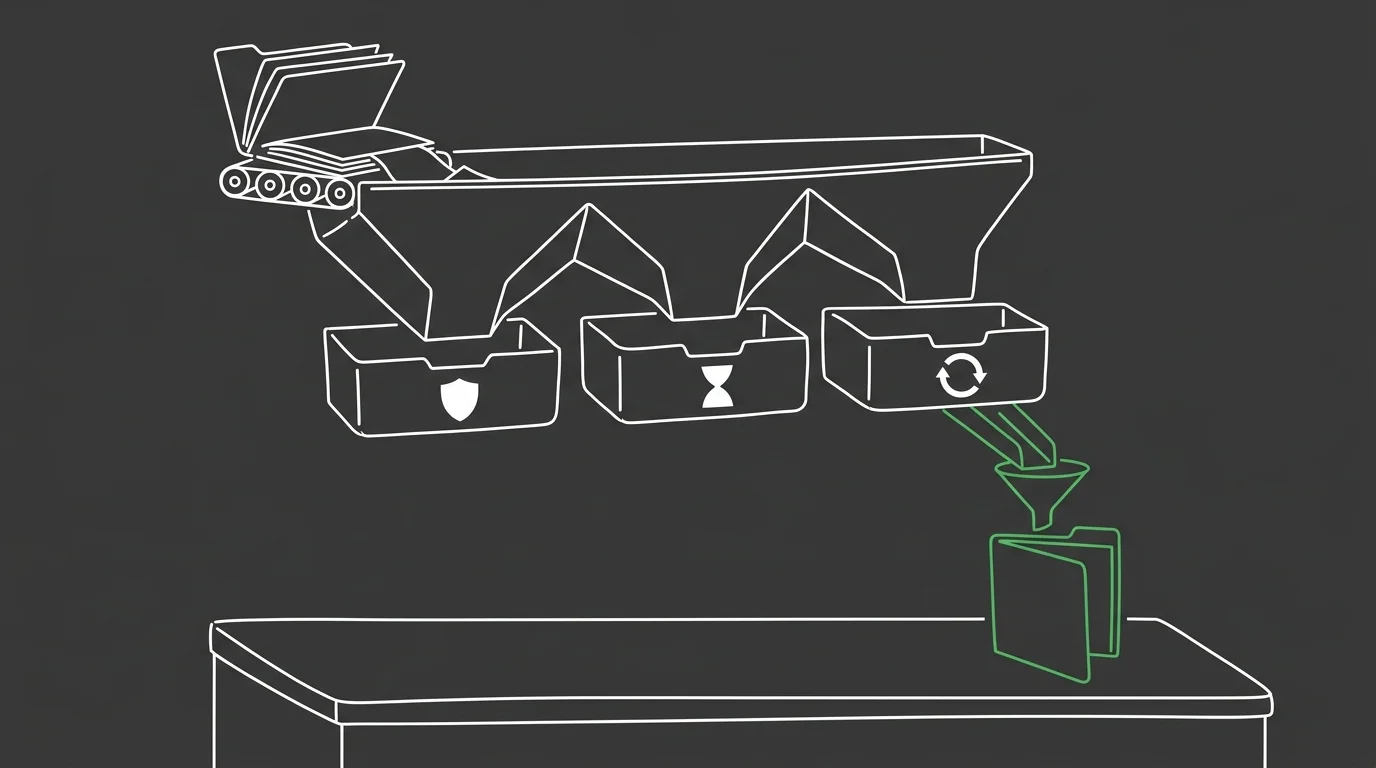
Open claims and aged accounts receivable don't vanish when a practice switches billing partners. They move. And how they move decides whether that revenue survives the transition at all.
Sequencing the Handoff So Nothing Falls Between Two Systems
New claims and old claims need separate lanes from day one. Claims generated after the switch flow through the new credentialing and documentation review process already described. Claims already in flight with the prior biller need their own tracking, so nothing sits untouched while attention shifts to the new workflow.
Sorting the Old Ledger Before a Single New Claim Goes Out
Sort the old ledger before a single new claim ships. Every open claim and aged balance gets sorted by payer, age, and denial status, never dumped in one undifferentiated pile. That sorting is what turns inherited accounts receivable into a worked list instead of a write-off.
Frequently Asked Questions
The sequenced walkthrough answers the strategic questions. These are the mechanical ones practices ask before they sign anything.
How will a new billing partner securely access a practice's EHR system?
Access opens only after a written agreement satisfying HIPAA business associate requirements is signed. That contract has to exist before any chart or login is issued, not after.
What documents and credentials are needed during the first week of credentialing?
Expect to hand over payer contracts, National Provider Identifier documentation, and current credentialing status with each carrier billed. Documentation samples showing how chief complaints and treatment plans get recorded are reviewed early too.
Will claim submission continue uninterrupted during the transition to a new billing partner?
Claims continue going out to payers where credentialing is already confirmed. Documentation review and system setup run in parallel for the rest, so submission does not stall behind the slowest approval.
What performance reports should appear within the first 30 days?
Expect a baseline report on claim submission timelines, denial patterns inherited from prior billing, and outstanding accounts receivable. That baseline is a starting measurement, not a performance verdict.
How are old or denied claims from a previous biller handled during transition?
Old claims and new claims run in separate lanes from day one. Every inherited claim and aged balance gets sorted by payer, age, and denial status, never left sitting untouched.
How long does payer credentialing typically take during initial setup?
Timelines vary by payer, and approvals rarely land on the same day. That is why applications go out first to the highest-volume payers, so delays hit the smallest share of claims possible.
What is the most common reason a chiropractic claim gets denied?
Incomplete documentation, almost every time. Missing or inadequate treatment plans, an unclear chief complaint, or undocumented spinal regions treated are common reasons chiropractic claims get denied.
The First 30 Days Set the Ceiling for Everything After
A chiropractor's SOAP note is written in one language. A claim form is written in another. The first 30 days decide whether that translation happens correctly, or whether it gets guessed at every month after.
Transitioning to a new chiropractic billing partner is a foundational business decision, not just an administrative hand-off. Treat it like a file transfer and the errors compound quietly for years. Treat it like the clinical translation work it actually is, and the systems built in that first month hold up under every payer that tests them.
That translation work doesn't happen by accident. It happens because a peer relationship, not a vendor relationship, is doing the reading. If you want your first 30 days to look like that from day one, book a call with Bushido Billing.