

Human Intelligence vs. Automated Status Updates: Which One Actually Resolves Denials?
Automated billing platforms can submit claims. They cannot resolve denials. That gap is where chiropractic practices lose revenue they never knew was gone.
When a claim is denied, the software logs it. Flags it. Sends a status update. A smoke alarm tells you there’s a fire. It doesn’t put it out.
Actual resolution requires human judgment – someone who understands why the claim was denied, what documentation is needed to overturn it, and how to work payer-specific appeal requirements for chiropractic services.
The clinical specificity of chiropractic billing makes that gap worse. Medicare requires the AT modifier on every active-care claim to distinguish medically necessary treatment from non-covered maintenance therapy. The Centers for Medicare and Medicaid Services also mandates documentation of the specific subluxation diagnosis and precise spinal levels adjusted on every claim. Under American Chiropractic Association documentation standards, practices must demonstrate quantifiable functional progress to support ongoing care – and missing that documentation is one of the most common drivers of medical necessity denials.
These aren’t fields a software template fills in correctly by default. They’re clinical judgments. And when they’re wrong, no algorithm writes the appeal.
The data shows how often that falls apart. Chiropractic billing errors frequently exceed 50% under strict Office of Inspector General reviews, with the majority of audited claims failing to meet basic documentation requirements for active treatment. In many cases, automated templates contributed directly – EHR copy-paste features and standardized note cloning can obscure a patient’s actual clinical presentation and trigger documentation audits.
Human expertise isn’t optional overhead. It’s the resolution mechanism. Software reports the problem. A skilled biller solves it.
What Automated Billing Platforms Actually Do (And Don’t Do)
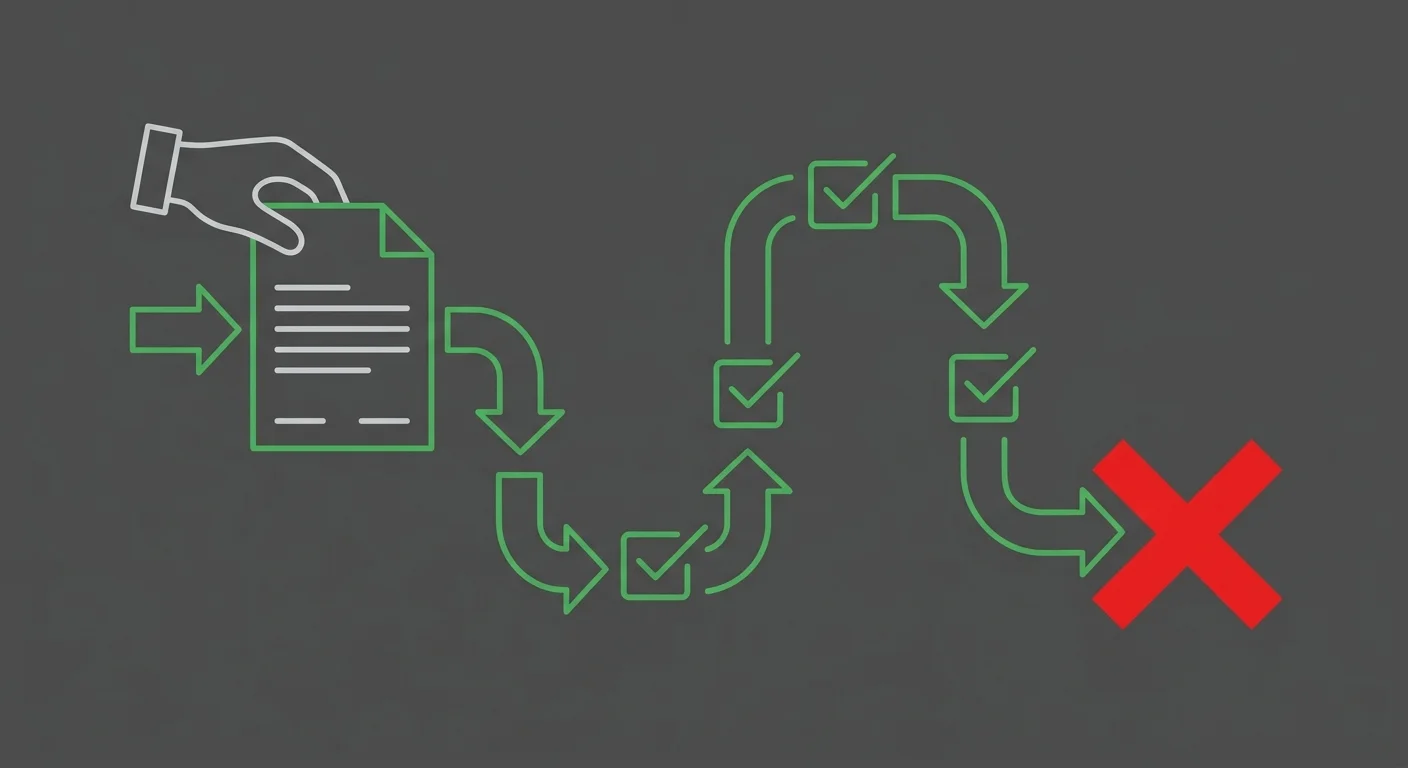
Automated billing platforms are submission engines. They validate fields, format data, and push claims through the clearinghouse. For clean, straightforward claims, they do that job well.
But the design stops at submission. Once a claim goes out, the platform moves on. Status tracking, dashboard flags, and denial alerts are the ceiling – not the floor. The system tells you the claim failed. It doesn’t do anything about it.
That gap – between knowing a claim failed and actually resolving it – isn’t a bug. It’s a design choice.
Automation scales volume. It doesn’t work exceptions. That distinction matters more than any feature list a billing platform will ever put in front of you.
The Submission-First Design Problem
The submission-first model works fine – for the easy stuff. Clean codes, no modifier questions, no medical necessity scrutiny. The platform was built for those claims, and it handles them.
The moment a claim needs something more, the model breaks. And EHR-driven automation doesn’t just fail – it often makes the problem worse.
Copy-paste documentation features and standardized note templates can obscure what the patient’s clinical record actually shows. That turns a documentation gap into a full documentation audit. According to this published analysis, EHR-induced errors frequently stem from template-driven cloning that masks what the payer actually needs to see.
A dedicated biller working that claim catches the problem before it compounds. A platform just logs it.
The practices that learn this the hard way are usually the ones sold on EHR claim submission tools as a complete billing solution.
They’re not. Submission is the floor. Revenue recovery is a different discipline – and it requires a different kind of expertise.
That’s why the gap between a dedicated biller assigned to your practice and a general pool pulling from a shared queue is where that discipline either exists or doesn’t.
Why the Alert Is Not the Answer
A smoke alarm tells you there’s a fire. It doesn’t put it out.
That’s what an automated billing alert does. It detects the problem and stops. Denial resolution starts exactly where the alert ends.
Automated systems handle routine data entry well. That’s documented, and it’s true. What they don’t handle is the non-standard bottleneck.
A disputed medical necessity determination isn’t routine data entry. A multi-step payer appeal with clinical documentation attached isn’t routine data entry.
Those are the exact situations where a human has to move the claim forward. And when no one does – when your platform just sits quiet – that silence is the clearest signal that no one is actually working the file.
| Billing Function | What Automated Platforms Do | What Automated Platforms Cannot Do |
|---|---|---|
| Claim Submission | Validates fields, formats data, and routes claims through the clearinghouse for clean, code-compliant claims | Cannot identify or correct clinical documentation gaps before submission that will trigger a denial downstream |
| Denial Logging | Flags denied claims and records the payer’s rejection code in the dashboard | Cannot interpret why the denial occurred, what documentation is missing, or which payer-specific appeal pathway applies |
| Status Tracking | Generates automated alerts and updates claim status in the billing queue | Cannot take any action on a flagged claim – the alert is the end of the platform’s involvement |
| Documentation Handling | Populates claim fields using EHR templates and auto-filled data pulled from the patient record | Cannot evaluate whether the clinical documentation actually supports medical necessity or meets payer-specific standards for active chiropractic care |
| Modifier Application | Applies modifiers based on coded rules and template logic | Cannot exercise clinical judgment to determine whether a modifier is defensible under payer review or to correct a modifier error after a denial is issued |
| Denial Resolution | Routes denied claims to a worklist or rejection queue | Cannot craft a medical necessity argument, attach supporting clinical documentation, or execute a multi-step appeal – that work requires a skilled human biller |
| Payer Communication | Transmits claims and receives electronic remittance data | Cannot initiate outbound contact with a payer to dispute a determination, request reconsideration, or navigate payer-specific appeal requirements for chiropractic services |
Why Automated Status Updates Cannot Resolve a Chiropractic Denial
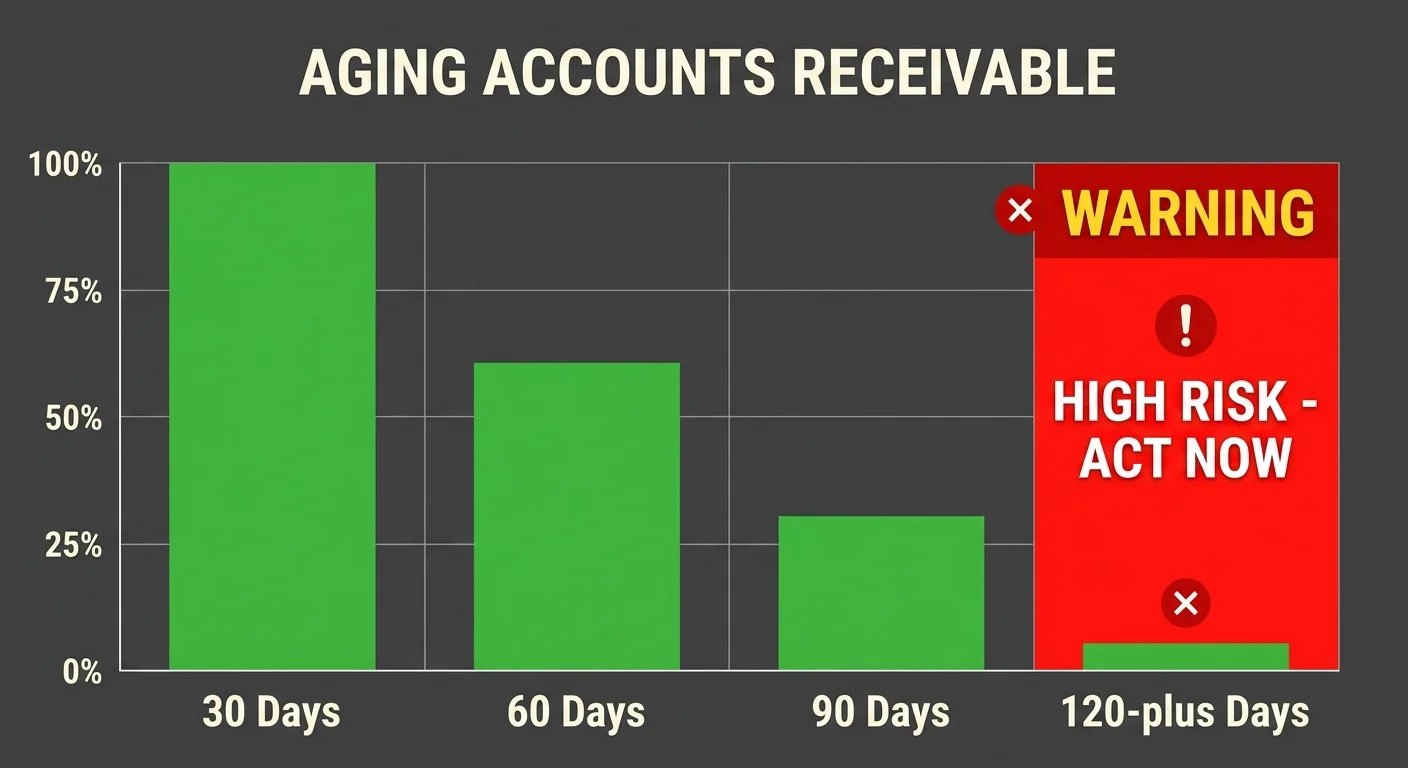
Knowing a claim was denied isn’t the same as fixing it. Automated status updates tell you the first thing. They can’t do the second.
When a chiropractic denial comes back, the platform logs it. The dashboard flags it. Maybe a notification fires.
And then nothing happens.
The system has no pathway to argue the denial. It can’t find the documentation gap. It can’t write a payer-specific response that addresses the actual objection. The alert fires. The claim keeps bleeding.
Chiropractic billing errors frequently exceed 50% under strict Office of Inspector General reviews. The majority of those audited claims failed on documentation requirements for active treatment.
That’s not a submission problem. That’s a resolution problem.
Automated platforms aren’t built to solve it. They’re built to move on.
The Volume-First Model and the Claims It Abandons
Volume-first billing is built for throughput. The metric is claims submitted per day – not revenue recovered per quarter. Those aren’t the same number. In a volume-first operation, complex claims aren’t a priority. They’re a drag on the model.
Clean claims move fast. Correct codes, no modifier issues, no documentation questions – the platform was built for those.
But a denied chiropractic claim that needs a medical necessity argument, a modifier dispute, or a clinical documentation review? That takes time. It takes expertise. A high-volume operation doesn’t budget for either.
So those claims don’t get worked. They get logged. There’s a difference.
Then they age. Slowly, quietly, without a single alert.
The practice assumes someone is working on preventing revenue leakage – until the AR report shows how much has already slipped past recovery windows.
By then, the window to argue the claim is often closed. The revenue is gone.
A disputed medical necessity determination is not a data entry task. A multi-step payer appeal with clinical documentation attached is not a data entry task.
The volume-first model has no pathway for either. And nobody in the shared queue is assigned to change that. The claim sits in a line that never gets shorter.
What Happens to a Denied Claim When No One Argues It
Here’s what actually happens to a denied chiropractic claim in an automated environment: nothing.
The platform flagged it. The biller working a shared queue of hundreds of accounts moved on. The denial sits – unargued, unworked, aging.
The majority of audited chiropractic claims fail on documentation requirements for active treatment. Automation didn’t prevent those failures – in many cases, it contributed to them through template cloning and copy-paste notes that obscure actual clinical progress.
But the deeper problem isn’t the submission error. It’s that no one argues the denial afterward.
Human intervention is what moves a contested claim forward. Without it, the payer window closes. The practice never sees that revenue. And in most cases, nobody tells them it’s gone.
Silence from a billing platform isn’t stability. It’s the sound of unworked denials compounding in the background – indistinguishable from a functioning billing relationship until the AR report tells a different story.
| Denial Scenario | Automated System Response | Human Biller Response | Revenue Outcome |
|---|---|---|---|
| AT modifier missing or applied to a maintenance care claim | Flags the denial and logs it to the dashboard; no action taken | Reviews the clinical notes, confirms active treatment status, corrects the modifier, and resubmits with supporting documentation | Claim recovered; revenue returned to the practice |
| Medical necessity denial – payer disputes clinical justification for ongoing care | Records the denial code; no mechanism to draft or submit a rebuttal | Pulls the patient’s functional progress notes, identifies the documentation gap, and crafts a payer-specific appeal with clinical evidence attached | Appeal advanced; claim moves toward resolution rather than aging out |
| Subluxation diagnosis missing or spinal level unspecified on the claim | Denial logged; automated alert sent to the practice with no corrective pathway | Identifies the missing documentation requirement, coordinates with the provider for the corrected record, and resubmits within the payer’s timely filing window | Resubmission completed before the appeal deadline; revenue preserved |
| Claim denied for insufficient documentation of functional progress | Status updated to ‘denied’ in the platform; dashboard count increases | Reviews ACA documentation standards against the submitted notes, flags the specific gap to the provider, and builds a compliant appeal narrative | Denial challenged with substantive clinical evidence rather than left to age |
| Multi-step payer appeal requiring clinical letter and follow-up | No follow-up capability; appeal process falls outside automated workflow design | Drafts the clinical letter, submits it through the correct payer channel, tracks the follow-up timeline, and escalates if no response is received | Multi-step process completed; claim kept active rather than abandoned |
| Aged denied claim approaching payer’s timely filing or appeal deadline | Denial remains in the queue with no urgency signal beyond a static flag | Proactively identifies the approaching deadline, prioritizes the file, and initiates the appeal before the recovery window closes | Revenue protected that an automated queue would have allowed to expire |
| Payer requests additional records before processing the claim | Record request logged; no automated mechanism to fulfill or track the response | Coordinates the records request directly with the provider, ensures timely submission, and confirms receipt with the payer | Claim moves forward rather than stalling indefinitely in a pending status |
The Human Judgment Requirements in Chiropractic Denial Appeals

Denial resolution isn’t a software problem. It’s a clinical judgment problem. And that’s exactly the gap automation can’t close.
Chiropractic claims carry regulatory and clinical specificity that no submission platform touches after a denial comes back. The modifier rules. The documentation standards. The subluxation-level requirements. These aren’t fields a system validates – they’re arguments a skilled biller has to reconstruct and defend, payer by payer, claim by claim. Software doesn’t do that work. It flags the denial and waits.
That’s where full-service insurance billing separates from submission-only workflows. Clean claim management is a commodity. Arguing a denied chiropractic claim on clinical grounds is a discipline – one that requires a biller who understands what the payer needs to see and what the documentation has to say to get there.
AT Modifier Rules and Medical Necessity Documentation
The AT modifier is the most consequential – and most misapplied – element in Medicare chiropractic billing. It goes on every active-care claim to separate medically necessary treatment from non-covered maintenance therapy. Miss it. Misapply it. Let it ride on a claim where the documentation doesn’t support active care. The denial isn’t a risk at that point. It’s a certainty.
The AT modifier isn’t a clerical checkbox. It’s a clinical assertion. It tells the payer that the provider evaluated the patient, determined active treatment is medically necessary, and documented that determination. Automation can populate the modifier field. It cannot evaluate whether the supporting documentation holds up to payer scrutiny. That review requires a person who knows what payers are actually looking for – and reads the chart to find out whether it’s there.
Under American Chiropractic Association documentation standards, ongoing care claims must show quantifiable functional progress – clear subjective and objective measures that the patient is responding to treatment. When that documented progress is absent, the denial follows. That’s not a modifier problem. That’s a clinical narrative problem. No platform reads the chart, spots the gap, and flags it before the claim goes out. No platform fights for it after the denial comes back. A biller does.
Subluxation Documentation and Spinal-Level Specificity
Subluxation documentation is where chiropractic billing gets granular fast. Payers don’t want the region. They want the level. Specific spinal levels adjusted, on every claim, every time. And practices routinely miss this.
CMS rules require x-ray or physical examination documentation to establish subluxation, and the specific spinal level must be declared explicitly on every claim. When that specificity is vague or missing, the denial follows. And when the denial comes back, a human biller has to open the chart, read what the payer is objecting to, and build a response that addresses the clinical record directly. That is not a task you hand off to a software alert.
A software dashboard flags the denial and moves on. A dedicated biller opens the file, reads the documentation, identifies the gap, and decides whether the claim is arguable – and what that argument needs to say. That’s a judgment call. It has always been a judgment call. No algorithm has ever made it.
Who This Approach Is Not For
This model isn’t for every practice. If the first question out of the gate is what’s your rate – not who works the appeals, not how often you’ll get an update, not what happens when a complex claim comes back denied – this isn’t the right conversation.
Practices that want a fully disengaged arrangement won’t get what this model produces. No EHR cooperation. No documentation follow-through. No provider availability when a claim needs clinical backup. Denial resolution is a working partnership – the biller needs access, the provider needs to be reachable, and the documentation needs to be accurate. When that cooperation isn’t there, human judgment doesn’t have the raw material it needs. The result isn’t a billing problem. It’s an operations problem.
And if insurance billing isn’t a meaningful revenue driver – if the practice runs primarily cash-pay with minimal payer complexity – the depth of expertise here isn’t what’s needed. Vertical specialization in chiropractic and allied health billing isn’t a constraint. It’s the point. Practices that need that depth already know it. Practices that don’t are better served somewhere else, and that’s a clean answer.
| Denial Type | Clinical Knowledge Required | Documentation Standard | Why Automation Fails Here |
|---|---|---|---|
| AT Modifier Dispute (Medicare Active Care) | Ability to distinguish active, medically necessary treatment from non-covered maintenance therapy; understanding of when clinical documentation supports the modifier vs. when it exposes the claim to denial | Documented evidence of active treatment necessity; clear subjective and objective measures of patient progress tied to the specific visit date | Automation populates the modifier field based on coded inputs – it cannot evaluate whether the underlying documentation supports the clinical assertion the modifier makes |
| Medical Necessity Denial | Understanding of payer-specific criteria for what constitutes medically necessary chiropractic care; ability to read clinical notes and identify where the narrative falls short of payer expectations | Quantifiable functional progress recorded with subjective complaints and objective findings; documentation must show the patient is responding to active treatment | Automated systems flag the denial code but have no mechanism to read the chart, identify the documentation gap, or construct a payer-specific argument that addresses the actual objection |
| Subluxation Documentation Deficiency | Knowledge of subluxation diagnosis coding at the spinal-level of specificity payers require; ability to distinguish between region-level and level-specific documentation and identify which is present in the chart | Primary subluxation diagnosis and precise spinal levels adjusted must be explicitly declared; x-ray or physical examination findings must establish the subluxation on record | A platform processes what the claim contains – it does not compare documentation specificity against payer requirements or flag vague subluxation references before submission or after denial |
| Maintenance vs. Active Care Misclassification | Clinical understanding of the treatment trajectory distinction; ability to assess whether the provider’s notes support an active-care determination or inadvertently document a maintenance pattern | Ongoing care claims must reflect a measurable functional goal and evidence the patient has not plateaued; any plateau language in notes undermines active-care classification | Automation cannot read clinical narrative for plateau indicators or flag treatment progression language that contradicts the modifier applied – those mismatches surface only after the payer denies the claim |
| Payer-Specific Appeal Construction | Familiarity with individual payer appeal protocols, documentation submission requirements, and the specific clinical language each payer’s reviewers look for when evaluating a contested claim | Appeal response must directly address the denial rationale, attach supporting clinical documentation, and frame the argument in terms the payer’s review criteria recognize as sufficient | No automated platform maintains payer-by-payer appeal logic or constructs a tailored clinical argument – the denial response process requires a human to assess the objection and decide how to answer it |
| Documentation Gap Identification (Pre-Submission) | Ability to review clinical notes before a claim goes out and identify whether the documentation supports the codes, modifiers, and care classification being billed | Notes must substantiate every element of the claim – diagnosis, treatment rendered, clinical rationale, and active-care status – before the claim leaves the practice | Submission platforms validate field formats and code combinations – they do not evaluate whether the clinical story in the chart actually supports the billing on the claim |
How a Weekly Communication Loop Changes Denial Outcomes
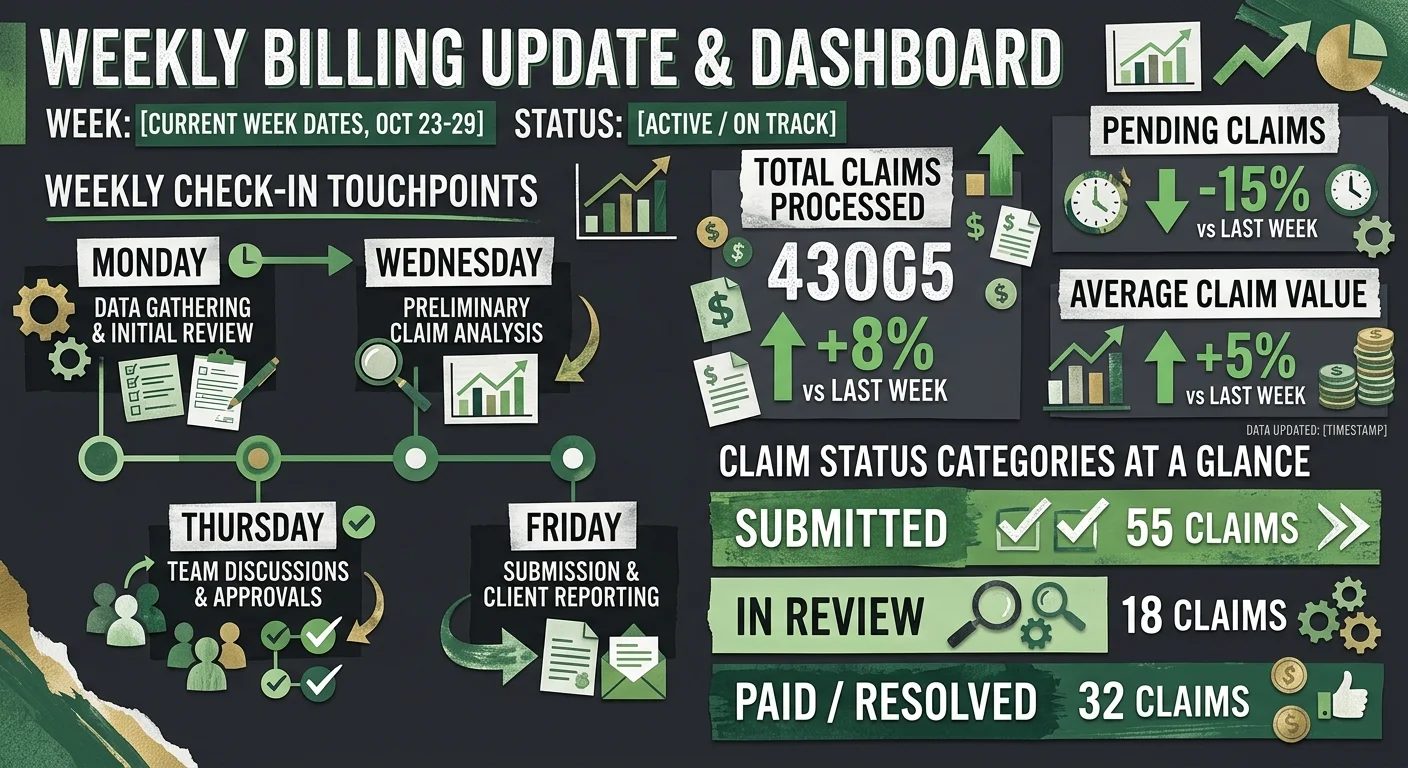
Human judgment fixes the denial in front of you. But a structured weekly communication loop is what stops the next ten denials from quietly stacking up while the practice assumes everything’s running clean.
Most billing relationships don’t break because the biller can’t work a denial. They break because no one surfaces what’s happening while it’s still fixable.
A denied claim that gets attention in two weeks is recoverable. The same claim at ten weeks often isn’t. That gap isn’t a technical problem. It’s a communication problem.
The difference between those two outcomes is whether someone is actively tracking the file – and telling the practice what they’re finding before the window closes.
That’s what the weekly update model is built for. Not a courtesy. A structural safeguard against the silence that turns workable denials into written-off revenue.
The Structural Difference Between Alerts and Updates
An alert tells a practice something went wrong. An update tells a practice what it means, what’s being done about it, and what comes next.
Those aren’t versions of the same thing. They’re different functions entirely.
Automated status updates are alerts. A denial flag fires. The dashboard registers it. A notification reaches someone – maybe.
There’s no follow-through built into that system. The alert did its job. The claim is still sitting there unpaid.
Practices that want real visibility – not just confirmation that something broke – need a structure a software dashboard isn’t designed to provide.
A weekly communication cadence closes that gap. Someone has reviewed the claim file, identified what’s pending, and is telling the practice what’s moving, what’s stalled, and why.
Chiropractic billing errors frequently exceed 50% under strict OIG reviews – and the majority of those failures trace back to documentation problems for active treatment. Problems that show up in the denial, not at submission.
Catching those patterns early and communicating them before they compound – that’s the job. Automation has no mechanism for any of it.
How a Dedicated Biller Tracks and Escalates Denials
A dedicated biller doesn’t just work claims. They track patterns.
When chiropractic claims come back denied for missing functional progress documentation – the quantified objective measures the American Chiropractic Association requires to support ongoing care – a dedicated biller sees that pattern across the entire claim file.
They flag it. They communicate it. And they work with whoever can fix the underlying documentation problem before the next batch goes out with the same flaw baked in.
That’s active file management. It’s also what separates a billing partner from a billing platform – and it’s exactly the operating model that lets practices regain control of the revenue cycle without adding a single hour to the provider’s workload.
The escalation piece matters just as much. When a denial requires a clinical narrative – when an AT modifier dispute hinges on whether the documentation actually supports active medically necessary treatment rather than maintenance care – a dedicated biller decides whether the claim is arguable, constructs the argument, and moves it forward.
That decision happens because someone is assigned to the file. They know its history. They have the context to act.
A shared queue doesn’t produce that. A volume model doesn’t budget for it. The EHR claim submission tools that practices mistake for billing solutions don’t even have a pathway for it.
A dedicated biller model assigned to your practice does. And the weekly communication loop is what ensures none of that work happens in the dark.
| Communication Model | What the Practice Knows Each Week | Denial Escalation Pathway | AR Visibility |
|---|---|---|---|
| Automated status alerts | A notification that a denial occurred – no context, no cause, no next step | No embedded pathway – the alert fires and stops; escalation depends on whether someone at the practice notices and acts | Dashboard view of claim status only – aging AR is visible as a number, not as a workable or unworkable file |
| Weekly human communication loop | What is pending, what is stalled, why it is stalled, and what is being done about it – delivered in plain language by the biller working the file | The biller identifies denial patterns, determines whether a claim is arguable, constructs the clinical narrative, and moves it forward without waiting for the practice to ask | Full AR context – which claims are workable, which are aging toward the point of no return, and what action is underway on each |
| Silent billing relationship (no structured cadence) | Whatever the practice can piece together by pulling reports – no proactive summary, no pattern identification, no explanation of what the numbers mean | Denials sit until the practice notices the AR aging or revenue drops – escalation is reactive and often late | AR report exists but is uninterpreted – the practice sees the aging columns without knowing which claims are still recoverable |
| Volume-first billing model | Submission confirmations and aggregate denial counts – high-level throughput data, not file-level intelligence | High-complexity denials requiring medical necessity arguments are deprioritized – escalation pathway exists in theory but is not budgeted into the model | AR is tracked at volume, not at the level of individual claim workability – the files that need the most attention get the least |
Frequently Asked Questions
Sure, human judgment sounds better than automated alerts. But practices running on software dashboards have a real question: where exactly does the model break – and what does a different structure actually look like?
These are the questions practices ask before they change anything. Here are straight answers.
Can our EHR software handle denial resolution automatically?
No. And the distinction isn’t subtle.
An EHR handles claim submission. That’s the front end of the billing process. Denial resolution is what happens after the claim comes back rejected – and no EHR has a mechanism for that. There’s no pathway in the software to read the denial reason, evaluate the clinical record, determine whether the documentation supports a credible appeal, and construct the argument.
EHR-induced errors make it worse. Automated templates and copy-paste features can obscure the patient’s actual clinical presentation. A claim that went out may already be built on documentation that won’t survive payer scrutiny. When the denial arrives, the platform flags it. What happens next depends entirely on whether a human being is assigned to work it.
Submission and resolution aren’t the same function. Practices that treat them as interchangeable are the ones watching their AR climb.
Why does automated claims tracking fail to recover aged accounts receivable?
Because tracking isn’t the same as working.
Automated claims tracking tells a practice a claim is outstanding. It doesn’t assign anyone to pursue it, evaluate whether it’s still arguable, or escalate before the payer’s timely filing window closes. The dashboard stays current. The claim stays unpaid.
Aged AR compounds silently. A denied claim that’s workable at two weeks becomes significantly harder to recover at ten – and at some point, it isn’t recoverable at all. The automated system can’t distinguish between those stages. It records the status. It doesn’t change it.
Chiropractic billing errors frequently exceed 50% under strict OIG reviews, and the majority trace to documentation problems for active treatment. Those problems surface in the denial – not at submission. Catching them before they age requires someone actively reviewing the file. Not a platform logging it.
How does a dedicated human biller outperform automated status updates on complex chiropractic denials?
The difference is judgment – and judgment requires context a shared queue doesn’t have.
A dedicated biller assigned to a practice knows the file. They know which claims are pending, which denials have already been addressed, and which payer patterns keep showing up. When a denial requires a clinical narrative – when an AT modifier dispute hinges on whether the documentation actually supports active, medically necessary treatment rather than maintenance care – a dedicated biller can evaluate whether the claim is arguable and what that argument needs to say.
Chiropractic claims carry documentation requirements specific enough to trip up any generic workflow. CMS mandates that every claim identify the primary subluxation diagnosis and the precise spinal level adjusted – not the region, the level. When that specificity is missing, the denial is predictable. When it’s present but buried in a template-generated note, the biller has to read the chart, locate the relevant documentation, and decide whether it supports a successful appeal. Under American Chiropractic Association documentation standards, ongoing care claims must also demonstrate quantifiable functional progress – and a dedicated biller catches that gap before it becomes the next denial.
A volume model doesn’t budget for any of that. A dedicated biller does – because that’s the structure.
What are the structural limitations of relying on billing software algorithms for chiropractic claims?
Billing software algorithms are built for clean claims. That’s not a flaw – it’s the design. And the design has a ceiling.
When a claim is straightforward – standard coding, no modifier complexity, no documentation gaps – the algorithm processes it efficiently. The moment a claim requires human judgment, the algorithm has nothing to offer. It can log the denial. It can’t read the clinical record, evaluate whether an appeal is arguable, or construct the argument that gets the claim paid.
EHR systems add their own structural risk. Copy-paste features and automated templates can obscure the patient’s actual clinical presentation – producing documentation that looks complete but won’t hold up under payer scrutiny. The platform submitted the claim in good faith. The audit that follows doesn’t care.
This isn’t a deficiency a better platform would fix. It’s a category problem. Algorithms process data. Chiropractic denial resolution requires reading a clinical record, applying payer-specific knowledge, and making a judgment call about what the appeal argument has to say. Those aren’t algorithmic functions. They never have been.
How does a weekly communication model prevent hidden revenue leakage in a chiropractic practice?
By making the invisible visible – before it becomes unrecoverable.
Billing revenue rarely disappears in a single event. It erodes. A denied claim sits unaddressed. A documentation pattern repeats across a dozen claims. A payer’s timely filing window closes while the practice assumes someone is working the file. By the time it shows up in an AR report, the most recoverable window has already passed.
A weekly communication model changes that structure. Someone has reviewed the claim file, identified what’s pending and what’s stalled, and is telling the practice what it means – and what happens next. That’s not a status update. It’s active file management on a reliable cadence, before the problem compounds.
Chiropractic billing errors frequently exceed 50% under strict OIG reviews, and the documentation failures driving those errors – missing functional progress measures under American Chiropractic Association standards, incomplete subluxation specificity – are exactly the patterns a weekly review loop catches early. A practice that hears about a documentation issue after ten denied claims is in a fundamentally different position than one that hears about it after two. That difference is the weekly communication model.
The Bottom Line on Denial Resolution
Automated platforms don’t resolve denials. They record them.
That gap – between logging a problem and actually working it – is exactly where chiropractic practice revenue disappears. The system flagged the claim. Someone still has to fight for it.
A smoke alarm tells you there’s a fire. It doesn’t put it out.
Practices still relying on status dashboards and automated alerts to manage their denial pipeline aren’t just waiting for resolution. They’re watching recoverable revenue age past the point of return – while the dashboard stays current and the AR keeps climbing.
Every week a denied claim sits unworked is a week the argument gets harder to make. And a week closer to the payer’s timely filing limit.
Human judgment doesn’t just make the argument better. It makes the argument at all. Automation never does.
Bushido Billing was built on one premise: submitting a claim isn’t billing. Getting paid is billing.
That means a dedicated biller assigned to your practice – not a shared queue, not a software dashboard. It means a weekly communication loop so nothing ages in the dark. And it means clinical fluency specific enough to defend the claims that get challenged most: AT modifier disputes, medical necessity arguments, subluxation documentation reviews.
If your current billing setup can’t do all three, it isn’t resolving denials. It’s processing them. And every unworked denied claim is one week closer to the payer window that closes for good – and takes the revenue with it.
Logging denials isn’t the same as resolving them. If your billing setup is tracking what’s failing but nobody’s working the file, you’re watching revenue age out in real time. Bushido Billing exists for exactly that gap – Book a Call and find out what your revenue cycle is actually recovering, and what it isn’t.

© . All Rights Reserved | Web Design by iTech Valet