

How to Read Your Weekly Chiropractic AR Aging and Revenue Reports?
A weekly chiropractic AR aging and revenue report is a financial diagnostic tool – not a filing exercise. It tells a practice exactly where its insurance revenue stands: which claims are moving, which are stalled, and which are approaching the point of no return.
Reading it correctly starts with four aging buckets. Current (0-30 Days): recently submitted claims inside normal payer processing windows. At-Risk (31-60 Days): claims without a response that need active follow-up now. Danger Zone (61-90 Days): denied, held, or ignored claims requiring immediate human intervention. Critical (90+ Days): revenue aging past the point where most payers will honor appeals without significant escalation.
Chiropractic billing adds complexity that makes weekly review non-negotiable. Medicare reimbursements for spinal manipulation are calculated using annually adjusted conversion factors and relative value units under the Medicare Physician Fee Schedule. Claims must document active, corrective care – not maintenance care – and require the AT modifier to confirm medical necessity. Documentation deficiencies are a primary driver of audit exposure, with strict adherence to objective improvement markers required to sustain coverage.
AR reports are a clinic’s financial indicators. A revenue report paired with the AR aging snapshot shows total collections against expected reimbursement, denial patterns by payer, and whether cash flow reflects actual services rendered. These two reports together are not a monthly compliance check. They are a real-time measure of billing health – one that requires a trained eye to interpret and act on every single week.
What a Weekly Chiropractic AR Aging Report Actually Tells You
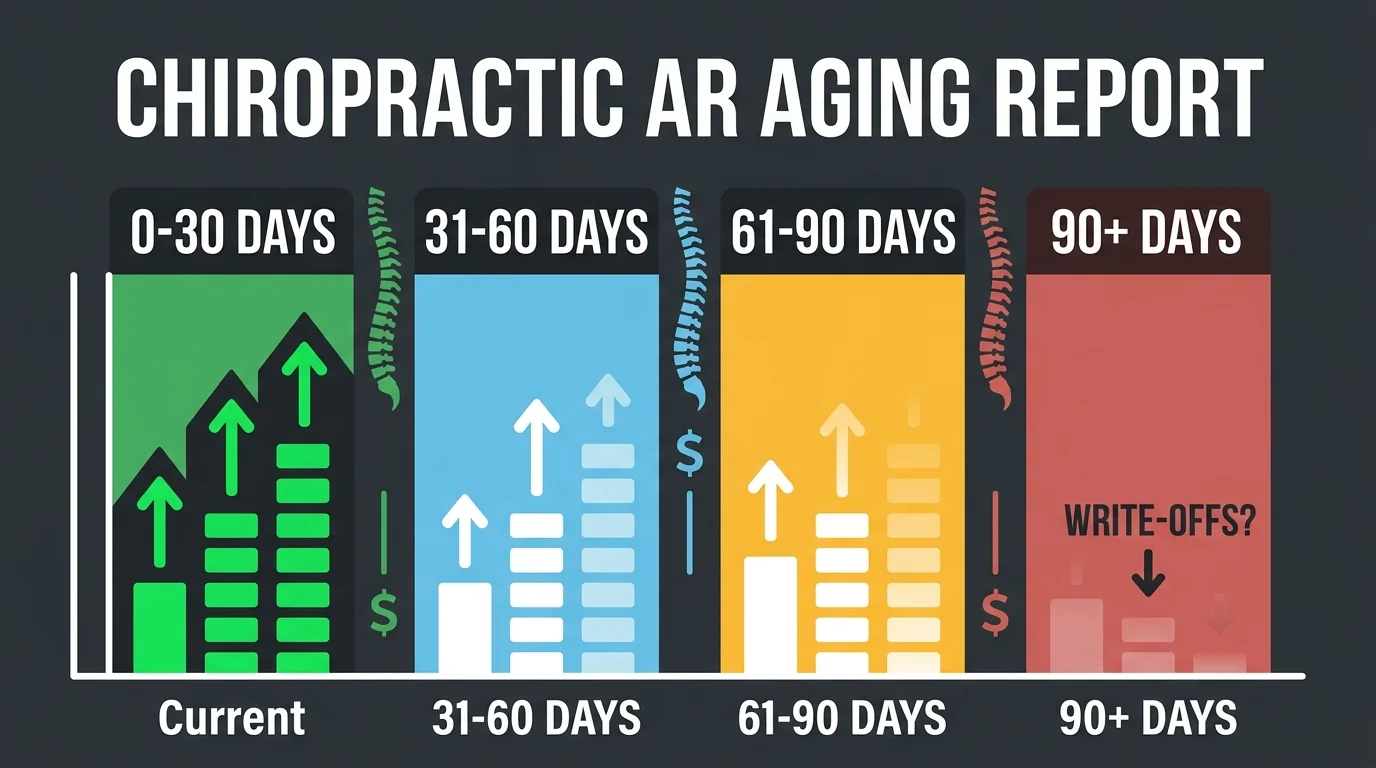
A weekly AR aging report is not a spreadsheet to file away. It’s a signal.
The way a provider reads a patient chart to make a clinical call, a billing partner reads the AR report to make a revenue call. Same logic. Same stakes. And the same cost when nobody’s paying attention.
Here’s what it tracks: which claims are moving, which have stalled without a payer response, and which are aging into territory where recovery gets exponentially harder.
That last category isn’t an administrative footnote. That’s where practice revenue disappears – permanently.
But the report only tells you something useful if you know what each layer means – and what to do the moment a number moves wrong.
That’s the difference between reading an AR report and acting on one. Recovery is not automatic.
The Four Aging Buckets and What Each One Means
The Current (0-30 Days) bucket is the healthiest signal in the report. Claims here are inside normal payer processing windows and don’t need intervention yet.
But ‘no intervention’ doesn’t mean no attention. The job at this tier is confirmation: clean submission, no early rejection flags, nothing quietly sliding toward the next bucket before anyone notices it’s moved.
The At-Risk (31-60 Days) bucket is where attention earns its keep. A claim sitting here without a payer response isn’t moving on its own – it’s stalling.
Active follow-up is what separates a recovered claim from one that quietly ages past the point of return. Not automated resubmission. Direct payer contact. A person making a call and staying on it. Automation doesn’t do that. It resubmits. It doesn’t advocate.
The Danger Zone (61-90 Days) and Critical (90+ Days) buckets aren’t filing categories. They’re financial emergencies.
AR recovery probability drops sharply past the 90-day mark. Every week a claim sits unworked in those buckets, the practice loses ground – and revenue it won’t get back. There’s no catching up. There’s only damage control.
Why Weekly Frequency Changes Everything
Monthly AR review sounds reasonable – until you see what a billing cycle actually looks like in practice.
A claim denied at day 18 that goes unread until day 45 is already halfway to the Danger Zone (61-90 Days) before anyone raises a hand. That’s not a worst-case scenario. That’s the standard outcome of a monthly review cadence.
Weekly review compresses that exposure window. It catches movement – or the absence of it – before a stalled claim crosses into the next aging bucket.
For chiropractic practices, the margin on each claim is narrow. Medicare reimbursements for spinal manipulation are calculated using annually adjusted conversion factors and relative value units per published fee schedule data. Miss the correction window on a coding issue, and there’s no recovering that revenue. The payer won’t come back to you.
So the frequency isn’t a reporting preference. It’s a recovery mechanism.
A billing partner running on a weekly cadence isn’t doing more paperwork. It’s catching revenue before it expires.
Why Most AR Reports Tell You Less Than You Think
Most practices assume their AR report is an accurate picture of billing health.
It’s often not. A report pulled from an EHR system or clearinghouse shows submission activity – not recovery activity. Those aren’t the same thing. One tells you claims went out. The other tells you money came back.
Administrative friction reduces clean claim rates – and that friction shows up in the numbers. But only if the reader knows what to look for.
An AR report showing a low Critical (90+ Days) balance looks healthy at a glance. But if claims are being written off before they age rather than worked through, that balance is low because revenue was abandoned – not because it was collected. Those two outcomes look identical in the report. They’re not. And the difference between them is the entire margin of a chiropractic practice.
That distinction is exactly why dedicated account ownership changes the outcome. A biller who owns the account reads the same report differently than one rotating across dozens of practices.
They know which payers are slow-walking specific codes. They know which denial patterns are trending. And they know which stalled claims still have a viable appeal path – versus which ones are genuinely gone. That’s not a software output. That’s pattern recognition built from working the same account week after week.
And for practices that want to verify what recovery patterns are appearing week over week, pairing the AR aging report with real-time billing data closes the loop.
The AR report tells you where claims stand. The real-time data tells you whether the pattern is improving or compounding. Together, they’re not a snapshot – they’re a trend line. That’s the complete picture. And without both, you’re making revenue decisions on incomplete information.
| Aging Bucket | Days Outstanding | Risk Level | Typical Recovery Rate | Required Action |
|---|---|---|---|---|
| Current (0-30 Days) | 0-30 days | Low | High – claims inside normal payer processing windows with no intervention needed | Confirm clean submission; monitor for early rejection flags before claims age into the next bucket |
| At-Risk (31-60 Days) | 31-60 days | Moderate | Recoverable – but only with active, human-led payer follow-up initiated immediately | Direct payer contact; verify claim status and identify any missing documentation or coding issues before the claim crosses into Danger Zone |
| Danger Zone (61-90 Days) | 61-90 days | High | Declining rapidly – every additional week without intervention reduces the recovery window | Immediate human escalation required; denial appeals, documentation correction, and direct payer advocacy before the 90-day threshold |
| Critical (90+ Days) | 90+ days | Critical | Low and decreasing – most payers require significant escalation to honor appeals past this mark | AR recovery audit; determine which claims retain viable appeal pathways and which require write-off decisions; prevents further aging losses |
Why Most Billing Systems Leave the Hardest Buckets Unworked
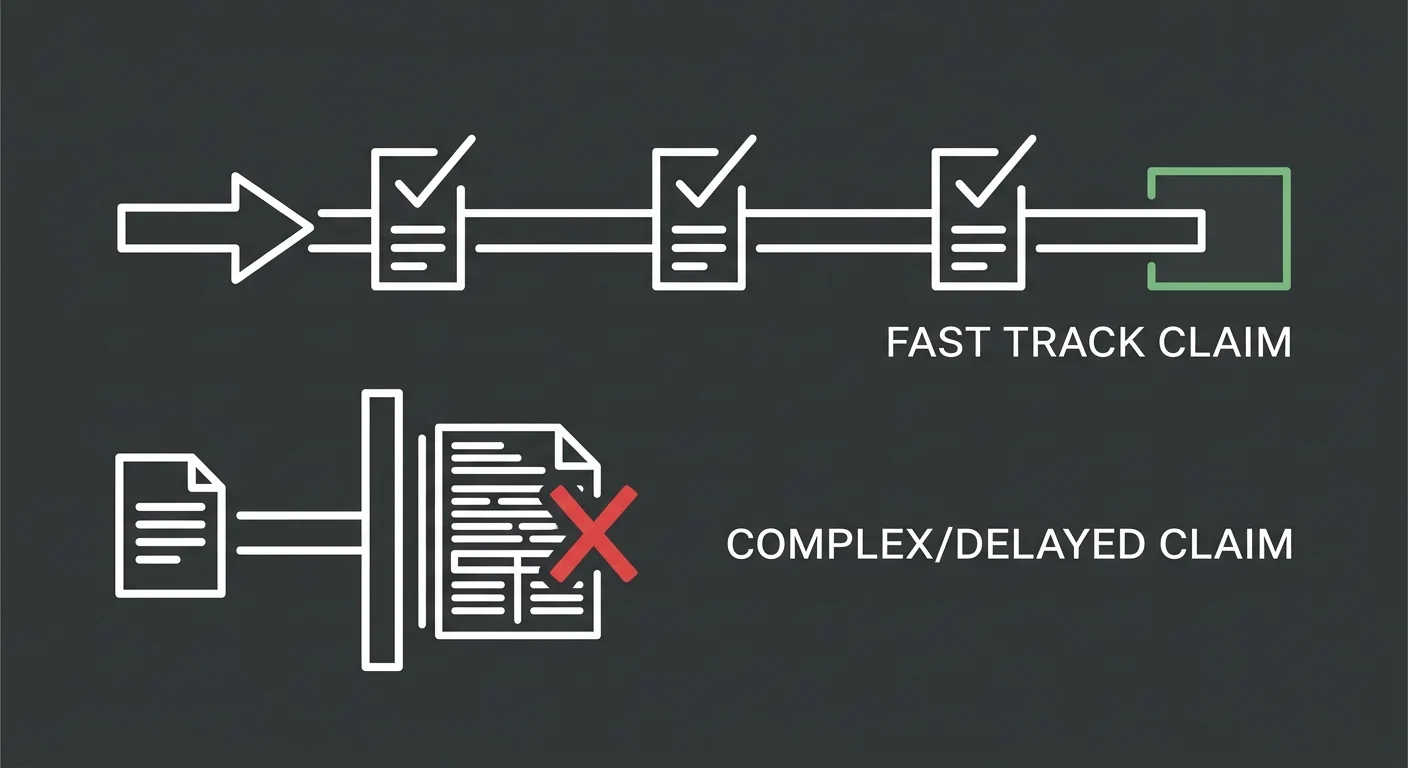
Volume-first billing systems are built for speed. Not recovery.
They process clean claims efficiently. That’s the entire design. And the moment a claim needs actual work – that’s where the model breaks down.
A documentation question. A payer-specific modifier dispute. A medical necessity challenge.
The volume model has no efficient pathway for any of that. So the claim doesn’t get worked. It gets aged.
That aging isn’t accidental. It’s structural.
And it shows up – every single week – in the Danger Zone (61-90 Days) and Critical (90+ Days) buckets of every AR report flowing through a high-throughput billing operation.
How Volume-First Models Prioritize Clean Claims and Abandon Complex Ones
Volume-first billing measures success by submission speed and claim count.
Neither of those metrics has anything to do with how much your practice actually collects. The gap between them is exactly where your most valuable claims disappear.
Clean claims – straightforward diagnosis, standard coding, no documentation issues – move through payer systems reliably. They make a billing company’s numbers look strong.
But those aren’t the claims that determine whether a chiropractic practice gets paid at its full earned rate. The hard claims do.
The claims that actually move the revenue needle are the high-friction ones. Multi-step appeals. Documentation corrections. Direct payer conversations.
Those are exactly what a volume model deprioritizes – because they cost more time per dollar recovered than the throughput math allows. Whether that pattern is improving or compounding week over week is precisely what cash flow optimization audits are built to surface.
So those claims sit. They age through At-Risk (31-60 Days) into Danger Zone (61-90 Days).
When they hit Critical (90+ Days), the practice finds out the revenue it assumed was coming isn’t coming. No one warned them. No one explained why.
That’s the structural failure of a volume-first model. Not incompetence. Architecture.
The AT Modifier Problem That Shows Up in Your AR Every Week
Chiropractic carries a documentation burden most billing models aren’t built to handle.
Medicare reimbursement for spinal manipulation requires the AT modifier on every covered claim – confirming the service is active, corrective care and not non-covered maintenance care. That distinction isn’t a technicality. It’s a binary coverage determination, and this published analysis makes clear it governs whether the claim pays at all.
When the AT modifier is missing, incorrect, or unsupported by clinical documentation, the claim denies.
NIH research confirms that documentation deficiency – particularly around medical necessity metrics – is a primary driver of audit exposure across chiropractic practices. That exposure doesn’t show up once. It shows up on the AR report every week, in the same payer columns, on the same claim types.
Medicare chiropractic coverage is explicitly limited to manual manipulation of the spine to correct subluxation – and claims must document that subluxation through physical examination or X-ray.
A billing system that doesn’t review claims against that standard before submission isn’t protecting the practice. It’s building a predictable denial pattern that shows up in the Danger Zone (61-90 Days) bucket week after week – until someone with specialty knowledge steps in.
This Is Not the Right Fit for Every Practice
Not every practice is the right fit for full-service insurance billing.
Saying that plainly matters.
If a practice runs primarily on cash-pay or out-of-network arrangements with minimal insurance complexity, the weekly AR diagnostic framework described here isn’t the right tool.
The value of reading these reports weekly – and having a billing partner who acts on what they show – scales directly with the volume of insurance claims moving through the system. Low insurance volume means low return. That’s not a fit, and there’s no value in pretending otherwise.
But if insurance billing drives the clinic’s revenue – and the Critical (90+ Days) bucket is growing – and no one is explaining why – that’s not a reporting problem.
That’s a structural one. And the only way to fix a structural problem is with a billing model built around recovery, not throughput.
| Claim Type | Automation Handling | Human Review Required | AT Modifier Risk | Typical AR Outcome |
|---|---|---|---|---|
| Clean Standard Claim | Processed automatically – high throughput, low friction | Minimal – coding and payer rules are straightforward | Low – routine spinal manipulation with clear documentation | Paid reliably; inflates volume metrics without reflecting complex claim performance |
| AT Modifier Dispute | Flagged or denied – no automated pathway for modifier defense | Required – specialist must verify active care documentation against coverage criteria | Critical – missing or unsupported modifier triggers binary denial | Ages into Danger Zone (61-90 Days) or Critical (90+ Days) without human intervention |
| Medical Necessity Challenge | Deprioritized – multi-step resolution exceeds throughput model capacity | Required – documentation must demonstrate objective improvement markers aligned to payer standards | High – maintenance care exclusion applies if necessity is not clearly established | Sits unworked; reaches Critical (90+ Days) before appeal window closes |
| Subluxation Documentation Gap | Submitted as-is or rejected at clearinghouse – no clinical review layer | Required – physical exam or X-ray evidence must be confirmed before resubmission | High – subluxation must be explicitly documented or coverage is denied outright | Denial recurs on same claim types weekly; pattern appears in At-Risk (31-60 Days) and compounds forward |
| Payer-Specific Coding Dispute | No payer-specific logic applied – standardized code set used across all payers | Required – specialist must track payer-level modifier and coding preferences by claim type | Moderate to high – varies by payer policy on chiropractic spinal manipulation billing | Stalls in At-Risk (31-60 Days); advances to Danger Zone (61-90 Days) without direct payer contact |
The AR Aging Buckets That Demand Immediate Action
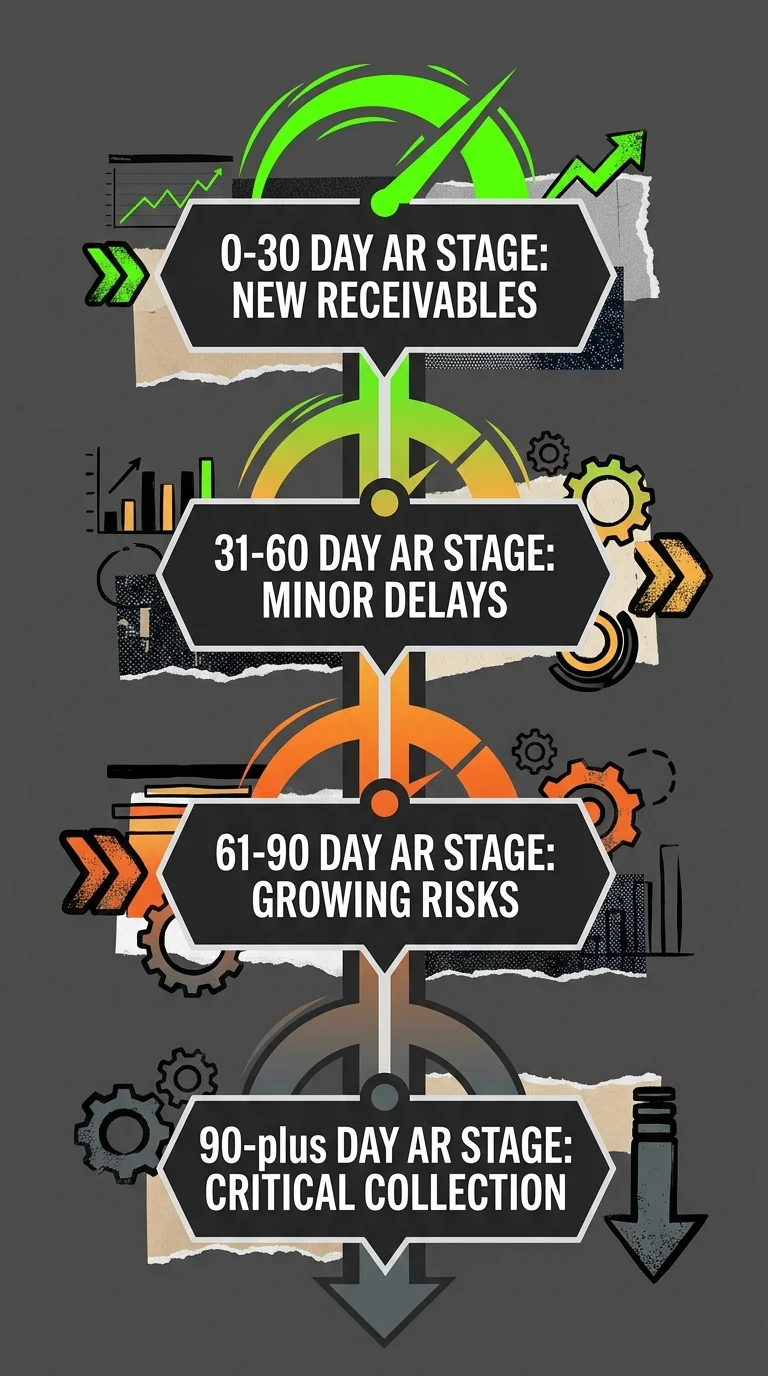
Context is useful. But operational survival runs on specifics.
Knowing which buckets to treat as emergencies – and what to do the moment a claim crosses into one – is the difference between a practice that recovers revenue and one that watches it expire.
The four aging buckets are not interchangeable. Each one carries a different recovery probability, a different required response, and a different consequence for inaction.
Reading them as if they’re the same is how practices lose revenue they could have kept.
Here’s the thing: the buckets only work as a diagnostic tool if someone is actually treating them like one.
Weekly. Not monthly. With a trained eye on what’s moving – and what isn’t.
Bucket 1 – Current (0-30 Days): What Healthy Looks Like
The Current (0-30 Days) bucket is the closest thing a chiropractic AR report has to good news.
Claims here are inside standard payer processing windows. They don’t require emergency action yet. But that’s not the same as requiring no attention.
This is where submission errors are still correctable before they harden into formal denials. A billing specialist reading the 0-30 Days bucket every week is scanning for early rejection signals – wrong modifiers, missing documentation flags, payer-specific formatting issues – that lock in as denials if nobody catches them in the next week or two.
That window is short. And it closes quietly.
That early scan isn’t administrative overhead. It’s denial prevention.
For chiropractic practices – where documentation deficiency is a primary driver of audit exposure – catching a documentation issue at day 12 costs a fraction of what it costs to catch it at day 75. The claim is still correctable. The payer window is still open. That is the entire value of reading this bucket every single week.
Bucket 2 – At-Risk (31-60 Days): The Window That Closes Fast
The At-Risk (31-60 Days) bucket is where the window starts closing.
And it is where automated billing systems reliably fail the practice.
A claim that hits day 31 without a payer response isn’t moving on its own. It needs a person to contact the payer directly, identify the stall, and push the claim back into motion.
Automated resubmission doesn’t do that. It generates activity. It does not produce answers. Those are not the same thing – and confusing them is how practices watch recoverable claims age past the point of return.
So this is the intervention window. Direct payer contact, documentation review, and active follow-through still give the practice a strong recovery probability in the At-Risk (31-60 Days) range.
Let claims cross day 60 without that intervention, and the next stop is the Danger Zone. That’s not a minor escalation. It’s a material change in what the practice is realistically going to collect.
Bucket 3 – Danger Zone (61-90 Days): When Silence Becomes a Cash Flow Crisis
The Danger Zone (61-90 Days) is not a warning label.
It is a financial emergency with a ticking clock.
AR recovery probability decreases exponentially past the 90-day mark. Claims sitting in the Danger Zone (61-90 Days) aren’t trending slowly toward that threshold – they’re accelerating toward it every week.
Every week of inaction in this bucket is a direct reduction in what the practice will collect. Not a risk of reduction. An actual one.
For chiropractic practices, the Danger Zone (61-90 Days) hits harder than most. The claims that land here are typically the complex ones – AT modifier corrections, medical necessity documentation, payer-specific appeal language.
These don’t resolve on their own. And FTC enforcement guidance makes clear that the regulatory stakes of non-compliant billing processes extend well beyond the payer relationship – adding compliance pressure on top of the revenue pressure the practice is already carrying.
Practices that track billing performance through weekly updates see the Danger Zone (61-90 Days) signal before it becomes irreversible.
The movement pattern shows up in the data a week before the damage locks in. That week is the difference between an appeal that can still be filed and revenue that’s simply gone.
Bucket 4 – Critical (90+ Days): What Is and Is Not Recoverable
The Critical (90+ Days) bucket demands honesty that most billing conversations avoid.
Not everything in it is recoverable. But more is recoverable than practices typically believe – if someone with specialty knowledge is actually working it.
A portion of what lands in Critical (90+ Days) got there not because recovery was impossible – but because nobody pursued it with the documentation specificity and payer persistence that chiropractic claims require.
That’s a recoverable problem. But only if someone is willing to actually do the work – and knows what that work looks like for this specialty.
The triage question for every claim in the Critical (90+ Days) bucket is the same: is the filing deadline still open, and is there a viable appeal pathway?
A billing specialist who knows chiropractic payer behavior – who understands which carriers will reconsider with the right documentation and which won’t – can answer that accurately. A volume-first model can’t. Because it never asked the question in the first place.
That number in the Critical column isn’t just a balance.
It’s a verdict on the billing model behind it – whether that model is actively fighting for the practice’s revenue, or quietly letting it expire one aging bucket at a time.
| Aging Bucket | Primary Cause in Chiropractic | What to Check First | Action Deadline | Recovery Likelihood |
|---|---|---|---|---|
| Current (0-30 Days) | Submission errors, missing modifiers, payer-specific formatting issues | Early rejection signals – wrong AT modifier, missing documentation flags, payer format mismatches | Correct before day 30 to prevent formal denial | High – issues are still correctable before a denial is issued |
| At-Risk (31-60 Days) | Payer stalls, no-response claims, automated resubmission cycles that generate activity without answers | Whether direct payer contact has been made and a stall reason has been identified | Intervene before day 60 – recovery probability drops sharply after this point | Moderate to high – direct human follow-through at this stage still produces strong results |
| Danger Zone (61-90 Days) | Complex chiropractic claims requiring AT modifier correction, medical necessity documentation, or payer-specific appeal language | Which claims have a viable appeal pathway and what documentation is still correctable | Immediate – every additional week of inaction directly reduces collectible revenue | Moderate – recovery is possible but requires specialty knowledge and documented payer persistence |
| Critical (90+ Days) | Neglected claims recovery – denials that were never appealed, documentation gaps that were never corrected, filing deadlines that were approaching | Whether the filing deadline is still open and whether a chiropractic-specific appeal pathway exists | Triage immediately – separate recoverable claims from those past the point of return | Low to variable – a portion is still recoverable with specialty billing expertise; a volume-first model will not identify which portion |
How to Cross-Reference Your AR Report With Denial and Revenue Data
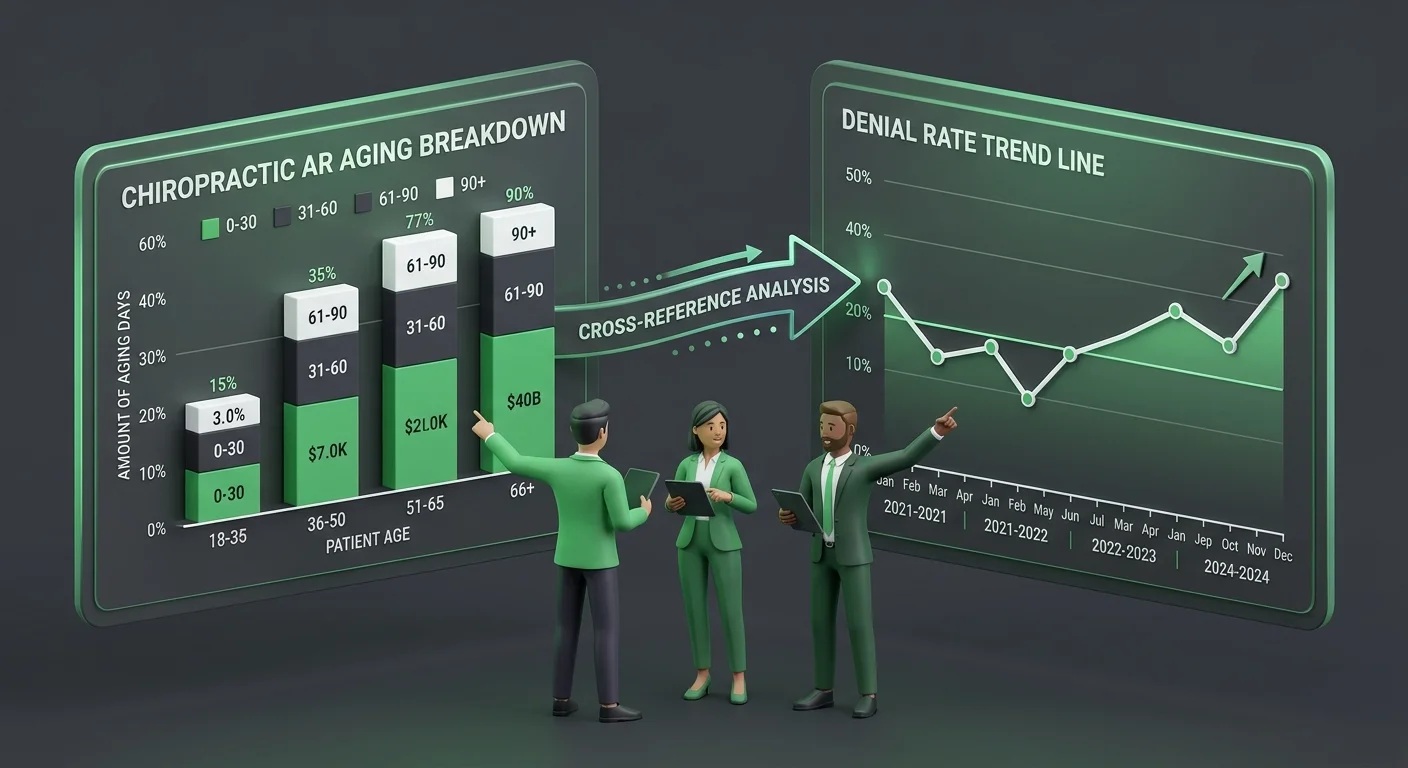
Aging buckets tell you where claims are stuck. Not why.
The why lives in denial patterns and revenue trend lines. Connect those two data streams to the aging report, and the picture stops being ambiguous.
Here’s the thing: a claim sitting in Danger Zone (61-90 Days) is a symptom. The denial code behind it is the diagnosis.
Reading the AR report without cross-referencing the denial data is like reading a patient’s vitals without reading the chart. You see numbers. You don’t know what they mean.
That distinction is not semantic. It determines whether the practice acts on the right problem – or misreads the signal entirely.
The revenue trend line adds the third dimension. It shows whether total dollars moving through the system are growing, plateauing, or quietly shrinking – and whether that movement matches what the aging buckets would predict.
When all three data streams align, the weekly report stops being a compliance document. It becomes a decision-making instrument.
That shift – from record to instrument – is the entire point.
Reading Denial Patterns Alongside Your AR Aging Report
Denial patterns don’t randomize. They cluster – by payer, by claim type, by modifier, by documentation gap.
A practice that tracks denial codes weekly will see the same two or three patterns reappear in the same columns of the AR report, week after week.
That repetition is not bad luck. It’s a signal – and it’s specific.
Something upstream in the submission workflow is producing a predictable output. A missing AT modifier. An unsupported medical necessity narrative. A payer-specific formatting error. The same cause, showing up in the At-Risk (31-60 Days) and Danger Zone (61-90 Days) buckets, week after week.
The denial code names the cause. The AR bucket shows the cost.
So the denial report doesn’t just tell you what went wrong. It tells you what will go wrong next week if no one intervenes.
A billing specialist reading denial patterns alongside the AR aging report can identify that intervention point before a claim crosses into Critical (90+ Days). That’s not reactive billing. That’s prevention.
How revenue leakage surfaces week over week is exactly what separates a billing partner who stops losses from one who only documents them.
What Your Revenue Trend Line Is Actually Measuring
Most practices read the revenue trend line as a collections summary. It isn’t.
It’s a measure of billing model performance. And it reads very differently than most practices expect.
A flat or declining trend line while claim volume holds steady means revenue is being left in the pipeline. Claims are going out. Dollars are not coming back at the rate they should.
That gap – between what was billed and what was collected – is where the aging report and the denial data intersect.
The trend line makes that gap visible. The other two reports explain it.
And when the reimbursement rate itself shifts – because Medicare’s annually adjusted conversion factors changed, or because a specific payer repriced a procedure code – the trend line catches it before the practice notices the shortfall in deposits.
That’s the difference between a leading indicator and a lagging one. A lagging indicator tells you what you already lost. A leading one gives you time to act.
A billing partner reading this data every week isn’t doing administrative maintenance. They’re watching for the shift before it becomes a loss.
The Weekly Billing Audit as a Diagnostic Instrument
A weekly billing audit is not a review meeting.
It’s a structured diagnostic – the same systematic cross-referencing a provider runs when reading a patient’s chart before making a clinical decision. Same rigor. Same purpose. Different chart.
The audit asks three questions, in order. What aged this week? What denied this week? Does the revenue trend line reflect the expected output of the claims that paid?
If all three align, the billing model is functioning. If they don’t – if the At-Risk (31-60 Days) bucket grew while denials clustered around the same modifier error – the audit surfaces the exact failure point.
That’s the difference between knowing something is wrong and knowing what to fix.
That’s the full diagnostic instrument. Not the AR report alone. Not the denial log alone. Three data streams, read together, every week, by someone with the specialty knowledge to know what the pattern means – and what the next move is.
Practices that run weekly billing audits catch the problems that kill revenue before they become untreatable.
Because they’re reading the vital signs. Not filing them.
| Revenue Report Signal | What It Reveals | Corresponding AR Bucket | Required Billing Action | Documentation Checkpoint |
|---|---|---|---|---|
| Flat or declining revenue trend while claim volume holds steady | Revenue is being left in the pipeline – claims are going out but dollars are not returning at expected rates | At-Risk (31-60 Days) and Danger Zone (61-90 Days) | Conduct payer-level review to identify which carriers are stalling; initiate direct follow-up on all non-responsive claims | Confirm claim submissions include complete payer-specific formatting; verify modifier usage aligns with payer contract terms |
| Denial codes clustering around the same modifier or documentation type across multiple weeks | A systemic upstream submission error is producing predictable, repeating denials – not isolated claim failures | At-Risk (31-60 Days) | Identify the root cause in the submission workflow; correct the documentation or modifier pattern before the next submission cycle | Review AT modifier application on all active care claims; confirm medical necessity narrative meets payer-specific standards |
| Sudden growth in the Danger Zone (61-90 Days) bucket week over week | Claims that were at-risk last cycle received no intervention and have now crossed into high-risk aging territory | Danger Zone (61-90 Days) | Escalate all claims in this bucket to active appeal or payer contact; do not allow further aging without a documented action plan | Verify that each claim has a complete medical necessity record, objective improvement documentation, and any required prior authorization |
| Reimbursement rate shift that does not match billed amounts or expected payer contract rates | A fee schedule adjustment – such as an annually updated Medicare conversion factor – has changed the reimbursement baseline without the practice’s awareness | Current (0-30 Days) | Cross-reference current claims against the updated Medicare Physician Fee Schedule or payer contract; flag underpayments for immediate correction or appeal | Confirm billed procedure codes and relative value units align with the current fee schedule; document any payer repricing for appeal reference |
| High volume of claims entering Critical (90+ Days) without prior intervention in earlier buckets | The billing model is not performing systematic follow-up – claims are aging passively rather than being worked at each stage | Critical (90+ Days) | Triage each claim for filing deadline status and appeal viability; prioritize claims with open timely filing windows and documented medical necessity | Audit documentation completeness on all critical claims; identify whether denials cite documentation deficiency, modifier error, or medical necessity as the primary reason |
| Revenue trend line growth that does not match the volume of claims in Current (0-30 Days) | Claim submissions may be increasing but complex or high-value claims are not converting to collections at the expected rate | Current (0-30 Days) and At-Risk (31-60 Days) | Review payer mix and claim complexity distribution; ensure high-value claims receive specialist-level review before submission rather than standard processing | Verify that claims for spinal manipulation include subluxation documentation via physical exam or imaging, as required for Medicare and major commercial payers |
Frequently Asked Questions
These aren’t hypotheticals.
They’re the actual questions that come up in real billing data, week after week, across practices of every size.
Each answer follows the same logic the report does. Signal first. Cause second. What to do about it.
No hedging. The data tells you what’s happening – and so do these answers.
What are the most critical aging buckets to watch in a weekly chiropractic AR report?
Two buckets demand your attention above all others: At-Risk (31-60 Days) and Danger Zone (61-90 Days).
Current (0-30 Days) is healthy pipeline. It needs monitoring, not emergency action. Critical (90+ Days) needs triage – but the window to change the outcome is narrow.
At-Risk (31-60 Days) and Danger Zone (61-90 Days) are where recoverable revenue is actively becoming unrecoverable. AR recovery probability decreases exponentially past the 90-day mark. That means Danger Zone (61-90 Days) is the last point where consistent weekly action reliably changes what the practice collects.
Watch those two buckets every week. Not every month. Every week.
Why does my chiropractic AR show claims stuck in the 60-to-90-day window?
Claims stall in Danger Zone (61-90 Days) for one of three reasons: a documentation gap, a modifier error, or a payer-specific submission issue that never got corrected.
For chiropractic, the AT modifier is the most common culprit. Medicare requires it on every claim to confirm the service was active, corrective spinal manipulation – not maintenance care. Missing or incorrectly applied, the claim stalls and ages.
But here’s the real problem. The billing workflow caught the denial and didn’t fix the root cause. So the same error repeats. The same claims keep landing in the same bucket. Week after week.
How do I cross-reference weekly denial reports with my EHR system?
Start with the denial code – not the dollar amount.
Pull the denial code from the billing report. Match it to the corresponding claim in the EHR. The EHR shows what was documented. The denial code shows what the payer rejected. The gap between them is the problem.
If the payer denied for insufficient medical necessity documentation, the EHR will show which objective improvement markers were recorded – and whether they meet the payer’s threshold. Do this weekly. The pattern across multiple claims in a single week reveals the root cause faster than reviewing claims one at a time.
That pattern is what stops the same denial from appearing next week.
What is the difference between active care and maintenance care in weekly billing metrics?
Active care is covered. Maintenance care isn’t. That distinction shows up in your weekly metrics as approved claims on one side and denials on the other.
CMS covers manual spinal manipulation to correct subluxation – but only when documentation proves active, measurable improvement. The moment the clinical narrative reads as maintenance, the claim is out. The AT modifier is how that line gets communicated on the claim itself. Medicare won’t pay without it applied correctly.
Here’s what trips practices up: the care is often active. The chart just doesn’t say so clearly enough. That’s not a clinical problem. It’s a documentation language problem – and it’s fixable. But you have to catch it weekly, or the same denial compounds across a dozen claims before anyone notices the pattern.
How does ignoring a weekly AR report lead to complete clinic cash flow failure?
Neglected AR doesn’t hold its value. It ages – and the failure sequence is the same every time.
An unread report means unworked denials. Unworked denials mean aging claims. Aging claims cross into the Critical bucket – 90+ days – where recovery probability drops sharply past the 90-day mark and keeps dropping every week no one acts.
The practice isn’t saving time by skipping weekly review. It’s converting recoverable revenue into write-offs. Slowly enough that no single week feels like a crisis. Fast enough that by the time the damage shows up, the window to fix it has already closed.
Your AR Report Is a Vital Sign – Start Reading It Like One
Every data stream in this article points to the same place.
The weekly AR report isn’t a record-keeping formality. It isn’t a compliance artifact. It’s a live diagnostic – and it only works if someone is actively reading it, every single week, and doing something about what it shows.
No provider glances at a patient’s chart once a month and assumes everything is fine. They read it before every clinical decision – because the chart tells them where the patient is, where they’re headed, and what move comes next.
The AR report works the same way. Current (0-30 Days) tells you what’s healthy. At-Risk (31-60 Days) tells you what needs attention today. Danger Zone (61-90 Days) tells you what’s becoming critical. Critical (90+ Days) tells you what’s already in crisis – and whether there’s still time to act.
That’s not a reporting cadence. That’s a diagnostic rhythm. Practices that run it weekly – with a billing partner who understands chiropractic claims at the specialty level – catch the problems that kill revenue before they become untreatable.
Bushido Billing was built on that premise. The billing relationship isn’t a service you set in motion and check on occasionally – it’s an embedded partnership that reads the financial signals with you, every week, and acts on what they show.
So if your current setup isn’t delivering that – if the AR report sits unread, denial patterns go undiscussed, and the revenue trend line is just a number with no explanation attached – the report isn’t the problem. The model behind it is.
AR reports are a clinic’s financial vital signs. The only question is whether anyone in your billing operation is treating them that way.
Your weekly AR report is either a working diagnostic tool or a document nobody reads. If it’s the latter – and if your billing company isn’t explaining what the numbers mean – that’s not a reporting gap. That’s the whole problem, sitting right in front of you.

© . All Rights Reserved | Web Design by iTech Valet