

What to Ask a Payer Rep When a Claim Shows No Record of Receipt
Know what to ask a payer rep when a claim shows no record of receipt: check the 277CA, the EDI helpline, the portal, and rejected versus denied.
If you did not get a 277CA report, contact the Electronic Data Interchange (EDI) helpline to see if the file was rejected on a different report, like the 999 Acknowledgement. Check your claim status in your MAC’s secure internet portal, which is the fastest way to check an individual claim status. When you send a 276 request for Part B claim status, use the billing provider’s NPI and include the ICN. A rejection is not the same as a denial, and you cannot appeal a rejected claim. The only fix is to correct it and resubmit it as a new claim.
Why a Payer Can Have No Record of a Claim
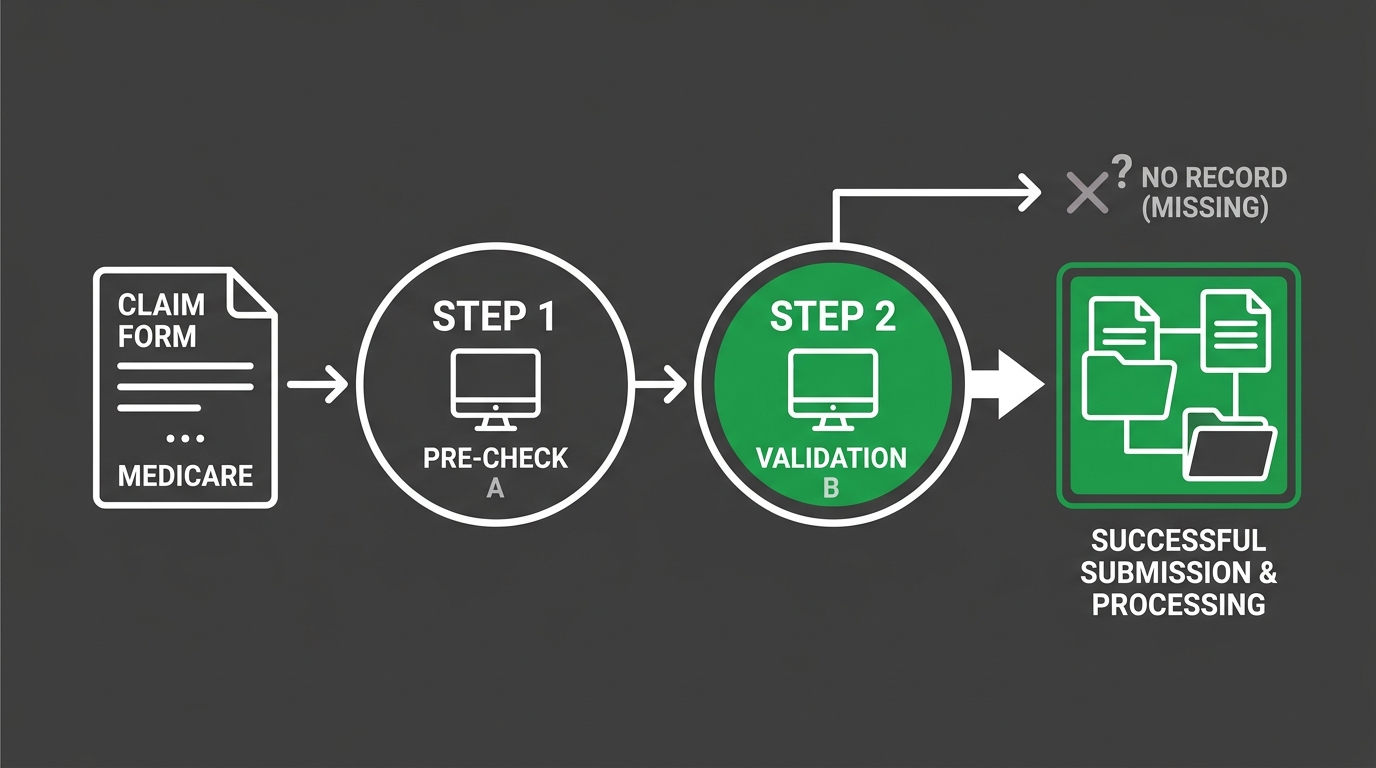
Medicare checks a file in two steps before a claim goes into processing. Either step can stop a claim, and when that happens, a payer rep has nothing to find.
The first step is a front-end check. Your Medicare Administrative Contractor (MAC) looks at whether the file can be read, then sends you a 999 Acknowledgement. If the system finds errors here, your MAC rejects the whole batch of claims. You correct them and send them again.
The second step looks at single claims. If the system finds errors here, your MAC rejects only the claims with errors, and you get a 277CA Health Care Claims Acknowledgement. You correct those claims and resubmit them.
So “no record” can mean the claim never got past one of these steps. The Centers for Medicare & Medicaid Services (CMS) guide, Checking Medicare Claim Status (MLN3171902, March 2026), explains both steps.
First Questions: Did the File Ever Reach the Payer?
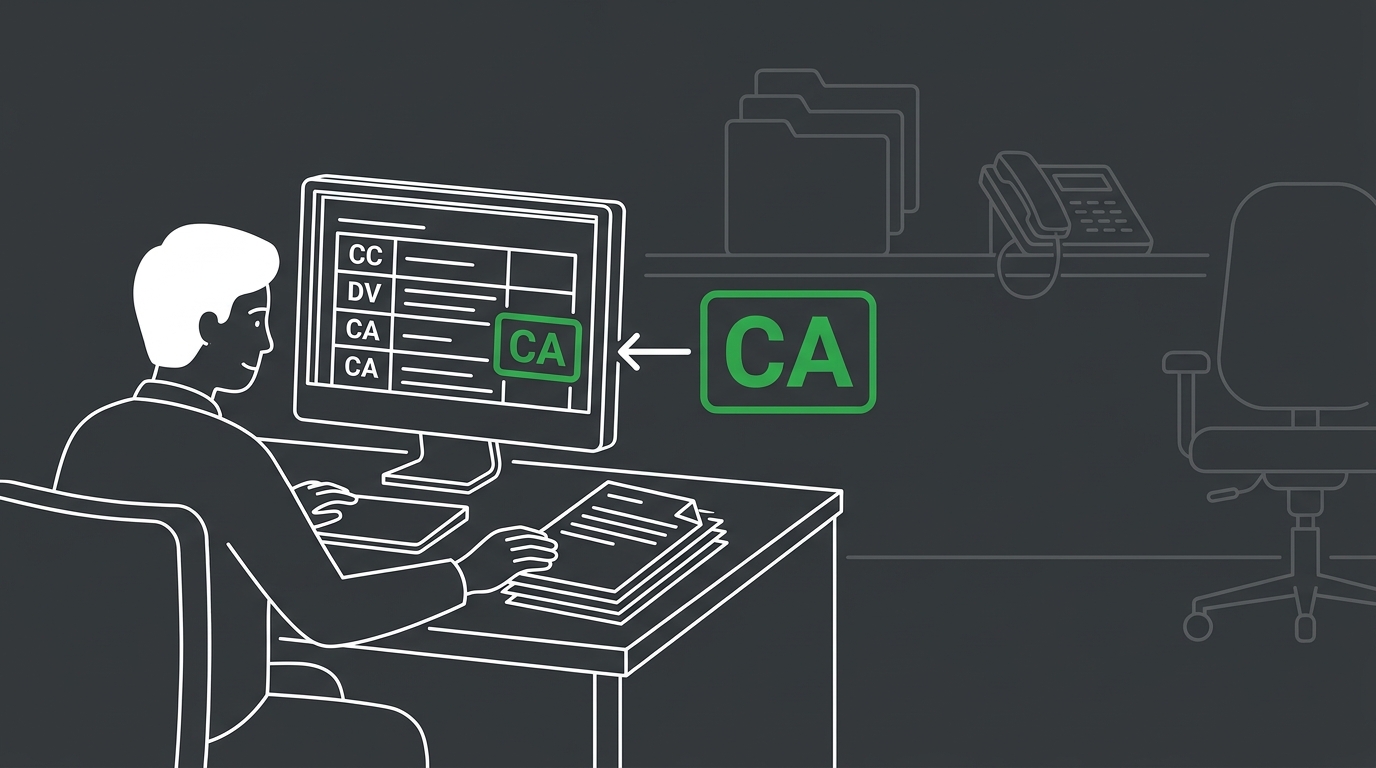
Start with the reports you got back, and look for a 277CA. If you didn’t get one, call the Electronic Data Interchange (EDI) helpline. Ask whether the file was rejected on a different report, like the 999 Acknowledgement.
Next, check your MAC’s secure internet portal. CMS says this is the fastest way to check the status of an individual claim.
If you send a 276 request for the status of your Part B claims, use the billing provider’s National Provider Identifier (NPI). That lets you see the status of all claims the billing provider submitted for that date of service. Include the claim number too, which is the Internal Control Number (ICN).
The table below lines those questions up with each situation you might be in. The CMS guide, Checking Medicare Claim Status (MLN3171902, March 2026), has the full steps.
| Situation | Question to ask | Why it matters |
|---|---|---|
| No 277CA received | Was the file rejected on a different report, like the 999? | Shows whether the file was rejected on a different report |
| Need the quickest answer | Can we check this in the MAC’s secure internet portal? | CMS calls it the fastest way to check an individual claim status |
| Part B status request | What does the 276 show for the billing provider’s NPI and this date of service, with the ICN? | Shows the status of all claims the billing provider submitted for that date of service |
If your payer is a commercial one and not Medicare, read How to Locate a Missing Chiropractic Payment From a Commercial Payer.
Rejected or Denied? The Follow-Up Question Changes
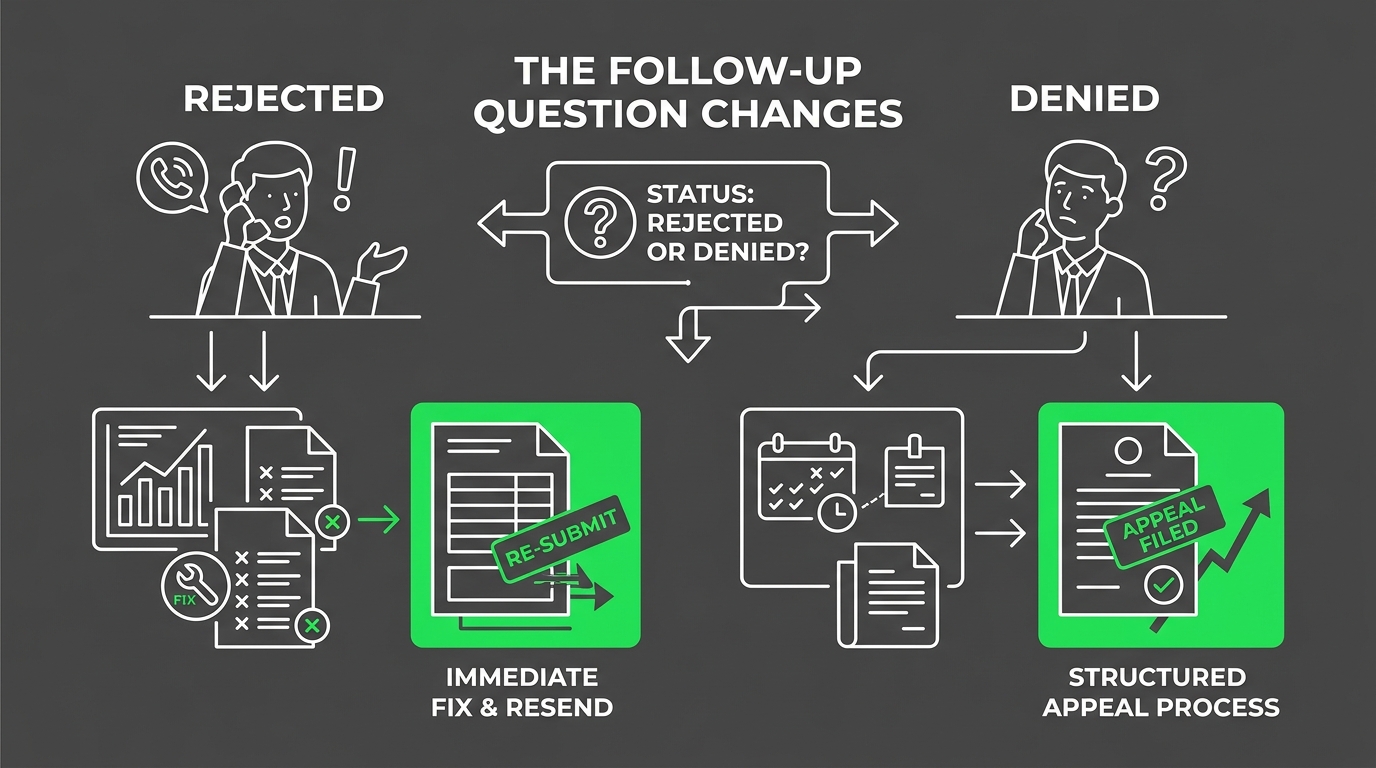
Early on, ask the rep one thing: is this claim rejected or denied? The answer changes what you do next.
A rejection is not a denial, and you can’t appeal a rejected claim. AAPC says there is only one way to fix it: correct it and resubmit it as a new claim.
A denial is a different story. If a Medicare claim is denied, don’t just resubmit it, because that causes a duplicate denial. Appeal the original denial or ask for it to be reopened instead. AAPC explains this in Follow This Advice for Clean Medicare Claims.
I don’t count on your EHR to handle billing. I treat it as the tool that sends claims, and nothing more. When a claim is denied, I want a person to read the denial and decide on an appeal, not click resend. Appeals and old unpaid balances go to someone who uses judgment. For more on those, see Resolving Aged Chiropractic Insurance Balances: A Complete Guide.
Before You Resubmit: Avoiding a Duplicate Claim
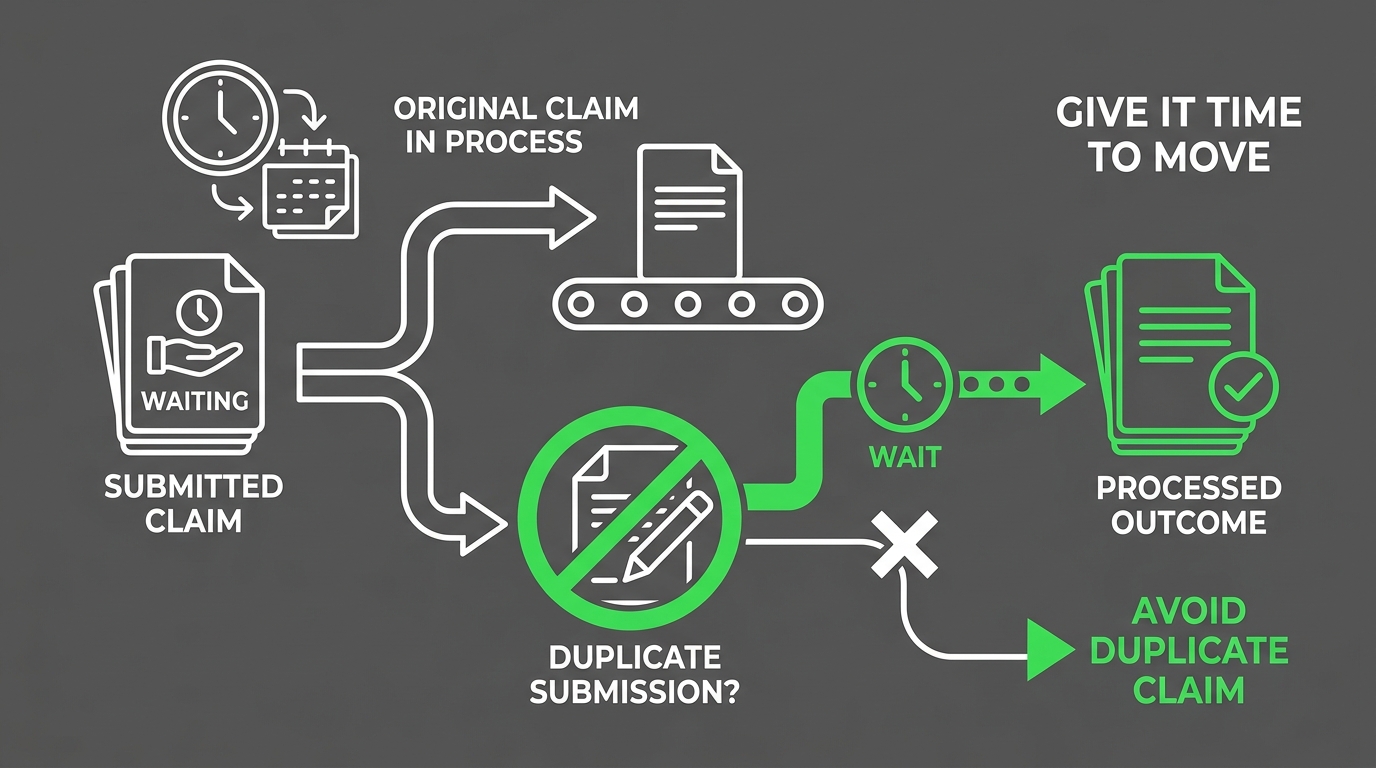
Give your claim time to move. The two editing steps can take up to 3 days, and if you resubmit while your claim is still in editing, you create a duplicate claim.
Medicare rejects duplicate electronic claims as a front-end edit. When that happens, you’ll see a status code on the 5010 277CA.
Check your own system too. If it’s set to rebill automatically after 30 days, you could end up billing Medicare twice by mistake.
How Long to Wait Before Calling About a Clean Claim
Calling too early won’t tell you much. To check the payment status of a clean claim, wait at least 14 days for an electronic claim and at least 29 days for a paper claim.
What is a clean claim? It is a claim that your MAC doesn’t need to investigate or develop outside its Medicare operation before payment.
Chiropractic Claim Fields to Confirm on the Call
The Centers for Medicare & Medicaid Services (CMS) lists these items for chiropractic claims:
- The symptom, condition, or secondary diagnosis code(s)
- The subluxation or primary diagnosis code(s)
- The date of service
- The place of service
- The procedure code
If any of these items aren’t reported, your claim will be denied or delayed. So ask the rep to confirm each one is on the claim they have in front of them.
We think chiropractic claims belong with a biller who knows chiropractic, not one who does a little of everything. That’s the kind of specialty knowledge we’d want on your claims.
Questions to Ask When a Billing Company or Clearinghouse Submits for You
Sometimes someone else sends your claims. CMS says that if a billing agency, clearinghouse, software vendor, or other third-party business does your Medicare billing, you should ask them three things:
- Do you use subcontractors?
- How do you protect my data?
- Does my data go outside the U.S.?
Bushido Billing uses TriZetto and Office Ally. Both are clearinghouses, and we use them without providing clearinghouse services ourselves. We have also used ClaimMD, another clearinghouse, which is the go-between that passes claims along.
Our founders’ story says they used computers to check and double-check every insurance claim to make sure it was right. Our rule is that software submits and people review. Software is fine for routine claims with no errors. When a claim needs judgment, like showing why care was medically necessary or writing an appeal after a denial, we put a skilled person on it. Tech gets a real role, but a limited one. You can read how the work is done on our Medical Billing Services page.
Frequently Asked Questions
Why can’t the rep find the claim by its number?
Your claim may not have a number yet. CMS says a Medicare claim that didn’t pass the first 2 editing levels won’t have a Medicare claim number. That also means you won’t get claim information through the status-check methods CMS describes.
What usually triggers a rejection code?
Missing, wrong, or incomplete information. The American Academy of Professional Coders (AAPC) says that if you send Medicare a claim like that, you will likely get a rejection code back. Look over each claim for gaps before you send it.
Will Medicare catch duplicate claims sent in the same batch?
Not always. AAPC says Medicare may not spot duplicate claims received in the same batch, and may not send an error message for them. The error could still show up in an audit, so look through your batch for repeats before you send it.
Does Medicare pay interest when a clean claim is paid late?
Yes. CMS says Medicare claims contractors must pay interest on clean claims if they don’t pay within 30 calendar days of getting the claim. Write down the date your claim was received, and you can tell the rep exactly how many days have passed.
Put the Questions in Order, Then Let a Specialist Make the Call
A set order of questions can turn a “no record” claim into one you can fix. Start by asking whether the file reached the payer. Next, ask whether it was rejected or denied. Then fix it the right way, and wait out the editing window before you resubmit.
On a payer call for a chiropractic claim, we’d rather have a chiropractic specialist than a biller who covers every specialty. Bushido Billing does full-service insurance billing, unpaid claim cleanup, and denial appeals for chiropractic and allied health practices. Our founders say they made sure providers could always know what was happening with their insurance claims.
Would you like to talk through your claim follow-up with our team? Book a Call.