

Why Jane App Insurance vs Patient Portion Math Leaves Revenue Uncollected
Jane App auto-posts insurance payments, but default settings can miscalculate patient portions. See where the reconciliation gap forms and costs revenue.
Jane App's insurance and patient portion math leaves revenue uncollected because the platform calculates patient responsibility from expected fee schedules and default insurance settings rather than from a verified line-by-line reconciliation of what the insurer actually paid. When an electronic remittance advice posts automatically, the software applies its programmed assumptions about adjustments, deductibles, and coinsurance to update the patient ledger. Those assumptions do not always match the insurer's actual adjudication. A claim can be paid at a different rate than the fee schedule predicted, a deductible can be applied differently than expected, or a secondary payer's contribution can be misread by the auto-posting logic. Each of these produces a small discrepancy between the patient balance Jane App displays and the patient balance that reflects reality. None of these discrepancies trigger an alert on their own. The software processes the remittance, updates the ledger, and moves to the next claim without flagging the mismatch for review. Over weeks and months, these unverified entries accumulate across a practice's full claim volume. Some balances end up too high, prompting collections friction with patients. Others end up too low, and the difference becomes a silent write-off that never gets billed or collected. The root cause is not a software defect. It is the absence of a systematic process that checks every remittance against the claim it corresponds to before the patient ledger is treated as final. Default settings without verification produce ledgers that look complete and are not.
How Jane App Actually Calculates the Patient Portion

Here's what Jane App is really doing: solving a math problem, not confirming a fact. It pulls a fee schedule, applies a payer's default adjustment rules, and drops a number onto the ledger.
That number is a prediction, not a confirmation. It reflects what the software expects an insurer to do, not what the insurer actually did on that specific claim.
What the Patient Portion Represents on a Claim
The patient portion is the amount a patient owes for a covered healthcare service after their insurance carrier has paid its share. That definition sounds simple, but it depends entirely on the carrier's share being recorded correctly first.
So when the insurance payment on a claim is wrong, the patient portion built on top of it is wrong too. The ledger inherits every upstream error and never questions it.
How the Software Posts an Insurance Payment
When an electronic remittance advice file arrives, Jane App reads the payer's coded response and posts it automatically. Deductibles, coinsurance, and contractual adjustments all get applied from what the file says and what the default settings assume.
The software does not pause to ask whether that posting matches the original claim submission. It is built for throughput, not audit — a distinction covered further in why platform billing tools can't run the whole revenue cycle. That throughput-first design is exactly why the running tally drifts the moment nobody checks the math line by line.
What the Software Assumes vs What the Insurer Actually Sends
Jane App's auto-posting logic was built for one shape of data. It expects every remittance to match a single, predictable template.
| Data Field | What the System Expects | What Payers Often Send |
|---|---|---|
| Adjustment Type | One coded reason per line item, applied cleanly against the fee schedule | Multiple stacked adjustment codes on a single line, sometimes only partially explained |
| Deductible Application | A flat deductible amount applied consistently based on default plan settings | A deductible split across several claims or applied differently depending on service date |
| Secondary Payer Allocation | A clean handoff where the secondary payer's share fills the exact remainder | A partial or delayed secondary allocation that does not match the primary payer's assumptions |
| Claim Bundling | One claim, one remittance line, one straightforward posting event | Several claims bundled into a single remittance file that the auto-posting logic must unpack |
The Expected Payment Format
The expected format is clean: one claim, one adjudication, one tidy split between insurance payment and patient responsibility. So the moment a remittance lands, the software applies its default fee schedule and adjustment rules — no matter what that remittance actually holds.
That gap between the expected format and the real data is what becomes a reconciliation problem. For the mechanics of where it opens, look at ways to close that reconciliation gap.
And a discrepancy between the expected insurance payment and the actual amount received is the primary driver of incorrect patient portion calculations.
The Real Variability in Payer Remittance Data
Real payer remittance data does not arrive that clean. Bundled procedures, split payments, and secondary-payer offsets are routine, not exceptions.
Up to 80% of electronic remittance advice processing can be handled automatically by practice management systems without human intervention, leaving a meaningful share that automation alone cannot resolve. This published analysis reports up to 80% of electronic remittance advice processing can be handled automatically by practice management systems without human intervention. That remaining share is where the running tally starts to drift, because nothing in the default settings is built to flag it.
Why Trusting Auto-Posted ERAs Without Review Fails
Trusting an auto-posted remittance without review fails for one reason: it treats software output as final when it's only a first pass. Plenty of private practices pick Jane App for its clinical and scheduling features, then assume the billing module is a foolproof solution that runs itself. That assumption is where the running tally starts to drift.
The Mechanism Behind an Unreviewed Auto-Post
An unreviewed auto-post works by accepting the payer's coded response and updating the ledger without a second check. The mechanism has no built-in pause point, so a misapplied adjustment moves straight from remittance to patient balance. For the specific fix to that gap, see ways to stop small mismatches from becoming permanent losses.
The Conditions Under Which Auto-Posting Breaks Down
Auto-posting breaks down under conditions the software was never built to interpret correctly. Bundled procedures, split payer responsibility, and secondary-payer offsets all push a remittance outside the clean one-claim template the system expects. Under those conditions, the ledger keeps updating, but the tally it produces stops matching what actually happened.
Where the Errors Actually Originate
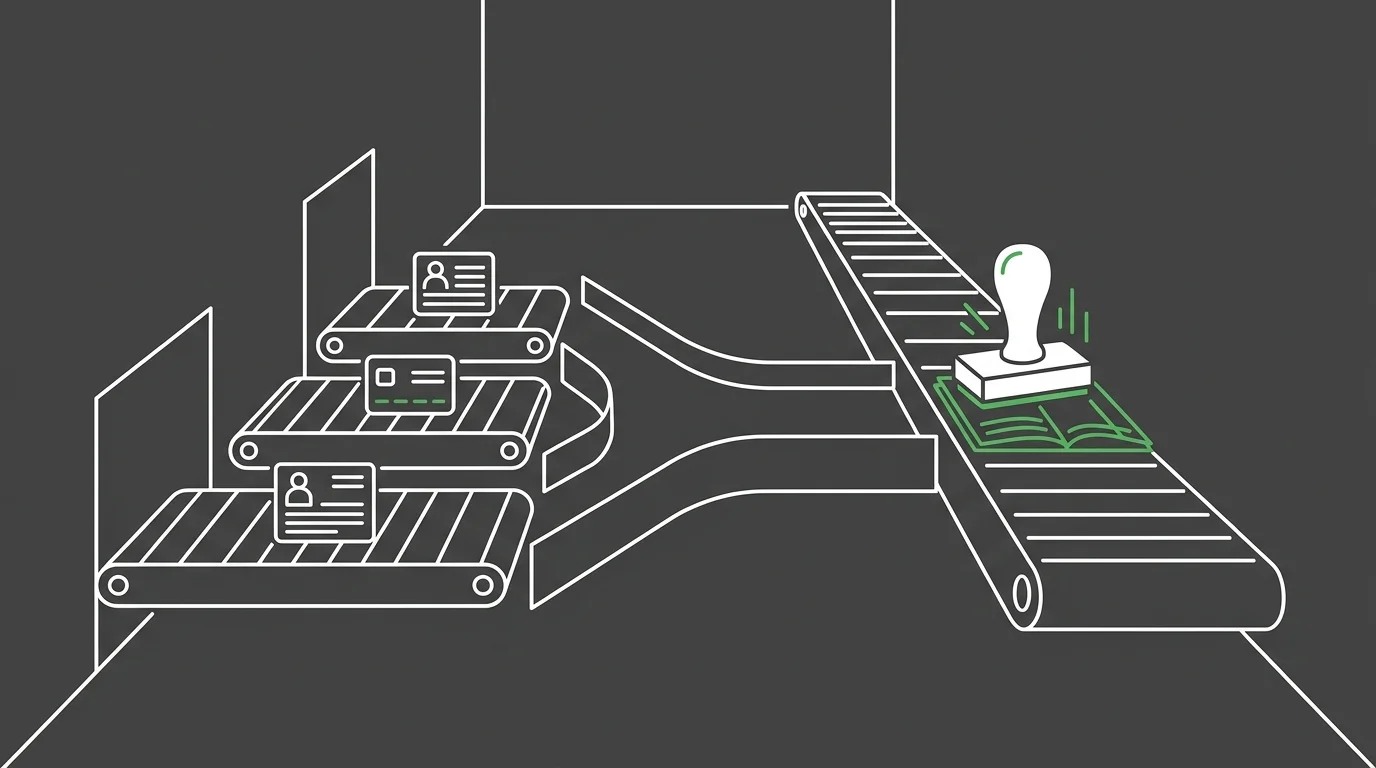
Auto-posting is one entry point for a bad patient portion figure. It isn't the only one. Zoom out and the errors trace back to several distinct points, each one long before a claim ever reaches the ledger.
| Error Origin Point | Typical Cause | Downstream Effect on the Ledger |
|---|---|---|
| Front-Desk Data Entry | A mistyped policy number, an unverified eligibility check, or an outdated insurance record captured at check-in | The error seeds the claim before submission and travels untouched into the patient portion figure |
| ERA Auto-Posting | Default settings force a non-standard remittance into a clean one-claim template it was not built to interpret | A misapplied adjustment posts straight to the ledger with no pause point for review |
| Denial and Adjudication Cycles | Repeated review rounds between a practice and an insurer over a disputed or partially paid claim | Each cycle is another point where the ledger can drift further from the insurer's actual determination |
| Secondary Payer Coordination | A second insurer's contribution gets misread or misallocated against the primary payer's adjudication | The patient portion is built on an incomplete picture of what was actually paid, so it inherits the error |
| Bundled or Split Claims | Multiple procedures or payers resolved on a single remittance that the auto-posting logic reads as one flat transaction | The ledger shows a single balance that masks several distinct, unverified allocations underneath it |
Front-Desk Data Entry Points
It starts at the front desk. A mistyped policy number or a skipped eligibility check seeds the whole claim with bad data. That error rides straight through adjudication and lands in the patient portion untouched, because nothing downstream is built to catch a mistake made at check-in.
Claim Adjudication and Denial Points
Denial and adjudication cycles compound the same problem. Per Premier's claims adjudication analysis, administrative staff went through an average of three rounds of reviews with insurers for denied claims, with each review cycle taking between 45 and 60 days — a finding from an industry survey. Every one of those cycles is another chance for the running tally to drift further from what actually happened — which is exactly why chiropractic revenue cycle management exists as a dedicated discipline, not an afterthought.
How Small Mismatches Compound Into Uncollected Revenue
A mismatch nobody reviewed doesn't stay small. It sits on the ledger, unflagged, waiting for the next remittance to stack another discrepancy on top of it.
The Compounding Timeline
Reconciliation failures compound over long stretches when nobody's checking the math. HHS reports some providers did not reconcile certain patient records for more than 6 years, allowing credit balance discrepancies to persist without identification or reporting. That audit looked at Medicaid providers across 8 states, and some of the 64 providers reviewed had gone more than 6 years without reconciling certain patient records. A practice's ledger drifts the same way — small, unreviewed, easy to miss until years of entries have piled up.
Building a Reconciliation Discipline Jane App Doesn't Enforce

A running tally is only accurate if someone actually checks it. Reconciliation discipline is that checking — a fixed sequence run against every remittance before the ledger is allowed to call itself final.
| Reconciliation Step | What Gets Checked | Why It Matters |
|---|---|---|
| Pre-Post Verification | Every ERA line item against the original claim submission — allowed amount, adjustment code, patient responsibility | Catches a misapplied adjustment before it ever reaches the patient ledger |
| Post-Post Confirmation | The patient statement against the adjudicated claim to confirm the balance matches what the insurer actually paid | Stops a small posting error from hardening into a permanent write-off |
| Denial and Resubmission Tracking | Every claim still moving through review cycles, flagged separately from claims treated as final | Prevents a claim still in dispute from being posted as settled and closing the ledger prematurely |
| Aging Balance Review | Patient and insurance balances left open past a set point, checked against their original claim record | Surfaces drift while it is still a small correction instead of a multi-year discrepancy |
Auditing the ERA Line Item Before It Posts
The first check comes before the remittance ever posts. Every ERA line item gets held against the original claim submission — allowed amount, adjustment code, patient responsibility, one line at a time. Nothing gets waved through just because the software already processed it.
Reconciling the Patient Statement Against the Adjudicated Claim
The second check comes after posting. The patient statement gets matched against the adjudicated claim to confirm the balance reflects what the insurer actually paid, not what the fee schedule guessed. That second look is what keeps a small posting error from hardening into a permanent write-off.
Frequently Asked Questions
Once operators start reading their own ledgers this way, the same mechanical questions come up again and again. Here are the direct answers, no setup.
How does Jane App calculate the patient portion on an invoice?
It runs the payer's default fee schedule and adjustment rules against the claim automatically. But that figure is a prediction, not a confirmed record of what the insurer actually paid.
What is an ERA and why is it essential for accurate patient balance billing in Jane App?
An electronic remittance advice file is the coded response an insurer sends back after adjudicating a claim. It matters because the amount owed after the insurer pays its share is only accurate once that response is verified line by line, not assumed.
Can I manually adjust the patient responsibility on a claim within Jane App?
Yes, the ledger allows a manual override of the posted patient responsibility. That override only fixes the number in front of you, though. It does not catch the next remittance that arrives with the same unverified assumption.
What are the most common reasons for a mismatch between the insurance payment and the patient portion in Jane?
Bundled procedures, split payer responsibility, and secondary-payer offsets are the repeat offenders. Each one pushes a remittance outside the clean, single-claim template the software expects — and the auto-posting logic forces it through anyway.
If Jane App auto-posts an incorrect insurance payment, what is the fastest way to correct the patient's ledger?
Pull the original ERA and compare it line by line against the claim submission before you touch the ledger again. Correct the patient balance only after the insurance payment itself is confirmed, never before.
What percentage of ERA processing can actually run without human review?
A meaningful share of that processing still needs a human to catch what automation cannot. That remaining share is exactly where bundled claims and split payments hide, and it needs a human check every time.
Where This Leaves the Ledger
A patient ledger is a running tally. And a running tally only stays honest if every entry gets checked against what actually happened. Jane App's default settings assume the remittance is clean, and that assumption is the drift.
Automation without verification doesn't kill the error. It buries it inside a ledger that looks finished. Line-by-line reconciliation is what closes the gap between a posted number and a confirmed one, claim by claim, remittance by remittance.
That discipline is what this article has been describing all along, not a software setting. A practice that wants its ledger checked this way, line by line, can start that conversation through Bushido Billing's services page.