

What Documents Update Taxonomy Codes or Practice Locations?
Taxonomy and location changes need separate filings with Medicare, NPPES, CAQH and each payer. Medicare sets a 30-day deadline for location changes.
Taxonomy codes and practice locations are updated through a specific set of documents filed with federal systems, state licensing boards, and individual payers, and no single form covers all three. For Medicare enrollment, updates run through the CMS-855 series of forms or the equivalent electronic submission in the Provider Enrollment, Chain and Ownership System, which captures changes to a provider's taxonomy classification and any addition, deletion, or change of a practice location. The National Plan and Provider Enumeration System holds the National Provider Identifier record itself, and a taxonomy correction there does not automatically push to Medicare, Medicaid, or any commercial payer. CAQH ProView is a separate attestation system that many commercial payers pull from, so a provider profile left unattested or outdated in that system can misstate a practice address even after Medicare records are correct. State licensing boards maintain their own address and status records independent of any payer system, and those filings follow the board's own forms and deadlines. Commercial payers each maintain separate provider data files and typically require a written notification or an online portal update submitted directly to that payer, separate from anything filed with Medicare or CAQH. A change made in one of these systems does not replicate to the others. Each one is a distinct, siloed record that must be corrected on its own, through its own document, before a claim referencing that taxonomy code or location will process correctly against it.
What Counts as a Reportable Change to a Taxonomy Code or Practice Location?
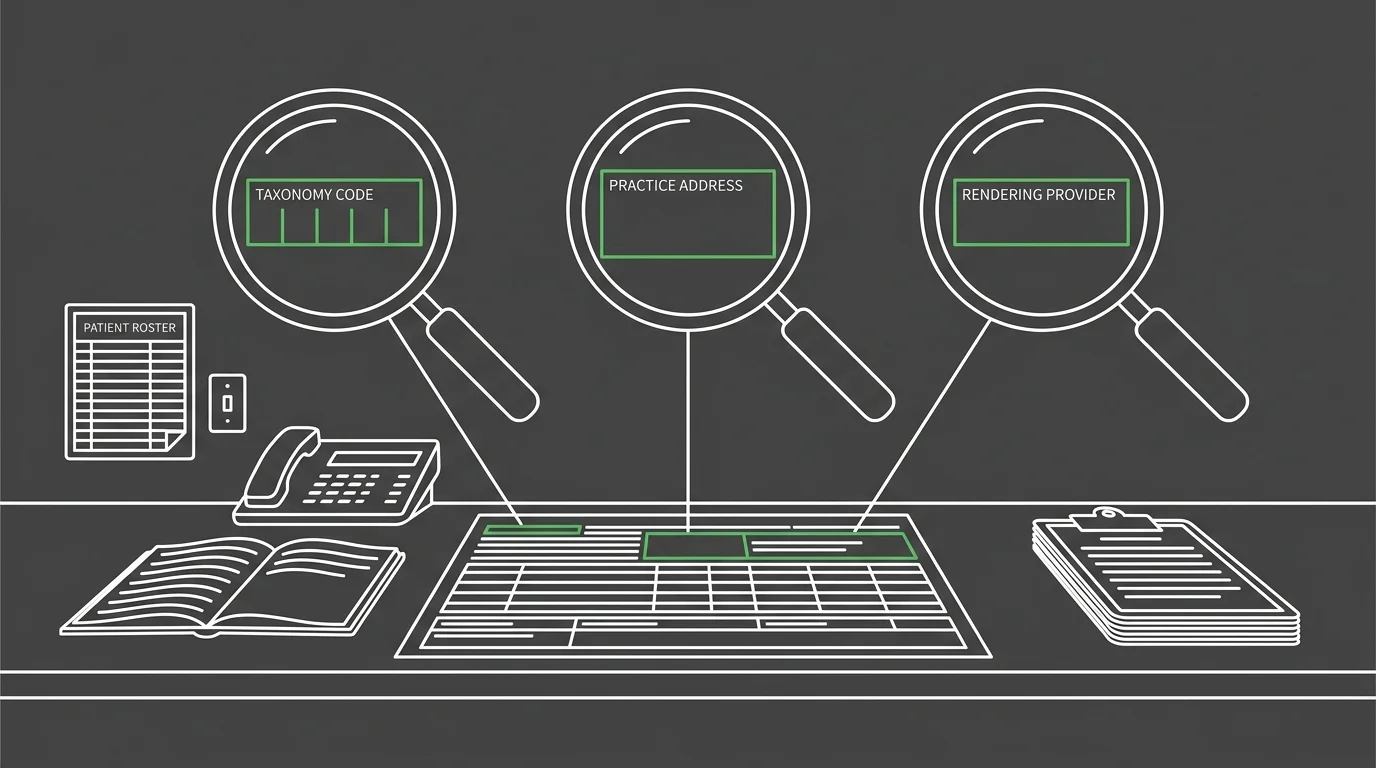
Every reportable change comes down to two data points: the taxonomy code and the practice location. And a taxonomy code isn't just a label on a profile. It rides on every claim, telling the payer exactly what kind of provider rendered the service.
Practice location carries the same weight, because it tells a payer where care happened, which network it falls under, and whether that site is even on file. So change either one without filing the matching document, and the claim built on top of it has no foundation left to stand on. For the filing side of that problem, see how practices avoid lapses in payer credentialing.
Why the Codes and the Address Matter More Than They Look Like They Should
Before anyone reads the clinical note, a payer has already checked two things. The taxonomy code tells it what kind of provider rendered the service, and the practice location tells it where the claim came from.
Getting those two data points right is basic work, and it has to happen before a claim goes out. For what a relocation actually changes on file, read keeping payer records aligned after a move.
| Data Point | What It Tells a Payer | What Happens When It's Outdated |
|---|---|---|
| Taxonomy Code | The specific provider type rendering the service, which determines network eligibility and reimbursement rules for that specialty | A claim lands under the wrong provider type, which can trigger a denial or route the claim to a review queue before anyone reads the chart |
| Practice Location | The physical site where care happened, which ties the claim to a specific network and facility record on file with the payer | The claim cites a site the payer has no record of, which stops processing even when the service itself was covered and documented correctly |
| Combined Taxonomy and Location Record | A provider's full enrollment profile as the payer system understands it, built from both data points together | A mismatch in either field breaks the whole profile's credibility, and the payer has no way to confirm which part of the claim to trust |
The Document Trail: What Actually Updates Each System
Here's the part that trips practices up: every system touching a chiropractic claim keeps its own record. That record changes only when its own document lands, not a day sooner.
So that's the crack in the foundation, traced to its source. The paperwork is specific to each system, and so is the deadline that comes with it.
| System | Document or Form | Reporting Deadline |
|---|---|---|
| Medicare (PECOS / MAC) | CMS-855 series form or electronic PECOS update | Within 30 days of a change of ownership, an adverse legal action, or a change, addition, or deletion of a practice location |
| NPPES | National Provider Identifier record update | File when the taxonomy or location changes, then confirm it matches every payer file |
| CAQH ProView | Provider attestation submitted directly in the CAQH portal | Update and re-attest when the taxonomy or location changes, on the schedule CAQH sets |
| Commercial payer | Written notification or payer-specific portal update | Set by each payer's provider agreement, so check the contract for its notice window |
Medicare's Paper Trail
Medicare enrollment runs on its own deadline, not a courtesy window. CMS states that providers and suppliers must report a change of ownership, an adverse legal action, or a change, addition, or deletion of a practice location within 30 days.
That report goes to the Medicare Administrative Contractor on record. CMS warns that untimely reporting of a new practice location can lead to administrative action. Let that window close, and claims keep pointing at a location Medicare doesn't have on file.
NPPES, CAQH, and the Commercial Payer Maze
Medicare is only one system in a wider chain. Updating provider data also means separate filings with NPPES, which holds the NPI record, with CAQH ProView, the credentialing profile many commercial payers pull from, and with each commercial payer's own portal.
None of those three hand off to one another automatically. A commercial payer portal update does not reach NPPES, and a CAQH attestation does not reach Medicare. Each is a separate filing, on its own form. After a payer approves an update, the checklist for resuming billing after approval covers what to check before claims go out again.
Why "We Already Told Someone" Keeps Failing Practices
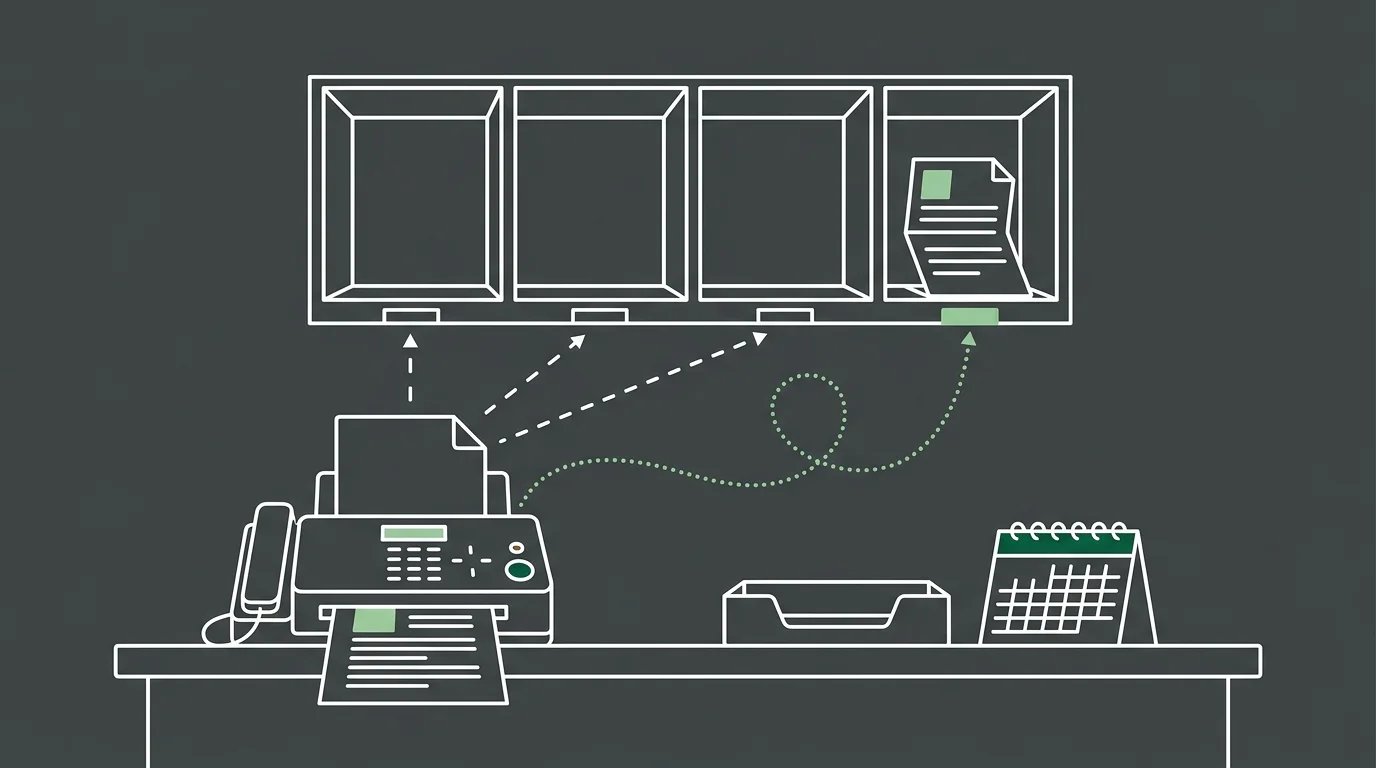
The assumption underneath most missed filings sounds reasonable: hire a billing partner and the paperwork runs itself. That assumption doesn't survive contact with how provider data actually moves. A billing partner can file the form. A billing partner cannot generate the fact that a provider moved locations, dropped a taxonomy classification, or picked up a new one — that information starts inside the practice.
A simple administrative oversight, like a missed address update on a single form, can cascade into significant payment delays and claim denials. That cascade starts the moment the practice treats the update as told rather than filed. Embedded chiropractic billing and revenue recovery depends on the practice surfacing the change the same day it happens, not after the next denial arrives. A disengaged practice produces disengaged results, no matter which forms exist to catch the gap.
The Mechanics of a Dropped Update
A dropped update doesn't announce itself. It shows up weeks later as a denial, with no obvious link back to the form that never got filed.
Fixing it means tracing the denial back to the one system that never got its own filing. File it there, then confirm the change actually shows up before the next claim goes out.
What a Billing Partnership Can and Cannot Fix
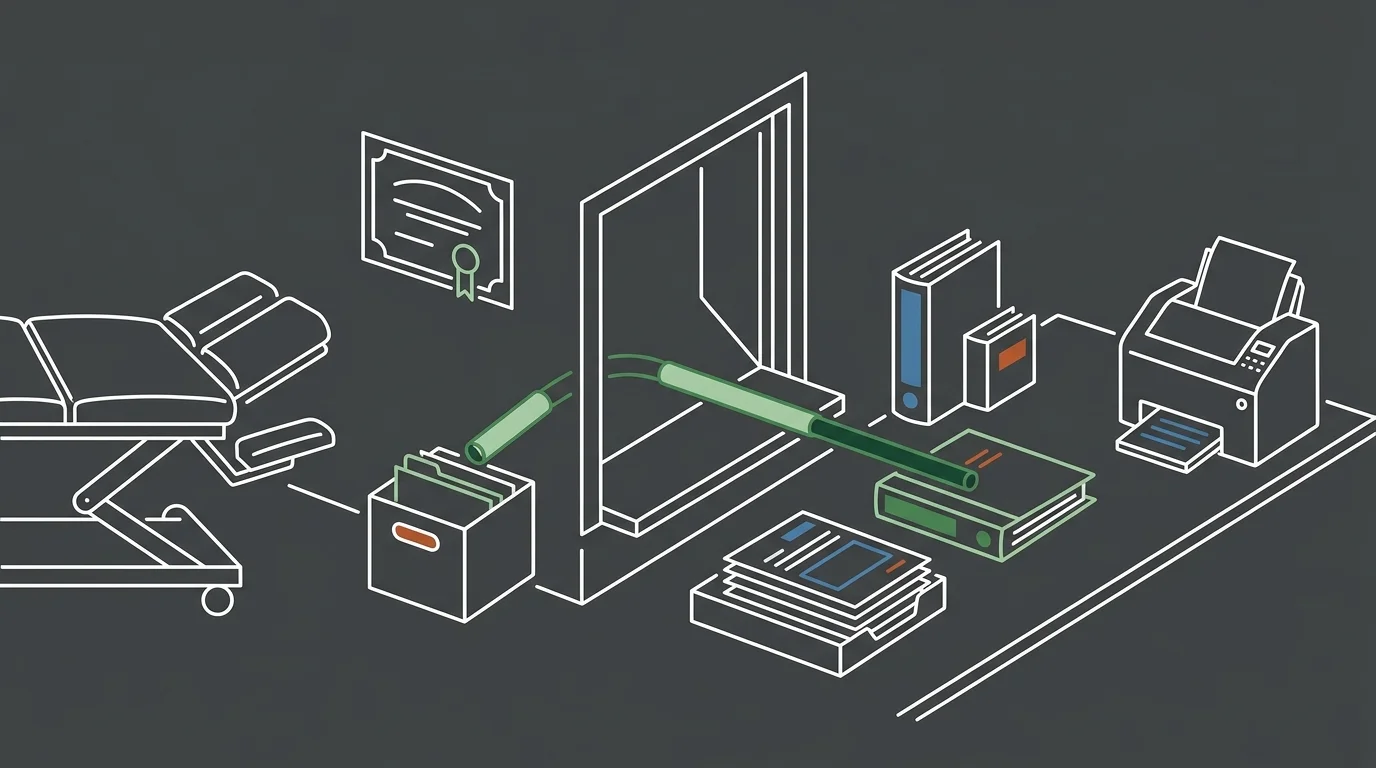
Here's where the line sits. A billing partner can file the corrected form, but it can't manufacture the fact that triggers the filing in the first place.
| Task | Who Holds the Information | Who Can File the Update |
|---|---|---|
| Preparing and submitting the correct form once notified | The billing partner | The billing partner, on the practice's instruction |
| Confirming the update posted correctly across systems | Shared | The billing partner can verify; the practice must flag what changed and when |
Keeping the Record Straight Once It's Fixed
Fixing the record is only half the job. Once a correction clears NPPES, CAQH, or a payer portal, all three have to stay aligned, and updating one while assuming the rest caught up just rebuilds the gap that was closed.
Building a Simple Update Checklist
So keep the list short and keep it honest. Confirm the taxonomy code and location match across NPPES, CAQH, Medicare enrollment, and every commercial payer file the practice touches. Then log the date each update was filed, not just approved, so any lapse has a visible starting point.
Frequently Asked Questions
These questions come up every time a provider moves or changes classification. Here's what actually happens at the document level.
What happens to insurance billing if a practice location isn't updated with payers in time?
Claims tied to that location start denying or sitting in pending. The payer has no record matching the address on the claim, so filing the update is the fix, not waiting out the backlog.
How long does a taxonomy code update take to be reflected in payer systems?
There's no single timeline, since each system processes its own filing on its own schedule. A practice should confirm the update landed in each system separately rather than assume one confirmation covers all of them.
Do separate documents need to go to Medicare, Medicaid, and each commercial payer for a location change?
Yes. Medicare, state Medicaid, and each commercial payer keep separate provider files, and a change filed with one won't reach the others on its own.
What is the difference between a legal business address and a service location for billing purposes?
The legal business address is where the practice is registered and correspondence is sent. The service location is where care is actually delivered, and payers need both correct on their own records.
Which record is the authoritative source when NPPES, CAQH, and a payer portal show different data?
None of them is automatically authoritative over the others, since each reflects whatever was last filed there. The practice's own current records are the source of truth, and every system should be checked against them.
What role does a revenue cycle partner play in filing these documentation updates?
A revenue cycle partner can prepare and submit the paperwork once the practice confirms what changed.
Where This Leaves the Revenue Cycle
So the foundation metaphor holds all the way up. Every claim that gets paid rests on taxonomy and location data that someone filed correctly, long before the claim itself was ever built.
A crack at that foundation doesn't stay contained. It shows up as a denial on one floor, a stalled payment on another, and neither repair starts until the practice surfaces the change that caused it.
Staying current protects the foundation itself, not just the claim sitting on top of it today. That's the work worth putting in front of someone who handles chiropractic billing and revenue recovery for a living — book a call with Bushido Billing and walk through what a practice's current records actually show.