

How to Decide When Credentialing Needs a Dedicated Owner
Learn when chiropractic credentialing needs a dedicated owner, the signs to watch for, and how NCQA's three-year cycle and payer deadlines shape the choice.
Credentialing needs a dedicated owner when a practice cannot reliably track every payer deadline, re-attestation window, and enrollment status across its provider roster without delays reaching the revenue cycle. A dedicated owner is a specific person or entity accountable for the full lifecycle of a provider's eligibility to be paid, rather than a task completed once and filed away. This lifecycle includes initial application, payer follow-up, periodic recredentialing, and immediate updates whenever a provider's status changes. A practice should assign this role deliberately once any of several signals appear: growth into new payer networks, addition of new providers, recurring claim denials tied to enrollment gaps, or missed recredentialing cycles. Credentialing is not a one-time administrative task completed at hire. It is an ongoing strategic function tied directly to a practice's financial health, because a lapse in a single payer's enrollment status can halt reimbursement for every claim submitted under that provider during the lapse. The decision to formalize ownership, whether through an internal employee or an external partner, depends on a practice's growth stage, its payer mix, and how much financial risk it can absorb from an enrollment gap. Practices that rely on informal tracking, shared spreadsheets, or occasional attention from administrative staff often underestimate the cumulative hours required to manage multiple applications and deadlines correctly across payers. A dedicated owner treats credentialing as a continuous operational responsibility rather than a periodic chore, maintaining current status across every payer relationship the practice depends on for reimbursement.
What Counts as Provider Credentialing, and Where the Ownership Question Actually Starts
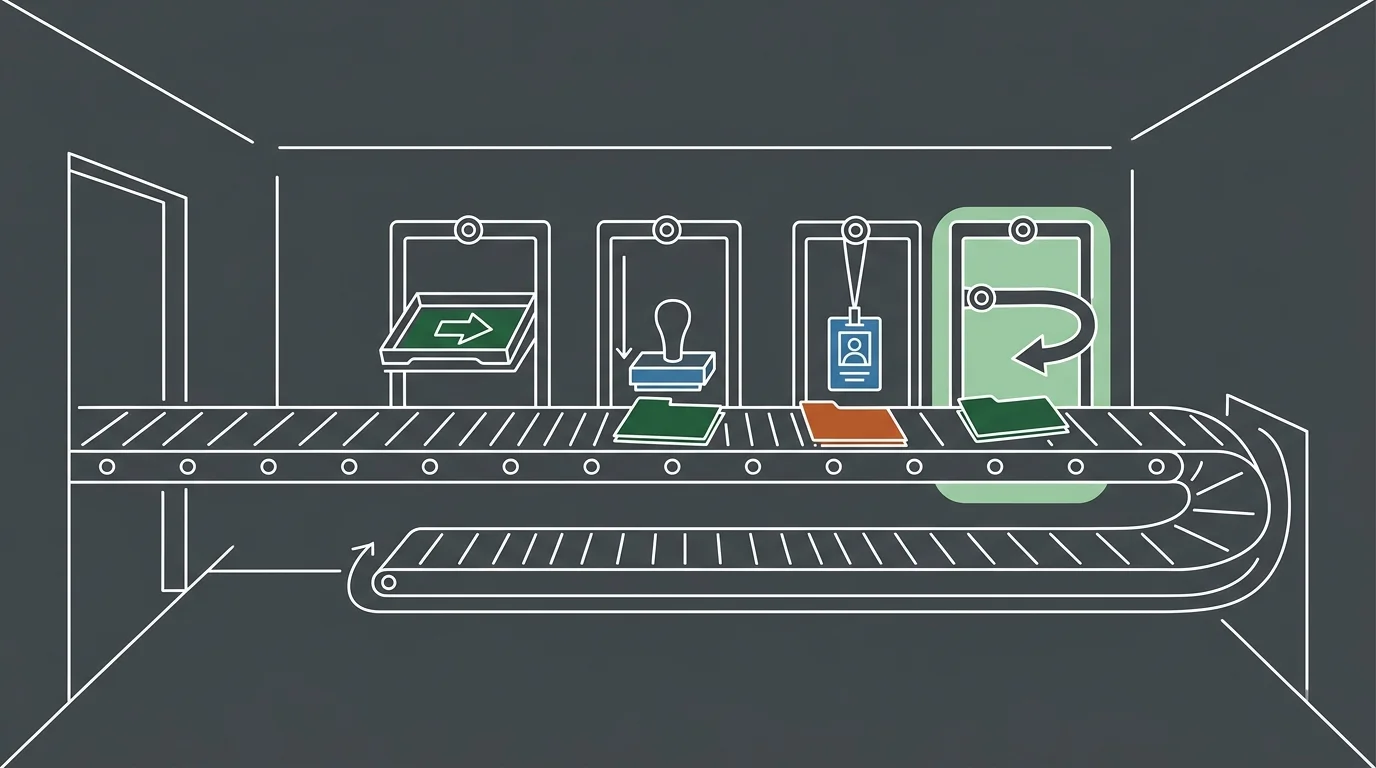
Credentialing covers four linked stages: initial application, payer follow-up, periodic recredentialing, and status updates whenever something changes. Treat any one of those stages as a finished task and the lifecycle breaks. The ownership question starts exactly there, at the gap between a stage closed and a stage maintained.
A practice without a named owner tends to react to denials instead of preventing them. The work of staying ahead of payer enrollment deadlines is what separates a maintained lifecycle from a reactive one. That distinction is the entire basis for deciding whether the role needs a dedicated owner at all.
Where Credentialing Lives Inside the Revenue Cycle
Credentialing sits upstream of every claim a practice submits. A payer cannot pay a claim for a provider it has not approved, no matter how clean the documentation is.
That puts enrollment status at the start of the revenue cycle, not beside it. Billing staff downstream inherit whatever state credentialing left behind.
| Revenue Cycle Stage | Function Performed | Dependency on Credentialing Status |
|---|---|---|
| Credentialing & Enrollment | Establish and maintain each provider's approved status with every payer the practice bills | Full dependency — this stage is the gate every downstream stage waits on |
| Claim Submission | Format and transmit the claim to the payer based on documentation and coding | High dependency — a claim submitted under a lapsed enrollment fails before review |
| Adjudication & Payment | Payer reviews the claim against coverage, medical necessity, and provider eligibility | High dependency — adjudication cannot approve payment to a provider it has not credentialed |
| Denial Management & Appeals | Investigate denial reasons, correct errors, and argue reversals with the payer | Variable dependency — enrollment gaps create a category of denial that documentation fixes cannot resolve |
| AR Follow-Up & Recovery | Track outstanding balances and pursue collection on aging claims | Indirect dependency — a credentialing lapse upstream widens the AR backlog this stage has to work through |
From Enrollment Status to Clean Claim Submission
Current enrollment lets a claim move through adjudication and get judged on its own merits. Lapsed enrollment stops it cold, before anyone even looks at the coding or the documentation behind it.
And nobody sees that failure until a denial report surfaces it, often weeks after the service date. Knowing when established clinics should start re-credentialing closes that lag before it ever reaches a claim.
Why an EHR Cannot Carry This Function Alone
Drop the idea that software handles billing because the EHR takes care of it. That belief treats submission and payment as one event, and they aren't. An EHR sends a correctly formatted claim, but it has no way to judge why a payer denied it or to argue the appeal.
Denials, appeals, and AR recovery need human judgment that a record-keeping system was never built to supply. A dedicated owner tracks which payer relationships are live and which are not, across every network a practice bills into.
Why Treating Credentialing as a One-Time Task Breaks Down
Treat credentialing as a box checked at hire, and the lifecycle breaks right where nobody's watching. Good billing runs on an embedded partnership: EHR access, documentation cooperation, and providers who are available when a payer needs something. A practice that steps back from that partnership gets disengaged results, because the status a payer has on file stops matching reality the day nobody updates it.
The Disengaged Practice Pattern
A practice running this way treats credentialing as something assigned once and never revisited. Deadlines get missed not from neglect of the whole system, but from nobody owning any single payer relationship long enough to notice it drifting.
Medicare revalidation adds one more clock to watch, and it runs separately from every commercial payer's cycle. A practice with no named owner tends to learn about a missed step from a denial, not a reminder.
Why Re-Attestation Deadlines Get Missed Even by Organized Practices
Organized practices still miss recredentialing cycles because the interval is long enough to fall off a calendar nobody is actively maintaining. NCQA requires recredentialing every three years under the standards it sets for the organizations it accredits. Knowing when a tracking system beats a spreadsheet is the difference between a date someone remembers and a date a system surfaces on its own.
Why Generalist Handling Leaves Gaps

Generalist billing operations produce generalist results. A chiropractic practice may carry many payers, each re-credentialing on its own cycle, and a generalist process tends to absorb those dates inconsistently. Chiropractic billing support is built for practices that need that work handled as a continuous lifecycle rather than a periodic task.
How Credentialing Ownership Is Structured Across Different Practice Models
Ownership of the credentialing lifecycle takes different shapes depending on how a practice is structured. Some assign it to internal staff. Others route it to an embedded partner alongside billing itself.
The decision hinges on a practice's growth stage, its payer mix, and how much financial risk it can absorb from a gap in enrollment status.
Internal Staff Ownership
An internal employee can own the lifecycle, but only if the hours actually exist to track every payer deadline across the full provider roster. That time cost climbs with each new payer relationship and each added provider. Hand it to a generalist office administrator juggling other duties and the results stay generalist, because credentialing ends up competing with everything else on that desk.
Embedded Partner Ownership
An embedded partner owns the same lifecycle, but as a continuous function rather than one competing task among many.
What a Dedicated Credentialing Owner Actually Does Week to Week

A named owner spends the week on tasks a folder of paperwork cannot perform itself. That means tracking deadlines, confirming payer rosters, and chasing documentation before a gap opens.
| Tracking Method | Deadline Visibility | Error Recovery Capacity |
|---|---|---|
| Informal or shared spreadsheet | Deadlines surface only when someone remembers to check the file | Low, errors are often found after a claim has already failed |
| Occasional attention from administrative staff | Visibility depends on whatever else competes for that person's time that week | Moderate, catches obvious gaps but misses slow drift across payers |
| Dedicated internal owner with protected time | Deadlines are tracked on a standing basis across the full provider roster | Higher, gaps get caught close to the point they open |
Tracking Re-Attestation and Revalidation Deadlines
Recredentialing cycles do not announce themselves early enough for informal tracking to catch them reliably. A dedicated owner watches those intervals the way the lifecycle framing demands, so the renewal date surfaces well before it becomes a lapse.
Managing the Application and Re-Enrollment Queue
Every open application and re-enrollment request needs one person watching it until the payer confirms. In a shared queue, a payer's request for one missing document can sit unanswered while the file stalls behind it.
Frequently Asked Questions
Once the lifecycle framing clicks, a few mechanical questions tend to follow. Here's what the walkthrough above leaves open.
What are the most common signs that a chiropractic practice needs a dedicated credentialing owner?
Denials tied to eligibility rather than coding are the clearest signal. So are missed recredentialing dates and a provider roster nobody can confirm is current across every payer.
How does lapsed credentialing directly impact a practice's revenue cycle management?
Claims under a lapsed enrollment deny for eligibility, which no coding or documentation fix can correct, and the backlog lands in AR.
What's the difference between handling credentialing in-house with a staff member versus using an embedded billing partner?
Internal staff can own the role, provided the time exists to track every deadline across the full roster. An embedded partner treats the same lifecycle as a continuous function rather than one task competing against everything else on an office administrator's desk.
How often do chiropractors need to complete recredentialing with major insurance payers?
NCQA requires recredentialing every three years at the organizations it accredits, and each payer can add its own checkpoints, so one calendar reminder rarely catches every renewal.
Can practice management software alone effectively manage credentialing and payer enrollment?
No. An EHR submits a claim correctly formatted, but it has no mechanism to judge why a payer denied it or to track enrollment status across a full roster. That judgment and follow-through require a named owner, not a record-keeping system.
What This Means
Credentialing is a lifecycle, not a folder closed at hire. Four stages stay in motion for as long as a provider bills a payer. The moment ownership lapses, so does the accuracy of what that payer has on file.
Deciding whether that role needs a dedicated owner is really a question about engagement. A practice that treats credentialing as a passive task gets the disengaged results that follow from it. An embedded partnership, where EHR access, documentation, and provider availability stay current, is what keeps the lifecycle maintained instead of merely filed.
That's the commitment a dedicated owner stands for, whether that owner sits inside the practice or alongside it. Curious what a maintained credentialing lifecycle would look like for a practice's own provider roster? Schedule a conversation with Bushido Billing.