

How Often Do Chiropractors Need to Re-Attest and Update Their CAQH ProView Profile?
Chiropractors must re-attest CAQH ProView every 120 days. See what a missed deadline costs and how it differs from payer re-credentialing.
Chiropractors must re-attest their CAQH ProView profile every 120 days, regardless of whether any information has changed. This 120-day cycle is a standing requirement set by CAQH, not an optional check-in, and it applies continuously for as long as a provider expects health plans to treat their credentialing data as current. Re-attestation means logging into the CAQH ProView portal, reviewing every section of the profile for accuracy, and formally confirming the data is still correct, even when nothing needs updating. This process is separate from initial CAQH registration and separate from the periodic re-credentialing cycle each individual payer runs on its own schedule. Health plans, hospitals, and credentialing verification organizations pull directly from CAQH ProView to confirm a provider's license status, malpractice history, education, and practice locations. When the 120-day window lapses without attestation, the profile is marked inactive, and payers relying on that data can flag the provider as out of date. An inactive or outdated CAQH profile can stall new payer enrollments, delay re-credentialing reviews already in progress, and in some cases contribute to claim processing problems tied to provider directory accuracy. The requirement exists independently of state, specialty, or practice size, and it does not pause during busy clinical periods or staff transitions. Tracking the 120-day deadline and completing the review before it expires keeps a provider's data continuously verifiable to every plan that depends on CAQH ProView as its source of truth.
What CAQH ProView Actually Tracks, and Why It Sits Between You and Every Payer

CAQH ProView sits at the center of every reimbursement decision a payer makes about a chiropractor. It is the database every major plan checks before it trusts a provider's credentials.
And that position isn't an accident. It's structural, and once you see what the database actually does, the weight of the 120-day clock makes sense.
What CAQH ProView Is Built to Do
Think of CAQH ProView as the centralized digital locker for a provider's professional credentials. Nearly every major health plan pulls from it to confirm who a chiropractor is and whether they're still eligible for reimbursement.
That reach is not small. CAQH ProView is used by more than 1.6 million providers and 1,000 participating organizations. According to this published analysis, more than 1.6 million providers and 1,000 participating organizations use CAQH ProView. A database that size doesn't tolerate a stale profile quietly. It treats one as fact until someone corrects it.
Where Re-Attestation Fits Inside the Larger Credentialing Cycle
Here's where it gets muddled: re-attestation and payer re-credentialing get treated as one process. They're not.
Re-attestation confirms the CAQH profile itself is accurate every 120 days. Re-credentialing is a separate review each payer runs on its own schedule, often starting from that same CAQH data. For a fuller breakdown of how these enrollment mechanics connect to what a practice actually collects, see why credentialing sits at the front of the revenue cycle, which maps the credentialing cycle end to end.
The 120-Day Clock: How Often Re-Attestation Is Actually Required
The 120-day clock is the mechanism that keeps the revenue gateway open. Every attestation cycle either confirms access or quietly closes it.
| Credentialing Task | Governing Cycle | Who Manages It | What Triggers It |
|---|---|---|---|
| CAQH Re-Attestation | 120-day standing cycle set by CAQH, running continuously regardless of payer activity | The provider or the practice's credentialing staff, confirming the profile directly in CAQH ProView | The 120-day window closing, whether or not any profile data has actually changed |
| Payer Re-Credentialing | A separate review cycle each individual payer sets on its own internal schedule | The payer's credentialing department, pulling CAQH data as a starting reference point | The payer's own renewal timeline, independent of when the CAQH profile was last attested |
How the 120-Day Window Is Counted
The count starts the moment a profile is attested, not on a calendar date a practice gets to pick. Miss the window and the profile flips to inactive, and that inactive flag is what disrupts credentialing for groups running parallel processes like the Medicare revalidation process for chiropractic groups.
Why Some Practices Miscount Their Own Deadline
Practices miscount because they treat re-attestation like re-credentialing, assuming a payer's separate review timeline covers them. It doesn't. Re-attestation confirms the CAQH profile itself is accurate; re-credentialing is a distinct review each payer runs on its own schedule.
The distinction sharpened after 2022. That's when the No Surprises Act required providers and facilities to keep directory information current and accessible to plans. Research published through CAQH's provider directory issue brief found beginning in 2022, the No Surprises Act required providers and healthcare facilities to have business processes in place to ensure timely provision of provider directory information to plans or issuers. A lapsed attestation now feeds directly into inaccurate directory data, not just a stale internal file.
Why Treating Re-Attestation as a Formality Is a Flawed Practice
Most chiropractic practices treat credentialing as a set-it-and-forget-it task. That assumption is where the financial risk starts.
The Passive Credentialing Model and Why It Breaks Down
The passive model assumes a profile stays accurate the moment it's submitted. It doesn't, and the failure is silent by design: a profile flips inactive without a sound, and weeks or months pass before a stalled enrollment or a denied claim surfaces the problem. How Do Payer Directory Errors and Missed Attestations traces exactly how that quiet lag turns into a denial.
What Happens Mechanically When a Practice's CAQH Attestation Lapses
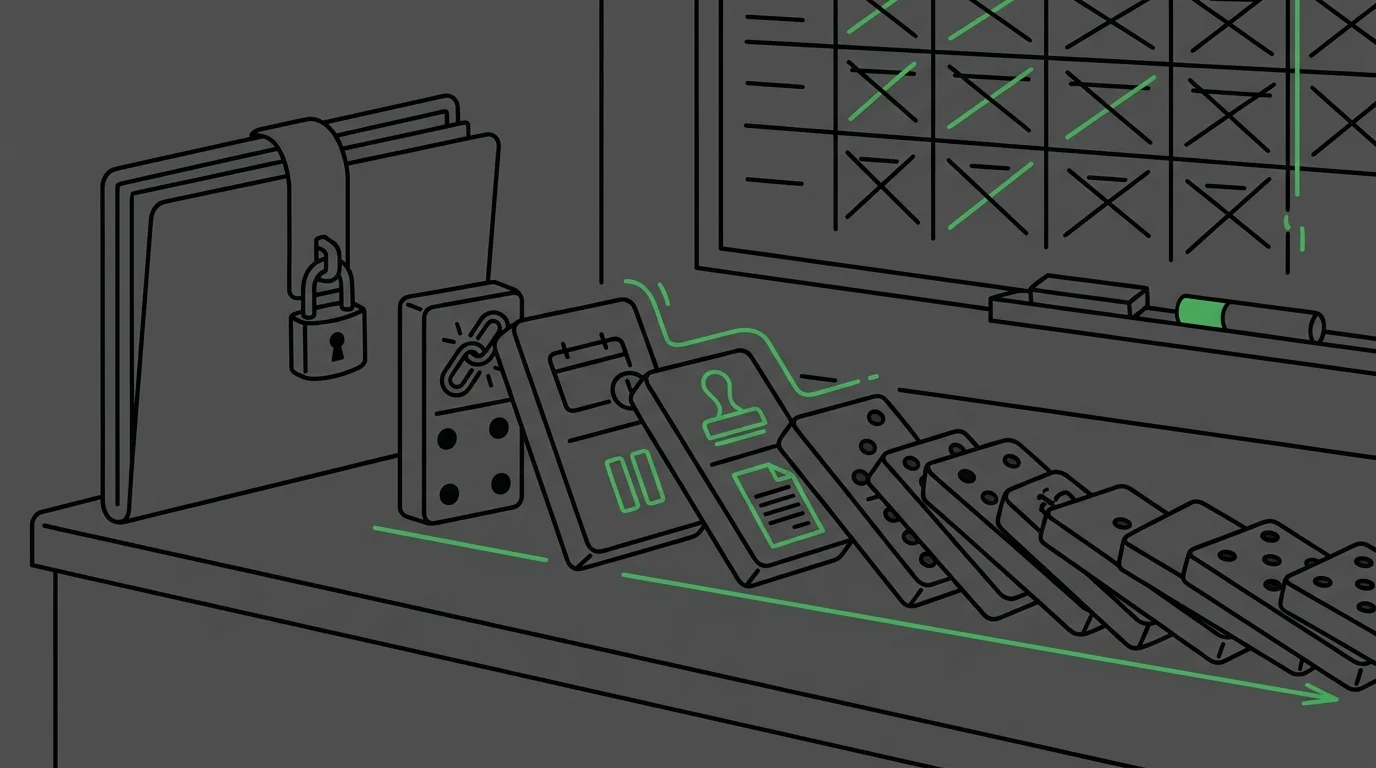
A lapsed profile doesn't trigger an alert to the practice. It just goes inactive, and the gateway starts closing from the inside.
The Chain Reaction Across Payer Networks
Every plan pulling from that profile now sees stale data instead of current data. Some pause pending applications. Others flag the provider record for internal review before any claim ever hits their system.
Reactivation Mechanics After a Lapse
Getting the profile back to active status is a manual fix, not an automatic one. Someone has to log back into the portal, re-confirm every section, and re-attest before payers will trust the data again. For a practice weighing whether to manage that recovery internally or hand credentialing hygiene to a dedicated service, specialist chiropractic billing help outlines what ongoing support actually covers.
Re-Attestation Versus Re-Credentialing: Two Different Clocks Operators Confuse
Zoom out from any single lapse and the confusion behind it becomes obvious. Practices treat re-attestation and re-credentialing as one clock when they're actually two.
| Dimension | CAQH Re-Attestation | Payer Re-Credentialing |
|---|---|---|
| Who initiates it | The provider, on a fixed schedule that never changes regardless of payer | Each individual payer, on that payer's own internal timeline |
| What it confirms | That the CAQH profile itself still reflects accurate, current data | Whether the provider still meets that specific payer's network standards |
| Trigger for the clock | Starts the moment a profile is attested, not a calendar date the practice picks | Set by the payer's own review cadence, often pulling from CAQH data as its starting point |
| What a lapse looks like | Profile flips inactive quietly, with no alert sent to the practice | A stalled application or a network status flag, discovered when a claim or renewal notice surfaces it |
| Where the data lives | One centralized profile every participating plan can pull from | A separate file inside each payer's own credentialing system |
| Fix required after a lapse | Manual re-confirmation of every section inside the portal before payers trust it again | A payer-specific review process, which cannot start until the underlying CAQH data is current |
Defining the Boundary Between the Two Processes
Re-attestation is a self-check. The provider confirms their own CAQH data is still accurate, on a fixed schedule that never changes. Re-credentialing is a payer-driven review, run on that payer's own timeline, often starting from the CAQH data the provider already confirmed.
Why Federal Directory Rules Raised the Stakes on Both
Federal rules raised the cost of confusing the two. Directory accuracy stopped being a private matter between a provider and one payer's files. It's a standing obligation tied to how plans show provider information to patients and to other plans.
Building an Operational Cadence That Keeps the Gateway Open
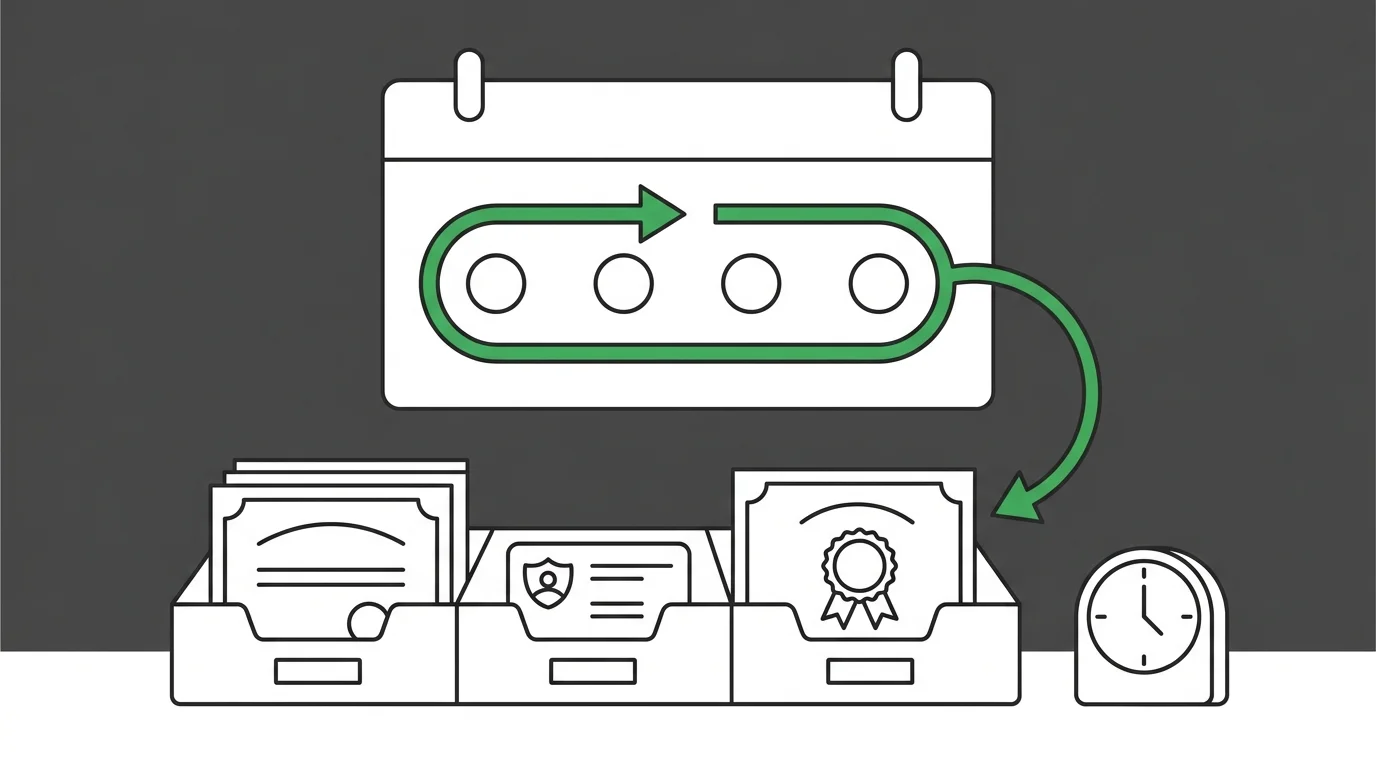
Naming the failure doesn't stop it. What stops it is a standing rhythm that catches the 120-day window every time, before it closes the gateway again.
| Document Category | Example Records | Why It Matters at Re-Attestation |
|---|---|---|
| Licensure Records | Active state license number, current expiration date, DEA registration if applicable | A lapsed or mismatched license entry stalls re-attestation and flags the profile for payer review |
| Malpractice Coverage | Current carrier name, policy number, coverage dates and limits | Payers pull this directly from the profile, so an expired policy listed as active breaks trust in the whole record |
| Education and Training | Degree conferral dates, residency or postgraduate training records, board certifications | Credentialing verification organizations cross-check this against primary sources, so gaps slow every downstream review |
| Practice Location Data | Current practice addresses, phone numbers, group affiliations | This is the exact directory data the No Surprises Act requires to stay accurate, tying re-attestation to a federal obligation |
| Work History and Gaps | Chronological practice history with explanations for any unexplained gaps | Unexplained gaps trigger manual review, which is what turns a routine re-attestation into a delayed one |
The Recurring Tasks a 120-Day Cadence Requires
The cadence starts with a calendar entry set the day a profile is attested, not the day someone remembers to check it. Someone reviews every profile section for accuracy, confirms the current data still matches reality, and re-attests before the window lapses. That review repeats every cycle, without exception, regardless of what else is happening in the practice.
Documentation That Keeps a Re-Attestation Fast
A fast re-attestation depends on documentation being ready before the deadline, not gathered after it. Current license numbers, malpractice coverage details, and practice location records need to sit in one place a staff member can pull from in minutes. Scrambling for that information during the review window is what turns a five-minute task into a missed one.
Frequently Asked Questions
A few mechanics keep surfacing once the 120-day cycle clicks into place. Here's where they get answered.
What's the difference between CAQH re-attestation and payer re-credentialing?
Re-attestation is a self-check: the provider confirms their own CAQH data every 120 days. Re-credentialing is a payer-driven review, run on that payer's separate timeline, often starting from the CAQH data already confirmed.
What specific documents are most commonly needed when updating a CAQH profile for re-attestation?
Current license numbers, malpractice coverage details, and practice location records are what most re-attestations turn on. Keeping those documents in one place before the deadline is what keeps the review fast.
If a CAQH re-attestation deadline is missed, how long does reactivation typically take?
Reactivation is a manual fix, never an automatic one. Someone has to log back into the portal, re-confirm every section, and re-attest before payers trust the data again.
Does a chiropractic practice need a new CAQH profile after moving locations or joining a group?
A profile move or a group change doesn't require a new CAQH profile. The existing profile gets updated with the new location or affiliation, then re-attested to confirm the change is accurate.
Are there state-specific exceptions to the standard CAQH re-attestation timeline?
There aren't any. The 120-day cycle is a standing CAQH requirement, not a state rule. It applies the same way regardless of state, specialty, or practice size.
Can a missed CAQH re-attestation cause claim denials for existing in-network patients?
Yes. A lapsed profile goes inactive, and payers relying on that stale data can flag directory accuracy problems that surface as denials for patients already in network.
How does CAQH re-attestation relate to Medicare's revalidation process?
They're two different clocks. Medicare revalidation is a separate federal process on its own schedule, distinct from CAQH's 120-day cycle. Groups tracking both have to treat them as two, not one.
What This Means
CAQH re-attestation is not paperwork. It is the checkpoint that decides whether the revenue gateway stays open every 120 days.
Treat it as a leading indicator, not an afterthought. A missed window closes the gateway silently, long before a denial or a stalled enrollment makes the damage visible.
Chiropractic practices that protect uninterrupted reimbursement build the 120-day cadence into standing operations, not into memory. If a practice wants that rhythm handled with the same discipline it demands from its own care standards, Bushido Billing's credentialing support is where that conversation starts.