

How to Run a Chiropractic EHR Ledger Audit to Find Lost Insurance Revenue
Learn how a chiropractic EHR ledger audit uncovers hidden insurance revenue lost to underpayments, unworked denials, and automation blind spots.
A chiropractic EHR ledger audit is a systematic, human-led review of every claim, payment, and adjustment recorded inside a practice management system to identify insurance revenue that was never fully collected. The process examines the full revenue cycle rather than a single report, comparing what was billed against what payers actually paid, what was contractually allowed, and what remains unresolved in accounts receivable. It requires a reviewer to manually reconcile posted payments against payer fee schedules, trace every denied or partially paid claim to its root cause, and identify claims that stalled without appeal or resubmission. This differs from routine software reporting because the ledger itself only displays the numbers a platform was configured to calculate. It does not question whether those numbers are correct. An audit interrogates the data behind each figure, checking coding accuracy, modifier application, documentation sufficiency, and payer-specific adjudication patterns line by line. The review typically covers underpayments where insurers paid less than contracted rates, unworked or abandoned denials, timely filing failures, and unposted adjustments that distort the true accounts receivable balance. It also verifies that write-offs were justified rather than defaulted by staff seeking to clear a worklist. The output is a documented inventory of specific dollars tied to specific claims, along with the operational cause of each loss. That inventory becomes the basis for corrective billing action, appeal submission, or process changes within the practice. The audit does not rely on any single EHR vendor's built-in analytics, since those tools report only what they are programmed to surface and cannot independently verify their own accuracy against payer contracts or claim-level documentation.
What a Chiropractic EHR Ledger Audit Actually Examines

Most chiropractic EHR platforms promise to simplify billing. That promise is exactly where the danger starts.
Automation can create dangerous financial blind spots for the practice owner, because a dashboard reporting clean numbers is not the same as a practice collecting every dollar it earned. The ledger becomes a black box quietly repeating whatever the system was configured to calculate.
A ledger audit is not simply about checking for errors. It is a critical diagnostic tool for assessing the financial health and operational efficiency of the entire revenue cycle, and it exists specifically to open that black box. For a closer look at where platform-specific automation tends to fail, see the case for revenue management beyond the EHR.
Where the Ledger Stops Telling the Truth
The ledger says the claim is closed. But closed and correctly paid are two very different things.
Every dashboard in a chiropractic EHR reports exactly what it was told to calculate. Not one was built to ask whether that number matches what the payer actually owed.
Why Automated Reporting Fails to Catch Underpayments
A payment posts. The ledger marks the claim resolved, and the system moves on without ever comparing that number to anything.
Here's the gap: contracted fee schedules sit outside most EHR reporting altogether. The software confirms money arrived, not that the right amount did, and that's exactly where quiet underpayments survive. A closer look at where that automation gap originates shows why the platform was never built to catch this.
Chiropractic billing runs on modifier rules and payer-specific policies that shift with every contract. A generic report has no way to police that variation, so software alone rarely catches a payer paying short against its own terms.
The Documentation Gap Behind Medicare's Improper Payment Rate

Underpayments are not the only blind spot the ledger hides. Documentation gaps are the largest one measured across the entire program.
Medicare's own data shows the scale of it. In the 2024 Medicare Fee-for-Service reporting period, improper payments for chiropractic services reached 33.6% of claims, and insufficient documentation accounted for 95.5% of those improper payments. According to CMS, improper payments for chiropractic services reached 33.6% during the 2024 Medicare Fee-for-Service reporting period, with insufficient documentation accounting for 95.5% of those improper payments.
A claim can pass every coding check and still fail on paper it never generated.
Coding errors are almost a footnote by comparison. Incorrect coding represented just 0.7% of improper payments for chiropractic services in that same period. CMS documents that insufficient documentation accounted for 95.5% of improper payments for chiropractic services, while incorrect coding represented 0.7% of improper payments.
That gap between 95.5% and 0.7% tells a practice exactly where to look first. It is not the codes. It is the notes behind them.
An EHR ledger cannot flag a missing justification it was never asked to read. Closing that gap is precisely what outperforming built-in billing analytics through independent human review is built to do.
| Improper Payment Cause | Share of Improper Payments | Ledger Field to Review |
|---|---|---|
| Insufficient documentation | 95.5% of improper payments | Chart notes and treatment plans tied to each billed date |
| Incorrect coding | 0.7% of improper payments | CPT and modifier selection on submitted claims |
| All improper payment causes combined | 33.6% of claims reviewed | Overall claim status report for the 2024 reporting period |
How Denials Compound When No One Reworks Them
A single denial looks small on the day it lands. Left unworked, it stops being a data point and starts being a pattern.
No one is tracing what happened after that claim left the practice, the same gap that lets underpayments hide inside a ledger marked paid.
Unworked denials compound because the clock behind them never stops. Each one that ages past a payer's filing window converts from recoverable to permanently lost.
A practice managing patient volume without managing this queue is watching the wrong number. For a fuller view of how that recovery work gets done, see Billing Services.
Running the Audit: A Field-by-Field Walkthrough of the Ledger
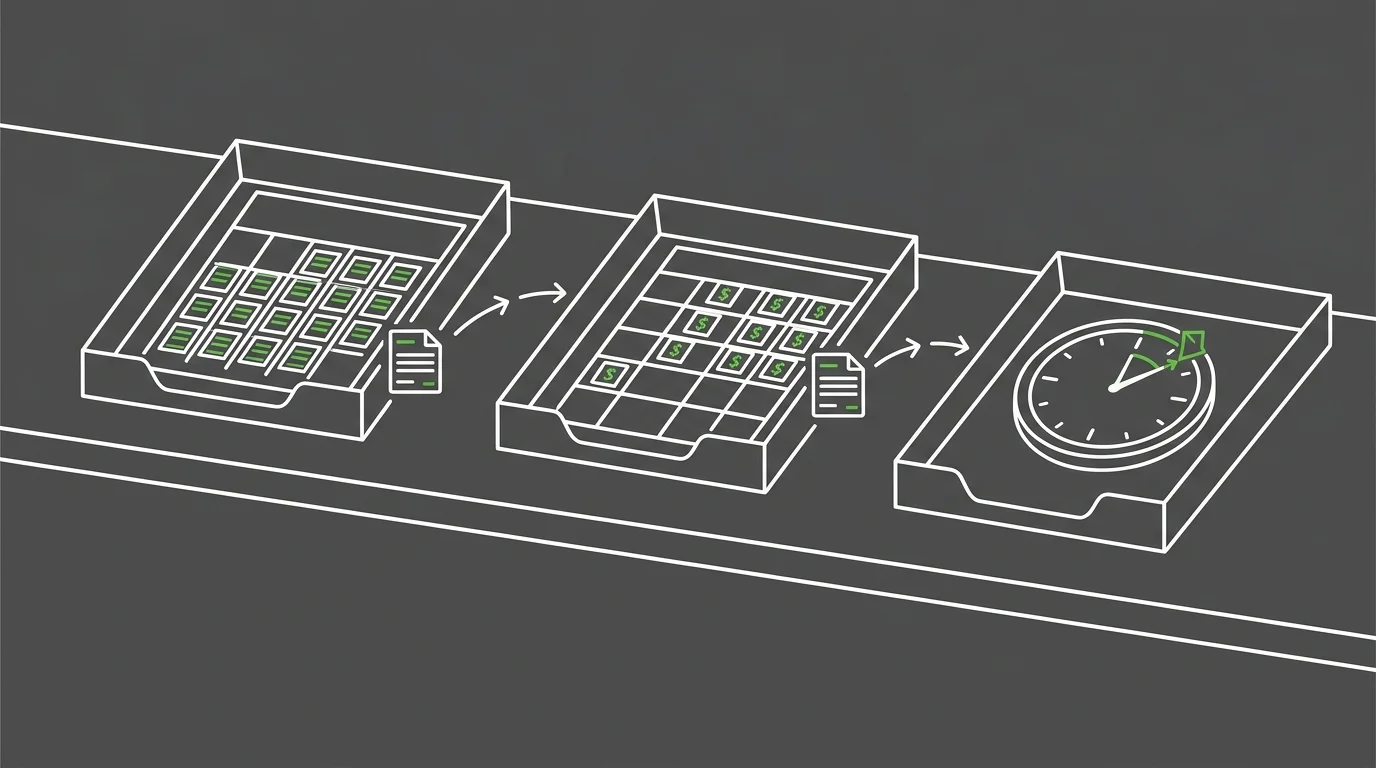
Opening the black box is not a philosophy. It is a sequence.
Three fields decide most of what an audit gets back: the aging report, the payment-to-fee-schedule comparison, and the filing deadline tracker. Each one exposes a different way revenue goes quiet inside the ledger.
| Audit Step | Ledger Report Used | What It Surfaces |
|---|---|---|
| Aging Review | Accounts receivable aging report | Claims sitting past a payer's normal response window without payment or denial, ranked by how close each sits to its filing cutoff |
| Payment Verification | Payment-to-fee-schedule comparison | Claims marked paid in the ledger that actually settled below the contracted rate, exposing underpayments the software never questioned |
| Deadline Tracking | Filing deadline tracker cross-referenced by payer and state | Claims approaching a timely filing cutoff that the ledger displays without flagging urgency, before the window closes and the claim becomes unrecoverable |
| Denial Root-Cause Review | Denial and rejection detail report | Denied or partially paid claims that stalled without appeal or resubmission, sorted by whether the cause was documentation, coding, or payer policy |
| Payer Type | Filing Deadline | Risk If Missed |
|---|---|---|
| State Medicaid (example: South Dakota) | 6 months following the month of service | Claim becomes permanently unrecoverable once the window closes |
| Commercial and Medicare payers generally | Varies by payer and is rarely uniform across a practice's mix | Revenue disappears quietly because the ledger does not sort claims by urgency |
Reading the Aging Report Before Anything Else
Start with what is old, not what is new. A claim sitting past ninety days without movement is not pending. It is dying.
The ledger will not sort by urgency on its own. Someone has to pull every claim aging toward its payer's cutoff and rank it by how close that cutoff sits.
Cross-Checking Payments Against the Fee Schedule
Next comes the number every practice trusts too quickly: the payment marked received. A paid claim in the ledger only confirms that money moved, not that the right amount moved.
Cross-checking means pulling the payer's contracted fee schedule and matching it line by line against what actually posted. Any gap between the two is a recoverable dollar the software already quit tracking.
Flagging Claims Against Payer Filing Deadlines
Filing deadlines are where the clock finally runs out. Payers do not send a warning before a window closes.
Deadlines vary sharply by payer and by state, and treating them as uniform is how claims expire unnoticed. According to published government guidance, requires completed chiropractic claims to be received within 6 months following the month the service was provided. A practice billing outside South Dakota still needs to know its own state's window, because six months can pass inside a ledger that never once flagged the date.
Frequently Asked Questions
Every time a ledger gets opened, the same handful of questions come up. Here are the straight answers.
How often should a chiropractic practice conduct a full EHR ledger audit?
Once a year catches the largest problems, but quarterly is where compounding losses actually get stopped. Underpayments and unworked denials do not wait for an annual calendar to accumulate.
What are the top three billing errors a ledger audit typically uncovers?
Three lead the list: underpayments against contracted fee schedules, denials left unworked past their appeal window, and missed filing deadlines. Underneath all three sits the same root cause payers name most often, documentation gaps.
Can a ledger audit find underpayments from insurance, or only non-payments?
Both. It's not just claims that were never paid. A ledger audit also catches claims marked paid that still came in under the contracted rate.
What specific reports from the EHR are most important for a ledger audit?
Three matter most: the aging report, the payment-to-fee-schedule comparison, and the filing deadline tracker. Together they expose the three ways revenue goes quiet inside the system.
After an audit finds lost revenue, what happens to a claim that is past the filing deadline?
Once a payer's filing window closes, that claim is generally gone for good. What the audit protects at that point is the next one, so the same deadline never gets missed again.
How does a ledger audit differ from the reports an EHR already generates automatically?
An EHR report only shows what the platform was configured to calculate. An audit questions whether those numbers are right, tracing each one back to what the payer actually owed.
Where This Leaves the Practice's Revenue Cycle
An EHR ledger was never built to question itself. It reports what it was told to report, and every dollar buried in underpayments, unworked denials, and missed filing windows stays invisible until someone forces the box open.
A platform-agnostic, human-led audit is that forcing. It does not trust the dashboard's clean numbers. It traces every claim back to what the payer actually owed, and it treats documentation, not code entry, as the real fault line running through the revenue cycle.
Once that box is open, the ledger stops being a record and becomes a map of exactly where the practice's revenue went missing. Bushido Billing built its process around opening that box for chiropractic practices running any EHR platform, and the next step is a conversation about what a review of your own ledger would surface. Schedule a revenue cycle review.