

Why Platform-Agnostic Human Revenue Cycle Management Outperforms Built-In EHR Billing Services
Why platform-agnostic human RCM outperforms built-in EHR billing modules for chiropractic and medical practices, and where automated systems miss revenue.
Platform-agnostic human revenue cycle management outperforms built-in EHR billing because it puts specialized experts on every claim to correct errors, resolve payer complexities, and adapt to the case-specific nuances that automated software cannot detect on its own. Built-in billing modules process claims against fixed rules and templates. They cannot judge when a modifier is missing context, when a payer has quietly changed a documentation requirement, or when a denial pattern signals a deeper coding problem. An electronic health record is built to measure clinical and financial activity, not to interpret it or decide how to act on it. Human revenue cycle management fills that gap. Specialists review claims before submission, catch the errors automated logic misses, and apply payer-specific knowledge that a generic software rule set was never built to hold. The approach is called platform-agnostic because it does not require a practice to adopt or replace any particular electronic health record. The revenue cycle team works with whatever system a practice already runs, treating the software as one operational input rather than the whole financial infrastructure. Practices that lean only on an EHR's native billing tool inherit that tool's blind spots, including its inability to renegotiate a denial, question a payer's stated reason, or catch a documentation gap before it turns into a rejected claim. Human-led management meets these mechanisms head-on by pairing every claim with expert judgment instead of fixed automation. The result is a revenue cycle that adapts to payer behavior and coding complexity in ways no built-in module, whatever its vendor, is structured to replicate.
What Revenue Cycle Management Actually Covers Beyond Claim Submission
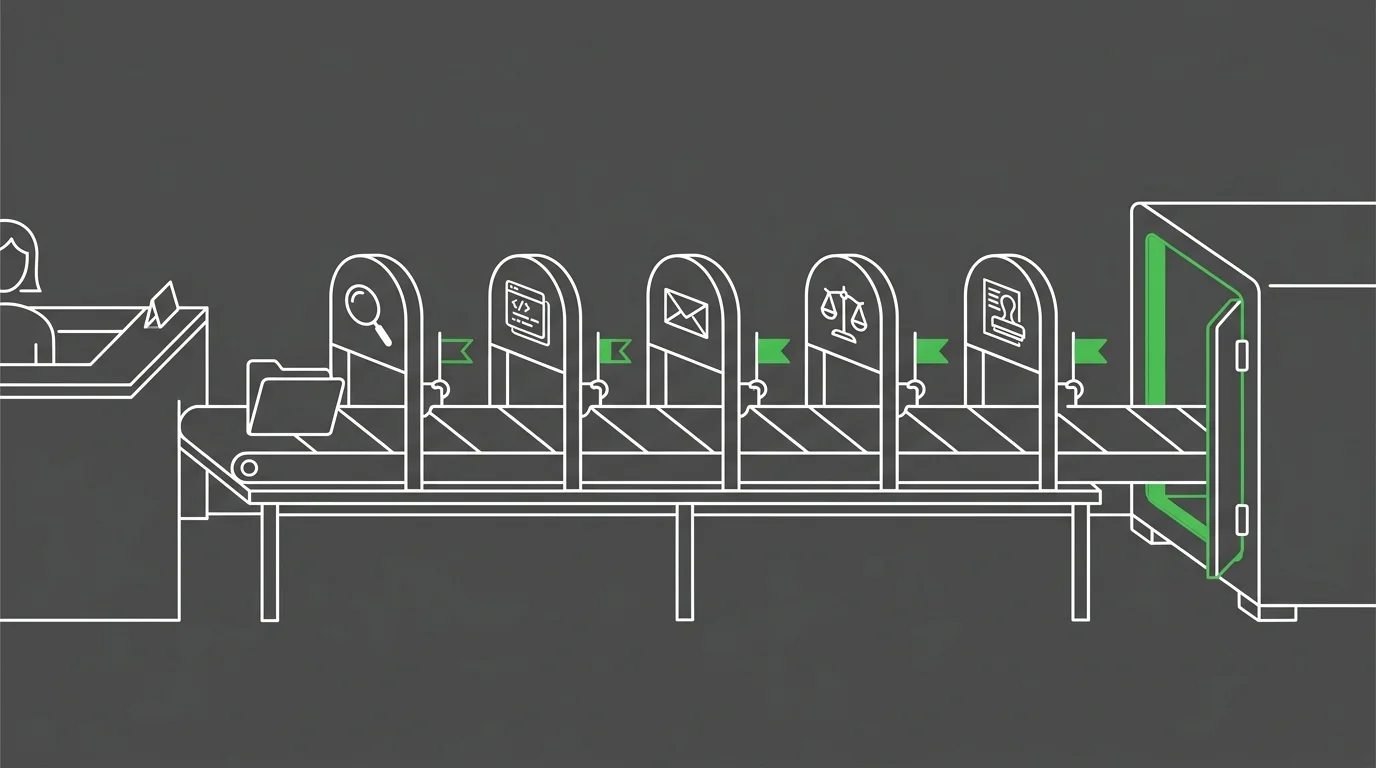
Claim submission is the part everyone sees. It's not the part that decides how much a practice actually collects. Revenue cycle management is a multi-stage financial process, and it takes specialized expertise at every step, not just a claim pushed out the door.
The work starts before a patient ever walks in, with eligibility verification and accurate charge capture. From there it runs through coding, claim scrubbing, submission, payment posting, denial resolution, and patient billing. Every stage has its own way of failing, and every one demands judgment no automated module was built to apply.
An EHR's billing module usually handles one or two of those stages, typically submission and posting. What it rarely touches is the appeal, the payer negotiation, or the documentation fix a denial actually requires. For a closer look at where a single-platform system runs out of road, read why clinical EHRs stop at claim submission.
Why the One-Click Billing Promise Breaks Down
The one-click promise sells simplicity. And that's exactly what breaks it.
The appeal of an all-in-one EHR system with a built-in billing module is its promise of simplicity and convenience. A single login, a single vendor, a single invoice — nothing about that pitch is dishonest.
But an easy interface tells you nothing about how the revenue cycle performs. A tool can be simple to use and still miss the payer nuance that decides whether a claim gets paid.
The Assumption Built Into Every EHR Billing Module
Many practice owners operate under the assumption that if they use their EHR software correctly, the billing and revenue will automatically follow suit. That assumption is baked into the software's own marketing.
It rarely survives a real payer mix. Clean data entry won't stop a payer from tightening a documentation rule halfway through the year.
And coding complexity only widens that gap. For a direct look at how three platforms handle it, see Jane App vs ChiroFusion vs ChiroHD.
Where Automated Claims Logic Fails Under Real Payer Conditions
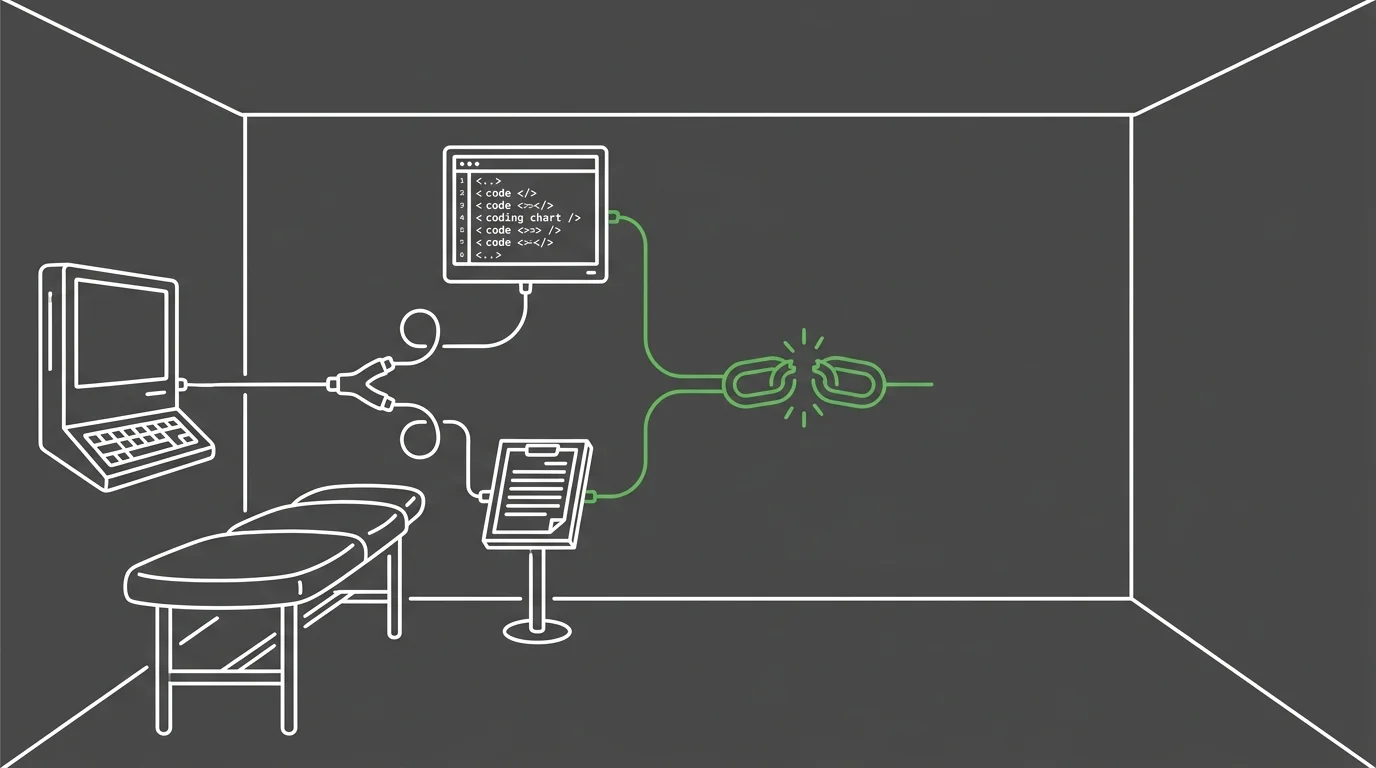
Automated claims logic works on the assumption that the rules stay still. Payer rules do not stay still.
A modifier requirement shifts mid-year. A documentation standard tightens without warning. Fixed software almost never catches that change before the claim's already gone out the door.
| Error Type | Where It Originates | Measured Impact |
|---|---|---|
| Coding Error | Chiropractic claims reviewed under Medicare's 2024 Comprehensive Error Rate Testing program | 33.6% of claims reviewed contained errors |
| Undercoding | Family medicine residency programs, where visits were coded at lower levels than attending physicians for comparable care | An estimated $2,558.66 lost per resident |
| Undercoding, aggregated | Family medicine residency programs, summed across residents coding below attending-physician levels | An estimated $57,569.85 lost per year for the average residency program |
| Administrative Drag | Manual billing and insurance-related tasks absorbed into a physician's own workload | 3 weeks a year spent on billing and insurance tasks |
How Coding Errors Compound Inside a Closed EHR System
Coding errors rarely announce themselves. A closed EHR system posts the claim, moves on, and waits for the denial to surface the problem.
Research published through CMS found errors were found in 33.6% of chiropractic claims according to a 2024 Medicare Comprehensive Error Rate Testing review. Chiropractic coding carries its own density of modifiers and documentation rules, which is exactly the terrain where a fixed rule set breaks down first. An error rate at that scale is not a rounding issue. It is a structural signal that automated logic alone cannot hold this specialty's complexity.
What Happens When Interoperability Gaps Meet Claims Processing
Interoperability gaps show up as small mismatches. A charge captured in one module does not always carry its full context into the claim that leaves the building.
Work available through PubMed Central indicates residents lost an estimated $2,558.66 per resident and $57,569.85 per year for the average residency program due to coding at lower levels than attending physicians for comparable visits. That loss is not unique to chiropractic coding. It is a pattern anywhere clinical documentation and billing logic sit in separate systems that assume the other side already handled the nuance. A practice can trace exactly where its own version of that gap is costing revenue through a How to Run a Chiropractic EHR Ledger Audit, which walks through the same interoperability failure points from the ledger side.
The Architecture of a Platform-Agnostic Human RCM Workflow
Cataloguing every place a fixed module stops short leaves one question standing. What replaces it?
The structural alternative is human review layered onto whatever EHR a practice already runs. A platform-agnostic approach fundamentally re-frames the EHR from being the entire financial system to being just one tool within a larger, human-managed revenue strategy.
Ownership shapes how that tool performs. Research published through a study in JAMA Network Open found physicians in physician-owned practices reported higher satisfaction with their EHR at 68.1%, compared to 58.5% of those in non-physician-owned practices. That gap tracks with who directs the system, not which system it is. For a fuller look at what that human layer actually covers, see denial management and appeals.
| Workflow Layer | Built-In EHR Billing Approach | Platform-Agnostic Human RCM Approach |
|---|---|---|
| Eligibility & Charge Capture | Verifies coverage at a fixed point, then assumes the data entered stays accurate through the visit | Specialists confirm eligibility and re-check charge accuracy against payer-specific rules before a claim ever forms |
| Coding & Claim Scrubbing | Applies a fixed rule set that cannot judge missing modifier context or a tightened documentation standard | Human reviewers catch modifier gaps and documentation shifts a static rule set was never built to see |
| Submission & Payment Posting | Handles this stage natively, since it is the one function most built-in modules were designed around | Layers judgment on top of submission, confirming payer-specific quirks before the claim leaves the practice |
| Denial Resolution & Appeals | Surfaces the denial after the fact, with no built-in path to question or negotiate the payer's stated reason | Treats denial resolution as its own stage, with specialists who appeal, negotiate, and correct the root cause |
| Ongoing Payer Strategy | Stays static until the vendor pushes an update, regardless of how a practice's payer mix changes | Adapts continuously, treating the EHR as one input while the human team directs the broader revenue strategy |
How a Human RCM Layer Is Implemented Across Different EHR Platforms
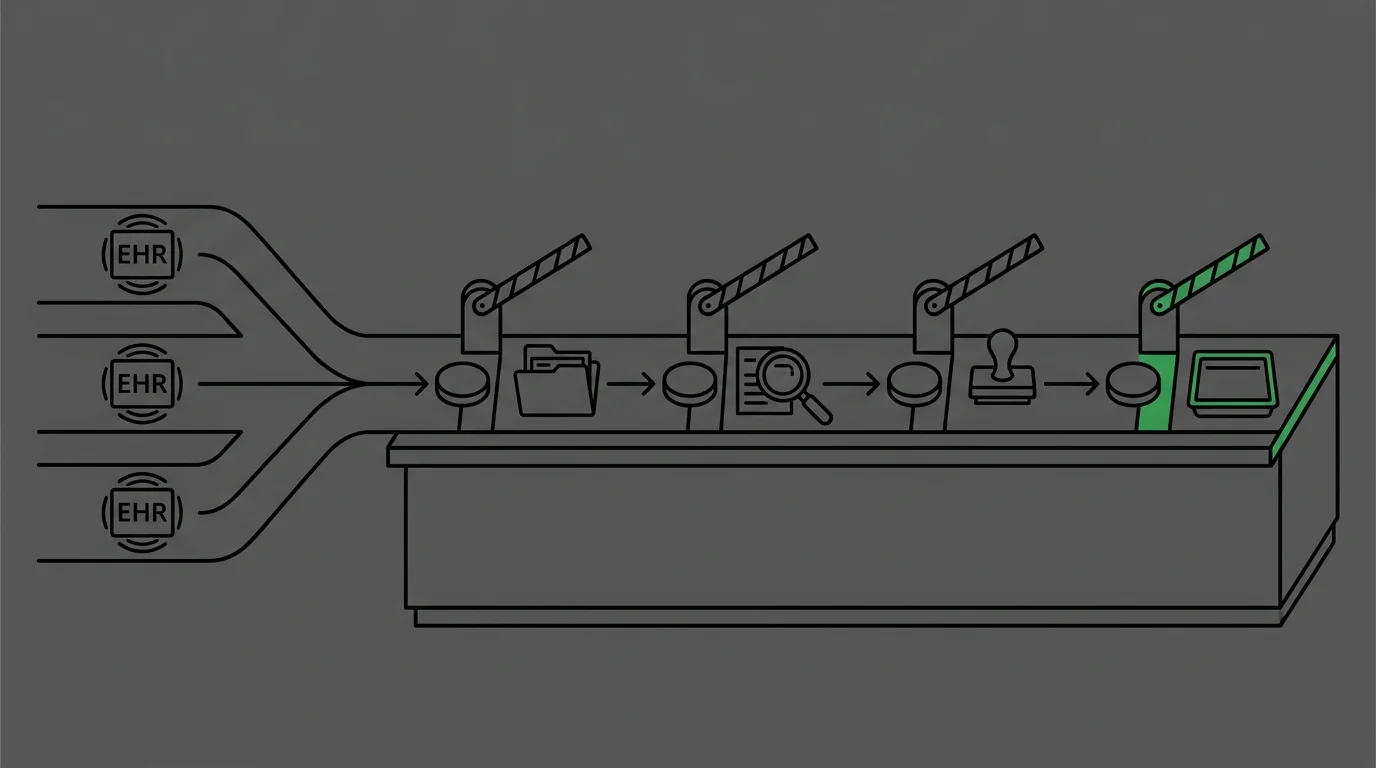
Implementation does not start with a software migration. It starts with a review of whatever system a practice already runs.
That distinction is the entire point. A revenue cycle team builds its workflow around the practice's existing EHR, not the other way around, treating the platform as one operational input rather than the financial system itself.
| Sequence Step | What Happens | Who Performs It |
|---|---|---|
| Credentialing Review | Specialists study the practice's payer mix, documentation habits, and the existing EHR's specific shortfalls before any claim moves. | Revenue cycle specialists working directly with practice staff |
| Pre-Submission Scrubbing | Every claim is checked against current payer rules and documentation standards before it leaves the building, not after a denial forces the issue. | Human reviewers layered on top of the EHR's native claim output |
| Denial Resolution and Appeals | Rejected claims are traced back to the specific rule or documentation gap that caused the denial, then corrected and resubmitted or appealed. | Specialists applying payer-specific knowledge no fixed software rule set holds |
| Payment Posting and Reconciliation | Posted payments are checked against expected reimbursement to surface underpayments the EHR's own ledger would otherwise absorb silently. | Human review paired with the EHR's existing posting function |
| Ongoing Payer Monitoring | Documentation and modifier requirements are tracked for change across the practice's payer mix, so a mid-year shift gets caught before it produces a pattern of denials. | Revenue cycle team operating independently of any single vendor's update schedule |
Mapping the Credentialing and Claims-Correction Sequence
Credentialing comes first. Before a single claim is touched, specialists study the practice's payer mix, its documentation habits, and the specific ways its current EHR tends to fall short.
From there, the sequence moves to claims correction. Every claim gets reviewed against payer rules before submission, not after a denial forces the issue, which is the layer no built-in module was ever designed to add.
Frequently Asked Questions
A handful of questions surface every time this comparison gets made. Here are the direct answers, no qualifiers.
What's the real difference between using my EHR's built-in billing module and a dedicated RCM service?
A built-in module executes fixed rules and submits what it is told. A dedicated RCM service applies human judgment at every stage, catching what fixed logic cannot see and correcting it before a payer ever gets the chance to deny it.
If I use an external RCM service, does that mean I have to switch to a new EHR?
No. Platform-agnostic means exactly that. The service works with whatever EHR a practice already runs, so switching software is never a condition of adding human oversight to the revenue cycle.
How does a human-led RCM service find revenue that my EHR's automated billing system misses?
It finds revenue by reviewing claims before submission, not by waiting for a denial to announce the problem. Specialists apply payer-specific knowledge and case-by-case judgment that a template-driven module was never built to hold.
What are the most common and costly billing errors that integrated EHR systems fail to catch?
Missing modifier context, undetected documentation gaps, and coding at a level that undervalues the visit are common failure points. These errors pass through fixed automated logic because the software has no mechanism to question its own output.
How does claim denial data reveal the limits of automated billing logic?
Denial data exposes the specific pattern behind an automated system's blind spots. A rejected claim that traces back to the same documentation gap over and over is not random noise. It is a coding rule the software's own logic was never structured to flag.
What does the credentialing process look like when adding a human RCM layer to an existing EHR?
Credentialing starts before a single claim moves through the system. Specialists study the practice's payer mix, its documentation habits, and where its current EHR tends to fall short, then build the review around those specifics.
Where This Leaves the Practice's Revenue Potential
An EHR measures. It does not decide.
That distinction is the whole argument. Software can capture a charge, post a payment, and flag a rule violation, but it cannot judge a denial, question a payer, or adapt to a documentation shift the way a specialist can. Whatever platform a practice runs, that platform is one input into a revenue strategy, not the strategy itself.
Revenue potential is maximized by the humans directing the system, not by the system a practice happens to own. A practice ready to see what its own claims are actually missing can start that conversation by booking a call with Bushido Billing.