

What Is the ROI of Proactive Provider Credentialing and Contract Management for Chiropractic Practices?
See how proactive chiropractic credentialing and contract management drives ROI by cutting payment delays, denials, and revenue leaks.
Proactive provider credentialing and contract management delivers a high return on investment for chiropractic practices by preventing revenue interruptions before they occur rather than resolving them after payment has already stalled. Credentialing determines whether a provider can bill a payer at all, which makes it a control point for revenue rather than a background administrative task. When credentialing is treated reactively, claims submitted before enrollment is finalized are typically denied outright, payment timelines stretch unpredictably, and staff time shifts from patient care to resubmissions and appeals. Contract management carries a parallel risk. Payer agreements negotiated once and left unreviewed tend to fall behind fee schedule updates, coding changes, and payer-specific documentation standards that differ across plans. Chiropractic care in particular involves scrutiny around medical necessity, visit limits, and modality-specific coding that generic, non-specialized credentialing processes are not built to anticipate. A proactive approach front-loads the work: verifying payer requirements before treatment begins, tracking contract renewal and renegotiation windows, and confirming documentation standards align with each payer's expectations before a claim is ever submitted. The return shows up as fewer denied claims, faster payment cycles, and contract terms that reflect current market and payer conditions rather than terms locked in years earlier. For a chiropractic practice, the ROI of this approach is measured less in a single recovered claim and more in the steady, predictable revenue flow that results when the credentialing and contracting functions are managed as ongoing strategic responsibilities instead of one-time administrative hurdles to clear and forget.
The Revenue Gateway Nobody Treats Like One

Credentialing controls whether a claim can get paid at all. That single fact gets buried under the word itself, which sounds like paperwork instead of what it actually is.
Most practices file it next to tax forms and license renewals. It belongs next to the revenue cycle instead, because a stalled application throttles payment before a single patient is seen. For the mechanics of how enrollment status shapes what gets reimbursed, see how credentialing status shapes chiropractic reimbursement timelines.
Why Generic Credentialing Breaks on Chiropractic-Specific Rules
Generic credentialing breaks because it treats every provider type the same. Chiropractic files carry rules that medical, dental, or behavioral health enrollments simply don't.
A generalist process checks boxes. It rarely knows why a payer wants specific documentation before it will approve a claim at all.
The Problem With One-Size-Fits-All Credentialing Services
For chiropractic practices, payer contracts hide nuance that a one-size-fits-all service isn't built to catch. Visit caps, modality-specific coding, and medical necessity standards vary by plan.
A generic credentialing vendor processes the application and moves on. It doesn't flag documentation gaps before they turn into denials, and it doesn't track when a contract needs renegotiating. For a breakdown of what a specialized process catches that a generalist billing and enrollment comparison lays out in full, that gap is exactly where the throttle forms.
Where the Break-Fix Approach Fails, and What It Costs
A break-fix approach never fails loudly. It fails in the gap between a claim submitted and a claim paid, and that gap is where growth opportunities quietly disappear.
The blueprint stays the same whether it's a single provider or a growing group: delayed payments, denials that surface after the fact, and staff time spent chasing both. Multi-location groups feel this most, since panel closures and enrollment gaps multiply across every new site. For how that plays out at scale, see managing payer panel closures across multiple locations.
What the Numbers Actually Show

The gap between claim submitted and claim paid isn't abstract. It has a dollar figure attached, and it's larger than most practice owners assume.
A survey of provider group leaders found that most reported a financial impact from credentialing bottlenecks of $25,000 to $100,000. That range covers a single stalled application cycle, not years of accumulated loss.
For a growing chiropractic practice, that swing between $25,000 and $100,000 is the difference between a strong quarter and a stalled one. It's tied to provider group leaders surveyed on their own credentialing bottlenecks, not to isolated horror stories.
Published trade reporting reports most group leaders reported a financial impact of credentialing bottlenecks between $25,000 to $100,000 — a finding from an industry survey.
That's a self-reported vendor market survey, not an audited industry census, so treat the range as directional rather than exact. What it makes clear either way is that the Revenue Gateway problem shows up on a balance sheet, not just in a delayed remittance. There is more on Billing Services if this is the part that matters to you.
| Financial Impact Range | Share of Group Leaders Reporting It | What This Reflects |
|---|---|---|
| Lower-impact range | Smaller share of group leaders | Practices with a single provider or limited payer mix, where a stalled application delays fewer claims at once |
| Mid-range impact, the most commonly reported band | The largest share of group leaders | The most frequently cited outcome, reflecting a stalled credentialing cycle across a typical multi-payer caseload |
| Higher-impact range | A smaller but consistent share of group leaders | Multi-location or multi-provider groups, where a single credentialing gap compounds across more billing volume |
How a Proactive Contract Architecture Is Actually Built
You don't fix a number like that by working harder inside a sequence that's already broken. You fix it by building a different sequence.
Proactive management isn't a mindset shift. It's the intentional shift from a state of constant administrative problem-solving to one of sustained strategic advantage, and that shift has a structure underneath it.
| Architecture Component | Reactive Approach | Proactive Approach |
|---|---|---|
| Payer Application Timing | Filed after a provider starts seeing patients, leaving claims stranded until enrollment clears | Mapped before the first patient visit, with every payer's effective-date rule identified up front |
| Renewal and Expiration Tracking | Caught only when a claim denies for lapsed status, forcing a scramble to reinstate | Tracked on a standing calendar so no credentialing file lapses without warning |
| Contract Review Cadence | Signed once and left untouched until a rate looks wrong on a remittance | Reviewed on a set cycle tied to fee schedule and coding updates |
| Documentation Standards | Discovered plan by plan, usually after a denial names the missing requirement | Confirmed against each payer's expectations before a claim is ever submitted |
| Operational Posture | Constant problem-solving after payment has already stalled | Sustained strategic advantage built before the disruption starts |
Building the Credentialing Timeline
So the timeline starts before a provider ever treats a patient, not after the first claim bounces. Every payer's application, verification, and effective-date requirements get mapped up front, so nothing sits waiting on a step nobody flagged.
Renewal dates get tracked the same way. A credentialing file that lapses mid-year creates the same payment gap as a new application that never got filed correctly, so both get watched on the same calendar.
Structuring Contract Review Cycles
Contracts don't get signed once and forgotten. They get reviewed on a set cycle, tied to fee schedule updates and coding changes instead of whenever someone happens to spot a problem.
That cycle is what keeps the Revenue Gateway open instead of just reopened after it's already closed. A reviewed contract catches a stale rate before it costs a full year of underpayment, not after.
Running the Gateway for Growing and Multi-Location Groups
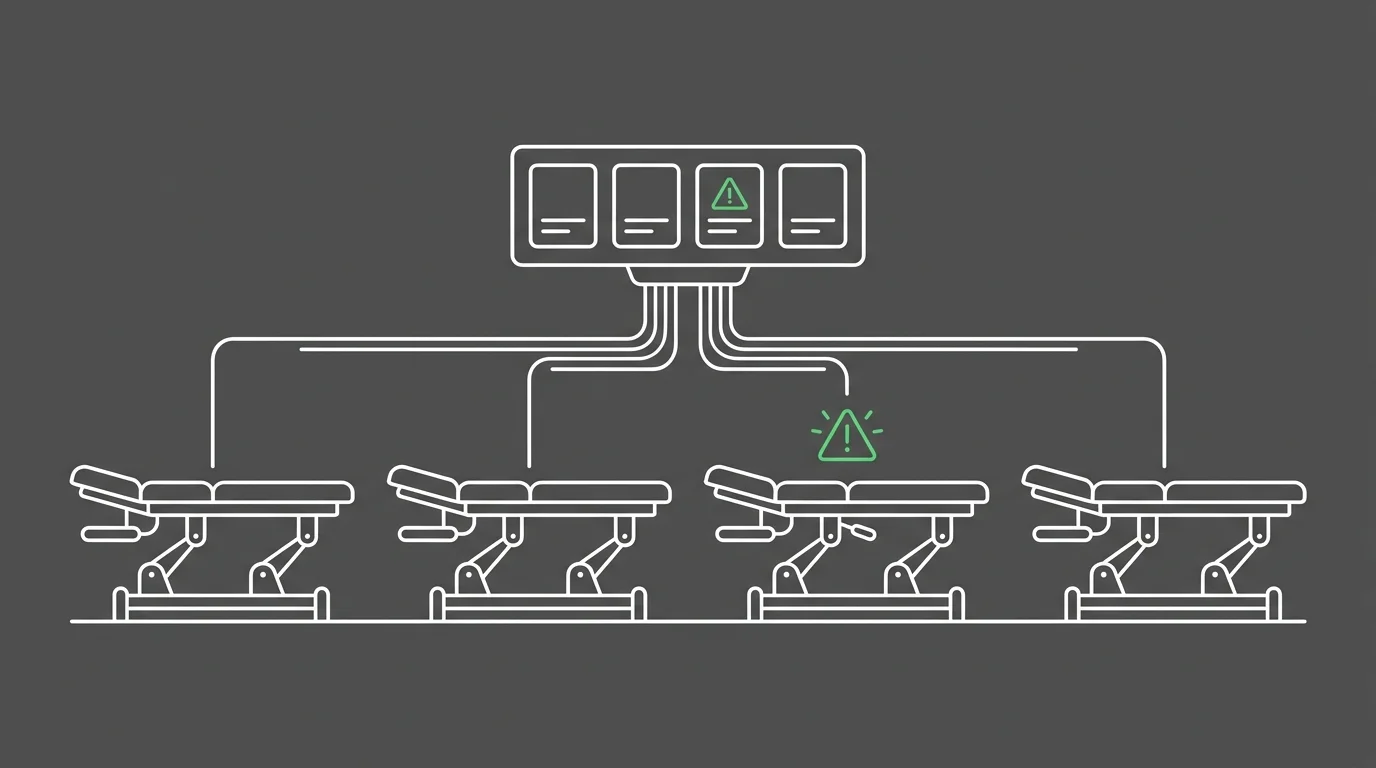
One gateway is already a lot to hold open. Multiply it across locations and that single control point becomes several, each with its own payer mix and its own timeline.
Panel closures make it harder still. A panel closed at one site doesn't close at the next, but the credentialing gap behaves the same way wherever it lands.
| Documentation Element | Required Timing Window | Consequence If Missed |
|---|---|---|
| Subluxation documentation (x-ray or physical exam) | Within the Medicare-defined window tied to treatment start | Claim denial for lack of medical necessity, repeated at every site carrying the same payer |
| Credentialing effective-date verification per location | Confirmed before the first patient is treated at that site | New-site claims processed as out-of-network or rejected outright until enrollment clears |
| Contract and fee schedule review per payer, per site | On a set recurring review cycle rather than at renewal notice | Underpayment against current rates continues unnoticed across every location on that panel |
| Panel status tracking across locations | Checked individually, since panel status does not transfer between sites | A closed panel at one site is mistaken for open status at another, stalling new claims |
Documentation Standards That Keep the Gateway Open
Documentation standards don't loosen just because a group is growing. As CMS reports, documentation of subluxation shown by x-ray or physical exam, with x-rays taken within 12 months before or 3 months following the beginning of treatment.
That window applies to every provider and every location the same way. A group that tracks it per-site keeps the gateway open at scale, instead of catching the gap after a denial lands.
Frequently Asked Questions
The Revenue Gateway framework raises specific operational questions once a practice sees its own credentialing this way. Here are the ones that come up most.
How long does provider credentialing typically take for a new chiropractor?
It depends on the payer and on how completely the file was built before it went out the door. Mapping each payer's requirements before treatment starts shortens the wait more than any single filing step ever will.
What are the most common and costly mistakes in chiropractic contract management?
Signing a contract once and never looking at it again is the costliest one. Fee schedules and coding standards move, and a stale contract quietly underpays every claim it touches until someone reviews it.
What documentation does Medicare require for chiropractic subluxation claims?
Medicare wants subluxation documented through x-ray or physical exam. The x-ray has to land within twelve months before treatment begins or three months after it does.
How often should a growing chiropractic practice review its payer contracts?
A growing practice needs contracts reviewed on a set cycle, not on an as-needed basis. Tying the review to fee schedule updates and coding changes catches a stale rate before it costs a full year of underpayment.
What causes the biggest delays in the credentialing timeline?
The worst delays trace back to incomplete or generic applications that never anticipate what a chiropractic payer actually wants to see. Those payer nuances take specialized understanding, and a one-size-fits-all service consistently lacks it.
How does panel closure affect multi-location chiropractic groups?
A panel closed at one location doesn't close everywhere, but the credentialing gap it creates behaves the same way at every site it touches. Multi-location groups that track this per-site keep the gateway open instead of discovering the gap through a denial.
The Gateway Stays Open or It Doesn't
A Revenue Gateway does one of two things. It stays open, or it throttles payment until somebody finally notices the flow slowed.
Generic, reactive credentialing waits for the throttle to show up as a denial. Proactive, chiropractic-specific credentialing and contract management removes the throttle before it forms, which is the entire case for treating this as strategic work instead of paperwork.
So that's the real choice under every payer relationship. Keep the gateway open on purpose, or keep reopening it after the fact. If it's time to find out which one describes your practice right now, book a call with Bushido Billing.