

When Does a Multi-Location Chiropractic Practice Require an NPI Type II Group Enrollment?
Learn exactly when a multi-location chiropractic practice needs a Type II Group NPI to protect claims, credentialing, and revenue.
A multi-location chiropractic practice requires a Type II Group National Provider Identifier when it bills payers as an organizational entity rather than as separate individual practitioners. This need arises specifically when the practice operates under a legal business structure, such as an LLC, PLLC, or corporation, that receives payment directly instead of routing reimbursement to each treating chiropractor individually. The Centers for Medicare and Medicaid Services distinguishes between an Entity Type 1 NPI, which identifies an individual provider, and an Entity Type 2 NPI, which identifies the organization itself in HIPAA-standard electronic transactions. A practice that has grown from a single provider into a group with multiple treating chiropractors, shared tax identification, or additional clinic locations typically meets the threshold for organizational billing status. Each individual provider retains a personal Type I NPI for credentialing and clinical identification, while the Type II NPI represents the business entity on claims, contracts, and enrollment records. Certain organizational components, referred to as subparts under federal guidance, may require separate identification when they are separately certified, licensed, or classified as a different provider type under state or federal regulation, regardless of shared physical space. Practices that continue billing exclusively under an individual NPI after expanding into a group structure risk claim processing errors tied to entity-type mismatches. The determining factor is not the number of physical locations alone, but whether the business has become a distinct billing entity separate from any one practitioner. Chiropractic providers are classified under a designated taxonomy code identifying them as chiropractors within the National Provider Identifier system, a classification that applies at both the individual and organizational enrollment level.
What Separates an Individual NPI From a Group NPI in Chiropractic Billing
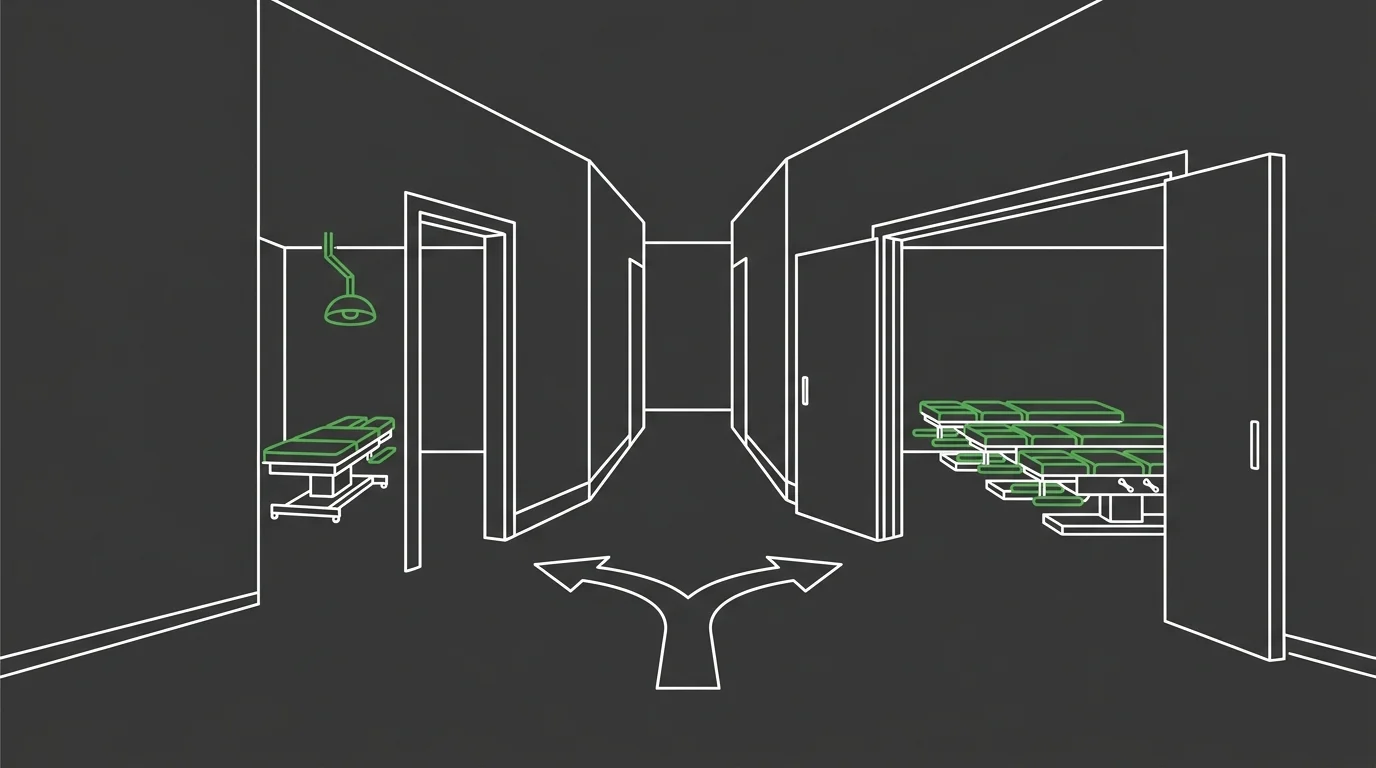
Confusion here costs practices real money. The line between an individual NPI and a group NPI is not administrative trivia.
Few credentialing questions trip up a growing chiropractic practice as hard as this one. Get it wrong, and claims stall on entity-type mismatches before a payer ever reads the clinical record.
Where the Type I and Type II Line Actually Falls
So where does the line actually fall? A Type I NPI travels with the person. It stays fixed to one chiropractor across every job, every clinic, every contract that provider ever signs.
A Type II NPI belongs to the business instead. That distinction matters most once credentialing enters the picture, and understanding provider credentialing and CAQH enrollment workflows shows exactly how the two identifiers interact on a claim.
What Counts as a Separate Location Under CMS Subpart Rules
So what actually pulls a second office over the line? Not every new address does. What CMS looks at is whether a location works as a distinct provider type, not whether there's a second lease on file.
CMS reports a subpart of an organization health care provider includes components separately certified, licensed, or identified by federal or state regulatory bodies as different provider types, regardless of shared physical location. That definition matters more than square footage or geography ever could. A satellite clinic sharing a parking lot with the main practice can still count as its own subpart if it is licensed or certified differently.
How Multi-Location Growth Changes What a Billing Entity Must Prove
Here's what changes when a practice grows: the billing entity now has to prove how its locations relate to each other on paper. A single-location practice never faced that question.
A multi-location group does. Once Medicare enrollment enters the picture, that proof runs through an overview of the group revalidation cycle, and subpart classification stops being theoretical the moment it starts deciding whether claims process at all.
How the Business Entity Behind the NPI Gets Built
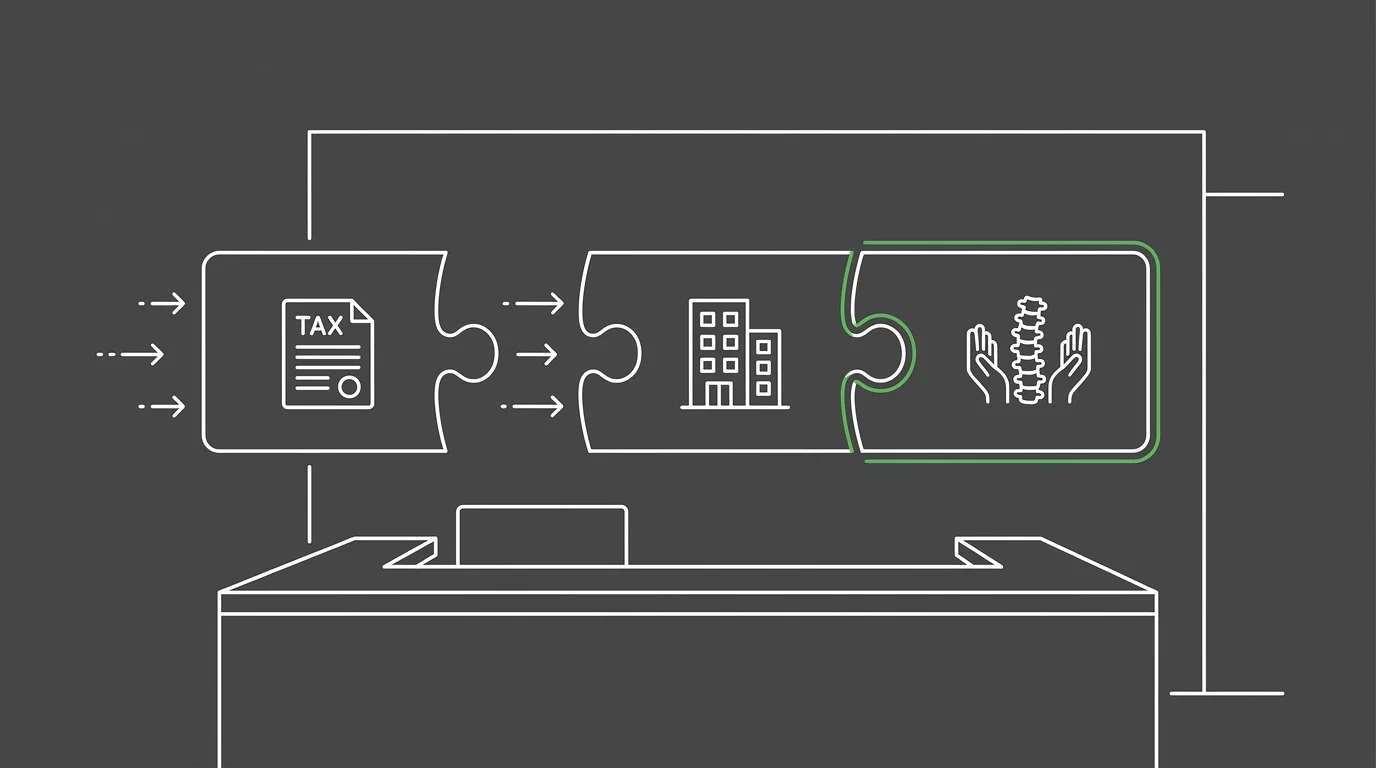
Here's what practices miss: the Type II NPI never stands on its own. It sits on top of a legal entity that has to be built right, or the identifier becomes paperwork that means nothing.
That entity runs on a Tax Identification Number tied to the business, not to any one chiropractor. Everything downstream, from payer contracts to the group NPI itself, points back to that EIN as its anchor.
| Component | What It Identifies | Where It Is Recorded |
|---|---|---|
| Tax Identification Number (EIN) | The legal business entity itself, separate from any individual chiropractor | IRS registration records and payer contract documentation |
| Legal Business Structure | The organizational form the practice operates under, such as an LLC, PLLC, or corporation | State business formation filings and the practice's governing documents |
| Type II NPI | The business entity in HIPAA-standard electronic transactions, distinct from the individual practitioners providing care | NPPES enrollment records and claims submitted under the group |
| Taxonomy Classification | The chiropractic specialty designation attached to the entity, using the same code that applies at the individual level | The group NPI application and payer credentialing files |
Linking the EIN, the Legal Entity, and the Taxonomy Code
Once the EIN exists, the group application links it to the practice's chosen taxonomy classification. Chiropractic providers carry a designated Healthcare Provider Taxonomy Code of 111N00000X under the classification Chiropractor, and that code applies whether the enrollment is individual or organizational. Per the CMS specialty code crosswalk, chiropractic providers are assigned Healthcare Provider Taxonomy Code 111N00000X with the classification Chiropractor.
Get any piece of that chain wrong, the EIN, the entity name, or the taxonomy code, and payer systems reject the mismatch outright. Retroactive fixes are rarely simple once a claim has already moved through the system, which is exactly why What Are the Retroactive Billing and Effective Date matters before expansion, not after it.
Why Treating Group Enrollment as a One-Time Form Fails a Growing Practice
A practice that files a Type II NPI once and never revisits it treats a living entity as a dead form. The gateway does not stay open on its own.
Growth keeps changing what sits behind that identifier. New locations, new hires, new payer contracts, every one of them has to line up against the same EIN, entity name, and taxonomy code, or the gateway starts blocking claims instead of clearing them.
| Denial Category | Share of Denials | Claim Type |
|---|---|---|
| Entity-Type Mismatch | Occurs when a claim lists an individual NPI for services billed under a group's tax identification | Professional claims submitted under an organizational billing arrangement |
| Rendering Provider Not Linked | Happens when a chiropractor treats patients before their credentialing ties to the group NPI are finalized | Claims naming a treating provider who is not yet affiliated in payer records |
| Subpart Classification Gap | Arises when a satellite location is licensed or certified differently but billed under the main entity's identifier | Claims originating from a location that functions as a distinct provider type |
| Taxonomy or EIN Discrepancy | Results when the group application references a taxonomy code or tax identification number that does not match payer enrollment files | Any claim carrying organizational identifiers that fail a payer system cross-check |
How a Misfiled Group NPI Shows Up as a Denied Claim Months Later
A claim rarely fails the day the mismatch happens. It fails months later, when the payer's system finally cross-checks the rendering provider's credentialing status against the group NPI on file.
By then the visit is long finished. The chiropractor has moved on to dozens of other patients, and the practice is left tracing a denial back to a filing error nobody flagged at the time.
What the Claims Data Says About Denial Risk Tied to Identifier Errors
Failing to secure a Type II NPI when required can lead to claim rejections, payment delays, and significant credentialing problems with payers. That risk does not announce itself at the point of service.
It surfaces in the aging report, in the resubmission queue, in the calls to payer provider services that eat staff hours the practice never budgeted for. Pivoting from a filing problem to a cash-flow problem is exactly how this failure mode compounds, and understanding Billing Services shows how that gap gets closed before it reaches the patient ledger.
How a New Associate Gets Linked to the Group NPI Without Breaking a Claim
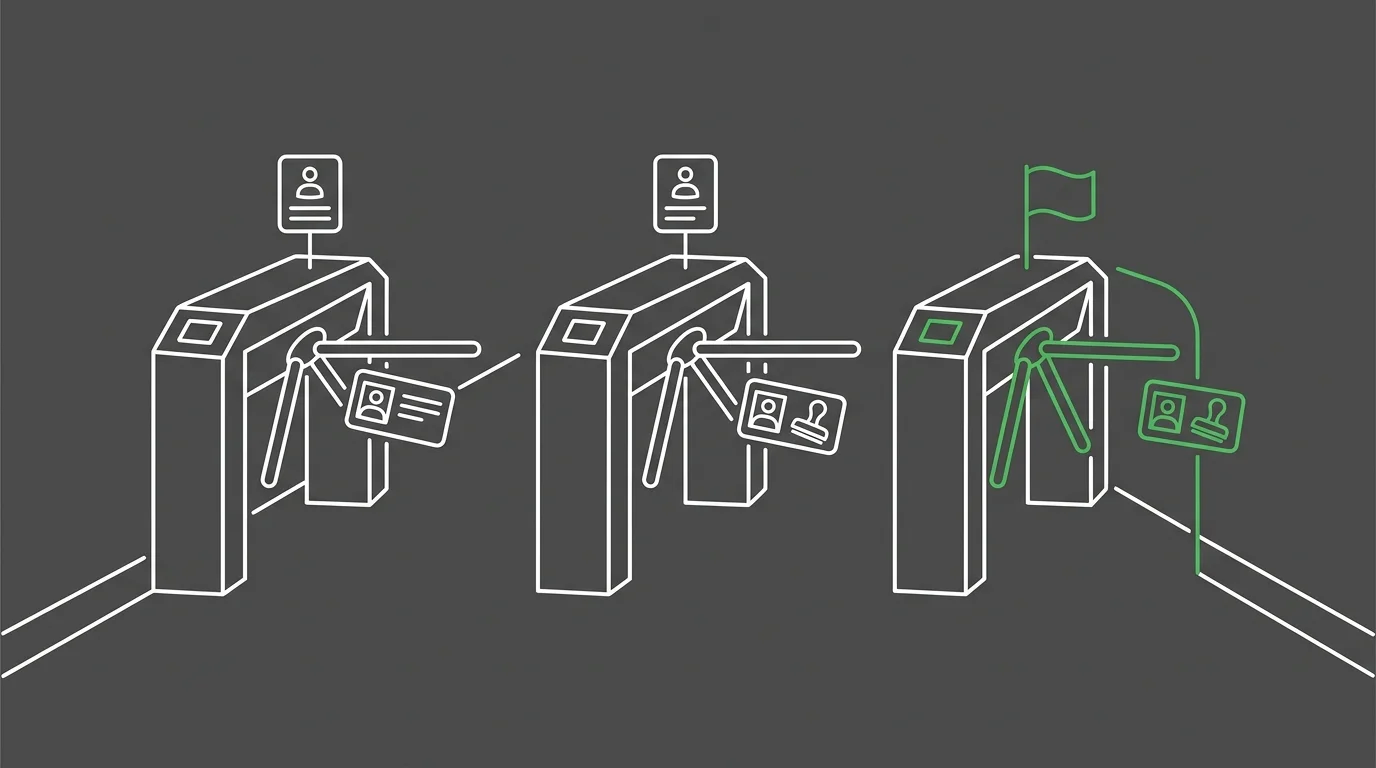
A new associate joining a group creates the exact mismatch risk the gateway is built to prevent. That associate cannot bill under the group's Type II NPI simply because they signed an employment agreement.
| Step | System Involved | What Must Be Complete First |
|---|---|---|
| Individual NPI issued | NPPES | Associate has accepted an offer and legal work authorization is confirmed. |
| Group affiliation recorded | PECOS | Individual Type I NPI exists and is active in NPPES. |
| Payer credentialing approved | Individual payer portals or CAQH profile | Group affiliation in PECOS reflects the associate under the Type II NPI. |
| Claims submitted under group NPI | Practice billing system | Payer credentialing approval is on file for that specific associate. |
Sequencing NPPES, PECOS, and Payer Credentialing in the Right Order
Sequence matters more than speed here. The associate needs an individual Type I NPI first, issued through NPPES before anything else moves.
From there, the group's PECOS enrollment has to reflect that provider as affiliated with the Type II NPI on file. Payer credentialing comes last, and only once both identifiers exist and match, because a claim submitted before that alignment lands right back in the mismatch problem the practice already paid to learn about.
Frequently Asked Questions
A handful of mechanical questions keep surfacing once the entity-type logic clicks. Here are the ones that matter most the moment a practice starts moving through the actual filing.
What is the difference between an NPI Type I and an NPI Type II?
A Type I NPI belongs to one chiropractor and follows that person across every job and contract. A Type II NPI belongs to the business entity itself, separate from any single provider.
If a solo chiropractor owns two separate clinic locations, does a Type II NPI apply?
Not automatically. What settles it is whether both sites bill under one legal entity with shared tax identification, or whether the chiropractor still bills as an individual at each address.
Can a new associate chiropractor bill under the group Type II NPI before individual credentialing is complete?
No. That associate needs an individual Type I NPI first, and payer credentialing has to confirm before any claim moves under the group's Type II NPI.
Does a multi-location practice need a separate Type II NPI for each clinic location?
Generally no, unless a location functions as a distinct subpart, separately certified or licensed as a different provider type under state or federal regulation. Shared physical space does not settle the question on its own.
How long does it typically take to receive a Type II NPI after applying through NPPES?
NPPES processes group applications alongside individual ones, but no fixed timeline applies to every filing. Errors in the entity name, EIN, or taxonomy code drag it out further.
What are the most common mistakes practices make when applying for a group NPI?
Mismatches between the EIN and entity name top the list. Right behind them: a taxonomy code submitted wrong, or a subpart that needed its own separate identification and never got it.
After a Type II NPI is issued, what is the next step for enrolling the group with Medicare?
Next comes PECOS. The group enrolls that Type II NPI there and affiliates each provider's Type I NPI to it. Credentialing with individual payers follows only once that affiliation is on file.
Where This Leaves a Growing Practice
None of this is paperwork for its own sake. A Type II NPI is the gateway a growing practice builds once, then has to keep aligned every time it adds a location, a provider, or a payer contract.
Skip that alignment and the gateway closes quietly. Claims that should have cleared start stalling on entity-type mismatches the practice never sees coming until the denial arrives.
A practice that treats the EIN, the taxonomy code, and every provider's credentialing status as one connected structure keeps that gateway open. For a look at how Bushido Billing helps groups keep that structure aligned as they grow, book a call with our team.