

Keeping Commercial Payer Credentialing Current: A Complete Guide
Learn why commercial payer credentialing demands ongoing management, not a one time setup, to prevent denials and protect chiropractic practice revenue.
Keeping commercial payer credentialing current means continuously maintaining and updating a provider's enrollment information with every commercial insurance plan the provider participates in, rather than treating credentialing as a one-time event completed at hire. Commercial payers require periodic re-credentialing, typically involving renewed verification of licensure, malpractice coverage, practice location, and other provider details, usually on a cycle set by each payer or accreditation standard. Current credentialing is what keeps a provider classified as in-network, allowing claims submitted under that provider to be processed and paid at contracted rates. When credentialing lapses or contains outdated information, payers can deny claims outright, place a provider out-of-network, or suspend claims processing until the file is corrected. This creates direct revenue disruption because claims tied to a lapsed credentialing status are frequently denied and require time-consuming appeals or resubmission once the issue is resolved. Maintaining current credentialing requires tracking expiration dates, renewal windows, and documentation requirements across every payer a practice contracts with, since each payer sets its own timeline and submission format. Many practices use the CAQH ProView system to centralize and attest to provider data, since numerous commercial payers pull directly from that database during re-credentialing cycles. Keeping that profile accurate and attested on schedule is one component of a broader credentialing maintenance process. Because payer requirements, provider details, and practice circumstances change continuously, credentialing upkeep functions as an ongoing operational responsibility rather than a completed task, with direct consequences for claim acceptance and payment timing.
Articles in this cluster
- Claims impact of a lapsed panel enrollment — What Happens to Claims When a Commercial Panel Enrollment Lapses?
- Appealing denials from a credentialing gap — How Should a Practice Appeal Denials from a Credentialing Gap?
- Timing for starting commercial re-credentialing — How Far Ahead Should Clinics Start Commercial Re-Credentialing?
- A stage-by-stage re-credentialing timeline — A Re-Credentialing Timeline for Established Chiropractic Clinics
- Tracking enrollment status across multiple plans — How to Track Enrollment Status Across Multiple Commercial Plans
- Spreadsheet versus dedicated enrollment tracking — Spreadsheet vs. Dedicated System: Tracking Payer Enrollment Status
- Documents needed to update taxonomy codes or locations — What Documents Update Taxonomy Codes or Practice Locations?
- How an address change disrupts payer enrollment — How a Practice Address Change Can Disrupt Payer Enrollment
- Deciding when credentialing needs a dedicated owner — How to Decide When Credentialing Needs a Dedicated Owner
- Common mistakes that delay re-credentialing — Common Mistakes That Delay Commercial Payer Re-Credentialing
- What to check after re-credentialing approval — What to Do Right After Re-Credentialing Is Approved
What Provider Credentialing Actually Means (And Why It Never Really Ends)
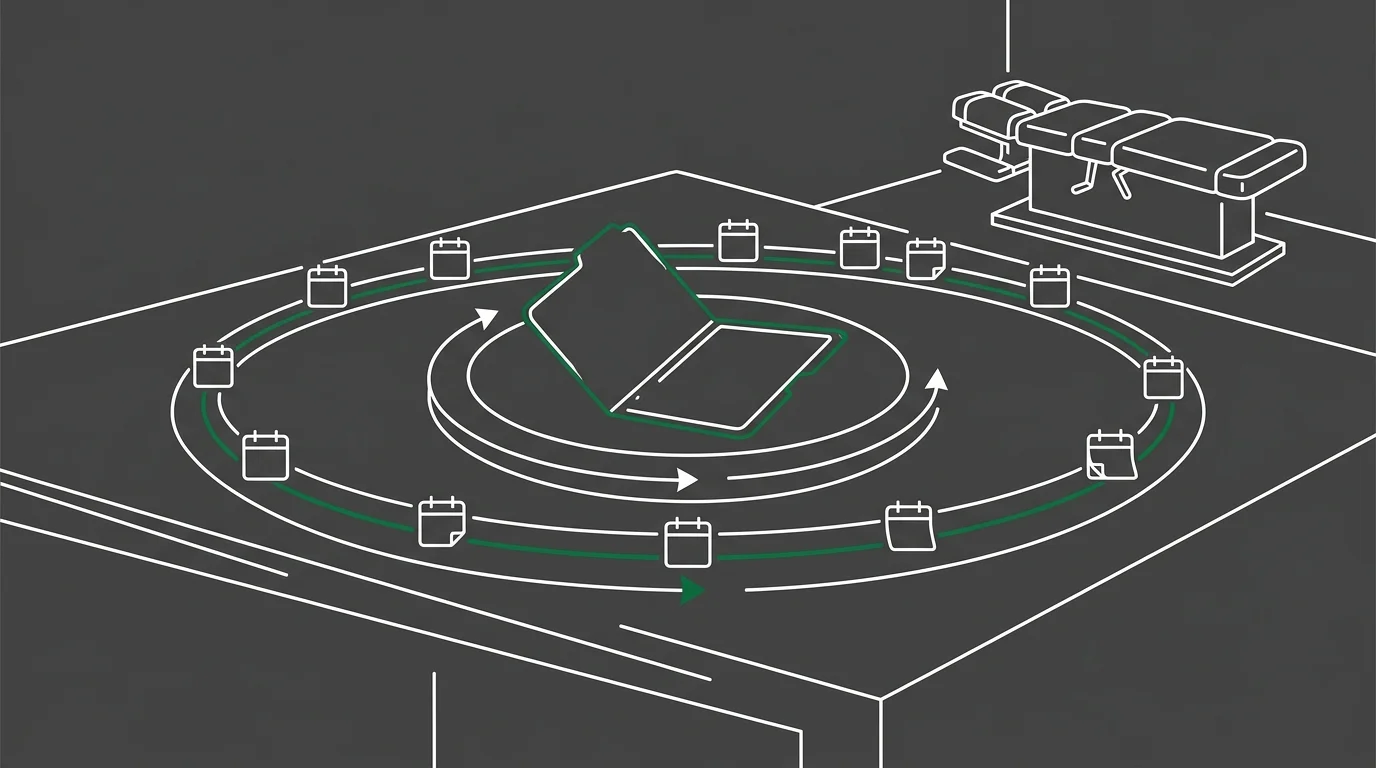
Provider credentialing is the process by which insurance payers verify a provider's qualifications to ensure they meet the required standards for inclusion in their network. That verification does not close once it is granted.
So picture a credentialing file as an open document, not a folder that gets closed and shelved. Every detail in it can slip out of date, and payers tend to catch that before the practice does.
The Difference Between Initial Credentialing and Ongoing Maintenance
Initial credentialing opens the file and proves a provider belongs in a payer's network for the first time. Ongoing maintenance is what keeps that file accurate for every day the provider stays in-network.
Current credentialing with commercial payers sits at the foundation of a healthy revenue cycle. That's why credentialing belongs inside chiropractic revenue cycle management as a standing responsibility, never a box that's been checked.
Why Treating Credentialing as Finished Puts Payment at Risk
It all starts with one assumption: once billing is handed off, it runs itself. That's exactly where credentialing problems begin. A payer file left alone doesn't stay accurate on its own.
Disengaged practices get disengaged results. EHR access, documentation cooperation, and provider availability all feed the credentialing file, and a billing team cannot maintain what the practice stops supplying.
The Hidden Workload Behind Multiple Payer Files
Plenty of chiropractic practices underestimate the time and detailed record-keeping it takes to keep credentialing current across multiple payers. And every payer runs its own renewal window, its own documentation format, and its own tolerance for a late submission.
Now, that requirement isn't unique to commercial payers. According to MACPAC, providers who deliver services and supplies to managed care enrollees must be credentialed to participate in managed care networks. Credentialing is a condition of getting paid, not an optional step.
The Mechanics of Lapsed Credentialing
A lapsed credentialing file doesn't always send the practice a warning. The problem sits in the payer's records, and it often shows up first as a denied claim.
How a Payer File Goes Out of Date
Payer credentialing files carry dates: a license expiration, a malpractice renewal, a last confirmed update. When one of those dates passes without an update, the payer can flag the file as out of date, and claims under that provider are at risk before anyone at the practice notices.
The software that submits a claim cannot see that flag coming. An EHR transmits what it is told to transmit, whether or not the provider behind that claim is still recognized as in-network. That gap is structural: claim submission and credentialing status live in different systems, and nothing in a practice's EHR checks one against the other before sending a claim.
What Happens to Claims Submitted During a Gap
Claims submitted during a credentialing gap typically deny on the payer side, not the practice side, since the payer's system is the one enforcing the flag. Rev Cycle Management reports that data from Assured shows an average delay of 90 to 120 days for provider credentialing. That delay compounds once a denial lands, because resolving it requires correcting the credentialing file first and resubmitting the claim second, not the other way around.
What the Data Shows About Credentialing Delays and Denials

That delay figure isn't abstract. It's a real file sitting open between a practice and a payer, with claims waiting behind it.
Denials tied to a credentialing gap don't show up at random. They line up with the dates when the file wasn't current, which is why those dates matter so much once the file is fixed.
| Metric | What It Measures | Why It Matters |
|---|---|---|
| Average Credentialing Delay | The average delay for provider credentialing, per data from Assured reported by Rev Cycle Management | An average delay of 90 to 120 days is time a practice has to plan around before a provider's file clears |
| Revenue Exposure From Delay | Whether claims held or denied during a pending or lapsed file get paid later | Money tied to a delay doesn't come back on its own once the file clears; the file gets corrected and the claims get resubmitted |
| Network Participation Requirement | Whether a provider must complete credentialing to participate in a managed care network at all. | Providers who deliver services and supplies to managed care enrollees must be credentialed to participate in managed care networks, which makes credentialing a prerequisite for payment, not an optional step. |
CAQH ProView and the Commercial Attestation Cycle
Here's the good news: all those separate payer timelines actually share a center. Many commercial payers lean on one system to check whether a provider's credentialing file is still current.
The Recurring Attestation Requirement
CAQH ProView doesn't wait for a yearly anniversary to go stale. Providers re-attest on the schedule CAQH sets, and a profile that isn't re-attested on time ages into a status payers treat as out of date. That's the open file in real life, and it only stays current if someone keeps reopening it on schedule.
Building a Credentialing Maintenance Workflow That Holds Up Under Multiple Payers

A credentialing maintenance workflow has exactly one job. It has to hold up in the month when five payers, three renewal cycles, and two attestation deadlines all land at once.
| Credentialing Cycle | Governing Body | Typical Trigger |
|---|---|---|
| Medicare Revalidation | Centers for Medicare and Medicaid Services | A federally set revalidation due date assigned to the provider, independent of any commercial payer calendar |
| Commercial Payer Re-Credentialing | Individual commercial payer, often pulling from CAQH ProView | A payer-specific renewal window tied to the provider's last approved credentialing file |
| CAQH Attestation | CAQH ProView, referenced by participating commercial payers | A recurring attestation deadline, on the schedule CAQH sets, that ages the file toward stale status if left unconfirmed |
| Practice-Level Document Renewal | State licensing board or malpractice carrier, tracked internally by the practice | An underlying license or coverage expiration that feeds directly into every payer's credentialing file |
| Document | Purpose | Renewal Frequency |
|---|---|---|
| State License | Confirms the provider is legally authorized to practice in the state tied to the credentialing file | Tracked against each state's own expiration date, well ahead of the renewal deadline |
| Malpractice Coverage | Shows continuous insurance protection with no coverage gap a payer could flag during review | Monitored on the policy's own renewal date, separate from any payer's attestation schedule |
| CAQH ProView Attestation | Confirms the centralized profile many commercial payers pull from is current and active | Requires active reattestation on the schedule CAQH sets, not a one-time submission |
| Practice Location and Provider Details | Keeps address, group affiliation, and provider-specific data aligned with what each payer has on file | Updated the moment a detail changes, then confirmed again at each payer's own renewal window |
Medicare Revalidation vs. Commercial Re-Credentialing
Medicare revalidation and commercial re-credentialing aren't the same clock, and treating them as one calendar is how a practice misses one while it's busy tracking the other. Commercial re-credentialing follows whatever schedule each individual payer contract sets.
Why a Single Shared Tracking Calendar Beats a Reactive Scramble
A reactive scramble loses to a visible schedule every time, and a single shared tracking calendar is what makes that schedule visible. Every payer's renewal window, every attestation date, and every document expiration sits in one place instead of scattered across separate payer portals.
Document Readiness and the Credentialing File
That calendar only earns its place if the documents behind it are ready before a deadline lands, not scrambled together after one passes. A credentialing file needs current licensure, malpractice coverage, and practice location details on hand at all times, and what keeps it current is a billing partner flagging a gap early instead of a practice discovering it through a denial. So a partner that raises a documentation gap before it turns into a denial is doing the job right, and silence from that partner is the warning sign, never the reassurance.
Frequently Asked Questions
A few procedural questions come up constantly once a practice understands credentialing as a living file. Here are the direct answers.
What happens to our billing if a provider's credentialing lapses with a major commercial payer?
The lapse hits billing right away. Claims tied to that provider typically deny or process out-of-network once the payer flags it. The file gets corrected first, then the affected claims go back out.
How often do we need to re-attest a provider's information with CAQH to keep commercial credentialing current?
On the schedule CAQH sets. CAQH ProView asks providers to re-attest on a recurring cycle, so put each provider's re-attestation date on the shared calendar and confirm it before it passes.
What is the difference between Medicare revalidation and commercial payer re-credentialing?
They run on two separate clocks. Medicare revalidation follows a federally set schedule, apart from any commercial contract. Commercial re-credentialing follows each payer's own timeline, so the calendars never line up.
Can a practice lose its in-network status due to a missed re-credentialing deadline?
Yes. A missed re-credentialing deadline can move a provider out-of-network with that payer until the payer reinstates the file, which is why each payer's deadline belongs on the shared calendar.
What are the most critical documents to have ready for a typical commercial payer re-credentialing application?
Current licensure, active malpractice coverage, and confirmed practice location details are the core set most payers request. Having those ready before a deadline arrives, not after, is what keeps an application from stalling.
How long before expiration should we begin the re-credentialing process for a commercial insurance plan?
Plan on starting 90 to 150 days before the expiration date. Review, verification, and document requests all take time on the payer's side, and starting early keeps the file from lapsing while the payer is still processing it.
Where This Leaves the Practice
A credentialing file is never finished. It stays open for as long as a provider stays in-network, and it stays accurate only when someone keeps reopening it on schedule.
That is why credentialing cannot be handed off and forgotten. A proactive management system, built on a shared calendar and current documentation, is what separates practices with steady cash flow from practices stuck in a reactive scramble. The partnership has to stay active on both sides, not just the biller's.
Going forward, that means a practice supplies documentation and EHR access without delay, and a billing partner flags every gap before it becomes a denial. Neither side gets to treat the file as closed. If that standing partnership is missing from how a practice's credentialing gets handled today, book a call with Bushido Billing to see what an engaged one looks like.