

What Are the Benefits of a Platform-Agnostic Billing Service in 2026?

A platform-agnostic billing service lets you keep the clinical software your team already knows while bringing in dedicated billing expertise your EHR wasn't designed to provide on its own.
Instead of requiring a software migration or tying you to a vendor's built-in billing module, a platform-agnostic partner logs directly into your existing EHR—whether that's ChiroTouch, Jane, Genesis, Olympus, or another system—and handles claims, denials, and follow-up from inside your workflow.
The core benefit is straightforward: you choose your billing partner based on expertise, not software compatibility.
You don't have to retrain your staff. You don't have to migrate patient data. And you don't have to settle for billing that underperforms just because your software vendor happens to offer a billing add-on.
In 2026, this matters more than it used to. Federal interoperability rules are expanding third-party access rights. Denial rates have been steadily climbing—initial claim denials reached 11.8% in 2024, up from 10.2% just a few years earlier. And the medical billing outsourcing market is growing at over 12% annually, reflecting a clear shift toward specialized partners.
Platform-agnostic billing gives you the flexibility to make billing decisions independently of your clinical software decisions. It means identifying revenue leakage before it adds up. And it means that if something isn't working, you can make a change without disrupting the rest of your operations.
The value of human intelligence in billing doesn't depend on which platform it's delivered through. It depends on the people doing the work.
Understanding the Cost of Tying Billing to Your EHR

Many clinic owners end up with their billing and software bundled together—not because they planned it that way, but because it seemed like the simplest option at the time.
You choose an EHR for its clinical features. The vendor offers a built-in billing module. It makes sense to keep everything under one roof. And by the time you notice billing results aren't where they should be, your entire workflow—notes, scheduling, billing, reporting—is connected to a single system.
At that point, changing your billing situation can feel like it requires changing everything.
It doesn't. But understanding why it feels that way is important.
Where Bundled Billing Often Falls Short
The appeal of all-in-one systems is real. One login, one vendor, one support team. That simplicity has value.
But billing is a specialized function, and bundled billing modules aren't always built with that level of specialization. Here's what we see in many clinics using built-in billing:
- Billing is treated as a software feature rather than a dedicated service. The team managing your claims may not have deep experience with chiropractic-specific payer rules, AT modifier requirements for Medicare, or the nuance of personal injury lien billing. They're working within the tools they have—those tools just weren't designed for that level of complexity.
- Denial follow-up gets deprioritized. Built-in billing modules often handle denials through automated queues. When a claim is rejected, it sits alongside hundreds of others without the kind of focused human review that identifies patterns and recovers revenue.
- Switching becomes expensive. When your software vendor also handles your billing, the only way to change your billing situation is to change your entire platform. For a small practice, that can mean $20,000 to $50,000 in data migration costs alone. Mid-sized clinics can face $65,000 to $200,000 in total transition expenses.
That cost creates a real barrier. Many clinics stay with billing that isn't performing well—not because they're satisfied, but because the alternative feels too disruptive.
Platform-agnostic billing removes that barrier entirely.
What Rising Denial Rates Mean for Billing Strategy
Denial rates across the industry have been climbing steadily, and the trend shows no signs of slowing down.
According to Experian Health's 2025 State of Claims report, 41% of healthcare providers now report that at least one in ten claims is denied. That number was 30% in 2022 and 38% in 2024.
This isn't something that general-purpose billing tools are well-equipped to address. Reducing denials requires specialized knowledge—understanding why a specific payer denied a specific code, knowing which documentation supports a successful appeal, and recognizing patterns before they become recurring problems.
A dedicated billing team tracks these patterns as part of their daily work. A software module processes claims. Both have their place, but they serve different functions.
| Billing team focus | Split between software development and billing operations | 100% focused on claims, denials, and collections |
| Denial management | Automated queues with limited manual review | Dedicated biller assigned to your account with hands-on follow-up |
| EHR flexibility | Connected to vendor's platform | Works with any EHR your clinic uses |
| Cost to change billing | Often requires full EHR migration ($20K–$200K+) | Change billing partners without touching your clinical software |
| Payer-specific expertise | Broad across many specialties | Deep knowledge of chiropractic, PT, and allied health payer rules |
How Platform-Agnostic Billing Actually Works

One of the most common questions about third-party billing is whether it requires a complex integration project—middleware, API connections, data feeds between systems.
For most chiropractic and allied health practices, it's much simpler than that.
Your System, Their Expertise
A platform-agnostic billing partner accesses your EHR the same way any remote team member would: through a secure login.
Your biller receives role-based credentials to your ChiroTouch, Jane, Genesis, or other system. They log in, review your claims, manage denials, post payments, and follow up on outstanding accounts receivable—all within the software your team already uses.
There's no second system. No data export. No double entry.
- Your clinical notes stay where they are. Providers continue documenting in their familiar environment. The billing team reviews that documentation and builds claims from it.
- Your scheduling workflow doesn't change. Front desk staff keep using the same system. The biller picks up where the clinical team leaves off.
- Your data stays in your EHR. All billing activity—submissions, denials, payments, adjustments—is logged inside your existing platform. You keep full visibility and ownership.
This is why the "double entry" concern is largely a holdover from an earlier era of billing technology. Modern platform-agnostic billing eliminates that friction.
What "Platform-Agnostic" Actually Means in Practice
Platform-agnostic doesn't mean "unfamiliar with your software." It means the billing team's value isn't tied to one specific platform.
A reliable platform-agnostic partner will have billers who specialize in specific EHR systems. There might be a Jane team, a ChiroTouch team, a Genesis team. The difference is that the billing methodology—the denial management approach, the appeals process, the AR follow-up cadence—stays consistent regardless of which system your clinic runs.
That consistency is what makes the difference. A skilled biller working in any competent EHR will consistently outperform a less experienced biller working in a more expensive system. The expertise matters more than the tool.
Secure Access and HIPAA Compliance
Security is a valid and important concern when granting system access to a third party. Reputable platform-agnostic billing services address this through several layers:
- HIPAA-compliant workspaces. Billers work from secure, private environments—not shared spaces. This is a standard hiring requirement for established billing companies.
- Role-based access controls. Your EHR's built-in permission settings determine what the billing team can see and do. They get access to billing functions without access to areas they don't need.
- Encrypted connections. VPN or equivalent security measures protect data in transit between the biller's workstation and your system.
- Audit trails. Every action the billing team takes inside your EHR is logged, creating a transparent record of who did what and when.
For many clinics, this level of documented security is actually more structured than what's in place at the front desk today—where login credentials are sometimes shared and workstations stay unlocked between patients.
The Federal Push for Interoperability: Why 2026 Matters
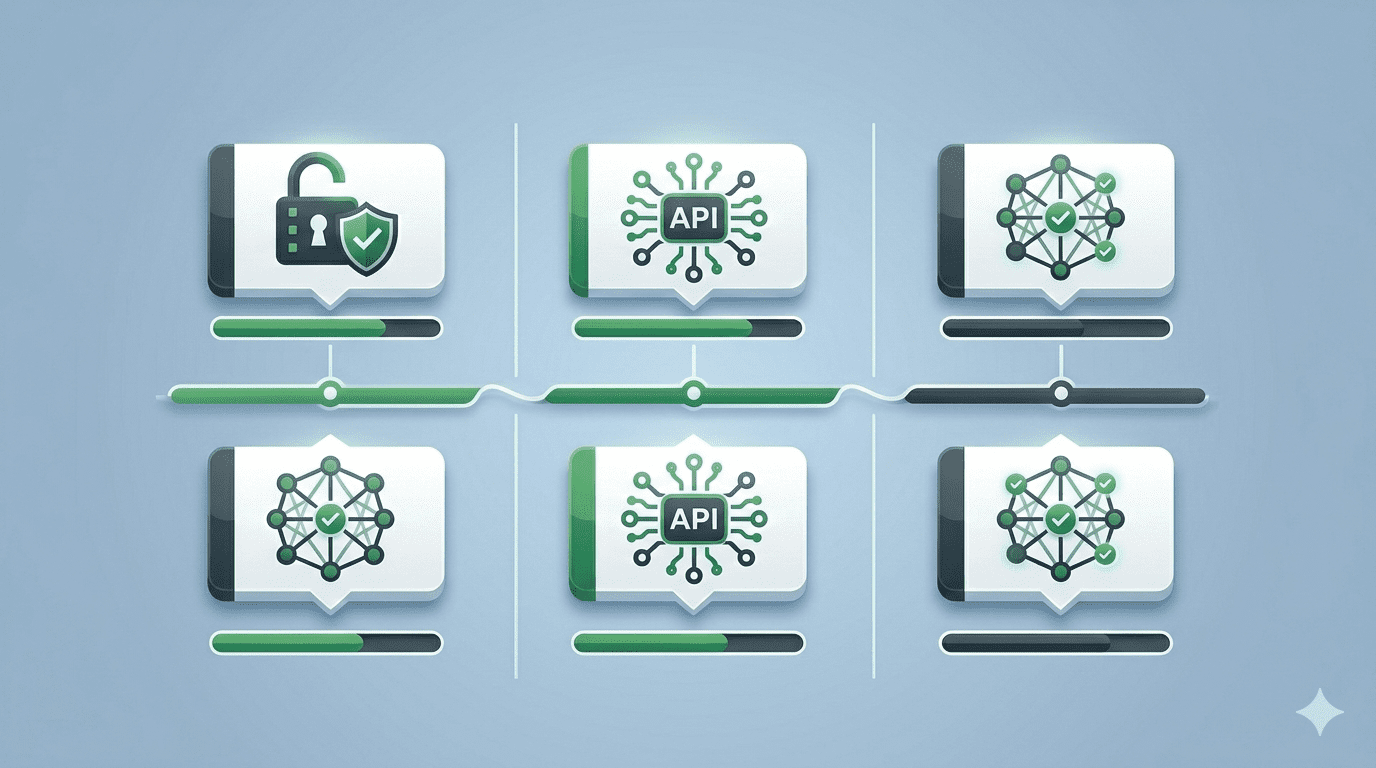
The regulatory landscape is moving in a direction that supports data accessibility and third-party access. For clinic owners, this is a meaningful development—particularly if you've felt limited by how your EHR vendor handles billing data.
The 21st Century Cures Act and Information Blocking
The 21st Century Cures Act established clear rules against "information blocking"—the practice of preventing or discouraging access to electronic health information.
In 2025, HHS announced that information blocking enforcement is now an active priority. The Office of Inspector General can impose fines of up to $1 million per violation on health IT developers, exchanges, and networks that interfere with data access.
In February 2026, ASTP/ONC began issuing letters of nonconformity to EHR developers suspected of restricting data access or failing to meet API compliance standards.
For clinic owners, the practical takeaway is this: your EHR vendor is required to support third-party access to the data a billing partner needs to manage your revenue cycle. The regulatory framework is designed to ensure that choosing a platform-agnostic billing partner remains a viable and supported option.
CMS Interoperability Rules Taking Effect in 2026
The CMS Interoperability and Prior Authorization Final Rule introduces several provisions that directly affect billing workflows:
- Payers must report Patient Access API usage metrics beginning January 1, 2026, creating more transparency around how claims data flows between systems.
- Prior authorization decisions must be delivered within 72 hours for urgent requests and seven calendar days for standard requests—reducing the wait time that can delay collections.
- Payers must provide specific denial reasons beginning in 2026, regardless of submission method. This gives billing teams clearer information for building appeals.
- Provider Access APIs (compliance deadline January 1, 2027 for most payer types) will support more direct data sharing between payers and providers through FHIR-based connections.
These changes support the platform-agnostic model by standardizing how health information moves between systems. As payers adopt open standards for data exchange, the practical advantages of being locked into a single vendor's ecosystem continue to narrow.
The FHIR Standard and What It Means for Billing
FHIR (Fast Healthcare Interoperability Resources) is the technology standard that federal regulations are building around. It's essentially a common language that allows different healthcare systems to exchange data without custom-built connections.
For clinics, the practical impact is clear: as EHR vendors are required to support FHIR-based APIs, third-party billing partners gain standardized access to the data they need. The proprietary barriers that once made working with an outside billing team more difficult are becoming less relevant with each regulatory update.
| Information blocking enforcement priority | September 2025 (active) | EHR vendors must support third-party data access |
| CMS Patient Access API reporting | January 1, 2026 | Greater transparency in claims data flow |
| Prior authorization decision timeframes | January 1, 2026 | Faster PA decisions reduce collection wait times |
| Specific denial reason requirements | January 1, 2026 | Better data for appeals and denial prevention |
| Provider Access API (FHIR-based) | January 1, 2027 | Standardized data exchange supporting platform-agnostic billing |
| USCDI Version 3 baseline standard | January 1, 2026 | Expanded data elements including SDOH available to third-party systems |
The Financial Case for Separating Billing From Software
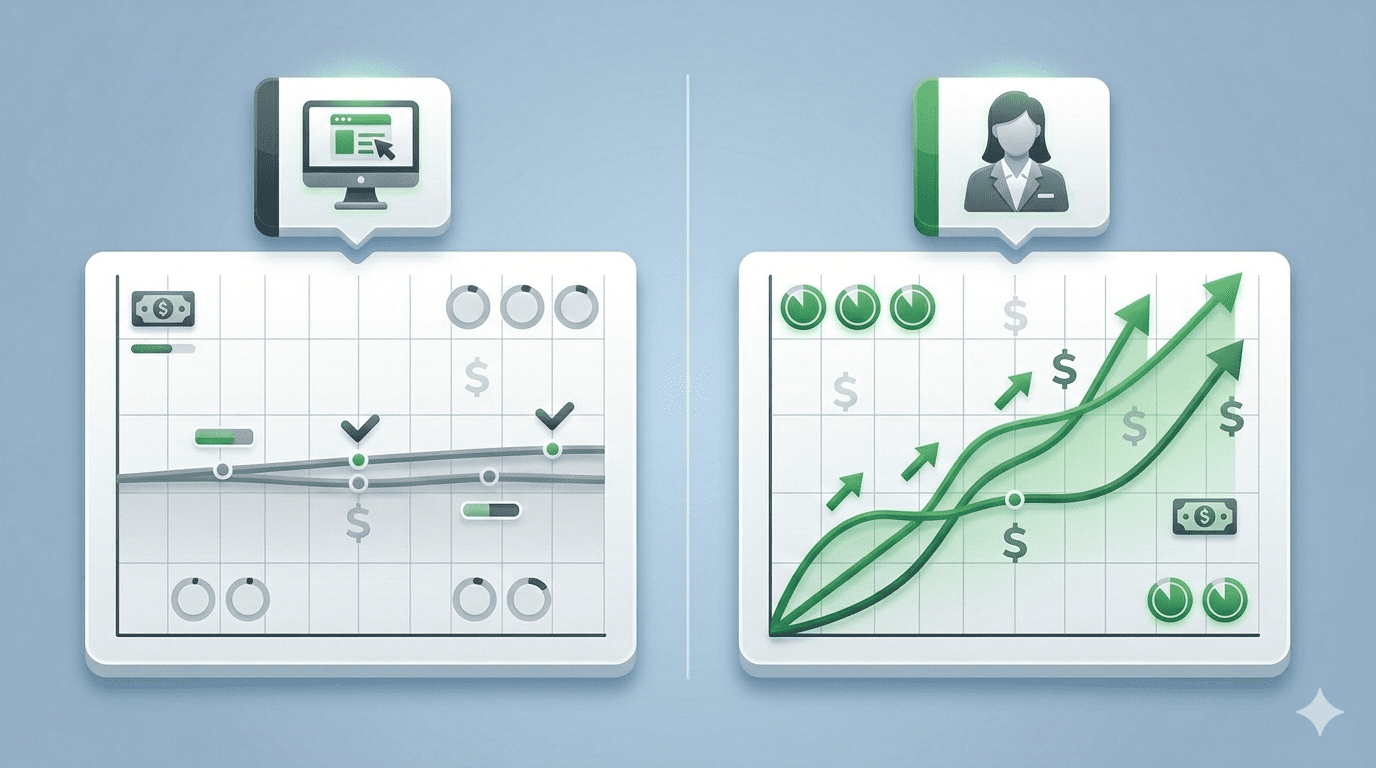
Choosing a billing partner based on expertise rather than software compatibility isn't just a matter of preference. There's a practical financial case for keeping these two functions separate.
What Bundled Billing Costs Over Time
The medical billing outsourcing market is growing at a CAGR of over 12%, projected to reach $50.47 billion by 2034. That growth reflects a clear industry shift: more clinics are choosing specialized billing partners over bundled or in-house alternatives.
The financial picture comes into focus when you look at what stays on the table when billing isn't getting the attention it needs:
- Unworked denials add up quietly. Industry data shows that 35–60% of denied claims are never resubmitted. Each one represents revenue the practice earned but didn't collect—not because the claim was invalid, but because no one followed up.
- Staff time spent on billing is time spent away from patients. Front desk teams managing claims follow-up aren't available for scheduling, patient communication, or the work that supports practice growth.
- The cost of change creates inertia. The more deeply billing is woven into a single software platform, the harder it becomes to evaluate billing performance on its own terms. That can lead to situations where billing stays unchanged not because it's working well, but because changing it feels complicated.
A platform-agnostic billing partner addresses each of these. Because they work inside your existing system, there's no migration cost involved in starting—or in making a change later if you need to.
The Value of Dedicated Denial Management
The financial impact of focused denial management becomes clear when you consider the numbers involved.
The average cost to rework a denied claim ranges between $25 and $181. For a practice handling hundreds of claims per month, even a modest improvement in denial rates translates to meaningful recovered revenue and lower administrative costs.
A platform-agnostic billing partner focused on active revenue defense brings a level of consistent attention that built-in billing modules aren't structured to provide. Every member of the billing team is focused on one thing: making sure your claims are submitted correctly, followed up on systematically, and appealed when appropriate.
This is especially important for chiropractic and physical therapy practices, where payer rules around medical necessity, maintenance care, and modifier usage create a higher-than-average level of complexity. A biller who understands why a specific payer denies 98941 with a missing AT modifier—and knows how to prevent it—provides value that no software feature can replicate.
Supporting Cash Flow Through Transitions
One of the quieter benefits of platform-agnostic billing is the stability it provides during periods of change.
Clinics grow. Associates get hired. Software gets updated. EHR vendors change ownership. These transitions naturally create uncertainty in the revenue cycle, and a billing partner who operates independently of your software stack provides continuity through all of it.
When you're focused on securing predictable clinic cash flow, that continuity matters. A billing partner who stays consistent while your clinical systems evolve is one less variable to manage during already busy periods.
This applies when bringing on new providers, too. The process of onboarding a new associate for insurance billing is more manageable when the billing team is already embedded in your system. They can adapt to new provider schedules, documentation styles, and credentialing needs without a platform change.
Who Benefits Most From Platform-Agnostic Billing?

Platform-agnostic billing works for any insurance-billing practice. But certain clinic profiles tend to see the most immediate value from this model.
Clinics Happy With Their EHR but Ready for Better Billing
This is the most common scenario we see. You like how your EHR handles clinical notes and scheduling. But the billing side—whether it's a built-in module or an in-house team that's stretched thin—isn't keeping pace with the rest of your operations.
Platform-agnostic billing addresses this without requiring changes to the clinical tools your team depends on. You bring in billing expertise. Everything else stays the same.
- Practices using Jane App that want specialized billing support without leaving the platform they rely on for patient management.
- ChiroTouch users who want dedicated attention on claims and AR without moving away from a system their providers know well.
- Genesis practices that want billing handled by a focused team rather than a software vendor's support department.
Multi-Location or Growing Practices
Growth creates billing complexity. More providers means more claims, more payer contracts, more denial patterns to monitor.
When billing is connected to a specific platform, scaling sometimes means extending the same billing setup across more locations—even if that setup wasn't performing well to begin with. Or it means a costly consolidation project to get all locations on the same system.
A platform-agnostic partner scales independently. Whether your new location runs the same EHR or a different one, the billing approach stays consistent. The team adapts to the software. The software doesn't determine the quality of your billing.
Practices Looking for a Fresh Start With Billing
If a previous billing arrangement didn't go the way you hoped, one of the most important things in choosing a new partner is maintaining control.
Platform-agnostic billing provides that from the start. Because the billing partner works inside your EHR, there's no proprietary system to untangle if you ever decide to make a change. Your data stays in your platform. Your staff's workflows stay intact.
For clinic owners who are "very cautious" about hiring a billing company or who have been working to rebuild confidence after a previous billing experience, this level of transparency and data ownership makes the decision easier.
| Solo practitioner using Jane or ChiroTouch | Billing isn't keeping up with clinical operations | Specialized billing without platform disruption |
| Multi-location chiropractic group | Inconsistent billing across locations using different EHRs | Unified billing methodology regardless of software |
| Practice choosing a new billing partner | Wanting control and easy transitions | Full data ownership, no proprietary lock-in |
| Clinic adding associates or new specialties | Credentialing complexity and onboarding needs | Billing team handles new provider setup within existing system |
| PT or allied health practice billing insurance | Need for specialty-specific payer expertise | Billers with deep knowledge of PT, acupuncture, and mental health coding |
Frequently Asked Questions
Does a billing service need to use my specific EHR to be effective?
No. A platform-agnostic billing service logs directly into your existing EHR—whether that's ChiroTouch, Jane, Genesis, or another system—and works within your current workflow.
The billing team's expertise matters far more than which software they use. What drives results is their knowledge of payer rules, denial patterns, and appeals strategy.
The strongest billing partners specialize their teams by EHR system, so you get someone who knows both the billing landscape and your specific software environment.
What is the difference between an all-in-one EHR and platform-agnostic billing?
An all-in-one EHR bundles clinical software with a built-in billing module, typically managed by the software vendor. Platform-agnostic billing is a dedicated third-party service where specialized billers log into your existing EHR to manage claims, denials, and accounts receivable.
The key difference is focus. Your EHR vendor builds software. A billing partner builds revenue expertise. These are different skill sets, and the difference becomes most visible when claims are denied or payer rules change—situations where human judgment matters more than automation.
Will my staff have to do double the work if I use a third-party billing company?
No. This is one of the most common concerns about third-party billing, and it comes from a time when systems didn't communicate well.
Modern platform-agnostic billers access your EHR using secure login credentials, the same way a remote team member would. Claims are submitted, tracked, and followed up on within your existing system. There's no separate platform, no export-import cycle, no duplicate data entry.
Most clinic teams actually do less administrative work after onboarding a dedicated billing partner, because tasks like denial follow-up, payment posting, and AR management shift to the billing team.
How do platform-agnostic billers access my ChiroTouch or Jane App account securely?
Platform-agnostic billing teams use secure, role-based login credentials provided by the clinic. Reputable billing partners operate from private, HIPAA-compliant workspaces with encrypted connections.
Access permissions can be customized through your EHR's built-in user management, so billers only see what they need. Every action taken inside your system is logged automatically, giving you a complete audit trail of billing activity.
Can I switch billing companies without switching my chiropractic software?
Yes. That's exactly what platform-agnostic billing makes possible.
Because the billing team works inside your existing EHR, switching billing partners doesn't require a software migration, staff retraining on new clinical tools, or any disruption to patient care. You keep your system. You bring in different billing expertise.
This flexibility is one of the most practical aspects of the platform-agnostic model—especially for clinic owners who want the ability to evaluate billing performance and make changes based on results.
Are there extra fees for using a third-party billing service with my EHR?
Most platform-agnostic billing services don't charge additional integration fees because they work within the software you already have. There are no special plugins, middleware, or third-party connectors to purchase.
The billing team logs into your system. Pricing is typically based on a percentage of collections or a flat monthly rate, depending on the billing partner and the scope of services.
What happens to my billing data if I stop using a platform-agnostic billing service?
Everything stays exactly where it's always been—in your EHR.
Because a platform-agnostic billing partner works inside your system rather than on a proprietary platform, all billing data—claims history, payment records, denial notes, AR reports—remains yours. Nothing gets exported to an outside system.
This is one of the clearest advantages of the platform-agnostic model. Your data stays in your platform, regardless of which billing partner you're working with at any given time.
Choosing the Right Billing Model for Your Practice
The billing model you choose in 2026 comes down to a clear priority: the people managing your revenue should be selected for what they know, not which software they use.
Platform-agnostic billing isn't a new concept. But the regulatory environment, the growing complexity of denial management, and the practical costs of tying billing to a single software vendor have made it more relevant than it's been in years.
If your current billing setup isn't performing the way you need it to—whether it's a built-in module, an in-house team that's stretched thin, or a previous partner that didn't deliver—you don't have to overhaul your entire system to address it.
You can bring in a dedicated billing team that works inside the system you already have.
Choosing a billing partner is a significant decision—and if you've been thinking about it for a while, you're not alone. Most clinic owners we talk to have been weighing their options quietly before reaching out.
That's why we offer a free discovery call. It's a chance to talk through your current billing situation and get a clear picture of what's working, what could improve, and what your options look like.
We'll help you understand:
- Where your claims might be getting held up
- What's behind any denials or delays
- Whether your AR is in good shape or needs attention
- How your current process compares to what we typically see
- What working with Bushido would actually look like day to day
Book a Call — no pressure, no obligation, just a clear conversation about your billing.
Because finding the right billing partner shouldn't require changing everything else about how your practice runs.
SCHEDULE YOUR FREE DISCOVERY SESSION TODAY.


Copyright 2026 | All rights reserved | Web Design by iTech Valet