

What Is the Difference Between Human Intelligence and AI in Billing? (2026 Comparison)
The difference between Human Intelligence (HI) and AI in billing comes down to what each approach handles well—and where each one needs support.
AI-powered billing systems excel at speed and consistency. They scrub claims for formatting errors, verify patient eligibility in real-time, and submit large claim volumes efficiently. For straightforward claims with complete documentation and clear coding, AI works reliably.
Human Intelligence handles the work that requires judgment. Arguing medical necessity with a peer reviewer. Understanding why a patient's 14th visit still qualifies as active treatment. Recognizing when documentation needs strengthening before submission. Constructing an appeal that addresses the specific concerns a payer raised.
Both have a role. The question is which approach—or combination—fits your practice's needs.
According to CMS CERT data from 2024, errors were found in 33.6% of chiropractic claims reviewed. Most weren't formatting mistakes. They were documentation and medical necessity issues—the kind that require clinical understanding to prevent and resolve.
The American Chiropractic Association reports that 30% of initial chiropractic claims are denied. That's a significant number, and it helps explain why practices focused on reducing chiropractic denial rates often find that software alone doesn't solve the underlying issues.
This article walks through what AI billing actually does, what Human Intelligence adds, and how to think about the right approach for your practice. The goal isn't to argue that one is universally better than the other—it's to help you understand the tradeoffs clearly so you can make an informed decision.
Understanding the AI vs. Human Intelligence Spectrum

Billing technology in 2026 exists on a spectrum. Pure AI automation sits at one end. Pure human processing sits at the other. Most practices land somewhere in between.
Understanding where different tools and services fall on this spectrum helps clarify what you're actually getting—and what gaps might remain.
What AI Billing Systems Do Well
AI in medical billing is pattern recognition software trained on billing data. It's good at specific, well-defined tasks.
Eligibility verification happens in real-time, checking patient coverage before appointments. Claim scrubbing identifies formatting errors, missing fields, and obvious coding mismatches. Batch submission processes hundreds of claims simultaneously. Payment posting matches EOBs to claims automatically.
These capabilities matter. For high-volume practices with straightforward cases, AI reduces administrative time significantly.
The Medical Group Management Association (MGMA) sets the benchmark for clean claim rates at 95% or higher. AI-assisted claim scrubbing helps practices approach this benchmark by catching formatting and data entry errors before submission.
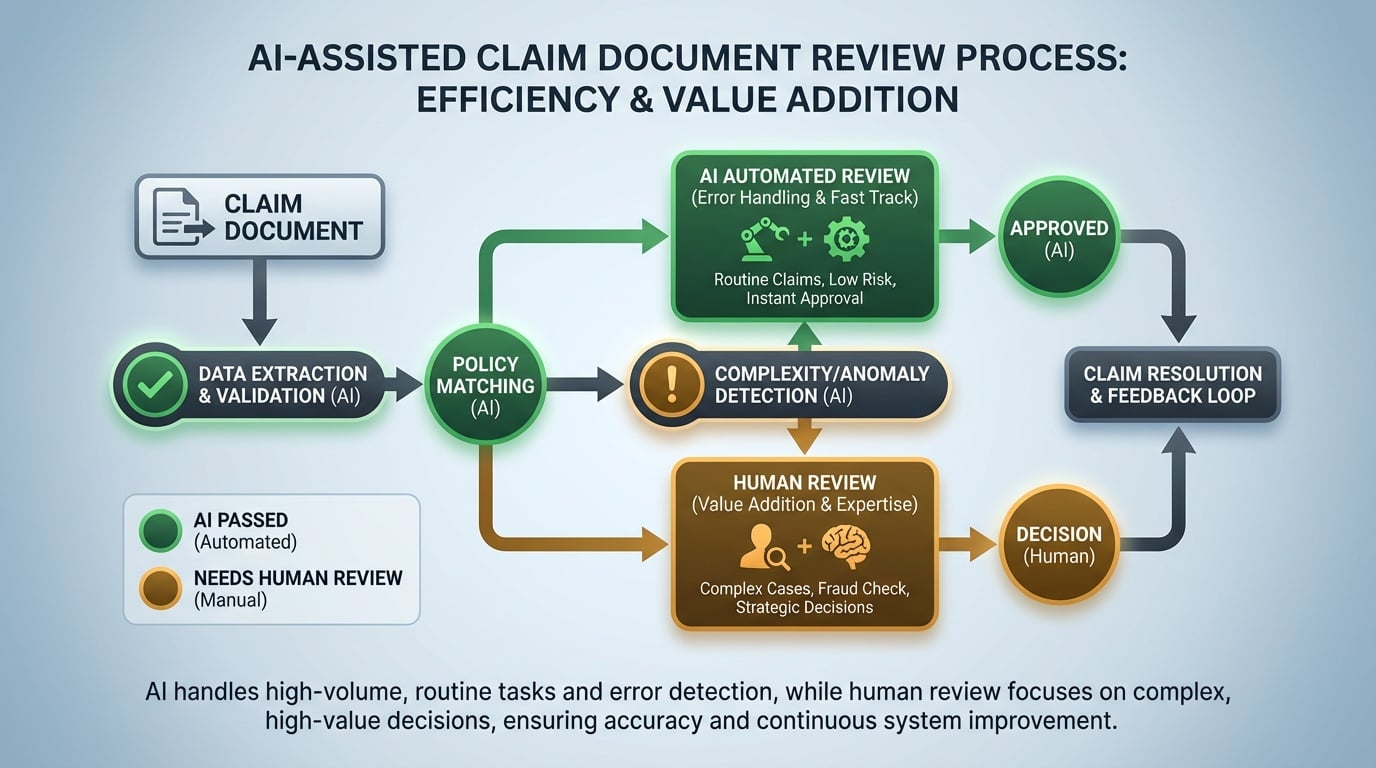
AI operates on rules and decision trees. When a claim fits established patterns, AI processes it efficiently. When a claim requires interpretation, AI either applies a default rule or flags the claim for review.
What Human Intelligence Adds
Human Intelligence in billing isn't about doing tasks more slowly. It's about handling tasks that require judgment and context.
Consider a Medicare chiropractic claim. The AT modifier designates active treatment versus maintenance care. AI can verify the modifier is present. What AI can't do is determine whether the underlying documentation actually supports that designation.
That determination requires reading the SOAP notes. Understanding PART criteria (Pain, Asymmetry, Range of motion, Tissue tone). Evaluating whether the treatment plan demonstrates expected functional improvement. Recognizing when a patient has reached maximum therapeutic benefit.
An experienced billing specialist reviews the clinical story, not just the codes. They identify potential issues before submission. They understand that different Medicare Administrative Contractors have different documentation requirements for the same CPT codes.
This clinical context is what's needed when you're identifying revenue leakage in your practice.
The Hybrid Approach
The most effective billing operations in 2026 combine both approaches deliberately.
This method—often called "human-in-the-loop" billing—uses AI for tasks where speed and consistency matter while preserving human judgment for tasks where context and interpretation matter.
According to Elation Health's analysis, organizations implementing human-in-the-loop systems report lower denial rates, shorter days in accounts receivable, and less staff burnout compared to either pure automation or pure manual processing.
The key is matching tasks to the right approach.
| Task | Best Approach | Why |
|---|---|---|
| Eligibility verification | AI | Speed and real-time accuracy matter most |
| Claim scrubbing for formatting | AI | Rule-based checking at scale |
| Medical necessity review | Human | Clinical judgment required |
| Modifier selection | Human with AI assist | Context determines correct choice |
| Appeal writing | Human | Persuasive narrative required |
| Payer negotiation | Human | Relationship and judgment |
| Payment posting | AI | Matching and calculation |
Why Chiropractic Billing Requires Specialized Attention
Chiropractic billing has characteristics that make it different from many other specialties. Understanding these differences helps explain why the AI-versus-human question matters more here than in some other contexts.
The Journal of Medical Practice Management describes revenue cycle management as both art and science. For chiropractic practices, the "art" portion—judgment, interpretation, and clinical reasoning—plays a larger role than in many other specialties.
Medical Necessity Documentation
Medical necessity is the single largest driver of chiropractic claim denials.
Research from the American Chiropractic Association indicates that medical necessity issues account for 38% of chiropractic denials.
Medicare defines covered chiropractic care as treatment expected to result in improvement. Once improvement plateaus, treatment becomes maintenance care, which Medicare doesn't cover.
The distinction between "still improving" and "stable" requires clinical interpretation. It involves reviewing subjective patient reports, objective examination findings, and treatment trajectory over time.
AI systems apply thresholds: flag claims after a certain number of visits, require additional documentation after a set timeframe. These rules don't account for the fact that one patient might need 20 visits while another is ready for maintenance care at visit 8.
Practices that document specific functional limitations with quantifiable measures experience 42% fewer medical necessity denials. Creating that documentation—and recognizing when it's missing—requires understanding what payers look for.
Modifier Requirements
Modifier errors generate 31% of chiropractic claim denials. This seems like something AI should handle well, since applying the correct modifier appears rule-based.
But the rules have layers that require interpretation.
The AT modifier is required on every Medicare manipulation claim to indicate active treatment. Missing it triggers automatic denial. AI can ensure the modifier is present. AI can't determine whether the underlying documentation justifies the modifier.
Modifier 25 allows billing an evaluation and management (E/M) visit on the same day as a manipulation—but only when the E/M service is "significant and separately identifiable." That phrase requires judgment. Is a new complaint significant enough? Is the documentation clear?
Modifier 59 separates distinct procedures to prevent inappropriate bundling. Using it when not justified flags claims for audit. Not using it when appropriate triggers denials. The correct choice depends on what actually happened during the encounter.
Practices working on reading an AR aging report often discover modifier-related denials clustering around specific payers or procedure combinations. Recognizing these patterns requires human analysis.
Payer-Specific Variation
Every major insurance payer has different requirements, processing logic, and documentation standards.
Medicare varies by region through Local Coverage Determinations (LCDs). What Noridian requires in the Northwest differs from Palmetto GBA requirements in the Southeast. Commercial payers each have their own standards.
Some payers require imaging documentation for certain procedures. Others require outcome assessments at specific intervals. UnitedHealthcare and Cigna now require minimum outcome assessment scores every 30 days for continued coverage. Some Blue Cross Blue Shield plans are implementing pre-payment reviews for high-volume providers.
Experienced billers develop knowledge about these variations over time. They learn which payers have specific requirements for certain codes. They understand the documentation language that different payers recognize. They recognize when a denial reflects a payer policy versus a documentation gap.
| Payer Type | Common Requirements | Consideration |
|---|---|---|
| Medicare FFS | AT modifier, PART documentation, subluxation evidence | Documentation quality determines approval |
| Medicare Advantage | Pre-authorization, outcome tracking | Requirements vary by plan within same region |
| Blue Cross Blue Shield | Pre-authorization for some codes, outcome data | Different requirements by state |
| UnitedHealthcare | Outcome assessments every 30 days | Timing and documentation quality matter |
| Aetna | Detailed medical necessity justification | Subjective standards require strong documentation |
Understanding the Economics of Different Billing Approaches
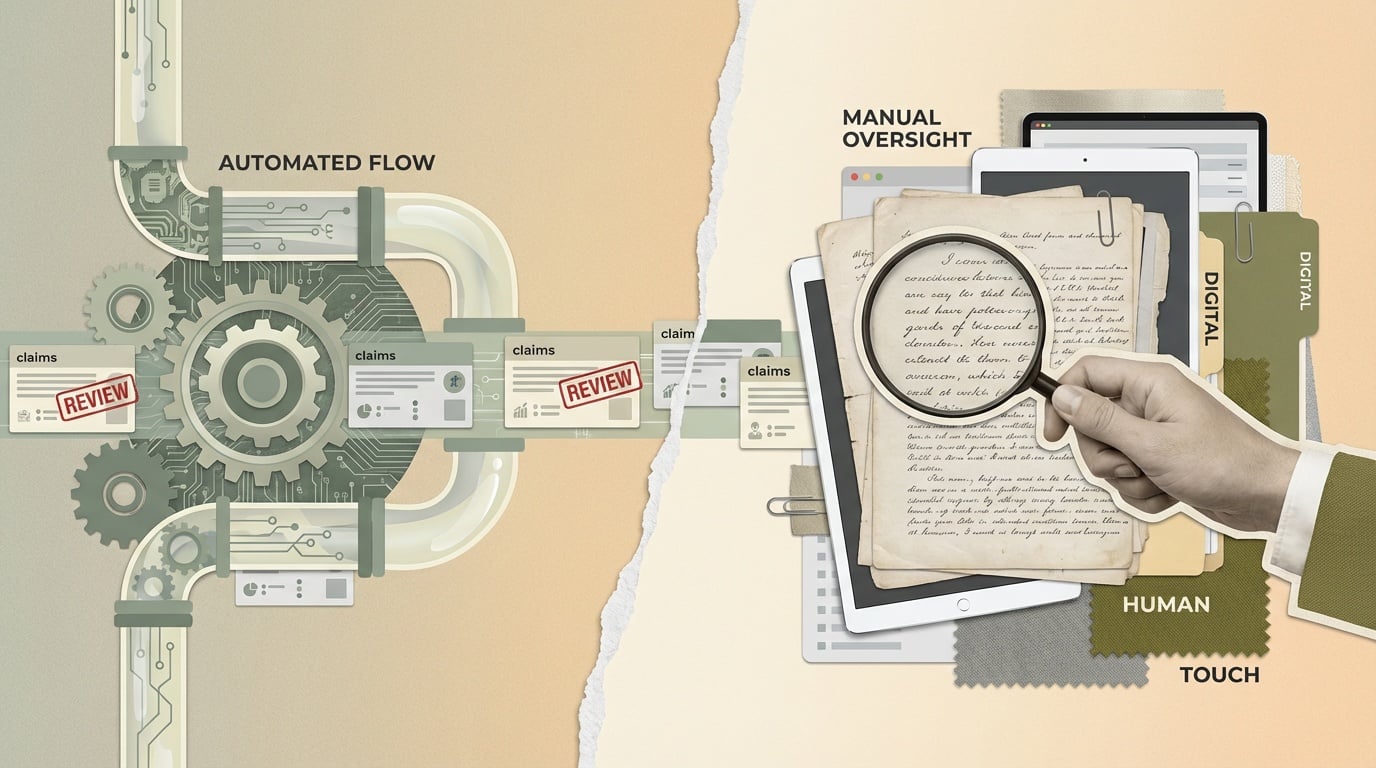
The financial comparison between billing approaches involves more than monthly service costs. Understanding the full picture helps with realistic planning.
Denial Rework Costs
Every denied claim requires work to resolve. According to HFMA research, the average administrative cost to rework a Medicare Advantage denial is $47.77. Commercial denial rework averages $63.76.
These costs have increased over recent years—from $43.84 in 2022 to over $57 in 2023 for the average denied claim. Industry studies estimate rework costs between $25 and $118 per claim, depending on complexity.
A practice submitting 500 claims monthly with a 15% denial rate faces 75 denials. At $50 average rework cost, that's $3,750 in administrative expense—before accounting for revenue that goes unrecovered.
The Healthcare Financial Management Association estimates hospitals and health systems spend $19.7 billion annually managing denied claims. For individual practices, this translates to meaningful costs that affect the bottom line.
Claims That Don't Get Worked
Not every denied claim receives attention. Staff managing high denial volume triage their time. Complex appeals requiring detailed clinical narrative sometimes get set aside in favor of simpler fixes.
Over time, practices develop a baseline write-off rate—claims that don't get resolved.
Industry data shows that claims aging beyond 60 days have reduced recovery probability. At 90 days, many claims approach timely filing limits.
Billing approaches that generate more denials contribute to this pattern. Each additional denied claim competes for limited staff attention. When appeals require detailed clinical reasoning, they may not get the time they need.
Practices focused on active revenue defense understand that preventing denials typically costs less than resolving them afterward.
Staff Considerations
The human side of billing economics matters too. Billing staff managing high denial rates deal with repetitive, detail-intensive work. Denial management is among the more demanding revenue cycle functions.
According to research cited by HFMA, organizations using thoughtful automation reported 30% higher productivity and 20% lower turnover in patient financial services compared to organizations managing high volumes of manual denial rework.
The cost of replacing billing staff—recruiting, hiring, and training—adds to overall billing costs. New staff members typically make more errors during their learning period.
| Cost Category | AI-Focused Approach | HI-Led Approach |
|---|---|---|
| Monthly service cost | Lower ($200-500/month) | Higher (5-10% of collections) |
| Typical denial rate | Often 12-15%+ | Target under 5% |
| Rework cost per denial | $25-118 | Same, but fewer denials |
| Appeal success rate | Limited appeal capability | Higher with experienced staff |
| Staff workload | Higher rework volume | More manageable volume |
| Write-off rate | Higher (complex denials less likely to be worked) | Lower (systematic follow-through) |
| Net collection rate | Lower after full cost accounting | Higher despite service cost |
How Human-Led Billing Prevents Denials Before Submission
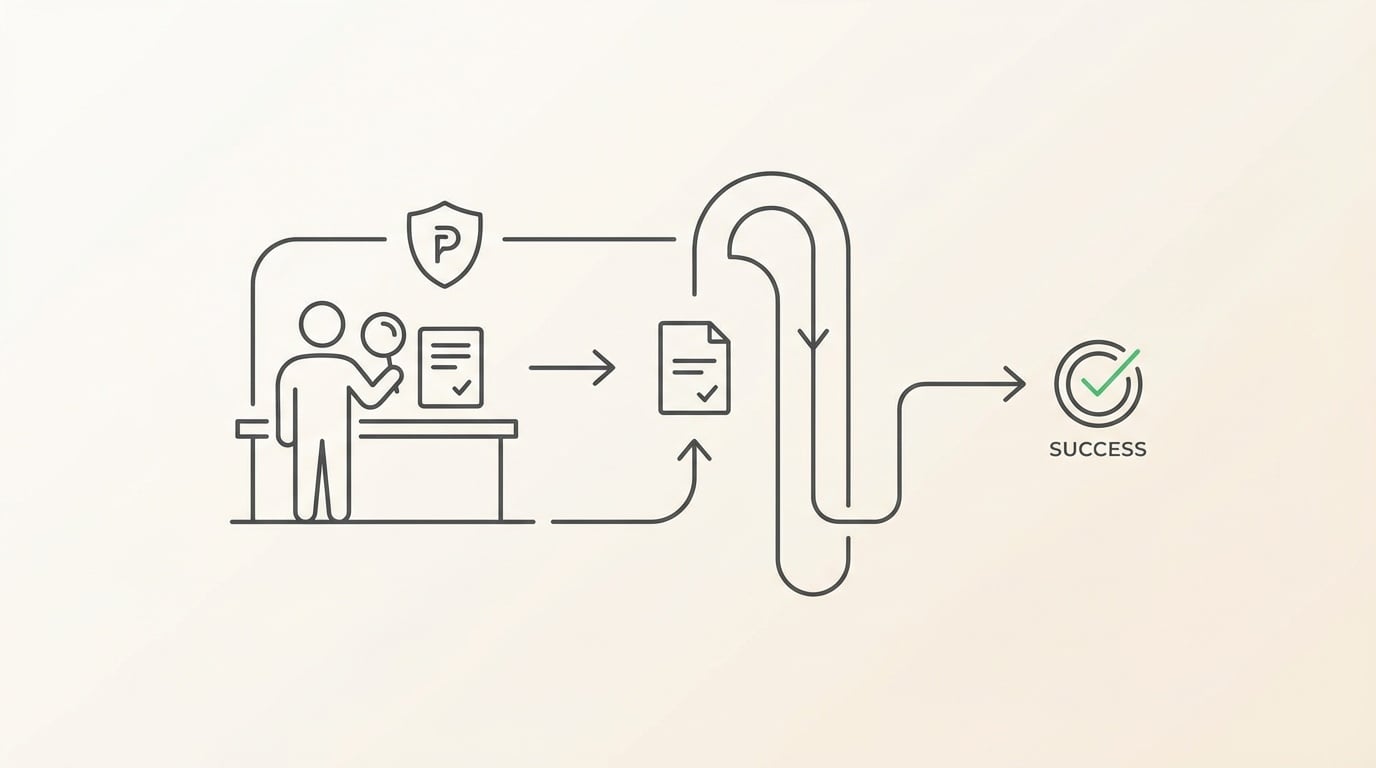
The most efficient approach to denials is preventing them. Human-led billing invests effort before submission to reduce rework afterward.
Pre-Submission Clinical Review
Before a claim leaves the practice, an experienced biller reviews the clinical documentation.
This review goes beyond checking that required fields are populated. It examines whether the documentation supports what's being billed.
Does the SOAP note establish the four elements of PART criteria? Is the treatment plan showing measurable progress? Does the diagnosis code align logically with the procedure code?
This clinical review catches issues that formatting checks miss. A claim can be perfectly formatted, with all required modifiers attached, and still face denial because the underlying documentation doesn't establish medical necessity clearly.
For practices where human intelligence in billing is part of the workflow, this review happens consistently. The biller understands what each payer requires and verifies that documentation meets those standards.
Documentation Feedback
Human billers can communicate with providers about documentation before it becomes a problem.
When a biller notices that a patient's treatment notes have become repetitive—same complaints, same findings, same plan—they can mention it to the provider. This feedback helps clinicians understand what documentation demonstrates continued medical necessity.
Over time, this feedback improves documentation quality across the practice. Providers learn what language resonates with payers, what measurements matter, and how to tell the clinical story clearly.
This is different from systems that flag documentation issues after denial. By then, the patient encounter may be months in the past.
Payer Knowledge
Experienced billers develop knowledge that's hard to systematize.
They remember that a particular payer started requiring additional documentation for certain codes. They notice when a payer begins denying claims that previously processed smoothly. They recognize patterns that indicate payer policy changes.
This knowledge informs decisions about claim submission. Should this claim go out as-is, or does it need additional supporting documentation?
Human billers also maintain working relationships with payer representatives. When issues arise, they can sometimes resolve problems through conversation that would otherwise require formal appeals.
The Appeal Process: Where Human Expertise Matters Most
Appeals demonstrate clearly where human expertise adds value. When a claim is denied, software's role largely ends. Human work is just beginning.
What Appeals Require
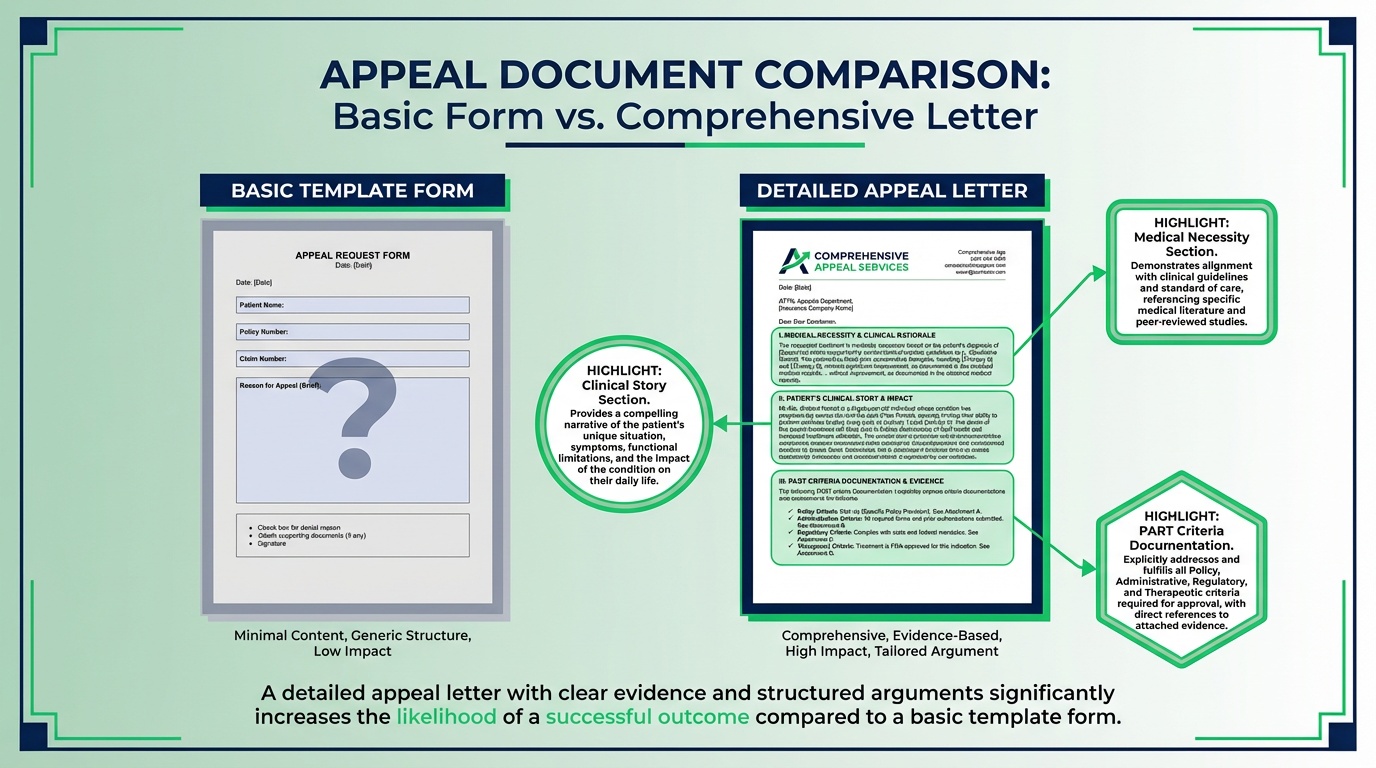
An appeal isn't a form—it's an argument.
It must address the specific reason for denial, provide supporting evidence, and explain why the original decision should be reconsidered.
The Journal of AHIMA reports that hospitals using feedback-driven, human-managed appeals shortened resolution times by 28% while improving claim accuracy across major service lines.
Consider a medical necessity denial. The appeal must explain why the treatment was reasonable and necessary for this specific patient, given their specific condition and treatment history. It must reference the documentation that supports active treatment status. It must anticipate and address the payer's concerns.
This requires reading the denial reason, reviewing the clinical record, identifying the strongest supporting evidence, and constructing a narrative that connects everything clearly.
Clinical Narrative
Successful appeals tell a story.
The patient presented with these complaints. Examination revealed these findings. Treatment aimed at these functional goals. Progress looked like this. Continued treatment is necessary because of these specific factors.
This narrative must be medically accurate, well-documented, and clearly presented. It must use language that payers recognize as meeting their coverage criteria.
Billers who've processed thousands of claims and hundreds of appeals develop skill with this communication. They know which information matters most. They understand how to present clinical facts in ways that different payers recognize as meeting their standards.
Appeal Economics
The financial impact of appeal success rates is meaningful.
Medicare data shows that providers appeal only a fraction of denials—6.4% of prior authorization denials in fee-for-service Medicare, 12% for Medicare Advantage. Among appealed claims, success rates vary based on appeal quality.
When a $150 manipulation claim is denied and not successfully appealed, that revenue is lost. When it's appealed and overturned, the revenue is recovered—minus the rework cost.
The practice with higher appeal success rates collects more revenue from the same service volume.
Billers familiar with specific payer appeal processes know which denials are worth appealing, how to present the strongest case, and when to escalate to higher appeal levels.
What a Human-Led Billing Partnership Looks Like

Understanding the AI-versus-human difference is one thing. Knowing what an effective human-led billing partnership actually involves is another.
An Advocacy-Focused Approach
Human-led billing positions your billing partner as an advocate—someone whose job is helping your practice collect the revenue it's earned.
This is different from billing as data processing. An advocate understands that every claim represents patient care that deserves proper compensation. They take ownership of collection outcomes, not just submission volume.
This approach means:
- Pre-submission review to catch issues before they become denials
- Ongoing communication with providers about documentation quality
- Consistent follow-up on unpaid claims before they age
- Strategic appeal management that prioritizes high-value recoveries
- Awareness of payer coverage changes and how they affect your practice
It's not about doing more work—it's about doing the right work at the right time.
Working with Your Existing Systems
Effective human-led billing works with your existing practice management software.
Whether your practice uses Jane App, ChiroTouch, Genesis, or another EHR platform, your billing partner integrates with your workflows. They access documentation directly, understand your system's outputs, and work within your established processes.
This differs from software-as-a-service billing solutions that require you to adapt to their platform. A good billing partner adapts to you.
Platform familiarity matters because different EHRs present claims data differently. A biller who knows Jane App understands where to find the documentation that supports medical necessity. They know how ChiroTouch formats treatment plans. This familiarity translates to faster review and smoother workflows.
Clear Communication
Human-led billing includes something automated systems don't provide: clear communication about what's happening with your revenue.
Regular updates explain claim status, denial patterns, and collection progress. When issues arise, you get explanations you can understand—not error codes that require interpretation. When patterns emerge, you get recommendations about how to address them.
This transparency serves a practical purpose. Understanding your billing performance helps you make informed decisions about documentation, scheduling, and treatment planning. It turns billing from something that happens in the background into useful feedback about your practice.
| Feature | AI-Focused Billing | Human-Led Billing |
|---|---|---|
| Claim submission | Automated, fast | Reviewed before submission |
| Error detection | Rule-based, formatting focused | Clinical context considered |
| Medical necessity | Cannot evaluate | Actively verified |
| Denial management | Generates reports | Works to prevent and resolve |
| Appeals | Limited or template-based | Custom clinical narratives |
| Payer communication | None | Active when needed |
| Reporting | Automated metrics | Interpreted insights with recommendations |
| Provider feedback | System alerts | Proactive documentation guidance |
Choosing the Right Approach for Your Practice
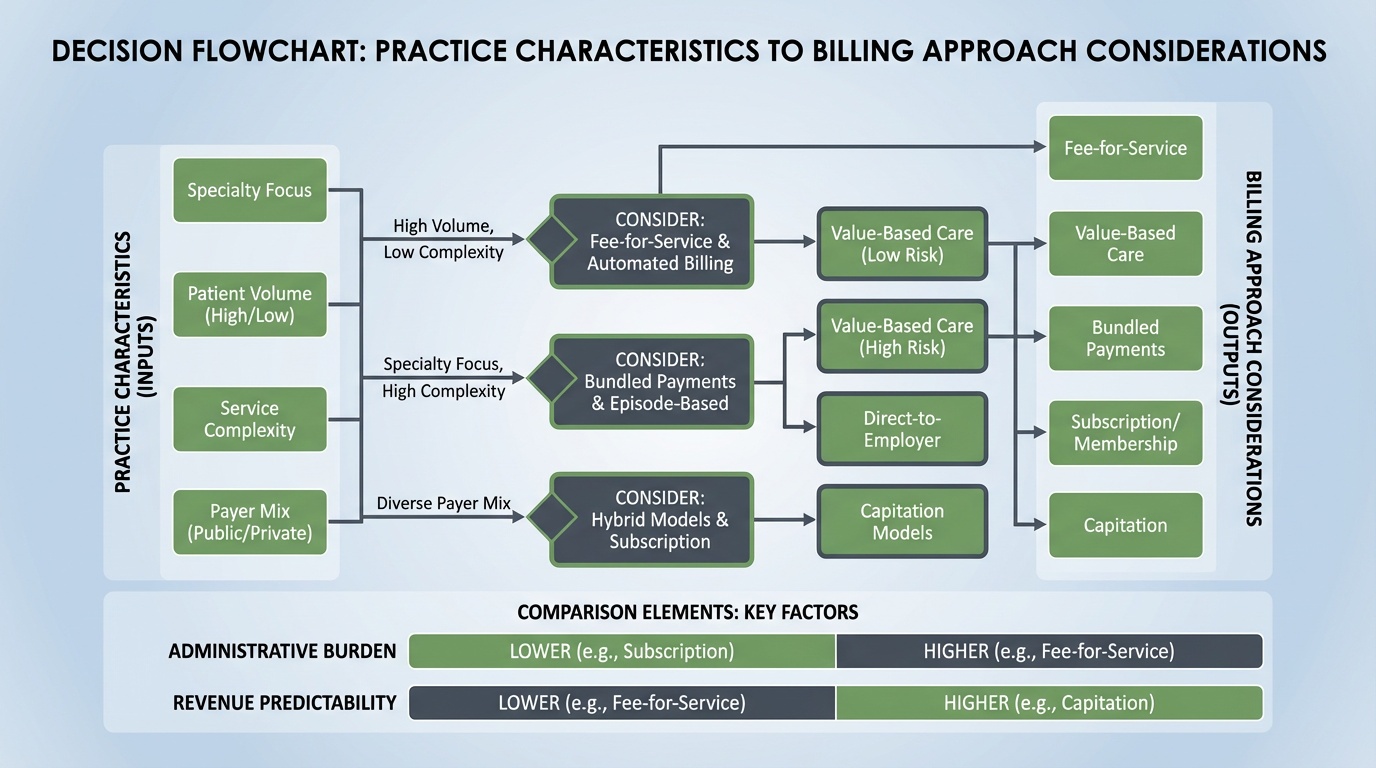
Different practices have different needs. The right choice depends on your claim volume, complexity, current performance, and goals.
When AI-Assisted Billing Can Work Well
For some practices, AI-focused billing with minimal human oversight fits well—when the practice has certain characteristics.
Lower claim volume with straightforward cases may find that occasional denials cost less than ongoing professional billing fees. If you're submitting fewer than 200 claims monthly, all within simple coding scenarios, the economics might favor automation.
Strong internal documentation may already produce the clinical narratives that prevent denials. If your providers consistently document PART criteria, functional progress, and treatment goals without prompting, AI systems have less opportunity to miss important details.
Cash-pay focused practices that bill insurance secondarily may accept higher denial rates in exchange for lower administrative costs. If insurance reimbursement represents a small fraction of revenue, optimizing that fraction may not justify premium billing services.
When Human Intelligence Adds the Most Value
Most chiropractic practices billing insurance as a primary revenue source benefit significantly from human-led billing. Signs that human expertise would help include:
- Denial rates above 10% (the industry average is near 12% currently)
- Significant Medicare patient population (AT modifier requirements, medical necessity documentation)
- Complex cases including personal injury, workers' compensation, or patients with multiple conditions
- Growth phases where documentation quality hasn't kept pace with volume
- Previous billing challenges or transitions between billing approaches
- Staff turnover creating inconsistency in billing practices
If several of these apply, the cost of AI-only billing—measured in denied claims, unsuccessful appeals, and staff workload—may exceed the cost of professional billing partnership.
Thinking About a Change
Practices currently using AI-focused billing sometimes consider transitioning to human-led models. The transition requires thoughtful planning.
Start with an assessment. How much revenue is currently sitting in denied or aging status? What patterns show up in your denial data? These insights reveal the opportunity and help prioritize the transition.
Expect a cleanup period. Practices transitioning from AI-focused billing often have accumulated backlogs of workable denials and aged claims. An effective billing partner addresses this backlog while establishing better processes going forward.
Measure what matters. Track denial rates, days in AR, and net collection percentage—not just submission volume. These metrics show whether your billing approach actually serves your financial goals.
Frequently Asked Questions
Can AI handle chiropractic medical necessity appeals?
AI isn't well-suited for chiropractic medical necessity appeals. These appeals require clinical judgment, understanding of patient-specific documentation like PART criteria, and the ability to construct arguments that address specific payer concerns.
Successful appeals tell a clinical story: what the patient presented with, what examination revealed, what treatment goals were established, what progress occurred, and why continued treatment remains medically necessary.
AI can populate templates. It can't craft the specific argument that addresses why this particular denial should be reconsidered.
What are the limitations of AI in medical billing?
AI in medical billing faces several limitations that matter for specialized practices like chiropractic offices.
AI doesn't understand clinical context. It processes data without comprehending what that data means for patient care or payer requirements. A claim can pass all automated checks and still be denied because the underlying documentation doesn't clearly support medical necessity.
AI doesn't exercise judgment on edge cases. When a claim doesn't fit established patterns—complex patients, unusual circumstances, payer-specific requirements—AI either applies a default rule or flags the claim without resolving the underlying question.
AI doesn't build relationships. Payer representatives, when engaged by experienced humans, can sometimes resolve issues informally that would otherwise require formal appeals.
AI doesn't adapt immediately to payer behavior changes. When payers modify their processing logic or introduce new documentation requirements, AI systems require updates that may lag behind the change.
Why do automated billing systems have higher denial rates for chiropractors?
Automated billing systems often have higher denial rates for chiropractors because chiropractic billing requires specialized knowledge that general-purpose AI systems don't have.
Medicare chiropractic claims require specific documentation (PART criteria), specific modifiers (AT for active treatment), and ongoing justification for medical necessity. Automated systems designed for broader healthcare billing may miss these specialty-specific requirements.
The CMS CERT program found errors in 33.6% of chiropractic claims reviewed in 2024. These weren't formatting mistakes—they were documentation and medical necessity issues.
Additionally, chiropractic care sits at a unique boundary between "active treatment" and "maintenance care." Making this distinction correctly requires understanding the patient's clinical trajectory.
Does human intelligence in billing reduce audit risk?
Yes, human intelligence in billing reduces audit risk through several mechanisms.
First, it prevents the documentation gaps that attract audit attention. Experienced billers review claims before submission, identifying patterns that might raise questions. They provide feedback to providers about documentation that could be stronger.
Second, it ensures proper modifier usage. The AT modifier, when applied without supporting documentation, creates audit exposure. Human review verifies that documentation actually justifies the modifier.
Third, it maintains compliance awareness. Billing regulations change regularly. Human billers stay current with LCD updates, Medicare guidelines, and payer-specific requirements—knowledge that helps practices avoid inadvertent compliance issues.
How much does AI billing cost vs. a professional billing partner?
Direct costs favor AI billing: software typically runs $200-500 monthly versus 5-10% of collections for professional billing partners.
But the full cost comparison includes what each approach delivers.
AI billing with a 15% denial rate generates meaningful rework cost ($25-118 per denied claim), limited appeal success, and higher write-off rates. These costs reduce and can exceed the apparent savings.
Professional billing with lower denial rates costs more in service fees but delivers higher net collections, more successful appeals, and steadier cash flow. The service fee often comes from revenue that wouldn't exist under an AI-only approach.
The relevant comparison isn't monthly cost—it's net collection percentage. What portion of your earned revenue actually reaches your bank account?
Will AI eventually replace medical billers in chiropractic practices?
AI will continue changing what billers do, but it won't replace them in chiropractic practices.
The trend is toward human-in-the-loop systems where AI handles routine, rules-based tasks while humans focus on judgment-intensive work. AI handles eligibility verification and claim formatting. Humans handle medical necessity review, appeal writing, and payer communication.
For chiropractic billing specifically, the proportion of claims requiring judgment—medical necessity evaluation, modifier selection, maintenance care transitions—limits AI's replacement potential. These tasks require clinical understanding.
The practices doing well in 2026 aren't choosing between AI and humans. They're using AI where it adds value while ensuring human expertise handles what AI can't.
How does HI fix the AT Modifier errors that AI misses?
Human intelligence catches AT modifier issues by understanding the clinical context behind each claim.
The AT modifier indicates active treatment—care expected to result in improvement. AI can verify the modifier is attached. It can't verify that documentation actually supports active treatment designation.
Human billers review the treatment plan. Is there a clear functional goal? Are examination findings showing objective changes? Do SOAP notes demonstrate progress toward that goal?
When documentation doesn't clearly establish active treatment, human billers can act before submission: requesting additional documentation, clarifying treatment plan goals, or recommending an ABN (Advance Beneficiary Notice) if the patient has transitioned to maintenance care.
This pre-submission work prevents denials rather than creating appeals.
What is a human-in-the-loop billing system?
A human-in-the-loop billing system combines AI automation for routine tasks with human oversight for complex decisions.
In practice, AI handles eligibility checks in real-time, scrubs claims for formatting errors, processes straightforward submissions, and posts payments automatically. Humans review flagged claims, evaluate medical necessity documentation, make modifier decisions requiring judgment, write appeals, and manage payer relationships.
The "loop" refers to the feedback cycle where human decisions inform system behavior over time. When humans consistently address certain types of issues, the system can learn to flag similar situations—but humans remain in control of final decisions.
This approach delivers efficiency benefits from automation without sacrificing judgment benefits from expertise. It recognizes that billing involves both data processing (where AI works well) and clinical interpretation (where humans remain essential).
Conclusion
The difference between Human Intelligence and AI in billing isn't about technology versus tradition. It's about understanding what each approach does well and where each one needs support.
AI billing systems process claims quickly and catch formatting errors consistently. For straightforward operations with strong internal documentation, they provide cost-effective claim submission.
Human Intelligence in billing adds what AI can't provide: clinical context, persuasive appeals, payer relationships, and the judgment to recognize when documentation needs attention before submission.
For chiropractic practices—where CERT data shows 33.6% claim error rates and medical necessity documentation determines so many outcomes—the question is whether the savings from automation outweigh what human expertise recovers.
The answer depends on your practice. Your claim volume. Your patient mix. Your current denial rates. Your goals.
Understanding these tradeoffs clearly is the first step toward making the right choice.
If you're wondering whether your current billing approach is working as well as it could, we're happy to talk it through.
That's what our discovery call is for. It's a chance to discuss your billing situation and get clarity on what's working, what might be improved, and what your options are.
We'll help you understand:
- Where your claims might be getting held up
- What's behind your current denial patterns
- Whether your AR is healthy or needs attention
- How your process compares to what we typically see
- What working with Bushido would actually look like
Book a Call — no pressure, no obligation. Just a straightforward conversation about your billing.
Because understanding where you stand is the first step toward deciding where you want to go.
SCHEDULE YOUR FREE DISCOVERY SESSION TODAY.

© 2026 Bushido Billing. All Rights Reserved | Web Design by iTech Valet