

Why Chiropractic Billing Fails Under Generalist Agencies
Chiropractic billing has one of Medicare's highest error rates. See why generalist billing agencies structurally fail to manage its coding demands.
Chiropractic billing fails under generalist agencies because those agencies apply one standardized coding and documentation process across many medical specialties instead of the specific rules chiropractic care requires. Chiropractic billing is not a subset of general medical billing. It operates under its own distinct set of rules, payer behaviors, and compliance requirements, including chiropractic manipulative treatment coding, the AT modifier, and mandatory documentation of the exact spinal regions treated. A generalist agency, by definition, applies a standardized approach across multiple medical specialties. That model can work in high-volume, low-complexity fields where coding decisions rarely hinge on clinical judgment. It breaks down when it meets the nuances of chiropractic care, where the same manipulation code carries different meaning depending on documented medical necessity, region count, and treatment plan detail. The core failure is not a typo or a missed deadline. It is an inability to understand the clinical and documentation context that drives chiropractic coding in the first place. Without that context, an agency processes chiropractic claims as if they were interchangeable with any other specialty's claims, applying generic logic to a coding system that demands specialty-specific judgment at every line. The result is a structurally higher likelihood of denial, because the agency is answering payer scrutiny with familiarity rather than fluency in the actual rules governing chiropractic reimbursement. This distinction, between recognizing chiropractic terminology and understanding what payers require behind it, is the mechanism behind the pattern connecting generalist billing management to elevated denial rates, compliance exposure, and lost revenue for chiropractic practices.
Articles in this cluster
- Dropping Despite Steady Patient Volume — Why Do Chiropractic Collections Keep Dropping Despite Steady Patient Volume?
- Care to Prevent Insurance Denials — How to Prove Medical Necessity for Chiropractic Care to Prevent Insurance Denials
- Review and Generalist Data Entry — What Is the Difference Between a DC-Led Billing Review and Generalist Data Entry?
- Failures Drain Chiropractic Clinical Focus — How Billing Failures Drain Chiropractic Clinical Focus
- Chiropractic Billing Services Compared — Chiropractic Billing Services Compared: In-House vs. Generalist Agency vs. Specialty Billing Partner
- Set 30-Day Chiropractic Billing Benchmarks — How to Safely Transition EHR Credentials and Set 30-Day Chiropractic Billing Benchmarks
- First 30 Days — What to Expect from Your Chiropractic Billing Partner in the First 30 Days
- Hiding Behind Corporate Jargon — How to Identify When a Billing Company Is Hiding Behind Corporate Jargon
- Billers Misinterpret Chiropractic Clinical Notes — Why Generalist Billers Misinterpret Chiropractic Clinical Notes
- Understanding Medicare Section 1862(a)(1)(A) — Understanding Medicare Section 1862(a)(1)(A): The Legal Standard for Chiropractic Medical Necessity
- Functional Improvement for Clean Claims — How to Document Region-Specific Subluxation and Functional Improvement for Clean Claims
What Makes Chiropractic Billing Its Own Discipline
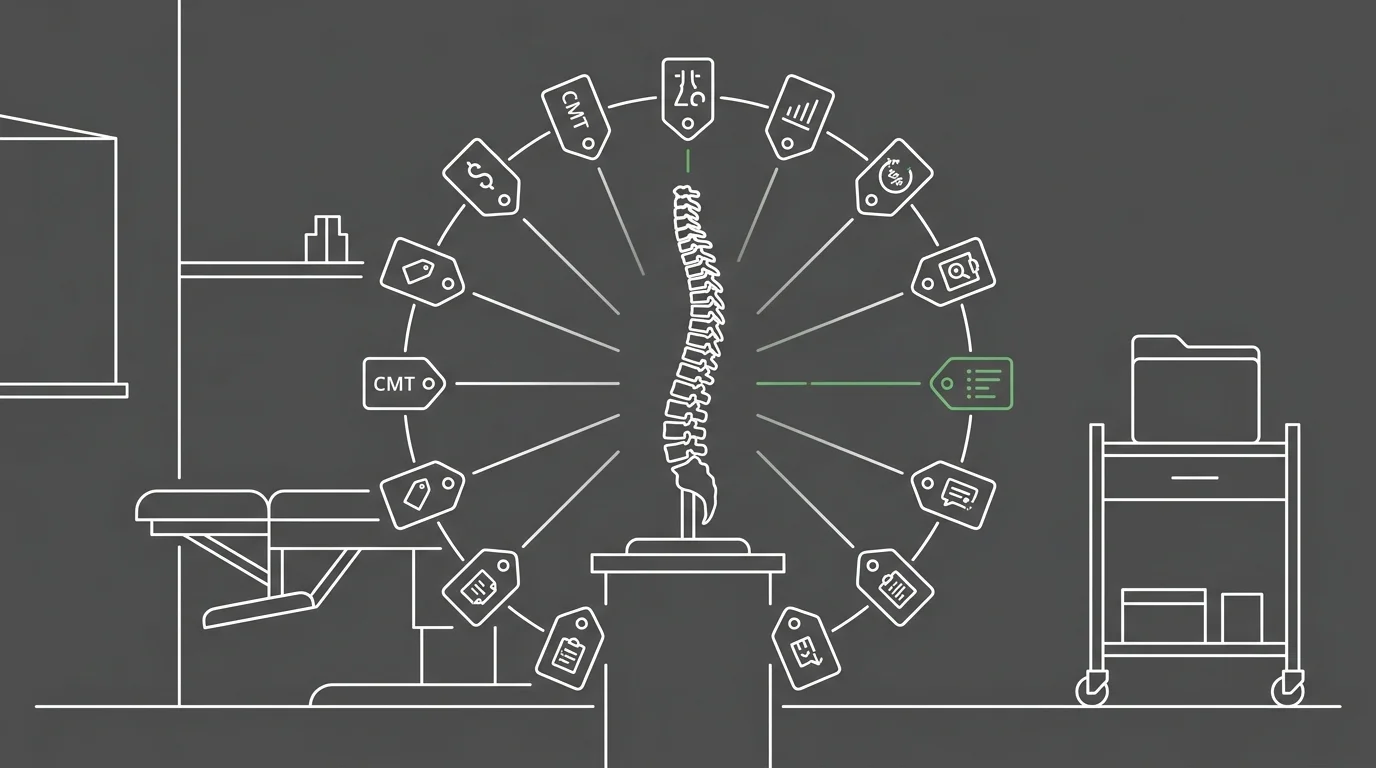
Chiropractic billing is not a dialect of general medical billing. It is its own language, with its own grammar of codes, modifiers, and required documentation.
Treat it like a subspecialty and the whole system misreads. That is a category error, not a minor oversight, and it shows up in every claim a generalist agency touches.
Where the Standard Rulebook Runs Out
The standard rulebook covers the alphabet: CPT codes, basic modifiers, claim formatting. It says nothing about why a manipulation code needs a specific region count behind it, or why the AT modifier has to reflect active treatment rather than maintenance care.
A generalist agency reads the alphabet fluently. What it never learns is the dialect underneath, the payer-specific expectations that turn a technically correct code into an approved claim. For a fuller picture of how that gap plays out across services, see chiropractic billing support.
Why Chiropractic Claims Carry the Highest Error Rates in Medicare
Ask a generalist agency what a chiropractic claim is, and you'll get a CPT code and a modifier list. That's the whole answer, because that's where the general rulebook stops.
The record shows what that stopping point costs. In 2018, the Comprehensive Error Testing Program reported a 41 percent error rate for chiropractic services, with most errors attributed to insufficient documentation or documentation errors. Research published through CMS found a 41 percent error rate for chiropractic services in 2018 was reported by the Comprehensive Error Testing Program, with most errors attributed to insufficient documentation or documentation errors. That rate did not come from bad intentions. It came from documentation built to satisfy a general standard instead of a chiropractic-specific one. The pattern is not recent, either. Research published through the Medicare Benefit Policy Manual found chiropractors filed claims incorrectly almost a third of the time, the highest Provider Compliance Error Rate in Medicare. Two decades apart, the same gap produced the same outcome. For a closer look at how that gap moves through an entire practice's revenue, see the cluster hub.
| Measurement Period | Error or Denial Finding | Primary Cause |
|---|---|---|
| 2018 | 41 percent error rate for chiropractic services | Insufficient documentation or documentation errors |
| 2003 | Chiropractors filed claims incorrectly almost a third of the time, the highest Provider Compliance Error Rate in Medicare | Filing errors tied to the highest Provider Compliance Error Rate in Medicare |
| Ongoing Medicare review findings | Missing or inadequate treatment plans, unclear chief complaints, and undocumented spinal regions cited as common denial reasons | Incomplete documentation of treatment plans, chief complaints, and treated spinal regions |
The Documentation Gaps That Trigger Denials
Denials rarely trace back to a wrong code. They trace back to what the code was supposed to prove and never did.
A missing treatment plan, a vague chief complaint, an incomplete spinal region count already named earlier: none of these are clerical accidents. That's what happens when a system checks that a field exists instead of checking what chiropractic-specific medical necessity requires inside it.
How a Standardized Billing Model Breaks Down Claim by Claim
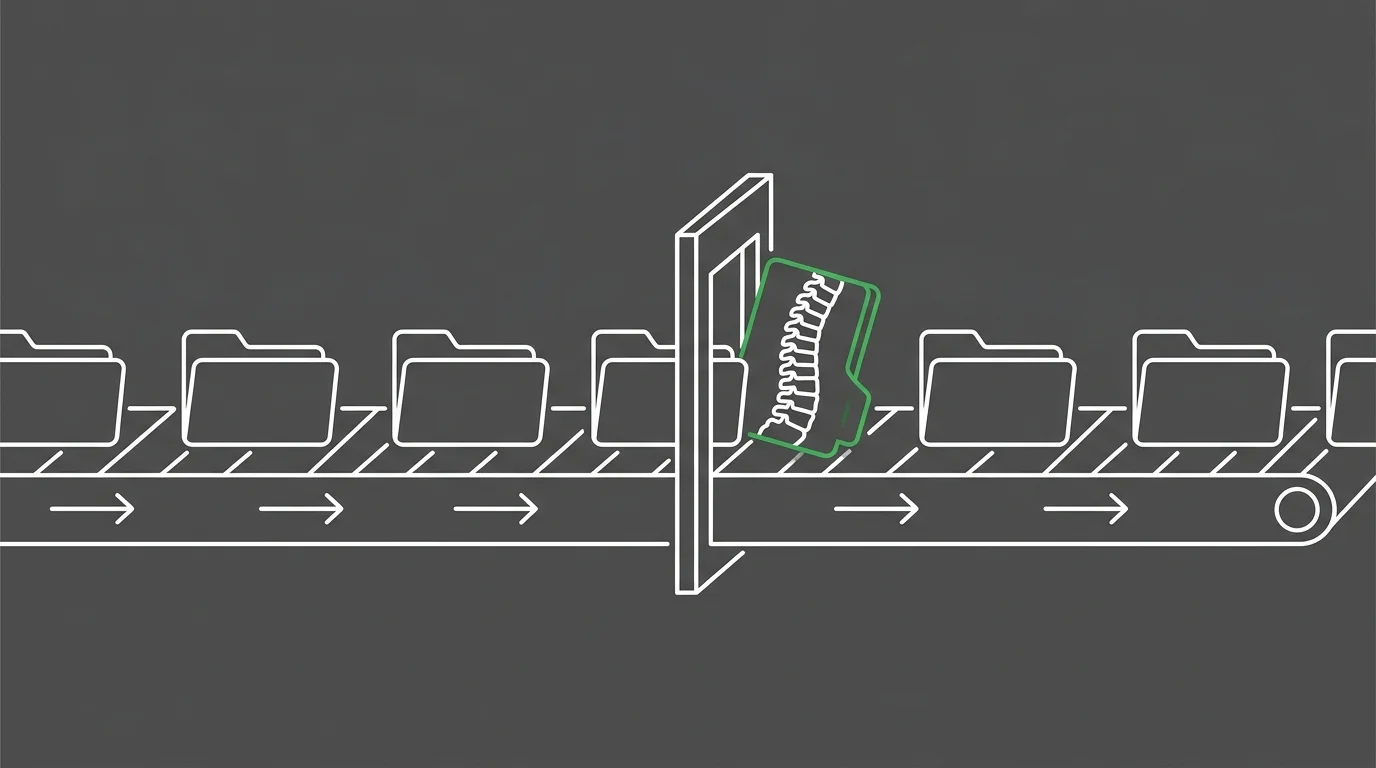
Here's how a one-size-fits-all coding process actually breaks: not all at once. It breaks claim by claim, at the exact spot where chiropractic specificity was required and generic logic got applied instead.
And that breaking point is built in, not accidental. Every claim moving through a uniform workflow gets measured against rules made for other specialties, never for the manipulation code sitting right in front of it.
Why a Uniform Workflow Cannot Absorb Chiropractic's Coding Demands
A workflow built for volume asks one thing: is the field complete? It never asks whether the documentation inside that field proves medical necessity for a specific spinal region.
But chiropractic coding needs that second question at every step. A uniform system has no way to ask it, because asking it was never part of the design.
What Happens When Claims Move Through a System Not Built for Them
Payer scrutiny does not treat every claim equally, and the data on safety-net providers shows why uneven handling compounds. Work available through PubMed Central indicates safety-net providers faced higher initial denial rates than nonsafety-net providers across professional (13.6% vs 9.2%), inpatient (18.3% vs 14.7%), and outpatient (13.3% vs 12.9%) services. Inpatient claims across all payers already run into stricter denial patterns than professional or outpatient claims, and a uniform workflow has no way to adjust its own diligence for that difference.
Feed a chiropractic claim through a system tuned for a different specialty's risk profile, and the mismatch shows up as a denial. The claim was coded correctly by generic standards. It failed by chiropractic standards, which are the only standards the payer is actually applying.
The Architecture Chiropractic-Specific Billing Actually Requires
A specialty-built billing structure starts from the opposite premise. It assumes the manipulation code, the modifier, and the documentation behind them all speak the same dialect.
Fluency changes what gets checked before a claim ever reaches a payer. The question is not whether a field is filled. It is whether the clinical record actually supports the specific code and region billed.
| Structural Component | Generalist Approach | Specialty-Built Approach |
|---|---|---|
| CMT Coding Logic | Applies one manipulation code choice across specialties, treating region count as a formatting detail rather than a clinical variable | Ties the manipulation code directly to documented region count, adjusting the coding decision every time the clinical record changes |
| AT Modifier Placement | Attaches the modifier by habit or template, without verifying it reflects active treatment rather than maintenance care | Reviews modifier use against the treatment plan itself, confirming active care is documented before the modifier is applied |
| Spinal Region Documentation | Checks that a region field is filled, without confirming the content inside it supports medical necessity | Cross-checks region documentation against medical necessity standards specific to chiropractic care before submission |
| Medical Necessity Review | Runs necessity review after a claim is denied, when correction is costly and revenue is already delayed | Runs necessity review before submission, catching gaps while a correction is still cheap and the claim is still clean |
The Core Components of a Specialty-Built Billing Structure
A specialty-built structure treats CMT coding, AT modifier logic, and spinal region documentation as one connected decision, not three separate steps. Change the region count and the modifier logic shifts right along with it.
Medical necessity documentation gets read against chiropractic-specific standards, not general medical templates. And that review happens before submission, where a corrected claim is cheap, not after denial, where it isn't.
How Medical Necessity Documentation Actually Gets Built
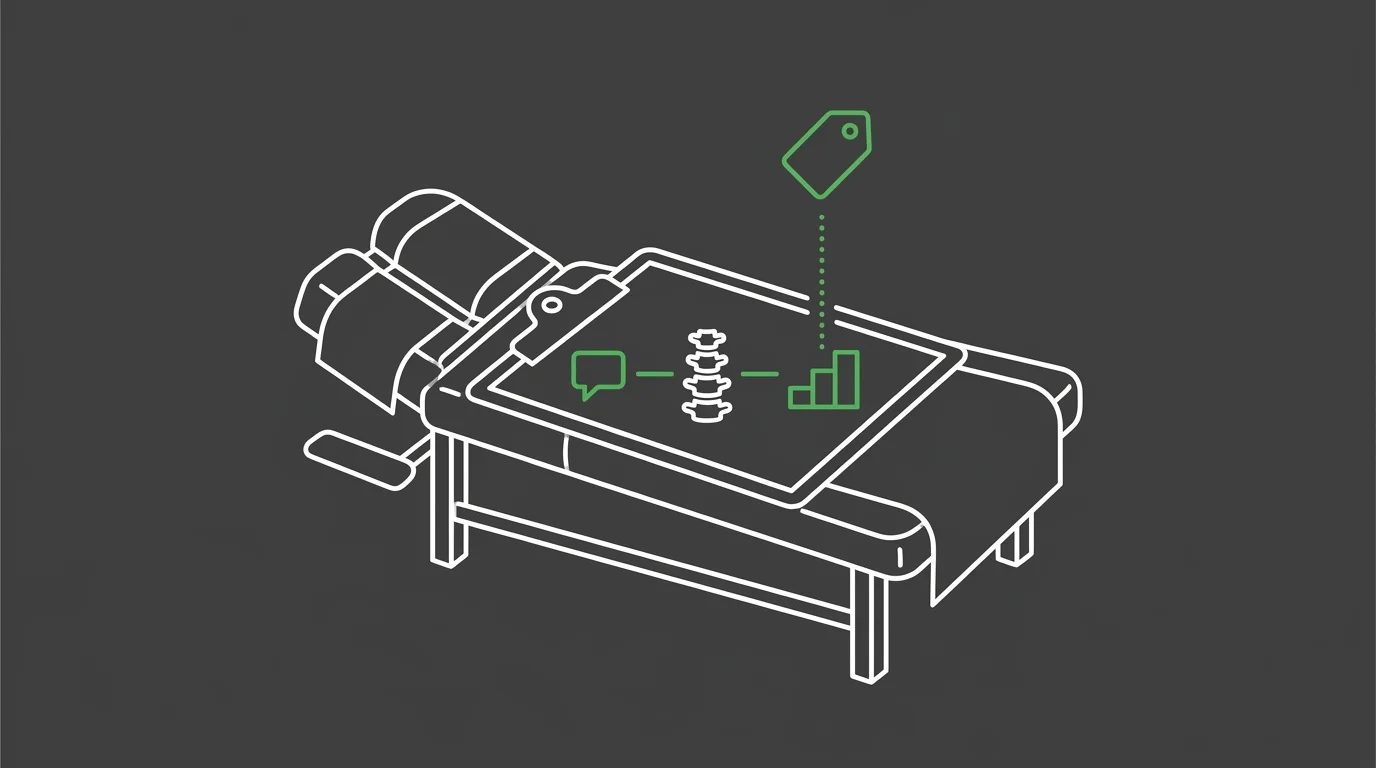
Architecture only counts once it produces a payable claim. Medical necessity documentation is where the specialty-built structure meets the paper that actually goes out the door.
A 2024 review of Medicare chiropractic claims found the same failure pattern still active: missing or inadequate treatment plans, unclear chief complaints, and incomplete spinal region documentation. Work available through the Medicare documentation checklist for chiropractors indicates missing or inadequate treatment plans, unclear chief complaints, and failure to document all treated spinal regions are common reasons for Medicare chiropractic claim denials. Each of those gaps traces back to the same root cause already named. A field got filled without confirming what chiropractic-specific medical necessity actually requires inside it.
| Documentation Element | What It Must Establish | Common Failure Point |
|---|---|---|
| Chief Complaint | The specific patient condition driving the visit, stated in clinical detail rather than a generic label | Vague or copy-forward complaints that read identical visit after visit |
| Treatment Plan | A documented course of care tied to the diagnosed condition, including expected duration and measurable goals | Missing or boilerplate plans that never connect back to the chief complaint |
| Spinal Region Detail | Every region actually treated, matched to the manipulation code and modifier billed for that visit | Region counts that do not match the code, or regions left undocumented entirely |
| AT Modifier Justification | Evidence in the chart that the visit reflects active treatment rather than maintenance care | Modifier applied by habit instead of by chart review, misrepresenting where the patient stands in care |
| Medical Necessity Narrative | The clinical reasoning that ties diagnosis, treatment, and progress into one coherent justification for the billed service | Fragmented notes that satisfy a checklist but never build a single defensible narrative |
Applying the AT Modifier Without Guesswork
The AT modifier is not a formality attached to a claim. It signals active treatment, and payers read it as a direct claim about where the patient stands in care.
Guesswork starts when a biller applies the modifier by habit instead of by chart review. A specialty-built process checks it against the treatment plan every single time, not on exception.
Frequently Asked Questions
A few mechanical questions come up every time this pattern gets explained. Here are the direct answers, no theory attached.
What specific billing codes do generalist agencies commonly get wrong for chiropractors?
CMT codes tied to region count are the most common miss. A generalist agency also tends to misapply modifiers meant for active treatment, treating them as routine add-ons rather than clinical statements.
How does a generalist's lack of knowledge about the AT modifier affect a practice's revenue?
An incorrectly applied AT modifier turns an approvable claim into a denial. The payer reads it as proof of maintenance care, not active treatment. And that single mismatch can suppress revenue across every claim built the same way, not just the one in front of you.
Why are chiropractic claims scrutinized more heavily by insurance payers than other specialties?
Chiropractic manipulation codes carry a built-in ambiguity other specialties don't. The same code can mean active treatment or maintenance care, and only the documentation tells a payer which, so medical necessity gets scrutinized far harder here.
Can a general billing agency effectively manage Medicare compliance for a chiropractic practice?
Not reliably. Medicare compliance for chiropractic claims runs on region-specific documentation and modifier logic that a uniform workflow was never built to check line by line.
What is the real financial impact of using a non-specialized biller in terms of denial rates and lost income?
The impact shows up as claims that get denied on first submission and then sit unappealed, because a generalist workflow was not built to catch chiropractic-specific errors before or after the fact. Lost revenue compounds quietly rather than announcing itself.
How does documentation for medical necessity differ in chiropractic claims compared to other specialties?
Chiropractic medical necessity documentation has to tie a specific spinal region, a treatment plan, and a modifier together as one clinical statement. Most other specialties do not require that same three-part linkage on every single claim.
Where This Leaves Chiropractic Practices
Fluency versus familiarity. That's the whole argument. A generalist agency recognizes the words of chiropractic billing, but it never learns what those words mean to a payer deciding whether to pay.
This gap isn't a personality flaw in any one biller. It's what happens when a specialty with its own grammar gets handed to a system built for a different language entirely. One mechanism runs through all of it, not many.
A DC-founded firm reads the dialect because the dialect is native, not studied. That is the distinction this entire pattern comes down to. If a practice wants billing built on fluency instead of familiarity, that conversation starts with a direct conversation with Bushido Billing.